Archive for the ‘Academic misconduct’ Category

The strange story of the San Raffaele Research Institute, Don Verzé, the Vatican, corruption and a suicide!

October 18, 2011

This is a very strange tale of a prestigious Italian bio-medical Research Institute, a strange priest, tons of money, huge debts, corruption, a suicide, the Vatican and – of course – links to Berlusconi.

It reads like a film script and a subject worthy of a Dan Brown blockbuster.

Alison Abbott writes in Nature:

One of Italy’s most prestigious biomedical research centres now faces bankruptcy, against a backdrop of rumours fed by intrigue among power-brokers, allegations of fraud and corruption, and a violent death. Next week, a court will decide whether to leave the Milan-based San Raffaele Scientific Institute to its fate, or allow a consortium led by the Vatican Bank to rescue it. (more…)

Further shenanigans at Singapore’s Agency for Science Technology and Research (A*)

October 15, 2011

Singapore was recently rocked by the Melendez affair where a much vaunted scientist was found to have manipulated data and 70 of his scientific papers are now under investigation. An excellent summary of the situation is here at Retraction Watch. Alirio Melendez who is currently employed by the University of Liverpool has been suspended pending the results of the investigation. In the strait-laced Singapore society which is utterly convinced about its own excellence in all things, this has come as a rude shock and shattered the complacent view of the academic world that “misconduct does not happen here”. There is now some concern that the reputation of the academic world in Singapore may be seriously tarnished.

But the misconduct may be rather more widespread than they would like to think. The “rotten” core was revealed by an “anonymous whistleblower” but it may be just the opening of the lid of a Pandora’s box.

Joerg Zwirner, an immunologist and associate professor at Georg-August-Universität Göttingen reports further cases of misconduct at Abnormal Science. He reports – courtesy of the whistleblower again – on 3 further papers where image manipulation is apparent. This time the common author is Kong-Peng Lam, of  the Laboratory of Molecular and Cellular Immunology, Biomedical Sciences Institutes, Singapore Agency for Science, Technology and Research (A*STAR).

Singapore and scientific misconduct: No end in sight

The three papers where image manipulation is apparent are:

1. Ng CH, Xu S, Lam KP.
Dok-3 plays a nonredundant role in negative regulation of B-cell activation.
Blood. 2007; 110: 259-66.

2. Tan JE, Wong SC, Gan SK, Xu S, Lam KP.
The adaptor protein BLNK is required for b cell antigen receptor-induced activation of nuclear factor-kappa B and cell cycle entry and survival of B lymphocytes.
J Biol Chem. 2001; 276:20055-63.

3. Wong SC, Chew WK, Tan JE, Melendez AJ, Francis F, Lam KP.
Peritoneal CD5+ B-1 cells have signaling properties similar to tolerant B cells.
J Biol Chem. 2002; 277: 30707-15.

Prof. KP Lam’s profile at A* is here. He has Minnesota, Columbia and Stanford behind him and a long list of publications in major journals.

Scientific retractions increasing sharply but is it due to better detection or increased misconduct?

October 5, 2011

Retractions of scientific papers is increasing sharply.

I am a strong believer in the Rule of the Iceberg where “whatever becomes visible is only 10% of all that exists”. And while I do not know if the number of retractions of scientific papers is increasing because detection methods are improved or because scientific misconduct is increasing, I am quite sure that the misconduct that is indicated by retractions is only a small part of all the misconduct that goes on.

What is clear however is that the world wide web provides a powerful new forum for the exercising of a check and a balance. It provides a hitherto unavailable method for mobilising resources from a wide and disparate group of individuals. The success of web sites such as Retraction Watch and Vroniplag are testimony to this. And the investigative power of the on-line community is particularly evident with Vroniplag as has been described by Prof.  Debora Weber-Wulff’s blog. And this investigative power – even if made up of “amateurs” in the on-line community – can bring to bear a vast and varying experience of techniques and expertise which – if harnessed towards a particular target – can function extremely rapidly. The recent on-line investigation and disclosure that an award winning nature photographer had been photo-shopping a great number of photographs of lynxes, wolves and raccoons and had invented stories about his encounters was entirely due to “amateurs” on the Flashback Forum in Sweden who very quickly created a web site to disclose all his trangressions and exactly how he had manipulated his images.

Nature addresses the subject of retractions today:

This week, some 27,000 freshly published research articles will pour into the Web of Science, Thomson Reuters’ vast online database of scientific publications. Almost all of these papers will stay there forever, a fixed contribution to the research literature. But 200 or so will eventually be flagged with a note of alteration such as a correction. And a handful — maybe five or six — will one day receive science’s ultimate post-publication punishment: retraction, the official declaration that a paper is so flawed that it must be withdrawn from the literature. … But retraction notices are increasing rapidly. In the early 2000s, only about 30 retraction notices appeared annually. This year, the Web of Science is on track to index more than 400 (see ‘Rise of the retractions’) — even though the total number of papers published has risen by only 44% over the past decade. …. 

…… When the UK-based Committee on Publication Ethics (COPE) surveyed editors’ attitudes to retraction two years ago, it found huge inconsistencies in policies and practices between journals, says Elizabeth Wager, a medical writer in Princes Risborough, UK, who is chair of COPE. That survey led to retraction guidelines that COPE published in 2009. But it’s still the case, says Wager, that “editors often have to be pushed to retract”. …… 

In surveys, around 1–2% of scientists admit to having fabricated, falsified or modified data or results at least once (D. Fanelli PLoS ONE4, e5738; 2009). But over the past decade, retraction notices for published papers have increased from 0.001% of the total to only about 0.02%. And, Ioannidis says, that subset of papers is “the tip of the iceberg” — too small and fragmentary for any useful conclusions to be drawn about the overall rates of sloppiness or misconduct.

Instead, it is more probable that the growth in retractions has come from an increased awareness of research misconduct, says Steneck. That’s thanks in part to the setting up of regulatory bodies such as the US Office of Research Integrity in the Department of Health and Human Services. These ensure greater accountability for the research institutions, which, along with researchers, are responsible for detecting mistakes.

The growth also owes a lot to the emergence of software for easily detecting plagiarism and image manipulation, combined with the greater number of readers that the Internet brings to research papers. In the future, wider use of such software could cause the rate of retraction notices to dip as fast as it spiked, simply because more of the problematic papers will be screened out before they reach publication. On the other hand, editors’ newfound comfort with talking about retraction may lead to notices coming at an even greater rate. …… 

Read the article

A graphic of retractions is here.

The academic and scientific community will – perforce – mirror the surrounding society it is embedded in. Standards of ethics and instances of misconduct will follow those of the surrounding environment. But the scientific community is somewhat protected in terms of not often having to bear liability for what they have published. Having to bear some responsibility and face liability for the quality of what they produce can be a force which will improve ethical standards immensely. Bringing incompetent or cheating scientists to book is not an attack on science. And it is what science needs to regain some of the reputation that has been tarnished in recent times. With the spotlight that is now available in the form of the world wide web, I expect the level of scrutiny to increase and this too can only be a force for the good.

Goldacre vs.Sigman and The Biologist: when opinion articles are published in the guise of science

October 5, 2011

Dr. Aric Sigman is a biologist with fine credentials (a Fellow of the Society of Biology and an Associate Fellow of the British Psychological Society) but one who has been seduced by the notoriety and adulation that comes from creating headlines with nonsense science (usually in the Daily Mail – popularly known as the Daily Fail).

Children’s TV diet more harmful than thought 

How super skinny TV stars are harming our health

Curse of the screen: PCs ‘dull children’s brains and should be banned until nine 

Ban TV to protect children’s health, top psychologist tells EU politicians 

How using Facebook could raise your risk of cancer 

Putting baby in nursery ‘could raise its risk of heart disease’

Just the headlines brand Sigman clearly as a publicity seeking “kook”. He has even gone on record – with the Daily Mail of course – to suggest that smacking children can lead to their success!! He may have been a scientist once but has now fallen to become a “celebrity scientist” and appears to be a psychologist suffering from some form of narcissism.

Ben Goldacre is the author of the Bad Science column in Saturday’s Guardian and of the Bad Science website and does not much care for Sigman (good for him).

But now Sigman has taken to publishing his crazy opinions in The Biologist. It is not science and the purpose is publicity and while The Biologist may well like basking in this publicity it degrades its own position as a scientific journal and degrades the work of those who publish real science in the journal.

Goldacre takes Sigman to task in The Guardian:

Last week the Daily Mail and the Today programme took some bait from Aric Sigman, an author of popular sciencey books about the merits of traditional values. “Sending babies and toddlers to daycare could do untold damage to the development of their brains and their future health,” explained the Mail.

These news stories were based on a scientific paper by Sigman in The Biologist. Itmisrepresents individual studies, as Professor Dorothy Bishop demonstrated almost immediately, and it cherry-picks the scientific literature, selectively referencing only the studies that support Sigman’s view. Normally this charge of cherry-picking would take a column of effort to prove, but this time Sigman himself admits it, frankly, in a PDF posted on his own website. Nobody reading The Biologist, or its press release, could possibly have known that the evidence presented was deliberately incomplete. That is, in my opinion, an act of deceit by the journal.  ……

Sigman replies to the criticism also in The Guardian by claiming that his article in the Biologist was not science and was clearly an opinion piece. But this does not wash. It was opinion – and nonsense opinion at that – but he clearly wanted it to be taken as science at least by the popular press to satisfy his narcissistic urges. He whines:

….. columnists and bloggers cannot assume a sense of entitlement over science and dictate to learned societies, their journals and journalists what they should publish, stifling healthy debate.

But bloggers and columnists can certainly demand of journals who claim to be scientific, peer-reviewed journals that they refrain from the politicisation and corruption of science and assure the quality of what they publish. The Biologist needs to clean up its act and cannot just pander to a “celebrity scientist” seeking publicity by passing off nonsense opinion as science. But it is Sigman’s ethics which are in doubt.

Related: How to become a celebrity scientific expert

Another case of misconduct at a private Indian college: Plagiarism at Nagpur College of Engineering

October 1, 2011

(link updated)

K. S. Jayaraman of Nature India reports on a blatant case of plagiarism at the G. H. Raisoni College of Engineering in Nagpur. Not only did a doctoral student, Parag Puranik, copy material from an American scientist but the Director of the institute, Preeti Bajaj, added her name as a co-author but she denies any knowledge of the admitted plagiarism nor does she take any responsibility.

Director Dr. Preeti Bajaj

Unfortunately the habit of senior academic staff merely adding their names onto papers written by their juniors seems to be quite prevalent. And – as in this case – where they provide no guidance, exercise no quality asssurance and probably do not even read what has been written by their students but are quite happy to add another publication to their list, they exhibit the worst kind of parasitic behaviour.

In yet another case of misconduct, scientists of a large PhD-granting research university in India have confessed having plagiarised a paper from an American scientist. The institute G. H. Raisoni College of Engineering in Nagpur, Maharashtra has named one of its doctoral students Parag Puranik for copying material from a paper by Lior Shamir, assistant professor of computer science, at the Lawrence Technological University in Southfield, Michigan. The co-authors of the paper, which include the director of the institute, say they had no knowledge of this blatant copying.

American computer scientist Shamir was shocked to notice that an important paper he published in 2006 was recycled and copied not once but thrice by a group of researchers at the Nagpur institute. “I became aware of it recently after I received an anonymous e-mail,” Shamir told Nature India.

(more…)

Scientific negligence goes on trial for manslaughter in Italy

September 20, 2011

“Scientists” today enjoy a general reputation for being unbiased, objective, incorruptible and dauntless seekers after truth. With this reputation they also have little liability for their pronouncements or for the integrity or the quality of their work. This is not sustainable as the politicisation of science is increasingly unavoidable and temptations for scientific misconduct grow. To try and de-politicise science is impractical. More emphasis can be placed on developing ethical standards which should reduce the incidence of misconduct. But I think the key is to ensure that scientists carry some liability for what they do and that they do it honestly. A scientist is no less a professional than a lawyer or an engineer or a physician or an architect. They do have some liability for the quality of what they do. Incompetence, negligence or dishonesty carry penalties for other professions and scientists can not and should not be exempt.

Of course the scientific community is up in arms about the seismologists being tried for manslaughter in Italy, but they do need to be held accountable for their negligence or incompetence – if demonstrated. Wearing a white coat and calling oneself a “scientist” should not provide automatic immunity from accountability and liability.

Scientific American:  By Nicola Nosengo

Six Italian seismologists and one government official will be tried for the manslaughter of those who died in the earthquake that struck the city of L’Aquila on 6 April 2009. The seven were on a committee that had been tasked with assessing the risk associated with recent increases in seismic activity in the area. Following a committee meeting just a week before the quake, some members of the group assured the public that they were in no danger. 

In the aftermath of the quake, which killed 309 people, many citizens said that these reassurances were the reason they did not take precautionary measures, such as leaving their homes. As a consequence, the public prosecutor of L’Aquila pressed manslaughter charges against all the participants in the meeting, on the grounds that they had falsely reassured the public. After several delays, the public prosecutor Fabio Picuti and the defendants’ lawyers appeared this week before Giuseppe Gargarella, the judge for preliminary hearings, who had to decide whether to dismiss the case or proceed with a trial.

During the hearing, the prosecutor called the committee’s risk assessment “superficial and generic”, resulting in “incomplete, imprecise and contradictory public information”. Responding to the thousands of scientists who had signed a letter of support for the defendants, the prosecutor acknowledged that the committee members had no way of predicting the earthquake, but he accused them of translating their scientific uncertainty into an overly optimistic message. More specifically, the accusation focuses on a statement made at a press conference on 31 March 2009 by Bernardo De Bernardinis, who was then deputy technical head of Italy’s Civil Protection Agency and is now president of the Institute for Environmental Protection and Research in Rome. “The scientific community tells me there is no danger,” he said, “because there is an ongoing discharge of energy. The situation looks favorable”. ….

 At the end of the hearing, the judge decided that the trial will begin on 20 September. …

The earthquake was surely not predictable and poor building standards surely contributed to the deaths but whether the scientists exhibited incompetence or negligence is a valid question. And if they did they need to be held accountable even if not perhaps for manslaughter.

Bruno Frey and his habitual self-plagiarising by the “cloning” of papers

September 16, 2011

Handelsblatt, Germany’s business daily has been investigating Bruno Frey and his habitual self-plagiarising for some months now. Bruno Frey is an economics professor at the University of Zurich and has been making a habit of publishing the same paper in multiple journals. He is also apparently a potential candidate for a Nobel prize!! Frey apparently carried out a fairly trivial analysis of the people who survived the Titanic sinking but then went and got it published – with very minor variations – in 5 different journals. That such mundane and repetitive material would be published in fairly heavyweight journals does not say much for their review processes.

Olaf Storbeck is an author and Economics editor with Handelsblatt and is responsible for the weekly economics section. He has been leading the charge and he writes in Economics Intelligence:

One of the most senior economists of the German speaking world faces serious questions about his scientific modus operandi. Bruno Frey and his research team are accused of self-plagiarism. Additionally, they at least showed an amazing degree of sloppiness with regard to literature research. Five older publications from different authors on exactly the same research question are missing from the references.

This blog (among others, especially Andrew Gelman’s as well as “Economic Logic” and the EJMR forum) has played a role in making the whole thing public. On Wednesday, 6 July the University of Zurich has started a formal investigation against Frey, based on the “suspicion of unethical scientific conduct”.

Bruno Frey (University of Zurich), Benno Torgler (Queensland University of Technology) and Torgler’s Ph.D. student David Savage simultaneously published a series of papers dealing with the sinking of the Titanic, but neither cross-reference their own work nor  cite a number of older papers by other researcher addressing exactly the same topic.

The articles by Frey, Torgler and Savage appeared in the “Journal of Economic Behaviour and Organization”“PNAS”“Rationality and Society” and the“Journal of Economic Perspectives” in 2010 and 2011. They used individual-level passenger data showing the age, gender, ticket class and nationality of 2207 people sailing on the Titanic and employed an econometrical analysis on the determinants of survival. For several months the authors have been criticised because they simultaneously published nearly identical papers in four different journals without mentioning their other work on the same topic to the editors.

the article continues>>>>

Professor Debra Weber-Wulff comments on Bruno Frey on her blog:

The “Journal of Economic Perspectives” (JEP) has formally censured him, the “Journal of Economic Behaviour and Organization” (JEBO) has blacklisted the authors and will not accept any further papers from them. Frey and Torgler have said that Savage is not at fault and have tendered excuses at 3 of the 4 journals [German language detail: The article says that they “excused themselves”, I always thought you had to ask the other party to excuse you –dww]. Apparently, Frey had not gotten around to writing to the “Proceedings of the National Academy of Sciences” (PNAS) before the Handelsblatt started its investigations. 

The whole issue seems to have started with the blog Economic Logic and an entry entitled On the ethics of research cloning. The author of the blog had a good look at the CVs of the senior authors and finds evidence both of slicing results very thin in order to get much publication mileage out of them, as well as republishing the same results multiple times. In the comments a number of other clones showed up, and a  FreyPlagWiki (the currently popular German way to collect evidence on scientific misconduct and plagiarism) was set up. 

Interesting things have popped up, such as Frey exempting his doctoral students from coursework now required by the University in Zürich, or his being dropped from an editorial board without explanation.

Olaf Storbeck has found further examples of Frey’s multiple publications which he documents in this  Google Table  describing the “cloning” of 5 publications. But Storbeck’s article contains some disturbing reports of the behaviour of Journal Editors – in particular Jürgen Backhaus Professor of Finance and Fiscal Sociology at the Political Sciences Faculty of the University of Erfurt and Editor-in-chief of Springer’s European Journal of Law and Economics (EJLE).

Bruno Frey: More cases of self-plagiarism unveiled …. However, when I talked to Jürgen Backhaus on Sunday, the editor-in-chief was strongly backing Bruno Frey. Backhaus argued that Frey is known for his new and unconventional ideas. According to Backhaus, it was necessary to repeat them again and again to get them through to a reluctant audience. Backhaus told me:

“It is well known in the profession that Bruno Frey works like this.”

He said that it was an honour to be able to publish an article by Frey:

“He is an internationally renown academic who is a candidate for the Nobel prize.”

According to Backhaus, publishing an article by Frey enhances the attention for other articles in the journal. I asked him how he would explain to a PhD student that the official submission guidelines of the journals apparently are not applicable to Frey. His answer was:

“Bruno Frey is a trademark. The PhD student still has to build one.”

I was really stunned by these remarks. I emailed those quotes (in German) to Backhaus prior to publication. He confirmed that I quote him correctly. (Translations from German into English were done by me, however.) …… If the EJLE wants to retain any credibility and if Springer takes the COPE guidelines seriously, they won’t have any choice but to officially retract both articles. Additionally, I don’t see how Frey can stay on the editorial board of a journal which submission guidelines he repeatedly has clearly violated.


To “terja”: time to introduce a new verb into English from the Swedish?

September 16, 2011

One result of the revelations of the fraudulent manipulation of images by Terje Hellesö – a former award winning photographer (with the award now retracted) by the on-line community on the Swedish Flashback forum has been the introduction of a whole new vocabulary in Swedish with variations of his first name to describe stolen and manipulated images.

A comment on my earlier post led me to look at

  1. English words which were of Swedish and Scandinavian origin, and
  2. English words dealing with manipulation of images.
The Viking legacy has left many place names which are Scandinavian in whole or in part. In modern times many English words have been assimilated into all the Scandinavian languages. I have the impression that there may be more words of Scandinavian origin perhaps in the Celtic languages. But I was a little surprised that the list of English words emanating from Swedish or the old Scandinavian languages was not very long.

List of English words of Swedish origin

List of English words of Scandinavian origin 

Coming then to the manipulation of images there are a number of words in English which refer to some specific type of image manipulation. Manipulation has been evident from the onset of photography. Initially these referred to multiple-exposures or various dark-room techniques such as retouching , splicing negatives, scratching or air-brushing. The advent of computers and digital technology has led to “photoshopping” now becoming an accepted word (v. to photoshop which is an example of a noun becoming a verb). Digital manipulation may include resizing, shadowing, duplicating, cropping, re-scaling, retouching, emphasising, enhancing, splicing, color balancing, painting or “editing” all or part of the images being manipulated.

But there does not seem to be a word which particularly describes the act of stealing an image and then manipulating and combining it with other images. It seems therefore that there is space in English for a new word to describe the specific type of manipulation that Hellesö has carried out. My perception is that this form of manipulation may be quite wide-spread. It is also probably high time that Swedish contributed a new word to come into English usage. From the proposed verb “terja” I have chosen to go to “terjading” in preference to “terjaing” as being less difficult to pronounce.

ter.ja (tair – yah)

verb – to terja

the manipulation of a digital image by stealing images available on the internet and creating a montage of  stolen and or manipulated images together with other images and the representation of such images as one’s own original work without attribution to the original image creator.

Related forms – terjad ¦ terjas ¦ terjading

Adjective – terjad

Origin(2011) after Terje Hellesö and his theft and manipulation of  wild-life images disclosed on an internet forum

Examples :

I terjad yesterday, I terja today , he terjas always, he will terja tomorrow.

To terja an image is as reprehensible as to plagiarise.

Terje terjad his images probably starting from when he acquired his first digital camera. 

While image manipulation may well be permissible, terjading is always unethical. The penalties for terjading  however are not enshrined in law except – incidentally – for any theft or intentional fraud that can be proven.

His terjad photographs won him an award.

Tilburg University on terms of reference for Diederik Stapel misconduct inquiry

September 15, 2011

Following the suspension (pending dismissal) of Diederik Stapel for faking data, Tilburg University has published the terms of reference of the Levelt investigation committee and which is to report latest by the end of October.

Universiteit van Tilburg

Rector Magnificus of Tilburg University Prof. P. Eijlander has asked the Levelt Committee to investigate the extent and nature of the breach of scientific integrity committed by mr. Stapel. There are two elements to the task:

  1. The committee will examine which publications are based on fictitious data or fictitious scientific studies and during which period the misconduct took place.
  2. The committee should form a view on the methods and the research culture that facilitated this breach of scientific integrity, and make recommendations on how to prevent any recurrence of this.

The committee will publish its (interim) report by the end of October at the latest. The universities of Groningen and Amsterdam have both appointed staff members responsible for communication with the inquiry. 

Members committee
Prof.dr. W.J.M. Levelt, Prof.mr. M.S. Groenhuijsen, Prof.dr. J.A.P. Hagenaars,

Dr.ir. S.A.M. Baert (secretary)

Prof. Levelt is a psycho-linguist and former president of the Royal Netherlands Academy of Arts and Sciences while Prof. Groenhuijsen and Prof. Hagenaars are from Tilburg’s Law School.

Stapel has agreed to cooperate fully with the investigation and to help identify every instance of data fabrication. There are likely to be a number of retractions to come from among his published papers. It would though be a good sign if the Journals involved were to be pro-active in identifying these rather than starting their processes only after the investigation was complete. Some of the journals involved could be ScienceEuropean Journal of Social Psychology, Journal of Personality and Social Psychology and Journal of Experimental Social Psychology.

Dutch social psychologist sacked for faking data over a “prolonged period”

September 12, 2011

On September 7th, Tilburg University officially suspended Diederik Stapel, who heads the Tilburg Institute for Behavioral Economics Research. University Rector Philip Eijlander said that Stapel had admitted to using faked data and said that he would not be allowed to return.
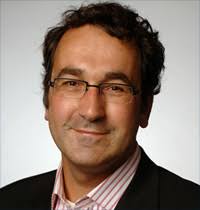
Diederik Stapel

Stapel’s homepage on the Tilburg University website has been removed “by the administrator”.

Mark van Vugt is a Netherlands evolutionary psychologist who currently holds a professorship in psychology at the VU University (Vrije Universiteit) Amsterdam, the Netherlands, and has affiliate positions at the Institute for Cognitive and Evolutionary Anthropology at University of Oxford, UK, and the University of Kent, UK. Mark van Vugt writes about his colleague Diederik Stapel in Psychology Today:

After the high profile case of Marc Hauser, the Harvard psychologist found guilty of serious scientific misconduct there is the recent case of my colleague, Diederik Stapel, a social psychology professor in the Netherlands who has been suspended by his university after admitting to have fabricated experimental data over a prolonged period.

The extent of his fraud is yet unclear but it has produced shock waves among the international social psychology community.

Stapel was the poster boy of Dutch social psychology, having published in the major psychology journals, and receiving various grants and prestigious awards for his research on social cognition and stereotyping. In a recent article published in Science, he and his colleagues showed that in a messy environment (a dirty railway station) White participants were more prejudiced against a Black person. The authenticity of these results is now being investigated…

The Science article that is being investigated is Coping with Chaos: How Disordered Contexts Promote Stereotyping and Discrimination by Diederik A. Stapel and Siegwart Lindenberg, Science 8 April 2011: Vol. 332 no. 6026 pp. 251-253 DOI: 10.1126/science.1201068

But this is not the only article being investigated and there may be a rash of retractions to come.

Science Insider writes:

A Dutch social psychologist whose eye-catching studies about human behavior were fodder for columnists and policy makers has lost his job after his university concluded that some of the data in those studies were fabricated.

Tilburg University today officially suspended Diederik Stapel, who heads the Tilburg Institute for Behavioral Economics Research. But in a TV interview today, university Rector Philip Eijlander said that Stapel had admitted to using faked data and said that he would not be allowed to return.

Stapel has worked at the university, located in southern Netherlands, since 2006. He is known as a prolific researcher and a successful fundraiser. His studies appeared to offer new insights into the workings of the human mind; for instance, a Science paper published in April showed that people are more likely to stereotype or discriminate in messy environments.

In the TV interview, Eijlander says he was first contacted on 27 August by “junior researchers” in Stapel’s lab who alleged that his conduct was fraudulent. Stapel immediately admitted that there was “something strange” in his papers, Eijlander says, and “yesterday, he told me that there are faked data.” The university has asked Willem Levelt, a psycholinguist and former president of the Royal Netherlands Academy of Arts and Sciences, to lead a panel investigating the extent of the alleged fraud. Eijlander says that all “tainted papers” will be retracted.

As to the whistleblowers, Eijlander told the television interviewer that “I have a lot of respect for them, because they found it very difficult.”

Just last week, Stapel made headlines with a press release claiming that thinking of eating meat makes people “more boorish” and less social. The announcement, which said that “meat brings out the worst in people,” raised eyebrows because the study hadn’t yet been written up, let alone published.

Roos Vonk, a psychologist at Radboud University Nijmegen and a collaborator on the study, wrote on her blog today that she believes the latest study is likely among those based on fabricated data. She writes that her conclusion is based on the fact that, although the results had been collected by Stapel’s group, “when we discussed [them], I thought it was odd that Diederik didn’t mention the name of his assistant.” But at the time, she writes, the possibility of fraud didn’t occur to her.

Roos Vonk writes further as she apologises on her blog

I regret very much that this has happened and I will do everything what I can so that trust in the scientific work within social psychology will recover. It is conceivable that this extensive lapse of a few colleagues effects the reputation of our entire profession. I understand that this way can work, but I want to stress that this is a single exception  probably much more shocking and shameful for me and my colleagues than for outsiders, because we all in our education are imbued with the importance of integrity.

An interesting UPDATE from Retraction Watch:

An alert Retraction Watch reader has pointed us to a 1999 paper by Stapel with the impossibly ironic title: Framed and misfortuned: identity salience and the whiff of scandal.”

In the article, which appeared in the European Journal of Social Psychology, Stapel and two colleagues reported the results of survey they’d conducted of Dutch psychologists in the wake of a major plagiarism scandal involving an unidentified Dutch clinical psychologist (“we decided to use neither the name of the person who was accused of plagiarism nor the university to which he was affiliated,” they wrote).

Put briefly, the researchers claimed to have found (rather unsurprisingly) that hows psychologists identified themselves professionally dictated how strongly they were affected personally by the scandal. Money quote:

Whether social psychologists view an article about a plagiarist clinical psychologist as relevant or irrelevant to the self may thus be determined by whether their social identity is narrowly defined (‘social  psychologists’), so as to exclude the plagiarist, or broadly define (‘psychologists’) to include the plagiarist.

Stapel’s group also showed that psychologists from the accused’s own university felt the shame of his alleged misdeeds more than those from other institutions.

And from what Roos Vonk has written it would seem that his collaborators indeed feel a stronger sense of shame than others.

It would seem that much of the research by Diederik Stapel will now be investigated and a number of his papers are likely to be retracted. In addition to the Science paper which is already under investigation some of his other earlier publications are:

I wonder whether cognitive psychology is particularly subject to the faking of data – possibly because faking is relatively easy when the data are so often subjective and so little of it is required to be reproducible or quantitative.