Archive for the ‘Aviation’ Category

Boeing 787 Dreamliner still not out of the woods

March 9, 2014

The Dreamliner woes continue with cracks in the wings found during manufacture and another emergency landing for a JAL Dreamliner. And in the meantime Norwegian Airlines is in rough seas as a consequence of their Dreamliner problems but have still ordered another four aircraft. Their eggs are all in the Dreamliner basket now but Boeing must have provided a great many sweeteners. The Dreamliners are proving not to be as fuel efficient as it was claimed they would be when they were being sold. Air India which has taken delivery of 13 Dreamliners and has a total of 27 on order is also reported to be seeking compensation from Boeing.

JAL Dreamliner makes emergency landing in Honolulu

Japan Airlines said Sunday its Dreamliner flight from Tokyo to San Francisco made an emergency landing in Honolulu, reportedly due to a possible problem with its hydraulic system.

The pilot of flight JL002, carrying 171 passengers and crew, decided to divert to Hawaii after a warning message about falling pressure of lubricant oil in its right engine, according to Japanese national broadcaster NHK.

Boeing Has a New 787 Dreamliner Headache With Wing Cracks

Boeing’s 787 is the airplane program that keeps on giving—problems. The company will inspect about 40 airplanes and delay some 787 deliveries after Mitsubishi Heavy Industries, which makes the plane’s carbon fiber wing, discovered small cracks in newly built wings following a change in its manufacturing process, Boeing said Friday.

The cracked area is very small and will require repairs that will take a week or two per airplane, Boeing spokesman Marc Birtel said. “We are confident that the condition does not exist in the in-service fleet,” the company said in an e-mailed statement. “We understand the issue, what must be done to correct it, and are completing inspections of potentially affected airplanes.”

Mitsubishi Heavy crafts the wings in Nagoya, Japan, and Boeing flies them to its 787 assembly plants in Everett, Wash., and North Charleston, S.C. About 17 of the 787s being inspected are fully completed, and seven have been undergoing predelivery flight tests, according to the Wall Street Journal, which first reported news of the cracks.

Profits down after Dreamliner dramas

Norwegian Air reported a profit in 2013 for the seventh year running on Thursday, but takings were significantly down on previous years. Major problems setting up its new long-haul routes with trouble-plagued Boeing 787 Dreamliners led to a huge amount of customer complaints, and the budget carrier angered unions and other airlines over pay conditions and its use of cheaper Asian crews. Norwegian reported its pre-tax profits for 2013 were NOK 437 million (USD 71.5 million), down from NOK 623 million in 2012. The airline lost NOK 283 million in the fourth quarter.

Norwegian orders four more Dreamliners and reports Q4 losses

Norwegian Air Shuttle announced on Thursday the lease of four more Boeing 787 Dreamliner aircraft, despite a series of technical hitches with the planes. The contract, which brings Norwegian’s planned Dreamliner fleet to 14, was signed with the US aircraft leasing company International Lease Finance Corporation (ILFC) but no financial details were released.

Boeing Says Air India Unhappy With 787 Dreamliner’s Performance

Boeing Co. said Air India Ltd. is dissatisfied with the performance of its 787 Dreamliner, joining other carriers including Norwegian Air Shuttle ASA in slamming the manufacturer for repeated faults on its marquee jet. “Yes, they are not happy with the reliability portion, neither are we,” Dinesh Keskar, a senior vice president at the Chicago-based planemaker, said in an interview at the Singapore Air Show today. “Over the last few months, we understood which are the components that were causing issues, which software needs to be upgraded.”

…. Air India diverted one of its 787s to Kuala Lumpur this month as a precaution after a software fault on a flight to New Delhi from Melbourne. Boeing is upgrading software and changing some components on Air India 787s whenever the planes can be taken out of service, Keskar said, adding that a 13th Dreamliner will be delivered to the carrier this month. …… Air India, which has ordered 27 Dreamliners, will seek compensation from Boeing after the carrier found that its 787s aren’t as fuel efficient as the planemaker had claimed while selling them ……. Fuel efficiency of the Dreamliner is improving after earlier models didn’t “quite make the mark” on this count, Keskar said.

Mystery surrounding Malaysian MH370 deepens with four passengers travelling on stolen European passports

March 9, 2014

I find aircraft accidents particularly disturbing – not just because I travel quite often – but mainly because of the suddenness and the helplessness of the many on board. Whatever the explanation 239 people have lost their lives.

I thought that suicide bombers generally operated singly. So while the news that at least four MH370 passengers were travelling on stolen European identities brings foul play up the list of possibilities, it seems unlikely that four suicide bombers would act in concert. In any event the lack of any contact before the disappearance  suggests a sudden, catastrophic airframe failure or a massive – perhaps malicious – explosion. Oil slicks suggest the South China Sea but there is no trace of wreckage. Military radar indicates that the aircraft may have started to turn back

The mystery however is deepening.

  • The lack of contact suggests something very sudden
  • A bomb should have provided a lot of floating wreckage.
  • Four “bad guys” acting in concert would be more suggestive of an attempted  hijacking
  • A turn-back should have allowed time for contact.
  • Aircraft breakup in the air should also have provided a lot of wreckage.

It may not be completely irrelevant that in August 2012 this particular aircraft was involved in a collision with the tail of a China Eastern Airline A340 plane at Pudong International Airport in Shanghai, China and suffered a damaged wing.

MH370 collision 2012 photo AP

MH370 collision 2012 photo AP

One theory is that an airframe failure could have caused the aircraft to suddenly fracture into two large pieces – both of which were large enough to plunge into the sea and sink without leaving much surface wreckage?

The Guardian: …… two Europeans listed on the passenger manifest – an Italian, Luigi Maraldi and an Austrian, Christian Kozel – had not been on the flight and were safe and well. Maraldi had his passport stolen in Thailand last year and Kozel’s was stolen in the region two years ago. The flight was a codeshare with China Southern and the two people named as Maraldi and Kozel on the list booked together via the Chinese airline, Chinese media reported.

The company said it had CCTV footage of the two people who checked in as Maraldi and Kozel.

Malaysian InsiderAuthorities have yet to confirm the identities of two more European passengers on flight MH370, adding to two others using stolen passports in the Malaysia Airlines plane which vanished over the Malaysia-Vietnam maritime border yesterday. The Malaysian Insider understands that all four had bought their flight tickets from China Southern Airlines, the Malaysia Airlines codeshare partner for the Kuala Lumpur-Beijing route.

“The background checks with the embassies are being done but these two cannot be confirmed,” a source told The Malaysian Insider, adding that both were from the same country.

MH370-Malaysia_Airlines-mas-last-location-graphics-080314-kamarul_540_341_100

MH370-Malaysia_Airlines-mas-last-location-graphics-080314-kamarul husain Malaysian Insider

Malaysian InsiderMalaysia Airlines said that the plane took off at 12.41am Malaysian time and that it disappeared from air traffic control radar in Subang at 2.40am.

The timeline seemed to suggest that the plane stayed in the air for two hours – long enough to fly not only across the Gulf of Thailand but also far north across Vietnam.

But Fredrik Lindahl, the chief executive of Flightradar24, an online aircraft tracking service, had said that the last radar contact had been at 1.19am, less than 40 minutes after the flight began.
The authorities said yesterday that the last conversation between the flight crew and air traffic control in Malaysia had been about 1.30am. – March 9, 2014.

Airport security and the monetisation of distrust

February 25, 2014

I am just back after a trip of 10 days and have suffered the travails of airport security at 5 airports.

It occurs to me that the behaviour of the security personnel (by definition composed of people required to follow a particular protocol and required NOT TO THINK) is primarily a measure of distrust.

  1. The “security” industry is just too large and too lucrative to disappear.
  2. Whether or not airport security achieves its purpose is not measurable and it is to the industry’s benefit that it not be measurable.
  3. The greater the inconvenience and hassle generated, the greater the perception that something useful is being achieved. (Hassle free security checks – which could be done – is not beneficial to the industry).
  4. The security checks are the single most disruptive and stressful part of the journey.
  5. Idiot security staff (chosen so since they are not required to think) are vested with a power to ruin your travel experience and doing so is one of the little pleasures they have in their jobs. They are more formidable than any immigration control officer.

Distrust has been monetised and some industries are making a killing. It is the monetisation of the precautionary principle where it pays handsomely to be alarmist.

I will not see a return in my lifetime to the days when the travel itself was a pleasurable experience. Those days are long since gone and will probably never return.

Fortunately it is still exciting to arrive.

Leaking fuel from the wing captured by Norwegian Dreamliner passengers

January 24, 2014

Following on from my previous post, Norwegian’s troubles with Boeing Dreamliner planes continue. This report from Nordlys.no is about a cancelled Norwegian Dreamliner flight from Bangkok to Oslo on 19th January where passengers took pictures and video of fuel pouring out of the aircraft’s wing while it was taxiing at take-off! The take-off was aborted and the flight cancelled – fortunately

...

Fuel leaking from the wing of a Norwegian Dreamliner at Bangkok Airport – photo Ann Kristin Balto

Nordlys.no: Ann Kristin Balto of Tromso was one of the 285 passengers waiting 19 hours for the delayed flight from Bangkok to Oslo.

She took the photo which shows how large amounts of fuel flowed out of the right wing of the Boeing 787-8 Dreamliner aircraft, …..

“When they discovered the error, they asked us not to take pictures because of the explosion hazard. Those who had already taken pictures were asked by the cabin crew if they could delete them”, said Balto.

Lasse Hagerupsen, a bank manager from Harstad was in a group of six and also noticed fuel leaking from the aircraft during taxiing.

“As the plane taxied to the runway and was about to take off, more passengers began to smell gasoline. The passengers alerted flight attendants who in turn reported to the cockpit. When the fuel ran out of the wing a half a meter long puddle of fuel was left by plane”. …. 

The bank manager confirmed that the attendants did not like that it was photographed. It was described by Norwegian as being due to defects in a valve.

The flight was canceled and the nearly 300 passengers were bussed to different hotels.

This one gives me some goose-bumps. I have seen the devastation from fuel-leak explosions and this could have gone really bad.

But all’s well ……

Dreamliner reliability is still short of the mark

January 24, 2014

Whether an aircraft is “available” to fly – whether a flight is scheduled or not –  is a measure – mainly – of the intrinsic soundness of that aircraft and its maintenance. The “dispatch reliability” of an aircraft or a type of aircraft is a composite measure of the performance of both the aircraft and the operator.

Aircraft availability and dispatch reliability and availability are two vital signs of any aviation operation. Availability refers to whether the aircraft is available for a flight, whether scheduled or not. An aircraft in for maintenance cannot be flown, and thus is not available. …. At its most basic, aircraft dispatch reliability accounts for whether the aircraft took-off on time and if not, why? If the dispatch performance and/or reliability of the aircraft is poor, then so is the level of service. …….

(more…)

Dreamliner battery fix fails as Tesla recalls 29,000 cars for battery charger fault

January 14, 2014

The overheating problems of lithium-ion batteries and their chargers seem to more serious than just teething problems. Boeing and Tesla continue to have issues with thermal runaway and permanent fixes are proving elusive.

Boeing’s problems with the Dreamliner batteries are not yet over. The fix for its battery problem in March  does not seem to have worked for yet another Japan Airlines aircraft. The lithium-ion batteries are now having issues even with Tesla who have recalled “29,000 Model S vehicle 240-volt charging adapters that could overheat and cause a fire. The company will update software in the electric vehicles and send owners replacement adapters.”

The Telegraph: 

Japan Airlines has temporarily grounded one of its 787 Dreamliners after white smoke was spotted outside the plane, warning lights in the cockpit indicated possible faults with the main battery and charger, and one battery cell appeared to be leaking.

Boeing said it was “aware of the 787 issue that occurred Tuesday afternoon at Narita, which appears to have involved the venting of a single battery cell”.

The incident comes nearly a year to the day after Japan Airlines and All Nippon Airways grounded their 787 fleets after two 787 batteries overheated on two different planes in less than two weeks.

Global regulators grounded the worldwide fleet on January 16, 2013. The planes remained grounded for more than three months while Boeing redesigned the battery, charger and containment system to ensure battery fires would not put the airplane at risk. The cause of the battery problems has not been determined.

On Tuesday, Japan Airlines said maintenance engineers who were in the cockpit saw white smoke from the cockpit. When they went outside the aircraft the smoke had dispersed.

Detroit News:

…. The Palo Alto, Calif., automaker told the National Highway Traffic Safety Administration that its review found that defective or improperly installed wall receptacles that the adapter plugged into could cause problems, including melted adapters and or a fire. While the number of incidents remains small, and Tesla’s review to date points to the building or wiring as the primary cause of failed adapters, “the company has determined that a voluntary recall is appropriate as a precautionary measure,” Tesla said.

Since late 2012, Tesla said 2.7 percent of universal mobile connector adapters have been returned and “showed signs of internal damage only and that stopped vehicle charging.” …

….. In November, NHTSA opened a formal investigation into 13,100 Tesla Motors Model S electric cars after three reports of battery fires that occurred after accidents. ……. The announcement of the investigation came after NHTSA had said in October it would not open a formal investigation after a fire in Kent, Wash., occurred when debris struck the underside of a Model S and caused the battery to catch fire. After a fire in Mexico and a fire earlier this month near Smyrna, Tenn., NHTSA decided to open an investigation.

NHTSA said in both of the incidents in the U.S., fires occurred after the undercarriage of the cars hit metal debris on the road, which damaged the battery tray and caused “thermal runaway.” “In each incident, the vehicle’s battery monitoring system provided escalating visible and audible warnings, allowing the driver to execute a controlled stop and exit the vehicle before the battery emitted smoke and fire,” NHTSA said.

Boeing issues warning: Further icing problems with GE GenX engines on Boeing aircraft

November 23, 2013
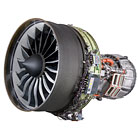
GenX 2B GE

GenX 2B GE

UPDATE:

Reuters: Boeing advised airlines on Friday about a risk of engine icing problems on its new 747-8 and 787 Dreamliner planes with engines made by General Electric, urging 15 carriers to avoid flying them near high-level thunderstorms. 

The move followed six incidents from April to November involving five 747-8s and one 787 when aircraft powered by GE’s GEnx engines suffered temporary loss of thrust while flying at high altitude. The problem was caused by a build-up of ice crystals, initially just behind the front fan, which ran through the engine, said a GE spokesman, adding that all of the aircraft landed at their planned destinations safely.

Boeing on Friday issued a notice prohibiting the affected aircraft from flying at high attitude within 50 nautical miles of thunderstorms that may contain ice crystals.

Icing problems with GE engines on Boeing’s Dreamliner has led to Japan Airlines pulling the Dreamliner from two international routes.

This comes on top of the icing problems noticed recently on the latest 747 cargo aircraft. A few weeks ago it was reported that a number of the latest long-haul Boeing 747 cargo aircraft fitted with the new GenX series of GE engines experienced engine icing problems when flying in particular cloud conditions at 41,000 feet:

Wall Street JournalIcing Hazards Surface on Boeing’s Newest 747 Jet

Years after aviation-safety experts thought they had eliminated the danger of airliner engines abruptly shutting down from internal ice accumulation, the same airborne hazard is showing up on a new generation of Boeing Co. jumbo jets.

The Chicago plane maker and General Electric Co., whose engines are installed on the biggest and newest Boeing 747 model, are now working together on fixes to prevent ice buildup that can prompt the giant airliner’s engines to temporarily malfunction or even stop working while cruising roughly 7 miles, or 41,000 feet, above the earth.

A GE spokesman said there are proposed software changes—which still need to be tested and then approved by the Federal Aviation Administration—designed to detect the presence of ice crystals in the atmosphere and eject the tiny particles before they form a coating deep inside engines that can melt or break into chunks.

… challenges with the GEnx-2B engines on extra-long 747 aircraft—known as 747-8s—highlight complex and nagging icing hazards that once again are forcing industry leaders and an international research team to scramble for answers. Before the partial government shutdown, according to industry officials, the FAA was moving toward mandating modifications to the 747-8’s computerized engine controls and making plans to warn pilots about susceptibility to internal engine icing while flying over storm-prone regions at roughly 40,000 feet.

Previously, experts believed such icing occurred primarily below 25,000 feet. ….

These cases of icing are different to those normally encountered and which are relatively well understood.

Aviation Week: 

….. The AirBridge Cargo event is the latest in a growing number of engine-icing incidents, which have triggered recent changes in international certification requirements. Unlike traditional engine icing, in which supercooled liquid droplets freeze on impact with exposed outer parts of the engine as the aircraft flies through clouds, engine core ice accretion involves a complex process where ice particles stick to a warm metal surface. These act as a heat sink until the metal surface temperature drops below freezing, thereby forming a location for ice and water (mixed-phase) accretion. The accumulated ice can either block flow into the core or shed into the downstream compressor stages and combustor, causing a surge, roll-back or other malfunction.

Until relatively recently, it was assumed that ice particles would bounce off structures and pass harmlessly through bypass ducts, or melt inside the engine. Now, there is evidence of an environment where a certain combination of water, ice and airflow is susceptible to accreting ice. Like many of the other known core icing events, the ABC 747-8F incident occurred near convective clouds. When incidents were first reported, investigators initially assumed supercooled liquid water, hail or rain were responsible because they had been lifted to high altitudes by updrafts. Yet most events have been recorded above 22,000 ft., which is considered the upper limit for clouds containing supercooled liquid water. ……

To find out exactly what is happening inside the convective systems that most frequently cause core icing, particularly in mid-latitude and tropical regions, an international team plans to conduct the High Ice Water Content (HIWC) test campaign in Darwin, Australia. The team includes NASA, FAA, Environment Canada, Transport Canada, Airbus, Boeing, the U.S. National Center for Atmospheric Research and the Australian Bureau of Meteorology. Also joining the effort will be the European Union’s High Altitude Ice Crystals (HAIC) project, which will be contributing a specially configured Falcon 20 research aircraft. ……

But now Boeing has warned all its clients who use aircraft with GE’s GenX engines not to fly them near certain kinds of storm clouds. And Japan Airlines whose Boeing 787 Dreamliners are powered by GenX engines has pulled the aircraft from two of its international routes:

Reuters: Japan Airlines (JAL)  said on Saturday it will pull Boeing 787 Dreamliners from two international routes after the U.S. aircraft maker notified it of icing problems in engines produced by General Electric .

Japanese carrier said Boeing notified airlines not to fly aircraft with GE’s GEnx Series engines near storm clouds following a recent incident in which a 747 aircraft experienced a loss of thrust after flying through anvil cloud.

As a result, JAL will replace Dreamliners on its Tokyo-Delhi and Tokyo-Singapore flights with other types of aircraft while also dropping a plan to use 787s for its Tokyo-Sydney route from December.

JAL will continue to fly 787s for other international and domestic routes, which are unlikely to be affected by cumulonimbus cloud for the time being.

Nightmare continues: Panel falls off Air India Dreamliner in flight

October 15, 2013

A new problem every few days for Boeing with their Dreamliner but their share price does not seem to be much affected:

The Hindu: 

An Air India Boeing 787 Dreamliner. File photo

An Air India Boeing 787 Dreamliner. File photo

A large panel in the belly of a Bangalore-bound Dreamliner of Air India fell off mid-air, putting about 150 passengers on board at a grave risk, but the aircraft landed safely.

The DGCA is probing the incident which occurred on Saturday when an 8X4 feet panel in the fuselage fell off while the plane was on its way to Bangalore from Delhi, leaving a gaping hole in the cargo hold, official sources said.

There were 148 persons, including the crew, on board flight AI-803 which landed safely at the Bangalore airport, the sources said, adding that the hole was noticed by the ground staff when they came to inspect the aircraft for its return journey.

A spare panel was flown to Bangalore and fitted on the Boeing 787, which was later declared fit to fly. But the return flight was delayed by over nine hours, they said.

Confirming the incident, airline officials said a panel had fallen off but was replaced and the aircraft was cleared for flights.

“Yes, there was a gaping hole. During the normal transit inspection, it was observed. Engineers immediately rectified it,” an AI official said requesting anonymity.

“It was not an emergency. There was no safety problem,” he added.

Besides long-haul international operations, Air India operates the Dreamliners on domestic routes like from Delhi to Chennai, Bangalore and Kolkata.


From a sublime “Dreamliner” to the ridiculous

October 10, 2013

Nightmares (for Boeing) are made of this:

ReutersJapan Airlines Co was forced to turn around its Tokyo-bound flight from Moscow on Thursday due to a problem in the Boeing 787 jet’s lavatory, a spokesman for the Japanese carrier said. … 

JAL spokesman Takuya Shimoguchi said the toilet malfunction on the flight from Moscow was likely caused by an electronic glitch. The airline was working on repairs on the ground, he added.

The flight, carrying 141 passengers, departed Moscow on Wednesday evening and returned after about five hours, he said.

Shares in JAL, which made headlines this week by signing with Boeing rival Airbus for the next generation of long-haul jets, were up 2.1 percent on Thursday morning, outperforming the broader market.

Updated 10th October:

BBC: 

Japan Airlines (JAL) says it has turned around two of its Boeing 787 Dreamliner aircraft during flights due to technical problems.

On one plane one of the two anti-ice systems, which prevent ice building up around the engine, failed.

Meanwhile, an electrical glitch made six toilets unusable on another flight.

These are the latest technical issues to hit the Dreamliner, which saw the entire fleet being grounded earlier this year following battery problems.

More bad dreams for Boeing as Polish LOT demands compensation for Dreamliner problems

September 29, 2013

Yesterday it was an airline sending an aircraft back to Boeing. Today Polish airlines LOT has warned Boeing to settle compensation claims by year-end or face legal action.

Reuters: 

A Boeing 787 Dreamliner operated by Poland’s LOT  airline had to land unexpectedly in Iceland on Sunday due to a fault in its air identification system, a spokeswoman for the airline said on Sunday.

The plane was flying from Toronto to Warsaw when it was forced to land at the island’s Keflavik airport.

“The aircraft had to land due to an air identification system fault. The Norwegian authorities have refused permission to fly over its territory, even though other countries gave permission to fly over theirs,” Barbara Pijanowska-Kuras said. …

For state-owned LOT, which has struggled for years with huge operating losses, the incident adds to a list of problems with the Dreamliners. Last week it had had to delay flights after check-ups showed two planes lacked gas filters.

LOT is demanding from Boeing compensation for lost revenue and has given Boeing time until the end of the year to settle on compensation over faults or face court action.