Archive for the ‘Aviation’ Category

Further Boeing Dreamliner delays and Rolls Royce shares feeling the heat

November 7, 2010

Over 25 million shares were sold on Thursday and Friday as Rolls Royce shares plummetted from 654p to 591p as their problems with the Trent 900 engines for the Airbus A380 and with the RB211-524 engines for the Boeing 747 became apparent.

Further delays of the Boeing Dreamliner which is to use the RR Trent 1000 engines were reported causing speculation that some of these delays were due to delays with the engine.

Boeing Co.  has told several of its early customers that delivery of the 787 Dreamliner will be delayed by as long as 10 months, Aviation Week reported Friday, citing industry sources. Korean Air will receive its first 787 in August 2012, 10 months later than planned. Air India, previously slated to receive the plane in April 2011, will get it in September or October of that year.

Boeing has said it intends to make the first delivery of the plane to All Nippon Airways in the middle of the 2011’s first quarter, according to reports.

Aviation news website FlightGlobal.com reported Thursday that Japan Airlines Corp. had expected to receive its first 787 delivery in March 2011, will now get the plane in June 2011.

http://www.aviationweek.com/aw/generic/story_channel.jsp?channel=comm&id=news/awx/2010/11/05/awx_11_05_2010_p0-267220.xml&headline=Boeing%20Tells%20Carriers%20About%20More%20787%20Delays

Three more RR Trent 900 engines removed from Qantas A 380’s after testing

November 7, 2010

The Age reports that Qantas has removed three more Rolls Royce Trent 900 engines on A380’s parked in Sydney and Los Angeles after putting them through 8 hour tests recommended by Rolls Royce.


Engine trouble: An Airbus A380's Rolls-Royce engine.

Engine trouble: An Airbus A380's Rolls-Royce engine. Photo: Reuters via The Age


QANTAS has found issues with three more Rolls-Royce engines on its grounded Airbus A380 fleet that have required their removal from the wings, dashing the prospect of an early return to the skies.

Two of the engines taken off for closer inspection were on an A380 parked in Sydney and one is from a craft in Los Angeles. They were removed after the eight-hour tests Rolls-Royce recommended for each engine after the fleet was grounded.

The airline has one A380 in Singapore under investigation, one in Germany for servicing, one in Sydney and three in Los Angeles undergoing checks in the wake of the mid-air engine explosion last Thursday.

While Qantas will not say what the nature of the engine issues are, or whether the three engines are being examined for the same or different matters, the concern was sufficient to warrant their removal from the wings.
There is a disturbing silence from Rolls Royce and also from Singapore Airlines and Lufthansa who with Qantas use Trent 900’s on their A 380 aircraft.

Eurofighter Typhoon leads after technical evaluation but still not the favourite for Indian M-MRCA contract

November 7, 2010

The Telegraph today carries the story that the Eurofighter Typhoon came out best in the technical and flight evaluation just completed for the Indian M-MRCA contract for 126 fighters worth about 11 billion $. However the Telegraph’s conclusion that

The European-made Typhoon fighter is winning the fight for the $11.5bn (£7.1bn) contract to supply 126 fighters to the Indian Air Force in a deal worth $5 billion and 2,000 new jobs to Britain.

is a little premature.

In a recent interview Air Chief Marshal Pradeep Naik Chief of Air Staff said

The IAF has completed the Field Evaluation Trials on all six M-MRCA aircraft and has submitted its Staff  Evaluation Report to MoD for further processing.The likely time frame for completion of various activities before the contract is signed is about 6-8 months. So, we expect the contract to be signed by March 2011.

Now begin the strategic evaluations and these include a number of different levels of nested strategies. In addition to the IAF’s own views of what is required in its goals of becoming a Strategic rather than a Tactical Air Force and the mix of aircraft required for that, come the strategic requirements of the Armed Forces as a whole including the views of the Army and Navy not only for tactical support needs but also including the Navy’s carrier based fighter requirements. The Ministry of Defence and the Ministry of Finance are obviously involved together with the Prime Ministers Office (PMO) in the highest level of strategic evaluation of the National Interests. The initial costs, life-cycle costs and operating costs are all separate parameters in the final evaluation. Then the impacts of future jobs, technology transfer, development of indigenous capabilities and National political aspirations come into play here.

The reason I believe that the Telegraph story is a little too optimistic about the EurofighterTyphoon’s chances is that the “Medium” representing the first “M” of M-MRCA (Medium Multi Role Combat Aircraft) is a critical factor. In the “Heavy” class India has the Russian Su-30MKI, which is under series production at HAL in Nasik, India. The Heavy class will probably represent about 60% of India’s combat aircraft for some time to come. The need for a “Medium” fighter comes about because most of India’s MIG 21s are obsolete and “life-expired” and the IAF only has some 50 Mirage 2000s which are a decade old. The indigenous Light Combat Aircraft which was to have replaced the MIG 21s is a long way behind schedule and has not yet resolved all its technical issues. It is the need for around 15 -20% of the IAF’s combat aircraft being in the “Medium” class which generates the 126 fighters required in the current contract. The winner of this contract is likely to then sell another 80 -100 aircraft in a second phase.

The Eurofighter Typhoon and the French Rafale at around 24,000 kg maximum weight are close to the level that would be classed as “Heavy”. The aircraft coming closest to meeting the Indian definition of “Medium” are Lockheed Martin’s F-16 IN Super Viper and the Swedish Saab Gripen IN and they have both been configured specifically for the IAF.


JAS Gripen

JAS Gripen Image via Wikipedia


Political considerations cannot be ignored and this gives the F-16 an edge even though there can be a perception issue since the F-16 is the mainstay of the Pakistani Air Force and the IAF must be seen to be getting something superior to that supplied to the Pakistan Air Force. The Swedish fighter may actually be closest to Indian requirements but bears the political burden of the Bofors affaire and the perception issues in India that domestic Swedish politics may suddenly intrude into a long term supply arrangement which must last for some 30 years.

The Eurofighter cannot be dismissed but my top three at this stage would be:

  1. Lockheed Martin F-16 IN Super Viper
  2. Saab Gripen IN, and
  3. Eurofighter Typhoon.

But there are many angles to be looked at and there is a very long way to go before the contract is awarded in March 2011.

Mount Merapi ash cloud leads to cancellation of flights to Jakarta

November 6, 2010

Mount Merapi volcano lies 431 km from Jakarta. But the continuing eruptions over the last two weeks have pumped sufficient ash sufficiently high into the atmosphere that flights to Jakarta are beginning to be cancelled. Flights to Yogyakarta, the nearest large airport to Mount Merapi, were suspended a few days ago.

The Guardian reports:

Several airlines have suspended flights into Indonesia’s capital Jakarta after Mount Merapi’s worst eruption in a century spewed volcanic ash up to five miles (8km) into the air.

The move came as number of people killed by Mount Merapi in the last two weeks climbed to 138 after the volcano unleashed a surge of searing gas yesterday that torched houses and trees and incinerated villagers.

Officials at Singapore Airlines, Japan Airlines, Malaysia Airlines, Lufthansa, Cathay Pacific and AirAsia fear the ash is a safety threat and could damage aircraft.

“The volcanic ash presence in the airways surrounding Jakarta could cause severe damage to our aircraft and engines which could impair the safety of our operations including passengers and crew,” said Azharuddin Osman, director of operations for Malaysia Airlines.


mt merapi erupting

Lightning strikes as Mount Merapi volcano erupted today, spewing out towering clouds of hot gas and debris, as seen from Ketep village in Magelang, Indonesia's Central Java province. Photograph: Beawiharta/Reuters


Does the fault lie with Rolls Royce or with the RR / Qantas combination?

November 6, 2010

Between August 30th and November 5th there have been at least 4 engine incidents involving a Rolls Royce engine causing a shut down of one engine and an emergency landing.

  1. August 30th QF 74, Boeing 747-400, RR RB211-524 engines, returned to San Francisco after one engine exploded, holes found in engine casing
  2. September 28th, SQ 333, A380-800, RR Trent 900 engines, returned to Paris after  one engine failed, two and a half hours after take-off.
  3. November 4th, QF32, A380, Trent 900 engines, return to Singapore after one engine exploded over Batam shortly after take-off
  4. November 5th, QF6, Boeing 747-400, RR RB 211-524 engines, returned to Changi, Singapore after one engine failed shortly after take-off.

Four incidents with engine failure in just over two months is quite out of the ordinary. All incidents involve Rolls Royce engines, three incidents involve Qantas aircraft, two were with Airbus A 380 aircraft and two with Boeing 747-400 jets. All of the incidents were soon after take-off (though the Singapore Airlines incident was 2.5 hours after take-off). Two of the incidents were “uncontained”, catastrophic engine failures (both Qantas) and the other two engine failures involved – by witness accounts – oil leaks and/or fires but no “uncontained explosions”. It is not clear whether in the latter 2 cases the engines were shut down or failed.

  • The proximity to take-off suggests maintenance issues but two different airlines were involved (though it seems that Rolls Royce are still responsible for maintenance of the A 380 Trent 900 engines).
  • Rolls Royce engines are used by many airlines and on many different aircraft types. It appears therefore that aircraft type is not the issue.
  • Rolls Royce engines and perhaps some design fault (since even the RB 211 engines which failed on the Boeing 747s had some Trent features) looks like the prime culprit,
  • the Rolls Royce Trent/ Qantas combination seems particularly prone to incidents.

In order of probability then the engine failure issue would seem to be caused by a Rolls Royce Trent design fault (which has then been introduced also into some of the RB 211-524’s powering the B747-400s), or some fault arising from the Qantas / RR Trent combination, or a maintenance issue specific to Rolls Royce’s maintenance organisation or a more general maintenance issue.

It is a tribute to engineers and engineering and safety standards that these 4 incidents led to no injuries whatever and were followed by perfectly safe landings even after the loss of one engine.

But a little more communication and information from Rolls Royce is called for. Singapore Airlines is also very tight with releasing any information about its incident. It is insufficient and inappropriate for Singapore Airlines to brush it off as a non-event. Lack of information only suggests something is being hidden.

And what of the Trent 1000 for the Boeing Dreamliner?

Internecine litigation: Pratt & Whitney counter-sue Rolls Royce

November 5, 2010

Bloomberg reports:

United Technologies Corp.’s Pratt & Whitney jet-engine unit filed patent-infringement complaints against Rolls-Royce Group Plc, a counterpunch in a dispute that may affect delivery of Boeing Co.’s Dreamliner airplanes.

Pratt & Whitney said it filed a complaint today at the U.S. International Trade Commission in Washington that claims the Trent 900 and Trent 1000 model engines made by London-based Rolls-Royce are infringing a patent for a swept-fan blade. A complaint making similar allegations was filed at the U.K. High Court in London, according to the company.

That the timing of the filing is unconnected and entirely coincidental with the current technical issues faced by Rolls Royce on their Trent 900 and 1000 engines is possible but unlikely. I am sure Pratt & Whitney’s lawyers are perfectly aware of the advantages of hitting an opponent when he is down.


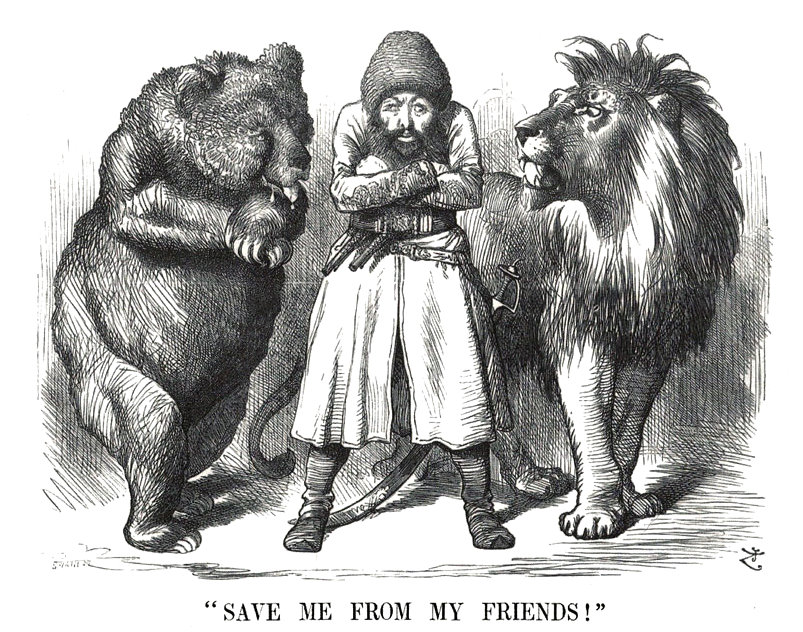
File:Great Game cartoon from 1878.jpg

The Great Game: wikimedia


Bloomberg continues:

A ruling in favor of Pratt & Whitney by the ITC would mean Rolls-Royce would be blocked from shipping engines for Boeing’s 787 Dreamliner, now in the final stages of flight testing. The U.K. lawsuit may limit shipments for the Airbus SAS A380, now in use by international carriers including Qantas Airways Ltd., and the Airbus A350XWB model powered solely by another version of the Trent engine.

“Pratt & Whitney’s case is very strong and we were left with no choice but to take these actions in light of Rolls- Royce’s aggression,” said Katy Padgett, a spokeswoman for East Hartford, Connecticut-based Pratt & Whitney. “We regret that these actions are necessary, and we continue to be willing to discuss a mutually acceptable resolution to this dispute.”

The complaints escalate a legal battle that started when Rolls-Royce sued Pratt & Whitney in May, claiming the GP7200 Fan Stage infringed a patent for a design that gives the largest part of a jet engine greater resistance to damage by foreign objects, more stability and lower noise levels. It later added Pratt’s Geared TurboFan engines, as Airbus and Boeing consider getting more efficient engines on the bestselling A320 and 737 planes.

Patent infringements must no doubt be fought but an internecine battle of this kind among the few engine manufacturers left may lead to some immediate competitive advantages to one or the other, but in the long-term could damage the entire industry to the ultimate detriment of the the consumers. The dispute has the potential of delaying engines to a variety of aircraft and to a number of airlines.

More woes for Rolls Royce?: Now a Qantas B747-400 in engine scare

November 5, 2010

BBC news has the story:

A Qantas airline jumbo jet has been forced to return to Singapore because of an engine problem. The Boeing 747-400 turned back shortly after take-off from Changi Airport, airline officials said. It comes a day after a Qantas Airbus A380 was forced to make an emergency landing in Singapore after one of its engines exploded. Qantas grounded its six-strong fleet of A380s and an investigation is under way into what caused the failure.

The latest incident affected Sydney-bound flight QF6, which managed to land safely. “Shortly after take-off the captain experienced an issue with one of its engines,” a Qantas spokeswoman said.

Qantas Boeing 747-400’s are usually equipped with 4 Rolls-Royce RB211-524G-T engines of the type which suffered an in-flight failure in August this year.


A Qantas jet was forced to turn back to San Francisco after a hole was blown in the shell of the engine.

Flight QF74 failure of RB211-524 engine in August 2010: Photo: Channel Ten


Battle lines are being drawn: EADS + Airlines versus Rolls Royce

November 5, 2010

After yesterdays midair failure of a Trent 900 engine on a Qantas Airways A 380 flight the German press today are unanimous in blaming Rolls Royce (and thereby protecting Lufthansa and EADS). Qantas is also positioning itself and questioning Rolls Royce’s engine design.

Der Spiegel writes:

‘Airbus and Qantas Are Victims’ of A380 Engine Problem

While the incident may be damaging to Airbus, German editorialists argue that the Rolls-Royce engine is to blame.

But I think the airlines (Qantas, Lufthansa and Singapore Airlines) and the manufacturer of the Airbus A380 (EADS) cannot so easily paint themselves as victims and absolve themselves of all responsibility. It is the airlines who pressurise the engine makers and the aircraft manufacturers for never ending improvements in fuel efficiency. EADS can ill-afford to market a plane which does not have more than one engine supplier.

Der Spiegel continues:

Qantas Airways CEO Alan Joyce said on Friday that it did not seem to be a maintenance problem. “This is an engine issue and the engines have been maintained by Rolls-Royce since they were installed on the aircraft,” he told a news conference in Sydney. Joyce confirmed that the engine failure had caused damage to the plane’s wing. “That was part of what made this a significant engine failure,” he said.

The center-left Süddeutsche Zeitung writes:

“The problem is not that one of the Airbus A380’s engines failed. … What makes the emergency landing such a serious incident is that parts of the debris damaged the wing. … Rolls-Royce, the manufacturer of the engines, now has to ensure that such a thing never happens again, even if this means that the A380 is grounded for a time.”

“Airplane manufacturer Airbus, as well as the airline Qantas, are the victims here. Yet the failed engine will not do their image much good, following the dramatic images of the damaged aircraft that were seen around the world on Thursday.”

“The A380 was two years late coming to the market. The delay cost the company billions, caused an internal revolution and undermined confidence. … Yet, despite all the criticism, one must not forget that the airlines and passengers praise the aircraft: A380 flights, despite somewhat higher ticket prices, are always full.”

The Financial Times Deutschland writes:

“The engine blow-out on the Airbus A380 that forced the Qantas flight to conduct an emergency landing on Thursday is above all a problem for the engine manufacturer Rolls-Royce.”

“The disaster highlights the dilemma that the entire industry faces. … The necessary and correct demand to make modern aircraft with lower emissions is taking its toll.”

“No one would imply that the testing was consciously sloppy. However, it is obvious that when it comes to a flagship aircraft like the A380 there is immense pressure to get it on the runway as soon as possible. Those who demand more tests do not make any friends. The close call shows, however, how much is at stake.”

In the meantime Singapore Airlines has resumed A380 flights following checks of the aircraft’s engines, despite the head of Qantas saying a design fault may be to blame for yesterday’s engine failure on one of the Australian carrier’s A380s.

Shares of Rolls-Royce Group PLC continued to get battered by the market, losing another 2.7% over fallout from the midair failure of one of its engines on a Qantas Airways flight. They lost 3.3% in value yesterday.



Trent 900 vs. GP7200: Competitive pressures getting too hot?

November 5, 2010

There are only two engines suitable for the A 380 – Rolls Royce’s  Trent 900 and its rival the GP7200 manufactured by the General Electric/Pratt & Whitney Engine Alliance.

Nov. 2012- Image updated: from http://www.enginealliance.com/engine_features.html

Engine Alliance GP7200: image http://www.enginealliance.com/

It is highly unlikely that the aircraft industry would ever allow a situation to arise where there was only one supplier of engines. A monopoly is something to be avoided at all costs in any purchaser / supplier arrangement. It follows that for the airlines and the airplane manufacturers that the market (in this case the number of A 380s) be split between the two suppliers such that:

  1. neither supplier gains a dominant market position such that it can dictate the engine price,
  2. each supplier has a large enough market share and sufficient earnings such that their continuation in the market is not jeopardised (for the sake of spares, service, development of new engines and, above all, to avoid a monopoly situation arising by the exit of one supplier).

Trent 900 cut away: epower-propulsion.com

If either engine supplier has an uncompetitive product – whether for price or for performance – the monopoly becomes inevitable and immediately jeopardises the continuation of the market itself. So if only one engine supplier was available, the A 380 itself becomes non-viable.

In this restricted market place, it would seem, a win-win situation should not be impossible. Yet the competition between the protagonists is intense and the technology boundaries are under constant pressure as each supplier tries to gain a competitive edge over the other. Each engine manufacturer knows that he will not be permitted to gain a market-dominant position. But the costs of engine development are so high that every little gain in market share is hotly pursued.

For the airline industry, fuel cost is a dominating cost element and even minute gains in fuel efficiency are well worth pursuing. The intense competition between the two engines for the A 380, is centred around fuel efficiency. The GP7200 is generally thought to have a 1% advantage. It also seems to be the strategy for the U.S. engine makers to constantly maintain this performance gap over their competitor as each tries to improve performance. The Trent 900 has a slightly higher thrust(about 3%) and prices are, of course, a closely guarded secret.

For fuel efficiency therefore it seems that Rolls Royce is playing catch-up. To get a decisive advantage each new improvement must be sufficient to go past the competitor – who in turn will introduce improvements to regain his advantage. But fuel efficiency is not easily gained.

  • Higher temperatures can give improved efficiency but lead to the need for new materials to handle the higher stresses at the higher temperatures,
  • reduced clearances can reduce leakage losses and increase efficiency but require increased manufacturing accuracy and can increase the possibilities of wear
  • more complex designs are devised where component positions can be changed during operation to optimise efficiency at different operating conditions but which increase the possibility of unwanted contacts within the engine.

That this competitive pressure leads to innovation is – I think – beyond doubt. But the Trent 1000 has had an “uncontained” explosion on the test bed. The Trent 900 has had one in flight.

The question that comes to mind is whether the competitive pressure and the quest for fuel efficiency has led to “too much – too quickly” for the Trent ?

Lufthansa grounds one A 380 flight – plans to fly normally today

November 5, 2010

Lufthansa grounded its A380 scheduled to depart Frankfurt for Johannesburg on Thursday while it checked the Trent 900 engines, and instead used an A340-600 on the route, spokesman Boris Ogursky said. Lufthansa plans to fly the A380 from Frankfurt to Tokyo as scheduled on Friday, he added.

Qantas has extended its grounding of its A 380 fleet by at least another day.

Singapore Airlines has “delayed” all A 380 flights for extra engine checks.

The mid-air engine explosion that grounded Qantas and Singapore Airlines A380s was the third emergency linked to the Rolls-Royce Trent 900 engine. Two months ago, a Lufthansa A380 had to shut down one of its four Trent 900 engines shortly before landing at Frankfurt due to concerns about a change in oil pressure. Another Rolls-Royce-powered A380, this time operated by Singapore Airlines, was forced to turn back after leaving Paris in September last year because of an engine malfunction.