Archive for the ‘Behaviour’ Category

“That is not who we are” – Barack Obama. Oh Yes it is!

December 10, 2014

I heard Barack Obama trying to make the best of the CIA torture report released by the Senate yesterday. “One of the things that sets us apart from other countries is that when we make mistakes, we admit them. ……… brutal, and as I’ve said before, constituted torture, in my mind. And that’s not who we are.

But of course it is “who we are”. Certainly admitting a self-judged, wrong-doing – after the event – is also part of “who we are”. But the fact of the wrong-doing remains part of the behaviour which constitutes “who we are”. It does not vanish with a subsequent apology.

While behaviour includes what one says, what one does always overrides if the two are in conflict. So, while the US is certainly to be commended on admitting some wrong-doings after the event, it is also quite clear that that behaviour is – at times – quite acceptable. “American Values” clearly do allow torture under certain conditions. Abu Ghraib and My Lai are part of the reality of the behaviour of the US military. Such behaviour is what they are, notwithstanding that the behaviour was later declared to be “wrong”. Those values are ingrained and it is almost certain that some “torture”and some mistreatment of detainees is ongoing right now, to be apologised for later – if revealed. I conclude that torture itself is not against American Values. The Value could actually be formulated thus:

Torture is wrong but permitted, as a last resort, in special circumstances and must be apologised for if later revealed.

The map of all the countries who were complicit – actively or passively – with CIA’s torture program includes most of the countries who speak loudest and most sanctimoniously about human rights. Add to this all the other countries (Russia, China, India, South American countries, …. ) who also use torture in some form, and I come to the conclusion that there is not a single country today where some form of torture (physical as well as mental) is not at least tolerated under some specific conditions. Nobody claims that torture is a “good thing”, but every country also accepts that it can be justified. The concept of “absolute human rights” is fundamentally flawed. The “human rights” that any society is prepared to bestow upon those within or without that society is dynamic and variable.

Currently “what humans are”, all around the world, includes the use of torture – knowing that it is “wrong” – under certain conditions when deemed absolutely necessary.

There are no absolute values either, just as there are no absolute human rights. How should we judge the behaviour of an ISIS executioner with that of a CIA torturer? An ISIS executioner carries out his bloody beheadings in the belief that he is doing “right” in accordance with his values. A CIA torturer carries out his miserable activities knowing that it is “wrong” but that it is in a “good” cause and justified by his values.

I suppose they will both be gathered to the bosoms of their angry gods in their respective heavens.
Academics, not journalists, responsible for hyping press releases

December 10, 2014

A new paper in the British Medical Journal seems to add substance to the view that many academics and their universities put far too much emphasis on self-promotion by means of exaggeration, sensationalism and alarmism. Science by press release seems to be the new paradigm. Rather than journalists it is the supposedly objective academics themselves who “talk up” their own work.

Sumner P, et al. The association between exaggeration in health related science news and academic press releases: retrospective observational study. BMJ 2014; 349: g7015

Results 40% (95% confidence interval 33% to 46%) of the press releases contained exaggerated advice, 33% (26% to 40%) contained exaggerated causal claims, and 36% (28% to 46%) contained exaggerated inference to humans from animal research. When press releases contained such exaggeration, 58% (95% confidence interval 48% to 68%), 81% (70% to 93%), and 86% (77% to 95%) of news stories, respectively, contained similar exaggeration, compared with exaggeration rates of 17% (10% to 24%), 18% (9% to 27%), and 10% (0% to 19%) in news when the press releases were not exaggerated. Odds ratios for each category of analysis were 6.5 (95% confidence interval 3.5 to 12), 20 (7.6 to 51), and 56 (15 to 211). At the same time, there was little evidence that exaggeration in press releases increased the uptake of news.

Conclusions Exaggeration in news is strongly associated with exaggeration in press releases. Improving the accuracy of academic press releases could represent a key opportunity for reducing misleading health related news.

Bern Goldacre has an editorial in the same issue of the BMJ. He argues that academics must be made accountable for exaggerations about their own work.

I would go much farther than Goldacre. Merely being accountable is not enough – it is liability that is required. I have long had a “thing” about this lack of liability for scientific misconduct Why cannot a concept of tort or “product liability”apply to scientists?.

Goldacre writes:

For anyone with medical training, mainstream media coverage of science can be an uncomfortable read. It is common to find correlational findings misrepresented as denoting causation, for example, or findings in animal studies confidently exaggerated to make claims about treatment for humans. But who is responsible for these misrepresentations?

In the linked paper (doi:10.1136/bmj.g7015) Sumner and colleagues found that much of the exaggeration in mainstream media coverage of health research—statements that went beyond findings in the academic paper—was already present in the press release sent out to journalists by the academic institution itself.

Sumner and colleagues identified all 462 press releases on health research from 20 leading UK universities over one year. They traced 668 associated news stories and the original academic papers that reported the scientific findings. Finally, they assessed the press releases and the news articles for exaggeration, defined as claims going beyond those in the peer reviewed paper. ……. 

Over a third of press releases contained exaggerated advice, causal claims, or inference to humans. When press releases contained exaggeration, 58% to 86% of derived news stories contained similar exaggeration, compared with exaggeration rates of 10% to 18% in news articles when the press releases were not exaggerated.

Academics and their institutions are surrounded and protected by a shield of supposed objectivity and good faith. But in the unprincipled hunt for funding between institutions and for academic advancement among researchers, there is a significant amount of falsified and manufactured research results. And then the shield protects them from having any liability. Accountability – if found out – leads to relatively mild consequences. If liability for the scientific “product” is introduced, then the taking of responsibility and accountability will automatically follow.

Swedish House Rules (for the next coalition)

December 9, 2014
  1. No party may cooperate with, or take the support of, the Sweden Democrats 
  2. Without the Sweden Democrats no minority coalition can survive.
  3. Any coalition must command a majority (175 seats)
  4. If the Left Party is included in any way then no party from the right of the divide will participate
  5. The Moderates or any parties to the right of the Moderates, will not participate if the Environmental Party (MP) is included
  6. The Centre Party may participate with a mildly left coalition provided it does not include the Left party

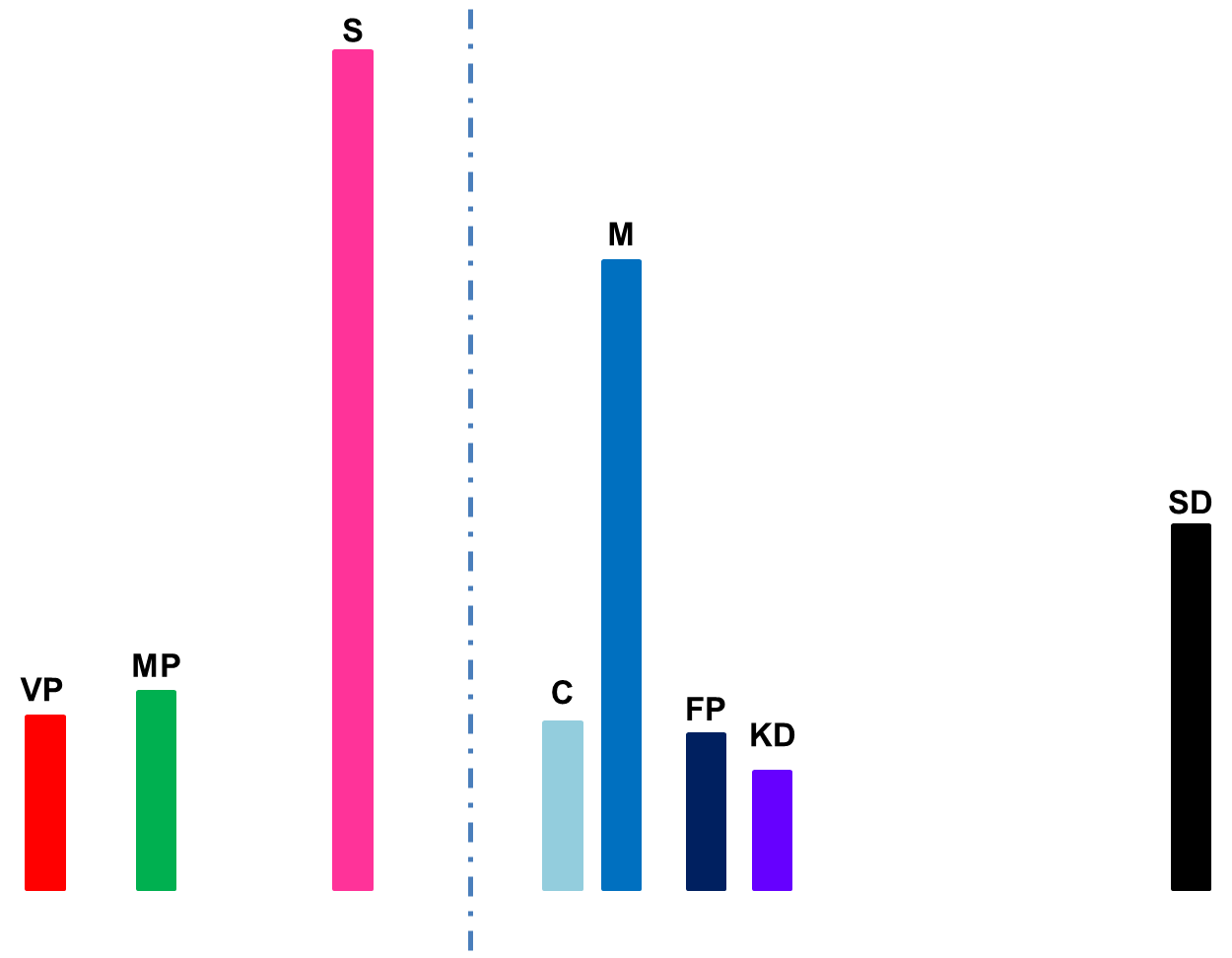
Currently the Swedish Parliament has 349 members from 8 parties.

Social Democrats – 113, Moderates – 84, Sweden Democrats – 49, Environment Party – 25, Centre Party – 22, Left Party – 21, Peoples Party – 19, Christian Democrats – 16.

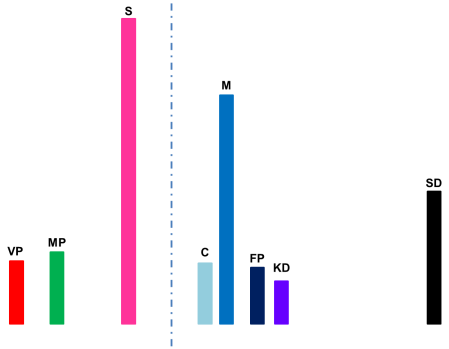
Swedish political landscape 2014

Swedish political landscape 2014

Following these rules and assuming that the current composition of parliament is not much changed after the extra election in March 2015, only two possible majority coalitions are arithmetically possible:

  1. A Grand Coalition of the Social Democrats and the Alliance group of parties, or
  2. A grand coalition of the Social Democrats and the Moderates

The simple rule is that it has to be a coalition of the middle ground. That excludes the Sweden Democrats on the extreme right and the Left and the Environmental parties on the extreme left.

One consequence is that no matter what majority coalition is formed, the Sweden Democrats will be the largest party in opposition.


Professor at Imperial College driven to his death?

December 8, 2014

This is sad and rather depressing.

On his blog, Professor David Colquhoun, FRS reports on the case of Professor Stefan Grimm of Imperial College who seems to have been bullied to his death.

Publish and perish at Imperial College London: the death of Stefan Grimm

This week’s Times Higher Education carried a report of the death, at age 51, of Professor Stefan Grimm: Imperial College London to ‘review procedures’ after death of academic. He was professor of toxicology in the Faculty of Medicine at Imperial.

Now Stefan Grimm is dead. Despite having a good publication record, he failed to do sufficiently expensive research, so he was fired (or at least threatened with being fired).

“Speaking to Times Higher Education on condition of anonymity, two academics who knew Professor Grimm, who was 51, said that he had complained of being placed under undue pressure by the university in the months leading up to his death, and that he had been placed on performance review.”

Having had cause to report before on bullying at Imperial’s Department of Medicine, I was curious to know more. 

Martin Wilkins wrote to Grimm on 10 March 2014. ………

……. It didn’t take long to get hold of an email from Grimm that has been widely circulated within Imperial. The mail is dated a month after his death. It isn’t known whether it was pre-set by Grimm himself or whether it was sent by someone else. It’s even possible that it wasn’t written by Grimm himself, though if it is an accurate description of what happened, that’s not crucial.

No doubt any Imperial staff member would be in great danger if they were to publish the mail. So, as a public service, I shall do so. ……

Read the rest at DC’s Improbable Science

Academic progress and goodness of research are not necessarily connected.


Using racial profiling is to be banned – except for those who need to use it

December 6, 2014

The point about profiling of any kind is that is tries to tie certain kinds of unwanted behaviour to other visible characteristics as a way of trying to detect such unwanted behaviour before it happens. But in almost every case it tries to increase the probability of detection of what is always a very low incidence rate of a particular behaviour.

For example if more terrorists tend to be bearded than not, then all bearded people are made subject to extra checks even though the incidence of a bearded person being a terrorist may be very low. The liberties of bearded people at large are sacrificed for the potential benefit of finding the “bad”, bearded guy. Or, as is happening in the US, and because certain crimes are more likely to be carried out by black or hispanic people, police detain and check black and hispanics more often just because they are black or hispanic rather than because they have any other indicators. But the connections between behaviour and profiles are a long, long way from being a science. Profiling is a very crude tool.

But using just race or appearance is not just crude, it also uses the ends (finding the “bad guy”) to justify the means (disenfranchising a great many of a particular group). And of course these means then tend to become self-fulfilling. It inconveniences and harasses the many in order to find the very few. It becomes a vicious loop when the means used provoke the very behaviour that is to be detected and avoided. And then to use such a crude tool – as profiling actually is – ends up with a huge amount of collateral damage.

The recent deaths of black people in encounters with white policemen, where the US Grand Juries do just what the prosecutor wants, and finds that policemen have no case to answer, have brought this again in to focus. And so racial profiling is to be banned except for use by the Department of Homeland Security and the Customs. Presumably the justification is that the DHS and Customs are looking at “very serious crimes”. Therefore the trampling on of individual liberties of many can be justified by the level of the potential downside.

VAGazetteAs the Obama administration prepares to announce new curbs on racial profiling by federal law enforcement, government officials said Friday that many officers and agents at the Department of Homeland Security will still be allowed to use the controversial practice, including while they screen airline passengers and guard the country’s southwestern border. …… 

The changes will also expand the definition of profiling to prevent FBI agents from considering factors such as religion and national origin when opening cases, officials said.

But after sharp disagreements among top officials, the administration will exempt a broad swath of DHS, namely the Transportation Security Administration and key parts of U.S. Customs and Border Protection, according to law enforcement officials.

The announcement of the new policy comes at a time of rising national protest over allegations that police engage in profiling when investigating and using force against minorities. The debate has been fueled by the recent deaths of three unarmed African-Americans at the hands of police in Ferguson, Missouri, New York and Cleveland, and the absence so far of criminal charges against the police officers who were involved.

But this logic is flawed. If it is acceptable for use by Customs to look for drug runners, then why is it not also acceptable for policemen doing the same thing? Either it is a good enough tool or it is not.

This action does not actually address the problems displayed at Ferguson or New York. And it is not just that there is a single problem. Policemen in the US, it is clear, profile people by race and do it automatically and unconsciously. They have some justification in real crime rates. Prosecutors and District Attorney’s use the grand juries for political ends – especially in not prosecuting those that they wish to protect. They also use prosecutions to harass political opponents. And thirdly – and that cannot either be ignored – the crime rate among blacks is undoubtedly significantly higher than for other groups (whatever the causes may be).

I suspect that these actions are primarily for the administration to demonstrate that they are doing something – anything – and to defuse the current wave of protests.

Swedish political crisis follows a failure of leadership

December 6, 2014

Leadership and courage do not result from administering a set of rules.  Changing the rules will not produce them either. But even a bad set of rules can be made to work if courage and leadership are present. Minority governments work when the leaders of the minority have the courage and the imagination and the leadership to maintain the temporary majorities necessary and sufficient to govern.

 Contrary to what is being taken as fact, a new general election in Sweden has not yet been called. While the current Red/Green government has had its budget rejected by the parliament and the current Prime Minister, Stefan Löfven, has announced his intention to call a new election, he cannot actually do so until 29th December. The laws require that a new election cannot be called until 3 months after this parliament first met on 29th September. In fact it is perfectly possible – instead – for a no-confidence motion against the government to be called in parliament (10% of members have to call for such a vote) and a simple majority of the vote can shift power from the PM and his government to the speaker of the house. If that happens before 22nd December (Christmas holidays intervening) then Löfven will not be around to call a new election as he intends to do on 29th December. It would then be up to the speaker or any other government which is established to make such a call. In practice Swedish parliaments have never before taken such a bold step and it would take a level of political courage that members of this parliament do not seem to have.

In municipalities all over Sweden a variety of coalitions between the different parties have been formed to create working majorities so that the business of government can continue. It always needs the leader of the largest local party to show some imagination and courage and not a little skill to create these coalitions. Some coalitions sometimes fail on contentious issues which the parties cannot overcome, but then a new coalition emerges so that the business of government continues.

It is this leadership – to first imagine and then to constitute a working majority – which is visible in abundance at local government level which has been absent at the national level. At national level there is now much talk about changing the rules of voting to enable a minority government to govern. This is a red herring. There is much talk also blaming the Sweden Democrat Party of breaking the “Swedish Model”. This, too, is another red herring. The Sweden Democrats may not have followed practice but they certainly broke no rules. 

The Prime Minister, the Social Democrats, their Environmental Party partners and their far Left supporters are all screeching about a failure of the rules and the malicious nature of the Sweden Democrats. Even the opposition is calling for a change of rules. But this is not a case of the failure of the rules. It has been a case of a failure of leadership, a failure of the ability to see what is required to govern and ultimately the skill to govern.

Löfven has not had the imagination to visualise a manner of cooperation with the other parties (whether jointly or separately) which would have given a working majority. He has taken the easy path of not crossing the Left/Right divide. He brought the Greens into government and took the support of the far Left. He effectively raised and strengthened the wall between Left and Right. He missed the first rule of building consensus by allying too closely with small and extreme groups, which immediately alienated all others. As soon as he had allied with one party on the left he made no real efforts to balance that with an ally on the right. Starting from a minority position on the left he only achieved another minority but extreme position which only hardened the position of his opponents. He judged that the opposition would be too fractured to defeat his grouping and that was a strategic blunder. He was reduced later to arguing why the opposition should remain fractured and not come together! But even after the blunder led to the defeat in parliament, he had not the vision or the skill to put together a new working majority. Instead he seems to have abdicated his responsibility to look for a solution and announced his intention to dump the problem back on to the electorate.

Though there are a few voices calling for parliamentarians to table a no-confidence motion, I am not expecting any group of 35 members to show the necessary courage. That will lead to another election on March 22nd. But the issue which should be the deciding issue and which should transcend all others should be that of leadership and the courage to govern.

Low farce as Stefan Löfven gives up – will call a new election on 29th December

December 3, 2014

It has been another busy day in the Swedish parliament and for the political commentators. The 2-month old Red/Green government’s budget (supported by the communistic far Left) was defeated in Parliament. The alternative budget presented by the right-leaning Alliance of opposition parties, was also supported – going against past practice – by the far-right Sweden Democrats, and prevailed. We now have the very odd situation of a Red/Green government now having to administer the opposition’s budget which comes into force on 1st January 2015. It has been a spectacular failure by the Red/Green government after just 2 months in power.

Stefan Löfven, the Prime Minister, could have just resigned and let the speaker try to get a government cobbled together which could manage to get a budget passed. Strictly he could not call a new election since it has been less than 3 months since this parliament first met. Those 3 months are up on December 29th.

Many political commentators called this the most dramatic happening in Swedish politics since 1958! But I thought there was more of low farce than of high drama in the proceedings today. Everybody had announced how they were going to vote yesterday. There was 6 hours of meaningless debate in parliament before the vote.  Each speaker tried to avoid blame. CYA of the lowest order! Löfven called a press conference and lashed out like a very sore loser. He blamed everybody else and then announced that he would be calling a new election on December 29th to be then held on 22nd March next year. He comes from the trade union movement and has had a reputation as a good negotiator in industrial disputes. But his wage negotiation skills were not up to political negotiations. He has moved too far, too fast to the left in appeasing the Greens and the far Left party. So much so that he misjudged his strengths and weaknesses completely. He provided the Sweden Democrats an irresistible opportunity to become the centre of attraction in bringing him down. In fact he also managed with his lurch to the left to alienate the Alliance so much that it became impossible for them to rescue him (even if they had wanted to) from the quagmire of his own making.

So today he threw his hands up in the air and announced he was giving up and that he would call a new election – when he could – and ask the electorate to take the call on his budget. It strikes me that this is not just giving up. It is also a tacit acknowledgement of misjudgements and a lack of competence in managing the process of getting his budget passed.

Maybe he is hoping that before the new election is actually called 26 days from now, that the Alliance or just the Moderate Party (2nd largest party in parliament) will somehow find a way of saving his face by offering him some form of cooperation. Maybe his public announcement that he would campaign together with the Greens is just negotiating tactics. Arithmetically the only way for a majority to form is if the Social Democrats cooperate with the Alliance or just the Moderates. It is highly unlikely that the Moderate Party will just abandon its allies. The chances for the Alliance to form a Grand Coalition with the Social Democrats is extremely small and will extract a heavy price. The Social Democrats would have to dump the Greens and the far Left. That price may be too heavy for the Social Democrats

But I can speculate that if the Social Democrats have the long term in mind and are prepared to dump the Greens and the far-Left, Löfven could retain the post of Prime Minister in a Grand Coalition with the Alliance. They would command a very stable parliamentary majority which could manage to keep the Sweden Democrats completely marginalised. But some of the key portfolios – such as Finance, Defence and Foreign Affairs – would have to go to the Alliance. It may not be politically possible for this crop of politicians, but it could be the best possible thing for the country.

But unless some such cooperation is finalised within the next 26 days, the Swedish parliamentarians would have failed the electorate. And just going back to the electorate may produce the same result and solve nothing.

Amateur dramatics on the Swedish political landscape

December 3, 2014

Yesterday was a busy day in Swedish politics, but it was amateur theatricality and not any high drama. I am left with the perception of some unruly teenagers (the Swedish Democrats) acting like hooligans in a classroom but where the adults (the other parties) have not the faintest idea what to do. They cannot expel the unruly elements and can only threaten not to speak to them. And they are then surprised that the unruliness continues. A most unedifying spectacle.

The Sweden Democrats announced yesterday that they would vote for the opposition’s alternative budget today in parliament rather than merely abstain to allow the red/green government’s budget to pass.

A Government Crisis will therefore be upon is when the vote is taken later this morning.

The government went into full panic mode last night and invited (begged) the opposition alliance (but not the Sweden Democrats or the Left Party) to emergency talks last night. They had to attend of course and they met with the Social Democrats and their Environment Party colleagues. Of course they just reiterated that it was not an opposition’s duty to help the government to pass its own budget and they would just be voting for their own alternative today.

The Swedish Prime Minister, Stefan Löfven, is in a bind. He does not have many options. Once he loses the vote today he can either call a new election (cannot be called before 29th December) or he can dump the green millstone around his neck and try and build a Grand Coalition in the German style with the moderates. Actually this is not that crazy. If he dumps the greens and the far left (who he has accommodated to a great extent so far), it is conceivable that sufficient common ground could be found with the Moderate Party for a very stable, majority government. Of course there would be some areas of ideological conflict but they would both have to leave those differences aside for their term together and revisit them in better days.

My own opinion is that Löfven and the Social Democrats have been weakened rather than strengthened by their association with the Greens and the Far Left. In fact the weight given to these minority parties has – in part – precipitated the crisis. The deep reds and the greens are anathema to the Sweden Democrats. The other parties would like to have no truck with the far-right Sweden Democrats (who I still perceive to be a bunch of junkies and hooligans) even though 13% of the country voted for them. They are attempting to make them political pariahs but they are not being very skillful about it. The other parties are coming across as bullies and are failing to show up the far-right extremists for what they truly are. (They have not yet learned that just shouting how bad the Sweden Democrats are does not address the reasons why their voters shifted their allegiance). Of course, they are all now blaming the Sweden Democrats for the crisis, but the reality is that the Social Democrats have been more than a little incompetent in giving undue weight to the wishes of the greens and the far left in their budget proposition. The bottom line is that the government has not had the skill to put together the support needed to get their budget passed.

All the other 7 parties have been rather clumsy – and inept – in their efforts to marginalise the Sweden Democrats and have only succeeded in catapulting them to the fulcrum of an artificial and ill-conceived crisis. I was listening to some of the comments yesterday from some of the politicians of the past and who are no longer in politics. I can’t help feeling that the current parties are lacking in pondus and could well use some older and more experienced advisors.

I am also quite sure that any sales or marketing manager from industry could teach these political parties a thing or two about how to marginalise a competitor – even in their home market.

Bringing in the extremists from the left or the right will not work.

Swedish political landscape 2014

Swedish political landscape 2014

Criminal fathers have stupid sons – Swedish study

December 2, 2014

I first thought this new paper was something of a hoax, but perhaps it isn’t. Our genes are the ultimate multi-taskers. Not only do they combine to cooperate with a variety of other genes to express certain characteristics, each gene seems to take part in many such cooperations in many other teams of genes.. If criminal behaviour is (even partly) genetic, and if intelligence is also (partly) genetic, then it is not impossible that the genetic factors which lead to increased criminal behaviour in the parent may also cause (directly or indirectly) lower cognitive ability (intelligence) in offspring. Of course I would expect that the tendency to have lower intelligence will also be exhibited in the parent.

Swedish and Finnish researchers have looked at data for over 1,000,000 men and “found that men whose fathers had any criminal convictions tended to have lower cognitive-ability scores than men whose fathers had no such history”.

A. Latvala, R. Kuja-Halkola, N. Langstrom, P. Lichtenstein. Paternal Antisocial Behavior and Sons’ Cognitive Ability: A Population-Based Quasiexperimental Study. Psychological Science, 2014; DOI: 10.1177/0956797614555726

From the Association for Psychological Science press release:

Sons whose fathers have criminal records tend to have lower cognitive abilities than sons whose fathers have no criminal history, data from over 1 million Swedish men show. The research, conducted by scientists in Sweden and Finland, indicates that the link is not directly caused by fathers’ behavior but is instead explained by genetic factors that are shared by father and son. …….. 

… Research looking across generations in families has shown that children of parents who engage in “antisocial” behaviors — such as rule-breaking, aggressive, or violent behavior — are at greater risk for various negative outcomes, including criminality, psychiatric disorders, substance use, and low academic achievement. And research has also shown that individuals who engage in antisocial behaviors tend to have poorer cognitive abilities than those without antisocial tendencies.

Latvala and colleagues wanted to combine these two strands of research to investigate how parents’ antisocial behaviors might affect their children’s cognitive development.

“We wondered whether children of antisocial parents also have lower cognitive ability than children of non-antisocial parents, and if so, whether compromised cognitive functioning might be part of the inherited risk for antisocial behavior,” says Latvala.

The researchers took advantage of extensive data collected from Swedish residents, including data on cognitive ability acquired as part of compulsory military conscription and data on antisocial behavior (in this case, defined as criminal convictions) obtained from a national crime register.

Looking at data from over 1,000,000 men, the researchers found that men whose fathers had any criminal convictions tended to have lower cognitive-ability scores than men whose fathers had no such history.

And this association seemed to be influenced by the severity of the fathers’ criminal history:

“Perhaps most surprising was the clear gradient seen in the magnitude of the association with sons’ cognitive ability by severity of fathers’ criminality: The more severe crimes the father had committed, the poorer was the sons’ cognitive performance,” explains Latvala.

But did fathers’ antisocial behavior have a direct causal effect on sons’ cognitive ability, or could the link be explained by shared genetic factors?

To find out, the researchers compared the link between fathers’ criminal history and sons’ cognitive ability across cousins whose fathers had varying relationships to each other.

Specifically, they examined the link in cousins whose fathers were half-siblings (sharing about 25% of their genetic makeup), cousins whose fathers were full siblings or fraternal twins (sharing about 50% of their genetic makeup), and cousins whose fathers were identical twins (sharing 100% of their genes).

If fathers’ antisocial behavior directly caused sons’ lower cognitive ability, the link would remain equally strong across the comparisons of varying genetic relationships.

The data, however, suggested otherwise. When the researchers took the varying genetic relationships into account, the association between fathers’ criminality and sons’ cognitive ability gradually diminished.

Marketing terrorism is becoming obsolete

December 1, 2014

Black Friday is over, today is Cyber Monday and tomorrow is Giving Tuesday. But this kind of marketing terrorism is becoming obsolete.

Obviously the marketing terrorism involving special days has worked – but it has worked not to increase total sales but only to shift consumption patterns. Sales are a little more concentrated on these days and to those stores who offer discounts. They encourage those chasing discounts but discourage those who don’t rely on the discount to make their purchases.

I suspect that rather than representing additional sales which would not otherwise happen, these “discount” days have only shifted buying – which would have happened anyway – to be concentrated to these “special” days and to those stores with the largest discounts. Imbuing artificial meaning into Valentine’s Day, Father’s Day and Mother’s Day, the invention of Black Friday, Cyber Monday and Giving Tuesday, having special “Sales” days after Christmas and the New Year, have all certainly served to change consumption patterns. But they have not really contributed to increasing the total sales. With the new buying pattern no store can afford to be the one that nobody comes to. I suspect also that the increased sale of discounted goods on these special days at just a particular store or chain is no longer worth the additional advertising and promotion costs.

But this kind of marketing is already obsolete. There is no more to be gained by inventing a Brother’s Day or a Sister’s Day or a Cousin’s day or a Children’s Day. On-line information gathering and on-line shopping have taken over. High street stores and even stores in shopping malls are increasingly showrooms for goods where the sales are actually consummated on-line. A few stores have caught on. They are converting their stores to become places to view goods and services and places to pick-up the goods bought on-line. They have realised that the “consumer commitment” has shifted from the store. The real capture of the sale happens on-line and no longer in the store. The store still has a role to play but this role is changing. The store needs to complement the on-line presence and to provide those bits that are missing from the on-line experience (viewing the goods and delivery of the goods). Walk-ins to the store have to be led inexorably to the web-site.

Those who have caught on have realised that the on-line store is open 24/7. The web site has to do an “IKEA” and ensure that the visitor is led through every part of the site and that he willingly parts with his money as he comes across little extras as he buys!!