Archive for the ‘Business’ Category

Time to bring in an “Olive Euro” or to bring back the Deutsche Mark?

December 30, 2010

50 Deutsche Mark banknote: image commons.wikimedia.org

As long as there is no economic and fiscal union in Europe, the Euro is going to be plagued by the inherent weaknesses of errant nations. The current economic weakness in Greece, Portugal, Spain and Italy and the political inability – or unwillingness – to deal with the simple financial housekeeping that any competent housewife would handle as a matter of course suggests that the fiscal union will never happen. Non-compliance with the stability rules by nations lead to few sanctions. This in turn leads to the question whether the Euro has any long term future in the absence of fiscal rectitude across all the participating nations.

100 Euro banknote from Germany

100 Euro banknote from Germany

The weakness of the Euro has in fact helped to boost exports from Germany and the relatively strong growth in Germany is mainly export driven. Nevertheless many Germans are beginning to worry about the value of their Euro when this value is being diluted by the “less responsible” nations. Germans are remembering that “German” Euro notes are easily identifiable (as are the notes printed in the different countries). There are calls for the German government to maintain the value of the “German” Euro when the Euro loses value! (German Euro banknotes can be identified by their serial number, which will always start with the letter “X”.) It is already noticeable that money changers in Asia are beginning to check the country of origin of the Euro banknotes they are dealing with. I can imagine their future reluctance to deal with notes having serial numbers beggining with “Y” (which would be a note from Greece). Some are calling for the Euro to be separated into a “Northern Euro” and an “Olive Euro”. It is only a short step to different values appearing unofficially for Euros from different countries.

Der Spiegel reports on the growing calls for the return of the Deutsche Mark:

Surveys show that many Germans are worried about the future of the euro, but the country’s political parties are not taking their fears seriously. The number of grassroots initiatives against the common currency is increasing, and political observers say a Tea Party-style anti-euro movement could do well.

Rolf Hochhuth is campaigning against the euro — and his stage is Germany’s Constitutional Court. “Why should we help rescue the Greeks from their sham bankruptcy?” he asks. “Ever since Odysseus, the world has known that the Greeks are the biggest rascals of all time. How is it even possible — unless it was premeditated — for this highly popular tourist destination to go bankrupt?”In the spring, he joined a group led by Berlin-based professor Markus Kerber that has filed a constitutional complaint against the billions in aid to Greece and the establishment of the European stabilization fund, which was set up in May 2010. Hochhuth wants the deutsche mark back. “I don’t know if this is possible. I only know that Germany lived very well with the mark.”

It’s an opinion that suddenly places this nearly 80-year-old man in a rather unusual position, at least for him: on the side of the majority of Germans.

(more…)

Japan shelves carbon emissions trading scheme

December 29, 2010

Japan joins the growing list of nations who have shelved, postponed or cancelled carbon trading schemes (and there is not a single carbon trading scheme anywhere which is not built on fraud).

Reuters reports:

Japan postponed plans for a national emissions trading scheme on Tuesday, bowing to powerful business groups that warned of job losses as they compete against overseas rivals facing fewer emissions regulations.

The government has submitted a climate bill to parliament that includes a one-year deadline to design a national trading scheme. After Tuesday’s delay, that bill faces revisions in the next parliamentary session that begins in January.

The decision is a blow to the European Union’s hopes that other top greenhouse gas polluters will introduce emissions trading schemes and follows setbacks to similar efforts in the United States and Australia.

A U.N. meeting in Cancun, Mexico, this month failed to clear uncertainty over a global climate framework beyond 2012. This is likely to cause some big emitters to take their time in rolling out tougher greenhouse gas regulations, particularly for carbon dioxide (CO2) from burning fossil fuels such as coal and oil.

Neighboring South Korea has delayed the introduction of its emissions trading laws into parliament until February because of business concerns.

Japanese fishing firms fight back taxes: “necessary” bribes to Russian officials paid into Cyprus banks

December 28, 2010

An interesting defence by Japanese fishing firms that bribes paid to Russian officials and deposited in Cyprus bank accounts were properly booked as “expenditures” and therefore not to be taxed as profits!!

(And from my own experience I conclude that there is no Japanese businessman – or politician – who believes there is anything wrong or unethical in bribing officials – especially in other countries. The only wrong is in paying too much or being caught.)

The Japan Times has the story (but of course does not comment on the ethics involved):

KUSHIRO, Hokkaido (Kyodo) One of four fishery firms hit for back taxes for allegedly making illicit payments to Russian officials denied any impropriety Monday and said the payments were a necessary expense. “We booked the money in the expenditure category (in accounting). It was not illicit money,” said Munemoto Nakayama, who runs Kanai Gyoin Kushiro, Hokkaido. The president spoke with reporters following media reports Sunday that Kanai and three other fishery firms provided about ¥500 million to Russian officials in the three years to 2009 so they could fish in Russia’s exclusive economic zone beyond the limits set under a bilateral agreement with Japan.

Sources said the tax authorities discovered the firms made the payments using irregular accounting methods and concluded the act constituted income concealment, ordering them to pay about ¥200 million in back taxes and penalties. Nakayama confirmed, as claimed in fresh media reports Monday, that the four firms, in addition to having given the money to Russian officials aboard their ships, remitted part of the ¥500 million to bank accounts overseas, including in Cyprus. “We have been doing Russia-related business for over 10 years and have remitted money (overseas),” he said. He also revealed that his company had already filed a revised tax return in connection with the payments as demanded by tax authorities. The four firms admitted paying the Russians to look the other way when their fish catches exceeded the legal quota, the sources said.

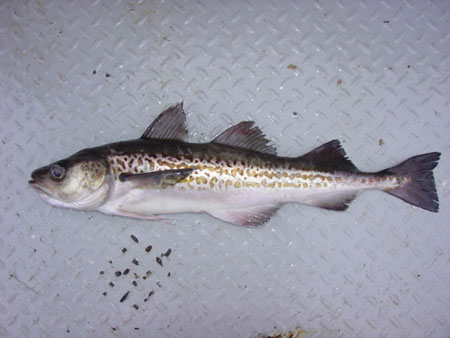
File:Walleye pollock.jpg

Walleye pollock: image wikimedia

Kanai, along with three other firms — Wakkanai Kaiyo in Wakkanai, Hokkaido, Kaiyo Gyogyo in Hachinohe, Aomori Prefecture, and Sato Gyogyo in Shiogama, Miyagi Prefecture — sends boats to Russia’s EEZ to catch walleye pollock. The annual catch quotas in Russia’s EEZ were set in the Russo-Japanese fisheries talks, and this year’s quota for walleye pollock was 10,925 tons, the Fisheries Agency said. Russian border security officials are usually present on Japanese boats to monitor their operations, the sources said. Investigative sources said they often hear of fishing companies paying the Russians and they appear to be wining and dining them as well.

China and the use of rare earth elements trade as a tool for diplomacy

December 28, 2010

Currently China produces about 97% of the global demand for “rare earth elements” used industrially but China has only about 36% of the world’s resources. In the last few months the Chinese have created a “crisis” both by throttling exports and by sharp price increases which have alarmed the auto and electronics industry. Japanese industry has been particularly disturbed. But it would seem that China had very clear diplomatic goals for their trade actions.

The 17  “rare earth elements” are not rare at all.

Rare Earth Elements: graphic ggg.gl


From Wikipedia: http://en.wikipedia.org/wiki/Rare_earth_element

Despite their name, rare earth elements (with the exception of the highly unstable promethium) are relatively plentiful in the Earth’s crust, with cerium being the 25th most abundant element at 68 parts per million (similar to copper). However, because of their geochemical properties, rare earth elements are not often found in concentrated and economically exploitable forms. Instead, they are usually found in rare earth minerals. It was the very scarcity of these minerals (previously called “earths”) that led to the term “rare earth”. The first such mineral discovered was gadolinite, acompound of cerium, yttrium, iron, silicon and other elements. This mineral was extracted from a mine in the village of Ytterby,  Sweden; many of the rare earth elements bear names derived from this location.

A table listing the seventeen rare earth elements, their atomic number and symbol, the etymology of their names, and their main usages is provided here. Some of the rare earths are named for the scientists who discovered or elucidated their elemental properties, and for their geographical discovery.

Z Symbol Name Etymology Selected Usages
21 Sc Scandium from Latin Scandia (Scandinavia), where the first rare earth ore was discovered. Light Aluminium-scandium alloy for aerospace components, additive in Mercury-vapor lamps.
39 Y Yttrium for the village of Ytterby, Sweden, where the first rare earth ore was discovered. Yttrium-aluminum garnet (YAG) laser, YBCO high-temperature superconductors, yttrium iron garnet (YIG) microwave filters.
57 La Lanthanum from the Greek “lanthanein”, meaningto be hidden. High refractive index glass, flint, hydrogen storage, battery-electrodes, camera lenses, fluid catalytic cracking catalyst for oil refineries
58 Ce Cerium for the dwarf planet Ceres. Chemical oxidizing agent, polishing powder, yellow colors in glass and ceramics, catalyst for self-cleaning ovens, fluid catalytic cracking catalyst for oil refineries
59 Pr Praseodymium from the Greek “prasios”, meaningleek-green, and “didymos”, meaningtwin. Rare-earth magnets, lasers, core material for carbon arc lighting, colourant in glasses andenamels, additive in Didymium glass used in welding goggles, ferrocerium firesteel (flint) products.
60 Nd Neodymium from the Greek “neos”, meaning new, and “didymos”, meaning twin. Rare-earth magnets, lasers, violet colors in glass and ceramics, ceramic capacitors
61 Pm Promethium for the Titan Prometheus, who brought fire to mortals. Nuclear batteries
62 Sm Samarium for Vasili Samarsky-Bykhovets, who discovered the rare earth oresamarskite. Rare-earth magnets, lasers, neutron capture, masers
63 Eu Europium for the continent of Europe. Red and blue phosphors, lasers, mercury-vapor lamps
64 Gd Gadolinium for Johan Gadolin (1760–1852), to honor his investigation of rare earths. Rare-earth magnets, high refractive index glass or garnets, lasers, x-ray tubes, computer memories, neutron capture
65 Tb Terbium for the village of Ytterby, Sweden. Green phosphors, lasers, fluorescent lamps
66 Dy Dysprosium from the Greek “dysprositos”, meaning hard to get. Rare-earth magnets, lasers
67 Ho Holmium for Stockholm (in Latin, “Holmia”), native city of one of its discoverers. Lasers
68 Er Erbium for the village of Ytterby, Sweden. Lasers, vanadium steel
69 Tm Thulium for the mythological northern land ofThule. Portable X-ray machines
70 Yb Ytterbium for the village of Ytterby, Sweden. Infrared lasers, chemical reducing agent
71 Lu Lutetium for Lutetia, the city which later became Paris. PET Scan detectors, high refractive index glass

As long as China’s own industry was not sufficiently developed to use these materials there was no crisis and production from resources in many other countries (rare earth elements are quite plentiful around the globe and not “rare” at all) were discontinued in the face of Chinese competition. The current crisis comes about because Chinese industry is now sufficiently advanced to make use of these elements and its industrial volume is large enough to absorb a large part of the production. This allowed China to use of reduction of exports and increase of prices to send strong diplomatic signals. Firstly to counter the US pressure to revalue the Yuan and second to warn Japan regarding their territorial dispute.

But this “crisis” can only be short-lived. The price increase has already led to production of rare earth elements being restarted in the US and many other countries are now planning to start production (Sweden, India, Vietnam and countries in Central Asia for example). China is no doubt well aware that their manufactured “rare earth elements” crisis will only accelerate the production of these elements from alternate sources. But what it shows is that China has the economic muscle and the willingness to now use “trade wars” as a weapon in diplomacy. But what is also a new development is the concerted response from many countries in acting together to find alternate sources and counter the Chinese might.

That Japan feels particularly vulnerable is to be expected since it does not have its own resources and is a major user. The Asahi Shimbun writes:

One reason for China’s dominance in production is the cheap cost of labor. But the country also has an advantage because deposits there can be extracted through relatively rough methods. In southern China, the weathering of a particular type of granite containing large amounts of rare earths has progressed to the right degree. Unwanted substances have been washed away in the rain, leaving soil with high concentrations of rare earth metals exposed on the surface.

“Erosion proceeds quickly in places that are warm and have a high rainfall, but if there is too much rain, erosion proceeds too quickly,” said Mitsuya Hirokawa of Japan Oil, Gas and Metals National Corp. “The necessary conditions are the existence of granite that contain lots of rare earths and the right amount of rainfall.” Southern China fulfills these conditions.

Japan has the right type of granite, but it has not eroded at the proper pace. But environmental concerns are arising from the cheaper method of extraction in China. In normal mines, rare earths are extracted by chemically processing ore that has already been removed from the ground. But in the method used in southern China, the mine itself becomes a processing factory. Acidic liquid is poured on the ground, and the dissolved rare earths are recovered from the liquid that oozes out. If the toxic liquid leaks into rivers, it could have serious consequences for the environment. “There are paddy fields in the vicinity, and there are concerns about the impact on human health,” said a researcher who observed the procedure in southern China.

This is the context under which China cites environmental concerns as the reason for restricting exports of rare earth metals. But this cheaper method of extraction is one reason why production is concentrated in China. Many mines in the United States and elsewhere could not afford to continue operating and were closed down.

Apparently, similar “convenient” deposits exist in Vietnam. Studies are under way, but production there has not yet started.

The Wall Street Journal analyses the Chinese use of trade flows as a tool of diplomacy:

Beijing’s decision earlier this year to stop shipments of rare earth minerals to Japan apparently as part of a territorial dispute raised a lot of concerns about the strategic implications of China’s growing economic strength. And well it should. Up to now, Beijing has worked hard to separate economics from politics on the world stage as part of a strategy to minimize global unease with its rise. That it is now willing to use an economic lever in a political matter suggests that approach is changing in ways that could cause trouble for the rest of the world and for China itself……..

……….Before now, trading partners were willing to take the temporary hit to trade, since they knew the episode would quickly blow over. This time, though, all major trading partners are seriously contemplating alternatives to Chinese markets in rare earth supplies. Japan, naturally, has been most active in looking for alternative sources, signing agreements with Vietnam and Australia to develop new mines or renewing production in existing mines.

Eco-friendly superyacht – a contradiction in terms!

December 26, 2010

Motor Yacht

Super Yacht "Exuma": image ypigroup.com

From CNN:

Every few years, a radically designed superyacht splashes into the water, grabbing the world’s attention. Right now it’s “Exuma,” a motor yacht intended to consume less fuel and produce less carbon emissions than other motor yachts of a similar size. The yacht, which won the Green Yacht of the Year award at this year’s Monaco Yacht Show, pays close attention to three key principles: that it should be sustainable, efficient and robust.

Featuring an elongated, slender hull designed for maximum hydrodynamic efficiency to reduce water resistance, it scythes effortlessly through the water like a shark stalking its prey. Designed with exploration in mind, it has a range of over 6,000 miles at a speed of 12 knots — which is impressive given it has a fuel tank with a 75,000-litre capacity.

I admire the yacht and the use of technology but I find the “eco-friendly” label somewhat presumptious and not just a little vulgar.

Specifications

  • Built by: Picchiotti – Perini Navi Group
  • Length: 50 mtr (164 ft)
  • Beam: 9.5 mtr (31.2 ft)
  • Draft: 2.3 mtr (8.37 ft)
  • Year Built: 2010
  • Main Engines: DIESEL CATERPILLAR
  • Engines model: 2 x C32 Acert
  • Max speed: 17 Knots
  • Cruising speed: 14 Knots
  • Classification: ABS
  • Hull construction: Aluminium
  • Superstructure material: Aluminium
  • Guests cruising: 12 persons
  • Guests sleeping: 9 persons
  • Crew: 9 persons
  • Flag: Malta
“Eco-Friendly” rates are:
Summer charter rate: from EUR 175 000 per week
Winter charter rate: from EUR 175 000 per week

Honda takes to the air

December 24, 2010

From the WSJ:

Honda Motor Co. says the first FAA-conforming version of the small business jet it has been working on for years made its first flight. The plane, called the HondaJet, flew from the company’s Honda Aircraft Co. operation at Piedmont Triad International Airport in Greensboro, N.C.

HondaJet first flight:image Honda Motor Co.

While an earlier version called a proof-of-concept aircraft has logged more than 500 hours of flight testing, flying the version built to Federal Aviation Administration rules is what really counts toward bringing the plane to market. Honda’s project is part of a renewed and growing intersection between automobiles and aviation that is occurring around personal- and business-transport. Honda touts the same qualities for the plane, such as “dynamic performance” and efficiency, as it does for its cars. The company has said it is essentially applying lessons learned in auto manufacturing to the aircraft business

HondaJet First Conforming Flight

HondaJet First Conforming Flight: image Honda Motor Co.

Honda says it will build five FAA-conforming jets for testing before ramping up production in 2012. The company says it has more than 100 orders for the light business jets, which have a top speed around 483 mph and a ceiling of 43,000 feet. Honda plans to deliver the first one in the third quarter of 2012.

HondaJet interior

First flight video is at http://hondajet.honda.com/

Bring back my incandescent light bulb!

December 8, 2010
Image showing both a fluorescent and an incand...

Image via Wikipedia

While visiting relatives in Bangalore I notice that all their solar powered lamps – installed  a year or so ago in a surge of environmental consciousness – are all just ornaments on the garden path and provide no light any more. Any talk about them is somewhat embarassing and discouraged!!!

But at least in India the incandescent light bulb is not banned as it is in the environmentally alarmist EU.

As I have posted before I find the entire low energy lamp movement totally unconvincing and whenever I do the sums I find the environmental impact on reducing carbon footprint (which in any case is of little importance) to be quite insignificant.

Moreover, I find the low energy lamps cold and unattractive compared to the simple old-fashioned, incandescent light bulb.

Now comes confirmation that in fact the low energy lamps are not that environmentally friendly:

Consumer protection organisations have demanded a suspension of the EU ban on incandescent light bulbs, citing official tests that showed the new compact fluorescent lamps to be dangerous if broken.

The energy saving bulbs show mercury levels 20 times higher than regulations allow in the air surrounding them for up to five hours after they are broken, according to tests released Thursday by the Federal Environment Agency (UBA).

“If the industry can’t manage to offer safe bulbs, then the incandescent bulbs must remain on the market until autumn of 2011,” said Gerd Billen, the leader of the Federation of German Consumer Organisations (VZVB).

I for one would be very happy to see their return.


Sarkozy pushes nuclear, arms deals on India visit

December 5, 2010
The Indian Air Force has the second largest fl...

IAF Mirage 2000H: Image via Wikipedia

Domainb.com reports on the French President’s 4 day visit to India soon after the visits by President Obama and the Russian Prime Minister. The Chinese Premier is due next.

Close on the heels of India’s environment ministry clearing the last hurdle for French nuclear company Areva to supply six third-generation pressurised water reactors for a project worth Rs95,000 crore ($22 billion), French president Nicolas Sarkozy today kicked off a four-day visit to the country, pitching for new nuclear energy and arms contracts.

However, villagers in Jaitapur in Maharashtra, where the plant will come up, today staged a protest. Reports said at least 10,000 people turned up at the site to oppose the project.

Sarkozy, heading a large delegation of 7 ministers as also 60 business leaders, including the heads of aircraft-makers Dassault Aviation and EADS and Areva, to lobby for multibillion-dollar contracts for fighter jets and nuclear equipments, also stressed India’s increased stature in world affairs.

Although Indian officials said no defence deals will be signed during Sarkozy’s visit, French aircraft maker Dassault is hoping to secure a $1.2-billion contract to upgrade 56 Mirage-2000 aircraft that India bought from France in the 80s.

Dassault and EADS are vying with US and Swedish rivals for an Indian Air Force purchase order for 126 warplanes, for an estimated $11 billion.

“We all know how critical it is for India to ensure its energy security,” Sarkozy said in a speech at the Indian Space Research Organisation at India’s technology hub Bangalore.

Qantas prepares for legal action against Rolls Royce

December 2, 2010

The Trent 900 fix is not going to be cheap for Rolls Royce. I am still maintaining my estimate that the total cost for the engine manufacturer will be in excess of $300 M.

The Wall Street Journal:

Australia’s Qantas Airways Ltd. Thursday said it has taken measures that would allow litigation against Rolls-Royce Group PLC  if it fails to reach a commercial settlement over the recent failure of a Trent 900 engine powering one of its A380 super jumbos. Qantas confirmed in a statement it is in talks with Rolls Royce over the “financial and operational impacts” of the engine failure.

Also Thursday, the international carrier said it plans fresh inspections on the Trent 900 engines after Australian safety regulators said they have identified a possible manufacturing flaw.

Qantas was forced to ground its fleet of six A380s last month after an engine on board flight QF32 exploded above Batam Island, Indonesia shortly after the airplane took off from Singapore, en route to Australia on November 4. Two of the mega airliners have since returned to service.

The explosion has put U.K., Derby-based Rolls-Royce engines under the microscope as airlines around the world that operate the Airbus A380 run a raft of safety tests. Airbus is a division of European Aeronautic Defence & Space Co.

A statement of claim has been filed by Qantas and an injunction by the Federal Court of Australia granted, ensuring the carrier can pursue legal action if settlement does not emerge, it said in a statement.

Australian safety investigators now believe the cause of the November mid-air drama may have been a manufacturing defect with an oil tube connection on some Trent 900 engines. That problem could cause oil leakage, cracking and possible engine failure from an oil fire, the Australian Transport and Safety Bureau said Thursday.

“The safety recommendation of the ATSB is consistent with what we have said before. We have instituted a regime of inspection, maintenance and removal which has assured safe operation. This programme has been agreed in collaboration with Airbus, our airline customers and the regulators,” a Rolls-Royce spokesman said.

Singapore Airlines, Lufthansa and even Airbus (EADS) can have claims on Rolls Royce and all may well have to resort to legal action to reach settlements. Qantas and Airbus have the greatest potential claims. Whether Rolls Royce knew about defects in advance of the accident on QF32 will be a key issue to determine if the engines delivered by Rolls Royce were actually “fit for service”. If the engines were not “fit for service” it opens the door to an even greater levels of claims on Rolls Royce.

“Critical safety issue” with Trent 900 could lead to “catastrophic failure”: Qantas to make further inspections

December 2, 2010

The Australian Transport Safety Bureau has determined that there is a “critical safety issue” with the Rolls Royce Trent 900 used on the Qantas A380 aircraft which could lead to a “catastrophic failure”. Qantas has been ordered to carry out further inspections.

AFP reports:

The Australian Transport Safety Bureau said a misaligned component had thinned the wall of an oil pipe in the exploded engine, causing “fatigue cracking” that prompted leakage and a fire “central to the engine failure”. “This condition could lead to an elevated risk of fatigue crack initiation and growth, oil leakage and potential catastrophic engine failure from a resulting oil fire,” the ATSB said, noting it was “understood to be related to the manufacturing process.”

The Bureau issued a directive urging Rolls-Royce to “address the safety issue and take actions necessary to ensure the safety of flight operations in transport aircraft equipped with Rolls-Royce Trent 900 series engines.” Qantas said it would immediately conduct further engine investigations as a result of the findings, but stressed it was just a precautionary measure and “there is no immediate risk to flight safety.”

“Qantas currently has two A380 aircraft in operational service, following the grounding of the fleet on 4 November. Both A380 aircraft will be inspected at the Qantas Jet Base in Sydney,” the airline said. “Inspections will commence this afternoon.”

The flagship carrier said it would determine whether further action would need to be taken after inspections were complete and it had consulted both Rolls-Royce and regulators. “Qantas does not anticipate at this stage that the inspections will have an impact on international services. However contingency arrangements will be in place, if needed,” it said.

The findings come just five days after Qantas resumed A380 flights, though the carrier has barred the superjumbo from trans-Pacific trips to Los Angeles due to the extra engine thrust required. It had grounded all six of its Airbus superjumbos after the November 4 blast over the Indonesian island of Batam, which forced an A380 to return to Singapore airport trailing smoke.

Checks revealed problems with 16 of the total 24 Rolls-Royce Trent 900 engines powering Qantas’s A380s — four per plane — meaning the turbines would have to be replaced or modified.

Qantas chief Alan Joyce on Saturday said he was “100 percent comfortable” with the A380s’ operation.

As reported by the WSJ, Qantas has already said that they will be claiming compensation from Rolls Royce.