Can there be any other reason than B & C for Qatar to get the World Cup???
Archive for the ‘Corruption’ Category
Proof positive of FIFA bribery & corruption: Qatar to host World Cup
December 4, 2010UK MP’s continue with their expense claim shenanigans
December 1, 2010Of course UK MP’s are not alone among politicians who make creative and extravagant expense claims. I would suspect that Members of the European Parliament in particular could teach the UK MP’s more than a few tricks in this regard.
But The Telegraph reports the UK MP’s still spend considerable time pushing the envelope of what is an allowable expense – even after the supposed crack-down on expenses.
A list of 1,574 claims, rejected by the Independent Parliamentary Standards Authority (Ipsa) in the space of five months, shows that politicians have attempted to claim back money for their mortgage repayments, first-class travel and excessive hospitality.
The document, obtained by The Times newspaper, which lists a total of rejected claims worth £116,359, also reveals how parliamentarians submitted duplicate claims and did not provide suitable documentary evidence to back up their claims.
One MP was refused £338 for a shredder, while another tried to claim £1,057 for advertising. A third asked for £1,085 for ”contingencies”. All claims, which were submitted between May and September this year, were refused by Ipsa – the body set up to administer MPs expense claims.
The unsuccessful claims amounted to 7% of the total submitted by MPs during the period.
a limed oak toilet seat
- £97: Derek Conway (Ind, Old Bexley & Sidcup) two ‘limed oak toilet seats’. Also spent £76 on two loo roll holders at Peter Jones in London
- 55p: Andrew Selous (Con, South West Beds) claimed for a mug of Horlicks in the House of Commons tea room one evening in March this year
- 99p: Danny Alexander (Lib Dem, Inverness, Nairn, Badenoch & Strathspey) bought Mr Muscle cleaning fluid from a 99p shop
- £43.56: James Arbuthnot (Con, Hampshire NE) successfully claimed for three ‘Genius 4 piece garlic peeling & cutting set’ bought on QVC shopping channel
- £760: Alan Milburn (Lab, Darlington) went on a shopping spree in John Lewis in March 2009 including Nigella Lawson measuring spoons and a Jamie Oliver frying pan
- £175: Julie Kirkbride (Con, Bromsgrove) claimed for a Samuel Heath Curzon extending shaving mirror from John Lewis
- £5: Ben Chapman (Lab, Wirral South) claimed for a three pack of ‘waffle’ coat hangers from John Lewis
- £2,300: Crispin Blunt (Con, Reigate) claimed for ‘brickwork’ including work on his ‘water wheel structure’ and terracotta fireplace
- £2: Phil Hope (Lab, Corby) claimed for a Hamburger Maker from John Lewis, together with a £5 swivel peeler and two £6 tea towels
- £24: Lindsay Roy (Lab, Glenrothes) bought a Babyliss Salon Dry hairdryer despite having thinning hair. His claim was rejected by the fees office
- £105: Douglas Alexander (Lab, Paisley & Renfrewshire South) claimed for having the chimney swept at his designated second home in Scotland
- £562.23: Kali Mountford (Lab, Colne Valley) bought an LCD TV in West Yorkshire but said it was for her designated second home in London
- £2.95: David Ruffley (Con, Bury St Edmunds) bought an ‘anti moth proofer’ from Peter Jones of Sloane Square. A few months later he bought another six anti-moth sachets costing £24
- £420: Lynne Jones (Lab, Birmingham Selly Oak) claimed for Farrow & Ball Toile Trellis wallpaper in April 2008, and also claimed £28.80 for a food mixer
Next target for Wikileaks will be a megadump of banking information
November 30, 2010The information paradigm is changing, whether in the political or industrial or commercial or academic world. We are now in the age of megadumps of information and megaleaks from Wikileaks and its inevitable successors.
While the world’s governments threaten legal action against Wikileaks, and bemoan the damage to diplomacy, Australia is considering whether to revoke Julian Assange’s passport. Media which were not in the group of 5 who received the documents in advance are writing heavyweight editorials about the dangers to society of publishing “confidential” information. Some politicians want Wikileaks to be declared a terrorist organisation and many are warning of the “number of lives that will be put at risk”. Professors are weighing in with the dangers to history ! They are all attacking the messenger but “methinks they do protest too much”.
The risk, if any, emanates ultimately from the information or action that is the subject of the document released, not from the release in itself. Diplomats – or others – who are involved in “speaking with a forked tongue” must accept that their duplicity may be revealed. When governments – in the name of the society they represent – take upon themselves the right to tap telephones, intercept documents divert emails, search or arrest members of that society to collect “confidential” information then they will just have to live with the fact that members of that society may feel – technology permitting – the necessity to access and disseminate “confidential” government information. The information world has changed irreversibly and megadumps of information is a reality. It is not a genie which can be stuffed back into the bottle — though some politicians will try.
Attacking the messenger is essentially counter-productive.
I am sure that the self-righteous (and self-serving) indignation currently being exhibited by many politicians and diplomats as their dirty laundry becomes visible will not be present with the next megadump – according to Forbes – of Wikileaks revelations – concerning the banking sector. I find that this information may be of greater public interest than some of the secrets of governments – but that is because I have such low expectations of politicians and diplomats. I have the belief that being in government is inherently corrosive (the corruption of power) and all who attain “positions of power” will always engage in hypocrisy and double-talk. Forbes writes:
Early next year, Julian Assange says, a major American bank will suddenly find itself turned inside out. Tens of thousands of its internal documents will be exposed on Wikileaks.org with no polite requests for executives’ response or other forewarnings. The data dump will lay bare the finance firm’s secrets on the Web for every customer, every competitor, every regulator to examine and pass judgment on.
Sitting for a rare interview in a London garden flat on a rainy November day, he compares what he is ready to unleash to the damning e-mails that poured out of the Enron trial: a comprehensive vivisection of corporate bad behavior. “You could call it the ecosystem of corruption,” he says, refusing to characterize the coming release in more detail. “But it’s also all the regular decision making that turns a blind eye to and supports unethical practices: the oversight that’s not done, the priorities of executives, how they think they’re fulfilling their own self-interest.”
The diplomatic cable megadump is already a reality. The banking megadump will follow. And after banking it may be Energy.
The full transcript of Assange’s interview with Andy Greenberg is here.
FIFA’s dirty little secrets
November 29, 2010We have recently had the scandal of the corruption and bribery at the 2010 Commonwealth Games held in Delhi. Now that the games are over the police and other investigative agencies in India are digging deep, heads have rolled and prosecutions are imminent.
But the greed and corruption that was on display at the Commonwealth games is “peanuts” and pales into insignificance in relation to the amounts dealt with by corrupt FIFA officials when handling the selection of countries to host the World cup, the TV and advertising rights and the black market sale of tickets. In fact it seems as if the black market is itself controlled by FIFA officials. A BBC Panorama program to be broadcast later this week and before Thursday’s vote by FIFA’s executive committee to decide who will host the 2018 and 2022 World Cups reveals that at least three FIFA officials took bribes between 1989 and 1999. All three are due to vote on Thursday and since they have had no criticism since then and are still in office, it is highly probably that they have all continued their practices for Thursday’s vote.
With the World Cup as big as it is , the amounts involved are in the billions. FIFA is beginning to stink.

Fifa executives Ricardo Teixeira (l), Issa Hayatou and Nicolas Leoz (r): image BBC/ Getty
Three senior Fifa officials who will vote on the 2018 and 2022 World Cup bids took bribes in the 1990s, according to the BBC’s Panorama. Nicolas Leoz, Issa Hayatou and Ricardo Teixeira took the money from a sport marketing firm awarded lucrative World Cup rights, the programme alleges.
The alleged bribes are included in a confidential document listing 175 payments totalling about $100m (£64m). The three men did not respond to Panorama’s allegations. Fifa, world football’s governing body, also declined interview requests to address the allegations.
Panorama, to be broadcast later, also reports on evidence of a fourth senior Fifa executive’s continued involvement in the resale of World Cup tickets to touts. The BBC has received criticism over the timing of the programme, which comes ahead of Thursday’s vote by Fifa’s executive committee on who will host the 2018 and 2022 World Cup finals. England is competing with Russia, Spain/Portugal and Netherlands/Belgium to host the 2018 tournament.
The BBC has defended the timing of Panorama, saying the programme is in the public interest. The alleged bribes to the three members of Fifa’s executive committee were paid by sports marketing company International Sport and Leisure (ISL) and date from 1989 to 1999, Panorama reports. The company collapsed in 2001.
Fifa granted ISL exclusive rights to market World Cup tournaments to some of the world’s biggest brands and ISL received millions more from negotiating television broadcast rights. A former account manager at ISL, Roland Buechel, said staff had long suspected bribes were being paid for the lucrative Fifa contracts.
“It is huge money, billions, that can be earned and all the sports marketing companies they fight, they want it,” Mr Buechel said. Some details of the alleged bribes emerged in 2008, when six ISL managers were accused of misusing company money. One Fifa official – Nicolas Leoz, of Paraguay, the head of South America’s football confederation – was named in court papers in connection with payments totalling $130,000 (£83,000). But Panorama has obtained a confidential ISL document which lists 175 secret payments. It shows Mr Leoz was paid a further $600,000 (£384,000 using current conversions) in three instalments of $200,000.
Read source report: http://www.bbc.co.uk/news/uk-11841783
Former head of India’s counter-terrorism division expects next Wikileaks release to be about corruption
November 28, 2010Update!
2030 hrs CET, 28th November,
The Wikileaks release has started and will likely continue through the night. The Guardian, Der Spiegel, The New York Times, El Pais and Le Monde have received the material in advance under embargo and have all started releasing the US State Department cables.
Wikileaks has been subjected to a cyber-attack today and its site is currently inaccessible.
Link to Guardian ability to download all cables
=======================================
US warns Wikileaks’ Assange on possible leak
The US has stepped up its threats of legal action against Wikileaks while at the same time rushing to contact all “friendly” governments to try and defuse some of the expected fallout of such a release. The flurry of US government activity seems almost panicky and constant repetition of the claim that “countless lives could be put at risk” does not carry much credibility. Instead of taking responsibility for whatever might have been done or written in the past – and presumably they had good reason to believe it was the right and proper thing to do at the time – the strategy seems to be one of “shooting the messenger”. But in the current paradigm of ease of information dissemination and increased covert operations by governments around the world, attacks on the messenger only reduce the credibility of the attacker and are counter-productive.
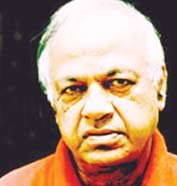
B. Raman: image intellibriefs.blogspot.com
B. Raman is a former Additional Secretary (retired), Cabinet Secretariat of the Government of India. He is the former head of the counter-terrorism division of India’s external intelligence agency Research and Analysis Wing (RAW). He has been applying his mind to the imminent release of confidential US State Department information by Wikileaks and he expects the main subject to be corruption in high places. His thoughts make fascinating reading.
1. Wikileaks announced through Twitter on November 22,2010, that it will be shortly releasing its third instalment of classified US documents.
2. The first instalment of 77,000 documents related to Afghanistan. The second instalment of 400,000 documents related to Iraq. According to the Twiiter message, its third instalment will contain a much larger number of documents.
3. Wikileaks did not say in its message what will be the subject-matter of the third instalment. However, a Reuters despatch from Washington DC said that classified US diplomatic cables reporting corruption allegations against foreign governments and leaders are expected in the official documents that Wikileaks plans to release. It added: “Three sources familiar with the US State Department cables held by Wikileaks say the corruption allegations in them are major enough to cause serious embarrassment for foreign governments and politicians named in them. They said the release was expected next week, but it could come earlier. The detailed, candid reports by US diplomats also may create foreign policy complications for the administration of US President Barack Obama, the sources said. Among the countries whose politicians feature in the reports are Russia, Afghanistan and former Soviet republics in Central Asia. But other reports also detail potentially embarrassing allegations reported to Washington from US diplomats in other regions, including East Asia and Europe. State Department spokesman Philip J. Crowley said Washington was assessing the implications of what Wikileaks may reveal and was notifying foreign governments about the possible release. “We wish that this would not happen, but we are obviously prepared for the possibility that it will,” he said.
4.The media has reported that the US has warned India and other key governments across the world about the expected release. Crowley has been quoted as saying: “We have reached out to India to warn them about a possible release of documents.” Among other Governments reportedly cautioned are those of Israel, Russia, Turkey, Canada and the UK.
5. After October last year when Wikileaks reportedly developed electronic access to the data bases of the US State Department and the Pentagon and the US military formations in Afghanistan and Iraq, the US authorities were reported to have tightened document security to prevent further leaks. If this tightening has been effective, it is likely that the latest load of documents acquired by Wikileaks (is) related to the period before October last year.
6.While corruption allegations as collected by the US Embassis in these countries could form a part of these documents, it is likely that considering the large number of documents mentioned by Wikileaks, the documents also cover US Embassy reporting on other subjects. Previously, Pakistan’s relations with the US were the focus of Wikileaks. It now seems to be focusing on India’s relations with the US too. It is, therefore, possible that in addition to corruption involving Indian personalities, the documents about India which have reached Wikileaks also relate to India’s policies on Afghanistan, Iraq and Iran.
7. Among the various events relating to Afghanistan, Iraq and Iran in which India figured during this period, four could be sensitive from India’s point of view. Firstly, the pressure on the Atal Behari Vajpayee Government by the administration of George Bush to send a Division of the Indian Army to Iraq. By July,2003, the Vajpayee Government had decided to say no to Washington DC, but there was a lot of voices in Delhi in favour of accepting the US request. Secondly, the papers captured by the US intelligence after the occupation of Iraq from the Iraqi Government Departments showing or corroborating the alleged involvement of a leader or leaders of the Congress (I) in contacts with the Saddam Hussein Government for acquiring preferential quotas for the import of oil from Iraq (the oil for food scandal). Thirdly, the pressure exercised by the Bush Administration on the Manmohan Singh Government for voting against Iran in the International Atomic Energy Agency in Vienna. The Government of India succumbed to this pressure as a quid pro quo for the Indo-US civil nuclear co-operation agreement of July,2005. Fourthly, the analysis and assessment made in the State Department and the Pentagon regarding Pakistani allegations of Indian involvement in Balochistan.
8. Is it possible that Wikileaks might have also got hold of diplomatic cables between the US Embassy in New Delhi and Washinton DC on Indian political leaders, bureaucrats and policy-making? Has it also got hold of messages sent by the US Embassy in New Delhi to Washington DC about the escape of Major Rabinder Singh, the mole of the Central Intelligence Agency in the Research & Analysis Wing, to the US in 2004 and about the detection by the Indian counter-intelligence of a US mole in the sensitive National Security Council Secretariat in 2006? The documents to be released by Wikileaks need to be carefully scrutinised.. ( 28-11-10)
Shooting the messenger to discredit the message
November 27, 2010From ancient times, envoys, messengers, heralds and town criers have all had to live with the risk of the messages they delivered incensing their audiences sufficiently to cause a backlash against the messenger. “Shooting the messenger” is then the metaphoric expression of this illogical but understandable lashing out against the bearer of bad news. Envoys and heralds were sometimes arrested or beheaded and sent back not just because the message was disliked but to create and transmit a new message by the action itself.
But it is only in modern times with the advent of readily available duplication (micro-film, photocopiers, magnetic tapes, electronic scanning and now cut-and-paste) and of easy dissemination across the globe (fax, computers, email and internet) that the leaking of confidential documents has come into its own. That confidential documents have always existed and will always exist is axiomatic and it is not only governments that have an interest in keeping documents secret. While the act of keeping some information secret may well be to hide some wrongdoing, it is not in itself indicative of illegality. Nevertheless the judgement that something needs to be kept secret is in itself acknowledgement that the information would cause harm – to someone – if disclosed.
“Whistleblowing” – defined as revealing wrongdoing which is being kept secret – is now taken to be admirable whether the wrongdoings are by politicians or governments or corporations. Legislation is in place in many countries ostensibly to “protect” whistleblowers but is usually quite ineffective in preventing reprisals against the whistleblower. Often the legislation is intentionally ineffective and the only purpose is to project an image of “open government” but not actually to permit the disclosure of government secrets. Reprisals have often been crude and violent. In India, whistleblowers have even been killed out of hand. So-called Freedom of Information legislation also strives to maintain this balance of creating an impression of openness but where what is desired to be kept secret can be maintained secret (either by rejection of the request or by introducing delays or by deletion of sensitive information).
The messengers today are often a part of the message. Whistleblowing may have a political agenda. Whistleblowers may be political activists trying to mobilise the forces of public opinion. “Shooting the messenger” in the form of discrediting the messenger or his objectives has now come to be seen as a legitimate method of trying to discredit the message. This was attempted in the Climategate disclosures. Numerous articles were written to label the disclosure the work of a “hacker” (and therefore an illegal act) rather than that of a “leaker” (and therefore the act of an internal whistleblower). In the event the substance of the revelations carried their own weight and even so called “whitewash” enquiries carried out to downplay the substance of the revelations have not been very successful.

Wikileaks: image via Wikipedia
In October this year Wikileaks disclosed the Iraq War Logs. Governments around the world first tried to prevent the release by claiming that people would be in danger of their lives and security would be undermined. Nobody denied that the information was authentic. Once the material had been released, the objectives of the release and the people behind the release were attacked. Governments across the world cooperated to try and discredit the messages. “National Security concerns” became the common theme for the governments in the US and Australia and the UK. The Swedish authorities have accused the Wikileaks founder (Julian Assange) of rape and attempted rape in a crude and rather bizarre incident – but presumably as part of a concerted effort to prevent further revelations. But the information revealed about the number of civilians killed in Iraq and the manner of their killing can no longer be kept secret.
Now, further revelations of confidential US State Department information are expected from Wikileaks. The attacks on the messenger have started. The US government has contacted scores of other governments to try and defuse and discredit the information before it is disclosed. As the BBC writes:
The plan by whistleblower website Wikileaks to release millions more classified US documents will put lives at risk and damage national security, the state department has warned. A spokesman said it would do harm to US international relations if the leaks contained diplomatic cables.
The Pentagon said US military interests could also be damaged. The Wikileaks website said the US authorities were afraid of being held to account.
The state department spokesman, PJ Crowley, said the release of confidential communications was “harmful to our national security. It does put lives at risk. It does put national interests at risk”. Mr Crowley said that diplomatic cables involved discussions with governments and private citizens, and their release could erode trust in the US as a diplomatic partner. “They are going to create tension in relationships between our diplomats and our friends around the world,” he said. “When this confidence is betrayed and ends up on the front pages of newspapers or lead stories on television or radio, it has an impact,” Mr Crowley said.
It is notable that when information is disclosed there is not much effort expended in denying the authenticity of the information. Instead the focus is more and more on attacking the purpose of the disclosure and on attacking the messengers. But even the most horrifying disclosures do not seem to have increased the accountability of governments or their desire to justify their behaviour. “National Security” is the new mantra they can hide behind.
But I cannot help thinking that this tendency of governments, politicians and officials increasingly to attack the messenger is ultimately due to an inability to stand up for one’s own behaviour. It boils down to a lack of courage.
Now Wall Street to crack down on insider trading
November 20, 2010Two days after the Tokyo Stock Exchange attacked the “rampant” insider trading prevalent in Japan, US federal authorities after a three-year investigation, “are preparing insider-trading charges against consultants, investment bankers, hedge-fund and mutual-fund traders and analysts across the nation” according to the Wall Street Journal. Where Tokyo calls it “rampant” the US calls it “vast” and “pervasive”.
The criminal and civil probes, which authorities say could eclipse the impact on the financial industry of any previous such investigation, are examining whether multiple insider-trading rings reaped illegal profits totaling tens of millions of dollars, the people say. Some charges could be brought before year-end, they say.
The investigations, if they bear fruit, have the potential to expose a culture of pervasive insider trading in U.S. financial markets, including new ways non-public information is passed to traders through experts tied to specific industries or companies, federal authorities say.
Among the expert networks whose consultants are being examined, the people say, is Primary Global Research LLC, a Mountain View, Calif., firm that connects experts with investors seeking information in the technology, health-care and other industries. “I have no comment on that,” said Phani Kumar Saripella, Primary Global’s chief operating officer. Primary’s chief executive and chief operating officers previously worked at Intel Corp., according to its website.
In another aspect of the probes, prosecutors and regulators are examining whether Goldman Sachs Group Inc. bankers leaked information about transactions, including health-care mergers, in ways that benefited certain investors, the people say. Goldman declined to comment.
Independent analysts and research boutiques also are being examined. John Kinnucan, a principal at Broadband Research LLC in Portland, Ore., sent an email on Oct. 26 to roughly 20 hedge-fund and mutual-fund clients telling of a visit by the Federal Bureau of Investigation.
“Today two fresh faced eager beavers from the FBI showed up unannounced (obviously) on my doorstep thoroughly convinced that my clients have been trading on copious inside information,” the email said. “(They obviously have been recording my cell phone conversations for quite some time, with what motivation I have no idea.) We obviously beg to differ, so have therefore declined the young gentleman’s gracious offer to wear a wire and therefore ensnare you in their devious web.”
The investigations have been conducted by federal prosecutors in New York, the FBI and the Securities and Exchange Commission. Representatives of the Manhattan U.S. Attorney’s office, the FBI and the SEC declined to comment.
Another aspect of the probe is an examination of whether traders at a number of hedge funds and trading firms, including First New York Securities LLC, improperly gained nonpublic information about pending health-care, technology and other merger deals, according to the people familiar with the matter.
Read the article:
Former head of Chinese Nuclear corporation sentenced to life for corruption
November 19, 2010
Kang Rixin: photo china-defense-mashup.com
In August 2009 China National Nuclear Corporation’s head Kang Rixin (born 1953), was suspended and put under investigation for misusing $260 million that was earmarked for the construction of three nuclear plants and allegedly used for playing the stock market sustaining heavy losses. Kang Rixin was also accused of accepting bribes of several million dollars of corrupt payments from Areva, a leading French nuclear engineering company.
Sun Qin was appointed President to replace the suspended Kang Rixin.
Today Xinhua reports
that a Chinese court sentenced Kang Rixin, a former head of Chinese nuclear giant China National Nuclear Corporation (CNNC), to life imprisonment Friday for corruption and accepting almost one million U.S. dollars in bribes. Kang, CNNC’s former general manager, was also deprived of his political rights for life and had his personal assets confiscated, a statement from the Beijing No.1 intermediary court said.
Kang, 57, was convicted of having abused his power to enable others to profit. He accepted bribes totaling 6.6 million yuan (970,000 U.S. dollars) between 2004 and 2009. The sentence was lighter because Kang cooperated with investigators and returned all his ill-gotten gains.
Kang became a member of the Communist Party of China (CPC) Central Committee in October 2007. He was stripped of his post in and membership of the CPC for “serious violations of the law and discipline breaches” in December 2009.

 The k2p blog