Archive for the ‘Corruption’ Category

Corruption in the European Union is alive and well

January 12, 2011
Constituency for the European Parliament elect...

Image via Wikipedia

Transparency International’s work and its Corruption Perception Index are both important and necessary, but they are just a small contribution to trying to restore ethics and integrity into public life. It mainly addresses the public sector and takes little account of the lack of ethics in the commercial world. Another problem with the CPI is that is skewed and as a perception index tends to be overly representative of the petty but widespread corruption (the so-called “facilitation fees”) in public services and among government employees. These are more common in developing countries and newly “democratised” countries where wage levels are low and institutional processes are still under evolution. But what the CPI does not address properly is the high level of corruption and fraud among politicians and bureaucrats in the developed world (Europe, the US, Japan, Korea for example) – which are not as numerous as in developing countries  but where the monetary values involved are huge. If we distinguish between petty bribery and corruption on the one hand and “grand” fraud and corruption on the other, I have little doubt that the US, Europe and Japan continue not only to lead the “grand” fraud and corruption stakes by a long way but are also the most innovative in finding new ways of being corrupt.

Politicians in the European Parliament and bureaucrats in the European Union are particularly venal and are subject to even less scrutiny than the national parliaments of the member countries (where padding expenses, influence peddling and basic corruption are also well established). The latest example of institutionalised corruption in Europe comes from The Telegraph:

The EU’s financial watchdog has systemically “sabotaged” investigations and caved into intimidation from countries including France and Italy to cover up fraud, according to a senior official.

Maarten Engwirda, a former Dutch member of European Court of Auditors for 15 years, who retired 10 days ago, has alleged that abuse of EU funds was swept under the carpet by an auditing body that was supposed to expose wrongdoing.

“There was a practice of watering down if not completely removing criticism,” he told the Dutch Volkskrant newspaper yesterday.

Slim Kallas, the European Commission’s vice-president, who was responsible for anti-fraud measures from 2004 to 2010 and who is now the EU transport chief, is accused of putting “heavy pressure” on investigators to tone down findings of abuse.

Mr Kallas also clashed with the Court of Auditors over its use of strict accounting standards which meant that the EU’s annual accounts have embarrassingly never been given a clean bill of health. Mr Engwirda, 67, also described an endemic “cover-up culture” within the court and wider EU institutions that had prevented the true extent of fraud from being disclosed.

Marta Andreasen, a Ukip MEP and a member of the European Parliament’s budgetary control committee, that she had come under “huge pressure to conceal the truth about EU expenditure” before being sacked as the commission’s chief accountant for whistle-blowing in 2002. “I witnessed the arm twisting of the Auditors each time they attempted to reveal the failures in the EU accounting and control systems. They came under huge pressure to keep the accountancy fraud hushed up,” she said. “Sadly the auditors did not support me when I stood up in defence of European taxpayers. In my opinion the court is not an independent body.”

Pieter Cleppe, the Brussels spokesman of the Open Europe pressure group said: “This insider story should serve as a warning not to give in to EU demands for more money until the culture of financial irresponsibility is being dealt with more fundamentally.”

http://www.telegraph.co.uk/news/worldnews/europe/eu/8252958/EU-financial-watchdog-systemically-sabotaged-fraud-investigations.html

There is little doubt that European politicians have received their pay-offs whenever a “fraud” investigation has been “sabotaged”.

Related: https://ktwop.wordpress.com/2011/01/07/chief-risk-officer-of-bayerische-landesbank-arrested-for-50-million-bribes/

https://ktwop.wordpress.com/2011/01/09/widespread-corruption-within-turkish-customs-bribes-pool-of-125-million/

Widespread corruption within Turkish customs: Bribes pool of $125 million

January 9, 2011

In Transparency International’s Corruption Perceptions Index, Turkey ranks together with countries such as the Czech Republic, Hungary, Saudi Arabia, South Africa and Slovenia but somewhat better than Italy.

A bribery ring composed of customs officials in Turkey and including the Director of the Istanbul Region has been revealed. It appears that the 34 arrested shared a bribes pool which in the period of the 6 month investigation is estimated to have contained about $125 million.

From the magnitude of the bribes pool it would seem that Turkey is well qualified for membership of the European Union and the monetary value of this case compares “well” with the Formula 1 bribery case in Germany – though that involved just one individual(?).

It was announced today that:

Thirty-four individuals serving at the İstanbul Customs Regional Directorate have been detained in a major investigation into bribery and corruption allegations at the customs department. The suspects include the chief director of the İstanbul Customs Regional Directorate.

The operation was carried out on Friday.

The allegations against the suspects include the collection of money paid in bribes in a pool and then the distribution of this money to İstanbul customs officials every Friday on the basis of rank and seniority. The investigators claim Chief Director Lütfi Ekinci was aware of this practice among his staff. Ekinci was detained in Mersin, where he was vacationing in his summerhouse.
The suspects allegedly relied on three methods to take bribes from companies importing goods to Turkey. One was to force companies that had all their documents in order to give money, calling this a “donation.” The other method was showing the value of an imported good to be nine-tenths less than the actual value on paper. In other words, an item that would normally cost TL 10 would be recorded as costing TL 1. A third method the officials used was falsifying documents and showing those products that are subject to higher taxes — such as cigarettes — as if they belong in another taxation category. The difference would be taken by the customs officials and added to the bribery pool. Investigators estimate the amount channeled into the bribe fund was TL 200 million ($125 million)…….. The center of the raids was the İstanbul Atatürk Airport Customs and the Ambarlı Customs Zone, but the raids were staged simultaneously at 20 different addresses. Hayrettin Eker, the İstanbul Atatürk Airport Customs Directorate Cargo Terminal chief, and Smuggling Intelligence and Narcotic Department Chief Coşkun Cihanoğlu were also detained in the operation. Documents and computers in the offices of the two men were seized by the police.

The police found TL 20,000 inside an envelope in Eker’s office. A total of TL 150,000 was found on other customs officials detained in the operation, which the investigators claim was taken in bribes. Investigators say the operations will extend to the companies that were involved in the customs bribery scheme.

Perceived versus actual corruption: Chief Risk Officer of Bayerische Landesbank took $50 million bribes

January 7, 2011

Transparency International in its newly published Corruption Perception Index focuses understandably on the under-developed and developing countries where the endemic petty bribery and facilitation fees to augment low wage levels are the visible and easily identifiable face of corruption. Of course grand corruption is also present in these countries but perception indices are inevitably skewed and dominated by what is visible and to the number of people affected rather than reflecting the monetary value of the corruption.

My own experience suggests – but I cannot prove – that in monetary terms the levels of corruption in the developed world are orders of magnitude larger but much more sophisticated and very well camouflaged compared to cases in the developing world. But with the much higher living standards the need for highly visible petty corruption has been largely eliminated. But the greed based cases in the developed world – when they are disclosed – are usually spectacular. As has now happened in Germany.

http://www.bloomberg.com/news/2011-01-05/ex-bayernlb-management-board-member-gribkowsky-arrested-in-bribery-probe.html

Gerhard Gribkowsky, the former chief risk officer of German state-owned bank Bayerische Landesbank, was arrested today over allegations he accepted bribes during his tenure at the lender. Munich prosecutors are investigating him on bribery, breach of trust and tax evasion allegations, Barbara Stockinger, a spokeswoman for the prosecutors, said in an e-mailed statement today. An arrest warrant was issued and executed today, she said.

The probe is reviewing the sale of a stake in Formula One motor-sports company which Gribkowsky, 52, was responsible for overseeing. BayernLB sold the stake in 2006 without it being properly evaluated, Stockinger said. “According to the current findings, the suspect in turn received $50 million in payments disguised via two consultancy agreements,” Stockinger said.

One instance with $50 million involved to one individual!!!

My $20 facilitation bribe to speed up my visa renewal in a developing country would need to be replicated 2,500,000 times for monetary equivalence with this one case. The corruption perception index would be overwhelmed.

I have the clear impression that the monetary value of corrupt and fraudulent practices in the developed world is enormous but extremely sophisticated and rarely found out. From UK MP’s cheating on their expenses, to selling Knighthoods and other Honours , to European MP’s expense and subsidy fiddles, to billions distributed in carbon trading scams and the enormous cases of corruption/fraud whether at AIG or Lehman Brothers or by Bernie Madoff.

The monetary value of fraud and corruption in the OECD countries is probably one or two orders of magnitude greater than in the developing countries but the number of cases is probably an order of magnitude less.

The CPI is perhaps a measure of visible corruption in the public sector – but does not- and can not –  reflect the monetary value of sophisticated – and invisible – corrupt practices.

No surprise: US diplomats acted as Boeing salesmen

January 3, 2011

It comes as no surprise that diplomats and government officials are heavily involved in lobbying and “advocacy” in favour of major corporations in international trade. This applies for sales of all defence equipment, commercial aircraft, major rail transport projects, nuclear and conventional power plant and -in short – virtually all large projects where jobs at the seller’s establishment are involved.

Virtually every visit of a head of government to another country reserves a great deal of time for commercial lobbying activities. Large companies look to such visits to bring purchasing decisions to a head and the months preceding such visits are periods of intense co-operation between commercial sales people, diplomats, bureaucrats and politicians in both countries. So called “agents” (essentially middle-men with “sticky” fingers) thrive on such activity.  During such periods I have seen how diplomats take directions from sales people at private companies or from the “agents”. The ability to access and trigger such “advocacy” is of huge competitive advantage for the companies involved. It is here that large international companies can bring factors outside the conventional sales criteria into play.

It is not just the US or just Boeing involved in such advocacy. Nearly every country indulges in this. The UK (British Aerospace for example), France (Areva and nuclear power or Alstom and High speed trains) or Germany (Siemens for power plants or trains or VW at car factories) are all engaged in similar advocacy. But the particular case of US diplomats acting as salesmen for Boeing is reported by the New York Times from the Wikileaks release of diplomatic cables and these reveal some of the “perks” and extra factors that are brought into play. Such as

The king of Saudi Arabia wanted the United States to outfit his personal jet with the same high-tech devices as Air Force One. The president of Turkey wanted the Obama administration to let a Turkish astronaut sit in on a NASA space flight. And in Bangladesh, the prime minister pressed the State Department to re-establish landing rights at Kennedy International Airport in New York. Each of these government leaders had one thing in common: they were trying to decide whether to buy billions of dollars’ worth of commercial jets from Boeing or its European competitor, Airbus. And United States diplomats were acting like marketing agents, offering deals to heads of state and airline executives whose decisions could be influenced by price, performance and, as with all finicky customers with plenty to spend, perks.

To get the interest of their own politicians and governments every large corporation knows that the magic key is being able to link the sale being pursued to jobs in the home-country and especially in the constituency of the home-politician. “Job creation” is the magic mantra that no politician can resist or can afford to ignore. The use of dubious agents or the use of “undue” influence or the flow of a few percent of the contract value  through some side-channels or the provision of some “perks” to politicians and bureaucrats through the entire chain from supplier to purchaser become critical and pervasive.

When the potential of job creation is involved, questions of ethics are rarely raised and the system of high level corruption is perpetuated.

NYT report

Hausergate: In scientific misconduct “confirmation bias” or “fudging data” are equally corrupt

January 2, 2011

The Scientific American carries an article about the Marc Hauser case at Harvard. (Marc Hauser was found to have committed 8 cases of scientific misconduct).

Scientific American

Scott O. Lilienfeld argues that Hauser may only be guilty of “confirmation bias” and that it is premature to ascribe deliberate wrongdoing to him:

Hauser has admitted to committing “significant mistakes.” In observing the reactions of my colleagues to Hauser’s shocking comeuppance, I have been surprised at how many assume reflexively that his misbehavior must have been deliberate. For example, University of Maryland physicist Robert L. Park wrote in a Web column that Hauser “fudged his experiments.” I don’t think we can be so sure. It’s entirely possible that Hauser was swayed by “confirmation bias”—the tendency to look for and perceive evidence consistent with our hypotheses and to deny, dismiss or distort evidence that is not.

The past few decades of research in cognitive, social and clinical psychology suggest that confirmation bias may be far more common than most of us realize. Even the best and the brightest scientists can be swayed by it, especially when they are deeply invested in their own hypotheses and the data are ambiguous. A baseball manager doesn’t argue with the umpire when the call is clear-cut—only when it is close.

Scholars in the behavioral sciences, including psychology and animal behavior, may be especially prone to bias. They often make close calls about data that are open to many interpretations…….

………. Two factors make combating confirmation bias an uphill battle. For one, data show that eminent scientists tend to be more arrogant and confident than other scientists. As a consequence, they may be especially vulnerable to confirmation bias and to wrong-headed conclusions, unless they are perpetually vigilant. Second, the mounting pressure on scholars to conduct single-hypothesis-driven research programs supported by huge federal grants is a recipe for trouble. Many scientists are highly motivated to disregard or selectively reinterpret negative results that could doom their careers.

But I am not persuaded. When “eminent” scientists use their position and power to indulge in “confirmation bias” it is merely a euphemism for what is still cheating by taking undue advantage of their position. It is “corruption” in its most basic form. I reject the notion that such “confirmation bias” is a form of  “unwitting behaviour”. It may well be behaviour which resides in the sub-conscious but that is not “unwitting” behaviour. Neither is it excusable just because it may be in the sub-conscious. It gets into the sub-conscious only because the conscious allows it to do so. When any behaviour residing in the sub-conscious conflicts with the values and morality of an individual it is inevitably ejected into the conscious.  Being sub-consciously immoral but consciously moral is not feasible.

In the case of Marc Hauser, even assuming that his faults were due to “confirmation bias” then either it was behaviour which remained entirely in the sub-conscious in which case his values and morality are suspect, or it was triggered into the conscious and he continued anyway in which case it was simple cheating.

Many faculty members involved in fake institute at IIT Kharagpur

December 31, 2010
The Main Building of IIT Kharagpur

IIT Kharagpur: Image via Wikipedia

The Indian Institute of Technology at Kharagpur is one of the original 5 IIT’s and perhaps the one enjoying the highest reputation of them all. But the case of the fake institute  – Institution of Electrical Engineers (I) – being run apparently by a few rogue faculty members is now spreading and revealing that many faculty members were involved. The investigations which were first to be conducted by a panel of academics will now be shifted to the Central Bureau of Investigation (CBI). Many voices were raised against the proposed composition of the panel apprehending a “whitewash”.

The case was first broken in October by the Calcutta Telegraph:

The Centre today asked IIT Kharagpur to give a “factual account” of a professor’s alleged role in running an unapproved institute and duping students into believing it was a branch of the tech school. Amit Kumar Ghosh, the head of the department of aeronautical engineering, has been accused of having a hand in the running of the Institution of Electrical Engineering (IEE) in Kharagpur and offering diploma courses without the approval of the All India Council of Technical Education (AICTE).

The ministry is livid that a senior faculty member could be involved in “fraudulent” activities. “The IIT Kharagpur authorities have been asked to furnish a factual account on the issue,” a ministry official said. A senior IIT official said Ghosh had been removed as aeronautical engineering department head following the allegations. An inquiry has been ordered.

The IEE has been operating from a temporary campus and offering courses such as a diploma in electrical engineering. Ghosh has allegedly been serving as the institute president. J.K. Tiwary has apparently been managing the institute for the last two years and luring students by claiming that the IEE is a branch of IIT-Kharagpur. Trouble started this year after students found out that the IEE had no connection with IIT Kharagpur. It did not even have AICTE approval, mandatory for an institute teaching any technical course.

Furious, the students registered a complaint with the IIT Kharagpur director. “They have spoiled our career. We want justice,” M. Ramu, a student of IEE, said.

In the beginning of December, evidence surfaced that many more faculty members were involved. The Times of India reported that:

IIT-Kharagpur has all along been in denial that its faculty members were involved in the running of fake institute — Institution of Electrical Engineers (I). But the hollow claims now lay in tatters, thanks to a photographic proof showing teachers of the institution along with J K Tiwari, the brain behind the institute, who, incidentally, has nothing to do with IIT-Kharagpur.

Police recovered the photograph during a raid and are soon going to question faculty members — both serving and retired — who are seen along with Tiwari. The photograph shows A K Ghosh, former head of department of aerospace engineering and an ex-chief vigilance officer, who has since been suspended for his alleged involvement in the scam.

The others caught in freeze frame are N K Kishore, professor, department of electrical engineering; Jayanta Pal, head of department, electrical engineering; Pallab Kumar Chattopadhyay, retired professor of agricultural and food engineering; Punyabrata Dutta Gupta, retired professor of electrical engineering; J C Biswas, retired professor of electronics & electrical communication engineering.

Tiwari, who conceived IEE (I), and even managed to get an official quarter for the institute, is seen sitting along with a section of IIT-Kharagpur faculty members. Police sources said they are investigating if the photograph was taken during the convocation of IEE (I) as claimed by many students of the fake institute.

Yesterday, the Indian Express revealed that

The Central Bureau of Investigation (CBI) will probe the fake institute scam that was allegedly run from the Indian Institute of Technology, Kharagpur, by some of its faculty members……. HRD Minister Kapil Sibal is learnt to have decided that a CBI probe was the best course to follow and the issue would be formally referred to the agency in the next few days.

The stench of corruption in the Indian body academic is not restricted to the private “education industry” but is present even in the most respectable institutions.

Japanese fishing firms fight back taxes: “necessary” bribes to Russian officials paid into Cyprus banks

December 28, 2010

An interesting defence by Japanese fishing firms that bribes paid to Russian officials and deposited in Cyprus bank accounts were properly booked as “expenditures” and therefore not to be taxed as profits!!

(And from my own experience I conclude that there is no Japanese businessman – or politician – who believes there is anything wrong or unethical in bribing officials – especially in other countries. The only wrong is in paying too much or being caught.)

The Japan Times has the story (but of course does not comment on the ethics involved):

KUSHIRO, Hokkaido (Kyodo) One of four fishery firms hit for back taxes for allegedly making illicit payments to Russian officials denied any impropriety Monday and said the payments were a necessary expense. “We booked the money in the expenditure category (in accounting). It was not illicit money,” said Munemoto Nakayama, who runs Kanai Gyoin Kushiro, Hokkaido. The president spoke with reporters following media reports Sunday that Kanai and three other fishery firms provided about ¥500 million to Russian officials in the three years to 2009 so they could fish in Russia’s exclusive economic zone beyond the limits set under a bilateral agreement with Japan.

Sources said the tax authorities discovered the firms made the payments using irregular accounting methods and concluded the act constituted income concealment, ordering them to pay about ¥200 million in back taxes and penalties. Nakayama confirmed, as claimed in fresh media reports Monday, that the four firms, in addition to having given the money to Russian officials aboard their ships, remitted part of the ¥500 million to bank accounts overseas, including in Cyprus. “We have been doing Russia-related business for over 10 years and have remitted money (overseas),” he said. He also revealed that his company had already filed a revised tax return in connection with the payments as demanded by tax authorities. The four firms admitted paying the Russians to look the other way when their fish catches exceeded the legal quota, the sources said.

File:Walleye pollock.jpg

Walleye pollock: image wikimedia

Kanai, along with three other firms — Wakkanai Kaiyo in Wakkanai, Hokkaido, Kaiyo Gyogyo in Hachinohe, Aomori Prefecture, and Sato Gyogyo in Shiogama, Miyagi Prefecture — sends boats to Russia’s EEZ to catch walleye pollock. The annual catch quotas in Russia’s EEZ were set in the Russo-Japanese fisheries talks, and this year’s quota for walleye pollock was 10,925 tons, the Fisheries Agency said. Russian border security officials are usually present on Japanese boats to monitor their operations, the sources said. Investigative sources said they often hear of fishing companies paying the Russians and they appear to be wining and dining them as well.

High corruption at the Commonwealth games spawns tales of conspiracies

December 22, 2010

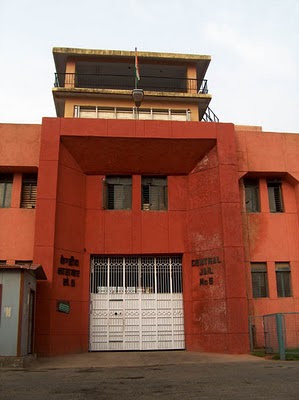
Today came the startling news that two inmates serving life sentences at Delhi’s notorious Tihar jail claim that the jail authorities gave them weapons to kill 2 of the 3 members of the Commonwealth Games Organising Committee currently being held at the jail on corruption charges.

Tihar Jail

The Hindustan Times reports:

Two inmates serving life sentences at Tihar Jail have claimed that the prison authorities gave them weapons to murder two former senior officials of the Commonwealth Games (CWG) lodged in the prison with them. In an application to chief metropolitan magistrate (CMM) Vinod Yadav, Amit and Nishant who are facing trial in a murder case, have said, “The jail authorities inside jail number 4 and ward number 11 approached us with weapons on December 20, 2010, and asked us to murder the two Commonwealth Games officials lodged in the jail with us.”  On personally meeting the judge, the inmates identified the officials as TS Darbari and Sanjay Mahendroo, who are lodged in Tihar following corruption charges.

Their application stated, “The jail officials threatened us with dire consequences if we do not comply with their orders. We are also receiving threats to our life inside the jail premises.” Amit’s mother Munni Devi has also filed an application in the magistrate’s court claiming her son and Pawan were being threatened inside the jail.

The application also claimed that a Delhi police official, who had come to the prison on Monday, recovered the knife from their cell. But they have not identified the officer before the magistrate. “The country-made pistol that was given to us was displaced by the jail authorities. We seek the court’s help to protect us from this ongoing exploitation at Tihar,” the application read.

Following this, the judge has directed the station house officer of the Hari Nagar police station to file a report in the incident and investigate the claims of the Tihar inmates.

Sunil Gupta, PRO of Tihar Jail, told Hindustan Times, “These are hardcore criminals lodged in high security jail. No weapon was recovered from the jail premises and their application is a farce. There was no conspiracy.”

Speculation now is that:

  1. The lifers made up the story merely to create a distraction from their own murder trial, or
  2. Other officials in fear of new confessions have placed a contract on the lives of the officials being held, or
  3. Politicians who fear being implicated in the mesh of corruption surrounding the games have placed the contract, or
  4. the officials under arrest have themselves arranged for the “confession” to develop a sympathy factor before they come to trial.

Tihar Jail is itself notorious for the mal-treatment of many prisoners and for the comfortable living conditions for inmates with money and clout. So the allegation that Tihar jail officials were involved in something like this is not – in itself- so incredible!!

There will be many more twists and turns in this corruption scandal.

A small bright spot in the murky world of corporate ethics

December 21, 2010

Laws tell us what we must not do and morals tell us what we ought not to do – whether illegal or not.

But ethics – when they exist – tell us what is the right and proper and desirable thing to do.

Far too many corporates seem to think that mere compliance with laws is sufficient as a code of ethics. Much trumpeted Corporate Social Responsibilities are primarily public relations and image building exercises with little relation to ethics. Token gestures of engaging in some social programme are assumed to be evidence of the existence of an ethical code but the reality is that most corporates have no ethics. They are content – like children – to let others tell them by law what is forbidden and then take the easy path provided by assuming that all behaviour which is not illegal is – by default – ethical.

As if it is not possible to be completely compliant and completely corrupt at the same time. British Aerospace and their utter lack of ethics being a case in point.

Retraction Watch carries the refreshing story of Wnt Research which shows that some bright spots still exist in the murky world of corporate ethics.

Two weeks ago, we covered the retraction of a PNAS paper on a potential breast cancer treatment, one that would make tumors that didn’t respond to tamoxifen respond to the drug. We learned earlier this week from a Retraction Watch commenter that Wnt Research, a company based on the breast cancer finding and other work, was about to go public.

In fact, their initial public offering (IPO) happened today, and you can follow the price of their stock — listed on the Stockholm Stock Exchange as WNT — here. But what we learned when we looked into the IPO was that it was originally scheduled for late November, and was delayed because of the retraction.

Tommy Andersson, one of the researchers on the now-retracted paper and Wnt Research’s chief scientific officer, told Retraction Watch that the company had initially planned on going public on November 26. They had written a memorandum describing the company’s work to date, and its plans, and the public was given a chance to invest before shares hit the Stockholm exchange. That memorandum included a mention of the PNAS paper, as follows (translated from Swedish):

The research group has even shown that combining Wnt-5a or Foxy-5 will increase the expression of estrogen receptors in estrogen-negative breast cancer cells. It turned out that human breast cancer cells exposed to Foxy-5 regained tamoxifen sensitivity, which is clear from the increased apoptosis and reduced cell growth as a response to the endocrine treatment. Likewise, the research group found that administration of Foxy-5 in the body brought back the expression of estrogen receptors in a mouse model. Apart from the therapeutic potential of these observations, there is a potential to use the outcome of estrogen receptors as a biological marker, which should advance research.

The deadline for investment was October 27, and a number of people responded, allowing the company to continue its work. But on November 11, Andersson and his colleagues realized there were serious errors in the paper, and that it would need to be retracted. When Andersson called Wnt Research’s CEO, Bert Junno, on the 12th:

He rapidly called upon an extra Board meeting on the 15th of November (the same day my email of retraction was sent to the PNAS office). At this meeting we decided to make a press release on this matter and this went out on the 16th of November.

We again had an extra Board meeting on the 19th of November to discuss what other things that we needed to do. We agreed that the short press release must be accompanied by an addition to the already published memorandum, the reason being that you cannot change in the original memorandum. The CEO wrote this addition together with the people at the office of the small Stockholm Exchange “Aktietorget” where the company was to be listed. We also decided to ask for legal advice in how to handle the public that had already paid for shares in the company.

The board held another meeting on the 22nd, during which they approved the addition to the memorandum saying that the PNAS paper had been retracted. They also did something that can only be described as the right thing: They decided to write all of the approximately 275 people who had invested in the company by the October 27 deadline and offer their money back:

The reason for this was that the lawyer advised us to act according to good morals rather than to what we were required to do by law. His belief was that this would pay off in the long run.

The memorandum addition was published on November 25. And some people did ask for their money back:

The offer to retract their investments in the company resulted in a net loss of investments, but we still obtained enough investments to continue our work.

All of that back and forth also meant that the IPO was delayed by three weeks, until today.

We find this story wonderfully refreshing. Imagine, a company bending over backward to let investors — and potential investors — know about problems with its data.

I can only agree that this little story proves that, unlike what Milton Friedman had to say, it is perfectly possible to be ethical in the corporate world.

Today I did my bit and bought some shares in Wnt Research. I know too little about cancer research to judge whether this was or will be a good buy. But I applaud their ethics and my share purchase is just to put my money where my mouth is.

Capitation fees: The stench of corruption in the Indian body academic

December 10, 2010
Varkala in Kerala. India.

Image via Wikipedia

This past week I have been travelling in the southern Indian states of Tamil Nadu and Karnataka.

The growth is palpable and vibrant. But it is chaotic and uncontrolled – and probably uncontrollable, The best that can be hoped for is that movement is in the general direction desired but it is futile to to try and exercise any micro-control. The speed is such that there is no time for consolidation, for reflection, for developing values or standards or for any feedback. Feed forward is the only thing that can keep up.

But in every field of operation – whether construction or government or industry or financial institutions or academia – the stench of corruption is contained under a thin veneer of apparent sophistication. The overpowering fundamental value which gets free reign is greed.

What has become apparent to me is that in spite of many good intentions by government, the shortage of supply in the face of an ever-increasing demand for education has allowed the unfettered growth of  private colleges and universities. But the demand is only used as a vehicle for satisfying greed not for satisfying educational needs.

All degrees and especially post graduate degrees in medicine, engineering and IT related subjects from private colleges in India are granted solely for the payment of a capitation fee.

http://en.wikipedia.org/wiki/Capitation_fee

Capitation fee refers to the unlawful collection of payment by educational bodies in exchange for a seat in the institution. It is also known as donations. This practice is popular in private colleges and universities in India, especially those that grant baccalaureate degrees in Engineering, IT and the sciences. This is an example of institutionalized corruption prevalent in India.The practice goes mostly unnoticed because the board/owners of these institutions hold political/financial powers and also the parents who pay the donations are more than happy to do so.

The Concise Oxford Dictionary defines capitation as follows:

The payment of a fee or a grant to a doctor, school, etc., the amount being determined by the number of patients, pupils etc. Origin (denoting the counting of heads)

The Kerala Self Financing Professional Colleges (Prohibition of Capitation Fees and Procedure for Admission and Fixation of Fees) Act 2004 defines capitation fees as follows.

“capitation fees” means any amount by whatever name called, whether in cash or in kind paid or collected or received directly or indirectly in addition to the fees determined under section 4.

The Supreme Court Judgement in 1993 in the Unni Krishnan Case declared that charging capitation fees was illegal.

But capitation fees are now the only way of  getting a seat in a private college. It guarantees a degree will be awarded. Academic staff  have no say in the selection of students. That selection is reserved for the owners and they usually auction the seats to the highest bidder. Capitation fees are unrecorded, undeclared and paid in cash. Academic standards are irrelevant.

This is not to say that competent engineers and doctors do not exist. But a degree from a private college is an empty thing. It only proves that a capitation fee was paid and is totally silent regarding the capability or competence of the person receiving a degree.