Archive for the ‘Development’ Category

How exactly is biodiversity a problem?

October 5, 2010

Yesterday The Guardian reported that

While some 230,000 marine species have been recorded there are thought to be at least 1 million species in the sea. Ian Poiner, chair of the Census of Marine Life (COML) steering committee, said: “All surface life depends on life inside and beneath the oceans. Sea life provides half of our oxygen and a lot of our food and regulates climate. We are all citizens of the sea”. To mark the end of the COML project, scientists at the British Antarctic Survey (BAS) showed off the results of the Census of Antarctic Marine Life, an inventory of more than 16,000 marine species and the culmination of more than 19 trips into Antarctic waters.

In fact the total is unknown and may be as many as 10 million. The New Scientist points out:

A newly discovered copepod (Image: Jan Michels)

A newly discovered copepod (Image: Jan Michels)

“There are three to four unknown species for every known,” says Paul Snelgrove of Memorial University of Newfoundland in St John’s, Canada.

The Census has so far added 1200 new species to the tally, though that is likely to rise as over 5000 more organisms that were collected have yet to be studied or named. The new species include several that were thought to have disappeared, such as the “Jurassic shrimp”, which was believed to have died out 50 million years ago.

The Census was also able to identify those regions that are richest in diversity, which include the Gulf of Mexico and the Australian coastline. The Galapagos Islands, meanwhile, turned out to have less biodiversity than the chilly South Orkney Islands, in the Southern Ocean near Antarctica.

However, plant and animal diversity looks insignificant compared to the sea’s micro-organisms, which may number 1 billion. Their diversity is “spectacular”, Snelgrove says.

Just a few days ago Science reported that

Diana Fisher and Simon Blomberg of the University of Queensland in Australia carried out a comprehensive analysis of missing and extinct mammalian species. They created a database of all 187 mammal species that have been identified as extinct or possibly extinct, then combed through the literature to find out which ones had been rediscovered. They also included what threats the species had been facing, such as habitat destruction or hunting.
(more…)

A ramble through electricity consumption and aspirations.

September 29, 2010

From the IEA 2010 World Energy Statistics, the country with the lowest electricity consumption is Haiti at 23 kWh /capita. The country with the highest consumption is Iceland with 49,818 kWh/capita. In between come Ethiopia at 42 kWh/capita, Kenya at 156, India at 566, Iraq at 1267, China at 2453, France at 7,703, the US at 13,647, Canada at 17,053 and Norway at 24,868 kWh/capita. For the world as a whole the average consumption is 2,782 kWh/capita.

The average is 18 times less than the maximum and the minimum is 120 times less than the average. And of course the average in every country itself represents an enormous spread between individuals.

To put this into the perspective of living standards and the quality of life, the electricity consumption of household goods is typically as follows:

  • One 60 W light –bulb for 8 hrs per day consumes 175 kWh/annum,
  • Typical 19” colour TV (70 W) for c. 5 hrs per day 125 kWh/annum
  • Table fan (20 W) for c. 12 hours per day 88 kWh/annum
  • Desktop computer (100 W) for 8 hours per day 290 kWh/annum
  • Refrigerator (80 W), continuously, 700 kWh/annum
  • Freezer 150 W continuously, 1300 kWh/annum

To have access to one 60 W light bulb when you have none is an enormous improvement in the quality of one’s life. To have access to a fridge so that shopping and cooking every day while also holding down a full-time job is no longer necessary is the difference between freedom and slavery for many women in the developing world. It is a sobering thought that if every Haitian used just one 60 W light bulb for 8 hours every day, the electricity consumption in Haiti (and therefore electricity generation) would increase seven-fold!

(more…)

Is Greenpeace fabricating data?

September 28, 2010

In July this year Greenpeace trumpeted

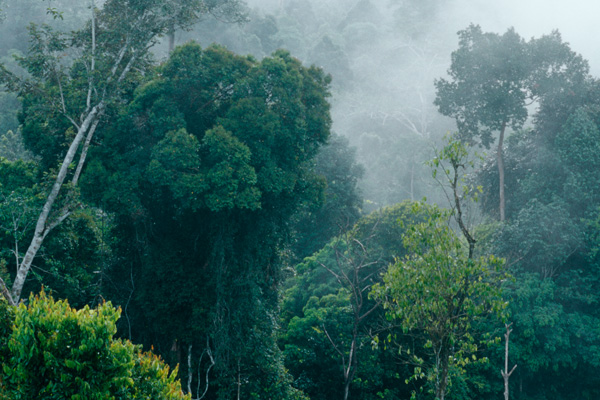
rain forest

“A new investigative report from Greenpeace, ‘How Sinar Mas is Pulping the Planet’, shows how major brands like Walmart, Auchan and Kentucky Fried Chicken (KFC) are fueling climate change and pushing Sumatran tigers and orang-utans towards the brink of extinction. These companies are using or selling paper made from Asia Pulp and Paper (APP), part of the notorious Sinar Mas group that is destroying Indonesia’s rainforests and carbon-rich peatlands.”

The Jakarta Globe reports

Sinar Mas commissioned an independent audit which has now accused Greenpeace of “false and misleading information to attack a company’s credibility”. International Trade Strategies Global (ITS) conducted a peer-review on Greenpeace’s report, “How Sinar Mas is Pulping the Planet.”

“The evidence shows that Greenpeace provided quotes that don’t exist, maps that show concessions that don’t exist, and used source material with high margins of error that was cited as absolute fact,” said Alan Oxley, chief executive office of the Melbourne-based ITS Global on the press release.

Oxley said the Greenpeace report was highly misleading and indefensible. In addition, the audit stated that a map in the Greenpeace report shows four concessions which don’t exist. “Sadly this is not an isolated incident. Greenpeace has exaggerated claims in the past.  When we see reports like this with such obvious factual inaccuracies it makes us call into question the real Greenpeace agenda, risking the greater good to achieve its own political ends.”

However, Bustar Maitar, lead forest campaigner for Greenpeace Indonesia, dismissed ITS’s report, saying it was biased. “If they claim it’s an independent report, it’s a joke because Alan Oxley is speaking as an APP representative,” he said.