Archive for the ‘Economy’ Category

Bad forecasts and grovelling apologies have become standard for the IMF

June 9, 2014

It’s not what you say but what you do that counts.

Economics is clearly not a science though many would like us to think it is. But with the IMF it is just apology followed by apology for wrong forecasts and bad advice. It smacks of forecasts made to suit a political agenda or just plain incompetence. Based on their track record nothing that is said by Christine Lagarde or the International Monetary Fund that she heads can be taken very seriously. She spends more time apologising than would seem to be healthy.

The latest apology by Christine Lagarde has been called “grovelling”:

‘Do I have to go on my knees?’: grovelling apology from IMF head for incorrect warnings on UK economy

Head of the International Monetary Fund, Christine Lagarde, accepts her organisation’s low growth forecasts for the UK economy were wrong.

Christine Lagarde has asked whether she needs to grovel on her knees before George Osborne over the IMF’s incorrect warnings on the UK economy, as she warned against raising taxes.

“Do I have to go on my knees?” Ms Lagarde, the head of the International Monetary Fund said, when asked whether she has apologised to George Osborne over the fund’s low growth forecasts and calls to adopt a ‘Plan B’ of less austerity – calls the body now accept it got wrong.

In a blow to Ed Miliband, who has called for higher rates of personal taxation and new levies on banks, Ms Lagarde said tax rises are “not recommendable”.

But this is not an isolated incident. Time after time the IMF announces that some country has got its economic policy wrong and warns of dire consequence if the country does not follow the advice of the IMF. Then – a few months later – they admit that the IMF got it wrong. And ususally by then they have caused much misery and wailing and gnashing of teeth.

12th January 2012: Does the EU-IMF Owe Ireland an Apology?

2nd June 2012: IMF apology to Greece after Lagarde remarks – YouTube

3rd January 2013: An amazing mea culpa from the IMF’s chief economist on austerity

6th June 2013: For hard-hit Greeks, IMF mea culpa comes too late

In any normal corporation Christine Lagarde and the IMF’s Chief Economist,  Olivier Blanchard would have been sacked a long time ago. And to think that some are suggesting Christine Lagarde for the top job in the EU only reduces my respect for the IMF and the EU.
 

An existentialist problem for virtual Bitcoins

February 26, 2014

“Virtual” has no connotations of having any virtues. As long as things “virtual” remain in the abstract world they work.

Virtual books can be read. Virtual commerce is fine for recording transactions. But virtual foods are indigestible and unsatisfying. A virtual house doesn’t keep out the rain. And virtual currencies are useless if they cannot be translated into the real world.

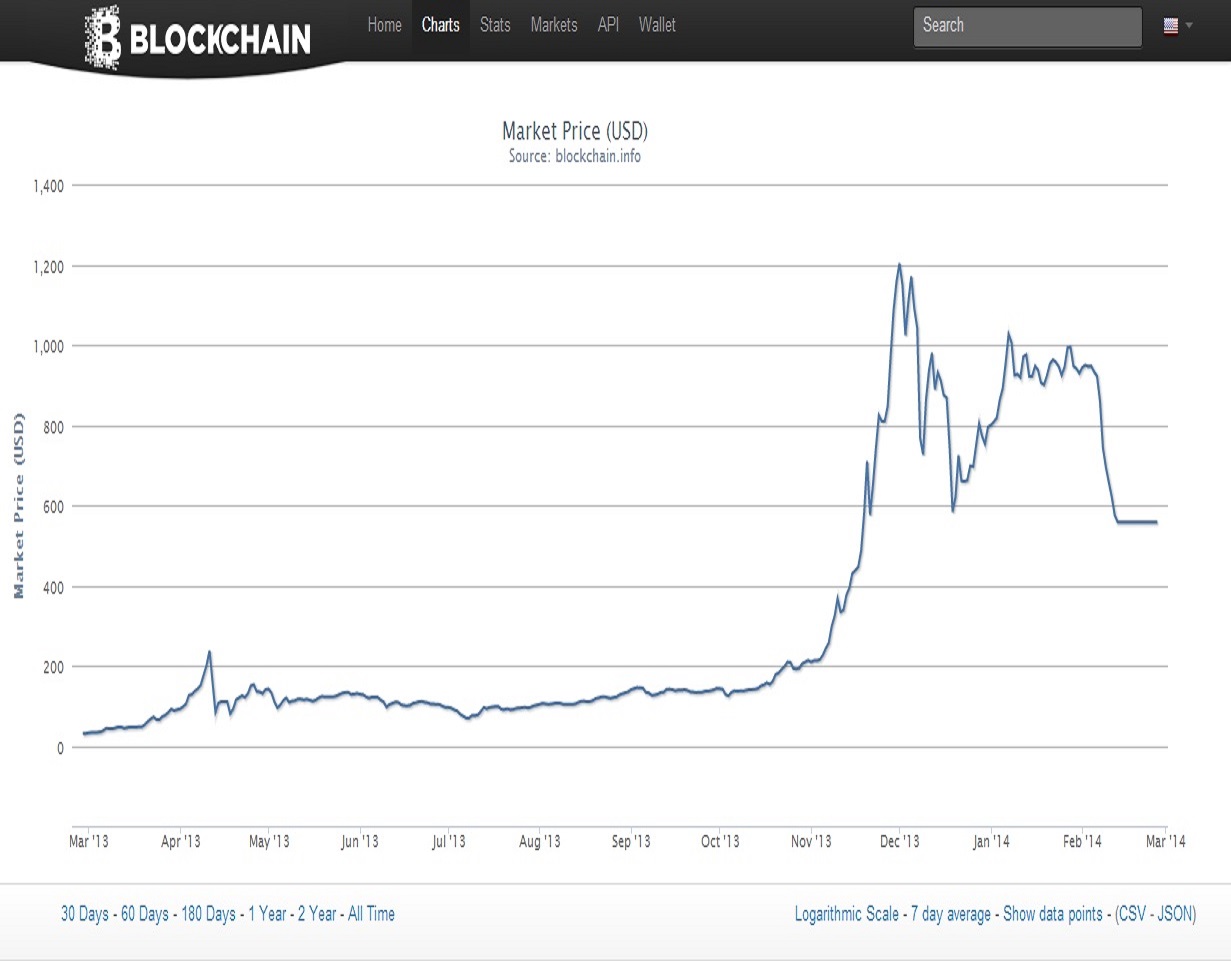
I am not convinced that virtual currency offers me anything more than I get with electronic transactions with real money. At least the real currency has a value which is somewhat connected to things happening on the ground (even if speculation does occur). The Bitcoin however has an exchange value solely dependent upon somebody’s imagination.

(Reuters)Mt. Gox, once the world’s biggest bitcoin exchange, abruptly stopped trading on Tuesday and its chief executive said the business was at “a turning point,” sparking concerns about the future of the unregulated virtual currency. ……. The website of Mt. Gox suddenly went dark on Tuesday with no explanation, and the company’s Tokyo office was empty – the only activity was outside, where a handful of protesters said they had lost money investing in the virtual currency. …

…. Investors deposit their bitcoins in digital wallets at specific exchanges, so the Mt. Gox shutdown is similar to a bank closing its doors – people cannot retrieve their funds.

A document circulating on the Internet purporting to be a crisis plan for Mt. Gox, said more than 744,000 bitcoins were “missing due to malleability-related theft”, and noted Mt. Gox had $174 million in liabilities against $32.75 million in assets. It was not possible to verify the document or the exchange’s financial situation. If accurate, that would mean approximately 6 percent of the 12.4 million bitcoins minted would be considered missing. ……. The digital currency has caught the eye of regulators concerned with consumer protections and bitcoin’s use in money laundering. ….

…… Mt. Gox halted withdrawals earlier this month after it said it detected “unusual activity on its bitcoin wallets and performed investigations during the past weeks.” The move pushed bitcoin prices down to their lowest level in nearly two months.

Even with the halt on February 7, Mt. Gox still handled more transactions than any other in the past month. Over the last 30 days, Mt. Gox has handled more than one million bitcoin transactions denominated in dollars, or about 34 percent of activity, according to Bitcoincharts, which provides data and charts for the bitcoin network.

Critics of the exchange, from rivals to burned investors, said the digital marketplace operator had long been lax over its security. Investors in bitcoin, who have endured a volatile ride in the value of the unregulated cyber-tender, said they still had faith in the currency despite the problems at Mt. Gox.

“Mt. Gox is one of several exchanges, and their exit, while unfortunate, opens a door of opportunity,” The Bitcoin Foundation, the digital currency’s trade group, said in a statement. “This incident demonstrates the need for responsible individuals and members of the bitcoin community to lead in providing reliable services.” …….

Bitcoin value Feb 2014

Bitcoin value Feb 2014

The exchange rate applying is entirely speculative and – it seems to me – purely a result of manipulation. It is not anchored to anything real  – but why would it be?

After all it is only virtual.

EU opposition to shale fracking is crumbling

January 27, 2014

The cost of gas in Europe (from the North Sea or from Russia) is about 3 times higher than in the US (from natural gas onshore and offshore and from the fracking of shale). The high gas price in Germany has led to a return to coal in a big way. Yet Europe has substantial reserves of shale which could give both oil and gas. Gas and energy prices are leading to the EU now increasingly trailing the US in competivity. Jobs are being lost. And it is the instant, knee-jerk reactions of the Greens in Europe, who have set themselves against fracking, which has slowed the deployment of shale gas. This mindless opposition is unsustainable and is beginning to crumble.

The UK has already declared its intentions to now pursue fracking in a big way. Other countries will have no option but to follow suit. The moratoriums against fracking in a number of countries (France, Germany …) will have to be withdrawn. Even Russia – which has a vested interest in keeping the price of natural gas high – is beginning to move on fracking of their vast reserves.

Europe has to frack. But politicians need a “decent”, politically viable interval to make their inevitable U-turns and give up their unsustainable positions. Fracking is becoming politically acceptable if not yet politically correct.

OilPrice

EU Readies for Shale Gas Breakthrough

  • Ukrainian company Nadra Ukrayny, along with co-sponsor International Gas Union, hosts a summit May 20-22 to discuss maximizing the benefits of shale exploration in the European community. Organizers say the event will have a pan-European focus, with strategy sessions focused on the shale potential from Eastern Europe to Great Britain.
  • Polish shale ambitions, meanwhile, were stymied in part by a decision from Italian energy company Eni to pull out of the country, the third company to do so since 2012. Eni said the geology was too complex to exploit now, leaving behind an estimated 187 trillion cubic feet of shale gas reserves. That too should pique future interest once technology evolves. Chevron remains one of the few players still in the Polish shale.
  • Rainer Seele, chairman of German energy company Wintershall, told delegates at a Berlin energy conference it was time for an honest debate about shale exploration. Late last year, German leaders agreed to keep a moratorium in place on hydraulic fracturing. Several European states have expressed reservations about the controversial drilling practice dubbed fracking. For Seele, it’s time for “an informed debate and legal clarity” because now, he said, the conversation is at a standstill. In 2012, a report found there may be as much as 100 trillion cubic feet of technically recoverable gas locked on German shale.
  • Spain too entered the fray last week when the central government filed a challenge against a decision to ban fracking in Cantabria, a region near the coast of the Bay of Biscay.  Regional leaders voted unanimously to ban fracking out of environmental concerns last year, but with Spain importing more than 70 percent of its natural gas needs, the 70 years’ worth of gas in Cantabria is too rich to ignore.
  • France and Bulgaria are among other European states with fracking bans in place. Last week, the European Commission embraced a series of recommendations meant to ensure appropriate safeguards are in place for members that choose to go ahead with shale exploration. The EU said the recommendations were part of a policy framework meant to guide regional energy policy through 2030. EU Environment Commissioner Janez Potocnik said shale gas is “raising hopes” in Europe. With energy companies clamoring to get in line, Europe may be on the cusp of a shale breakthrough.

My top 10 investment and disinvestment areas for 2014

January 2, 2014

I am relatively new to the world of personal investments and these are just based on my personal gut-feel:

  1. Oil and Gas companies – but only if they also have – or acquire – fracking reserves. I am staying away from those  gas producers who are overly dependent on “conventional” natural gas and have not embraced shale gas. If the economic recovery (globally) is confirned by Q2 then the “blue chip” oil companies become attractive again.
  2. I shall get out of wind and solar energy developers. Subsidies are declining and developers and plant operators are going to be hard pushed to retain their advantages. On the other hand manufacturers of unconventional energy equipment (off-shore wind, fuel cells, batteries, geothermal ….) and who are really spending their own money on R & D (as opposed to spending government grants) are attractive in the long term.
  3. Even with a solid economic recovery, there will be a time lag before the demand for special steels and other metals picks up. Metals and mining may becoming interesting again but only at the end of the year. Australian mining becomes attractive if the “green” burdens are lifted.
  4. Cement and bulk steels will respond first and manufacturers well established in Asia and Africa seem particularly interesting. I like cement in India for the second half of 2014.
  5. Rare earths will remain in short supply and economic recovery will give prices which justify development of new mines and new resources. Investing in China has its own risk profile though. Japanese rare earth development companies could be of interest.
  6. Big Pharma’s evergreen and predatory patenting will come under further attack not only from India and China but also from Indonesia and Africa. The whole IPR model is flawed which makes for uncertainty. I shall avoid new investment but hold what I have.
  7. Social media monopoly positions will be weakened and new media will grow. I haven’t the faintest idea of how to pick any winners from the newcomers here. There has to be a backlash against intrusive advertising and I think this will cap revenue growth.
  8. There is a battle brewing between tablets and mobile devices. A single device which is as small as a mobile and which can expand to the size of a large tablet (perhaps even as large as a desk-top through glasses) would be a winner.
  9. Large retailers are due for a boom in the second half of 2014 and especially those with positions in the developing world.
  10. There are going to be new winners from Africa and Brazil but I don’t know how to pick them and therefore must wait and see.

BRICS is losing BIS as the financial crisis bites

August 20, 2013

Emerging markets have the fundamental problem that their own domestic markets – while promising – are not large enough yet to raise the finances needed to drive their entire economies. They are critically dependent upon foreign investment. And now as funds return to the dollar, India, Brazil, South Africa and other emerging markets are feeling the global financial heat – and some of the heat is intense enough to cause some currency meltdowns.

The Indian economy is shrinking in real terms. Currency controls are on the way though the Indian government is – as usual – doing too little too late. Sovereign ratings of these countries are likely to be degraded which will reduce foreign investment further and raise the cost of foreign borrowing. A vicious downward spiral could ensue.

BRICS is losing BIS.

Economic Times:

A fierce selloff in many emerging currencies shows no sign of abating as the expected withdrawal of US monetary stimulus prompts investors to shun markets seen as riskier because of funding deficits, slowing economies and inflation. 

The rupee fits that bill, as do the Indonesian rupiah, the South African rand and theBrazilian real. The rupiah plunged to four-year troughs on Monday while the rand lost another 1 percent to bring year-to-date losses to almost 17 percent against the dollar. 

Brazil’s real extended last week’s fall of more than 5 percent fall to trade at its weakest level since March 2009 even as the central bank sold nearly $3 billion worth of currency swaps, which are derivatives that mimic an injection of dollars in the futures market. Like the rupee, it has been hammered by doubts over the efficacy of policy actions to stem the rout. 

The rupee and the real, respectively, have been the worst performers in Asia and Latin America since late May when the Fed first signalled that it may begin winding down its monetary stimulus this year. India’s currency has lost 13 percent against the dollar this year while the real has plunged 15 percent in the same period. 

A decline in the Fed’s bond purchases will push government debt yields higher, which should raise the attractiveness of the dollar and dollar-denominated assets. In Brazil, the currency weakness has complicated policymakers’ efforts to rein in inflation, leading many investors to bet the central bank may speed up the pace of monetary tightening next week.  

In India, the rupee’s sell-off threatens to drive Asia’s third-largest economy towards a full-blown crisis. 

“Our primary concern is that the policy authorities still don’t ‘get it’ – thinking this is a fairly minor squall which will simmer down relatively quickly with fairly minor actions,” Robert Prior-Wandesforde, an economist at Credit Suisse in Singapore, wrote in a note on the Indian currency on Monday. 


Snapshot of the world economy

May 9, 2013

Nothing much new here but some nice graphics.

Growth is shifting to Africa but the African economy is not sufficiently large as yet to act as the motor for the world.

Figure 1. World: 2013 GDP Growth Forecast

World: 2013 GDP Growth Forecast (IMF)


GDP Per Capita vs Median Age

GDP Per Capita vs Median Age (FT Data)


Wild ride for the Bitcoin as its value crashes

April 12, 2013

I wonder whether the real reasons for the Bitcoin gyrations ( see previous posts here and here) will ever be fully known. From $9 to about $240 and now back to $69!

But this kind of behaviour does not manifest itself without someone, somewhere pulling some strings. I am inclined to think that some very “hot” money was involved in the boom and that it has “moved on”  to create the bust – but has almost certainly not moved back to where it started from.

bitcoin turbulence april 2013

bitcoin turbulence april 2013 (Mt. Gox)

There is some discussion that this has been a concerted effort from within the world-wide-web to manipulate the price but I think the coincidences with the goings-on in Cyprus are connected. And that probably means the movement of Russian money.

Bitcoin still soaring

April 9, 2013

Updating my previous post, the Bitcoin value  continues to soar and had reached about $240 today. The Bitcoin hoard of 21 million is now worth about $5 billion.

Three months ago the value of a Bitcoin was less than $10. Simple arithmetic tells us that around an additional $4.8 billion has come into this market and  is now locked up as Bitcoins. Some of this enhanced value may be due to intentional circular trading but if that is the case this bubble will burst and some will make a killing and others are going to take a big hit. Anybody who has entered recently without a well thought out exit strategy is taking a big risk.

Last price:$235.70000, 

High:$240.11100, Low:$180.00000, 

Volume:108657 BTC 

bitcoin value 9th april 2013 in USD

bitcoin value 9th april 2013 in USD

Bitcoin value in US Dollars

Bitcoin value in US Dollars last 6 months to 7th April

Portugal moves closer to a Red Euro

April 7, 2013

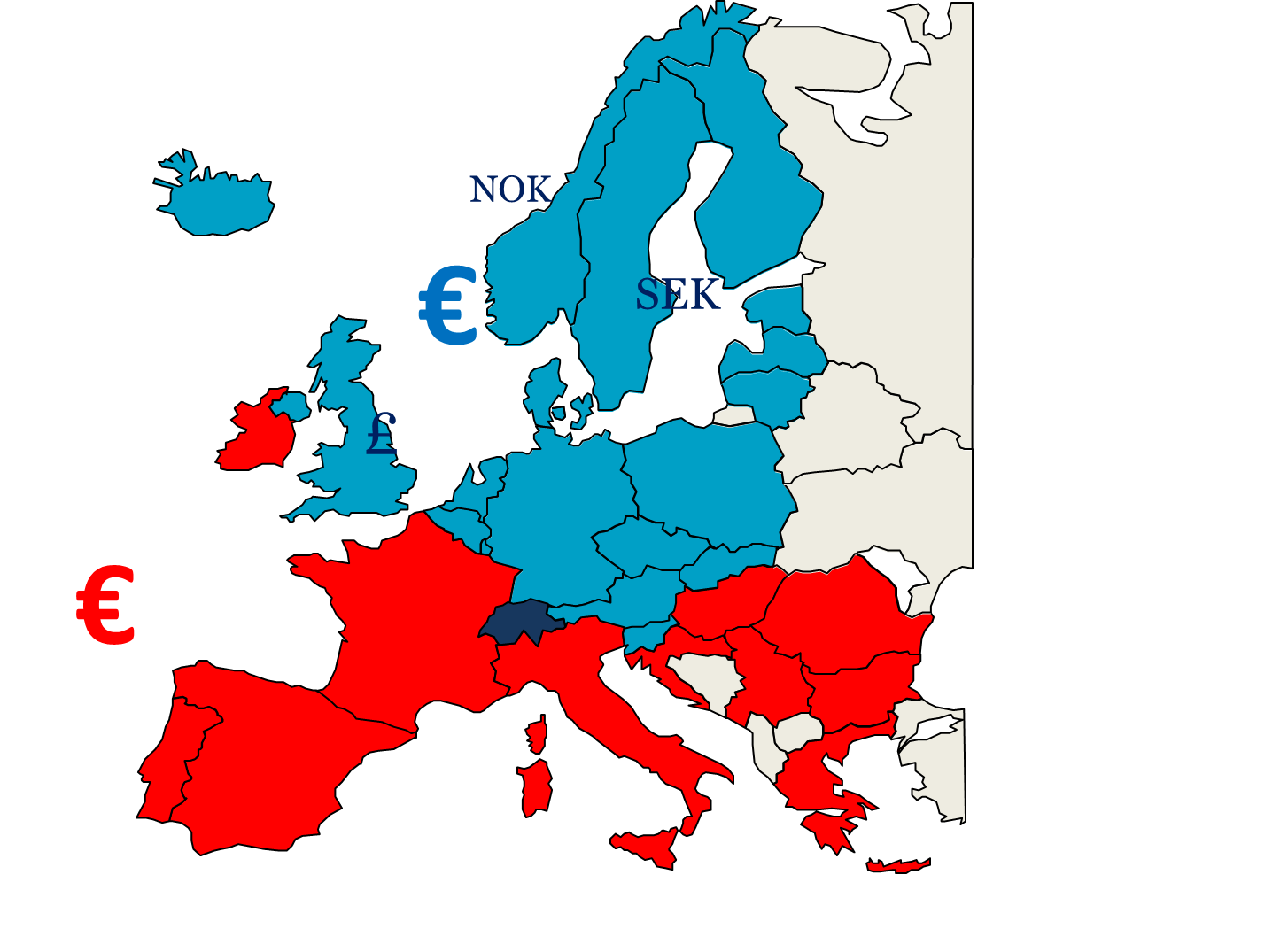
The common thread running through the countries which are now in or entering the Red Euro zone  is that they have reached their current positions because they have all been incredibly profligate in their public sector while being incredibly lax in controlling the excesses of a rampant private banking sector. Of course the private sector “cowboys” have made obscene amounts of money and ridden off into the sunset. But a large number of public sector employees also made economically unjustified gains in the form of increased salaries and inflated pensions and reduced working hours. Now the piper has to be paid and of course those doing the paying are not necessarily those who gained the benefits. There is a pervading sense of the unfairness of it all.

It is only to be expected that those bearing the brunt of the consequences will fight to retain what they have. Portugal has been teetering on the brink of falling into the Red Euro zone and has been struggling to implement the austerity measures that are deemed necessary. Most of the austerity measures in Greece and Italy and Portugal postpone the day of reckoning but don’t really correct for the previous profligacy. Now Portugal’s Constitutional Court has rejected some of the measures for public sector salary and pension reductions as being “unfair”. Portugal continues “muddling through”  and Government sources are playing down the impact of the Court’s rejections but Portugal is one step closer to the Red Euro. There is an argument that formally establishing the Red Euro zone with a lower value than the Blue Euro rather than “muddling through” with all the Euro constraints, would be a better way to go.

(Reuters) Portugal’s constitutional court on Friday rejected four out of nine contested austerity measures in this year’s budget in a ruling that deals a blow to government finances but is unlikely to derail reforms two years after the country’s bailout.

The measures rejected by the court should deprive the country of at least 900 million euros ($1.17 billion) in net revenues and savings, according to preliminary estimates by economists.

…  Debt-ridden Portugal agreed to a 78 billion euro bailout in 2011 from the European Union and International Monetary Fund. The entire package of austerity measures introduced by the 2013 budget is worth about 5 billion euros and includes the largest tax hikes in living memory, which were mostly upheld.

“It’s a lesser evil. … Putting it into perspective, a good manager and leader should not have difficulty finding room in a budget to accommodate this cut,” said Joao Cantiga Esteves, economist at the Lisbon Technical University.

…. The government has called a Cabinet meeting on Saturday, and would not provide any immediate comment. It has to cut the budget deficit to 5.5 percent of GDP this year from 6.4 percent in 2012, when it missed the goal but was still lauded by its EU and IMF lenders for its austerity efforts.

Analysts consider the outcome manageable and say the government should be able to cover the shortfall with additional spending cuts it has been working on at the request of lenders. Analysts say the lenders could also give Portugal more leeway in terms of budget targets. 

…… On Wednesday, the government easily defeated a motion of no confidence, but the move united all the opposition in parliament against it. Socialist opposition leader Antonio Seguro said on Friday the court’s ruling “reinforces our position in d..emanding the government’s resignation.”

…… The 13 constitutional court judges have been scrutinizing articles of the 2013 budget since January when opposition parties argued that cuts to pensions and welfare benefits undermined workers’ basic rights.

The court rejected cuts in pensioners’ and public servants’ holiday bonuses, as well as reductions to sickness leave and unemployment benefits. They upheld tougher measures such as a reduction in the number of tax brackets, which alone brings in an estimated revenue of more than 2 billion euros.

Last year, the court also dealt a blow to government plans for more public-sector wage cuts, forcing it to resort to tax hikes instead. The austerity has provoked mass protests, but rallies in Portugal have been much more peaceful than in countries like Greece or Italy.

Red Euro, Blue Euro

April 5, 2013

The two-€ Europe is effectively here and it is advisable to keep any savings far away from the Red Euro zone:

Spreading Red Euro

Spreading Red Euro