Archive for the ‘Energy’ Category

New report: “wind cannot be relied upon to provide any significant level of generation at any defined time in the future”

April 6, 2011

It is a bit like belabouring the obvious for the upmpteenth time but it has the stamp of authority of  a Consulting firm supported by the John Muir Trust and it is reported in the main stream media. Perhaps – one can dream – some realism will return to the rose-tinted views prevailing about renewable energy.

Intermittent sources of energy cannot – by wishful thinking and pious platitudes alone – become continuous suppliers of electricity until the storage of electricity becomes real. And since electricity is itself energy in a state of flux, it is not amenable to any simple storage as a flux.

The BBC reports:

Wind farms are much less efficient than claimed, producing below 10% of capacity for more than a third of the time, according to a new report. The analysis also suggested output was low during the times of highest demand.

The report, supported by conservation charity the John Muir Trust, concluded turbines “cannot be relied upon” to produce significant levels of power generation.

… The research, carried out by Stuart Young Consulting, analysed electricity generated from UK wind farms between November 2008 to December 2010. Statements made by the wind industry and government agencies commonly assert that wind turbines will generate on average 30% of their rated capacity over a year, it said. But the research found wind generation was below 20% of capacity more than half the time and below 10% of capacity over one third of the time.

It also challenged industry claims that periods of widespread low wind were “infrequent”. The average frequency and duration of a “low wind event” was once every 6.38 days for 4.93 hours, it suggested. The report noted: “Very low wind events are not confined to periods of high pressure in winter. “They can occur at any time of the year.” During each of the four highest peak demands of 2010, wind output reached just 4.72%, 5.51%, 2.59% and 2.51% of capacity, according to the analysis.

It concluded wind behaves in a “quite different manner” from that suggested by average output figures or wind speed records.

The report said: “It is clear from this analysis that wind cannot be relied upon to provide any significant level of generation at any defined time in the future. There is an urgent need to re-evaluate the implications of reliance on wind for any significant proportion of our energy requirement.”


Offshore wind farms drive beaching of whales

March 15, 2011

Wind turbines on land are not very healthy for large birds and it seems that off-shore wind farms drive whales on to beaches where they are stranded and perish. The Telegraph reports on research from St. Andrews University:

Environmentalists have blamed submarines’ sonar and a ground-breaking study has confirmed that sonar does disturb the navigation of whales but it has suggested that offshore wind farms, as well as oil rigs, and even passing ships, posed an even greater threat.

Scientists at the University of St Andrews studying beaked whales, a species that frequently becomes beached in Britain, concluded that they were extraordinarily timid creatures that were scared “by virtually anything unusual”, despite being the size of a rhinoceros and weighing the same as a London bus.

The findings suggest that more strandings can be expected as ministers are planning a major expansion in the number of offshore wind farms, especially off the coast of Scotland, which is an area where whales congregate to feed.

….. Prof Ian Boyd, the project’s chief scientist, said: “There has always been an association with sonar and the stranding of beaked whales, but now we really have proof this is the case.

“The sonar sounds that are used in naval anti-submarine exercises to detect submarines probably makes the beaked whales ‘get herded’ and pushed ashore. “But, maybe even more importantly, we have discovered that beaked whales are scared by virtually anything unusual.”

Maryland and Washington begin to sound like Delhi

February 6, 2011

In India, planned blackouts are used commonly for the management of electricity load. Delhi is used to regular black-outs and there is is no likelihood in the near future that the availability and quality of electric power will be sufficient to eliminate this system of load management. There is no office or shopping mall or large home in Delhi which does not plan for this by installing diesel generators as back-up. Smaller households or those which cannot afford generators use inverters which are sufficient for lighting and perhaps a fridge during an outage but cannot supply enough power for long enough for any air-conditioners or any heating. Even when power is available, the voltage variation is so large that virtually all electrical equipment must be protected by voltage stabilisers.

The black-outs in Delhi occur most often at peak times (around breakfast or dinner) and commonly at night during low load when equipment is shut off for maintenance to be carried out. Unplanned outages are apt to occur at any time. It is on summer nights that the sounds of Delhi are drowned by those of generators cutting in to keep air-conditioners running. There is no possibility of sound regulations being implemented to limit this noise and for those who have difficulty to sleep there is no alternative but to sound-proof their bed-rooms or to use ear-plugs.

The quality and reliability and availability of electric power in the more developed countries (Europe, Japan, US) is often quoted as the target for the Indian power generation and distribution system to aspire to.

But it seems that the US grid is now so weak that parts of Maryland and Washington are beginning to sound like Delhi. The Wasington Post reports:

map

Blackouts 2010 in Maryland and Washington

In Pepco territory, blackouts mean more home generators, more noise complaints

For Arthur Bennett, blackouts now come with a soundtrack.When last month’s “thundersnow” knocked out power in Bennett’s Montgomery County neighborhood, the preindustrial hush inside his house – when even the refrigerator seemed to hold its breath – soon gave way to the two-stroke roar of engines up and down his block.

Bennett, like many residents of Pepco‘s service area in Maryland and the District, has concluded that blackouts are likely to get even louder as the utility’s fed-up customers turn increasingly to backup power. According to retailers and electricians, home generator sales are booming in the area Pepco serves, especially since the company has been plagued by repeated, prolonged outages
over the past few years. Portable generators sold out at several home stores after the latest storm, and installers report that sales of high-end whole-house units have skyrocketed.

Jim Holt of Gaithersburg’s Holt Electrical said his sales of home generators have been climbing steadily and reached a near “level of panic” after the last blackout – mainly on Pepco’s turf. …….

…………. One thing both generator owners and their juiceless neighbors can agree on is the frustration of having to debate this issue at all. “I really think it’s kind of scandalous that in the capital of the world, we’ve got third-world reliability for electric power,” said Larry Posner of Shepherd Park in Northwest.

Read the entire article.

Wind Power capacity compromised in Texas: Rolling blackouts as Mexico supplies some back up

February 4, 2011

That wind power generating capacity is intermittent capacity and cannot be relied upon is obvious but sometimes escapes notice in the enthusiasm for “renewable energy”. That wind power must be backed up by other more reliable generating capacity for the periods when winds are too low or too high or when the weather is too cold is also often glossed over. That wind power must be used when the wind does blow irrespective of level of demand  and thereby displace more stable power (thus rendering it more expensive) is an inevitable consequence.

The following report comes as no surprise.

METEOROLOGICAL MUSINGS reports:

The Electric Reliability Council of Texas said 7,000 megawatts of generating capacity tripped [“tripped” means failed]Tuesday night, leaving the state without enough juice. That’s enough capacity to power about 1.4 million homes. By rotating outages, ERCOT said it prevented total blackouts.
“We have the double whammy of extremely high demand, given the lowest temperatures in 15 years, combined with generation that’s been compromised and is producing less than expected or needed,” said Oncor spokeswoman Catherine Cuellar. Oncor operates power lines in North Texas and facilitated the blackouts for ERCOT.
The article didn’t give a clue as to what generating capability failed, but I can make a pretty good guess: Wind energy…
For a time, Texas was bragging about being the #1 state for “wind power” (it still is) and we were bombarded with TV commercials and newspaper editorial touting the “Pickens Plan” for massive spending on wind energy. Pickens himself was building a huge wind farm in northwest Texas. He has now ceased construction.
Now, because of relying so much on wind power, the state is suffering blackouts.
Mexico is trying to help by shipping power to Texas, but it is not enough.

Wind turbine manufacturers in trouble

January 7, 2011
Suzlon wind energy project

Suzlon wind energy project: Image via Wikipedia

http://www.moneycontrol.com/news/business/consolidation-likelyrenewable-energy-sector-ey_510295.html

Beleaguered wind power major Suzlon, may be on the block. Sources indicate that Spain’s Gamesa is looking to pick up a majority stake in the company. Suzlon added in its statement to the stock exchanges that the news was both speculative in nature and inaccurate. Market rumours also have it that Suzlon’s founders the Tanti family may sell its entire 55% stake to Gamesa’s UK unit.

http://economictimes.indiatimes.com/markets/stocks/stocks-in-news/suzlon-investors-wonder-over-the-companys-accurate-picture-/articleshow/7219558.cms

Suzlon is the most leveraged wind company with net debt to earnings before interest, taxes, depreciation and amortisation ratio of 4.2, say JPMorgan analysts. That compares with less than 1 for global peers.
There are two ways out when saddled with Himalayan debt – either sell assets to pay off the debts, or declare bankruptcy. Suzlon is selling off stakes in assets such as gearbox-maker Hansen. But the question is what could be going on in the mind of promoter Tulsi Tanti, who was the nation’s eighth-richest man in 2006. After all, Mr Tanti had picked ‘Suz’ in Suzlon from the word, soojh-boojh, which means intelligence, and ‘lon’ from the word, loan. One part of it, ‘lon’, seems to have run longer than desired. So, will the other inspiration, intelligence, come into play?
If investors bet that intelligence would play a more dominant role than passion, then they may not be wrong in speculating that a possible stake sale could happen. Of course, at what valuation is anyone’s guess.
Mr Tanti, who once delivered fortunes for private funds such as Chryscapital and Citigroup, now heads a company whose shares are down more than 85% from their peak. The company may have created a record in going for seven share sales in five years, but there may be no one to buy in the next issue.

http://www.guardian.co.uk/business/2011/jan/06/wind-turbine-maker-skykon-in-administration

Britain’s nascent wind manufacturing industry has suffered a blow after the owner of Scotland’s only large turbine plant went into administration. The plant near Campbeltown, owned by Danish firm Skykon, has been closed and more than 120 staff sent home without pay after Ernst & Young was appointed as administrators this week.

A spokesman for the administrators said several expressions of interest had been received for the business and that staff would be updated next week. The future of the plant has been uncertain for several years. The Scottish government last year agreed to provide a £9m rescue loan to persuade Skykon to buy it from Danish rival Vestas. But Skykon has been in insolvency proceedings for months in Denmark after a slowdown in wind turbine orders across Europe. Only about £2m of the loan has already been paid. Ernst & Young declined to comment on whether the Scottish government would get that money back.

The prospects of production resuming at the plant are bleak. The number of new wind farms being planned in Europe is falling because governments are withdrawing subsidies to cut budget deficits while energy companies’ balance sheets are becoming increasingly strained.

Now it’s green vs. green: Sierra Club files suit against Calico solar plant

January 5, 2011

It had to come.

The unholy alliance between the extremists of conservation and environmentalism and global warming is not sustainable. Faith is set against faith. Now conservationists are beginning to find the vast tracts of undeveloped land needed by solar projects objectionable.

Reuters reports:

(Reuters) – A leading environmental advocacy group is suing the state of California’s Energy Commission over its approval of a giant solar plant, underscoring the growing challenge to the nation’s renewable-energy goals from within the environmental community.

The lawsuit, filed December 30 in California’s Supreme Court by the Sierra Club, alleges that state regulators improperly approved the plant, known as the Calico Solar Project.

The suit, obtained by Reuters, charges that regulators failed to fully mitigate the project’s impact on rare plant and animal species, and asks the court to void approval and permits for the plant………. Conflicts between solar proponents and foes are taking on growing importance as the industry experiences a boom, particularly for California. The lawsuit is the latest in a string of suits targeting planned solar plants, potentially setting back the development of solar energy and derailing state and federal commitments to lessening dependence on fossil fuels.

Last week, a group called La Cuna de Aztlan, which represents Native American groups such as the Chemehuevi and the Apache, filed a challenge in federal court to the federal government’s approval of six big solar plants.

In December, the Quechan Indian tribe won an injunction blocking construction of the Imperial Valley solar project, under development near California’s border with Mexico by NTR’s Tessera Solar. The Calico plant was also under development by Tessera until the company sold the plant last month to K Road Sun, a subsidiary of New York investment firm K Road Power. Tessera has been struggling to find funding for its plants, which cost about $2 billion.

Now conservationists come out against wind power

January 3, 2011
Whooping Crane

Whooping crane: Image via Wikipedia

Officials with American Bird Conservancy on Wednesday cited data from the U.S. Fish and Wildlife Service that estimates 400,000 birds of various species are killed by turbine blades annually reports the Omaha World Herald.

One of the nation’s largest bird conservation groups says rapid construction of wind energy projects will endanger several avian species……That includes the whooping crane, a famous migratory bird and annual visitor to central Nebraska.

“Golden eagles, whooping cranes and greater sage-grouse are likely to be among the birds most affected by poorly planned and sited wind projects,” said Kelly Fuller, a spokeswoman for the conservancy.

“Unless the government acts now to require that the wind industry respect basic wildlife safeguards, these three species will be at ever greater risk.”

Officials with Nebraska Public Power District and MidAmerican Energy Co. said potential wind farm developments are carefully examined by experts and conservationists to determine their ecological impact.

“We monitor for bird kills but haven’t seen anything of significance,” said Mark Becker, an NPPD spokesman. “But we have not heard of any endangered species or any endangered birds being killed in Nebraska.”


Russian oil pipeline to China in operation

January 2, 2011

Xinhua News:

MOHE, Heilongjiang, Jan. 2 (Xinhua) — Some 42,000 tonnes of crude oil had as of 5:48 a.m. Sunday flowed through an oil pipeline linking Russia’s far east and northeast China, 24 hours after the pipeline began operating, a spokesman for the Chinese operator of the pipeline said.

Pipelines and oil storage tanks of China and Russia crude oil pipeline in Mohe, northeast China's Heilongjiang Province, Jan. 1, 2011: (Xinhua/Wang Jianwei)

The pipeline, which originates in the Russian town of Skovorodino in the far-eastern Amur region, enters China at Mohe and terminates at northeast China’s Daqing City. A total of 1.32 million tonnes of oil is scheduled to be transported to China through the pipeline in January, said a spokesman for Pipeline Branch of Petro China Co., Ltd. (PBPC), the operator of the Chinese section of the pipeline.

The 1,000-km-long pipeline will transport 15 million tonnes of crude oil from Russia to China per year from 2011 until 2030, according to an agreement signed between the two countries. Some 72 kilometers of the pipeline is in Russia while 927 km of it is in China.


King Coal: The global battle to control resources

December 26, 2010

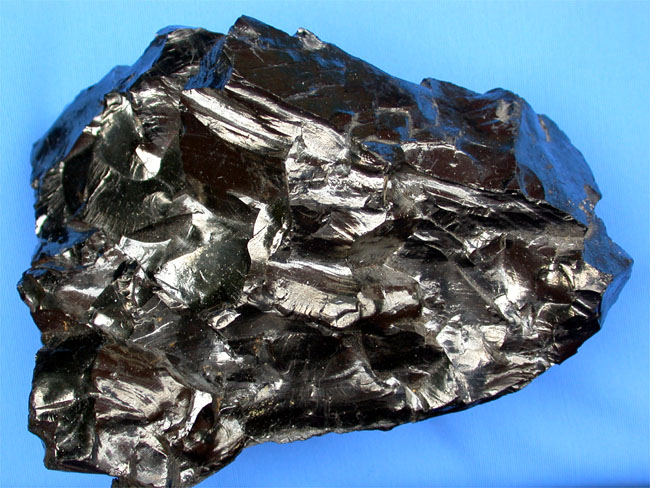
Riversdale Mining Ltd. has 13 billion metric tonnes of known coking and thermal coal reserves in its Benga and Zambeze projects in Mozambique. A global battle is now hotting up for the acquisition of Riversdale and the potential bidders clearly have no doubts about the continued use of coal and are not greatly impressed by the passing fad of Global Warming alarmism.

King Coal: image pitt.edu

Bloomberg reports:

International Coal Ventures Ltd., an Indian state-run joint venture, is studying an offer for Riversdale Mining Ltd. to counter a A$3.9 billion ($3.9 billion) bid from Rio Tinto Group.

ICVL appointed Citigroup Inc. to examine a possible takeover offer for the Sydney-based coal company with mines in Mozambique, the venture’s chairman C.S. Verma said yesterday. London-based Rio yesterday bid A$16 a share for Riversdale, securing 14.9 percent of the company in pre-bid agreements.

Indian companies are seeking coal mines overseas to ensure raw material supplies for producing steel and electricity. Brazil’s Vale SA or Eurasian Natural Resources Corp. may make bids, according to Sanford C. Bernstein & Co., as Tata Steel Ltd., Riversdale’s biggest holder, said it will study Rio’s offer “in the context of other alternatives” available to Tata. “The A$16 cash offer is unlikely to secure acceptance from all of Riversdale’s shareholders,” analysts led by Hayden Bairstow at CLSA Asia-Pacific Markets, said yesterday in a report, raising his price target for Riversdale by 3 percent to A$18. Riversdale’s “Benga and Zambeze coal projects are world class and we believe other suitors may show an interest in Riversdale now a formal bid has been tabled,” he said.

Tata Steel holds 24 per cent stake in Riversdale and is its largest shareholder. Sources say there have been talks between ICVL and Tata Steel for a joint bid or at the very least support from Tata Steel for ICVL’s bid. However, ICVL did not confirm that any talks took place between the consortium and Tata Steel reports The Hindu Business Line.

But more bidders are appearing and it is likely that the shareholders of Riversdale can expect a much higher price than what is on the table now. The Guardian reports that:

The global battle for control of the world’s natural resources flared again when it emerged that Anglo American could gatecrash Rio Tinto’s plans to buy Riversdale Mining, the Australian coking coal group, for £2.5bn.

Headed by chief executive Cynthia Carroll and chairman Sir John Parker, Anglo has joined a list of possible counter-bidders for Riversdale, whose African business produces coal for the fast-growing Asian steel industry.

Evidence of the importance of coking coal to China surfaced recently when Riversdale signed an agreement with Wuhan Iron and Steel to jointly develop Riversdale’s huge Zambeze coal reserves in Mozambique.

Anglo, which is believed to have appointed Morgan Stanley to advise on its options, will face stiff competition, with the Wall Street Journal reporting that Tata Steel of India, which controls 24% of Riversdale, is considering an offer.

Another potential bidder is ICVL, an Indian consortium that has appointed Citigroup as a financial adviser and mandated the bank to report back on the viability of a bid that would top Rio’s promise of A$16 a share.

Tata Steel has just received shareholder approval “for raising of additional long-term resources through issue of securities, including equity shares with differential rights as to voting and dividend, up to Rs 7,000 crore ($1,550 million)”. A company press release said “Tata Steel notes the takeover bid for Riversdale Mining announced by Rio Tinto. Tata Steel will evaluate the takeover bid in the context of other alternatives available to Tata Steel.” Riversdale is important for the long-term coking coal security for Corus. Tata Steel is already entrenched in its Mozambique coal mining project with a strategic stake and long-term supply contract. With Tata Steel’s share of Riversdale valued at almost $1 billion by the Rio Tinto bid it is likely that the final selling price will be significantly higher than Rio Tinto’s bid.

An educated guess would suggest a final selling price of over $5 billion or over A$20 per share.


Using cerium oxide to mimic absorption of solar energy by plants

December 24, 2010

A new paper in Science:

Science 24 December 2010: Vol. 330 no. 6012 pp. 1797-1801 DOI: 10.1126/science.1197834

High-Flux Solar-Driven Thermochemical Dissociation of CO2 and H2O Using Nonstoichiometric Ceria by William C. Chueh, Christoph Falter, Mandy Abbott, Danien Scipio, Philipp Furler, Sossina M. Haile, and Aldo Steinfeld

In the prototype, sunlight heats a ceria cylinder which breaks down water or carbon dioxide

In the prototype, sunlight heats a ceria cylinder which breaks down water or carbon dioxide

Abstract:

Because solar energy is available in large excess relative to current rates of energy consumption, effective conversion of this renewable yet intermittent resource into a transportable and dispatchable chemical fuel may ensure the goal of a sustainable energy future. However, low conversion efficiencies, particularly with CO2 reduction, as well as utilization of precious materials have limited the practical generation of solar fuels. By using a solar cavity-receiver reactor, we combined the oxygen uptake and release capacity of cerium oxide and facile catalysis at elevated temperatures to thermochemically dissociate CO2 and H2O, yielding CO and H2, respectively. Stable and rapid generation of fuel was demonstrated over 500 cycles. Solar-to-fuel efficiencies of 0.7 to 0.8% were achieved and shown to be largely limited by the system scale and design rather than by chemistry.

The BBC says:

A prototype solar device has been unveiled which mimics plant life, turning the Sun’s energy into fuel. The machine uses the Sun’s rays and a metal oxide called ceria to break down carbon dioxide or water into fuels which can be stored and transported.

Conventional photovoltaic panels must use the electricity they generate in situ, and cannot deliver power at night. Details are published in the journal Science. The prototype, which was devised by researchers in the US and Switzerland, uses a quartz window and cavity to concentrate sunlight into a cylinder lined with cerium oxide, also known as ceria.

Ceria has a natural propensity to exhale oxygen as it heats up and inhale it as it cools down.

If as in the prototype, carbon dioxide and/or water are pumped into the vessel, the ceria will rapidly strip the oxygen from them as it cools, creating hydrogen and/or carbon monoxide. Hydrogen produced could be used to fuel hydrogen fuel cells in cars, for example, while a combination of hydrogen and carbon monoxide can be used to create “syngas” for fuel. It is this harnessing of ceria’s properties in the solar reactor which represents the major breakthrough, say the inventors of the device. They also say the metal is readily available, being the most abundant of the “rare-earth” metals. Methane can be produced using the same machine, they say.

The prototype is grossly inefficient, the fuel created harnessing only between 0.7% and 0.8% of the solar energy taken into the vessel. Most of the energy is lost through heat loss through the reactor’s wall or through the re-radiation of sunlight back through the device’s aperture.

But the researchers are confident that efficiency rates of up to 19% can be achieved through better insulation and smaller apertures. Such efficiency rates, they say, could make for a viable commercial device.

“The chemistry of the material is really well suited to this process,” says Professor Sossina Haile of the California Institute of Technology (Caltech). “This is the first demonstration of doing the full shebang, running it under (light) photons in a reactor.”

It has been suggested that the device mimics plants, which also use carbon dioxide, water and sunlight to create energy as part of the process of photosynthesis. But Professor Haile thinks the analogy is over-simplistic. “Yes, the reactor takes in sunlight, we take in carbon dioxide and water and we produce a chemical compound, so in the most generic sense there are these similarities, but I think that’s pretty much where the analogy ends.”

While cerium is quite abundant in the earth’s crust it is one of the “rare earths” and current production is dominated by China.  Cerium oxide, which is used to finish semiconductors and obtained from the rare earth element cerium, rose in price from $ 4.70 per kg on April 20 to 36 U.S. dollars a kilo on Tuesday, October 19. An increase of 665 percent.