Archive for the ‘Environment’ Category

Sydney shivers! Can’t be climate must be weather.

September 30, 2010

Temperatures in Los Angeles must be due to climate but the cold in Sydney is probably only weather !!!

From the Sydney Morning Herald:

After their coldest winter in 13 years Sydney residents have just experienced their coldest September in five years. “September was an unusual month in terms of the lack of warm days across much of south-eastern Australia,” weatherzone meteorologist Brett Dutschke said.

When both daytime and overnight temperatures were combined, Sydney’s average temperature this month came in at just under 17 degrees. This made it the coldest September in five years, despite being one degree above the long-term norm. It was also the coldest September in terms of daytime temperatures in three years.

Sydney Winter Festival 2010

As far as rainfall goes, Sydney failed to receive the long-term monthly average of 69mm, despite having the normal number of rain days, 10. The city gained only 42mm, the lowest for September since 2007.

“With La Nina likely to peak in the next few months, we are expecting rainfall to increase, trending to near or above average into summer,” Mr Dutschke said. “During this period, daytime temperatures should be near or below average. Overnight temperatures are likely to be close to normal.”

Residents of Melbourne have just experienced their coldest September days in 16 years, Mr Dutschke said. Warmer days ahead will provide Adelaide residents with a good thawing out after enduring their coldest September in 18 years, Mr Dutschke said.

“CO2 is a valuable resource” – New Scientist

September 29, 2010
Carbon dioxide

CO2 molecule

Greenhouses to negate greenhouse effects?

The New Scientist today saysCarbon dioxide may be bad for the climate, but it’s good for the roses. Perhaps it’s time we rehabilitated this gaseous villain”.

While plenty of commercial greenhouses top up their air with extra CO2, what is unusual about this one is where its CO2 comes from. Until a few years ago, the greenhouse’s operators used to burn natural gas for the sole purpose of generating CO2. Today it is piped from a nearby oil refinery. Each year, 400,000 tonnes of CO2 are captured and then piped to around 500 greenhouses between Rotterdam and The Hague, where it is absorbed by the growing plants before they are shipped for sale around the world .

“It’s time we stopped thinking of CO2 solely as a pollutant and viewed it as a valuable resource,” says Gabriele Centi, a chemist at the University of Messina, Italy.

Cash for carbon

Capturing carbon dioxide from smokestacks and then pumping it underground is going to be an expensive way to combat climate change. For a coal-fired power plant, for instance, the process is expected to add 30 per cent to the cost of generating electricity. However, a handful of entrepreneurs are already beginning to turn a costly waste product into a valuable commodity.

Wikipedia

Take some flower-growing greenhouses in the Netherlands. There, CO2 emitted from a nearby oil refinery is piped to the plants, boosting their growth (pictured, and see main story). The scheme began in 2005, when Organic Carbon Dioxide for Assimilation of Plants (OCAP), a newly formed gas supplier, began pumping waste CO2from the refinery to the greenhouses along a disused oil pipeline. The refinery sells the CO2 to OCAP at a profit, which then sells the gas to greenhouses at a price lower than what they were paying to burn natural gas to generate CO2. “I think the best way to fight climate change is making money out of it, otherwise our efforts wouldn’t survive in the long term,” says OCAP director Hendrik de Wit.

Source: http://www.newscientist.com/article/mg20727791.100-emission-control-turning-carbon-trash-into-treasure.html?full=true

Tile Drainage: A boon for farming but cause of dead zones in the gulf

September 28, 2010

Tile drainage is an agriculture practice that removes excess water from soil subsurface to enable farming in wetlands. Whereas irrigation is the practice of adding additional water when the soil is naturally too dry, drainage brings soil moisture levels down for optimal crop growth.

Tile drainage ditch (Credit: Todd Royer)

A new paper in the Journal of Environmental Quality by Mark B. David, Laurie E. Drinkwater and Gregory F. McIsaac, Sources of Nitrate Yields in the Mississippi River Basin confirms that the run-off Nitrates from farming in the Missisipi river basin into the Gulf of Mexico leads to seasonal hypoxia. In the summer of 2010 this dead zone in the Gulf spanned over 7,000 square miles. The increased production of crops in this region for ethanol production has only exacerbated the problem. The dead zone in the gulf is a yearly event to be compared to those caused by sporadic oil spills.

gulf of mexico dead zone image

Gulf areas affected by hypoxia: NOAA

(Journal of Environmental Quality 2010 39:1657-1667) via EurekAlert

Tile drainage in the Mississippi Basin is one of the great advances of the 19th and 20th centuries, allowing highly productive agriculture in what was once land too wet to farm. In fact, installation of new tile systems continues every year, because it leads to increased crop yields. But a recent study shows that the most heavily tile-drained areas of North America are also the largest contributing source of nitrate to the Gulf of Mexico. Scientists from the U of I and Cornell University compiled information on each county in the Mississippi River basin including crop acreage and yields, fertilizer inputs, atmospheric deposition, number of people, and livestock to calculate all nitrogen inputs and outputs from 1997 to 2006. For 153 watersheds in the basin, they also used measurements of nitrate concentration and flow in streams, which allowed them to develop a statistical model that explained 83 percent of the variation in springtime nitrate flow in the monitored streams. The greatest nitrate loss to streams corresponded to the highly productive, tile-drained cornbelt from southwest Minnesota across Iowa, Illinois, Indiana, and Ohio.

Farmers are not to blame,” said University of Illinois researcher Mark David. “They are using the same amount of nitrogen as they were 30 years ago and getting much higher corn yields, but we have created a very leaky agricultural system. This allows nitrate to move quickly from fields into ditches and on to the Gulf of Mexico. We need policies that reward farmers to help correct the problem. A lot of people just want to blame fertilizer, but it’s not that simple,” David said. “It’s fertilizer on intensive corn and soybean agricultural rotations in heavily tile-drained areas. There is also an additional source of nitrogen from sewage effluent from people, although that is a small contribution. It’s all of these factors together.”

Ancestors to the rescue? Mammoth ivory could reduce elephant poaching.

September 28, 2010

Elephant poaching in Africa continues fuelled by the demand for ivory – even illegal ivory. Yesterday 90kg of illicit ivory was seized entering Thailand from Ethiopia.

African elephant

Twenty years after the international trade in ivory was banned the killing of elephants for their tusks is still widespread. From a population of about 5 million African elephants in 1950, numbers reduced to about 450,000 in 1989 due to loss of habitat and the ivory trade. Since the ban in 1990 numbers have increased but only by about 100,000 and significantly less than hoped for. In 2007 45 elephants were killed by poachers in Kenya alone and in 2009 this had increased to 271. Mass poaching still occurs all over Africa and last year elephants in Sierra Leone were wiped out at its only Wildlife Park. One ton of ivory from about 100 elephants was seized in Cameroon last year on its way to China.

The Woolly Mammoth at the Royal BC Museum, Vic...

Wikipedia: Woolly Mammoth

But modern day elephants may get help from an unlikely source. Their woolly mammoth ancestors who became extinct 4000 years ago are beginning to throw their dead weight around as they emerge from under the Siberian permafrost. Every spring and summer mammoth carcases are revealed in Siberia and it is estimated that there are more than 150 million carcases preserved and recoverable. They have been recovered for thousands of years whenever they have been found. But now with the use of aerial surveys and with the high demand for ivory, mammoth ivory is beginning to be recovered in large quantities and used instead of illegal ivory. It is promoted as “ethical” ivory and the prices are high enough for Russian entrepreneurs to expand their digging.

“Russia’s mammoth ivory industry expands: what effect on elephants?”

by Esmond Martin, Chryssee Martin, Pachyderm No. 47 January–June 2010
http://www.pachydermjournal.org/index.php/pachy/article/view/171/107

Abstract: The commerce in woolly mammoth tusks (Mammuthus primigenius) in Russia, the main source for this raw material, has been going on for thousands of years, but during the communist period (1917-1989) the trade declined sharply. Since the early 1990s the domestic and international trade in these tusks has greatly expanded due to the freeing up of the Russian economy, more foreign visitors to the country and greater demand due to the prohibition of international trade in elephant ivory in 1990. In recent years, 60 tonnes of mammoth tusks have been exported annually from Russia, mostly to Hong Kong for carving in mainland China. Additionally, there are local carving industries in several areas of Russia, but most of the objects emerging from these locales are sold within the country. Many thousands of recently-made mammoth ivory items are for sale in Asia, Europe and North America. People wishing to buy an elephant ivory object may purchase a similar one crafted from mammoth ivory that is legal and free of cumbersome paperwork. Mammoth ivory items are not for sale in Africa. If mammoth objects were to be offered in Africa, they could serve as cover for elephant ivory items. There are pros and cons for supporting a mammoth ivory trade in respect to elephant conservation. At the moment, however, there is no evidence that the worldwide mammoth ivory trade is adversely affecting the African or Asian elephant. For this reason, and because the species is extinct and large quantities of tusks are still available in Siberia, the commerce in mammoth ivory should not be banned.

The Telegraph reports:

It is a phenomenon that has Russia’s businessmen rubbing their hands together as mammoth ivory can command a much higher price than elephant ivory and sells for as much as £330 per kilogram. Elephant conservationists are hoping that the guilt-free mammoth ivory trade continues to flourish and eventually squeezes out the illegal trade in elephant tusks altogether.

“The large quantities of mammoth tusks imported into Hong Kong, which are mostly sent to the Chinese mainland for carving, probably reduce demand for elephant ivory from Africa,” the report, in a specialist journal called Pachyderm, concluded. “This may in the long run lower elephant ivory prices and reduce incentives to poach elephants.”

Size comparison animalpicturesarchive.com

Is Greenpeace fabricating data?

September 28, 2010

In July this year Greenpeace trumpeted

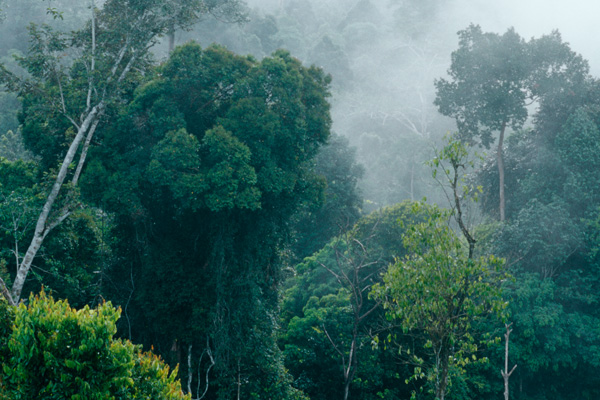
rain forest

“A new investigative report from Greenpeace, ‘How Sinar Mas is Pulping the Planet’, shows how major brands like Walmart, Auchan and Kentucky Fried Chicken (KFC) are fueling climate change and pushing Sumatran tigers and orang-utans towards the brink of extinction. These companies are using or selling paper made from Asia Pulp and Paper (APP), part of the notorious Sinar Mas group that is destroying Indonesia’s rainforests and carbon-rich peatlands.”

The Jakarta Globe reports

Sinar Mas commissioned an independent audit which has now accused Greenpeace of “false and misleading information to attack a company’s credibility”. International Trade Strategies Global (ITS) conducted a peer-review on Greenpeace’s report, “How Sinar Mas is Pulping the Planet.”

“The evidence shows that Greenpeace provided quotes that don’t exist, maps that show concessions that don’t exist, and used source material with high margins of error that was cited as absolute fact,” said Alan Oxley, chief executive office of the Melbourne-based ITS Global on the press release.

Oxley said the Greenpeace report was highly misleading and indefensible. In addition, the audit stated that a map in the Greenpeace report shows four concessions which don’t exist. “Sadly this is not an isolated incident. Greenpeace has exaggerated claims in the past.  When we see reports like this with such obvious factual inaccuracies it makes us call into question the real Greenpeace agenda, risking the greater good to achieve its own political ends.”

However, Bustar Maitar, lead forest campaigner for Greenpeace Indonesia, dismissed ITS’s report, saying it was biased. “If they claim it’s an independent report, it’s a joke because Alan Oxley is speaking as an APP representative,” he said.

New Zealand to use dung beetles to combat global warming!

September 27, 2010
Allot of dung beetles having a feast on horse ...

Dung beetles feasting on horse manure

The Dung Beetle Release Strategy Group (it really does exist) says the introduction of up to 11 foreign species of dung beetle into New Zealand, which hoover up animal dung for food, will lead to a reduction in the greenhouse gas byproduct of dung, nitrous oxide.

Group spokesman Andrew Barber said the introduction of the beetles from Australia, the south of France, Spain and South Africa, would bring several benefits for farmers. Among these were the beetles’ ability to improve pastures and soil profile by tunnelling 30cm to 60cm to bury manure, aerating the soil and enabling better water penetration, reducing the need for fertilisers.

Mr Barber said they would also reduce greenhouse gas emissions from dung. The beetles aid carbon sequestration by storing the carbon contained in the organic matter deep in the soil.

Dung beetle

Image via Wikipedia: Dung beetle

Entomologist Ruud Kleinpaste doubted the introduction of dung beetles would cause an ecological upheaval, despite earlier animal imports such as possums, rabbits and mustelids that have become expensive problems. He said it was unlikely that they would compete with the 17 species of native dung beetles in native forests. But he urged caution. “We have mammals here now and the poo is causing nitrification and causing major pollution on our farms,” he said.

Mr Barber said that if the idea were approved it could take 15 to 20 years for the beetles to become fully established and for their labours to become obvious.

Source: http://www.nzherald.co.nz/the-changing-world/news/article.cfm?c_id=1502962&objectid=10675713

Kilimanjaro ice loss was due to tree felling

September 26, 2010

Mt. Kilimanjaro: blog.gohoto.com

The New Scientist reports a new paper by Nicholas Pepin from the University of Portsmouth and his colleagues which suggests that extensive local deforestation in recent decades has likely reduced this flow of  warm, moist air up the Kilimanjaro mountainside depleting the mountain’s icy hood. Trees play an important role here by providing moisture through transpiration which add to the ice cap.

The montane circulation on Kilimanjaro, Tanzania and its relevance for the summit ice fields: Comparison of surface mountain climate with equivalent reanalysis parameters

by N.C. Pepin, W.J. Duane and D.R. Hardy

Article in press: Global and Planetary Change

Of course it’s possible that global warming led – by some unknown mechanism – to the deforestation — but it seems highly unlikely.

“We don’t want to be poor any more” – but the WWF is not listening

September 26, 2010

Laos says it rejects calls for a dam moratorium on the Mekong River because it wants cheap power to develop its economy despite threats to fish habitats. The Southeast Asian nation moved this week to secure regional approval for the first major hydropower plant on its stretch of the lower Mekong in the face of protests from international conservation groups. The Sayaboury dam is to be built across a part of the Mekong that flows through Laos.

Mekong and its main tributaries.

Wikipedia: Mekong and tributaries

The backers of the 1260 MW Sayaboury Hydro project include the World Bank and the Electricity Generating Authority of Thailand (EGAT), a state utility that signed an agreement in Laos in June to buy power once the new dam’s turbines come to life. The BBC reports that the World Bank would provide loans and guarantees for the $1.2bn project. The decision comes after nearly 10 years of discussions with the Laos government.

Laos is a poor, landlocked country which has few viable industries. But it does have plenty of mountains and rivers, and that is why it is pinning its hopes for the future on hydroelectric power. Nam Theun 2 is the country’s largest dam project, on a tributary of the mighty Mekong. It is designed to produce electricity for export to neighbouring Thailand, earning valuable foreign currency that Laos says it will use to alleviate poverty.

“We don’t want to be poor any more,” said Viraphone Viravong, director general of the country’s energy and mines department. “If we want to grow, we need this dam.”

But needless to say the WWF and The Guardian are opposed:

Giant Catfish _Pangasianodon gigas_ ©Sut.jpg

Giant dog-eating Catfish

Catfish the length of cars and stingrays that weigh more than tigers are threatened by the proposed 800m barrier.

“This dam is the greatest challenge the Mekong River Commission has faced since it was formed. It is the most serious test of its usefulness and relevance,” said Marc Goichot, of the WWF. “It is already very clear this dam would amplify and accelerate the negative impacts of Chinese dams to the Mekong delta. What are the other impacts?”

It has taken 10 years to get this far, but WWF supports a delay in the approval of the mainstream dams, including the Sayabouly hydropower dam in Sayabouly Province, Laos — and let the poverty and misery continue.

Spring blizzards in New Zealand

September 22, 2010

The Southern Hemisphere is still facing bitterly cold weather.

Southland, New Zealand

The 1st of September is usually designated as the start of spring in New Zealand. Lambing is in full swing but six days of blizzards are being called the worst spring storm in living memory. Cars, lambs, and buildings have all fallen victim to the unusually heavy, wet snow that has fallen in Southland. Seven trampers were rescued by helicopterafter being caught in the snowstorm that has swept South Island national parks. A roof of a stadium collapsed in Southland under the weight of wet snow. A sixth day of snow, rain, wind, hail and sleet was forecast for the already battered coastal belt from Colac Bay in Southland, parts of Central Southland, the Catlins, Owaka and Clinton. Three snowfalls of up to 15cm since Saturday had left ground conditions so wet and muddy that newborn lambs had nowhere dry to go.

A ewe shows concern for her lamb

BARRY HARCOURT/The Southland Times

Exactly how many lambs have been killed will not be known until tailing but at an expected average price of $80 for each lamb, the cost to farmers could be measured in millions of dollars. In recent days, the Owaka Lions Club has collected up to 400 dead lambs a day from the 19km Owaka Valley Rd, for which farmers receive 50c each.

Federated Farmers adverse events spokesman David Rose said he estimated half the farms in Southland were affected. “The spring storm of 2010 is, frankly, the worst in a generation, with farmers going back over 50 years for anything this bad.”

MetService warned that temperatures would plunge in the Southland tonight as a cold front crosses the region. It said significant snowfalls were expected overnight, mainly above 200m, where 10-15cm is possible, especially in the Catlins and hilly areas exposed to strong southwesterlies. Localised blizzards and snow drifts are possible. The Fire Service in Invercargill said it had been flat out working three pumps to drain properties around the city swamped by melting snow.

The North Island has also received its share of the snow fall.

The Rimutaka Hill Road was closed following 2-6cm of snow accumulating on the hill above 400m from 3am to 7am this morning. It has since reopened with cars only allowed across in escorted convoys, one way at a time. The Manawatu Gorge road has reopened following a slip which closed it yesterday. Snow is also falling on the Central Plateau this morning, with 4-12cm accumulating on the Desert Road between 3am and 12am this morning. Another 3-6cm are expected over the next couple of hours. Drivers are warned the road may close.

Sources: http://www.nzherald.co.nz/nz/news/article.cfm?c_id=1&objectid=10675265

http://www.nzherald.co.nz/nz/news/article.cfm?c_id=1&objectid=10675510

Japan’s mighty whale mountain – to be consumed by school children

September 20, 2010
The flukes of a sperm whale as it dives into t...

Sperm whale flukes

It has become an annual ritual between Sea Shepherd and Japanese whalers, a ritual that only gets stronger, louder, and more dangerous over the years.  The Japanese claim that their whaling program is for research purposes.  However, whale meat ends up on the shelves of almost every counter in Japan, leading many activist groups to believe that it is a cover-up.

It is a series of cat and mouse games between the two sides, more often than not resulting in violence and even injuries.  Earlier that day before the collision occurred, Sea Shepherd activists threw stink bombs at the ships and dropped ropes in an effort to snarl their propellers. In the past, they have lobbed missiles including paint and rancid butter. The Japanese whalers have responded with water cannon, flash grenades (usually used for crowd control), and military-grade acoustic weaponry.

But how effective are Sea Shepherd’s tactics?  It is a question that has no answer.  Many media sources criticize Sea Shepherd for their violent demeanor.  Perhaps one of the most well known activist groups, Greenpeace, has openly pointed out that Sea Shepherd’s tactics are “morally wrong” and counter-productive as violent means only harden the Japanese public opinion and ensures whaling continues.

The Japan Times reports:

Stocks of frozen whale meat in Japan have reached 4,000 tons. That means there are about 40 million portions of whale meat being expensively stored under refrigeration ready for eating. But not enough people eat kujira (whale), and far from dwindling, Japan’s whale mountain is growing. It’s just not popular enough as a food. The Institute of Cetacean Research (ICR) — a branch of the government’s Fisheries Agency that outsources and oversees Japan’s whaling operations — urgently needs to reduce the size of the mountain. It wants Japan to eat more whale, and it has targeted school children as important consumers.

Whale meat for schools

Whale meat has been eaten for centuries in Japan, even millennia, but it was not consumed on a large scale until after World War II. Post 1945, as the country was being rebuilt, whale meat became an important source of protein. The children who ate it in their school lunches back then are now the venerable policymakers in the ICR and in government. The first potential problem with whale meat concerns its possible contamination with mercury.

A study conducted by Tetsuya Endo at the Health Sciences University of Hokkaido, and Koichi Haraguchi at the Daiichi College of Pharmaceutical Sciences in Fukuoka, investigated methyl mercury levels in whale meat on sale in Taiji, and in hair samples taken from 50 residents of the town. They found methyl mercury levels of 5.9 micrograms per gram in the red meat. For comparison, the United States Food and Drug Administration sets an “action level” of 1 microgram. In the U.S., any food with more than 1 microgram of methyl mercury is not allowed to be sold or consumed.

In residents who often ate whale meat, on average their hair contained 24.6 micrograms of mercury per gram. The figure from residents who do not consume whale meat was 4.3 micrograms, and in the Japanese population as a whole the figure is about 2 micrograms. The study was published earlier this year in Marine Pollution Bulletin.

n the September 2010 issue of the journal Current Problems in Pediatric and Adolescent Health Care, a group of public health researchers made an extensive review of the evidence for the effect of mercury exposure on children’s health. “Mercury,” the team write, “is a highly toxic element; there is no known safe level of exposure. Ideally, neither children nor adults should have any mercury in their bodies because it provides no physiological benefit.” ( DOI reference  is: 10.1016/j.cppeds.2010.07.002.).

In a paper to come in October 2010’s issue of Environmental Research (DOI: 10.1016/jenvres.2010.07.001) researchers based at Tohoku University conducted a “birth cohort” study on almost 500 mothers-to-be, and the children they gave birth to. They looked at the amount of seafood consumed by the women, the amount of mercury in the women’s hair, and then they measured the child’s behavior at age 3 days using the standard Neonatal Behavioral Assessment Scale.

They found that the greater the amount of mercury in the mother’s hair, the worse the child performed on the behavioral test. “In conclusion,” the team write, “our data suggest that prenatal exposure to methyl mercury adversely affects neonatal neurobehavioral function.”

This seems to be a not insignificant risk to subject school children to.