Archive for the ‘Ethics’ Category

Ethics of Journals: When plagiarism is not plagiarism

December 31, 2010

When is plagiarism not plagiarism?

Apparently when the editor of the journal BMC Medical Ethics finds that a paper published in his own journal has copied large chunks from a different (competing?) Journal – in this case Bioethics.

As Retraction Watch points out the retraction notice issued by BMC Medical Ethics is less than satisfying:

BMC Medical Ethics has retracted a November 2010 paper by two authors from Mayo Clinic whose manuscript — “End-of-life discontinuation of destination therapy with cardiac and ventilatory support medical devices: physician-assisted death or allowing the patient to die?” — contained passages that closely echoed those in another article, “Moral fictions and medical ethics,” published online in July 2009 in the journal Bioethics.

Retraction Watch continues:

We find the retraction notice more than a little opaque and confusing. It’s unclear how “similar” the article was to the Bioethics paper it offended. But why not use the word “plagiarism” to describe the similarities? Also, how convincing is that “no intention” disclaimer? (Not very, as it happens, as you’ll soon learn.) And why is the article still available?

We’ve emailed the editor of BMC Medical Ethics for an answer to these questions and will update this post when we learn more.

Retraction Watch spoke to Franklin G. Miller, a bioethicist at the National Institutes of Health and first author of the plagiarized Bioethics paper

Miller, to whom the retraction notice specifically apologizes, said he discovered the offending material this fall when he chanced upon the BMC Medical Ethics article.

I first saw a citation to a piece of mine in Bioethics, but then I had the feeling some of this language sounded a little familiar to me. I looked side by side at the two articles and I found extensive passages that were lifted—some were verbatim, some had a couple of minor word changes. There was a citation, but only one, and no quotation marks. They had essentially appropriated our language, our arguments, and our analysis as their own.”

Miller said he contacted the journal, which conducted an investigation.

At first they said they were going to issue a correction, which I said was not satisfactory. Finally the legal dept of the publisher of Bioethics got into the act, and that led to the retraction.

Miller said he is “very dissatisfied” with the retraction notice for its failure to use the word plagiarism and its claim that the misappropriation was inadvertent.

To say that it wasn’t intentional is mind-boggling. You cannot systematically lift someone else’s text without intending to do it. It seems not possible. A sentence or two, maybe, but not paragraphs.

It seems to me that at best the retraction notice is mealy-mouthed and at worst it represents a certain hypocrisy by the editor of BMC Medical Ethics.

Or perhaps it is only plagiarism when other Journals copy material published in yours but not when others are copied and published in your Journal?

Many faculty members involved in fake institute at IIT Kharagpur

December 31, 2010
The Main Building of IIT Kharagpur

IIT Kharagpur: Image via Wikipedia

The Indian Institute of Technology at Kharagpur is one of the original 5 IIT’s and perhaps the one enjoying the highest reputation of them all. But the case of the fake institute  – Institution of Electrical Engineers (I) – being run apparently by a few rogue faculty members is now spreading and revealing that many faculty members were involved. The investigations which were first to be conducted by a panel of academics will now be shifted to the Central Bureau of Investigation (CBI). Many voices were raised against the proposed composition of the panel apprehending a “whitewash”.

The case was first broken in October by the Calcutta Telegraph:

The Centre today asked IIT Kharagpur to give a “factual account” of a professor’s alleged role in running an unapproved institute and duping students into believing it was a branch of the tech school. Amit Kumar Ghosh, the head of the department of aeronautical engineering, has been accused of having a hand in the running of the Institution of Electrical Engineering (IEE) in Kharagpur and offering diploma courses without the approval of the All India Council of Technical Education (AICTE).

The ministry is livid that a senior faculty member could be involved in “fraudulent” activities. “The IIT Kharagpur authorities have been asked to furnish a factual account on the issue,” a ministry official said. A senior IIT official said Ghosh had been removed as aeronautical engineering department head following the allegations. An inquiry has been ordered.

The IEE has been operating from a temporary campus and offering courses such as a diploma in electrical engineering. Ghosh has allegedly been serving as the institute president. J.K. Tiwary has apparently been managing the institute for the last two years and luring students by claiming that the IEE is a branch of IIT-Kharagpur. Trouble started this year after students found out that the IEE had no connection with IIT Kharagpur. It did not even have AICTE approval, mandatory for an institute teaching any technical course.

Furious, the students registered a complaint with the IIT Kharagpur director. “They have spoiled our career. We want justice,” M. Ramu, a student of IEE, said.

In the beginning of December, evidence surfaced that many more faculty members were involved. The Times of India reported that:

IIT-Kharagpur has all along been in denial that its faculty members were involved in the running of fake institute — Institution of Electrical Engineers (I). But the hollow claims now lay in tatters, thanks to a photographic proof showing teachers of the institution along with J K Tiwari, the brain behind the institute, who, incidentally, has nothing to do with IIT-Kharagpur.

Police recovered the photograph during a raid and are soon going to question faculty members — both serving and retired — who are seen along with Tiwari. The photograph shows A K Ghosh, former head of department of aerospace engineering and an ex-chief vigilance officer, who has since been suspended for his alleged involvement in the scam.

The others caught in freeze frame are N K Kishore, professor, department of electrical engineering; Jayanta Pal, head of department, electrical engineering; Pallab Kumar Chattopadhyay, retired professor of agricultural and food engineering; Punyabrata Dutta Gupta, retired professor of electrical engineering; J C Biswas, retired professor of electronics & electrical communication engineering.

Tiwari, who conceived IEE (I), and even managed to get an official quarter for the institute, is seen sitting along with a section of IIT-Kharagpur faculty members. Police sources said they are investigating if the photograph was taken during the convocation of IEE (I) as claimed by many students of the fake institute.

Yesterday, the Indian Express revealed that

The Central Bureau of Investigation (CBI) will probe the fake institute scam that was allegedly run from the Indian Institute of Technology, Kharagpur, by some of its faculty members……. HRD Minister Kapil Sibal is learnt to have decided that a CBI probe was the best course to follow and the issue would be formally referred to the agency in the next few days.

The stench of corruption in the Indian body academic is not restricted to the private “education industry” but is present even in the most respectable institutions.

Japanese fishing firms fight back taxes: “necessary” bribes to Russian officials paid into Cyprus banks

December 28, 2010

An interesting defence by Japanese fishing firms that bribes paid to Russian officials and deposited in Cyprus bank accounts were properly booked as “expenditures” and therefore not to be taxed as profits!!

(And from my own experience I conclude that there is no Japanese businessman – or politician – who believes there is anything wrong or unethical in bribing officials – especially in other countries. The only wrong is in paying too much or being caught.)

The Japan Times has the story (but of course does not comment on the ethics involved):

KUSHIRO, Hokkaido (Kyodo) One of four fishery firms hit for back taxes for allegedly making illicit payments to Russian officials denied any impropriety Monday and said the payments were a necessary expense. “We booked the money in the expenditure category (in accounting). It was not illicit money,” said Munemoto Nakayama, who runs Kanai Gyoin Kushiro, Hokkaido. The president spoke with reporters following media reports Sunday that Kanai and three other fishery firms provided about ¥500 million to Russian officials in the three years to 2009 so they could fish in Russia’s exclusive economic zone beyond the limits set under a bilateral agreement with Japan.

Sources said the tax authorities discovered the firms made the payments using irregular accounting methods and concluded the act constituted income concealment, ordering them to pay about ¥200 million in back taxes and penalties. Nakayama confirmed, as claimed in fresh media reports Monday, that the four firms, in addition to having given the money to Russian officials aboard their ships, remitted part of the ¥500 million to bank accounts overseas, including in Cyprus. “We have been doing Russia-related business for over 10 years and have remitted money (overseas),” he said. He also revealed that his company had already filed a revised tax return in connection with the payments as demanded by tax authorities. The four firms admitted paying the Russians to look the other way when their fish catches exceeded the legal quota, the sources said.

File:Walleye pollock.jpg

Walleye pollock: image wikimedia

Kanai, along with three other firms — Wakkanai Kaiyo in Wakkanai, Hokkaido, Kaiyo Gyogyo in Hachinohe, Aomori Prefecture, and Sato Gyogyo in Shiogama, Miyagi Prefecture — sends boats to Russia’s EEZ to catch walleye pollock. The annual catch quotas in Russia’s EEZ were set in the Russo-Japanese fisheries talks, and this year’s quota for walleye pollock was 10,925 tons, the Fisheries Agency said. Russian border security officials are usually present on Japanese boats to monitor their operations, the sources said. Investigative sources said they often hear of fishing companies paying the Russians and they appear to be wining and dining them as well.

High corruption at the Commonwealth games spawns tales of conspiracies

December 22, 2010

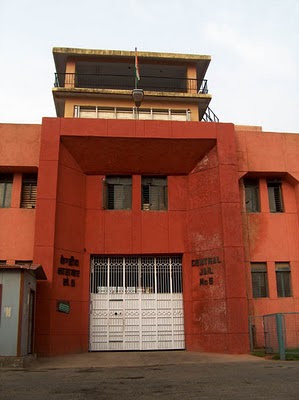
Today came the startling news that two inmates serving life sentences at Delhi’s notorious Tihar jail claim that the jail authorities gave them weapons to kill 2 of the 3 members of the Commonwealth Games Organising Committee currently being held at the jail on corruption charges.

Tihar Jail

The Hindustan Times reports:

Two inmates serving life sentences at Tihar Jail have claimed that the prison authorities gave them weapons to murder two former senior officials of the Commonwealth Games (CWG) lodged in the prison with them. In an application to chief metropolitan magistrate (CMM) Vinod Yadav, Amit and Nishant who are facing trial in a murder case, have said, “The jail authorities inside jail number 4 and ward number 11 approached us with weapons on December 20, 2010, and asked us to murder the two Commonwealth Games officials lodged in the jail with us.”  On personally meeting the judge, the inmates identified the officials as TS Darbari and Sanjay Mahendroo, who are lodged in Tihar following corruption charges.

Their application stated, “The jail officials threatened us with dire consequences if we do not comply with their orders. We are also receiving threats to our life inside the jail premises.” Amit’s mother Munni Devi has also filed an application in the magistrate’s court claiming her son and Pawan were being threatened inside the jail.

The application also claimed that a Delhi police official, who had come to the prison on Monday, recovered the knife from their cell. But they have not identified the officer before the magistrate. “The country-made pistol that was given to us was displaced by the jail authorities. We seek the court’s help to protect us from this ongoing exploitation at Tihar,” the application read.

Following this, the judge has directed the station house officer of the Hari Nagar police station to file a report in the incident and investigate the claims of the Tihar inmates.

Sunil Gupta, PRO of Tihar Jail, told Hindustan Times, “These are hardcore criminals lodged in high security jail. No weapon was recovered from the jail premises and their application is a farce. There was no conspiracy.”

Speculation now is that:

  1. The lifers made up the story merely to create a distraction from their own murder trial, or
  2. Other officials in fear of new confessions have placed a contract on the lives of the officials being held, or
  3. Politicians who fear being implicated in the mesh of corruption surrounding the games have placed the contract, or
  4. the officials under arrest have themselves arranged for the “confession” to develop a sympathy factor before they come to trial.

Tihar Jail is itself notorious for the mal-treatment of many prisoners and for the comfortable living conditions for inmates with money and clout. So the allegation that Tihar jail officials were involved in something like this is not – in itself- so incredible!!

There will be many more twists and turns in this corruption scandal.

A small bright spot in the murky world of corporate ethics

December 21, 2010

Laws tell us what we must not do and morals tell us what we ought not to do – whether illegal or not.

But ethics – when they exist – tell us what is the right and proper and desirable thing to do.

Far too many corporates seem to think that mere compliance with laws is sufficient as a code of ethics. Much trumpeted Corporate Social Responsibilities are primarily public relations and image building exercises with little relation to ethics. Token gestures of engaging in some social programme are assumed to be evidence of the existence of an ethical code but the reality is that most corporates have no ethics. They are content – like children – to let others tell them by law what is forbidden and then take the easy path provided by assuming that all behaviour which is not illegal is – by default – ethical.

As if it is not possible to be completely compliant and completely corrupt at the same time. British Aerospace and their utter lack of ethics being a case in point.

Retraction Watch carries the refreshing story of Wnt Research which shows that some bright spots still exist in the murky world of corporate ethics.

Two weeks ago, we covered the retraction of a PNAS paper on a potential breast cancer treatment, one that would make tumors that didn’t respond to tamoxifen respond to the drug. We learned earlier this week from a Retraction Watch commenter that Wnt Research, a company based on the breast cancer finding and other work, was about to go public.

In fact, their initial public offering (IPO) happened today, and you can follow the price of their stock — listed on the Stockholm Stock Exchange as WNT — here. But what we learned when we looked into the IPO was that it was originally scheduled for late November, and was delayed because of the retraction.

Tommy Andersson, one of the researchers on the now-retracted paper and Wnt Research’s chief scientific officer, told Retraction Watch that the company had initially planned on going public on November 26. They had written a memorandum describing the company’s work to date, and its plans, and the public was given a chance to invest before shares hit the Stockholm exchange. That memorandum included a mention of the PNAS paper, as follows (translated from Swedish):

The research group has even shown that combining Wnt-5a or Foxy-5 will increase the expression of estrogen receptors in estrogen-negative breast cancer cells. It turned out that human breast cancer cells exposed to Foxy-5 regained tamoxifen sensitivity, which is clear from the increased apoptosis and reduced cell growth as a response to the endocrine treatment. Likewise, the research group found that administration of Foxy-5 in the body brought back the expression of estrogen receptors in a mouse model. Apart from the therapeutic potential of these observations, there is a potential to use the outcome of estrogen receptors as a biological marker, which should advance research.

The deadline for investment was October 27, and a number of people responded, allowing the company to continue its work. But on November 11, Andersson and his colleagues realized there were serious errors in the paper, and that it would need to be retracted. When Andersson called Wnt Research’s CEO, Bert Junno, on the 12th:

He rapidly called upon an extra Board meeting on the 15th of November (the same day my email of retraction was sent to the PNAS office). At this meeting we decided to make a press release on this matter and this went out on the 16th of November.

We again had an extra Board meeting on the 19th of November to discuss what other things that we needed to do. We agreed that the short press release must be accompanied by an addition to the already published memorandum, the reason being that you cannot change in the original memorandum. The CEO wrote this addition together with the people at the office of the small Stockholm Exchange “Aktietorget” where the company was to be listed. We also decided to ask for legal advice in how to handle the public that had already paid for shares in the company.

The board held another meeting on the 22nd, during which they approved the addition to the memorandum saying that the PNAS paper had been retracted. They also did something that can only be described as the right thing: They decided to write all of the approximately 275 people who had invested in the company by the October 27 deadline and offer their money back:

The reason for this was that the lawyer advised us to act according to good morals rather than to what we were required to do by law. His belief was that this would pay off in the long run.

The memorandum addition was published on November 25. And some people did ask for their money back:

The offer to retract their investments in the company resulted in a net loss of investments, but we still obtained enough investments to continue our work.

All of that back and forth also meant that the IPO was delayed by three weeks, until today.

We find this story wonderfully refreshing. Imagine, a company bending over backward to let investors — and potential investors — know about problems with its data.

I can only agree that this little story proves that, unlike what Milton Friedman had to say, it is perfectly possible to be ethical in the corporate world.

Today I did my bit and bought some shares in Wnt Research. I know too little about cancer research to judge whether this was or will be a good buy. But I applaud their ethics and my share purchase is just to put my money where my mouth is.

UK MP’s continue with their expense claim shenanigans

December 1, 2010

Of course UK MP’s are not alone among politicians who make creative and extravagant expense claims. I would suspect that Members of the European Parliament in particular could teach the UK MP’s more than a few tricks in this regard.

But The Telegraph reports the UK MP’s still spend considerable time pushing the envelope of what is an allowable expense  – even after the supposed crack-down on expenses.

A list of 1,574 claims, rejected by the Independent Parliamentary Standards Authority (Ipsa) in the space of five months, shows that politicians have attempted to claim back money for their mortgage repayments, first-class travel and excessive hospitality.

The document, obtained by The Times newspaper, which lists a total of rejected claims worth £116,359, also reveals how parliamentarians submitted duplicate claims and did not provide suitable documentary evidence to back up their claims.

One MP was refused £338 for a shredder, while another tried to claim £1,057 for advertising. A third asked for £1,085 for ”contingencies”. All claims, which were submitted between May and September this year, were refused by Ipsa – the body set up to administer MPs expense claims.

The unsuccessful claims amounted to 7% of the total submitted by MPs during the period.

The most bizarre claims:

a limed oak toilet seat

  • £97: Derek Conway (Ind, Old Bexley & Sidcup) two ‘limed oak toilet seats’. Also spent £76 on two loo roll holders at Peter Jones in London
  • 55p: Andrew Selous (Con, South West Beds) claimed for a mug of Horlicks in the House of Commons tea room one evening in March this year
  • 99p: Danny Alexander (Lib Dem, Inverness, Nairn, Badenoch & Strathspey) bought Mr Muscle cleaning fluid from a 99p shop
  • £43.56: James Arbuthnot (Con, Hampshire NE) successfully claimed for three ‘Genius 4 piece garlic peeling & cutting set’ bought on QVC shopping channel
  • £760: Alan Milburn (Lab, Darlington) went on a shopping spree in John Lewis in March 2009 including Nigella Lawson measuring spoons and a Jamie Oliver frying pan
  • £175: Julie Kirkbride (Con, Bromsgrove) claimed for a Samuel Heath Curzon extending shaving mirror from John Lewis
  • £5: Ben Chapman (Lab, Wirral South) claimed for a three pack of ‘waffle’ coat hangers from John Lewis
  • £2,300: Crispin Blunt (Con, Reigate) claimed for ‘brickwork’ including work on his ‘water wheel structure’ and terracotta fireplace
  • £2: Phil Hope (Lab, Corby) claimed for a Hamburger Maker from John Lewis, together with a £5 swivel peeler and two £6 tea towels
  • £24: Lindsay Roy (Lab, Glenrothes) bought a Babyliss Salon Dry hairdryer despite having thinning hair. His claim was rejected by the fees office
  • £105: Douglas Alexander (Lab, Paisley & Renfrewshire South) claimed for having the chimney swept at his designated second home in Scotland
  • £562.23: Kali Mountford (Lab, Colne Valley) bought an LCD TV in West Yorkshire but said it was for her designated second home in London
  • £2.95: David Ruffley (Con, Bury St Edmunds) bought an ‘anti moth proofer’ from Peter Jones of Sloane Square. A few months later he bought another six anti-moth sachets costing £24
  • £420: Lynne Jones (Lab, Birmingham Selly Oak) claimed for Farrow & Ball Toile Trellis wallpaper in April 2008, and also claimed £28.80 for a food mixer

Next target for Wikileaks will be a megadump of banking information

November 30, 2010

The information paradigm is changing, whether in the political or industrial or commercial or academic world. We are now in the age of megadumps of information and megaleaks from Wikileaks and its inevitable successors.

While the world’s governments threaten legal action against Wikileaks, and bemoan the damage to diplomacy, Australia is considering whether to revoke Julian Assange’s passport. Media which were not in the group of 5 who received the documents in advance are writing heavyweight editorials about the dangers to society of publishing “confidential” information. Some politicians want Wikileaks to be declared a terrorist organisation and many are warning of the “number of lives that will be put at risk”. Professors are weighing in with the dangers to history ! They are all attacking the messenger but “methinks they do protest too much”.

The risk, if any, emanates ultimately from the information or action that is the subject of the document released, not from the release in itself. Diplomats – or others – who are involved in “speaking with a forked tongue” must accept that their duplicity may be revealed. When governments – in the name of the society they represent – take upon themselves the right to tap telephones, intercept documents divert emails, search or arrest members of that society to collect “confidential” information then they will just have to live with the fact that members of that society may feel – technology permitting – the necessity to access and disseminate “confidential” government information. The information world has changed irreversibly and megadumps of information is a reality. It is not a genie which can be stuffed back into the bottle — though some politicians will try.

Attacking the messenger is essentially counter-productive.

I am sure that the self-righteous (and self-serving) indignation currently being exhibited by many politicians and diplomats as their dirty laundry becomes visible will not be present with the next megadumpaccording to Forbes – of Wikileaks revelations – concerning the banking sector. I find that this information may be of greater public interest than some of the secrets of governments – but that is because I have such low expectations of politicians and diplomats. I have the belief that being in government is inherently corrosive (the corruption of power) and all who attain “positions of power” will always engage in hypocrisy and double-talk. Forbes writes:

Early next year, Julian Assange says, a major American bank will suddenly find itself turned inside out. Tens of thousands of its internal documents will be exposed on Wikileaks.org with no polite requests for executives’ response or other forewarnings. The data dump will lay bare the finance firm’s secrets on the Web for every customer, every competitor, every regulator to examine and pass judgment on.

Sitting for a rare interview in a London garden flat on a rainy November day, he compares what he is ready to unleash to the damning e-mails that poured out of the Enron trial: a comprehensive vivisection of corporate bad behavior. “You could call it the ecosystem of corruption,” he says, refusing to characterize the coming release in more detail. “But it’s also all the regular decision making that turns a blind eye to and supports unethical practices: the oversight that’s not done, the priorities of executives, how they think they’re fulfilling their own self-interest.”

The diplomatic cable megadump is already a reality. The banking megadump will follow. And after banking it may be Energy.

The full transcript of Assange’s interview with Andy Greenberg is here.

FIFA’s dirty little secrets

November 29, 2010

We have recently had the scandal of the corruption and bribery at the 2010 Commonwealth Games held in Delhi. Now that the games are over the police and other investigative agencies in India are digging deep, heads have rolled and prosecutions are imminent.

But the greed and corruption that was on display at the Commonwealth games is  “peanuts” and pales into insignificance in relation to the amounts dealt with by corrupt FIFA officials when handling the selection of countries to host the World cup, the TV and advertising rights and the black market sale of tickets. In fact it seems as if the black market is itself controlled by FIFA officials. A BBC Panorama program to be broadcast later this week and before Thursday’s vote by FIFA’s executive committee to decide who will host the 2018 and 2022 World Cups reveals that at least three FIFA officials took bribes between 1989 and 1999. All three are due to vote on Thursday and since they have had no criticism since then and are still in office, it is highly probably that they have all continued their practices for Thursday’s vote.

With the World Cup as big as it is , the amounts involved are in the billions. FIFA is beginning to stink.

Fifa executives Ricardo Teixeira (l), Issa Hayatou and Nicolas Leoz (r)

Fifa executives Ricardo Teixeira (l), Issa Hayatou and Nicolas Leoz (r): image BBC/ Getty

The BBC reports:

Three senior Fifa officials who will vote on the 2018 and 2022 World Cup bids took bribes in the 1990s, according to the BBC’s Panorama. Nicolas Leoz, Issa Hayatou and Ricardo Teixeira took the money from a sport marketing firm awarded lucrative World Cup rights, the programme alleges.

The alleged bribes are included in a confidential document listing 175 payments totalling about $100m (£64m). The three men did not respond to Panorama’s allegations. Fifa, world football’s governing body, also declined interview requests to address the allegations.

Panorama, to be broadcast later, also reports on evidence of a fourth senior Fifa executive’s continued involvement in the resale of World Cup tickets to touts. The BBC has received criticism over the timing of the programme, which comes ahead of Thursday’s vote by Fifa’s executive committee on who will host the 2018 and 2022 World Cup finals. England is competing with Russia, Spain/Portugal and Netherlands/Belgium to host the 2018 tournament.

The BBC has defended the timing of Panorama, saying the programme is in the public interest. The alleged bribes to the three members of Fifa’s executive committee were paid by sports marketing company International Sport and Leisure (ISL) and date from 1989 to 1999, Panorama reports. The company collapsed in 2001.

Fifa granted ISL exclusive rights to market World Cup tournaments to some of the world’s biggest brands and ISL received millions more from negotiating television broadcast rights. A former account manager at ISL, Roland Buechel, said staff had long suspected bribes were being paid for the lucrative Fifa contracts.

“It is huge money, billions, that can be earned and all the sports marketing companies they fight, they want it,” Mr Buechel said. Some details of the alleged bribes emerged in 2008, when six ISL managers were accused of misusing company money. One Fifa official – Nicolas Leoz, of Paraguay, the head of South America’s football confederation – was named in court papers in connection with payments totalling $130,000 (£83,000). But Panorama has obtained a confidential ISL document which lists 175 secret payments. It shows Mr Leoz was paid a further $600,000 (£384,000 using current conversions) in three instalments of $200,000.

Read source report: http://www.bbc.co.uk/news/uk-11841783

Diplomacy in action? Two nuclear scientists attacked in Teheran, one killed

November 29, 2010

In view of the latest Wikileaks revelations where the Saudi’s were aggressively pushing for the US to attack Iran, this story about two nuclear scientists being attacked by car bombs, killing one, becomes particularly interesting. Perhaps this is an example of modern diplomacy in action. Whether carried out by Saudi or US or Israeli agents, the use of car bombs – long associated with terrorism – smacks of hypocrisy. But then in modern “diplomacy”, hypocrisy is not – it seems – considered particularly unethical and it seems that in relationships between nations the end does in fact justify the means. Judging from the reaction of the US State Department to the publication of their confidential cables, it could be concluded that politicians and diplomats do not think it necessary to have  – and are not expected to have  –  any firm ethical standards.

The BBC carries the story:

An Iranian nuclear scientist has been killed and another wounded in two separate but similar attacks, according to Iranian media reports. The scientists were targeted in Tehran by attackers who attached bombs to each of their cars, reports said. The scientist killed has been named as Majid Shahriari of Shahid Beheshti University in Tehran, according to the official Irna news agency.

Another scientist was killed in a bomb blast at the beginning of the year.

The state television website says attackers riding on motorcycles attached bombs to the car windows of the scientists as they were driving to their workplaces on Monday morning. “In a criminal terrorist act, the agents of the Zionist regime attacked two prominent university professors who were on their way to work,” Iran’s state television’s website reported.

Dr Shahriari was a member of the nuclear engineering department of Shahid Beheshti University. His wife is said to have been injured in the attack. The nuclear scientist injured in the second attack was named as Fereydoon Abbasi. His wife was also wounded. According to the conservative news website Mashreghnews, Dr Abbasi is “one of the few specialists who can separate isotopes” and has been a member of the Revolutionary Guards since the 1979 revolution.

The Iranian scientist killed in January this year, Masoud Ali Mohammadi, was said to be a nuclear scientist assassinated by counter-revolutionaries, Zionists and agents of the “global arrogance”, Iranian media said at the time.

But I cannot help reflecting that as ethics and values become selective or are diluted as and when judged to be necessary, then decadence has set in and civilisation begins to crumble. As Einstein once said “Relativity applies to physics not to ethics”.

Former head of India’s counter-terrorism division expects next Wikileaks release to be about corruption

November 28, 2010

Update!

2030 hrs CET, 28th November,

The Wikileaks release has started and will likely continue through the night. The Guardian, Der Spiegel, The New York Times, El Pais and Le Monde have received the material in advance under embargo and have all started releasing the  US State Department cables.

Wikileaks has been subjected to a cyber-attack today and its site is currently inaccessible.

Link to Guardian ability to download all cables

=======================================

The BBC headline is

US warns Wikileaks’ Assange on possible leak

The US has stepped up its threats of legal action against Wikileaks while at the same time rushing to contact all “friendly” governments to try and defuse some of the expected fallout of such a release. The flurry of US government activity seems almost panicky and constant repetition of the claim that “countless lives could be put at risk” does not carry much credibility. Instead of taking responsibility for whatever might have been done or written in the past – and presumably they had good reason to believe it was the right and proper thing to do at the time – the strategy seems to be one of “shooting the messenger”.  But in the current paradigm of ease of information dissemination and increased covert operations by governments around the world, attacks on the messenger only reduce the credibility of the attacker and are counter-productive.

B. Raman: image intellibriefs.blogspot.com

B. Raman is a former Additional Secretary (retired), Cabinet Secretariat of the Government of India. He is the former head of the counter-terrorism division of India’s external intelligence agency Research and Analysis Wing (RAW). He has been applying his mind to the imminent release of confidential US State Department information by Wikileaks and he expects the main subject to be corruption in high places. His thoughts make fascinating reading.

B. Raman writes on his blog:

1. Wikileaks announced through Twitter on November 22,2010, that it will be shortly releasing its third instalment of classified US documents.

2. The first instalment of 77,000 documents related to Afghanistan. The second instalment of 400,000 documents related to Iraq. According to the Twiiter message, its third instalment will contain a much larger number of documents.

3. Wikileaks did not say in its message what will be the subject-matter of the third instalment. However, a Reuters despatch from Washington DC said that classified US diplomatic cables reporting corruption allegations against foreign governments and leaders are expected in the official documents that Wikileaks plans to release. It added: “Three sources familiar with the US State Department cables held by Wikileaks say the corruption allegations in them are major enough to cause serious embarrassment for foreign governments and politicians named in them. They said the release was expected next week, but it could come earlier. The detailed, candid reports by US diplomats also may create foreign policy complications for the administration of US President Barack Obama, the sources said. Among the countries whose politicians feature in the reports are Russia, Afghanistan and former Soviet republics in Central Asia. But other reports also detail potentially embarrassing allegations reported to Washington from US diplomats in other regions, including East Asia and Europe. State Department spokesman Philip J. Crowley said Washington was assessing the implications of what Wikileaks may reveal and was notifying foreign governments about the possible release. “We wish that this would not happen, but we are obviously prepared for the possibility that it will,” he said.

4.The media has reported that the US has warned India and other key governments across the world about the expected release. Crowley has been quoted as saying: “We have reached out to India to warn them about a possible release of documents.” Among other Governments reportedly cautioned are those of Israel, Russia, Turkey, Canada and the UK.

5. After October last year when Wikileaks reportedly developed electronic access to the data bases of the US State Department and the Pentagon and the US military formations in Afghanistan and Iraq, the US authorities were reported to have tightened document security to prevent further leaks. If this tightening has been effective, it is likely that the latest load of documents acquired by Wikileaks (is) related to the period before October last year.

6.While corruption allegations as collected by the US Embassis in these countries could form a part of these documents, it is likely that considering the large number of documents mentioned by Wikileaks, the documents also cover US Embassy reporting on other subjects. Previously, Pakistan’s relations with the US were the focus of Wikileaks. It now seems to be focusing on India’s relations with the US too. It is, therefore, possible that in addition to corruption involving Indian personalities, the documents about India which have reached Wikileaks also relate to India’s policies on Afghanistan, Iraq and Iran.

7. Among the various events relating to Afghanistan, Iraq and Iran in which India figured during this period, four could be sensitive from India’s point of view. Firstly, the pressure on the Atal Behari Vajpayee Government by the administration of George Bush to send a Division of the Indian Army to Iraq. By July,2003, the Vajpayee Government had decided to say no to Washington DC, but there was a lot of voices in Delhi in favour of accepting the US request. Secondly, the papers captured by the US intelligence after the occupation of Iraq from the Iraqi Government Departments showing or corroborating the alleged involvement of a leader or leaders of the Congress (I) in contacts with the Saddam Hussein Government for acquiring preferential quotas for the import of oil from Iraq (the oil for food scandal). Thirdly, the pressure exercised by the Bush Administration on the Manmohan Singh Government for voting against Iran in the International Atomic Energy Agency in Vienna. The Government of India succumbed to this pressure as a quid pro quo for the Indo-US civil nuclear co-operation agreement of July,2005. Fourthly, the analysis and assessment made in the State Department and the Pentagon regarding Pakistani allegations of Indian involvement in Balochistan.

8. Is it possible that Wikileaks might have also got hold of diplomatic cables between the US Embassy in New Delhi and Washinton DC on Indian political leaders, bureaucrats and policy-making? Has it also got hold of messages sent by the US Embassy in New Delhi to Washington DC about the escape of Major Rabinder Singh, the mole of the Central Intelligence Agency in the Research & Analysis Wing, to the US in 2004 and about the detection by the Indian counter-intelligence of a US mole in the sensitive National Security Council Secretariat in 2006? The documents to be released by Wikileaks need to be carefully scrutinised.. ( 28-11-10)