Archive for the ‘Evolution’ Category

Hearing came before ears existed (as sight must have come before eyes)

February 12, 2015

Of course all our senses lie in the brain and not in the sensors receiving the input from our surroundings. So while our ears, eyes, skin and taste-buds detect certain physical characteristics and convert them into electrical signals, it is our brains which interpret the electrical signals they receive as being sound or colour or taste or heat. Our sense organs are merely transducers, converting some physical characteristic into an electrical signal. So how did the brain evolve and develop the interpretation “software” for these signals before the sensors had even been developed?

Two new papers show that Lungfish and salamanders can hear, despite not having an outer ear or tympanic middle ear. 

  1. C. B. Christensen, H. Lauridsen, J. Christensen-Dalsgaard, M. Pedersen, P. T. Madsen. Better than fish on land? Hearing across metamorphosis in salamanders. Proceedings of the Royal Society B: Biological Sciences, 2015; 282 (1802): 20141943 DOI: 10.1098/rspb.2014.1943
  2. K. Knight. Lungfish hear air-borne sound. Journal of Experimental Biology, 2015; 218 (3): 329 DOI: 10.1242/%u200Bjeb.119487

Aarhus University Press Release:

Lungfish and salamander ears are good models for different stages of ear development in these early terrestrial vertebrates. Two new studies published in the renowned journals Proceedings of the Royal Society B and The Journal of Experimental Biology show that lungfish and salamanders can hear, despite not having an outer ear or tympanic middle ear. The study therefore indicates that the early terrestrial vertebrates were also able to hear prior to developing the tympanic middle ear. …….

……. However, available palaeontological data indicate that the tympanic middle ear most likely evolved in the Triassic period, approximately 100 million years after the transition of the vertebrates from an aquatic to a terrestrial habitat during the Early Carboniferous. The vertebrates could therefore have been deaf for the first 100 million years on land. ….. 

…… They studied the hearing of lungfish and salamanders by measuring auditory nerve signals and neural signals in the brainstem as a function of sound stimulation at different frequencies and at different levels. Surprisingly, the measurements showed that not only the terrestrial adult salamanders, but also the fully aquatic juvenile salamanders – and even the lungfish, which are completely maladapted to aerial hearing – were able to detect airborne sound despite not having a tympanic middle ear. By studying the animals’ sense of vibration, the researchers were able to demonstrate that both lungfish and salamanders detect sound by sensing the vibrations induced by sound waves. …..

My experience in the engineering world suggests that there must be a connection  – a feedback loop – between the “software” interpreting the signals in a brain and the development of the transducers generating the signals. For example, rotating equipment (turbines, compressors or pumps) are routinely plastered with pressure and temperature and stress (really just pressure) sensors. But the 4 – 20 mA signals they generate have to be interpreted by software in a brain. Over the last 40 years I have observed that simple interpretation software has led to improved (more focused and more accurate) sensors which has in turn given even more sophisticated software.

And so it must have also been with our senses. Primitive brains must have interpreted some “sound waves” picked up incidentally as “sound”. Some feedback loop must have then provided the impetus for the evolution of a “sound detector”. The improved sensor would then have increased the sophistication of the interpretation in the brain and given rise to further development of the sensors. Today our ears detect pressure waves of frequency between 20 and 20,000 Hz and convert them into electrical nerve signals interpreted by the brain as sound. Evolution is really not about pro-active selection of advantageous characteristics but of deselection of those not fit enough to aid survival. Evolution has nothing to do with the selection of the “best” or even of the “fittest” characteristics but is all about deselection of those having an insufficient fit. Of course in a competitive environment between individuals, those with “advantageous characteristics” would surely have helped in the culling – directly or indirectly – of the less fit. But that begs the question as to why we cannot hear ultrasound? Was the ability to hear ultrasound of no survival benefit? Was it too much for the “software”? Or was the audible range just a compromise between range on the one hand and intricacy of the sensor on the other?

There must have been a similar start to the development of sight. The incidental or accidental detection of certain frequencies of electromagnetic radiation must have led to a feedback loop between the interpretation software in the brain and the development of suitable sensors. And now our eyes detect electromagnetic radiation of frequency between 430 and 790 terraherz (TH) and convert them into electric signals which are sent to the brain for interpretation. We find benefit in cameras which can “see” uv and infrared light. But it is not an ability that has evolved in our eyes.

I begin to think that in considering evolution we must distinguish between external forces which direct the death of unfit species (environmental changes mainly) and the internal forces within the individuals of a species which leads to “deficient” individuals being “deselected”. And the feedback loop between the brain and our sensory organs – which is no doubt still operating – is probably one such internal force.

To put it crudely, our ears and our eyes are as good as they are because those individuals who had worse ears or eyes could not survive to reproduction. And our ears and eyes are not any better than they are because being any better does not contribute to any increased survival and reproduction.
Galapagos conservation project prevents the evolution of ninja turtles

January 19, 2015
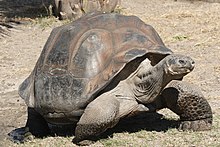
Adult Galápagos tortoise

Adult Galápagos tortoise

Giant tortoises are to be found only on the Aldabra Atoll in the Seychelles and on the Galapagos Islands in Ecuador.  Pinzón Island is home to the giant Galápagos tortoises of the endemic subspecies Chelonoidis nigra duncanensis. Pinzón is a tiny island covering 18 km2 right at the geographical centre of the Galapagos chain.

Galapagos Islands

The basic story is simple and just another example of a misguided conservation project where a successful species is exterminated to ensure the survival of an unfit species. The unfit species in this case is a reptile, the giant Galapagos tortoise which has been threatened by rodents of the black rat variety. Of course, black rats are politically incorrect and nasty and “vermin”, while the giant reptiles are seen as “cute” and “amusing” and “loveable”, even though the species is proving incompetent to adapt. (If rats had only been white they would probably be protected).

The rats preceded Darwin

By the time Darwin arrived in the Galapagos in 1835, the rodents had long since settled in. Mice and black rats were probably the first to arrive, introduced by pirates or whalers in the seventeenth century; since the 1980s, Norway rats have found their way there too.

Since 2012 a “conservancy project” has spent some $3 million to eradicate the rats and this now seems to have succeeded since new tortoise hatchlings have been observed for the first time in 150 years. That’s all very well, but there does not seem to be any one speaking up for the persecuted, murdered rats who, after all, have been present for over 300 years. They have been attacked by conservationists for over 50 years and -against all odds – have still thrived. Why this species-discrimination? Whatever happened to rodent rights?

In fact the rhetoric used by the conservationists reminds me of the language used by extreme, right-wing, anti-immigrant political parties:

“I just hated the immigrant killers because I could see what they were doing,” says Felipe Cruz, a lifelong conservationist who grew up on Floreana, one of four inhabited islands in the archipelago. In the early 1980s, Cruz spent nine months of the year camped in the Floreana highlands deploying a cocktail of rodenticide …… 

I find the analogy between conservationists as “specists” and right-wing, nationalistic, anti-immigration political parties as racists, quite revealing. Just as with conservationists who support politically correct species and try to exterminate the politically incorrect, right-wing extremists also support certain politically correct human races and try to exclude and remove the politically incorrect races. It is no great secret that even among immigrants in Europe there are “politically correct” races and those which are “politically incorrect”. The politically incorrect races are to be kept out. And conservationists all over Europe try to protect the unfit but politically correct species while destroying or keeping out the immigrant species.

But what conservationists are forgetting in their euphoria over killing all the rats on Pinzón is that without the rats there is no chance of the mutation needed to create Master Splinter and without Master Splinter there is no possibility that the Ninja Turtles will ever become a reality.

The Turtles’ sensei and adoptive father, Splinter is a Japanese mutant rat who learned the ways of ninjutsu from his owner and master, Hamato Yoshi. ……… Splinter was Hamato Yoshi mutated into a humanoid rat instead of being just Yoshi’s pet.

Master Splinter superherohype.com


Further Reading:

http://www.nature.com/news/invasive-species-the-18-km2-rat-trap-1.12992

http://www.galapagos.org/blog/pinzon-tortoise-survey-part2/

http://www.theguardian.com/science/animal-magic/2015/jan/16/rat-eradication-galapagos-tortoise-pinzon

http://en.wikipedia.org/wiki/Splinter_(Teenage_Mutant_Ninja_Turtles)

http://en.wikipedia.org/wiki/Teenage_Mutant_Ninja_Turtles

Wolves which adapt to humans will be the wolves which survive

December 19, 2014

The endangered species on earth are mainly those which are failures. Species which fail to adapt to the loss of habitat as the human species succeeds. Natural selection is incapable of ensuring survival of these species when their environment changes so rapidly. But humans represent one of the few species which has demonstrated the ability to handle rapid change. We have adapted by constructing artefacts to maintain optimum conditions in which to live, by the use of medicine and also – though this is in its infancy – by genetic manipulation. We effectively maintain a “tropical” climate around ourselves wherever we are. In our homes, in our transport vehicles, in our work places and in our public places, we maintain benign conditions of temperature, wind speed, humidity and pressure. Whether living in the Arctic circle or in equatorial deserts, we maintain “comfortable”, tropical conditions around us. We use medicine to fight debilitating diseases. And now we are moving towards the prevention of the birth of individuals with faulty genes but also towards the intentional selection of desired genes.

Some species have successfully adapted to the expansion of humans and their changing circumstances. Many bird species, rats, urban foxes (who now differ genetically from “wild” foxes”), urban polar bears, baboons, langur monkeys and even leopards are examples of species which have adapted to take advantage of the changes and thrive in the new conditions. Domesticated species are dependent upon their usefulness to, and the goodwill of, humans. Much admired species such as, rhinos, tigers and elephants have not adapted and face extinction – as all failing species do. From the beginning of life on earth, the rule has been “Adapt or die” and it it still applies.

In the long run traditional “conservation” which is based on trying to freeze a failing species in an unviable genetic pattern, within artificial habitats which are merely prisons, is meaningless and counter-productive. Helping a species has to be about adaptation to the new conditions and not about genetic stagnation in new prisons. It is time we helped these species adapt and stopped just stuffing them into zoos.

A year ago I observed

Perhaps Siberian neo-tigers could be evolved genetically to help herd reindeer and develop a mutually beneficial partnership with man. An occasional reindeer kill would then be quite acceptable. It would be so much more constructive if neo-wolves were helped not to stagnate genetically, but instead to evolve the behavioural characteristics that allowed them to find a way of co-existing with humans and human flocks of sheep.

And now this story suggests that some wolves have already realised that “if you can’t fight the humans it is better to join them”!

BBC:

Villagers in Kazakhstan are increasingly turning to an unusual animal to guard their land – wolves, it’s been reported.

“You can buy a wolf cub for just $500 (£320), they say, and hunters are adamant that if treated well the wild animal can be tamed,” the KTK television channel reports. Nurseit Zhylkyshybay, from the south-eastern Almaty region, tells the channel he bought a wolf cub, Kurtka, from hunters three years ago, and the animal is perfectly happy wandering the yard of his house. “He’s never muzzled, I rarely put him on a chain and do take him for regular walks around the village. Our family and neighbours aren’t scared of him at all,” Mr Zhylkyshybay insists. “If the wolf is well fed and cared for, he won’t attack you, although he does eat a lot more than a dog.”

Nurseit Zhylkyshybay and his wolf

The face of wolves to come

Maybe these wolves will just become another line of dogs or perhaps they are the particular species of neo-wolf which will succeed in developing a mutually beneficial relationship with humans.


A genetic component to extremism and cruelty?

December 17, 2014

One hundred and thirty two children were massacred by seven Taliban heroes in Peshawar yesterday. Three of the seven were suicide bombers seeking paradise who blew themselves up in an auditorium filled with 9th and 10th grade children. It was a public but an army-run school. The Taliban see anything connected with the Pakistan army as a legitimate target – even children. They have targeted and attacked the families of soldiers before. The day before the valiant heroes of ISIS beheaded another 13 people. Last week we heard about the brutal and degrading methods employed by the CIA. Every other day Al Shabab and Boko Haram kidnap, mutilate and kill innocents – often children. One despairs that humanity has not evolved away from this behaviour. Extremism and unfathomable cruelty is dominated by, but is not the exclusive domain of, religious fanatics. We find fanatics about other causes too. There are fanatics prepared to go to extreme lengths for many nationalistic – hence political – causes. Chechnya, the Uighurs, Kurds, the IRA, in Myanmar and of course in the Middle East and Africa. White power, Black power, animal rights, rain forests, abortion and environmental causes all attract some people capable of exhibiting extreme and cruel behaviour.

I wonder how humans could behave in this “bestial” manner and still be considered human? Is it the “cause” which elicits the behaviour or is it the deviant human who seeks the “cause”? Not every religious fanatic applies to become an ISIS executioner. Not every CIA employee is capable of being a torturer. Some, if not most, people, I think, are not capable of this cruel and “bestial” behaviour.

It suggests to me that there is a genetic component involved here. That does not mean that our genes determine our actual, day-to-day behaviour. But I am sure that it is our genes which determine the unique envelope of behaviours that is possible for each one of us. We may not exhibit all the behaviours within the envelope but all our actual behaviour will be contained within the envelope. I am inclined to believe that there is therefore a combination of genes which brings this kind of extreme and cruel behaviour within an individual’s envelope of possible behaviours, and then into play. Only some humans will have this within their envelope of possible behaviours and only some of them will then actually exhibit the behaviour. Possibly it is nurture and upbringing and exposure which determines if the potential behaviour becomes actual.

There is evidence that being “nice” does have a genetic component. There is little doubt that our social behaviour does have genetic components. Some genes do seem to effect something called the Empathy Quotient and there are clear linkages between empathy and the propensity to cruelty. Matt Ridley speculated in the WSJ about Osama bin Laden’s genes:

…. But, Prof. Baron-Cohen went on, it would at least be interesting to take a look at bin Laden’s MAOA gene (linked to aggression), his AVPR1A and CNR1 genes (linked to emotional expression) and his CYP11B1, NTRK1, and GABRB3 genes, which show some association with how individuals score on a scale called the “Empathy Quotient.” He discovered these linkages in the course of testing his hypothesis that cruelty is generally enabled by a failure of empathy. 

In most cruel people, Prof. Baron-Cohen argues, the “empathy circuit,” which runs through 10 different regions of the brain, goes down either temporarily or permanently, leaving the person with “zero empathy.” The reasons may be partly innate, partly a function of early experiences such as birth trauma or parental neglect, or an interaction of the two.

Not all zero-empathy people are cruel. There is a category of “zero-positive” people, with autism or severe Asperger’s, who lack empathy but show no tendency to unkindness. And not all cruel people lack empathy (bin Laden may be among the exceptions). But if Prof. Baron-Cohen is right, a combination of a brain scan, a genotyping and a case history could “diagnose” many or even most cruel personalities, perhaps even before they commit crimes. ….. 

If we could identify the genes and epigenetic factors which led to “inhuman” cruelty, then what would we do if we diagnosed someone as likely to become a cruel extremist? Would we be prepared as a society to act against an individual because he had the potential to be a terrorist – but before he had committed any terrorist act? And should we be ensuring that he does not pass his genes on?

A New Eugenics perhaps. The rational and logical conclusion if we could clearly identify “unwanted” characteristics would be to eliminate these characteristics in all future generations. We would also have to eliminate the possibility that there is any collateral damage, that some wanted characteristics disappear when the unwanted one is removed. Certainly social skills have been instrumental in the success of the species. But humans without some measure of aggression would probably not have survived. If removing cruelty also removed aggression then we would have to tread very carefully.

Is human cruelty the price the species pays? for what?

The shameful vilification of James Watson

December 12, 2014

In a recent post about the Nobel ceremony I observed that James Watson who had sold his Nobel medal had it returned to him by the purchaser. Apart from his recognition along with Crick and Wilkins for their DNA work, he has been and still is one of the most important evolutionary biologists of our time. But he has become persona non grata now with the self-appointed guardians of public morality and the prevailing “political correctness” which disallows “intelligence” – however it may be defined – from being in any way dependent upon the genetic variations between different human populations. His vilification and downfall was a rapid business in 2007, even though, everything Watson got in trouble for saying was entirely correct” as Gene Expression pointed out in October 2007:

It’s difficult to name many more important living figures in 20th century biology than James Watson. He ushered in the current age of molecular biology with his achievements in 1953, he built up one of the world’s greatest biological research facilities from damn near scratch, and he is a former head of the Human Genome Project.
Given such an august curriculum vitae, you would think that this man perhaps understands just a few things about genetics. But given only the condescending media coverage, you’d think this eminent geneticist was somehow “out of his depth” on this one.
In his interview with the Times on Oct. 14th, we learned that:

… [Watson] is “inherently gloomy about the prospect of Africa” because “all our social policies are based on the fact that their intelligence is the same as ours – whereas all the testing says not really”, and I know that this “hot potato” is going to be difficult to address.

These thoughts were a continuation of an important theme in his book Avoid Boring People:

… there is no firm reason to anticipate that the intellectual capacities of peoples geographically separated in their evolution should prove to have evolved identically. Our wanting to reserve equal powers of reason as some universal heritage of humanity will not be enough to make it so.

Although Watson’s book had already been out for a month with these more euphemistic, but still obvious, comments on race and intelligence, no one expressed any outrage. In fact the reviews were reverential and universally positive.
The explicit reference to intelligence and people of African heritage in his interview was clearly a violation of a much more formidable taboo. Still I am not aware of there being much noise about it until Oct. 17th when the Independent caused an immediate stir by calling attention to the remarks: Africans are less intelligent than Westerners says DNA pioneer.
There’s no point in rehashing the rapid sequence of events in detail: several of Watson’s sold-out speaking engagements were cancelled, many critical articles appeared in the British press, trailed by the American press a few days later, hundreds of blogs were fuming with negative commentary, including ones by the editors of Scientific American and Wired Magazine, a number of associations issued statements condemning his words, and soon he was suspended from his chancellorship at Cold Spring Harbor. Watson cancelled his already ruined book tour and flew home to tend to the destruction. It was too late; the eminent biologist retired in disgrace on Oct. 26th. 
One thing, though, was conspicuously missing from this whole irritating denouement: any semblance of factual refutation. There is good reason for this: everything Watson got in trouble for saying was entirely correct!

Gene Expression goes on to show that the data support what James Watson said.

Unfortunately our esteemed band of sputtering media scientists forgot to provide, in all of these instances, any of their allegedly voluminous citations to the contrary. Allow me, then, to take a different position, with the added benefit of evidence: ………

………. 65 psychometric intelligence study citations for sub-Saharan Africa, collected in IQ & Global Inequality, Race Differences in Intelligence, and IQ & the Wealth of Nations. The citations cover 47% of SS African countries or 78% of the people by national population numbers. The studies vary in quality, sample size, and representativeness, but broadly agree in their findings. Representative studies of the school age population with large sample sizes do not exhibit higher scores, much less scores that approach anything like European norms. …..

….. Thus typical African IQ scores of 70 and below can still be taken as a reliable finding. It is not simply the manufactured data of racialist researchers, or a byproduct of inadequate testing procedures. And, more importantly from the standpoint of the Watson controversy, certainly no reliable body of evidence has shown anything like parity with typical European scores.

The entire episode and shameful treatment meted out to Watson by an unscrupulous and sensationalist media and by politically correct but cowardly members of the scientific community was based, I think, on

  • the intellectual laziness in defining what “race” is, and the sloppy way in which the term is used, and 
  • a fear of confronting the ideological notion that some meaningless, diffuse “equality” of all humans transcends and overrides the real genetic variations due to ancestry

We use the term “race” colloquially and loosely and for convenience. There is no firm scientific definition of what constitutes a “race”. Often it is taken – wrongly – to be just a difference of skin colour. The politically correct brigade claim that race is a “social construct” but this is just nonsense. An “African-American” carries genes from his African ancestry and not any particular social behaviour from his ancestors. But “race” is also a dynamic term and shifts with the generations of man. The races we recognise and classify humans into today, is based on the prevailing groupings of populations that are convenient today. Fifty generations ago the “races” of that time would have been quite different. And fifty generations from now they will be quite different to the “races” we recognise today. The classification is about ancestry and is based on (or should be based on) the separate packages of genetic characteristics (some visible and some not) which are discernible and allow the grouping and classification of populations.

It seems perfectly logical, and is highly probable, that humans, though they may have originated from just a few relatively small populations out of Africarabia, have then over the next 5,000 generations, continued evolving in situ, giving the genetic diversity and the consequent physical diversity that we see today. The geographical populations we observe today are the result both of evolution in situ and a plethora of admixtures as people have migrated and mixed over the last 100,000 years. There were no “African-Americans” 50 generations ago. But already “African-Americans” today are different to “Africans” and both continue to evolve and develop in situ. It is quite unlikely that “African-American” or “Asian-British” or “Turkish-Germans” or “Chinese-Indonesian” will be classifications of race or ethnicity that will be used 50 generations from now. This geographically evolved and still evolving diversity, already shows up as genetic differences not only of skin, eye and hair colour but also as differences in disease resistance, physical characteristics, athletic capabilities, behaviour and surely many more invisible (including mental) characteristics.

We have no difficulty in accepting that different populations (effectively different races in colloquial usage) have differences of physical characteristics due to their genetic ancestry. There is no great outrage now that recent studies point to some genetic differences that Tibetans have which may give them an advantage in absorbing oxygen at high altitudes. Similarly there are no screams when other genetic studies suggest that East Africans (Kenyans and Ethiopians in the main) have some genes – or combination of genes – which give them better endurance and therefore – given good nourishment – lead to better performance as long distance runners. West Africans, or those of West African descent, it seems may have some genetic advantages which make them the fastest sprinters over short distances. African genes also seem to give a lower fat content in body mass – which is genetic – and may be one explanation why their performance as swimmers is less than exceptional. That Indians are more prone to Type 2 diabetes than other “races” is not indignantly opposed but just taken for the observation it is. Indian-Americans (3 generations) are already exhibiting lower rates than their Indian ancestry would indicate. Japanese have very low rates of heart disease but already (in less than 6 generations) Japanese-Hawaiians have heart disease rates that are 2 -3 times higher.

It is illogical to assume that these genetic variations between different geographic populations ( colloquially “races”) have only manifested themselves as physical variations. It is highly probable and probably inevitable that these genetic developments will also have affected the brain, its functioning and behaviour. And intelligence.

“Intelligence” is many things to many people and – by most definitions – more than just an IQ test. The IQ test only really measures the ability to do the test. Nevertheless the IQ test results do seem to correlate well to whatever we may choose to call intelligence. There is without doubt a genetic component to both intelligence and IQ test results. IQ test measurements do show that results are significantly lower – for whatever reason –  among sub-Saharan African populations – on average. If intelligence has a genetic component and the colloquial use of the term “race” refers to an identifiable population exhibiting a certain package of genetic characteristics, then it is quite likely that the different genetic packages lead to some differences of intelligence.

If it is acceptable – and not racist – to observe that there are genetic differences in physical characteristics between the “races” of today, then it is just as acceptable and no more racist to observe that there are genetic differences of intelligence between the “races” of today.

That is all that Watson said.

(What “intelligence” actually is or may be is another story for another day).

Homo erectus was making engravings 500,000 years ago

December 4, 2014

Long before any specimens of Homo sapiens were even gleams in the eyes of their hominin ancestors, Homo erectus peoples on Java (how and when did they get there?) were using shells as tools and were making engravings on the shells themselves. A new paper in Nature reports on studies of hundreds of fossil shells from the Homo erectus site Trinil, on the Indonesian island of Java. The shells are part of the Dubois Collection held at the Naturalis Biodiversity Center in Leiden. They have been dated to about 500,000 years ago.

Of course if all Homo Sapiens came Out of Africa (or Africarabia) around 100,000 years ago, then these Homo erectus on Java must have gone extinct without leaving any survivors (unless some of their genes still live on through later admixtures).

Joordens J.C.A., et al. Homo erectus at Trinil on Java used shells for tool product i on and engraving, Nature 10.1038/nature19362.

The 'Pseudodon shell' fossil with the engraving made by Homo erectus op Trinil. (Photo: Wim Lustenhouwer, Vrije Universiteit)

The ‘Pseudodon shell’ fossil with the engraving made by Homo erectus on Trinil. (Photo: Wim Lustenhouwer, Vrije Universiteit)

From the Leiden University Press Release:

Oldest ever engraving discovered on 500,000-year-old shell

Homo erectus on Java was already using shells of freshwater mussels as tools half a million years ago, and as a ‘canvas’ for an engraving. An international team of researchers, led by Leiden archaeologist José Joordens, published this discovery on 3 December in Nature. The discovery provides new insights into the evolution of human behaviour.

‘Until this discovery, it was assumed that comparable engravings were only made by modern humans – Homo sapiens – in Africa, starting about 100,000 years ago,’ says lead author José Joordens, researcher at the Faculty of Archaeology at Leiden University.

A team of 21 researchers studied hundreds of fossil shells from the Homo erectus site Trinil, on the Indonesian island of Java. The shells are part of the Dubois Collection held at the Naturalis Biodiversity Center in Leiden. The shells were excavated at the end of the 19th century by the Dutch physician and researcher Eugène Dubois, the discoverer ofPithecanthropus erectus – now known as Homo erectus.

The discovery of an engraved geometrical pattern on one of the shells came as a total surprise. The zigzag pattern, that can only be seen with oblique lighting, clearly pre-dates the weathering processes on the shell arising from fossilisation. The study has excluded the possibility that the pattern could have been caused by animals or by natural weathering processes and shows that the zigzag pattern is the work of Homo erectus.

By applying two dating methods, researchers at the VU University Amsterdam and Wageningen University have determined that the shell with the engraving is minimally 430,000 and maximally 540,000 years old.This means that the engraving is at least four times older than the previously oldest known engravings, found in Africa. …..

…… This research has shown that these early human-like people were very clever about how they opened these large freshwater mussels; they drilled a hole through the shell using a sharp object, possibly a shark’s tooth, exactly at the point where the muscle is attached that keeps the shell closed. ‘The precision with which these early humans worked indicates great dexterity and detailed knowledge of mollusc anatomy,’ says Frank Wesselingh, a researcher and expert on fossil shells at Naturalis. The molluscs were eaten and the empty shells were used to manufacture tools, such as knives.

A. Shell tool, made by Homo erectus. B. Detail of the sharp edge used for cutting or etching. (Photo: Francesco d'Errico, Bordeaux University)

A. Shell tool, made by Homo erectus. B. Detail of the sharp edge used for cutting or etching. (Photo: Francesco d’Errico, Bordeaux University)


Species that developed while India moved from Gondwana to Asia

November 21, 2014

About 200 million years ago the land mass that is now the India plate was part of Gondwanaland. When this plate broke off from Gondwana around 135 million years ago it included what is now Madagascar but then left Madagascar behind as it began – by tectonic standards – a headlong rush north-eastwards around 90 million years ago. Till the collision of this plate with Asia around 10 million years ago brought about the formation of the Himalayas. For around 80 million years then the Indian land mass was an isolated island “rushing” north-east at between 16-20 cm/year!

From Gondwanaland to modern times image berkeley.edu

Indian plate tectonics (after Wikipedia)

(after wikipedia)


This period was also extraordinarily rich in the evolutionary history of the mammals. It was the time when snakes and ants first appeared. There was a mass extinction event about 66 million years ago. The dinosaurs disappeared and became birds. Birds proliferated and so did large flightless birds. The diversity of mammals exploded, perhaps just because of the space left by the disappearance of the large, unsuccessful dinosaurs. The first pigs and deer developed. The grasses arrived. Carnivorous mammals appeared as their prey increased. The first primates made an entrance. But whatever was evolving on the Indian land-mass was evolving largely in isolation from that taking place in the areas that were to become Africa and Eurasia. But there are tantalising indications that on its journey the Indian land-mass may have been connected for short periods by a land bridge to the Horn of Africa or to what is now Arabia.

A new paper reports on fossils from the edges of an open cast coal mine north east of Mumbai in Western India.

Kenneth D. Rose, Luke T. Holbrook, Rajendra S. Rana, Kishor Kumar, Katrina E. Jones, Heather E. Ahrens, Pieter Missiaen, Ashok Sahni, Thierry Smith. Early Eocene fossils suggest that the mammalian order Perissodactyla originated in India. Nature Communications, 2014; 5: 5570 DOI: 10.1038/ncomms6570

The results suggest that an ancient relative of horses and rhinos lived 54.5 million years ago in what is now India. The findings shed light on the evolution of this group of animals. Several groups of mammals that appear at the beginning of the Eocene, including primates and odd- and even-toed ungulates, might have evolved in India while it was isolated.

John Hopkins Press ReleaseWorking at the edge of a coal mine in India, a team of Johns Hopkins researchers and colleagues have filled in a major gap in science’s understanding of the evolution of a group of animals that includes horses and rhinos. That group likely originated on the subcontinent when it was still an island headed swiftly for collision with Asia, the researchers report Nov. 20 in the online journal Nature Communications.

Modern horses, rhinos and tapirs belong to a biological group, or order, called Perissodactyla. Also known as “odd-toed ungulates,” animals in the order have, as their name implies, an uneven number of toes on their hind feet and a distinctive digestive system. Though paleontologists had found remains of Perissodactyla from as far back as the beginnings of the Eocene epoch, about 56 million years ago, their earlier evolution remained a mystery, says Ken Rose, Ph.D., a professor of functional anatomy and evolution at the Johns Hopkins University School of Medicine.

An artist’s depiction of Cambaytherium thewissi via Science Daily Credit: Elaine Kasmer

The mine yielded what Rose says was a treasure trove of teeth and bones for the researchers to comb through back in their home laboratories. Of these, more than 200 fossils turned out to belong to an animal dubbed Cambaytherium thewissi, about which little had been known. The researchers dated the fossils to about 54.5 million years old, making them slightly younger than the oldest known Perissodactyla remains, but, Rose says, it provides a window into what a common ancestor of all Perissodactyla would have looked like. “Many of Cambaytherium’s features, like the teeth, the number of sacral vertebrae, and the bones of the hands and feet, are intermediate between Perissodactyla and more primitive animals,” Rose says. “This is the closest thing we’ve found to a common ancestor of the Perissodactyla order.”

Cambaytherium and other finds from the Gujarat coal mine also provide tantalizing clues about India’s separation from Madagascar, lonely migration, and eventual collision with the continent of Asia as the Earth’s plates shifted, Rose says. In 1990, two researchers, David Krause and Mary Maas of Stony Brook University, published a paper suggesting that several groups of mammals that appear at the beginning of the Eocene, including primates and odd- and even-toed ungulates, might have evolved in India while it was isolated. Cambaytherium is the first concrete evidence to support that idea, Rose says. But, he adds, “It’s not a simple story.”

“Around Cambaytherium’s time, we think India was an island, but it also had primates and a rodent similar to those living in Europe at the time,” he says. “One possible explanation is that India passed close by the Arabian Peninsula or the Horn of Africa, and there was a land bridge that allowed the animals to migrate. But Cambaytherium is unique and suggests that India was indeed isolated for a while.”


Bats attracted to wind turbines because they think they are tall trees?

October 26, 2014

A new study published in PNAS has used thermal imaging to test the the hypotheses that wind speed and blade rotation speed influenced the way that bats interacted with turbines.  They found that the air currents around slow speed turbines could be fooling the bats into thinking they were the air currents associated with tall trees. It is suggested that around trees the air currents led to the bats searching for roosts and nocturnal insect prey that could accumulate in such air flows. Thus bat behaviour which had evolved as being advantageous around tall trees might now be the reason why many bats die at wind turbines.

“Fatalities of tree bats at turbines may be the consequence of behaviors that evolved to provide selective advantages when elicited by tall trees, but are now maladaptive when elicited by wind turbines”.

Paul Cryan et al, Behavior of bats at wind turbines, PNAS, Vol. 111 no. 42,  15126–15131, doi: 10.1073/pnas.1406672111

Significance

Bats are dying in unprecedented numbers at wind turbines, but causes of their susceptibility are unknown. Fatalities peak during low-wind conditions in late summer and autumn and primarily involve species that evolved to roost in trees. Common behaviors of “tree bats” might put them at risk, yet the difficulty of observing high-flying nocturnal animals has limited our understanding of their behaviors around tall structures. We used thermal surveillance cameras for, to our knowledge, the first time to observe behaviors of bats at experimentally manipulated wind turbines over several months. We discovered previously undescribed patterns in the ways bats approach and interact with turbines, suggesting behaviors that evolved at tall trees might be the reason why many bats die at wind turbines.

Fig. 1.

Fig. 1 Still images of night-flying bats (green arrows) at wind turbines that were detected in thermal-infrared video footage. Cameras were positioned 12 m from the base of the turbine, looking up the 80-m monopole toward the nacelle (rectangular machinery enclosure) and rotor, to which three 40-m blades attach. Red circles represent the object identified as a bat by the automated software used for finding their presence in nightly (∼10 h) video recordings. A variety of detection conditions are illustrated, including a bat approaching fast-rotating (14 rpm) …

Abstract

Wind turbines are causing unprecedented numbers of bat fatalities. Many fatalities involve tree-roosting bats, but reasons for this higher susceptibility remain unknown. To better understand behaviors associated with risk, we monitored bats at three experimentally manipulated wind turbines in Indiana, United States, from July 29 to October 1, 2012, using thermal cameras and other methods. We observed bats on 993 occasions and saw many behaviors, including close approaches, flight loops and dives, hovering, and chases. Most bats altered course toward turbines during observation. Based on these new observations, we tested the hypotheses that wind speed and blade rotation speed influenced the way that bats interacted with turbines. We found that bats were detected more frequently at lower wind speeds and typically approached turbines on the leeward (downwind) side. The proportion of leeward approaches increased with wind speed when blades were prevented from turning, yet decreased when blades could turn. Bats were observed more frequently at turbines on moonlit nights. Taken together, these observations suggest that bats may orient toward turbines by sensing air currents and using vision, and that air turbulence caused by fast-moving blades creates conditions that are less attractive to bats passing in close proximity. Tree bats may respond to streams of air flowing downwind from trees at night while searching for roosts, conspecifics, and nocturnal insect prey that could accumulate in such flows. Fatalities of tree bats at turbines may be the consequence of behaviors that evolved to provide selective advantages when elicited by tall trees, but are now maladaptive when elicited by wind turbines.


More speech gives fewer malignant breast tumours!

October 25, 2014

Who would have thought the ability to develop speech may be linked to the malignancy of breast cancer cells.

A new paper in Cell Stem Cell apparently shows that “silencing the Speech Gene FOXP2 Causes Breast Cancer Cells to Metastasize”Forkhead box protein P2 (FOXP2) is a protein that in humans is encoded by the FOXP2 gene and which is thought to enable speech and language development in the brain. It is also known to affect tissue development. While Neanderthals had the physical capability for speech it is not known if they had the FOXP2 gene. The new paper reports that suppressing the FOXP2 gene leads to more breast cancer cells turning malignant.

Perhaps the ability to talk is a survival factor for women?

The number of genes may be finite and limited but they are expert not only at multi-tasking but also in working in very many different “teams” with other genes.

Beth Israel Press Release:

It is an intricate network of activity that enables breast cancer cells to move from the primary breast tumor and set up new growths in other parts of the body, a process known as metastasis.

Now a research team led by investigators at Beth Israel Deaconess Medical Center (BIDMC) has identified an unexpected link between a transcription factor known to regulate speech and language development and metastatic colonization of breast cancer.

Currently described online in Cell Stem Cell, the new findings demonstrate that, when silenced, the FOXP2 transcription factor, otherwise known as the speech gene, endows breast cancer cells with a number of malignant traits and properties that enable them to survive – and thrive. …

…….. FOXP2 has primarily been implicated in regulating speech and language development and several reports have described functions for this protein in developmental neurogenesis. Additional reports have also linked FOXP2 to tissue development, such as the lung.

“We were curious and wanted to find out the business of FOXP2 in breast cancer,” he adds. “Surprisingly, we found that its suppression in the tumor cells was sufficient to expand cancer stem cell traits and caused the cancer cells to metastasize much more vigorously.”

These findings agreed with similar results in which the authors determined that miR-199a upregulation and FOXP2 repression are prominent features of aggressive clinical breast cancers and represent independent prognostic parameters for overall patient survival.

“We are one step closer to understanding how cells in the tumor microenvironment, such as MSCs, promote the malignancy of neighboring cancer cells,” says Karnoub. “We’re now more closely investigating FOXP2’s potential role as a metastasis suppressor that needs to be downregulated for metastasis to take place.”


Nokia adapts genetically while Microsoft drops the “Nokia” brand

October 24, 2014
Nokia NMT900 1987

Nokia NMT900 1987

A few days ago Microsoft announced that it was dropping the “Nokia” brand and would continue with “Lumia”.  My first mobile phone ever was an NMT900 in 1988 or ’89. My first five mobile phones were all Nokias. It felt like the end of an era. As if some well loved species was going extinct.

Irish IndependentFor many of us it’s a name synonymous with mobile phones, but Microsoft is now officially axing the Nokia brand in favour of its own Lumia range of Windows smartphones.

The tech giant bought Nokia’s mobile division back in April for $7.2bn along with a 10-year deal to use the Finnish company’s name on smartphones. Now, however, it seems Microsoft wishes to push its own Lumia brand, the most successful iteration of the company’s Windows Phone OS – rival to Google’s Android and Apple’s iOS systems.

The company actually began life in the 19 century as a single paper mill in what was then part of the Russian Empire. It grew into an industrial conglomerate with interests in everything from galoshes to gas masks, with the push into electronics only coming in the 1960s.

From the 1980s to 2000s it had a string of mobile hits (including the famous 3310 – one of the best selling mobile devices of all time, with more than 126 million units sold worldwide) but failed to keep on top of its smartphone competitors.

Windows Phone meanwhile continues to struggle against iOS and Android, with global market falling to 2.5 per cent. Microsoft will be hoping that Nokia’s ever-popular range of capable, low-end devices will eventually shuffle users in developing markets onto its OS, but nothing looks like it will shake Android and iOS in the high end.

But there is no need to be sad.

The brand is not going extinct. It is adapting and changing with the times. The company started with a paper mill and only enetered electronics in the 1960s. Now it has adapted and has returned to profit  – demonstrating the benefits of genetic evolution over stagnating conservation.

The Register: Nokia reported strong results on Thursday even after giving long-suffering shareholders a dividend and taking the hit of a one-time charge.

Profits rose to €353m on earnings of €3.3bn, up from €2.9bn a year ago. 

With the Windows Phone albatross thrown to a reluctant new owner, Nokia is now three divisions: network equipment (Nokia Networks), mapping (HERE) and IPR licensing (Nokia Technologies), but with €2.6bn of income, Networks provides most of the meat.

Nokia Networks sales rose 13 per cent year on year, based on LTE sales into China and North America, the company said. HERE grew 12 per cent, and IP licensing nine per cent to €152m; Microsoft is now a more important licensee. 

The company paid out €1.372bn in dividends and recorded a goodwill charge of €1.2bn against HERE’s profits, the latter reflecting a new evaluation of the division at €2bn.

The HERE charge reflected, “an adjustment to the HERE strategy and the related new long-range plan”. Nokia also spent €220m buying back shares.

Nokia made a string of mapping acquisitions in the Noughties, the largest of which was Navteq for $8.1bn (€5.6bn at the time). The company defended its continuing investment in HERE, declaring that “we continue to believe we have an opportunity to create significant value with the HERE business, as connected cars become more pervasive and as enterprises deploy new location-services to improve their productivity and efficiency”.

Despite all the charges, the company still has €5.4bn in cash and assets.

For a corporation to change its genetic code and shift away from a previously successful habitat and move into new territory is not easy. It needs changes to corporate competences and culture and shape and size – and many of the changes are painful. But Nokia seems to be well on the way to reinventing itself – again.

It is a lesson from the corporate world which should be taken to heart by all so-called conservationists. In the corporate world, continuing with a failing strategy, or a failing habitat or living in past glories does not help survival. It is genetic adaptation (from paper to tyres to gas masks to phones to networks) which provides Nokia with a new future. Similarly, in the animal world, trying to freeze failing species into a failed strategy in an artificial habitat is pointless. Genetic adaptation not stagnating conservation is the way to go.