Archive for the ‘Evolution’ Category

Not so random animal sounds may show a stepping stone towards language

August 21, 2014

The manner in which humans came to invent gestures and sounds, then developed these into words, then into language and eventually on into writing is a critical and fascinating story from our past that will probably never be fully known or understood. No doubt for humans there is also a connection to the invention of counting, the use of abstract symbols and the evolution of numeracy and the beginnings of the languages of mathematics.The timeline of these evolutions are also in much doubt. Possibly gestures and sounds go back 300,000 years (or even further), but language was established among humans only by about 50,000 years ago. Words and their earlier sounds must have come much, much earlier and writing very much later. Cave paintings around 30,000 years ago may represent the period when abstract symbolism was taking off. It is thought that writing did not come until agriculture expanded – perhaps from about 12,000 years ago.

Now research on animal sounds suggests that for some species the sounds they make are not as random as they were originally thought to be. They exhibit levels of complexity which are suggestive of stepping-stones along the long road to grammar and language. Such steps may have assisted humans from moving from sounds and words to context-free grammars and thence to language.

The sequence in humans – I speculate – could have been:

(300KYA) gestures>> sounds>> (smiles, laughter?)>> words>> ..(unknown steps)>> simple grammar>> context-free grammar>> language>> symbols>> abstract symbols>> writing (12KYA)

Kershenbaum A, Bowles A, Freeburg T, Dezhe J, Lameira A, Bohn K. 2014. Animal vocal sequences: Not the Markov chains we thought they were. Proceedings of the Royal Society B. rspb.royalsocietypublishing.or… .1098/rspb.2014.1370

PhysOrg reports:

The study, published today in the journal Proceedings of the Royal Society B, analyzed the vocal sequences of seven different species of birds and mammals and found that the vocal sequences produced by the animals appear to be generated by complex statistical processes, more akin to human language. ….

Many species of animals produce complex vocalizations – consider the mockingbird, for example, which can mimic over 100 distinct song types of different species, or the rock hyrax, whose long string of wails, chucks and snorts signify male territory. But while the vocalizations suggest language-like characteristics, scientists have found it difficult to define and identify the complexity.

Typically, scientists have assumed that the sequence of animal calls is generated by a simple random process, called a “Markov process.” Using the Markov process to examine animal vocalization means that the sequence of variables—in this case, the vocal elements—is dependent only on a finite number of preceding vocal elements, making the process fairly random and far different from the complexity inherent in human language. ……. 

…… the study found no evidence for a Markovian process. The researchers used mathematical models to analyze the vocal sequences of chickadees, finches, bats, orangutans, killer whales, pilot whales and hyraxes, and found most of the vocal sequences were more consistent with statistical models that are more complex than Markov processes and more language-like. …… 

“Language is the biggest difference that separates humans from animals evolutionarily, but multiple studies are finding more and more stepping stones that seem to bridge this gap. Uncovering the process underlying vocal sequence generation in animals may be critical to our understanding of the origin of language,” said lead author Arik Kershenbaum, a postdoctoral fellow at the National Institute for Mathematical and Biological Synthesis.

Abstract:

Many animals produce vocal sequences that appear complex. Most researchers assume that these sequences are well characterized as Markov chains (i.e. that the probability of a particular vocal element can be calculated from the history of only a finite number of preceding elements). However, this assumption has never been explicitly tested. Furthermore, it is unclear how language could evolve in a single step from a Markovian origin, as is frequently assumed, as no intermediate forms have been found between animal communication and human language. Here, we assess whether animal taxa produce vocal sequences that are better described by Markov chains, or by non-Markovian dynamics such as the ‘renewal process’ (RP), characterized by a strong tendency to repeat elements. We examined vocal sequences of seven taxa: Bengalese finches Lonchura striata domestica, Carolina chickadees Poecile carolinensis, free-tailed bats Tadarida brasiliensis, rock hyraxes Procavia capensis, pilot whales Globicephala macrorhynchus, killer whales Orcinus orca and orangutans Pongo spp. The vocal systems of most of these species are more consistent with a non-Markovian RP than with the Markovian models traditionally assumed. Our data suggest that non-Markovian vocal sequences may be more common than Markov sequences, which must be taken into account when evaluating alternative hypotheses for the evolution of signalling complexity, and perhaps human language origins.

Sensory and evolutionary deficiencies

August 18, 2014

What shapes our bodies? We can only sense what our shapes permit but are our shapes a result of the survival advantages of what we can sense? Certainly there is much of the physical world that we cannot sense directly – but which we can sense by the instruments we have crafted.There may be many things we don’t even know about which are outside the range of our senses and our instruments (lumped together as extra-sensory things and the source of much speculation and much fraud). Our view of the world and of physical reality is totally dependent upon our senses and what we can perceive directly or through our instruments. Even what we can imagine is limited (a la Rumsfeld) to areas that we know we don’t know. But we cannot even conceive of – let alone imagine – what we don’t know we don’t know.

But why are the ranges of what can be detected by our senses limited to what they are? As hunter-gatherers surely it would have been of survival advantage to see in the dark at least as well as the big cats that were our predators. We must – before agriculture – have had the ability to track our prey. Did humans have a more acute sense of smell then, in the distant past? Did we once use smell as a communication tool as some animals apparently do? Has our sense of smell deteriorated as we have developed as an agrarian society. We can feel minute changes of heat flow on our skins but we cannot “see” thermal images with our eyes. Is there no survival advantage in seeing further into the ultra-violet or the infra-red? Why is our ability to hear high frequency sounds so much inferior even to animals we have domesticated?

There is also a fundamental difference between our ability to perceive some sensory inputs and our ability to generate such sensory signals. We can make as well as detect sounds. We can see certain wave-lengths of reflected radiation but we are not luminescent. Our olfactory sense can detect some trace chemicals but we cannot generate smells at will. Taste buds taste but cannot generate tastes.

It is now thought that humans have many more than just the five traditional “Aristotelian” senses of sight, hearing, touch, taste and smell. Nowadays some recognise pressure, itch, balance, thermoception, proprioception, pain, magnetoception and perhaps even chronoception (the ability to discern passage of time) as being human senses. We can even perhaps sense the force of gravity. If our inherent senses were powerful enough and varied enough, we would not need any instruments. What we cannot detect because our senses are limited could well be called sensory deficiencies, but whether these are evolutionary deficiencies or not depends upon whether the lack of capability could have provided some survival advantage.We can measure brain waves in a fashion with our instruments but we don’t always know what they mean. The existence of an instrument to measure something is itself evidence of a sensory deficiency. But what an instrument can measure we can also imagine some organ may be able to sense.

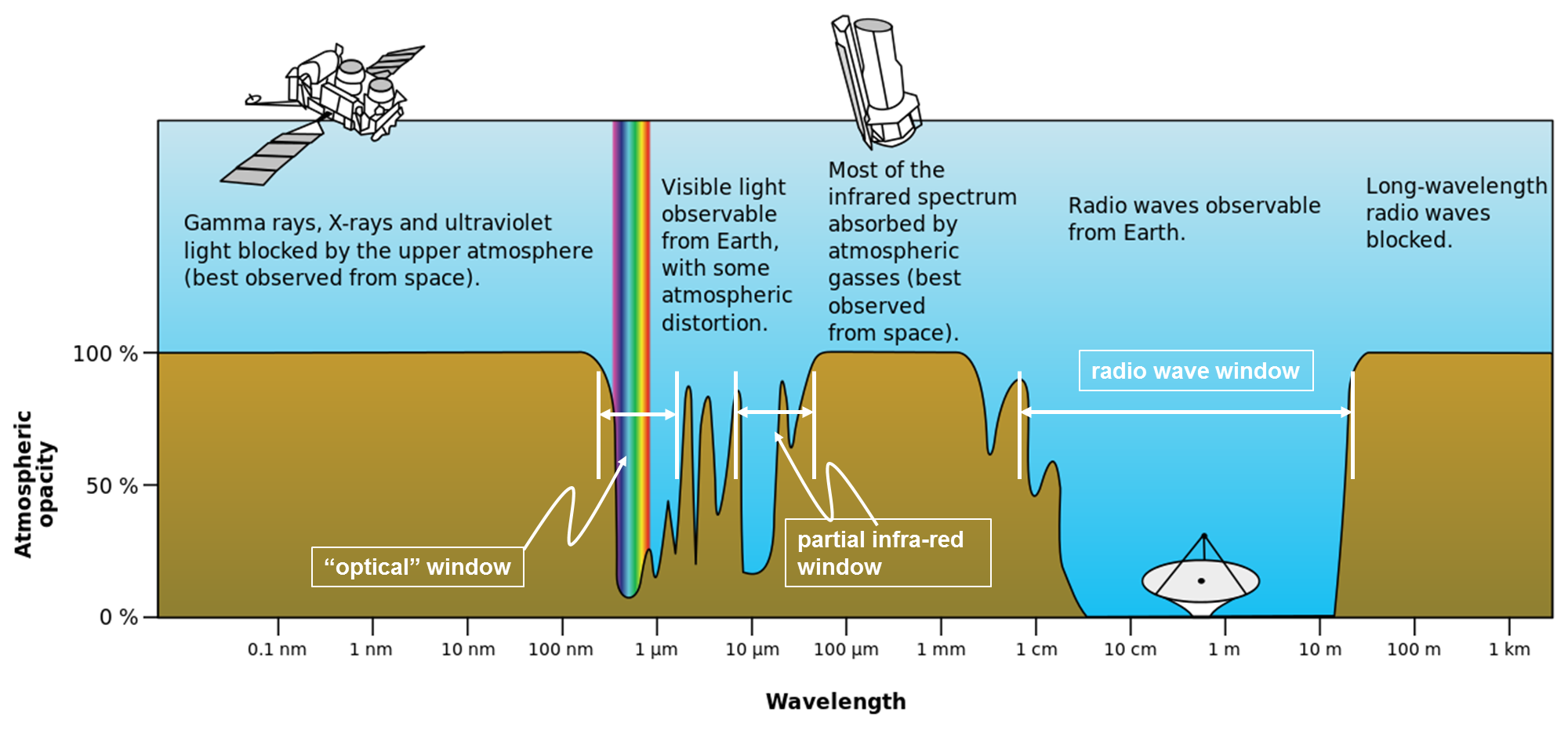
There are some who point to the evolution of the eye as some kind of proof of Intelligent Design. But it is actually the reverse. Human eyes actually see a very small part of the spectrum available to be discerned. Compared to what it could be, vision is a key area of sensory deficiency. Electromagnetic radiation exists in the range from gamma rays having a wavelength of 0.1 Angstrom (10−11 m  corresponding to a wavelength of 1019 Hz) all the way up to long wave radiation with a wave length of about 1,000 m and a frequency of 100,000 Hz. Within this range we find radio waves (wavelength 50 cm – 10 m), microwaves and radar (between 1cm – 10 cm wavelengths), infra-red (between 1 μm and 1 mm), “visible light” (between 360 nm to 720 nm), ultra-violet (20 nm to 100 nm) and X-rays (0.2 nm to 1 nm). The gases in the Earth’s atmosphere prevents much of the electromagnetic radiation from reaching the surface. But the atmosphere is virtually transparent in 3 main bands

  1. an “optical window” including the visible spectrum along with the near uv and near ir regions,
  2. a partial infra-red window, and
  3. a radio wave window
emr windows - based on wikimedia

emr windows – based on wikimedia

There is some reason therefore for life on earth to develop senses which take advantage of these windows to detect the electromagnetic radiation that passes through the atmosphere and bombards the earth. Yet no animal can detect all radiation just in the “optical window”. Some of the infra-red radiation can be detected as warmth on the skin. Bats can both see and emit along the radar bands but not at longer radio wave-lengths. Humans are virtually blind in the top two windows.

daffodil in visible and UV light image Dr. Mccarthy

daffodil in visible and UV light image Dr. Mccarthy

http://drmccarthysciencehgms.blogspot.se/2010/01/how-do-insects-see-flowers.html

Even within the optical window, the range of wave-lengths that are “visible” to humans is much narrower than the range visible to all animal-life. Pollinating creatures (bees and butterflies), for example, see well into the ultra-violet. The colours and patterns on flowers look quite different in ultra-violet light. They appear like landing lights to guide the pollinator “home”.While the picture on the right above is exclusively in uv light, an extended range of human visibility would lead to “seeing” some combination of the two pictures above. And so it would be if we could see further into the infra-red as well. We would need non-existent – but imaginable organs, to sense radiation within the other two windows.

Whether or not an extended range of vision could have helped humans better to survive, it is apparent that human vision is – compared to what is possible in the animal world – deficient. Compared to what is there to be “seen”, we see only a tiny fraction. It is highly unlikely that having an extended range of vision would have been a disadvantage in the survival stakes. It may not have provided a critical advantage but it still remains a sensory and an evolutionary deficiency!

Humans also lack the organs which allow bats to be radar receivers and emitters. A deficiency. We lack the organs that allow sharks to detect electric currents or birds to detect and navigate along magnetic lines of force. Our olfactory senses are far inferior to that of most animals. Dogs may be able to smell cancer cells but we can’t. Our hearing of high frequency sounds is also much inferior to that of most animals. All deficiencies. Humans do very well with low frequency sounds and perhaps only elephants and the largest of whales can generate and hear lower pitched sounds than humans can. We do not have the senses to even discern what some of our instruments measure.

For every human sense, and comparing only with the range exhibited by other life on Earth, our range of detection is deficient. There is no instance where the range of a human sense represents the entire range available within the animal world. Clearly, with a greater sensory range, humans could be much more capable – inherently – of discerning the world around them than they actually are.

Evolution of course is not about excellence. It is not even about the survival of the fittest. It is just the result of the demise of the unfit and therefore represents the minimum required to survive. Evolution is not about being “best” but only about being “good enough”. Evolution therefore sorts out individuals with sensory deficiencies when they are debilitating and prevent survival but evolution does not – except by accident – lead to an increase in a sensory range.

Natural de-selection which has dominated evolution so far is essentially without direction and is not a “selection for excellence”. Now as artificial selection comes into play, it becomes possible for humans – for the first time ever – to consider the direction to be taken for the development of future humans. This is the stuff of Frankenstein and Dr. Moreau and other evil genetic manipulators. Nevertheless I wonder which senses I would want/desire to be improved or enhanced or even created. (Though I would prefer that the deterioration of senses with age be addressed first).

Vision: I would quite like to have a much better night vision sensitivity together with some further range into the infra-red (but perhaps not much further into the uv range). I exclude Superman like X-ray vision as being too far removed from the optical window. To be able to “light-up” whatever I was looking at – say within 1 m – would require some new organ of luminescence which may be asking for too much.

Sound: A slightly larger range of hearing into the high frequency bands is, I think, to be desired. At least so I can hear what a dog hears. This would change human music and musical instruments quite drastically. I don’t think I want a more acute hearing sense (we are surrounded by enough noise as it is) but I would like to be able to hear a greater range of sounds than I can produce.

Magnetoception: It would have been a boon for explorers 500 years ago if they had had an innate sense of magnetic north. As we go out away from earth, humans will be exploring again and being able to discern lines of magnetic force without relying on instruments could well come in useful.

I have no great desire for enhancing the sense of touch or of smell. They are fine as they are and I see no clear benefits in their enhancement. But a new organ of extra-sensory perception (esp) to pick up the brain waves of others could be very handy. In its simplest form it would just detect when somebody was lying or some kind of “empathy” level being broadcast. But in its most evolved form it could be what is so beloved of science fiction writers. An organ that allowed mind-to-mind contact would lead to a profound paradigm shift in communication between humans which would rival the introduction of speech and language.

Another duck species being exterminated for being successful

August 8, 2014

The inconsistencies in the “conservation” movement and the meaningless defence of “biodiversity” have never been so apparent as in this case where the UK is wiping out all the females of a duck species just because the males are too successful.

Once again an inadequate and failing species is being “protected” by exterminating a successful one for no other reason than that it is successful. The nonsense spouted in the name of “conservationism” is amusing but always expensive and without any real benefit.

The Guardian:

It is American, oversexed and over here, but the days of the ruddy duck in the UK are finally numbered, with the latest culling data revealing that just 10 females remain.

The shooting of the final few – at about £3,000 a bird – will mark the end of half a century of occupation by the species. At their peak, their numbers reached 6,500 but their breeding prowess threatened the native European white-headed duck. 

The invasion began in 1948 when the famed conservationist Sir Peter Scott’s love for ducks led him to import three pairs of the colourful US birds to his Slimbridge reserve in Gloucestershire. But their escape and consequent flourishing in the British countryside led to an anguished debate among ornithologists decades later, as well as a nationwide cull that has cost more than £5m. …… 

Apart from their success in the duck world they don’t seem to pose any particular threat to humans

The problem is that the “sexy” males ruddy ducks (Oxyura jamaicensis) are preferred by female white-headed ducks. The resulting hybrid offspring threatened the survival of the white-headed duck, which was already struggling with habitat loss due to development. “Ruddy duck males are particularly aggressive when it comes to breeding and court females more vigorously,” said Madge. “That makes them more attractive to female white-headed ducks.”

The UK ruddy ducks also spread their wings across Europe, into France, Belgium, the Netherlands and into Spain. The discovery of hybrids in the latter country in the 1990s showed the ducks had grown into a continent-wide threat and that sealed their fate. The following year, an eradication programme began in the UK and a marksmen who has been part of the cull since then told the Guardian the birds fulfil the idea of a sitting duck.

Clearly gender equality is not something for ducks when the females are culled for the “sins” of the males. If ruddy duck males are preferred by the female white-headed ducks (and they have no problem in breeding together) why are these “conservationists” not allowing natural selection to take its course?

If male conservationists were preferred by normal females then perhaps the solution is to eradicate all female conservationists?

Related: Too much biodiversity – time to let some species die out

Breeding for intelligence?

August 8, 2014

I take intelligence to be a capability – a potential. For every human it is – by my definition – genetic. Knowledge, not intelligence, is what is acquired. No matter how we define it, intelligence is a composite consequence of many genes. Epigenetics suggests that some of these genes may be switched on or not depending upon nurture but the existence of the relevant genes must surely be inherited (nature). The supremely idiotic goings-on in Iraq and Syria and Gaza and Africa and in all the instances of barbarism and mayhem around the world are all consequent to a lack of intelligence. They only convince me that human intelligence is not on the increase and- clearly – is not a trait that is being selected for.

But it should be.

Though intelligence does seem to be positively correlated with survival to reproduction age, it seems that it leads to a lower reproduction rate which more than negates the effects of the increased survival. Assuming that IQ is at least a partial measure of intelligence, fertility rate seems to reduce with increasing intelligence. If the lower reproductive rate is actually a consequence of the higher intelligence, then the human race – without intervention – is doomed to remaining where it is on the scale of intelligence and its proportion of idiots. The paradox is that there is nobody who does not want to be more intelligent – but it does not seem to be an evolutionary trait.

IQ and fertility: A cross-national study

Many studies have found a small to moderate negative correlation between IQ and fertility rates. However, these studies have been limited to the United States and some European countries. The present study was a between-nation study using national IQ scores and national fertility rates. There were strong negative correlations found between national IQ and three national indicators of fertility.

“Evolution” is actually just the result of the those who failed to reproduce. So while intelligence may be a survival trait it does not seem to result in increasing reproduction and is therefore not an evolutionary trait.

Demographically then the human race – without human intervention – is condemned to a  “dumbing down”.

Is human intelligence declining?

If “intelligence” is an inherited characteristic – as it seems at least partially to be –  then it is only a matter of simple arithmetic that unless the “more intelligent” reproduce at a higher rate than those of “less intelligence” then the “average intelligence” of the population will inevitably decrease.

There is little doubt that there is a connection between intelligence and brain size. But brain size alone is not a measure of intelligence. Intelligence was probably selected for (and therefore an evolutionary trait) during the period when the size of the human brain was increasing. Possibly at some point the collateral genetic cost of increasing intelligence led to a leveling off. There could well have been trade-offs during the period when – simultaneously – food supply was more secure, human brain size was increasing, intelligence increased, language was evolving and social interaction was increasing. Quite possibly there is an optimum combination of these (and possibly other) traits for any given set of prevailing environmental conditions.

Brain size does not seem to have increased for anatomically modern humans (AMH) and that means for around 100,000 years – perhaps 200,000. But during this time the physical differences between the various “races” of humans have evolved. Possibly these physical changes have occurred fastest during the last 20,000 years since the end of the last glacial period. But even coping with this massive change of environmental surroundings has not led to the further development of brain size and – apparently – intelligence. There is some suggestion that intelligence peaked with the hunter-gatherers. Intelligence has not been a decisive factor for survival and subsequent reproduction. Perhaps human intelligence cannot increase unless the conditions first exist which lead to an increase of brain size? Or perhaps brain size increases only as a consequence of intelligence being selected for?

The question is whether we should now explicitly be trying to increase the intelligence of humankind?

We are now within a paradigm where “natural selection” by the prevailing environment has been decoupled from survival and subsequent reproduction. Natural selection is apparently obsolete and of no great value for the further development of humankind.  Social factors rather than the surrounding environment control fertility. The welfare state has seen to it that physical disabilities after birth generally do not act as a de-selector. “Artificial selection” does not yet dominate but is of increasing importance in determining who survives to subsequently reproduce. Abortion (25 -30% of all conceptions) de-selects for some serious, detectable, physical disabilities but is also often for the social convenience of the mother.  Surrogacy and IVF are driven by social needs and are providing the possibility of selecting for specific characteristics – though the “selection” is still largely hit-and-miss. I am not sure that IQ is necessarily the best measure of intelligence, but it seems ridiculous that where we do use “artificial selection”, intelligence is not also a criterion for selection.

Humans have learned to overcome the limitations of the surrounding “natural” environment. We cannot predict – let alone control – earthquakes and volcanoes, but we do build houses which make the vagaries of most weather irrelevant. We breed other species to suit our needs. We overturn the natural order of things by protecting the weak and healing the sick and caring for the old.  Modern living is fundamentally “unnatural” in that it is dominated by human intervention to mitigate “natural” effects. The many deficiencies we still have – poverty and gratuitous violence and famine and rape and genocide and intolerance and religious insanities – can all be put down to insufficiency of intelligence.

There is nothing wrong with eugenics. It is the methods by which it is applied which can be ethical or unethical.It is inevitable that we try and achieve a growth of intelligence. And perhaps it has already started – in China.

iO9: Chinese parents will be able to engage in what’s called preimplantation genetic diagnosis (PGD) in order to select the most “intelligent” babies. It’s not genetic engineering — instead, doctors look at the DNA of several zygotes and choose the most promising one for implantation. Put this reproductive technology in the hands of enough parents, and the next generation of Chinese citizens could start to exhibit rates of intelligence five to 15 IQ points higher than what’s typically seen today.

China passed its so-called “Eugenics Law” in 1994, what it formally calls the “Maternal and Infant Health Care Law”:

This law regulates support for maternal and child health and also requires physicians to recommend a postponement of marriage if either member of a couple has an infectious, contagious disease or an active mental disorder. If one member of a couple has a serious hereditary disease, the couple may only marry if they agree to use longterm contraception or to undergo sterilization. If prenatal tests reveal that a fetus has a serious hereditary disease or serious deformity, the physician must advise the pregnant woman to have an abortion, and the law states that the pregnant woman “should” follow this recommendation.

The introduction of novel biotechnologies could allow the communist government to take its eugenic-like policies to the next level (though it’s not clear at this time if China will insist that PGD be enforced in this way). But rather than just screen for a “serious deformity,” the Chinese may eventually designate any kind of “deleterious” trait — like low IQ — as something that can and should be eliminated from the gene pool (with “low” IQ being a potentially normative and scalable characteristic).

Put that together with the Chinese Genetic Program:

Vice: At BGI Shenzhen, scientists have collected DNA samples from 2,000 of the world’s smartest people and are sequencing their entire genomes in an attempt to identify the alleles which determine human intelligence. Apparently they’re not far from finding them, and when they do, embryo screening will allow parents to pick their brightest zygote and potentially bump up every generation’s intelligence by five to 15 IQ points. 

Related: On birth rates, abortions and “eugenics by default”

Eugenics by surrogacy – Australian style

August 1, 2014

It was an Australian couple in this case but of course there are many who use surrogacy in Thailand and other poor countries to carry out procedures they cannot in their own countries. In nearly all cases of surrogacy the mother is required to abort if a serious medical problem is detected.

In the Sydney Morning Herald:

Gammy, a six-month-old baby abandoned by his Australian parents, could die because his impoverished Thai surrogate mother cannot pay for medical treatment for his congenital heart condition.

The child will never know his twin sister, who was born healthy with him in a Bangkok hospital and has been taken away by their parents, who are living anonymously in Australia.

The story of how 21-year-old Pattharamon Janbua was cheated by a surrogacy agent in Bangkok and left to try to save the life of her critically unwell baby has emerged as Thai authorities move to crack down on IVF clinics, …… 

Ms Pattharamon says three months after a doctor injected the Australian woman’s fertilised egg into her uterus, she discovered she was having twins. The agent promised her an additional $1673 to have the second baby.

The couple asked the Thai mother to abort the Downs syndrome twin which she was not prepared to do.

Four months into the pregnancy, doctors doing routine checks discovered one of the babies had Down syndrome. They told the Australian parents, who said they did not want to take the boy, according to a source familiar with the case.  

“They told me to have an abortion but I didn’t agree because I am afraid of sin,” Ms Pattharamon says, referring to her Buddhist beliefs. 

This couple probably should be barred from being parents but their genes are being carried forward.

How many surrogate conceptions are aborted is not known but they happen –  it is thought – mainly because a medical defect in the fetus has been detected.  However, it is known that many surrogate clinics do select for the sex of the child and babies of the undesired gender are also aborted. Many of the Thai surrogacies for Australians are for same-sex couples. I don’t believe that any child – if given and capable of an informed choice – would prefer to do without a father or a mother.

Currently around 25-30% of all “normal “human conceptions are aborted. But most of these are abortions for convenience rather than for defects in the fetus. If being a reluctant mother has a genetic component then every abortion is also a genetic deselection of reluctant mothers.

Related: On birth rates, abortions and “eugenics by default”

No mass extinction! Dinosaurs shrank to become birds

August 1, 2014

Sixty five million years ago, the theory goes, a 6 mile long asteroid slammed into the earth and caused the extinction of all non-avian dinosaurs as part of a mass extinction event. Some 50% of all species living at the time – the hypothesis proclaims – vanished in this mass extinction event. It’s the stuff of catastrophe theories and movie scripts.

Smithsonian: Sixty-five million years ago the dinosaurs died out along with more than 50% of other life forms on the planet. This mass extinction is so dramatic that for many years it was used to mark the boundary between the Cretaceous Period, when the last dinosaurs lived, and the Tertiary Period, when no dinosaurs remained. This is called the Cretaceous/Tertiary (or K/T) boundary, and the associated extinction is often termed the K/T extinction event. …….  Most theories focused on climate change, perhaps brought on by volcanism, lowering sea level, and shifting continents. But hundreds of other theories were developed, some reasonable but others rather far-fetched (including decimation by visiting aliens, widespread dinosaur “wars”, and “paläoweltschmertz”­the idea that dinosaurs just got tired and went extinct). It was often popularly thought that the evolving mammals simply ate enough of the dinosaurs’ eggs to drive them to extinction.

But a new paper now suggests that dinosaurs actually shrank as they evolved over 50 million years to become the birds we know today. This still means that it was the dinosaurs vacating space on land which gave rise to the growth of mammal species, but it was not a one-time catastrophic event. No mass extinction then!

No fireworks apparently. Just a gradual, fairly mundane process where the large and cumbersome were deselected as they ran out of the ability to feed themselves and died off.  While the small and the nimble both needed less food and were more capable of getting it.

Michael S. Y. Lee, Andrea Cau, Darren Naish, Gareth J. Dyke. Sustained miniaturization and anatomical innovation in the dinosaurian ancestors of birds. Science, 1 August 2014: Vol. 345 no. 6196 pp. 562-566 DOI:10.1126/science.1252243

University of Southampton Press ReleaseA new study involving scientists from the University of Southampton has revealed how massive, meat-eating, ground-dwelling dinosaurs evolved into agile flying birds: they just kept shrinking and shrinking, for over 50 million years.  

Today, in the journal Science, the researchers present a detailed family tree of dinosaurs and their bird descendants, which maps out this unlikely transformation.  They showed that the branch of theropod dinosaurs, which gave rise to modern birds, were the only dinosaurs that kept getting inexorably smaller.  

“These bird ancestors also evolved new adaptations, such as feathers, wishbones and wings, four times faster than other dinosaurs,” says co-author Darren Naish, Vertebrate Palaeontologist at the University of Southampton.  

“Birds evolved through a unique phase of sustained miniaturisation in dinosaurs,” says lead author Associate Professor Michael Lee, from the University of Adelaide’s School of Earth and Environmental Sciences and the South Australian Museum.  

“Being smaller and lighter in the land of giants, with rapidly evolving anatomical adaptations, provided these bird ancestors with new ecological opportunities, such as the ability to climb trees, glide and fly. Ultimately, this evolutionary flexibility helped birds survive the deadly meteorite impact which killed off all their dinosaurian cousins.”  

Co-author Gareth Dyke, Senior Lecturer in Vertebrate Palaeontology at the University of Southampton, adds: “The dinosaurs most closely related to birds are all small, and many of them – such as the aptly named Microraptor – had some ability to climb and glide.”  

The study examined over 1,500 anatomical traits of dinosaurs to reconstruct their family tree. The researchers used sophisticated mathematical modelling to trace evolving adaptions and changing body size over time and across dinosaur branches.  The study concluded that the branch of dinosaurs leading to birds was more evolutionary innovative than other dinosaur lineages. “Birds out-shrank and out-evolved their dinosaurian ancestors, surviving where their larger, less evolvable relatives could not,” says Associate Professor Lee.


Too much biodiversity – time to let some species die out

July 28, 2014

Conservationists would have us believe that the earth is losing species at an alarming rate and that evil humanity is to blame and therefore more and more species must be protected by “freezing” them into an unnatural existence. Alarmist “conservationism” has led to the ridiculous situation where successful species are termed pests and are eradicated. Hopelessly unfit species – if they are cuddly or otherwise attractive to watch – are protected by being sentenced to a “frozen” existence in zoos or in “protected” and totally unnatural and anachronistic habitats.

I was just watching a program about the highly successful urban coyotes of N. America. They have found a new prey in domestic pets and are thriving. But having adapted successfully to the changing environment they have – needless to say – earned  the status of being declared a pest to be wiped out!!

And yet there have never been more species alive than there are today.

A new review paper warns with great alarm about another impending mass extinction due to the loss of fauna that man has caused. The press release for this paper (why do scientific papers need press releases?) begins thus:

Stanford biologist warns of early stages of Earth’s 6th mass extinction event

The planet’s current biodiversity, the product of 3.5 billion years of evolutionary trial and error, is the highest in the history of life. But it may be reaching a tipping point.

In a new review of scientific literature and analysis of data published in Science, an international team of scientists cautions that the loss and decline of animals is contributing to what appears to be the early days of the planet’s sixth mass biological extinction event.

If biodiversity “is the highest in the history of life” and many species are incapable of adapting to the world they live in, perhaps it is time for them to exit gracefully.

Perhaps the progress of humankind requires that some of these obsolete species must be allowed to disappear.

The dangers of reducing biodiversity are being hyped to a ridiculous extent. Without the mass extinctions of the past, most of the species living today would never have evolved. If the dinosaurs had not gone extinct we would not be around. And the disappearance of the dodo has not increased any threat to humanity.

Related:

Fighting against species extinction is to deny evolution

Genetic adaptation – not stagnating conservation – is the way to help threatened species

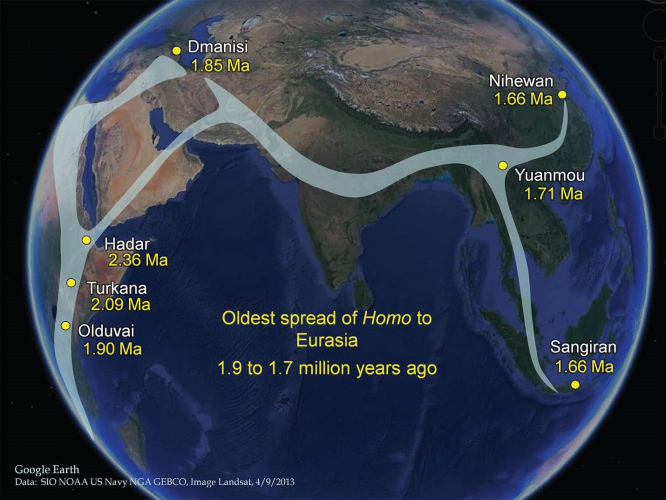
The “original” Out of Africa event

July 6, 2014

Homo Out of Africa 1.9 million years ago

Homo Out of Africa

Climate and the butterfly in Brazil

June 22, 2014

You may think that the weather outside your window is a consequence of the prevailing climate. But that would be the cart before the horse. Without weather there is no climate.

Climate is to weather as evolution is to reproduction.

Evolution is just a label given to the result of many, many individual survival and reproduction events. Evolution is not a “force” which directs who will survive and who will not or which individuals will reproduce and who will not. Evolution is then the name we give to the resultant changes in the genetic make-up of species as individuals of that species survive and reproduce (or fail to reproduce where  the species goes extinct). The survival and reproduction of individuals changes as the environment they live in changes. Evolution is thus the global, net result of the millions of successful, local, individual matings, and of the many more millions of failures to reproduce. Natural selection is merely a record of those that manged to survive and reproduce and thereby “deselected” all the failures. Without environmental change first causing a change in which individuals survive and then reproduce, there can be no evolutionary change (except due to random mutations).  Similarly there is no great driving force called climate which determines the weather outside your window. Climate is the label we give to the summation of all the local weathers in a region or around the globe as being the climate of that region or of the world. Just as resulting evolution and evolutionary change is impacted by the local survival or failure of a species, so is resulting climate impacted by weather and by changes to local weather patterns. Climate is a calculated result, an average, of  myriads of local weather events

Without reproduction and consequent genetic change there is nothing to be called evolution. There is no evolutionary change if a species is genetically static – if it’s surroundings and its growth are unchanged.  Similarly there is no climate change if local weather patterns remain static. And without individual events of local weather there can be no average to be called climate.

The weather we each experience locally outside our windows covers a very wide range. Within a few minutes, on any day of the year we can experience temperature changes of  5 – 10ºC as clouds appear or it starts blowing or if it rains or if it snows. Winds can vary from virtually still upto over 100km/h in the midst of a storm. Every single day we see a change of around 10ºC between day and night. Over a period of a week it would not be unusual to have a temperature change of even 20ºC. Over a year a temperature variation of 60ºC (+35ºC on the warmest day to – 25ºC on the coldest) could be expected at my latitude.

Politically correct “climate science” today takes it for granted that any unpleasant warming of the earth, or uncomfortable cooling of the earth, or increased frequency of storms, or copious amounts of rainfall and any resulting flood, or no rainfall and any resulting drought, or any unduly severe hurricanes is – by virtue of its unpleasantness – due to man-made climate change. And man’s evil influence is all manifested by the emissions of carbon dioxide from fossil fuel combustion and the atmospheric concentration of carbon dioxide!

But in the meantime it is mid-summers day and a cloud has passed over the sun. And when the cloud has passed I will feel a lot warmer than by increasing the carbon dioxide around me!!!!

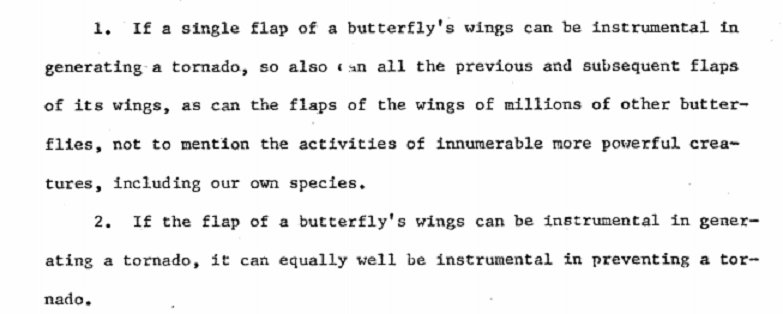
In the 1960’s Edward Lorenz developed his chaos theory and in 1972 gave his famous talk questioning if the flap of a butterfly’s wings in Brazil could set off a tornado in Texas. (Lorenz Butterfly 1972).

Lorenz 1972

Lorenz 1972

Without reproduction there is no evolution and without local weather there is no climate.

Blaming fossil fuel combustion for climate change is like blaming one poor butterfly in Brazil and ignoring every other bird and insect flapping its wings.


Polar bear numbers systematically underestimated by 25-30%

May 31, 2014

The International Union for Conservation of Nature (IUCN) is a conservation lobby group. As with all advocacy groups (WWF, FoE, Greenpeace….) much of their “science” has to be taken with a large bushel of salt. Needless to say they have “observer” status at the UN. In any event they have a Polar Bear Specialist Group (PBSG) and much of the unfounded alarmism about the polar bear being a threatened species originates with them. As with other advocacy groups they systematically ignore data which does not advance their theses. They are not averse to data manipulation when it suits them.

In fact polar bears are thriving. The IUCN -PBSG now admits – in a little footnote – that their numbers in 5 large zones have just been ignored and set to zero for lack of data. Actual polar bear numbers are probably well in excess of 30,000. Since 2001, the PBSG has systematically ignored 5 large sub-populations of polar bears as Dr. Susan Crockford reports on her blog:

…. none of these ‘global population estimates’ (from 2001 onward) came anywhere close to being estimates of the actual world population size of polar bears (regardless of how scientifically inaccurate they might have been) — rather, they were estimates of only the subpopulations that Arctic biologists have tried to count.

For example, the PBSG’s  most recent global estimate (range 13,071-24,238) ignores five very large subpopulation regions which between them potentially contain 1/3 as many additional bears as the official estimate includes (see map below). The PBSG effectively gives them each an estimate of zero.

Based on previous PBSG estimates and other research reports, it appears there are probably at least another 6,000 or so bears living in these regions and perhaps as many as 9,000 (or more) that are not included in any PBSG “global population estimate”: Chukchi Sea ~2,000-3,000; East Greenland, ~ 2,000-3,000; the two Russian regions together (Laptev Sea and Kara Sea), another ~2,000-3,000 or so, plus 200 or so in the central Arctic Basin. These are guesses, to be sure, but they at least give a potential size.

I find the entire thrust of Conservationism to be fundamentally flawed. Threatened species are genetic and evolutionary failures in the sense that they do not have the genetic variability necessary to continue in a changing world. Trying to stop the change they cannot cope with is a futile exercise. If conservation of a species has to mean anything, then selected, threatened species have to be helped to adapt to the inevitable change – genetically if necessary.