Archive for the ‘Gas’ Category

Japanese test confirms successsful extraction of gas from deep-sea methane hydrate

March 13, 2013

Methane hydrates represent the largest source of hydrocarbons in the earth’s crust.

“The worldwide amounts of carbon bound in gas hydrates is conservatively estimated to total twice the amount of carbon to be found in all known fossil fuels on Earth”.

JOGMEC has put out a press release:

Japan Oil, Gas and Metals National Corporation which has been conducting preparation works for the first offshore production test off the coasts of Atsumi and Shima peninsulas, started a flow test applying the depressurization method and confirmed production of methane gas estimated from methane hydrate layers on March 12, 2013.
JOGMEC will start analyzing data while it continues the flow test.

Methane hydrate receives attention as one of the unconventional gas resources in the future.
During the period from FY2001 to FY2008, which is Phase 1 of the “Japan’s Methane Hydrate R&D Program”, seismic surveys and exploitation drillings were conducted at the eastern Nankai trough, off the coast from Shizuoka-pref. to Wakayama-pref., as the model area, where a considerable amount of methane hydrate deposits is confirmed.
In Phase 2 of the Program starting from FY2009, aiming to develop a technology to extract natural gas through dissociation of methane hydrate, this is the first offshore test ever conducted. The first offshore production test is planned over a span of two years. In February and March last year, the preparatory works including drilling a production well and two monitoring wells were conducted. From June to July, the pressured core samples were acquired from methane hydrate layers. In this operation, a flow test through dissociation of methane hydrate is conducted after the preparatory works including drilling and installing equipments for the flow test.

Deposits of methane hydrates have been reported in marine sediments in the Nankai Trough off the Pacific coast of central Japan, where the water depth is more than 500 meters. Some estimates indicate that the reserves of methane hydrate correspond to a 100-year supply of natural gas for Japan, making it an important potential source of energy. The Japan National Oil Corporation (JNOC) began research work on methane hydrates in 1995, and JOGMEC has overseen the project since the JNOC’s restructuring. An international joint research team including Japan has obtained successful results in experimental production of methane gas by injecting hot water into a borehole in the Mackenzie Delta in the arctic region of Canada.

With shale gas and shale oil adding to the known reserves of oil and gas and now with the potential exploitation of deep-sea methane hydrates, “peak-oil” and “peak-gas” would seem to have been postponed by a millenium.

 

UK has enough shale gas for a millenium

February 9, 2013

Shale gas reserve estimates keep on increasing. We have the peculiar situation where Russia and some of the large oil companies attack shale gas only because some of their existing business may be threatened. But they all also have strong positions with shale gas. But what is clear is that “peak gas” has been postponed by several hundred years and there is no energy crisis in sight.

Peak Gas will never come

The Times has seen advance copies of the British Geological Survey’s new estimates of shale gas reserves in the UK:

Britain could have enough shale gas to heat every home for 1,500 years, according to new estimates that suggest reserves are 200 times greater than experts previously believed. The British Geological Survey is understood to have increased dramatically its official estimate of the amount of shale gas to between 1,300 trillion and 1,700 trillion cubic feet, dwarfing its previous estimate of 5.3 trillion cubic feet.

According to GWPF:

According to industry sources, the revised estimates will be published by the Government next month, fuelling hopes that new “fracking” techniques to capture trapped resources will result in cheaper energy bills.

It is thought that it will be technically possible to recover up to a fifth of this gas, making Britain’s shale rocks potentially as bountiful as those in the US. Experts stressed that it was still much too early to say how much of the gas it would be economic to get out of the ground to heat homes and help to generate electricity. 

In an interview with The Times today, Ed Davey, the Energy and Climate Change Secretary, tries to downplay hopes of a shale gas glut in the UK pushing down household heating bills, which are at record highs. “It is not the golden goose. The experts are clear that they do not expect this to have a major impact on the gas price.”

The UK Onshore Operators Group (UKOOG), which also represents other onshore oil and gas producers, is aiming to win over public opinion about the shale gas industry, in particular by countering claims that the process of fracking poses an environmental menace.

The shale gas industry is gearing up for a year of intense activity after the Government lifted an 18-month moratorium on fracking in December. The ban was imposed in May 2011 after Cuadrilla Resources, the explorer backed by Lord Browne of Madingley, the former chief executive of BP, set off dozens of earth tremors when it began fracking on sites near Blackpool. The company intends to resume fracking this summer to find out more about the size and commercial potential of its reserves.

Other explorers sitting on vast shale gas deposits will also apply for fracking licences soon. Government officials are preparing to hold an onshore oil and gas licensing round this year which could result in more parts of the UK being opened up for shale exploration.


Low energy prices with shale gas leading to shift of jobs from Europe to US

December 28, 2012

It is inevitable that investment and jobs – and especially in energy intensive industries – will migrate to regions of low energy costs. Over the next few years the lead that the US has developed over the rest of the world in the exploitation of shale gas will cause European companies to shun the high energy costs at home and shift to the US.

Reuters: Austria’s group Voestalpine is considering a plan to build a $1 billion plant in the United States that would convert iron ore into concentrate used in steelmaking, Trend magazine reported. ………. Trend said the plant was envisioned for a coastal city in the southern United States, given cheap and reliable supplies of natural gas, political stability and efficient port infrastructure.

And the problem has been the unnecessary and misguided European obsession with chasing a mirage.  A meaningless and unjustified pursuit of “low carbon” energy; profligate subsidies for ineffective renewable energy; wasteful – and eventually corrupt – attempts to bias the market with carbon credits and the shutting down of perfectly viable coal and nuclear power plants has given the highest energy costs in the world. Gas prices in Europe are 4 or 5 times as high as in the US. Europe has plenty of shale gas potential but development is lagging far behind the US largely because of the political opposition from the “Green” lobbies. As the New York Times reports:

High Energy Costs Plaguing Europe

.. Asked whether he had considered building the plant in Europe, Voestalpine’s chief executive, Wolfgang Eder, said that that “calculation does not make sense from the very beginning.” Gas in Europe is much more expensive, he said.

High energy costs are emerging as an issue in Europe that is prompting debate, including questioning of the Continent’s clean energy initiatives. Over the past few years, Europe has spent tens of billions of euros in an effort to reduce carbon dioxide emissions. The bulk of the spending has gone into low-carbon energy sources like wind and solar power that have needed special tariffs or other subsidies to be commercially viable.

“We embarked on a big transition to a low-carbon economy without taking into account the cost and without factoring in the competitive impact,” says Fabien Roques, head of European power and carbon at the energy consulting firm IHS CERA in Paris. “I think there will be a critical review of some of these policies in the next few years.” 

Both consumers and the industry are upset about high energy costs. Energy-intensive industries like chemicals and steel are, if not closing European plants outright, looking toward places like the United States that have lower energy costs as they pursue new investments.

BASF, the German chemical giant, has been outspoken about the consequences of energy costs for competitiveness and is building a new plant in Louisiana.

“We Europeans are currently paying up to four or five times more for natural gas than the Americans,” Harald Schwager, a member of the executive board at BASF, said last month. “Energy efficiency alone will not allow us to compensate for this. Of course, that means increased competition for all the European manufacturing sites.”

And it beomes increasingly clear that the chase for politically correct “brownie points” by European  governments as they have demonised carbon dioxide quite needlessly while spending massively on renewable subsidies is not sustainable. Just as Japan must now waste political energy in “reviewing” their hasty decisions about the use of nuclear energy after Fukushima , Europe will have to spend the next decade in “reviewing and reversing” the spate of bad decisions made based on climate alarmism.

The expansion in renewables will probably ensure that Europe will meet its target of reducing greenhouse gases 20 percent from their 1990 levels by 2020. But it has been a disappointment on other levels. For one thing, emissions continue to rise globally. In a sense, Europe is likely to have exported its emissions to places like China, where polluting economic activity continues to increase while the European economy stagnates.

A striking indicator that the European effort has not achieved all that it intended to is the continued rise in the burning of coal, by far the biggest polluter among fossil fuels.

The International Energy Agency, a Paris-based group formed by consumer nations, recently said that coal was likely to catch up with oil as the world’s largest source of energy in a decade.

Much of the increase in coal use can be blamed on China and India, but not all of it. Europe has increased its coal use this year, and that has led to an increase of about 7 percent in carbon dioxide emissions from power generation, according to IHS. Coal use is increasing in all regions except the United States, the I.E.A. said.

Shale gas boosts petrochemical developments as fracking proves as important as catalytic cracking

December 19, 2012

The advent of shale gas (and shale oil) is having more profound effects than just on the production of energy or electric power. The development of “fracking” technology is providing an impetus for developments in the petrochemical industry which can be compared to the “golden years” which followed the introduction of catalytic cracking.  Petrochemical processing costs are now lower in the US than in many other countries and there has been a sharp increase in projects for the “cracking” of ethane to make ethylene as a feedstock.

As put by the Financial Times: “The international chemicals industry is undergoing its most profound upheaval for 75 years, according to Kevin Swift of the American Chemistry Council. Not since the years before the second world war, when there was a flood of discoveries including nylon, synthetic rubber, PVC plastic and polystyrene, has there been technological change with such far-reaching consequences.”

The American Chemistry Council has just published its Year End 2012 Situation and Outlook and issued this press release.

HydrocarbonProcessing writes:

Favorable oil-to-gas price ratios driven by the production of natural gas from shale will drive a renewed US competitiveness that will boost exports and fuel greater domestic investment, economic growth and job creation within the business of chemistry.

(more…)

Russia losing the shale gas wars

October 1, 2012

The advent of shale gas is not only a game-changer regarding power generation but also a game-changer in the area of energy and geopolitics. The Russian dominance in the European gas markets is being threatened and they are now joining forces with various environmental groups in an unholy alliance to restrain the development of shale gas production in Europe.

But in the long-term I expect Russia will join the shale-gas movement. They have larger resources of oil and gas bearing shales  than most others.

Wall Street Journal (Associated Press):

The Kremlin is watching, European nations are rebelling, and some suspect Moscow is secretly bankrolling a campaign to derail the West’s strategic plans. It’s not some Cold War movie; it’s about the U.S. boom in natural gas drilling, and the political implications are enormous. Like falling dominoes, the drilling process called hydraulic fracturing, or fracking, is shaking up world energy markets from Washington to Moscow to Beijing. Some predict what was once unthinkable: that the U.S. won’t need to import natural gas in the near future, and that Russia could be the big loser.

(more…)

As with peak gas, peak oil and rampant pessimism need to be postponed

July 9, 2012

Recovery of gas and oil from shale is more than just a game changer – it is a mind-changer. The recoverability of oil and gas from shale postpones “peak oil” and “peak gas” indefinitely. For 3 decades we have suffered from the rampant pessimism of the alarmists and the coercive politics of fear. A change of mind-set from pessimistic environmentalism and backward-looking conservationism is called for. A shift of attitude from the joyless “glass half-empty and we are doomed” to the entrepreneurial “glass half-full but can be filled”  is over-due.

Resource depletion with usage is a trivial truth  – though matter at the elemental level is never destroyed by human use. However utilisation of resources does alter the composition and concentration of materials remaining available. But every alarmist and doom-sayer who has ever lived and has forecast impending catastrophe has been proven spectacularly wrong. Human ingenuity has faced every challenge and trumped the doom-sayers – every time.

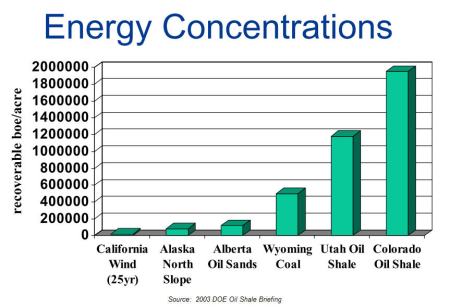
The pictures say it all:

The scope of the US oil shale resource

The scope of the US oil shale resource

Related: “Peak Oil” hypothesis is following “Peak Gas” into oblivion

Moving peaks

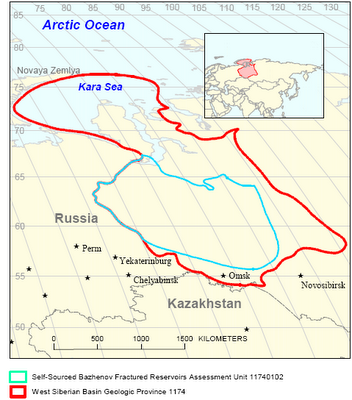
Vast shale oil deposits in Siberia

June 6, 2012

While oil from Siberia is nothing new the vast shale resources in the Bazhenov – containing oil and gas – have yet to be exploited. But fracking technology to extract these is now available. The West Siberian basin is the largest petroleum basin in the world.

Bazhenov basin Western Siberia

The shale in Western Siberia also contains large amounts of gas. Shale gas and oil are already flowing in the US, the shale gas potential in China and India is being explored and developed and now vast reserves of  oil and gas are available from shale deposits in Russia. Europe also has large deposits of shale gas but are dithering under the influence of alarmist environmentalism. They will have little choice but to join the brave new world of shale – or be left far behind.

Forbes reports:

(more…)

Renewable Energy Law has weakened the German electricity grid

May 13, 2012

The Renewable Energy Law was introduced 12 years ago in Germany. It prioritises the use of “green energy”. What was thought to be a way of helping the introduction of new technology and fulfilling a political agenda has backfired and has led to a severe weakness of the electricity grid and the second-highest electricty price in Europe.

The Law leads to large conventional coal and gas plants leaving the grid far too early  and these are the only plants which can guarantee a stable supply of power. This in turn has led to many of these plants being decommissioned prematurely since they were being forced to operate at uneconomic levels of loading. They are then no longer available to compensate when the wind does not blow or at night or on cloudy days as wind and solar power generation fluctuate wildly.

The hidden costs of renewable power are now being revealed and an entirely new market for “balancing power” has appeared. The “balancing power” – nearly always gas-fired  – is just to compensate for the inherent unreliability of wind and solar.  For every 100 MW of renewable capacity added around 70 MW of (mainly) gas-based balancing capacity has to be added to ensure a stable and steady supply of power. With subsidies and “balancing” costs added to the direct cost of building wind or solar plants, the actual costs of renewable power have been exorbitant and have contributed significantly to the increase of electricity prices to the consumer. Germany now has the second highest consumer electricity price in Europe (second only to Denmark with its profligate use of subsidised wind turbines)

The German Federal Network Agency has issued a report warning of the dangers during the coming winter. Daniel Wetzel of Die Welt writes (translation from GWPF – Philip Mueller):

Last winter, on several occasions, Germany escaped only just large-scale power outages. Next winter the risk of large blackouts is even greater. The culprit for the looming crisis is the single most important instrument of German energy policy: the “Renewable Energy Law.”

(more…)

With gas from methane hydrates added to shale and natural gas, the world has gas for a thousand years

May 3, 2012

Methane hydrates represent the largest source of hydrocarbons in the earth’s crust.

Methane clathrate (CH4•5.75H2O), also called methane hydratehydromethanemethane icefire icenatural gas hydrate, or gas hydrate is a solid clathrate compound (more specifically, a clathrate hydrate) in which a large amount of methane is trapped within a crystal structure of water, forming a solid similar to ice. Originally thought to occur only in the outer regions of the Solar System where temperatures are low and water ice is common, significant deposits of methane clathrate have been found under sediments on the ocean floors of Earth. 

The worldwide amounts of carbon bound in gas hydrates is conservatively estimated to total twice the amount of carbon to be found in all known fossil fuels on Earth.

(more…)

The Age of Gas: China has enough shale gas for 200 years

March 2, 2012

The Age of Gas is not just dawning  but is well and truly underway with China revealing reserves sufficient for 200 years. At 25 trillion cubic meters (875 trillion cubic feet) of recoverable reserves these could be almost twice the recoverable reserves in the US.

As shale gas comes into play all over the globe there is going to be a run on large gas turbines for power generation. Gas turbine manufacturers (and the big 4 are GE, Siemens, Alstom and MHI) can expect a sellers market within 2 or 3 years as the economic recovery pressurises generation capacity.

File:GasDepositDiagram.jpg

from Wikipedia

The Telegraph: 

China is planning an investment blitz to unlock its vast reserves of shale gas, convinced it can match the energy revolution under way in the US and meet a significant part of its fast-growing fuel needs.

(more…)