Archive for the ‘Health’ Category

In Sweden there is some encouraging data, but ……..

March 28, 2020

I would expect that the really heavy load on the Swedish health care system is dominated by the number of coronavirus patients needing intensive care places. Of course any patient who needs hospitalization and isolation also raises the load. The number of tests to be carried out places a load on the labs and the health care system in general but probably not specifically on hospitals.

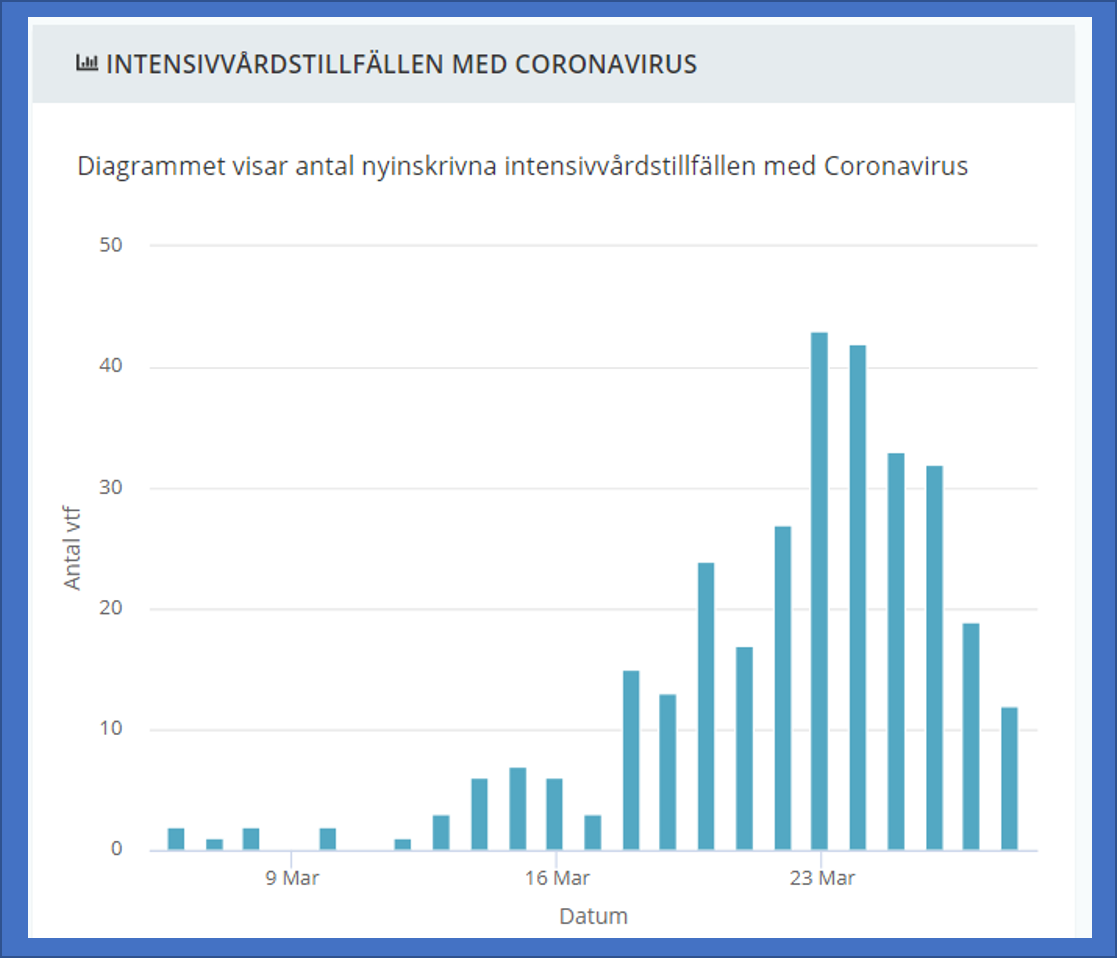
Maybe I am just an optimist and it is probably too early to be sure, but the daily number of cases needing intensive care has dropped over the last few days. At the time of writing there are a total of 310 Covid-19 patients in intensive care. The daily new cases for intensive care reached 43 and 42 respectively on 23rd and 24th March. However, there has been a drop in new cases since then.

Source: Swedish Intensive Care Register

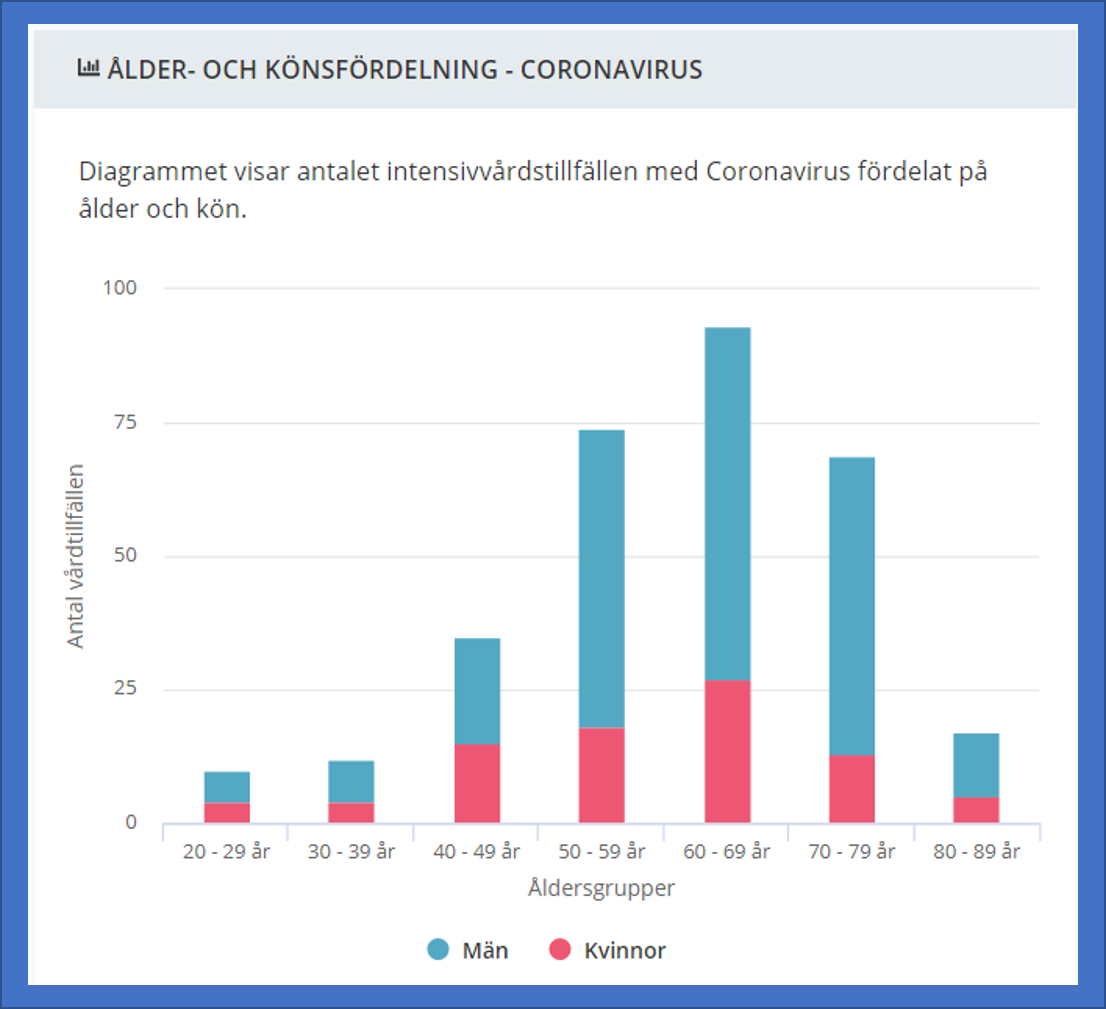
The age and gender distribution of the 310 intensive care cases (as of 28th March) show a predominance of men and over 50% between the ages of 50 and 70. Those over 70 account for 28% of intensive care cases. It seems a relative under-representation which, in turn, suggests some success with the voluntary social distancing.

78% of those in intensive care are people with some “risk” condition (chronic heart-lung conditions, chronic liver-kidney conditions, hypertension, diabetes, ……)

It is far too early to draw any clear conclusions but possibly Sweden has yet to see any wave of Phase 3 “community transmission” of the virus.

My guess is that after 3 weeks of a voluntary lock-down, it will be time to start allowing manufacturing to restart, but that service businesses with high levels of customer contact will need another 3 weeks after that. The risk groups will probably need to practice social distancing for 2 – 3 months.


The number reported infected is of little relevance

March 27, 2020

I am amazed at the shallowness and downright stupidity of some of the headlines hyping the number of people infected in any country. Countries are following widely divergent testing policies. Apart from for celebrities looking for publicity, testing is only carried out for those showing some symptoms or who are known to have been, or are at risk of of being, exposed. The number being reported as infected says very little beyond the boundaries of the testing policy. Comparing numbers from countries implementing different testing policies is just dumb.

Around half a million positive tests have been reported around the globe. That only reflects the number of tests carried out on varying population groups.  Probably ten or twenty times that number have actually been mildly infected (5 – 10 million). The number reported infected only says how many tested positive of those few who were tested.

The only statistics that are really relevant are:

  • how many have been hospitalized,
  • how many are in intensive care, and
  • how many have died.

It is desirable that everybody be mildly infected to develop a mass immunity. It is desirable that the vulnerable not be infected at all, until a vaccine is available. Any country’s strategy has to be a balance between maximizing the number to be mildly infected (such as with a vaccine) and minimizing the number severely affected. The objective currently should be to prevent infection, in general, and especially to prevent infections among those likely to suffer severe effects. That should mean ensuring social distance for those with other underlying conditions (of any age). Of course, other exacerbating conditions are more likely among the older population. General, draconian lock-downs are not sustainable for very long. The conventional wisdom seems to be that about 3 weeks may be sustainable. The purpose of any such restrictions can only be to win some time.

It will take a year or more for a vaccine. It makes more sense to follow sustainable rules of social distancing for the most vulnerable for the next 3 – 6 months and to allow the general population to return to normal. If the most vulnerable are protected then it makes sense for most of the population to be mildly affected, recover and carry on.


China WHO?

March 26, 2020

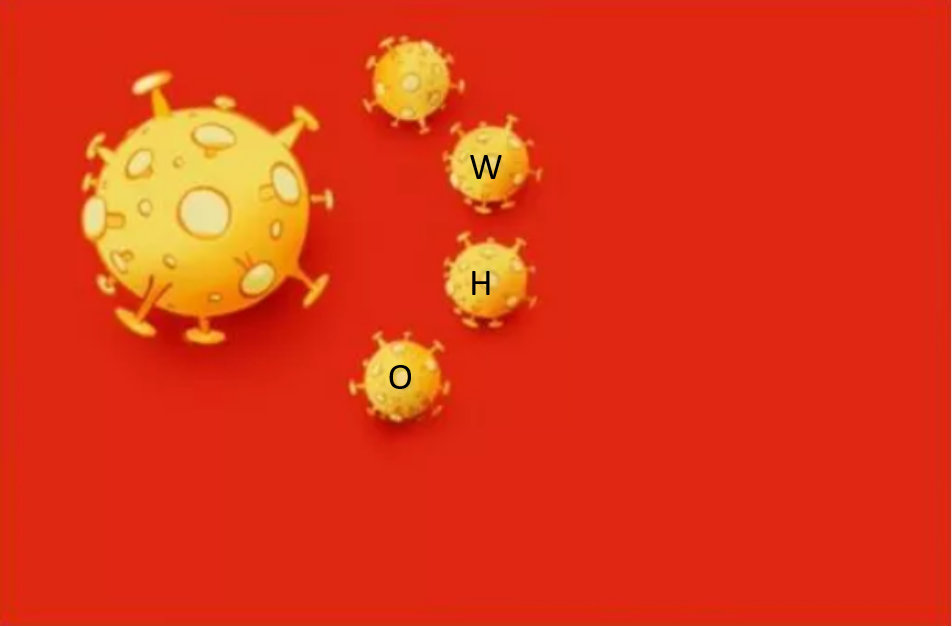
Maybe not politically correct to give the virus a nationality, ….

…… but China, aided and abetted by the WHO, certainly suppressed information which could have slowed its progress.

(original image from Denmark’s Jyllands-Posten)


Sweden’s voluntary lock-down may be able to flatten the curve

March 26, 2020

Sweden has been following a voluntary lock-down for some time now. Those who feel ill (with a cold or influenza-like symptoms) have been asked to stay at home. Those over 70 have been asked to self-isolate, stay home and only go out if absolutely necessary. Formally, only public gatherings of over 500 are not permitted. People have been asked to be socially distant but there are no compulsive measures. The strategy is absolutely reliant upon people being responsible. Of course, there are cases of irresponsible young people. However, bearing in mind that the areas of critical judgement in the human brain are not fully developed till the age of 25, this is not too surprising. Mass testing for the virus is not being carried out. Only those who clearly show symptoms and require hospital treatment are tested. Large scale testing of hospital staff and health care workers is being done. So there is no clear number of how many are actually infected. The only reliable statistics are the number of those hospitalized, those in intensive care and those who have died. Of course, the markets have crashed and small businesses are dying. Travel services, restaurants and all the service industries are in deep trouble. Big companies are sending workers home and declaring redundancies at an alarming rate.  Economic support packages are being announced every few days.

Anders Tegnell is the chief epidemiologist at the Public Health Agency and is on the news every day. To me he has been the face of common sense, even if many “influencers”, some in the media and prominent celebrities have been crying out for draconian measures to be applied (always it seems, to others). Saint Greta has been starved of attention and has just dramatically announced that she has probably been infected with Covid-19 but is recovering. (!!!??). It is not yet clear if the relatively low-key Swedish approach has worked and it will be some time before this real crisis is over. It is quite interesting that Sweden takes the common sense approach when dealing with a real crisis but becomes hysterical when dealing with imaginary crises. Virus smart but climate dumb. However, every day that goes by without the number infected increasing sharply (“day zero” when exponential growth takes off) means that the time baseline has been extended and the potential peak has been reduced. It is thought that it needs 80 days after “day zero” for the virus to have run its course.

Anders Tegnell: “Contrary to many other countries, like Great-Britain or Germany, the number of infections in Sweden has not yet started to incline dramatically, despite the fact that 36 Swedes have already died of covid-19. No region, not even Stockholm where the virus has spread considerably, has already experienced their ‘day zero’. Everything lies still ahead of us. Moreover, day zero will most likely not arrive simultaneously in the different Swedish regions.”

As of writing there have been 44 deaths in Sweden attributed to the virus and nearly all had some other underlying conditions.

The voluntary approach can only work if the sense of civic responsibility is strong. Civic responsibility runs high here. I note that it had to be enforced in China where they seem to be coming out of the crisis. It also runs voluntarily very high in S Korea and Japan where the curve does seem to have been flattened.

At the personal level, we have been “social distancing” for more than a week. Our lives are somewhat discommoded. It isn’t quite warm enough to be out on the deck. Much needed and necessary surgery is inevitably being delayed since intensive care places are limited. We don’t have the usual network of relatives or friends to run our errands or do our shopping for us but I remain quite hopeful that common sense will prevail.


The coronavirus dilemma lies between developing mass immunity and coping with the severe cases

March 15, 2020

As a layman I am still trying to understand the thinking which is leading to the political decisions surrounding the different country responses. This is just thinking aloud to get my own thoughts in order.

It seems to me that whereas it is desirable, in the long term, for as many as possible to be mildly infected (as with mass vaccinations) and develop immunity, right now countries are shutting down their borders because:

  • the infection wave would be uncontrolled, and
  • the number of resulting severe cases would also be uncontrolled, and
  • the health services may not be able to cope

I read that the virus cannot be killed off. It may die out as the human population develops immunity and the virus itself mutates. Most people who are infected, recover and develop immunity. However, for those who are severely affected (maybe 10-15% of those infected) there are no specific treatment therapies yet established. It also seems that most of those severely affected are the elderly or those who are in close contact with sick patients (doctors and nurses). A vaccine, when developed, would effectively spread immunity without the risk of severe effects, especially among those at risk. From the almost panicked reactions of so many countries I suspect that they have access to some worrying data. This is probably that

  • There is no great success in treating the risk groups who are severely infected, and
  • the fatality rate among these high-risk groups is much higher than with conventional influenza.

I discern a 3-Phase strategy being implemented.

  1. The drastic country lock-downs is Phase One. It is not so much an effort to prevent infection but an effort to prevent infection at such a rate that the severe cases are too high for the health services to cope. Probably the lock-downs will last about a month (or two).
  2. This buys time to develop some effective treatment therapies for the severely affected which then leads to Phase Two where infection is allowed to proceed “naturally” but where there is a preparedness for the severely affected.
  3. Phase Three comes when a vaccine is available and mild “natural” infection together with vaccination for those at risk, leads to the virus becoming just another “flu virus”.

The long term goal is then for populations to develop immunity (natural and by vaccination) and to have treatments for the severely infected. There is no goal to eliminate the virus (which is probably impossible).

In my lifetime, I have not seen anything like the response to the Covid-19 response. I was travelling extensively during the SARS and H1N1 and HIV scares, but the responses then were nowhere near as drastic as now. We have aged into the risk group. We travel much less now. Self-isolation causes minor difficulties but is not so very traumatic. Certainly I would prefer to get any immunity from a vaccine rather than an untreatable “natural” infection. A new risk for us, though, is that the serious but “routine” hospital care we rely on will be delayed or postponed.


Young fathers die younger

August 7, 2015

Here’s an article from the Journal of Epidemiology & Community Health about the implied stresses and strains of being a young father. It seems that men who become fathers under the age of 25 have a higher risk of dying in middle-age than those who become fathers when older. It seems fairly obvious that those between 30 and 44 are far more likely to have stable economics in the home and the wherewithal to support a family, than young men of 25. Considering also that the development of the cognitive faculties – especially those of judgement – are not fully developed till the age of 25, it is perhaps not entirely surprising that the stresses of fatherhood are more debilitating on the young than on the older. But I had not thought that these stresses were sufficient to be visible as an increase in the mid-life mortality rate.

The conclusions that I draw are that young men under 25 are first to be discouraged from setting up families. Secondly young fathers probably need more societal support for some 4 or 5 years if they do take on the burdens of a family. Possibly young fathers received far more support from their parents and relatives in the pre-industrial world.

“the association between young fatherhood and mid life mortality is likely to be causal”

Elina Einiö, Jessica Nisén, Pekka Martikainen. Is young fatherhood causally related to midlife mortality? A sibling fixed-effect study in Finland. Journal of Epidemiology and Community Health, 2015; jech-2015-205627 DOI: 10.1136/jech-2015-205627

Press Release:

Becoming a dad before the age of 25 is linked to a heightened risk of dying early in middle age, indicates a sibling study published online in the Journal of Epidemiology & Community Health. The published evidence suggests that men who father a child in early life have poorer health and die earlier than men who delay fatherhood, but family environment, early socioeconomic circumstances and genes are thought to explain this association.

In a bid to tease out the underlying factors, the researchers used a 10 per cent nationally representative sample of households drawn from the 1950 Finnish Census. This involved more than 30,500 men born between 1940 and 1950, who became fathers by the age of 45. The dads were tracked from the age of 45 until death or age 54, using mortality data for 1985-2005. Some 15% of this sample had fathered their first child by the age of 22; 29% at ages 22-24; 18% when they were 25-26;19% between the ages of 27and 29; and 19% between the ages of 30 and 44. The average age at which a man became a dad was 25-26, and men in this age bracket were used as a reference.

During the 10 year monitoring period around 1 in 20 of the dads died. The primary causes of death were ischaemic heart disease (21%) and diseases related to excess alcohol (16%). Men who were dads by the time they were 22 had a 26% higher risk of death in mid-life than those who had fathered their first child when they were 25 or 26. Similarly, men who had their first child between the ages of 22 and 24 had a 14% higher risk of dying in middle age.

These findings were independent of factors in adulthood or year of birth.

At the other end of the scale, those who became dads between the ages of 30 and 44 had a 25% lower risk of death in middle age than those who fathered their first child at 25 or 26. The risk of death for men fathering their first child between the ages of 27 and 29 was the same as that of men in the reference group. In a subsidiary sample of 1124 siblings, brothers who had become dads by the age of 22 were 73% more likely to die early than their siblings who had fathered their first child at the age of 25 or 26. Similarly, those who entered parenthood at 22-24 were 63% more likely to die in mid life. …… Once again, men who became dads between the ages of 30 and 44 had a 22% lower risk of a mid-life death, although this was statistically the same as those who fathered their first child at 25/26.

“The findings of our study suggest that the association between young fatherhood and mid life mortality is likely to be causal,” write the researchers. “The association was not explained by unobserved early life characteristics shared by brothers or by certain adult characteristics known to be associated both with fertility timing and mortality,” they explain.

They go on to say that although having a child as a young adult is thought to be less disruptive for a man than it is for a woman, taking on the combined role of father, partner and breadwinner may cause considerable psychological and economic stress for a young man and deprive him of the ability to invest in his own wellbeing. The researchers point out that while these factors may not be so important for today’s generation of dads, they may nevertheless experience other types of stressors.