Archive for the ‘India’ Category

Jail time coming for Anil Ambani?

April 23, 2011

As an “anti-corruption” wave sweeps through the normally long-suffering and silent majority in India, Tihar Jail in Delhi is filling up with the rich and the famous now being caught up in the wake of the Satyam scams, the 2G scam and the pig-troughs surrounding the Delhi Commonwealth Games.

And about time too.

If this wave becomes a tsunami Tihar will soon need a new wing.

The 2G scam was based on the underpricing of 2G spectrum by the Telecom Ministry of India, resulting in a loss to the exchequer of some $40 billion and with a corresponding benefit to the companies being allocated the 2G licences. The former Minister and a number of other players are all currently in jail though a trial and convictions are still a long way away.

Back in February Tehelka reported:

THE 2G spectrum scam is getting murkier by the day. A well-known Maharashtra politician and a Delhi- based real estate group have now come under the probe agencies’ scanner for their suspected role in the scam.

This new revelation takes the probe to the doorsteps of political parties other than the Dravida Munnetra Kazhagam (DMK). Over the past week, the Central Bureau of Investigation (CBI) has interrogated at length senior officials of the Anil Dhirubhai Ambani Group (ADAG) and Amit Sarin, the Delhi-based billionaire and real estate tycoon, asking them to explain a string of suspicious transactions, particularly one where Rs. 100 crore was transferred to Mumbai billionaire Shahid Balwa a day after he applied for a telecom licence.

The CBI has unearthed a money trail of Rs. 100 crore that starts from the Anil Dhirubhai Ambani Group, goes through the Delhi-based real estate company Anant Raj Group and Balwa, and finally ends with a company associated with the influential Maharashtra politician.

Now evidence is forthcoming from the banks involved in the jungle of transactions  involving the menagerie of companies controlled by Anil Ambani’s ADAG Group and which confirms that Anil Ambani was central to the games being played:

Anil Ambani and wife Tina were the only two individuals with unlimited powers to transfer money and make payments for the sevenAnil Dhirubhai Ambani Group (ADAG) companies that are now under CBI investigation for their links to the 2G scam-linked Swan Telecom, according to the testimony of Amit Khot, deputy branch manager of ICICI Bank’s Nariman Point branch, where these seven companies have their accounts. 

From Tehelka again:

Swan, Tiger, Parrot, Zebra, Penguin, Giraffe: A corporate menagerie
The CBI believes that the conspiracy behind the Swan Telecom was hatched in early 2006 when ADAG created a web of newly formed companies named after animals.

The following six companies were incorporated between March and July 2006:
1. Swan Infonet (later renamed Parrot Contelesultants); incorporated on 17 March 2006
2. Penguin International Ventures Pvt Ltd (later renamed Reliance Utility Engineers) on 26 June 2006 
3. Swan Advisory Services Pvt Ltd (later renamed Zebra Consultants Pvt Ltd) on 21 March 2006
4. Giraffe Consultancy Pvt Ltd (later renamed Sidhartha Consultancy) on 27 June 2006 
5. Tiger Traders on 20 March 2006, and
6. Swan Capital Pvt Ltd (later renamed as Swan Telecom) on 13 July 2006

All these companies were incorporated with an initial share capital of 1 lakh each. Even these few lakhs allegedly came from the bank accounts of top ADAG officials. Besides, either an ADAG company or directors of ADAG owned equity in these companies. The addresses provided in the incorporation documents were those of the registered office of ADAG.

The ADAG Menagerie: Tehelka

Tina and Anil Ambani with friend

It would seem to be just a matter of time before Anil Ambani is taken in for questioning about the 2G scam but whether he spends any jail time remains to be seen. (Commentary removed – October 2014)

He is the cow

April 17, 2011

This is reported to be the successful essay written by a candidate from Bihar for the IAS (Indian Administrative Service) entrance exams.

HE IS THE COW.

The cow is a successful animal. Also he is 4 footed, And because he is a female, he give milks, (but will do so when he is got child.) He is same like-God, sacred to Hindus and useful to man. But he has got four legs together. Two are forward and two are afterwards. His whole body can be utilised for use. More so the milk. Milk comes from 4 taps attached to his basement. (horses dont have any such attachment).
What can it do? Various ghee, butter, cream, curd, why and the condensed milk and so forth. Also he is useful to cobbler, watermans and mankind generally. His motion is slow only because he is of lazy species, Also his other motion.. (dung) is much useful to trees, plants as well as for making flat cakes (like Pizza), in hand and drying in the sun.
A Cow is the only animal that extricates his feeding after eating. 
Then afterwards she chew with his teeth whom are situated in the inside of the mouth. He is incessantly in the meadows in the grass. His only attacking and defending organ is the horns, specially so when he is got child. This is done by bowing his head whereby he causes the weapons to be paralleled to the ground of the earth and instantly proceed with great velocity forwards. 
He has got tails also, situated in the backyard, but not like similar animals. It has hairs on the other end of the other side. This is done to frighten away the flies which alight on his cohesive body hereupon he gives hit with it. 
The palms of his feet are soft unto the touch. So the grasses head is not crushed. At night time have poses by looking down on the ground and he shouts . His eyes and nose are like his other relatives. This is the cow.


But apart from the night-time “poses”, the meaning is quite clear even if the language is a little eccentric. And this candidate has clearly actually seen and felt and been chased by a cow.


Pakistan Navy photoshop fail

March 9, 2011

Advertising agencies are supposedly very creative but much of their output is little more than plagiarism.

The Indian and Pakistani Armed Forces share a common past before 1947 but are the most intense rivals and virtually paranoid about each other. But it seems that the Pakistani Navy (or their advertising agency Orient Advertising) is a little short of stock photographs and imagination. Photo-shopping provides a cheap alternative.

Reminiscent of the Chinese publicity film about their new generation fighter aircraft which had spliced in images from “Top Gun”!

In an embarrassing goof-up, an advertisement issued by the Pakistan navy on Tuesday for a multinational exercise prominently featured images of Indian Navy warships even though India is not among the participating countries.

The full-page advertisement for the Aman-11 exercise in the Arabian Sea, which appeared in The Nation and Nawa-e-Waqt newspapers, featured photographs of Indian Navy’s Delhi, Godavari and Talwar-class warships. The insert also featured images of US warships under the slogan: “Together for peace” .

Warships, aircraft, Special Forces and representatives from 39 countries are participating in the exercises for fostering peace in the region and enhancing cooperation to counter maritime threats like piracy.

Within hours of the advertisement being posted on websites of newspapers, blogger Shahid Saeed posted the original image of American and Indian warships from the Malabar 2010 exercise that was used in the advertisement . There was no official word from the Pakistan Navy.

The Advertisement (with 2 ships removed, one helicopter removed and one ship added)

Photoshopped advertisement in The Nation

The original picture from the Indo-US Naval Exercise, Malabar 2010:

Indo-US Naval Exercise Malabar 2010

Shahid Saeed has another example of an incompetently photo-shopped image of UN envoy Ellen Margrethe Løj apparently pinning UN Medal to a Pakistan Army Doctor during a Special Award Ceremony held for Pakistani UN Peace Keeping Mission serving at Minrovia, Liberia. (23-2-2011), but which is remarkably careless with the bodies and limbs of people in the background.

Indian Supreme Court: Active euthanasia is illegal but supervised passive euthanasia can be allowed

March 7, 2011

The supreme court of india. Taken about 170 m ...

Supreme Court of India: Image via Wikipedia

In a keenly-awaited verdict, the Supreme Court on Monday dismissed a plea for mercy killing on behalf of a 60-year-old nurse, living in a vegetative state for the last 37 years in a Mumbai hospital after a brutal sexual assault.

A bench of justices Markandey Katju and Gyan Sudha Mishra dismissed the plea filed on behalf of KEM hospital nurse Aruna Ramachandra Shanbaug, saying that while active euthanasia (mercy killing) was illegal, yet “passive euthanasia” can be permissible in exceptional circumstances.

The apex court said that as per the facts and circumstances of Ms. Aruna’s case, medical evidence and other material suggest that the victim need not be subjected to euthanasia.

The bench, however, said since there is no law presently in the country on euthanasia, mercy killing of terminally ill patient “under passive euthanasia doctrine can be resorted to in exceptional cases.”

The bench clarified that until Parliament enacts a law, its judgement on active and passive euthanasia will be in force. Ms. Aruna, who is now nearly 60-years-old, slipped into coma after a brutal attack on her at Mumbai’s King Edward Memorial Hospital by a staffer on November 27, 1973…..

During the arguments, the government had taken the stand that there is no provision either under the statute or the Constitution to permit euthanasia.

Her attacker was found guilty and served out his 7 year sentence and was freed.

“Passive euthanasia”is usually defined as withdrawing medical treatment with the deliberate intention of causing the patient’s death. For example, if a patient requires kidney dialysis to survive, the doctors disconnect the dialysis machine, allowing the patient to die soon.

This form of euthanasia is different from “active” euthanasia, or simply euthanasia, where the death is caused by the use of lethal substances. It is widely considered to be criminal homicide, but voluntary passive euthanasia is considered non-criminal in several countries.

Euthanasia conducted with the consent of the patient is termed “voluntary euthanasia”, which is legal in Belgium, Luxembourg, the Netherlands, Switzerland, and the U.S. states of Oregon and Washington.

When the patient brings about his or her own death with the assistance of a physician, the term “assisted suicide” is often used. If euthanasia is carried out on a patient, who is not in a condition to express his or her desire to die, it is called non-voluntary euthanasia. Examples include child euthanasia, which is illegal worldwide but decriminalised under certain specific circumstances in the Netherlands under the Groningen Protocol.

It’s also legal in Albania if three or more family members consent to the decision.

Although both forms of euthanasia are illegal in Switzerland, assisted suicide is penalised only if it is carried out “from selfish motives”.

In 1995, Australia’s Northern Territory had approved a euthanasia bill. It went into effect in 1996, but the Australian Parliament overturned the bill the next year.

In Colombia, the Supreme Court ruled in favour of mercy killing in 1997 and recommended removing penalties over it. But, the ruling has not gone into effect as the Colombian Congress is yet to approve guidelines for it.

It is illegal for anyone to actively contribute to someone’s death in Ireland. However, it is not illegal to remove life support and other treatment if a person requests for it — in other words, passive euthanasia is legal.

In Mexico, active euthanasia is illegal but since 2008 the law allows the terminally ill to refuse medication or further medical treatment to extend life.


Indian MMRCA decision in two weeks – Eurofighter Typhoon still leads

February 13, 2011

A decision on the winner of the $10 billion Indian MMRCA deal for 126 fighters could be announced in two weeks and the contract signed by September. But in the normal way of these things I expect that a number of the losing contractors will object to whoever is chosen and some of the objections may well be in Court. There is no large Government contract placed in India without allegations of biased and “fixed” evaluations by the losers. But eventually the number of decisions overturned by such objections is very few. Whoever is called for negotiations when the winner is announced is 95% certain of being awarded the contract.

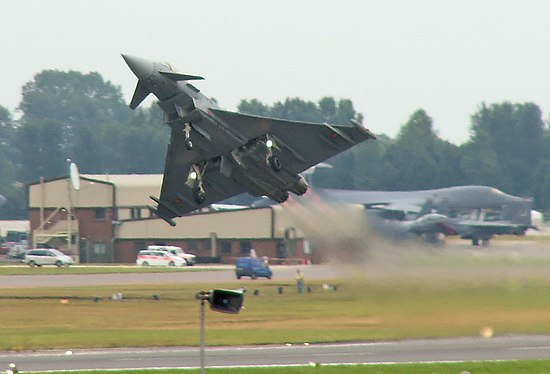
Eurofighter take-off: image india-defence.com

The word on the street is that the 4-nation European consortium’s Eurofighter Typhoon still leads after the commercial and strategic evaluation having already won the technical evaluation . But all the offset proposals put forward by the contractors may not have been fully evaluated yet. It would seem that technical considerations for one ( Lockheed Martin’s F-16IN Super Viper) and strategic considerations for the other ( Boeing’s F/A-18 Super Hornet) may disallow the choice of the US fighters. The Saab JAS 39 Gripen is probably running second.

But there may yet be a surprise.

Business Standard reports:

Electrifying aerospace vendors at Aero India 2011 in Bangalore, Indian Air Force chief, Air Chief Marshall PV Naik, announced today that New Delhi would decide within two weeks about which medium multi-role combat aircraft (MMRCA) it would buy, and actually sign the US $10 billion contract by September.

A panoramic view of Aero India 2011: image Broadsword (4.bp.blogspot.com)

“The CNC (Cost Negotiation Committee) is likely to start in a week or two. Taking that as the datum and giving [the CNC] another 6-8 months, the contract is likely to be signed in September”, declared Naik.
The CNC is a group of officials that negotiates, between the Ministry of Defence and the winning vendor, a final price for the sale.
Naik’s boss, defence minister AK Antony, had stated at Aero India 2011 yesterday that the globally-watched contract would be finalised by the end of the next financial year 2011-2012, i.e. by March 2012. By setting the deadline six months earlier, Naik appears to have put the MoD under pressure.
Asked for a clarification by Business Standard, Naik’s officiating deputy, Air Marshall RK Sharma, confirmed his chief’s announcement. Sharma clarified that the winning vendor would be issued an invitation within two weeks to appear for cost negotiations, while the CNC would actually meet within two months. An invitation to a vendor to appear in a CNC is tantamount to announcing the winner of a contract.
“The DAC (the MoD’s apex Defence Acquisition Council) will formalise the winner soon; we will then invite that company for negotiations”, said Sharma.
Six fighters are competing for the IAF contract: Boeing’s F/A-18 Super Hornet; Lockheed Martin’s F-16IN Super Viper; the MiG Corporation’s MiG-35; Saab’s Gripen NG; Dassault’s Rafale; and a four-nation European consortium’s Eurofighter. Executives from these companies say they are baffled by Naik’s announcement. Asked in late-2010 to rework their offset bids, and with no date yet given for resubmission, the MoD does not have a key element needed to decide a winner.
“Is the MoD going to decide the contract winner without examining the offset bids?” asks a bemused executive, from one of the competing aircraft manufacturers.
……….

The air chief also voiced his apprehension that the contract could be delayed by “dissatisfied vendors (who) put a spoke in the wheel”, using allegations of wrongdoing to trigger long-running probes by investigation agencies.
Yesterday, a defensive Antony had announced that political considerations would play no role in deciding the winner. That seemed to suggest that the Cabinet Committee on Security (CCS), which will be required to approval the contract after the CNC negotiates a final price, would merely rubber-stamp the IAF/MoD decision.
Other than the impending contract for 126 medium fighters to boost the IAF’s dwindling numbers, the IAF chief also announced the impending conclusion, “within this financial year”, of the contract to upgrade the air force’s 20-year-old fleet of 52 Mirage-2000 medium fighters. This upgrade, which has been the subject of bitter negotiations between the IAF and French contractor, Thales, will give the Mirage-2000 another 20 years of service life by fitting on a new radar and a modern cockpit with state-of-the-art avionics and electronic warfare equipment.
While Thales had initially demanded US $52 million per aircraft, the deal has been concluded, say IAF sources to Business Standard, at US 39 million per aircraft.
Related:
https://ktwop.wordpress.com/2010/11/07/eurofighter-typhoon-leads-after-technical-evaluation-but-still-not-the-favourite-for-indian-m-mrca-contract/
https://ktwop.wordpress.com/2011/01/04/no-surprise-secret-technical-evaluation-in-indian-mmrca-deal-found-on-the-street/

Proof that at the UN diplomats often do not think

February 13, 2011

Indian Minister of External Affairs S.M. Krish...

Image via Wikipedia

When making his speech at the UN Security Council, the Indian External Affairs minister S. M. Krishna started by reading the speech of the Portuguese Foreign Minister instead of his own. It took three whole minutes before another member of the Indian delegation stopped him and asked him to start again!!

One wonders how long the Minister would have continued before realising it was not his own speech. One wonders also if his colleagues were sleeping if it took them 3 minutes to realise what was happening. Of course UN speeches are so full of platitudes and phrases “signifying nothing” that it is sometimes difficult to distinguish one speech from another.

Another confirmation of my belief that the UN is not a place given to thought but serves only for reading out prepared positions by rote (prepared by others of course). Neither politicians / ministers, diplomats or their speech writers come out with much credit.

India Today has the story:

While delivering his speech at the UNSC, Krishna read out portions of the Portuguese foreign minister’s speech instead.

The occasion was significant as it was the Indian foreign minister’s first speech at the UNSC after New Delhi entered the coveted body on January 1 as a non-permanent member after nearly two decades.

Krishna was scheduled to speak after his Portuguese counterpart Luis Amado at a session on Friday on ‘Maintenance of International Peace and Security: Interdependence between Security and Development’. Portugal has also been elected to the UNSC for a two- year period.

As soon as the minister started speaking, almost everyone present realised that he was reading from Amado’s speech, as a few lines were out of place. Krishna apparently did not realise his mistake and went on.

“On a more personal note, allow me to express my profound satisfaction regarding the happy coincidence of having two members of the Portuguese Speaking Countries, Brazil and Portugal, together here today,” the minister said as a horrified Indian contingent watched. “The European Union is also responding in this manner in coordination with the United Nations.”

It was after three minutes that India’s permanent representative to the UN, Hardeep Puri, intervened and asked him to start afresh.

Clearly embarrassed, the ministry of external affairs (MEA) on Saturday tried to play down the minister’s gaffe.

It insisted that the “mistake” was not so crucial because the initial paragraph of all formal addresses contains ” certain salutations and courteous references and he had used such expressions from the address of the previous speaker”. Sources in the MEA said it was a “genuine” mistake. Amado had delivered an extempore speech and its written summary was distributed to all other 14 ministers of the UNSC members and five invitee ministers.

Krishna spoke immediately after Amado and he mixed the text of his own speech with the summary of what the Portugese minister had said. The copy of Amado’s speech in a folder did not bear either his name or the name of his country. Hence, the ” honest and inadvertent mistake”, a source said.

A former foreign minister, who did not wish to be named, put the blame on the Indian diplomats and ministerial staff present. “They should have alerted the minister within a few seconds. It was their responsibility to ensure that he had the correct speech before he began,” he said. Apart from Puri, other Indian diplomats present included MEA additional secretary (international organisations) Dilip Sinha and adviser to the minister Raghavendra Shastry. All of them were sitting right behind Krishna.


Aero India 2011 kicks off tomorrow: MMRCA and technology transfer are the issues of the day

February 8, 2011

The 5 day Aero India 2011 airshow kicks off tomorrow in Bangalore and is expected to attract over 600 equipment vendors from over 60 countries. It also brings to a head the discussions within India as to how to stimulate the indigenous aviation industry and whether offset requirements in defence procurement are effective. There is a school of thought that technology transfer should be used and that offset requirements do not contribute to developing the industry. In the background is the competition for the $10 billion, 126 MMRCA aircraft contract that must be decided in March / April.

DNA reports:

In the premier Indian defence journal, Maj Gen (Retd) Mrinal Suman — who retired from the Indian Army in 2003 and currently heads the defence technical assessment and advisory service of Confederation of Indian Industry (CII) — prescribes that India, at present, urgently needs FDI in the defence and military aviation sector which is technology-centric with inherent flexibility. He has suggested that FDI could be 26% for low-tech products, while it could be 51%-74% for matured systems, and 75%-100% for cutting edge technologies.

Maj Gen Suman has decried the drastic fall in defence exports from ordnance factories from Rs41.07 crore in 2008-09 to a mere Rs12.28 crore in 2009-10, and has called it “a reflection of the nature of quality items being produced indigenously”. He has called for significantly increasing FDI and private sector’s participation in defence production and manufacture instead of just restricting to doors and frames of aircraft bodies. Suman also blasted India’s offset policy which envisages Indian companies to manufacture components worth 30% of any deal bagged by a foreign company as a seller to India. He termed it a “flawed policy” as it was not contributing to upgrading the indigenous technological base. He instead suggested that the current offset policy be amended to make transfer of technology the preferred mode.

While this is expected to take centre-stage at Aero India 2011, the intensifying contest for winning India’s $10 billion contract to procure 126 medium-weight multi-role combat aircraft (MMRCAs) will undoubtedly be the second most important issue in focus.

Not surprisingly, this is the first time ever that all six contenders for the contract are participating at an Aero India show — Boeing’s F/A-18 Super Hornet, Lockheed Martin’s F-16 Super Viper (both from USA), MiG Corporation’s MiG-35 (Russian), Dassault’s Rafale (French), EADS’s Eurofighter Typhoon (European Union’s) and SAAB’s Grippen (Swedish).

The contest between these six, this time round, will be there for all to see with these aircraft displaying their skills and manoeuvrability to win the hearts of the Indian Air Force and ministry of defence experts who are expected to place a finger on one of them for procurement.

The IAF is procuring the 126 MMRCAs to bolster its depleting squadron strength. The IAF squadron strength is at present below the sanctioned strength — just 34 squadrons as against the sanctioned strength of thirty-nine-and-a-half.

There is a formidable Russian presence at the air show.

Russia will exhibit over 80 types of weaponry and will be represented by 35 companies at the upcoming Aero India 2011 air show, state-run arms exporter Rosoboronexport said in a statement.
Russia will be represented by 35 companies, including MiG , Sukhoi, Almaz-Antei and Engineering Design Bureau.
Russia will traditionally promote MiG-35 and Su-35 fighter jets, the Yak-130 combat trainer, two versions of Il-76MD transport plane (with different engines), the Il-78MK aerial tanker and MiG-29K and MiG-29KUB naval fighters.
The Be-200 amphibious aircraft will most likely be one of the top attractions of the Russian exhibit as its popularity with foreign customers steadily grows. The plane could be used in a wide variety of roles, from maritime reconnaissance and rescue to firefighting.
Rosoboronexport and Russian helicopters will show the Mi-28NE attack helicopter, the light multirole Ka-226T and the heavy transport Mi-26. All three helicopters are currently taking part in separate Indian helicopter tenders.
The visitors will also be able to receive information about the Mi-35M combat transport helicopter, the Kamov Ka-31 radar surveillance helicopter and the Ansat and Kamov Ka-32A11BS multi-role helicopters.
The air defence part of the Russian exhibit will be represented by the Tor-M2E, the S-300VM, the Buk-M2E and the Tunguska-M1 systems.

Relatedhttps://ktwop.wordpress.com/2010/11/07/eurofighter-typhoon-leads-after-technical-evaluation-but-still-not-the-favourite-for-indian-m-mrca-contract/

Paid news: The cancer in the Indian media

February 5, 2011

The Hindu stands out as one of the few main-stream media prepared to discuss the insidious and increasing trend towards “paid news” in Indian newspapers and on the multiplicity of Indian TV channels fighting for advertising revenue. The TV “news” channels abandoned the rigour of traditional journalism some time ago and are mainly in the business of manufacturing or sensationalising news or of presenting “paid news”. TV anchors are chosen on their ability to rant and programmes are dominated by

  • instant “breaking” news – much of it manufactured – or
  • revelations of scams filmed by “secret” cameras – but usually provoked, or
  • so-called chat shows and panel discussions where  only antagonistic participation is permitted (and the more one can screech over the other the more likely it is to be re-invited to participate – paid of course).

The Hindu writes:

In newspapers and TV channels, choking with stories on corruption, this is the one story you are the least likely to see. The media are their own worst censors when it comes to reporting on ‘Paid News.’

Just before the 2009 Assembly elections in Maharashtra, a large newspaper group in the State brought its editors together for a meeting in Pune. Generally, it was agreed, winning a seat in the State legislature would cost Rs. 3 crore to Rs. 5 crore. ($700,000 to $1.1 million). ….. If there’s that kind of money being spent, said the cash-box boys, we should get a decent share of it. What, after all, is election expenditure but campaign and propaganda expenses? Detailed plans for ‘pay-to-print’ were soon under way in one of the biggest media groups in the State. ……

Paid news comes in many packages: pre-paid, post-paid and yet-to-be-paid, for instance. There are also deluxe tariffs and aam aadmi tariffs, the former in crores (10s of millions), the latter in lakhs (100,000’s). Sadly, these media groups met, even exceeded, their targets.

But it’s not just during elections that paid news or its Euclidian variants occur. The crazy saturation coverage of Davos in some channels was not caused by breathless public interest or media curiosity. It had a lot to do with ‘partnerships’ and corporate subsidies the public can’t see, and won’t be allowed to see. Some channels sent out ‘rules’ to their journalists of things that just had to be done. Rules with no particular journalistic rationale at all. …..

It is a scam worth more millions than anyone can accurately estimate. Most other institutions of Indian democracy and regulatory structures have tried doing something about it. But in the free media, there was a costly silence…..

So the ECI, Parliament, SEBI and top political leaders have all contributed to the fight against the slaughter of honest journalism. Even the spineless PCI did so, before deserting ship. But in the media there is near-total silence. True, there are the exceptions. And the fact that all those journalists went public at those meetings shows how deep their resentment runs. But institutionally, the media’s failure is huge and, if not reversed, will extract a terrible price. The corporate media have censored the Paid News story, browbeaten their own journalists and cheated the public of information it has every right and need to know.

Read the entire article.

Related: India’s Election Commission To Address It’s Paid News Problem

Paid news syndrome is a full blown cancer in Indian Media

German freighter sinks Indian Navy frigate

February 4, 2011

From thelocal.de:

Cargo Ship Nordlake IMO 9057173 by MSC Michi

Cargo Ship Nordlake 22,450 tons

A German cargo ship has slammed into an Indian frigate in the port of Mumbai, causing the military vessel to catch fire and eventually sink.

The ocean liner Nordlake, based in Hamburg and managed by the Klaus E. Oldendorff shipping company, crashed into the Indian navy vessel Vindhyagiri in a narrow navigation channel at the entrance to the port of Mumbai on Sunday, Indian broadcaster NDTV reported.

The nearly 400 people on board the Vindhyagiri – including the ship’s crew and their visiting families, who were celebrating Navy Day – were successfully evacuated before a massive fire broke out on the vessel some 12 hours later.

A preliminary investigation found that the Nordlake was exiting the harbour as theVindhyagiri was navigating its way in. The Nordlake swerved to avoid another ship and subsequently struck the Vindhyagiri.

INS Vindhyagiri 2682 tons

The Indian navy called the sinking of the Vindhyagiri India’s greatest peacetime casualty, noting that a frigate has never been sunk by a civilian vessel. Built in 1981, the Vindhyagiri suffered extensive damage, but the navy said the ship could possibly be repaired and eventually brought back into service.

The nearly 180-metre-long Nordlake, which flies a Cypriot flag, did not sustain any serious damage. The freighter supports an international crew, and no Germans were on board at the time of the crash.

“We are happy that, to our current understanding, the accident has caused neither environmental harm nor any human casualties,” Peter Rybarczyk, chief executive of the Klaus E. Oldendorff shipping company, told Hamburg broadcaster NDR.

The Director General of Shipping in Mumbai has ordered an inquiry into the collision, NDTV reported, while the navy has also filed a complaint that argues the ship from Cyprus did not follow standard operating procedure.

The Nordlake has a deadweight of 22,450 tons and almost ten times greater than the standard weight of INS Vindhyachal at 2682 tons.

Photo: DPA

Mumbai harbour after collision: photo DPA


Response from VC Kalasalingam Unversity

February 2, 2011

Following the case of plagiarism that was brought to light by the retraction of a paper in the journal Biotechnology Advances, the Vice Chancellor has responded by email:

Dear Sir,
Thanks for your mail.
As soon as we came to know about the plagiarism complaint against the reesearchers from our division of Molecular and cellular biology, we have formed a committe of senior faculty members of our university  to probe the same.

We have also taken action as per the committee’s report. The committee’s report and the action taken details were informed to the DST and other funding agencies in India.
We have also advised our university’s research community to take proper care to strictly avoid occurring of such complaints in future
Dr.S.Radhakrishnan
Vice-Chancellor Kalasalingam University

Update 4th February:

The VC’s response is a little disappointing in that he has advised the university’s research community only to avoid future complaints and not to avoid the misconduct itself. He surely can not mean that the actions are acceptable if complaints are  avoided.

So far there has been no response to a request to provide a copy of the “committees report”. It is still not known as to who served on this committee and what their conclusions and recommendations were. What sanctions are to be applied to those found responsible for misconduct is also unknown.