Archive for the ‘Middle East’ Category

Uninvited Turkish troops jeopardise the assault on Mosul

October 21, 2016

Burak Bekdil has an article in The Gatestone Institute where he makes the case that

  • Turkey’s primary concern is not to drive ISIS out of Mosul but to make it a “Sunni-controlled city” after ISIS has been pushed out. And this ambition jeopardizes the planned assault on ISIS.
  • Turkey’s pretext is that its troops are in Iraq to “fight ISIS.” That does not convince anyone.

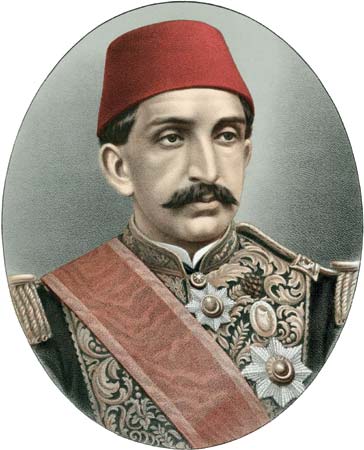
President Recep Tayyip Erdogan fancies himself as a reincarnation of Sultan Abdulhamid II who was the 34th and last effective Sultan of the Ottoman Empire. He reigned from 1876 to 1908. As Mustafa Akyol writes in Al Monitor:
Sultan Abdulhamid II (image Brittanica)

Sultan Abdulhamid II (image Brittanica)

In Turkey, there has been an unmistakable revival of the image of Sultan Abdulhamid II. The powerful Ottoman monarch who ruled the empire single-handedly from 1876 to 1909 is praised with a flood of articles in the pro-government press, endless messages on social media and various conferences and panels. The speaker of the Turkish parliament, Ismail Kahraman, a confidant of President Recep Tayyip Erdogan, even hosted an “International Symposium on Sultan Abdulhamid II and His Era,” at the Dolmabahce Palace in Istanbul, a relic from the latter-day Ottoman Empire. The great sultan, Kahraman said, “is a mariner’s compass to give us direction and enlighten our future.”

It is – at least partly – Erdogan’s vision of a new Ottoman Empire with himself as a Great Sultan which has triggered Turkish adventurism in Syria and Iraq. A key defensive component of Turkish actions are to eliminate – or at least to block – Kurdish or Shiite influence. The aggressive portion is to expand and promote Sunni dominated areas and keep on good terms with Saudi Arabia.

Their presence in northern Iraq is uninvited.

Bekdil:

Iraqi Prime Minister Haider al-Abadi renewed the call for the withdrawal of Turkish soldiers from his country and warned that Turkey’s military adventurism could trigger another war in the Middle East. He said: “We do not want to enter into a military confrontation with Turkey … The Turkish insistence on [its] presence inside Iraqi territories has no justification.”

The Iraqi parliament said in a statement: “The Iraqi government must consider Turkish troops as hostile occupying forces.” Baghdad has also requested an emergency meeting of the United Nations Security Council (UNSC) to discuss the issue. The UNSC should “shoulder its responsibility and adopt a resolution to end to the Turkish troops’ violation of Iraq’s sovereignty,” said Ahmad Jamal, spokesman for the Iraqi Foreign Ministry.

That ISIS is a Sunni group undermines Turkey’s explanations for why they are in Iraq. It is the support for Sunnis and the supposed opposition to ISIS which makes Turkey’s actions seem schizophrenic. The simple reality is that Turkey would like “good Sunnis” to be in control in northern Syria and in northern Iraq. Even the barabarians of ISIS are preferable to the Kurds (and Shiites in Turkish eyes are almost as bad as the Kurds).

Ankara remains defiant. Prime Minister Binali Yildirim said that Turkish troops would remain in Iraq. Turkey’s pretext is that its troops are in Iraq to “fight ISIS.” That does not convince anyone. Turkey’s intention is largely sectarian (read: pro-Sunni) and Yildirim admitted that in a not-so-subtle way when he said that the Turkish troops were in Iraq also “to make sure that no change to the region’s ‘demographic structure’ is imposed by force.”

Turkey fears that the aftermath of a planned assault on Mosul, Iraq’s second largest city and ISIS’s Iraqi stronghold, could see a heavy Shiite and Kurdish dominance in the Mosul area. Turkish Foreign Minister Mevlut Cavusoglu said: “Involving Shiite militias in the operation [against IS] will not bring peace to Mosul. On the contrary, it will increase problems.” Unsurprisingly Turkey’s pro-Sunni Islamists want Sunni dominance in a foreign country. This is not the first time they passionately do so.

The problem is that Turkey’s sectarian ambitions come at a time when the coalition is preparing a heavy offensive on ISIS-controlled Mosul. Turkey’s primary concern is not to drive ISIS out of Mosul but to make it a “Sunni-controlled city” after ISIS has been pushed out. And this ambition jeopardizes the planned assault on ISIS. ……. 

….. Turkey’s sectarian ambitions in neighboring Syria have ended up in total failure and bloodshed. Now Ankara wants to try another sectarian adventure in another neighboring and near-failed state, under the pretext of “bringing stability.” Yildirim said that Turkey “bears responsibility for stability in Iraq.” That is simply funny. You cannot bring stability to a country that looks more like a battleground of multiple religious wars than a country with just a few hundred troops.

Now that the assault on Mosul has started, it is already reported that the Turks are complicating and hindering the advance. Presumably they are trying to hinder Kurdish and Shiite forces and trying to assist the Iraqi Sunni forces.

Swedish Radio:

“Turkey jeopardizes the entire military operation by setting their insane demands”, says Mahmoud. “We do not want anyone other than the Iraqi army and peshmerga forces involved here on the Nineveh Plain”, he says.

Altercation between Turkey and Iraq have become increasingly poisonous in recent days. Iraq’s prime minister has told Turkey to stay out of the Mosul operation, while Turkish President Erdogan responds that it is out of the question, and at the weekend the Turkish newspapers published old maps of the Ottoman Empire which included Mosul.

Erdogan also stamped the Iraqi government as sectarian and fanatical. In Baghdad Shiite Muslims demonstrated against Turkey and demanded an end to the Turkish occupation of northern Iraq, referring to the soldiers at the military base Bashiqa.

The increasingly serious contradictions also reflects the regional power struggle, where Sunni Muslim Turkey is now viewed by many here as part of the Saudi sphere of influence, while the Shiite-dominated Iraqi government is considered part of Iran’s sphere of influence.
 

Putin/Lavrov are running rings around Obama/Kerry in the the Middle East

October 5, 2016

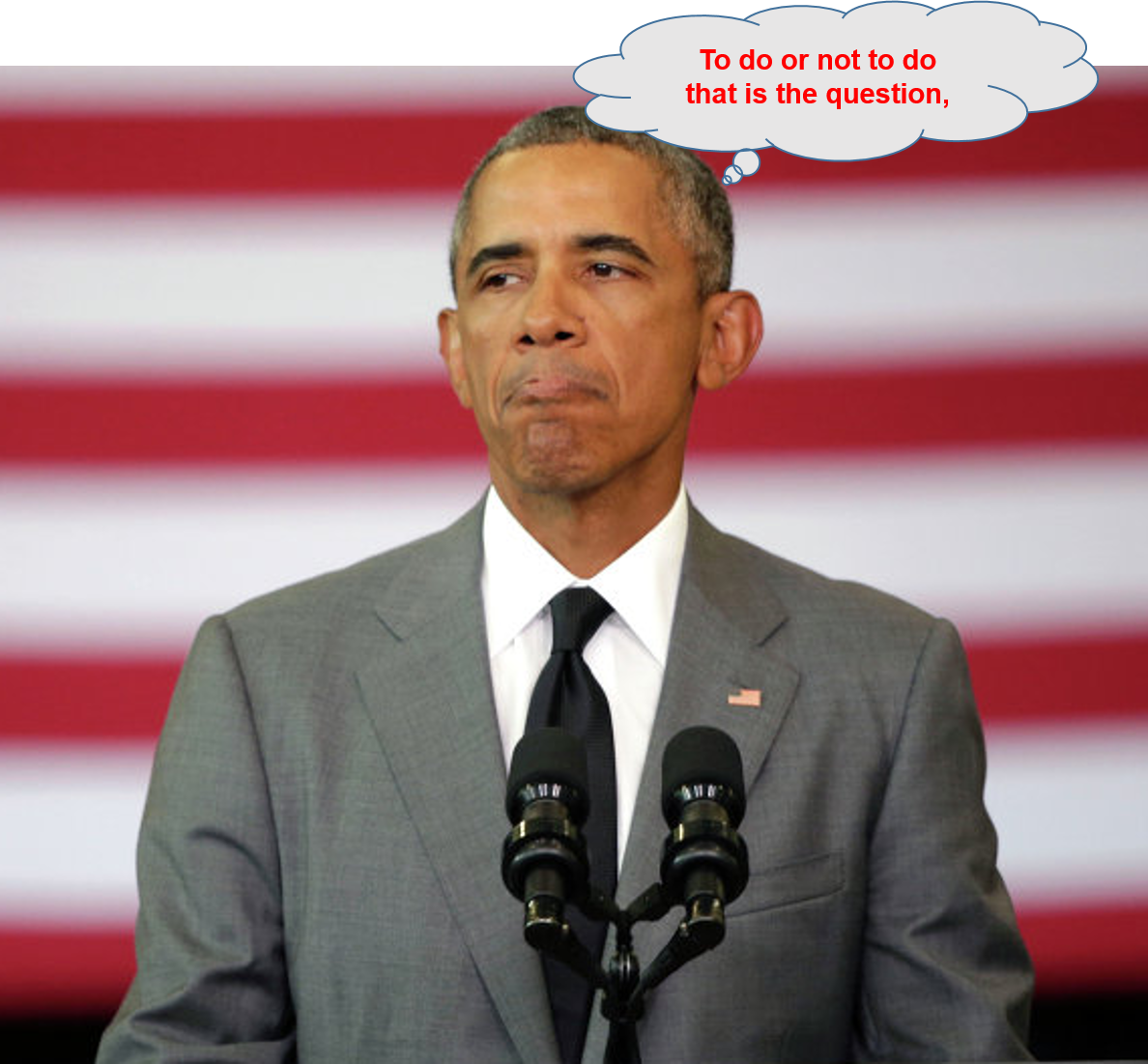
Putin takes risks but Obama does not. But whereas Russia’s risk taking is based on some hard calculation of the probability of success, Obama and Kerry are obsessed with risk avoidance. So much so that US policy in Syria and against ISIS could be said to be “paralysis by analysis”. But the Russian risk-taking seems to be paying off.

analysis-paralysis

analysis-paralysis

  1. The Russian intervention started the decline of ISIS
  2. Putin has allied with Iran and Shi’ite interests while remaining on good terms with Netanyahu and Israel,
  3. Putin’s support of Assad, has forced the US supported rebel groups to ally themselves with terroris groups (Al-Nusra front),
  4. While the West has been criticising Erdogan’s purge of his opposition, a remarkable detente has developed between Russia and Turkey (which after the downing of the Russian fighter plane hardly seemed feasible),
  5. Sunni Arab states are so disillusioned with Washington and Russian influence has grown so much in the region, that they are now making overtures to Putin in spite of his support for the Shi’ites.
  6. Saudi Arabia has paused its oil war against Iran and Russia.

An insightful commentary in Reuters:

Putin’s Middle East gamble is paying dividends

Vladimir Putin has made an art of turning weakness into strength.  As Russian and Syrian forces pound Aleppo in the biggest assault of Syria’s five-year civil war, the Russian president clearly has emerged as a dominant force in the Middle East. ……..

…….. Over the last year, Putin has inserted Russia into the Syrian conflict and shored up the regime of President Bashar al-Assad as it was on the verge of collapse. The Russian leader has forged a quasi-military alliance with Iran that has allowed him to project power in the Persian Gulf – something that has evaded Moscow since the end of World War Two.

If that wasn’t enough, Putin’s relationship with Turkey, which seemed to be on a collision course after Ankara downed a Russian fighter jet last year, has now warmed to the point where Putin and Turkish President Tayyip Erdogan are about to restore full diplomatic relations. All the while Putin has maintained a close and productive relationship with Israeli Prime Minister Benyamin Netanyahu.

…………. 

Since the 1979 Islamic Revolution in Iran, the United States has aligned its interest in the Persian Gulf with Sunni monarchies such as Saudi Arabia, Kuwait and Qatar. In turn, these countries have invested heavily in the United States – from buying U.S. debt, to investing in real estate and buying billions of dollars in American military hardware.

Arab states have also invested heavily in Washington, buying influence in the corridors of power, funding think tanks and hiring public relations firms to help spread a narrative about why their countries are essential to America’s interest in the Middle East. The relationship between Riyadh and Washington remains particularly strong even as the American public questions the logic behind an alliance with a country whose actions often run counter to Washington’s interests. 

These countries feel that Washington is obligated to share their view of the Middle East, which means backing them regardless of whether any conflict they engage in is against the interest of the United States. They have no such influence in Moscow. Even as Moscow backs Shi’ite powerhouse Iran and the Assad regime in Syria, Sunni Arab leaders continue to court Putin and look for ways to collaborate with him. Saudi Arabia, for example is currently trying to coordinate with Moscow on how best to stabilize oil markets and want Putin to pressure Iran to do the same.

Russia’s partnerships are based on cold, hard realism. Putin’s sole aim is to further Moscow’s interest. He’s unburdened by a legacy of alliances that do not serve Russia’s strategic aims. He supports Damascus, Tehran and the Shi’ite government of Iraq because he views Sunni extremism as a long-term threat that has destabilized countries in the Middle East, and which he fears could wreak havoc in countries close to Russia’s borders. Yet this coordination and collaboration with Shi’ite Iran doesn’t preclude him from working with Sunni Arab states to promote trade for Russian industry and its atomic energy program. 

Putin is doing all of this while remaining close to Netanyahu. Even though Putin is working with Syria and Iran – Israel’s mortal enemies – he has convinced Netanyahu that these alliances are not meant to threaten Israel’s existence, but rather serve a larger purpose of defeating Sunni extremism. Russia continues to cooperate with Israel in diverse fields such as energy, agriculture and arms. Russia and Israel also maintain close military contacts and Putin is careful not to transfer offensive weapons to Israel’s foes.

Juxtapose this with how Netanyahu treated Obama and interferes in U.S. domestic politics. In the run-up to the Iran deal, Netanyahu used the influence of AIPAC and other pro-Israel lobbying organizations to try and undermine a sitting president and scuttle his signature foreign policy achievement.

If Israel or another U.S. ally tried to interfere or challenge Putin in such a manner, it’s difficult to imagine that he would reward them with $38 billion in aid for ten years, as Obama has done with Israel, or continue to support them militarily with advanced weapons and intelligence – as Washington has done with Saudi Arabia. …….

……….


US – Russia deal on Syria is a de facto acceptance of Assad’s position

September 10, 2016

The deal is that US backed rebels will not fight with forces  backed by Russia (Assad’s). That will allow the US, Russia and their proxies to fight ISIS forces wherever they may be in Syria and Iraq. However it is unlikely that Turkey will refrain from attacking Kurdish groups who are also in the front line against ISIS.

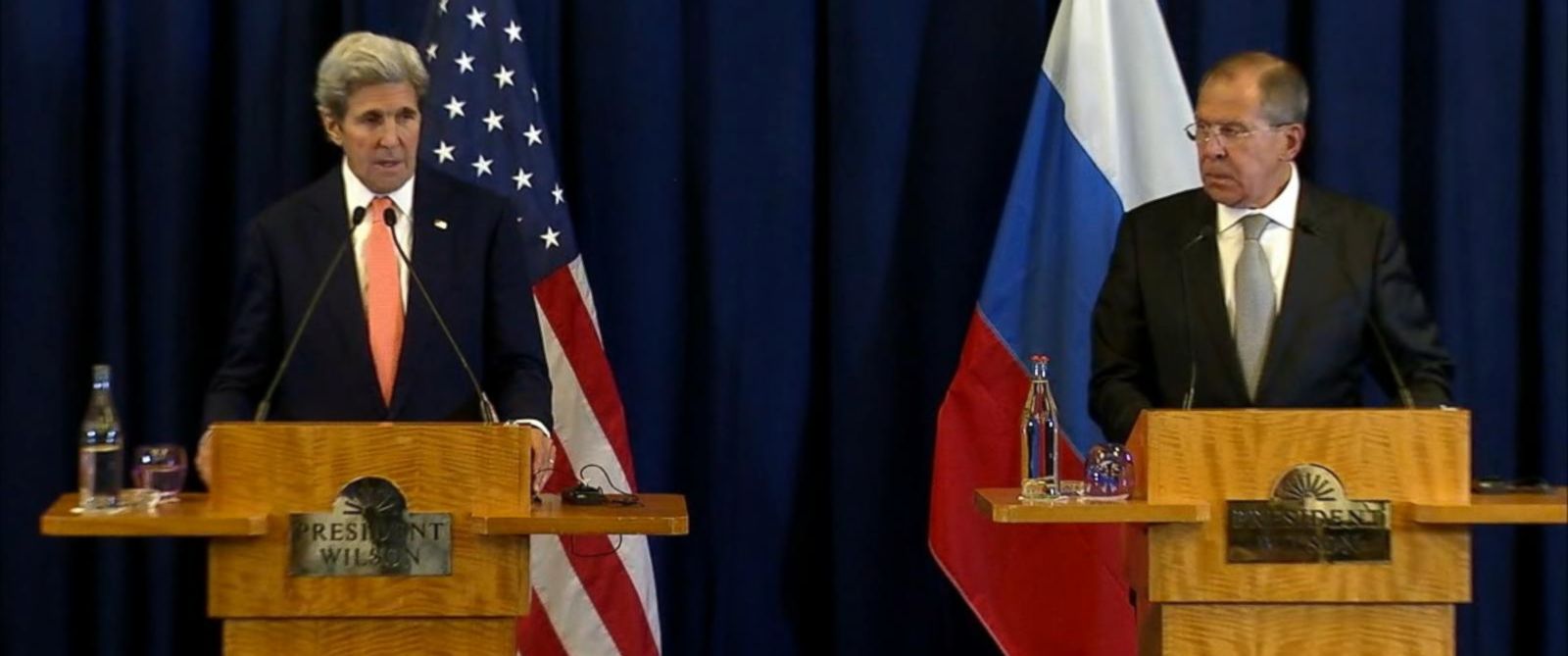
PHOTO: Secretary of State John Kerry, left, and Russian Foreign Minister Sergei Lavrov speak at a press conference, Sept. 9, 2016.

If the deal holds it effectively consolidates Assad’s improving position on the ground. But even if the deal does not hold, the US anti-Assad position is grossly undermined.

Reuters: 

The United States and Russia reached a breakthrough deal early on Saturday to try to restore peace in Syria, but air strikes hours later added to rebels’ doubts that any ceasefire could hold.

The agreement, by the powers that back opposing sides in the five-year-old war, promises a nationwide truce from sundown on Monday, improved access for humanitarian aid and joint military targeting of hardline Islamist groups.

But hours later, jets bombed a marketplace in rebel-held Idlib in northwestern Syria, killing at least 25 people and wounding dozens, according to locals and rescue workers who said they believed the planes to be Russian.

Idlib province has endured escalating strikes by Russian jets in recent months, according to international aid workers and residents, destroying scores of hospitals, bakeries and other infrastructure across rebel-held territory.

Aleppo was also hit from the air and fighting continued on the ground. The army attacked rebel-held areas, both sides said, pushing to maximize gains before the ceasefire deadline. …….

Kerry said the “bedrock” of the new deal was an agreement that the Syrian government would not fly combat missions in an agreed area on the pretext of hunting fighters from the Nusra Front, an al-Qaeda affiliate in Syria which has recently changed its name to Jabhat Fateh al-Sham.

Under the new deal, both sides – Russian-backed government forces and rebel groups supported by the U.S. and Gulf states, – are to halt fighting as a confidence building measure.

If the truce holds from Monday, Russia and the United States will begin seven days of preparatory work to set up a “joint implementation centre”, where they will share information to distinguish territory controlled by Nusra from that held by other rebel groups.

Moon of Alabama has this analysis:

It looks as if there has been unseemly resistance to this agreement by parts of the U.S. government. This may have been just for show. But it may also be a sign that Obama lost control of the bureaucracy:

The proposed level of U.S.-Russian interaction has upset several leading national security officials in Washington, including Defense Secretary Ash Carter and National Intelligence Director James Clapper, and Kerry only appeared at the news conference after several hours of internal U.S. discussions.After the Geneva announcement, Pentagon secretary Peter Cook offered a guarded endorsement of the arrangement and cautioned, “We will be watching closely the implementation of this understanding in the days ahead.”

If this deal falls apart, as it is likely to eventually do, all responsibility will be put onto Secretary of State Kerry. Indeed the military and intelligence parts of the U.S. government may well work to sabotage the deal while Kerry will be presented as convenient scapegoat whenever it fails.


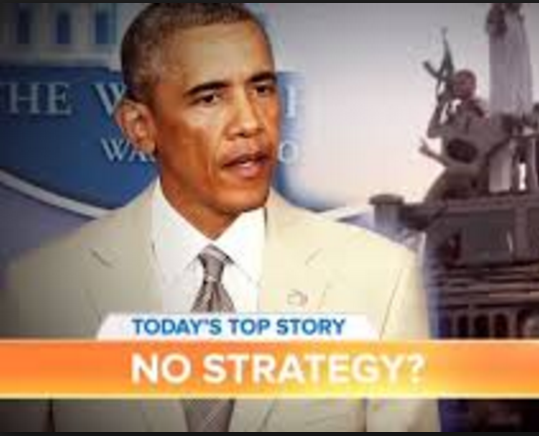
In Syria, the Obama non-strategy: US supported groups fight US supported groups

September 3, 2016

Eric Margolis has this post in The Unz Review and it only confirms for me that Obama’s lasting legacy will be of his “paralysis by analysis”. Obama’s actions are dominated by his fears. He has good intentions and then gets bogged down as soon as the risk analysis gets under way. His Iraq/ Syria/ Turkey/ Iran strategy – if it can be credited with the label of a “strategy” – has been one of avoiding risks as they appear. His actions are all short-term reactions to the appearance of new, perceived risks. His “red lines in the sand” have proven to be shifting lines. Obama’s misguided actions and his inactions allowed the ISIS expansion to flourish. The containing of ISIS expansion has only been made possible by the Russian intervention and the propping-up of Assad.

Obama’s predecessor, Bush Jr., distinguished himself by not thinking anything through. He rushed to conclusions and to actions without too much thought or analysis. In my definitions of behaviour he comes across, not necessarily as without courage, but as foolhardy. Obama, on the other hand, will be remembered, no doubt, for being intelligent and analytical but without courage.

As Margolis points out, the actions from diverse groups within the US have been chaotic and often opposed to one another.

U.S. vs. U.S. in Syria


pentagon-cia

What a mess! In the crazy Syrian war, US-backed and armed groups are fighting other US-backed rebel groups. How can this be?

It is so because the Obama White House had stirred up the war in Syria but then lost control of the process. When the US has a strong president, he can usually keep the military and intelligence agencies on a tight leash.

But the Obama administration has had a weak secretary of defense and a bunch of lady strategists who are the worst military commanders since Louis XV, who put his mistress, Madame de Pompadour, in charge of French military forces during the Seven Year’s War. The French were routed by the Prussians. France’s foe, Frederick the Great of Prussia, named one of his dogs, “la Pompadour.”

As a result, the two arms of offensive US strategic power, the Pentagon, and CIA, went separate ways in Syria. Growing competition between the US military and militarized CIA broke into the open in Syria.

Fed up with the astounding incompetence of the White House, the US military launched and supported its own rebel groups in Syria, while CIA did the same.

Fighting soon after erupted in Syria and Iraq between the US-backed groups. US Special Forces joined the fighting in Syria, Iraq and most lately, Libya.

The well-publicized atrocities, like mass murders and decapitations, greatly embarrassed Washington, making it harder to portray their jihadi wildmen as liberators. The only thing exceptional about US policy in Syria was its astounding incompetence.

Few can keep track of the 1,000 groups of jihadis that keep changing their names and shifting alliances. Throw in Turkomans, Yazidis, Armenians, Nestorians, Druze, Circassians, Alawis, Assyrians and Palestinians. Oh yes, and the Alevis.

Meanwhile, ISIS was inflicting mayhem in Syria and Iraq. But who really is ISIS? A few thousand twenty-something hooligans with little knowledge of Islam but a burning desire to dynamite the existing order and a sharp media sense. The leadership of these turbaned anarchists appears to have formed in US prison camps in Afghanistan.

The US, Saudi Arabia, and Turkey armed and financed ISIS as a weapon to unleash on Syria, which was an ally of Iran that refused to take orders from the Western powers. The west bears a heavy responsibility for the deaths of 450,000 Syrians, at least half the nation of 23 million becoming refugees, and destruction of this once lovely country.

At some point, ISIS shook off its western tutors and literally ran amok. But the US has not yet made a concerted attempt to crush ISIS because of its continuing usefulness in Syria and in the US, where ISIS has become the favorite whipping boy of politicians.

Next, come the Kurds, an ancient Indo-European stateless people spread across Turkey, Iraq, Iran and Syria. They have been denied a national state by the western powers since WWI. Kurdish rebels in Iraq have been armed and financed by Israel since the 1970’s.

When America’s Arab jihadists proved militarily feeble, the US turned to the Kurds, who are renowned fighters, arming and financing the Kurdish Syrian YPG which is part of the well-known PKK rebel group that fights Turkey.

I covered the Turkish-Kurdish conflict in eastern Anatolia in the 1980’s in which some 40,000 died.

Turkey is now again battling a rising wave of Kurdish attacks that caused the Turks to probe into northern Syria to prevent a link-up of advancing Kurdish rebel forces.

So, Turkey, a key American ally, is now battling CIA-backed Kurdish groups in Syria. Eighty percent of Turks believe the recent failed coup in Turkey was mounted by the US – not the White House, but by the Pentagon which has always been joined at the hip to Turkey’s military.

This major Turkish-Kurdish crisis was perfectly predictable, but the obtuse junior warriors of the Obama administration failed to grasp this point.

Now the Russians have entered the fray in an effort to prevent their ally, Bashar Assad, from being overthrow by western powers. Also perfectly predictable. Russia claimed to be bombing ISIS but in fact, is targeting US-backed groups. Washington is outraged that the wicked Russians are doing in the Mideast what the US has done for decades.

The US and Russia now both claim to have killed a senior ISIS commander in an air strike. Their warplanes are dodging one another, creating a perfect scenario for a head-on clash at a time when neocons in the US are agitating for war with Russia.

Does anyone think poor, demolished Syria is worth the price? Hatred for the US is now seething in Turkey and across the Mideast. Hundreds of millions of US tax dollars have been wasted in this cruel, pointless war.

Time for the US to stop stirring this witch’s brew.

Reagan (and Pakistan) created the Taliban, Bush (and Saudi Arabia) nurtured Al Qaida and Obama/Clinton allowed ISIS to grow

August 12, 2016

Ronald Reagan (President from 1981 -1989) and Pakistan’s ISI created the Taliban,

From Politics 116 at Mt Holyoke College

The Creation of Taliban goes back to 1979, when the Soviet Union invaded Afghanistan. In 1973, The Soviet Union brought their soldiers into Afghanistan claiming to rebuild the crushing economy. However, the Soviet was resented by the Mujahidin (from whom the Taliban evolved from). At the same time, the Soviet Union and United States were engaged in a cold war. The U.S. was genuinely interested in counter power against the Soviet Union. Thus, Soviet Union’s entrance in Afghanistan signaled the Soviet’s increase in power and strength gaining more power and strength so the United States decided to intervene.Because the United States did not want to see the Soviet Union take control over Central Asia, the U.S. decided to fund troops to fight against the Soviet Union. These troops were called the Mujahedeen. The Mujahedeen were armed and supported by several countries including, the U.S., Pakistan and Saudi Arabia. Under Reagan’s presidency Congress which was led by Democrats, decided to form a partnership with the ISI which would recruit the Mujahideen with the support of the Pakistani military extreme views of Islam, led the Mujahedeen to fight ferociously against the Soviet Union. these extremist succeeded in driving Soviet militants out (1989). This unforeseen defeat caused the Soviets to lose billions of Dollars, and led to the collapse of the Soviet Union After the war, Pakistan was left alone to deal with the problems associated with the post war. Following the 9/11 attacks, the U.S. declared a war against Afghanistan. at this point the U.S. realized the seeds they had sown. Taliban was a creation of the Pakistani intelligence agency (the ISI) but was funded by the U.S. The U.S. provided $3 billion to build this Islamic group by providing provided ammunitions, which they forgot to keep track of after the Soviet war. Thus, the U.S. was taken a back when the millions worth in weapons that they had provided were now being used against them. Since the Taliban was a creation of the Pakistani intelligence agency. Pakistan has been reluctant to fight them. It is said that a lot of Pakistani and other military personal were known to be siding with the Taliban. It has further been said that the U.S. is responsible for providing the Taliban with logistical and military advice, along with military hardware . Therefore the Unites States and Pakistan are accountable for the Creation of Islamic extremist Group called `Taliban’.

The success against the Soviet forces in Afghanistan and the need for further jihad gave rise to Osama bin Laden and Al Qaida in 1989. George Bush Sr. who was already involved with Saudi support for the Taliban as Vice President under Reagan came into his own as a godfather for Al Qaida as President from 1989-1993. Through the CIA and its many arms, Bush Sr. and Saudi Arabia provided the money and the training. Al Qaida did not become an “enemy” of the US until 2001 when the campaign in Afghanistan was launced in retaliation for the 9/11 atrocities.

BBC (June 2004):

Al-Qaeda, meaning “the base”, was created in 1989 as Soviet forces withdrew from Afghanistan and Osama Bin Laden and his colleagues began looking for new jihads.

The organisation grew out of the network of Arab volunteers who had gone to Afghanistan in the 1980s to fight under the banner of Islam against Soviet Communism. During the anti-Soviet jihad Bin Laden and his fighters received American and Saudi funding. Some analysts believe Bin Laden himself had security training from the CIA.

The “Arab Afghans”, as they became known, were battle-hardened and highly motivated. In the early 1990s Al-Qaeda operated in Sudan. After 1996 its headquarters and about a dozen training camps moved to Afghanistan, where Bin Laden forged a close relationship with the Taleban.

The US campaign in Afghanistan starting in late 2001 dispersed the organisation and drove it underground as its personnel were attacked and its bases and training camps destroyed.

It was the US occupation of Iraq and their support for the Shi’ite government of Nouri al-Maliki from 2003 – 2011 which provided the motivation for the Sunni backlash. Abu Bakr al-Baghdadi was leading an Al Qaida faction and, the Guardian writes, “after the US invasion in 2003, he was quickly drawn into the emerging al-Qaida in Iraq under Abu Musab al-Zarqawi, getting involved first in smuggling foreign fighters into Iraq, then later as the “emir” of Rawa, a town near the Syrian border. There, presiding over his own sharia court, he gained a reputation for brutality, publicly executing those suspected of aiding the US-led coalition forces – the same brutality that has become familiar to those living in Syria under his group’s control”. By various accounts he was detained at the US Camp Bucca as a low level prisoner from 2004 either for less than a year or upto 2008. 

Possibly he was in detention till 2008, since it is only after 2009 that ISIS takes off and it is only after 2011, when Barack Obama and Hillary Clinton are in place, that ISIS expands –  violently and explosively – in Syria and Iraq. Obama and Clinton lost interest in Iraq and dropped the ball on ISIS. They (and Saudi Arabia) were so focused on creating regime change in Syria and toppling Assad that they lost sight of the support (money and training) being provide by the US for anti-Assad groups which included ISIS affiliated groups. David Mizner writes:

“The August 5, 2012 DIA report confirms much of what Assad has been saying all along about his opponents both inside and outside Syria,” says “terrorism analyst” Max Abrams.

The report concerns a period in time when the escalating violence in Iraq had ceased to be a prominent topic in the US press and when its coverage of the war in Syria — mirroring the discussion in Washington — focused on the Assad government, not the forces aligned against it. This may be hard to imagine now that ISIS has become the US government’s favorite monster, but during these months President Obama and his team gave major speeches on Syria that didn’t even mention the group.

Even after ISIS took Fallujah in January 2014, discussion of the group in establishment outlets was scarce. It wasn’t until later in 2014 — after continued battlefield victories and heavily publicized beheadings of westerners — that Islamic State became Public Enemy Number 1.

American officials claimed the ascendancy of ISIS had caught American intelligence by surprise. Yet in the 2012 report — which was circulated widely through the US government — the DIA foresaw the creation of a “Salafist principality” in eastern Syria. It also said that Islamic State of Iraq could “return to its old pockets in Mosul and Ramadi” and declare an “Islamic state” in western Iraq and eastern Syria.

More than that, the report says the creation of an Islamic state was precisely the goal of the foreign governments that support the opposition:

If the situation unravels there is the possibility of establishing a declared or undeclared Salafist principality in Eastern Syria (Hasaka and Der Zor) and this is exactly what the supporting powers to the opposition want, in order to isolate the Syrian regime, which is considered the strategic depth of the Shia expansion (Iraq and Iran).

US Defense Intelligence clearly puts the cause for the rise of ISIS on the policy being followed by the US in Syria (by Obama and Clinton), and not primarily on what was happening in Iraq. Mizner again:

While American politicians and pundits have blamed the ascendance of ISIS on former Iraqi president Nouri al-Maliki and Assad — or on the removal of American troops from Iraq — the DIA report reminds us that the key event in the rise of ISIS was the corresponding rise of the insurgency in Syria. Brad Hoff of the Levant Report, the first journalist to analyze the DIA report, says it shows that “A nascent Islamic State became a reality only with the rise of the Syrian insurgency . . . there is no mention of U.S. troop withdrawal from Iraq as a catalyst.”

Maliki warned that the war in Syria could engulf Iraq, yet the United States and its allies kept supporting the insurgency. The American bombing of ISIS, relatively light and sporadic, has only intensified the belief of many Iraqis that the United States doesn’t want to defeat the group.

The US has a well established track record now of creating the very monsters which then becomes their greatest enemies. Obama – in spite of his reputation of over-analysing issues – clearly did not foresee how his inaction in Iraq, and his misguided regime-change actions in Syria, would cause the explosive growth of ISIS. And Clinton, who had little understanding of the complex relations in the Middle East, couldn’t cover for Obama’s blind spots and had no real strategy of her own to bring to the table. Furthermore, Obama and Clinton (and later Kerry) have done little, if anything, to stop ISIS being financed from Saudi Arabia and the Gulf States.

obama no strategy

While Trump’s claim that Obama and Clinton “founded” ISIS is not strictly true, there is little doubt that the Obama/Clinton inaction in Iraq, and their misguided actions in Syria, led directly to the growth of ISIS and the current miserable situation in the Middle East. The Obama/Kerry combination has continued with the Assad obsession and their strategies (or lack of strategies) have been largely ineffective against ISIS. It is only Russian intervention which has perhaps turned the tide.


The incontrovertible truth is that Iraq would have been a better place without Blair

July 6, 2016

There will be reams written about Chilcot but my view of Tony Blair does not change very much. If anything, I am more than ever convinced of Blair’s poodle-like fawning in Bush’s presence and his glorified image of himself.

“Flawed intelligence” and “actions in good faith” are Tony Blair’s defence. Certainly Blair’s character was (and still is) seriously flawed. That he has native cunning and intelligence is apparent but it is seriously skewed. Greed and self-glorification would seem to be his primary goals. “Good faith” is defined as being based on “sincere beliefs or motives without any malice or the desire to defraud others” and that certainly does not apply. He had malice aplenty and he wanted to impress Bush. His own country and his own soldiers and all of Iraq’s population were just collateral damage along the way to satisfying his enormous ego.

Would Iraq have been better off today with Saddam still around? That is impossible to answer. In fact, that is the wrong question. But it is incontrovertible that Iraq would have been better off without Tony Blair or George Bush.

Just as the real question today is whether the Ukraine or the Middle East would not have been better off without the sanctimonious interference of the EU, Obama and Kerry?


Syrian forces (with Russian support) advance into Palmyra but Iraqi forces (with US support) make slow progress in Mosul

March 27, 2016

Earlier this week there was a great deal of publicity from the Pentagon about a strike which had killed the No.2 in the ISIS “cabinet”, again. (The No. 2 was also killed in August last year and in 2014).

AtlanticIn August of last year, U.S. officials announced the death of Fadhil Ahmad al-Hayali, the No. 2 to Islamic State leader Abu Bakr al-Baghdadi and something of a weapons and logistics manager for the terrorist group. It was the second time in less than a year the ISIS leader’s top deputy met with an early demise. On Friday, U.S. Defense Secretary Ash Carter added Haji Imam, the Islamic State’s finance chief who went by several names, to the growing list of seconds-in-command to die at the hands of American forces. …. 

What Kerry didn’t mention was that, for at least the third time in 18 months, ISIS would need a new No. 2.

I wondered why there was so much publicity about this event in a week which saw Syrian forces advancing on Palmyra and Iraqi forces advancing on Mosul. Surely the retaking of Palmyra and Mosul would be of much greater significance than the killing of not-indispensable individuals?

But then the reason for the PR blitz by the Pentagon became clear. The Syrian advance on Palmyra backed up by Russian air strikes was moving steadily forward. The Iraqi advance on Mosul, backed by US air strikes, was bogged down. A few IS snipers and some land mines were holding up the entire Iraqi advance. The impression that Russian strategy was, once again, showing up US strategy was unpalatable for Obama and the Pentagon, and so the killing of the ISIS No. 2 was pushed forward to demonstrate US successes.

In any event it was a bad week for ISIS on the battlefields of the Middle East but their guerrilla war in Europe hit Brussels. The recapture of Palmyra by Syrian troops is now imminent. The recapture of Mosul by Iraqi troops may take a little longer. The eventual recapture of Mosul will happen, I think. Even if the Iraqi troops fail – which is not at all impossible – the Peshmerga are close behind. To lose Palmyra and Mosul would be a debilitating blow for ISIS in Syria and Iraq. It will surely accelerate their shift into Libya.

Reuters: Syrian army, with Russian air support, advances inside Palmyra

Syrian government forces advanced into Palmyra on Saturday with heavy support from Russian air strikes, taking control of several districts in a major assault against Islamic State fighters, Syrian state media and a monitoring group said. ……. 

The Syrian Observatory for Human Rights said it was the biggest assault in a three-week campaign by the Syrian army and allied militia fighters to recapture the desert city and open up the road to Islamic State strongholds further east. Observatory director Rami Abdulrahman said Syrian soldiers and allied militias had taken control of one-third of Palmyra, mainly in the west and north, including part of the ancient city and its Roman-era ruins. Soldiers were also fighting on a southern front, he said.

Syrian media and Arab television channels broadcasting from the slopes of Palmyra’s medieval citadel, one of the last areas of high ground seized by the army on Friday, said troops had advanced inside Palmyra and had taken several neighborhoods. 

The recapture of Palmyra, which the Islamist group seized in May 2015, would mark the biggest reversal for Islamic State in Syria since Russia’s intervention turned the tide of the five-year conflict in President Bashar al-Assad’s favor.

Times of OmanIraqi forces make slow progress against IS 

Iraqi forces made slow progress against IS in the north of the country on Friday in the second day of an offensive touted as the beginning of a broader campaign to clear areas around the city of Mosul. Backed by Kurdish forces and a US-led coalition, Iraqi forces launched the assault at dawn on Thursday, recapturing three villages in the Makhmour area south of Mosul, according to peshmerga commander Najat Ali and an Iraqi army source.

The Iraqi army source, who is taking part in the offensive, said troops were preparing to attack another village on Friday but were being held up because the militants had rigged streets and buildings with explosives. “The mining has slightly slowed down the army,” said the source, who asked to remain anonymous because he is not authorised to speak to the media. ….. 

Iraqi officials say they will retake Mosul this year but, in private, many question whether the army, which partially collapsed when IS overran a third of the country in June 2014, will be ready in time.

Six months of Russian intervention shows up 5 years of Obama’s ineptitude in Syria

March 13, 2016

Russia began its current intervention in Syria on September 30th last year, whereas the US began its anti-Assad campaign in 2011:

……… with the financing, training and encouragement of selected “moderate rebels”. They have no doubt weakened Assad but have also been instrumental in creating ISIS.

The Russian intervention has had a focus and an end-game in mind, both of which were missing from the US/NATO “strategy”. The “ceasefire” that is currently in place allows Russia (and Assad) to continue operating against the “terrorists” (ISIS, Al Nusra…) who are not party to the ceasefire. The US is now just following Russia’s lead much to the chagrin of the many Sunni opposition groups and of Saudi Arabia.

The only objective which Obama and Kerry ever had in Syria was to remove Assad but they had no strategy either for that or for what would follow. In Syria, Vladimir Putin has highlighted Obama’s ineptitude.

Canada Free Press:

On February 27, 2016, a ceasefire went into effect in Syria between the forces of the Assad regime and the opposition. The ceasefire was achieved after the United States and Russia reached understandings regarding the terms of the agreement; Bashar al-Assad and the representatives of the opposition who took part in the contacts accepted its terms; and the ceasefire was grounded in a UN Security Council resolution.

The Islamic State, Jabhat al-Nusra, and other jihadist rebel groups are not party to the ceasefire, and Russia and the United States have agreed that they would continue fighting them in cooperation with one another. In actuality, the ceasefire was reached as a result of the combined efforts of the two superpowers currently engaged in leading the campaign for a political solution to the Syrian crisis. All the other actors are dependent on the assistance of these two powers and are subject to their influence.

In order to translate its military achievements in the Syrian arena into achievements in the realm of international politics, Russia worked intensively to advance the ceasefire along two parallel channels. The first channel was operational – specifically, a joint air and ground offensive against rebel forces aimed at exhausting them, carried out by a pro-Assad coalition including Iran, Syrian military forces that are loyal to Assad, Hezbollah, and Shiite militias. The severe damage sustained by the rebel forces is what brought them to the negotiating table. The second channel focused on advancing a political process, primarily vis-à-vis the United States, but also Saudi Arabia.

Moscow sought to promote the political dialogue while it enjoyed the upper hand on the military battlefield and was able to dictate the outcome of the process. Russia translated its achievements on the ground into a political roadmap for a cessation of hostilities and the establishment of a transitional period toward a solution to the conflict within 18 months. Russian policy with regard to the Syrian crisis was also motivated by Russia’s aspiration to promote its standing within the international arena and reduce the Western foreign and economic pressure leveled against it following its actions in Ukraine. In this context, Moscow led the joint offensive of the forces of the pro-Assad coalition in an effort to demonstrate its determination and to create pressure on the West and on Turkey by means of a massive flight of refugees toward Turkey from the embattled areas. It is unclear whether Russia received anything in return from the contacts that took place behind the scenes between Washington and Moscow, such as an easing of the Western sanctions.

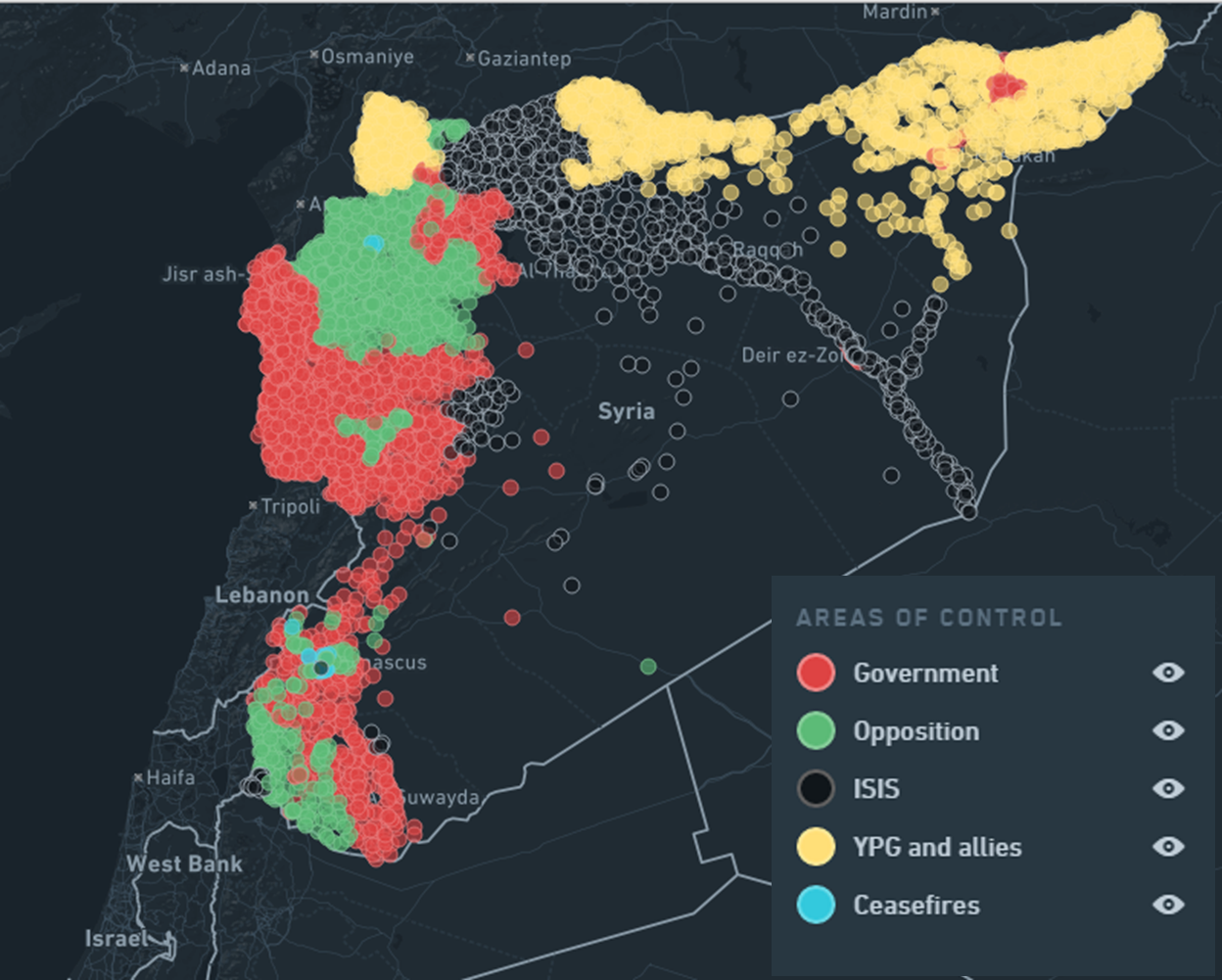
Syria conflict map 13th March 2016 Carter Center

Syria conflict map 13th March 2016 Carter Center

The Russian intervention has seen the ISIS expansion halted and reversed. They have secured breathing space for the Assad regime though they expect to have him replaced in an orderly manner in time. ISIS will shift (is already shifting) to Libya which is in chaos (for which Obama passes the buck to Cameron and Sarkozy). The EU with its shambles of a refugee policy is providing the sink which swallows the bulk of those displaced.

The real Middle East end-game is a very long way away but Russia is reaching its immediate objectives of supporting the Syrian regime, halting the march of Sunni- groups, restraining the ambitions of Saudi Arabia and of getting in the good books of Iran.

The US and Europe will still have to handle ISIS in Libya but here they will not have the Russians to rescue them.


Pots & kettles as Obama criticises Cameron over Libya

March 11, 2016

It seems a bit rich for Obama with his utter shambles in Syria to be criticising David Cameron for the shambles in Libya. Not that Obama (and Hillary Clinton) didn’t mess up in Libya as well but the UK and France were taking the lead there.  And while it may have been the fall of Libya which unleashed the weapons and fanatics who morphed into ISIS, they would not have expanded as they did without Obama and Kerry dropping the ball in Iraq and Syria.

The Russian strategy seems to be actually forcing ISIS back, but plan B for ISIS seems to be to setup headquarters in Libya if they are eventually squeezed out of Iraq and Syria. The UK and France have to take their share of the blame for their sanctimonious but ill-thought out “regime change” in Libya, but the real frustration for Obama is that he has compounded the failed end-game in Libya and multiplied it in Syria.

BBC:

David Cameron became “distracted” after the 2011 intervention in Libya, US President Barack Obama has said. Speaking to the Atlantic magazine, he said the operation went as well as he had hoped, but Libya was now “a mess”. The article also said he had warned the PM the UK would have to pay its “fair share” and spend 2% of GDP on defence. …..

…. BBC North America editor Jon Sopel said the unsolicited statement put out by the White House suggested Downing Street had reacted angrily to the article. “It’s like we’ve seen a curtain drawn back on the unspun thoughts of President Obama, complete with frustration as well, and what we’ve seen tonight is the White House trying to close the curtain as quickly as it can,” he added. …….

……. The toppling of the Gaddafi regime in Libya – following UN-backed air strikes designed to protect civilians – led to a power vacuum and instability, with no authority in full control. The intervention was led by the UK and France – and in his interview, Mr Obama reflects on “what went wrong”, saying: “There’s room for criticism, because I had more faith in the Europeans, given Libya’s proximity, being invested in the follow-up.” Mr Cameron, he said, became “distracted by a range of other things”.

He also criticised former French President Nicolas Sarkozy, saying he had tried to claim the spotlight. The former French president, he said, “wanted to trumpet the flights he was taking in the air campaign, despite the fact that we had wiped out all the air defences and essentially set up the entire infrastructure” for the intervention. President Obama said the intervention “averted large-scale civilian casualties (and) prevented what almost surely would have been a prolonged and bloody civil conflict”. But he added: “And despite all that, Libya is a mess.”

Trying to pass on some of the blame onto Cameron and Sarkozy is not unjustified but it does not put Obama’s utter fiasco in Iraq and Syria into any better light. It really does not help the pot when it calls the kettles black.


ISIS losing ground is a good way to end 2015

December 22, 2015

A good way to end 2015 will be the news that Ramadi has actually been retaken from ISIS (where the civilian population were advised yesterday by air-dropped leaflets to leave the town and where Iraqi troops are reported today to be entering the town).

ISIS lost Kobane earlier to Kurdish forces and after the Russian entry their northern territories in Syria are beginning to come under pressure. But it is when they lose Mosul and Raqqa and Palmyra that their losses will become irretrievable I think. Of course they are now trying to establish themselves in the confusion that is Libya.

IHS has a new map of the territories lost by ISIS

Preview image

Islamic State territorial gains and losses in 2015 Graphic – IHS

IHS: 

The Islamic State has consistently lost territory month-on-month throughout 2015, according to new analysis released today by IHS Inc. (NYSE: IHS), the leading global source of critical information and insight.

Using open source intelligence including social media and sources inside the countries, the team at IHS estimates that the Islamic State’s ‘caliphate’ shrunk by 12,800 km2 to 78,000 km2 between 1 January and 14 December 2015, a net loss of 14 percent.

The Islamic State’s losses in 2015 include large swathes of Syria’s northern border with Turkey, including the Tal Abyad border crossing, which was the group’s main access point to the Turkish border from their de-facto capital Raqqa.

Retaking Mosul, Raqqa and Palmyra during 2016 will be a hopeful sign that ISIS can be reduced to less than the critical mass of territory under their control. But the idea of a Caliphate will remain as long as they have the tacit support and their inspiration from Saudi Arabia and the Gulf States.