Archive for the ‘Russia’ Category

Sea of Okhotsk rescues hampered by bad weather and thick ice

January 9, 2011

Freeing the ships – and especially the factory ship Sodruzhestvo – trapped in the Sea of Okhutsk is going to be a slow process. In addition to the Magadan and the Admiral Makarov the icebreaker Krasin has also been deployed. (This is the second Krasin and was built in 1976 in Finland – the original Krasin was built in 1916 and designed by Admiral Stepan Makarov)

The Gulf of Sakahalin is still heavy with ice. In addition to the thick ice of upto 2 m reported earlier, local ice thickness can be 2 – 4 m with chunks upto 25 m thick. Bad weather is also hampering the rescue operations.

Krasin on its way to McMurdo

Icebreaker Krasin: Image via Wikipedia

Itar-Tass:

MOSCOW, January 9 (Itar-Tass) — Russia’s Minister of Transport Igor Levitin chaired on Sunday another meeting on the rescue operation in the Sea of Okhotsk.

“The participants in the meeting discussed the rescue operation in the anomalous bad weather conditions with persistent North-West stormy wind of 25 metres per second, zero visibility and heavy ice,” the Ministry’s press service said. On January 9, the Krasin icebreaker is expected to approach the Admiral Makarov icebreaker.

“If the weather permits, they will pull the Shore of Hope refrigerator to ice-free waters,” the source said. Earlier, the Admiral Makarov towed the Professor Kizevetter research vessel into an easily passable ice area and handed it over to the Magadan icebreaker which led it to open waters.

The third ship, the Sodruzhestvo floating base, remains stranded in the ice. Experts believe that it’s going to be harder to take it out to clear waters because its hull is wider than that of the icebreakers. The Krasin icebreaker is expected to widen the canal for the ship’s passage.

Three Russian vessels, the Sodruzhestvo, the Professor Kizevetter and the Shore of Hope got trapped in the ice of the Sakhalin Gulf, the Sea of Okhotsk, on December 30 of the past year. According to scientists who have carried out research, the thickness of ice in the Gulf in various periods may vary from two to four meters. Some chunks of ice may reach the thickness of 25 meters.

Rescue operation in Sea of Okhotsk begins but one icebreaker stuck in the ice…

January 5, 2011
The Russian icebreakers Admiral Makarov and Mo...

Icebreakers Admiral Makarov and Moskva: Image via Wikipedia

The icebreaker Admiral Makarov has reached its destination in the Sea of Okhotsk and the rescue operation to free the ships trapped in the ice has begun. One trawler has been escorted to safety. But there are “hummocks” in the ice which is upto 2 m thick in places. The second icebreaker Magadan is now itself stuck in the ice and the Admiral Makarov is racing to its rescue.

Itar-Tass reports:

VLADIVOSTOK, January 5 (Itar-Tass)The Admiral Makarov icebreaker that took the Mys Yelizavety to the clear waters is now moving at full tilt to help the icebreaker Magadan, which took part in the escorting effort but got stuck in the ice itself. Given that the Magadan, too, has stuck in the thick ice filling the spaces of the Sakhalin Bay, the number of ships drifting amid ice floes towards the shore has again increased to five.

A total of three ships – the Sodruzhetsvo floating factory, the Bereg Nadezhny refrigerating ship, and the Professor Kizivetter, all of them registered in the port of Vladivostok – found themselves stranded in the ice December 30. They are located at a distance of eleven to twelve nautical miles away from Sakhalin’s shore. One more ship, the Anton Gurin trawler registered in St Petersburg, joined the trapped ships January 3.

The Magadan, a port area icebreaker, has the technical characteristics largely inferior to those of the Admiral Makarov. It has a length of 88 meters and a capacity of 13,000 horse-powers. The Admiral Makarov has the length of 135 meters and the capacity for 12,000 horse-powers.

A mass of ice floes has been driven into the Sakhalin Bay by northern winds. The ice is covered with hummocks and its thickness reaches 2 meters in some spots. The total number of seamen trapped by the ice at present stands at around 500. The Sodruzhestvo floating factory has the largest crew of 340 persons.

Unusually thick ice traps ships in the Sea of Okhotsk

January 3, 2011

Itar-Tass reports that the Magadan icebreaker is struggling through 2-meter-thick ice to reach stuck ships in the Sea of Okhotsk and another ice-breaker is on its way. This reports talks of 3 ships being trapped but other reports speak of 10 ships with over 600 crew being trapped.

Line icebreaker ADMIRAL MAKAROV: image fesco.ru

VLADIVOSTOK, January 2 (Itar-Tass) — The Magadan icebreaker of the Far Eastern Shipping Company is struggling its way through the two-meter-thick ice to rescue three ships stuck in the ice in the Sakhalin Bay of the Sea of Okhotsk, a spokesman for the Yuzhno-Sakhalinsk sea rescue coordination center said on Sunday.

With a speed of 2.6 knots the icebreaker develops in conditions of the 10 point ice, she has to master five miles to reach the stuck ships, the spokesman said.

The Sodruzhestvo mother ship, the Professor Kizevetter research vessel and the Bereg Nadezhdy refrigerated cargo ship are trapped in the ice eleven to twelve miles off the Khabarovsk coastline. Their attempts to break free have been vain ….. According to the Sakhalin regional emergencies administration, there is no threat to the lives and health of crew members of the three ships. Of the three stuck ships, the Sodruzhestvo has the largest crew of 340 people. The ship has food reserves for 75 days.

The Admiral Makarov, the biggest icebreaker in Russia’s Far East, is also heading to join the rescue operations. She is expected to reach the Sakhalin Bay on January 4.

The BBC also carries a report also quoting Itar-Tass but their facts seem to have morphed along the way. Two metres is converted to 12 inches by the BBC calculator!!!!

map

Sea of Okhotsk: image BBC


Rescue efforts are under way to evacuate more than 600 crew on 10 ships trapped in ice in the Sea of Okhotsk. The ice is up to 30cm (12 inches) thick in some places, according to the Russian news agency Itar-Tass.

The temperature in the area is -22C, according to Itar-Tass, and forecasts suggest it will fall even lower.

An Itar-Tass update is here:

http://www.itar-tass.com/eng/level2.html?NewsID=15834220&PageNum=0

Russian oil pipeline to China in operation

January 2, 2011

Xinhua News:

MOHE, Heilongjiang, Jan. 2 (Xinhua) — Some 42,000 tonnes of crude oil had as of 5:48 a.m. Sunday flowed through an oil pipeline linking Russia’s far east and northeast China, 24 hours after the pipeline began operating, a spokesman for the Chinese operator of the pipeline said.

Pipelines and oil storage tanks of China and Russia crude oil pipeline in Mohe, northeast China's Heilongjiang Province, Jan. 1, 2011: (Xinhua/Wang Jianwei)

The pipeline, which originates in the Russian town of Skovorodino in the far-eastern Amur region, enters China at Mohe and terminates at northeast China’s Daqing City. A total of 1.32 million tonnes of oil is scheduled to be transported to China through the pipeline in January, said a spokesman for Pipeline Branch of Petro China Co., Ltd. (PBPC), the operator of the Chinese section of the pipeline.

The 1,000-km-long pipeline will transport 15 million tonnes of crude oil from Russia to China per year from 2011 until 2030, according to an agreement signed between the two countries. Some 72 kilometers of the pipeline is in Russia while 927 km of it is in China.


Japanese fishing firms fight back taxes: “necessary” bribes to Russian officials paid into Cyprus banks

December 28, 2010

An interesting defence by Japanese fishing firms that bribes paid to Russian officials and deposited in Cyprus bank accounts were properly booked as “expenditures” and therefore not to be taxed as profits!!

(And from my own experience I conclude that there is no Japanese businessman – or politician – who believes there is anything wrong or unethical in bribing officials – especially in other countries. The only wrong is in paying too much or being caught.)

The Japan Times has the story (but of course does not comment on the ethics involved):

KUSHIRO, Hokkaido (Kyodo) One of four fishery firms hit for back taxes for allegedly making illicit payments to Russian officials denied any impropriety Monday and said the payments were a necessary expense. “We booked the money in the expenditure category (in accounting). It was not illicit money,” said Munemoto Nakayama, who runs Kanai Gyoin Kushiro, Hokkaido. The president spoke with reporters following media reports Sunday that Kanai and three other fishery firms provided about ¥500 million to Russian officials in the three years to 2009 so they could fish in Russia’s exclusive economic zone beyond the limits set under a bilateral agreement with Japan.

Sources said the tax authorities discovered the firms made the payments using irregular accounting methods and concluded the act constituted income concealment, ordering them to pay about ¥200 million in back taxes and penalties. Nakayama confirmed, as claimed in fresh media reports Monday, that the four firms, in addition to having given the money to Russian officials aboard their ships, remitted part of the ¥500 million to bank accounts overseas, including in Cyprus. “We have been doing Russia-related business for over 10 years and have remitted money (overseas),” he said. He also revealed that his company had already filed a revised tax return in connection with the payments as demanded by tax authorities. The four firms admitted paying the Russians to look the other way when their fish catches exceeded the legal quota, the sources said.

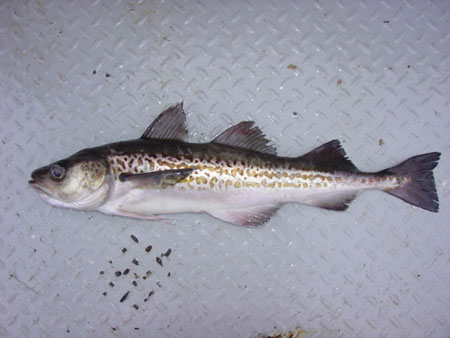
File:Walleye pollock.jpg

Walleye pollock: image wikimedia

Kanai, along with three other firms — Wakkanai Kaiyo in Wakkanai, Hokkaido, Kaiyo Gyogyo in Hachinohe, Aomori Prefecture, and Sato Gyogyo in Shiogama, Miyagi Prefecture — sends boats to Russia’s EEZ to catch walleye pollock. The annual catch quotas in Russia’s EEZ were set in the Russo-Japanese fisheries talks, and this year’s quota for walleye pollock was 10,925 tons, the Fisheries Agency said. Russian border security officials are usually present on Japanese boats to monitor their operations, the sources said. Investigative sources said they often hear of fishing companies paying the Russians and they appear to be wining and dining them as well.

Nuclear renaissance: Vietnam gets nuclear reactors from Russia and Japan, Japan gets access to rare earths

November 1, 2010

Now Vietnam is going nuclear with its first 2 plants coming from Russia and the next 2 from Japan. Unexploited rare earth deposits in Vietnam are receiving a great deal of attention from countries hit by the Chinese monopoly on rare earth supplies.

Chosun Ilbo reports

Russian President Dmitry Medvedev and his Vietnamese counterpart Nguyen Minh Triet have called for increased trade and investment between their two countries. The two leaders met Sunday in Hanoi to seal a nuclear plant construction agreement and other bilateral deals. Under the $5 billion agreement, Russia will build Vietnam’s first nuclear power plant. Construction is expected to start in 2014.

Asahi Shimbun reports on a deal where Japan  gets access to the rare earth resources in Vietnam in exchange for two 1000 MW nuclear reactors worth 14.4 billion $ to the Japanese nuclear construction industry.

The nuclear reactor construction agreement, worth an estimated 1 trillion yen ($14.4 billion), gives the green light for Japanese companies to build nuclear facilities in an emerging nation’s fledgling nuclear industry for the first time.

The two reactors will be built in the southeastern province of Ninh Thuan and are scheduled to start operations in 2021. They will have a combined output of 2 gigawatts. Vietnam plans to build 14 nuclear reactors by 2030. Construction deals for four reactors in Ninh Thuan province have so far been agreed upon, including the two to be awarded to Japan. Russia won the rights to build two reactors in December last year.

Japan, which has been trying to use infrastructure exports as a springboard for its flagging economy, began bidding for the nuclear reactor project earlier this year. In August, a delegation of Japanese business leaders led by Japan’s industry minister visited Vietnam to lobby officials. They offered financial assistance and training for Vietnamese people.

Visiting Prime Minister Naoto Kan and Vietnamese Premier Nguyen Tan Dung also agreed on joint development of deposits in Vietnam of rare earth elements, part of a Japanese drive to reduce its reliance on China for supplies of the vital raw materials, which have been obstructed following a diplomatic dispute with Beijing.

A joint team of Japanese and Vietnamese businesses is currently applying for rare earth mining rights. The Japan Oil, Gas and Metals National Corp. discovered rare earth veins in the northern Lai Chau province about 10 years ago. Toyota Tsusho Corp., Sojitz Corp., and an arm of a Vietnamese public corporation have been preparing plans for joint development.

The underground reserves are believed to be capable of yielding 3,000 tons of rare earths a year, about 10 percent of Japan’s current annual requirement.

The Japanese government has offered to provide expertise and training in surveying, excavation, and processing the rare earth metals to Vietnam. Japan is also likely to dip into official development assistance to help the country build infrastructure such as roads and water supply near the mines. In a separate project, Sumitomo Corp. is looking into mining rare earths in Yen Bai province in the north of Vietnam.

Russian hotel enters space tourism race

September 30, 2010

Virgin Galactic

In 2007, Genesis II, an experimental spacecraft designed to test the viability of a space hotel, was successfully sent into orbit by Bigelow Aerospace. Boeing have announced that they will be able to take tourists into space in 5 years.

The Galactic Suite

Virgin Atlantic has announced its intention to begin redeeming tickets on commercial space flights within the next 18 months – by some time in early 2012. In 2009 the Barcelona-based developers of The Galactic Suite Space Resort said their orbiting hotel was on target to accept its first paying guests by 2012.

Today the BBC reported that a Russian company has unveiled an ambitious plan to launch a “cosmic hotel” for wealthy space tourists. Orbital Technologies says its “comfortable” four-room guest house could be in orbit by 2016, Russia’s RIA Novosti news agency reports. Guests would be ferried to the hotel on a Soyuz shuttle of the type used to transport cosmonauts to the International Space Station (ISS). The new hotel would offer greater comforts, according to Sergei Kostenko, chief executive of Orbital Technologies. “Our planned module inside will not remind you of the ISS. A hotel should be comfortable inside, and it will be possible to look at the Earth through large portholes,” he told RIA Novosti.

It is not clear how the “cosmic hotel” would be built, but the company’s website names Energia, Russia’s state-controlled spacecraft manufacturer, as the project’s general contractor. Energia builds the Soyuz capsules and Progress cargo ships which deliver crew and supplies to the ISS.

The Czar’s lost gold may have been found

September 4, 2010
A map of Baikal

Image via Wikipedia

The search for Lost Treasures still goes on.

Source: Der Spiegel

Fearing that German troops might get their hands on it during World War I, Czar Nicholas II had had 500 tons of gold transported from St. Petersburg to Kazan.

Admiral Aleksandr Kolchak led the “White Guards” under his command over the Ural Mountains. Kolchak and his forces drove the Bolsheviks out of Kazan, a city east of Moscow, and took control of a major part of Russia’s gold reserves. The gold, worth about 650 million rubles, reportedly filled 5,000 crates and 1,700 sacks; the “Whites” required 40 railway cars for the journey.

The “Czechoslovakian corps” which had been fighting the Bolsheviks alongside Kolchak, handed over 410 million rubles’ worth of the gold over to the government in Moscow in return for safe passage home.

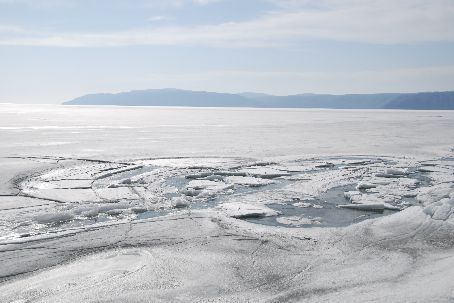
But what happened to the rest? The last traces of the gold have disappeared in the wide open spaces of Siberia. According to legend, members of the “White Guards” tried to cross Lake Baikal with the railway cars while it was frozen over with winter ice. But the weight of the cars caused them to crash through the ice and the gold sank into the depths. In fact, the frozen lake is still used as a route for traffic in the winter. During the Russo-Japanese War (1904-1905), railway tracks were even laid across the meter-thick ice.

This week, researchers, exploring the depths by submarine, may have found the Russian royals’ lost gold.

As Bair Tsyrenov slowly guided his Mir submersible up an underwater slope, a shimmer of gold was caught in the vehicle’s headlights, 400 meters (1,300 feet) below the surface of Lake Baikal. First the ship’s three-man crew discovered “steel girders that looked like railway bridges.” Then they struck upon the “bars with a particular golden radiance,” Tsyrenov, a researcher from the Lake Baikal Protection Fund, reports.

The find, made by researchers at the beginning of this week, was a spectacular one. For the last two years, the two Mir submersible research vehicles, usually at work in the Atlantic Ocean and the Indian Ocean, have been operating in Siberia’s Lake Baikal, the world’s largest freshwater body. These are the same two mini-submarines that brought the world the first underwater images of the Titanic.

The Mir expedition to Lake Baikal was actually supposed to be finishing up around now. But the vessels are currently hot on the trail of a legend: the last czars’ hoard of gold, which has been missing for 90 years and which, according to legend, lies in the depths of the Siberian lake.

Frozen Lake Baikal

http://aphs.worldnomads.com/nomadnorrie/10484/DSC_0985.jpg