Archive for the ‘Technology’ Category
May 12, 2011
Swedish Radio has just announced that the agreement between Saab and Hawtai has been suspended and negotiations continue!!!
I have little confidence in Victor Muller and his jet-setting around the world – at Saab’s expense – ostensibly to save Saab, seems more and more like the acts of a charlatan. I have observed earlier that his high-profile chasing of Russian and Chinese money will probably lead nowhere except to prolong the agony for Saab.
Svenska Dagbladet writes:
Saab’s new commercial venture with Chinese Hawtai is at risk of collapse. Saab’s President Victor Muller has already started planning to go to China for new negotiations with previously upset Chinese automakers. But Chinese car companies feel themselves cheated by Muller.
After Hawtai’s delegation visited Saab factory in Trollhättan at the end of last week they were aghast at how bad the situation was. They then demanded tough renegotiations with Victor Muller. If Hawtai and Saab cannot agree before the deadline for the contract expires tomorrow the deal may be over.
According to SvD’s industry sources, the agreement between Dutch Spyker, which owns Saab, and Hawtai is only a framework agreement. The agreement that was presented with great fanfare on 3rd May is full of ecape clauses that Hawtai can use if the parties fail to agree. Now Saab’s President Victor Muller is preparing to travel to Beijing. He will try to repair bridges with Chinese companies he has previously been in conflict with. Two relevant companies are the Great Wall Motor company and the government car giant BAIC. … Neither Great Wall nor BAIC have any affection for Muller. “BAIC can consider buying Saab, but they do not like Muller, they know that he has deceived them”, says a key figure in the affair. … BAIC believed they had the rights to the Saab 9-3 when Saab announced that they intended to produce in China with Hawtai. Until mid-April BAIC negotiated for the Saab dealership in China. And till April 30th Great Wall negotiated with Saab. Great Wall is a large and successful private Chinese automaker. But the negotiations ended because Great Wall needed at least one more week to do a due diligence and to have a board meeting, which Muller felt that the bleeding Saab did not have time for. Three days later, on May 3, he presented the Hawtai agreement. Great Wall reacted very negatively and it was not alone. Even private automaker Youngman Automobile Group of Hangzhou reacted sharply. “We were extremely disappointed and upset”, said one of Youngman’s management team . “ We have a written contract with Spyker that they could not negotiate with any other Chinese company before we were done. We took it for granted that they would follow the rules”.
Spyker had had negotiations ongoing with at least three other Chinese companies, Great Wall, Hawtai and another company. Youngman says they began negotiations for Saab in January. They also signed a letter of intent on cooperation. Youngman Automobile is the only company that has already submitted an application for Saab and an investment permit to the Chinese National Reform and Development Commission, NDRC.
Victor Muller clearly cannot be trusted and his ethics are highly suspect.
Tags:China, Hawtai, SAAB, Spyker Cars, Victor Muller
Posted in Automobiles, Behaviour, Ethics, Sweden, Technology | 4 Comments »
May 9, 2011
For twenty years the Saab 9000 and the Saab 9.5 were my cars of choice until “old age” has forced me to the blend of comfort and power that a Mercedes represents.
But Saab Motors is now on life support and in the hands of a Victor Muller who resembles a quack doctor extracting every bit he can from a dying patient. Saab’s production has been halted while new transfusions of money are being desperately sought – from very strange and dubious Russian and Chinese sources. The employees continue to hope and their attempts to push back the day of reckoning is perfectly understandable. But the fundamental reality is that not enough Saab cars are bought and it has become too expensive for what it is. The technology is still superb but in the meantime the Saab brand is being dragged through mud and manure.
Euthanasia is preferable to this degradation of the brand.
The Chinese money is unlikely to be forthcoming.
Dagens Industri writes:
Saab’s affaire with Chinese Hawtai has led to questions in the Chinese media. Experts are cautious about the marriage, and it is feared it will be stopped by the authorities. Hong Kong-based Phoenix television station says on its site ifeng.com
“Saab is not Volvo. The established Chinese car companies are not interested in Saab, and therefore this contract has come between Saab and Hawtai, two companies that both are in need to get out of a difficult situation. But what are the chances that the agreement be implemented? “
The Chinese Commission on Development and Reform NDRC, has to approve major transactions between Chinese and foreign companies. “Just as when Tengzhong Heavy Industrial tried to buy the Hummer this agreement between Hawtai and Saab has not been reported to the NDRC in advance, and therefore it has not been approved. It is therefore difficult to say whether this project will be approved. Further, the establishment of a joint venture for the manufacture and sale of Saab Cars is even more difficult.”
In recent times there has been a very strict control on approval of joint ventures for the manufacture of complete cars. “Even the long discussed projects between Changan Mazda Guangzhou Automobile and Mitsubishi, between Changan and PSA Peugeot Citroen, and the proposed Volkswagen plant expansions in Nanhai and Jiangsu are all still waiting for approval. To think that Saab Cars, which does not have as much advanced technology, would be allowed into manufacture and sale in China is less likely.”
Industry observers think that Hawtai’s and Saab’s agreement on strategic cooperation may suffer the same fate as Tengzhongs purchase of Hummer, and ultimately not be anything at all, according to Phoenix.
Even the South China Morning Post questioned whether authorities would approve the deal.
And in the meantime Saab suppliers have had to warn that they may be forced to lay-off their employees.
Tags:brand degradation, Hawtai, SAAB, Sweden, Victor Muller
Posted in Automobiles, Engineering, Sweden, Technology | 1 Comment »
May 6, 2011
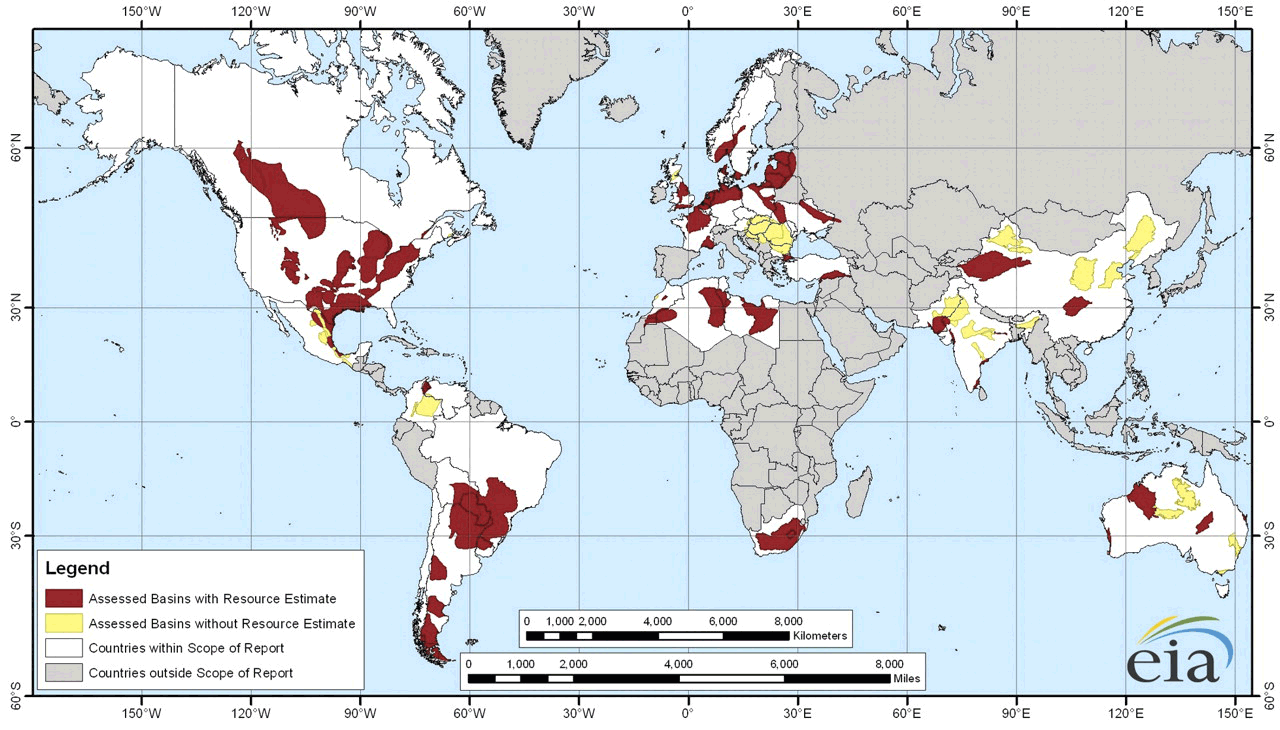
Shale gas is abundant and now beginning to undercut the price of other sources of natural gas. It is already cheaper than LNG transported around the world which requires both terminals for liquefaction and receiving stations for evaporation. Gas-fired power plants are relatively cheap and quick to build. In simple-cycle operation gas turbine based power plant provide the economic method of choice for emergency power and peak power. In combined cycle operation they provide the highest efficiency of all types of fossil fired electricity generation (around 60%). The ratio of gas price to coal price determines whether this can be cheaper than coal fired power generation.

Shale gas is abundant: map via Wikipedia
Total oil, gas and coal resources in the Earth’s crust are estimated at more than 570,000 exajoules. The world will use about 450 exajoules (billion billion joules) of fossil fuel energy this year.
Exajoule
The exajoule (EJ) is equal to 1018 joules. The 2011 Tōhoku earthquake and tsunami in Japan had 1.41 EJ of energy according to its 9.0 on the Richter magnitude scale. Energy in the United States used per year is roughly 94 EJ.
Matt Ridley:
Quantity is not really the point; price is. Most fossil fuels are impossibly hard to extract at a reasonable price. More than half the reserves consist of methane clathrates hydrated gas found mostly on the seabed near the margins of the continents in vast quantities. Nobody knows how to turn them into fuel except at huge cost, although the Japanese are on the case. So the question is not whether we run out of fossil fuels but whether we run out of cheap fossil fuels.
With oil, the answer may be “yes”. A huge amount of oil is still untapped, but most of it is under deep water or in oil sands and is costly to extract. But with gas, the answer is “no”. Most free methane is found in impermeable rocks such as shale, not in permeable “traps” whence it is easiest to extract. Shale gas was thought to be as inaccessible as clathrates, and when it began to be exploited in the 1990s it looked as if it would still come in at the top of the price range. Now technological improvements have brought the price down so far that it undercuts conventional gas.
The “shale-gas shock” will have far-reaching consequences. It will make gas prices lower and less volatile relative to oil than ever before.
This will cause gas to take market share from coal, nuclear and renewables in electricity generation, and from oil in transport. London buses should follow Washington and Delhi in switching to gas both to save money and to produce less smog.
Shale gas is good news for America and China (which probably has even more of it than America), consumers (cheap fuel means higher standards of living) and farmers (fertiliser is made from gas). It is bad news for Russia and Iran (which hoped to corner the gas market in coming decades), for coal (until now the cheapest fuel for electricity) and for the nuclear and wind industries. The last two had expected to be rescued from dependence on subsidies by rising fossil fuel prices. They may now not be.
The losers are formidable enemies, so there is a movement, whose fans range from Gazprom to Greenpeace, to strangle the shale-gas industry at birth, by claiming that drilling for it contaminates water with carcinogenic and even radioactive chemicals. This turns out to be true only in the sense that coffee is carcinogenic, bananas radioactive and dihydrogen monoxide (water) a chemical.
The use of gas for power generation is perfectly sustainable into the foreseeable future. As the hysteria and alarmism around carbon dioxide causing global warming is debunked and begins to fade away the fashionable and unsustainable focus on bio-gas will also die away. The price of electricity production from gas will be the benchmark for judging whether wind and solar power make any sense. Without artificially imposed penalties on carbon or carbon taxes on fossil fuel, bio-gas can never be more than a marginal fuel of little significance. For bio-gas to have any significance catchment areas become so large that food production is adversely affected. The cost of production is relatively high. Without a carbon dioxide scare and the resulting subsidies, wind and solar power are still not able to compete against any form of fossil fuel power generation or hydro power or nuclear power.
But the success of technologies for the extraction of shale gas ensures availability of significant quantities for a long time to come. These quantities are so large that there is no “peak” in sight and all the alarmist “peak” gas scenarios are rendered meaningless.

Moving peaks: Peak gas will never come
Related: Europe told of potential shale gas bonanza
Tags:"Peak" gas, Electricity production, Energy, Shale gas
Posted in Energy, Engineering, Gas, Technology | 3 Comments »
February 26, 2011
From AFP via PhysOrg

Robovie PC (right) beats his brother Robovie PC-Lite by one second
Robovie-PC, a toy-sized humanoid, won the world’s first full-length marathon for two-legged robots by a whisker Saturday, beating its closest rival by a single second after more than two days of racing.
Five bipedal machines began the non-stop 42.2-kilometre (26.2-mile) contest on a 100-metre indoor track in the western Japanese city of Osaka Thursday morning after doing knee bends or raising their hands to greet spectators.
One of the competitors retired after finishing only the first lap, but the others continued running day and night, getting up by themselves every time they fell to the floor or got into collisions with rivals.
Robovie-PC, 40 centimetres (16 inches) tall and weighing 2.4 kilograms (5.3 pounds), stormed into first place with only a few laps to go after Robovie-PC Lite, which had established a comfortable lead and appeared to have secured an easy victory, suddenly locked up.
Robovie-PC Lite managed to return to the track and fiercely chased the leader, but after 422 laps Robovie-PC crossed the line in 54 hours 57 minutes 50 seconds, organisers said, one second ahead of its rival.
Their average speed was 0.77 kilometres per hour.
After the dramatic finish the two robots — both made by Vstone Co., a robot technology firm based in the industrial city which also organised the “Robo Mara Full” race — waved their arms and bowed, to wild applause from the crowd.
According to the event’s regulations, competitors were allowed to change batteries and the servomotors which control the robots’ speed and other functions.
The other two robots still running had yet to complete the race Saturday evening.
Tags:Osaka, Robot marathon, robotics, Robovie-PC, Vstone
Posted in Engineering, Japan, Technology | Comments Off on Robovie-PC wins robot marathon by one second
February 25, 2011
Airbus will no doubt protest but if they really expect to displace Boeing for the US Air Force tankers they are living in a dream world. They should have seen the writing on the wall when the whole contract was re-tendered even after they had won the order for 179 aircraft in 2008. There is no US politician who would have the courage to place such an order outside of the US.
Bloomberg reports:
Boeing Co., the sole supplier of aerial refueling tankers to the U.S. Air Force since 1948, beat European Aeronautic, Defence & Space Co. for a $35 billion program to build 179 new tankers, the Pentagon said yesterday.
It was the Chicago-based company’s third try at the contract since Congress and the Air Force first proposed the tanker replacement program in late 2001 — a contest in which Boeing was viewed as an underdog, said an analyst.
“Boeing’s victory was a major upset, and not at all what the industry was expecting,” Richard Aboulafia, a military aircraft analyst with the Fairfax, Virginia-based Teal Group, said in an e-mail.
Boeing will manufacture basic 767-model aircraft in Everett, Washington, and convert them into tankers in Wichita, Kansas, during the first stage of a three-part Air Force program stretching decades to replace its tanker fleet.
The initial contract for the development phase was valued at $3.5 billion. The entire first phase covers 13 production lots through 2027. The Pratt & Whitney unit of United Technologies Corp. will provide the engines. Boeing says the win will create and sustain 50,000 jobs among 800 suppliers in 40 states.
Related:
$35 billion US tanker decision imminent: Boeing and Airbus prepare to protest a loss
Tags:Airbus, Boeing, EADS, Tanker Order, United States Air Force
Posted in Aviation, Behaviour, Defense, Technology, US | Comments Off on Surprise! Boeing wins $35 billion tanker order
February 24, 2011
The world’s first full-length marathon for two-legged robots kicked off in Japan on Thursday, with the toy-sized humanoids were due to run 42.195 kilometres (26 miles) over four days.
http://www.physorg.com/news/2011-02-robot-marathon.html
Five robots are competing. Results will be reported in 4 days.

A humanoid robot named "Robovie-PC" (R) leads in a race against other robots during the world's first full-length marathon for two-legged robots, in Osaka. image:physorg.com
Tags:Osaka, Robot, Robot marathon, robotics, Robovie-PC
Posted in Engineering, Japan, Technology | Comments Off on Robot Marathon underway
February 17, 2011
Qantas half-year profits have already been hit to the tune of $55 million by the failure of the Rolls Royce Trent 900 and the subsequent grounding of their A380 aircraft in November last year. They also stated that there would be a charge of $ 25 million for the second half-year which gives a total cost to Qantas – for this financial year – of at least $ 80 million.
BBC News:
Qantas Airways said its first half net profits had risen four-fold, but it added that last year’s explosion in one of its Rolls-Royce engines had wiped off $55m (£34.4m). The breakdown led to the grounding of its A380 aircraft last year.
The Australian airline predicted 2011 full year profits would be much higher than last year. But it warned that these would be held back by high fuel prices and the recent floods in Queensland.
Qantas said there would be another $25m charge in the second-half results from the A380 problems.
Rolls Royce has already announced a hit on profits for direct costs of £56 million (about $89 million) for the engine explosion and related events for the year till December 2010. No doubt the losses suffered by Qantas will be part of their compensation claim against the engine maker.
With compensation claims due also from Airbus (EADS), Singapore Airlines and Lufthansa and with the additional costs spilling over into 2011, the total cost of the engine mishap will likely exceed my estimate of $300 million.
Estimated costs for Rolls Royce:
- Direct costs $130 million
- Indirect (servicing) costs thru 2011 – $50 million
- Qantas claim – $70 million
- Airbus claims – $50 million
- Singapore Airline claims – $25 million
- Lufthansa claims – $10 million
What impact the loss of potential sales could have is anybody’s guess – but it would be interesting to see if Pratt & Whitney shows a better than expected order intake.
Tags:Airbus, EADS, Lufthansa, Pratt & Whitney, Qantas, Rolls-Royce Trent 900, Singapore Airline, Trent 900 failure
Posted in Australia, Aviation, Engineering, Technology, Travel | Comments Off on Rolls Royce engine failure will eat up $80 million of Qantas profits
February 10, 2011
BBC reports:
Manufacturing giant Rolls-Royce has said the mid-air failure of one of its Trent 900 engines on a Qantas superjumbo had led to costs of £56m. The explosion in the engine forced an emergency landing of the A380 in November last year. The one-off cost contributed to annual pre-tax profits dropping 76% to £702m in 2010 from £2.96bn. Foreign exchange costs and interest rate and fuel hedging contracts also contributed to the profit fall.
But the Derby-based company said that underlying pre-tax profits – which strip out one-off costs – were up by 4% to £955m in 2010 and were a better indication of its performance.
Rolls Royce say that the may face further “modest costs” but this seems to be far too optimistic considering that all the engine servicing costs have yet to show up and all the various compensation claims from Qantas, Airbus, Lufthansa, and Singapore Airline will take some time to work their way through. Once all the claims are presented there is an even chance that some will need arbitration before settlement which will take some time.
Jorn Madslien also writes:
Investors will be scrutinising Rolls-Royce’s financial figures to try to find out how the recent engine failure that led to the grounding of six Qantas Airbus A380 aircraft affected the company. ……..
….. The long-term effects of the engine failure, for instance a potential fall in new orders over the months and years ahead, cannot be measured at this stage. Consequently, the final impact on the company’s bottom line is not yet known.
It does not seem as if Rolls Royce have made any provision for further costs which is a little worrying and I stay with my estimate of around $300 million as the total hit that Rolls will have to swallow for the Trent 900 for the A380 in addition to any impact on engine sales.
Judging from the delays the development cost of the Trent 1000 for the Dreamliner is also likely to be significantly more than budgeted or expected.
It will be at least 2012 before the full financial impact is known though some residual impacts will continue for many years.

The wrecked engine after QF32 landed in Singapore in Nov. 2010:Photo: AFP
Tags:Airbus, Airbus A380, Qantas, Rolls Royce, Rolls-Royce Trent, Trent 900 costs
Posted in Aviation, Business, Engineering, Technology | 3 Comments »
February 9, 2011
The London Design Museum is putting on a special display to celebrate 50 years of the Jaguar E-type from its launch at the Geneva Motor Show in 1961. In the late 1960’s as an apprentice in England, the E-type represented the stuff of our dreams. But back then when my weekly wage as an engineering apprentice was £3- 10s per week, the £2,000 price tag was as unattainable as a date with Sophia Loren!
In the 1970’s when I could aspire to more, I actually considered the Triumph GT6 – also known as the “poor-man’s E-type” – but instead I settled for a much more sedate Renault -12. And by the time I could consider its price tag the E-type was no longer in production and my tastes had a decided preference for the comfort of a Mercedes.
The Design Museum celebrates 50 years of the iconic Jaguar E-Type with a display in the Design Museum Tank.

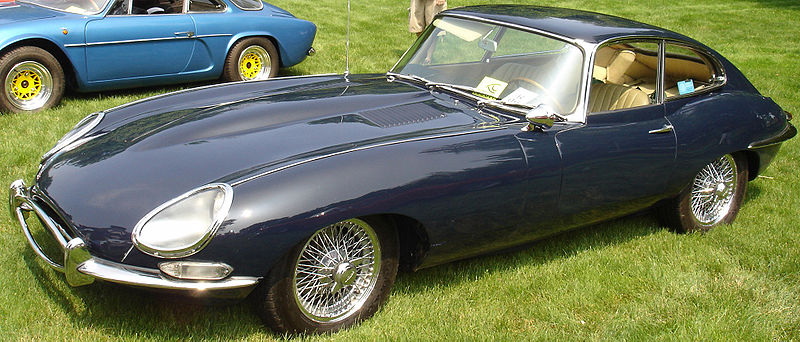
Jaguar E-Type series 1, 1961
Originally launched at the Geneva Motor Show in 1961, the E-Type’s caused an instant sensation. With a 3.8 litre XK engine, a top speed of 150 miles per hour and a price of £2000, the E-Type was an accessible dream and signalled the new era of modernity of the 1960s. Between 1961 and 1974 over 70,000 E-Types were produced.
The bullet-like design of the E-Type was the result of the mathematical and engineering talent of Malcolm Sayer and the E-type was the first large-scale production road car to be developed from the study of aerodynamics. The founder of Jaguar, Sir William Lyons combined his flare for style and luxury with his business and marketing skills to ensure the E-Type became the car of celebrities from George Harrison of the Beatles to footballer George Best
The E-Type on display was manufactured in 1961 and has been provided by Classic Motors Cars Limited.
On its release Enzo Ferrari called it “The most beautiful car ever made”.

Jaguar e-Type series one: image Wikipedia
The E-type was 4.4 m long with a 3.8 litre engine while the GT6 had a length of 3.7 m and a 2 litre engine. Technically and in looks the Triumph GT6 never came close to the E-type, but it looked fast. On the few occasions when I drove a friend’s GT6, my main memory is that it had a decided “tail-wag” when cornering.

1973 Triumph GT6: image Wikipedia
Bot nowadays my tastes are much more sedate and the Jaguar E-type remains the dream it always was. So I shall make do with my Mercedes E-class.

Mercedes E-class 2010: image via Flickr
Tags:50 years E-type, Geneva Motor Show, Jaguar E-type, Mercedes-Benz E-Class, Triumph GT6
Posted in Automobiles, Design, Engineering, Technology | Comments Off on The E-type turns 50
February 4, 2011
That wind power generating capacity is intermittent capacity and cannot be relied upon is obvious but sometimes escapes notice in the enthusiasm for “renewable energy”. That wind power must be backed up by other more reliable generating capacity for the periods when winds are too low or too high or when the weather is too cold is also often glossed over. That wind power must be used when the wind does blow irrespective of level of demand and thereby displace more stable power (thus rendering it more expensive) is an inevitable consequence.
The following report comes as no surprise.
METEOROLOGICAL MUSINGS reports:
The Electric Reliability Council of Texas said 7,000 megawatts of generating capacity tripped [“tripped” means failed]Tuesday night, leaving the state without enough juice. That’s enough capacity to power about 1.4 million homes. By rotating outages, ERCOT said it prevented total blackouts.
“We have the double whammy of extremely high demand, given the lowest temperatures in 15 years, combined with generation that’s been compromised and is producing less than expected or needed,” said Oncor spokeswoman Catherine Cuellar. Oncor operates power lines in North Texas and facilitated the blackouts for ERCOT.
The article didn’t give a clue as to what generating capability failed, but I can make a pretty good guess: Wind energy…
For a time, Texas was bragging about being the #1 state for “wind power” (it still is) and we were bombarded with TV commercials and newspaper editorial touting the “Pickens Plan” for massive spending on wind energy. Pickens himself was building a huge wind farm in northwest Texas. He has now ceased construction.
Now, because of relying so much on wind power, the state is suffering blackouts.
Tags:Electricity generation, Rolling blackouts, Texas, wind power, Wind power failure
Posted in Energy, Environment, Technology, US, Wind power | 5 Comments »





 The k2p blog