You cannot kill for free speech but you have to be prepared to die for it

January 16, 2015

The Pope just said that, if the limits to free speech are exceeded, then violence is to be expected. In spite of his separate statement that violence in the name of God was never justified, he has effectively condoned a violent reaction if and when some limit to “free speech” is exceeded.

Pope Francis says freedom of speech has limits

Pope Francis has defended freedom of expression following last week’s attack on French satirical magazine Charlie Hebdo – but also stressed its limits. The pontiff said religions had to be treated with respect, so that people’s faiths were not insulted or ridiculed.

To illustrate his point, he told journalists that his assistant could expect a punch if he cursed his mother.

But his handlers at the Vatican soon realised that he was effectively saying that at some level of perceived insult, a violent reaction was to be expected and, by implication, justified. They tried to put the cat back in the bag, but they cannot get away from the fact that even a playful punch at an assistant was, and was intended to, represent a violent reaction:

Yahoo News: The Rev. Thomas Rosica, who collaborates with the Vatican press office, issued a statement early Friday stressing that the pope was by no means justifying the attack on Charlie Hebdo.

“Pope Francis has not advocated violence with his words on the flight,” he said in a statement.

He said Francis’ words were “spoken colloquially and in a friendly, intimate manner among colleagues and friends on the journey.” He noted that Francis has spoken out clearly against the Paris attacks and that violence in God’s name can never be justified.

Leaving aside this Pope’s attempts at populism, he does not address the fact that all organised religions – and not least Catholicism – are fundamentally opposed to and deny free speech. They are all concerned with telling, and imposing on their members, what to think and how to behave.

Those who like to quote Voltaire and his “I do not agree with what you have to say, but I’ll defend to the death your right to say it”, need to admit that what he actually said was not that “free speech” was a right, but that “free speech was worth dying for”.

It could be argued that the Pope was saying the same thing. You cannot kill for free speech but you have to be prepared to die for it. The terrorists in Paris were killing because they felt insulted not because they were for or against free speech. The Charlie Hebdo journalists died for their right to express whatever they wished.

(Sometimes I wonder why something so simple is made so complicated. Of course, every individual can say or express whatever he likes. And of course he must take responsibility for that. He is not immune to the consequences of what he says. The problem comes only when the “free speaker” demands immunity from any prosecution and protection from any unpleasant consequence. The risk of retaliation – whether legal or not – must be taken by the speaker. Equally, the retaliator has no “right” not to be offended. The offense lies in his mind and he must take responsibility for his actions.)

But the Pope is not alone in being confused. His confused message is just an example of the many confused responses to the brutal murders at Charlie Hebdo’s office and the Jewish supermarket in Paris. Initially, there was universal condemnation of the killings and the “Je suis Charlie” meme was used to show solidarity with the victims and as a manifestation of support for free speech.

But it soon became clear that the manifestations of support were not as simple and unified as all that. The Left were – in their confused minds – supporting free speech and condemning violence by Islamic terrorists. But by some mental calisthenics they were also showing solidarity with moderate Islam. The confused Prime Minister of Turkey went to Paris and stood arm-in-arm with Hollande and other leaders and then went home and condemned the journalists for their insults to Islam and for the new Charlie Hebdo issue. The confused members of Pegida suppressed their dislike of the media and joined the wave of manifestations, to demonstrate their opposition to the Islamicisation of Europe. For them the attack was proof of the evil in Islam. They tried not to show too much sympathy for the Jewish victims but focused on the evil attackers. A confused Barack Obama did not know what to do and so – as usual – did nothing. Confused orthodox Jewish papers removed all women from their pictures of the Paris manifestation. A confused Angela Merkel joined the Paris manifestation and then went home and joined a pro-Muslim demonstration for balance. A confused David Cameron joined the Paris manifestation and then was quick to point out that he was only against the Islamic terrorists.

Al Qaeda in the Yemen claimed that they were responsible.

After a few days, while the support for free speech in the face of Islamic barbarism continues as the main theme, the message has now started to be diluted. Charlie Hebdo had gone too far and the reaction – while not justified – was to be expected. In other words the irresponsible journalists were – to some extent – culpable. By their racism and irresponsibility they had invited retaliation. The co-founder of Charlie Hebdo accused the editor of dragging himself and others to their deaths. The Pope said much the same.

SalonThe previously ubiquitous hashtags of #JeSuisCharlie were suddenly replaced by declarations that “I am not Charlie Hebdo, and torn commentators searched for alternative symbols to cling to in the wake of tragedy, such as Ahmed Merebat, the Muslim police officer killed by the terrorists as they made their getaway.

In the matter of three days, the staff of Charlie Hebdo had transformed from heroic symbols of free expression to the latest in a long line of racists whose right to say what they say we’ll defend to the death, even if we don’t particularly like what they’re saying.

But the events of Paris were not about free speech. They were – primarily – about Islamic terrorists who killed to satisfy their warped and twisted view of the world. They killed innocent Jews in a supermarket and journalists with a rather juvenile sense of humour. And while the Islamic fanatics may not represent the main body of moderate Muslims, the fringe that is radical Islam exists where it does because the main body of Islam exists where it does.

And the origins of most of the Sunni Islamic extremism are still rabid Saudi Arabian clerics and Saudi Arabian money.

Laws are only as “good” as the compliance they command

January 15, 2015

There are always examples illustrating where the “law is an ass”. Recently there was the case of the Saudi Arabian cleric who has issued a fatwa against the building of a snowman since this would be an “image of man” and a blasphemy! Laws are nearly always about achieving a balance between the needs of individuals and those of the larger society, and which can often be in conflict. It is always the larger society which makes the law (never the individual) and it is always the larger society which assumes for itself the right to make laws and coerce the behaviour of the individuals making up the society. I got to wondering about how the “goodness” of a law could be measured.

The objective of creating a law is to get compliance. Man-made laws (and even all the laws of all the gods – inevitably interpreted by men) are fundamentally coercive towards the end of compliance. They try to shape human behaviour – and only human behaviour – by threats of consequences for non-compliance with the law (if found out). They are a tool of organised societies and usually only try to coerce the behaviour of members of that society (including temporary members or others within the power of that society). The purpose is usually the smooth operation or the (perceived) well-being of that society.  Laws have specified jurisdictions. They do not – usually – try to coerce the behaviour of entities not within the coercive power of the law-making body. There have been cases of misguided lawmakers and Kings trying to create laws to govern animals and birds, or to control the tides or to ban eclipses and volcano eruptions, but these examples of idiocy are relatively few. (But such idiocies are present even today as with those who try to make laws to control the climate).

There is a hierarchy to these laws with the laws of any society generally being subordinate to those of any larger society it is part of. Town laws are subordinate to county laws which are subordinate to country laws. (But it is noteworthy that no country gives precedence to the laws of a god over the laws of a country. Even some Islamic States which claim to give such precedence first merge the supposed laws of their god into the laws of the country. Saudi Arabia is a legal chaos unto itself where women drivers are treated as dissenters and tried in terrorism courts). The supposed “sanctity of the law” is merely a concept which presupposes the supreme goal as being the well being of the society making the law. The laws of a failed or discredited society are discredited and discarded along with that society. Courts of Law deal with compliance or non-compliance with the Law and Justice is served only incidentally.

But all man-made laws are formulated only because compliance with the law is not assured and the society wishes to have such compliance. Only the “laws of nature” command full compliance and are 100% effective. In fact, the laws of nature are only discerned by humans because they are always complied with – without any measures to ensure compliance. Coercion is always zero. Gravity always applies – but we still don’t know quite how it does. The laws of nature are fully complied with even if the law is not discerned or formulated. Man-made laws cannot negate or defy gravity or any of the laws of nature. Neither can the laws supposed to be of the gods. (Which begs the question as to why a law supposed to have been made by an all-powerful god cannot ensure full compliance without any coercion? Going by the ability to command compliance, all imagined gods are subject to natural law!)

It occurs to me that “compliance” is the “benefit” when assessing a law and the “cost” is the amount of coercion that has to be applied to get that compliance. Taking the laws of nature as my benchmark – 100% compliance with zero coercion – leads me to think that the “goodness” of a law can then be defined as the ratio of the compliance it achieves to the cost of the coercion it has to use to achieve that compliance.  A Compliance/Coercion Ratio is then effectively a benefit/cost ratio. The greater the ratio the greater the “goodness” of a law. Note that the cost to society of some non-compliance may indicate the need for a law in that area but is irrelevant for estimating the “goodness” of that law once made.

“Goodness” is clearly infinity for laws of nature where the compliance is full and the amount of coercion in the denominator is zero. At the other end of the scale, for “bad” laws, the C/C Ratio would go to zero if either the numerator was zero or where the amount of coercion was very high and approached infinity. Clearly if there was no compliance, the C/C ratio would be zero and the law would be a “bad law”. Equally if coercion is “unlimited” (mass executions for example), the “goodness” would be zero no matter what level of compliance was achieved.

Compliance and coercion are not impossible to measure. Compliance is simply the proportion of those complying among the total population subject to the law. The amount of coercion applied could be measured by estimating the cost of the penalty/punishment levied – or to be levied – and the number of times it would be applied. A law against murder – for example – would need to estimate the amount of coercion as the punishment level multiplied by the number of times the punishment was – or would be – applied. It would need some imagination to compare the total cost to society of – say – an execution to that of a life-term, but it would not be beyond the wit of man to estimate the “amount of coercion”. A successful law would show a clear increase of the C/C ratio over time. It would quantify and demonstrate how behaviour changed such that there was more compliance with less coercion.

Perhaps every new law that is proposed should be judged for its “goodness” by estimating its Compliance/Coercion Ratio. Laws are only as “good” as the compliance they command and as “bad” as the coercion they need to apply.

Politicians and pseudoscience

January 14, 2015

I hadn’t realised just how far Obama and McCain were prepared to go in accepting pseudoscience when chasing votes and political power.

Washington Post Fact Checker:

“We’ve seen just a skyrocketing autism rate. Some people are suspicious that it’s connected to the vaccines. This person included. The science right now is inconclusive, but we have to research it.” –Barack Obama, Pennsylvania Rally, April 21, 2008.

“It’s indisputable that (autism) is on the rise among children, the question is what’s causing it. And we go back and forth and there’s strong evidence that indicates it’s got to do with a preservative in vaccines.” –John McCain, Texas town hall meeting, February 29, 2008.

There is no proven link between vaccinations and autism just as there is no proven link between man-made carbon dioxide emissions and global warming.

You also can say whatever I like

January 13, 2015

Voltaire: I do not agree with what you have to say, but I’ll defend to the death your right to say it.

The world pays lip service to the “freedom of speech” or the “freedom of expression”. No country in the world today actually lives up to Voltaire.

The only reality that is universally held is

I can say whatever I like. You also can say whatever I like. 

  1. You can say what you like but you cannot reveal what I consider confidential. (US)
  2. You can say what you like but we will flog you if you “like” the facebook page of Arab Christians. (Saudi Arabia)
  3. You can say what you like but you cannot call for a boycott of Israel. (Israel)
  4. You can say whatever you like but I can always sue you for libel or slander or obscenity or pornography. (most countries)
  5. You can say what you like but you cannot speak against me, Robert Mugabe. (Zimbabwe)
  6. You can say whatever you like but we will put you in prison if you incite others to violence. (most countries)
  7. You can say whatever you like, but if you say that the Holocaust did not happen we will put you in prison. (most Western European countries)
  8. You can say whatever you like but if you offend my sensibilities I am justified in beating you up. (India, Malaysia, Indonesia, Iran, Russia, China, Vietnam, Burma).
  9. You can say whatever you like but if you insult our King we can lock you up and throw away the key. (Thailand)
  10. You can say whatever you like but if I perceive that Islam has been insulted I can kill you or authorise your killing by anybody. (all Islamic countries)

Who is Charlie?

January 13, 2015

JE SUIS CHARLIE

Omslaget på tidningen Charlie Hebdos nya nummer, Charlie Hebdo och tidningen Liberations redaktioner. Foto: TT/AP och Charlie Hebdo.

The cover of the new issue of Charlie Hebdo, Charlie Hebdo and the newspaper Liberation editors. Photo: TT / AP and Charlie Hebdo (via Swedish Radio)

 PEGIDA ALSO CLAIMS TO BE CHARLIE 

A protestor holds a poster showing German Chancellor Angela Merkel wearing a head scarf in front of the Reichtstags building with a crescent on top and the writing "Mrs Merkel here is the people" during a rally of the group Patriotic Europeans against the Islamization of the West, or PEGIDA, in Dresden, Germany, Monday, Jan. 12, 2015.

A record 25,000 attended the Pegida demonstration in Dresden on 12th January 2015 BBC/AP

 BUT, HE IS NOT CHARLIE

Right-wing Polish MEP Janusz Korwin-Mikke

Right-wing Polish MEP Janusz Korwin-Mikke at the European Parliament 12th January 2015 BBC/Reuters

Nigel Farage the UKIP leader, who is a clown in many ways and on many issues, does have a point regarding integration (not immigration). It is not mass immigration – as he believes – but the blind worship of a soppy, separatist, “multi-culturism” which has removed the incentive and need for immigrants to integrate. The grooming rings of Pakistani immigrants and the attempted take-over of Birmingham schools have certainly been enabled – perhaps only partly – by the cowardly worship of “multi-culturism”. Like it or not, Europe is and will continue to be multiethnic. That requires the separate cultures to be subordinated to a single over-riding culture, which in turn has to be something new which evolves from the various new inputs. Immigration inevitably gives multi-ethnicity but it is the blind worship of multi-culturism which hinders integration. No doubt prejudice and racism also hinder integration but even here, the separatist nature of multi-culturism entrenches racism.

I love the fact that in the UK, chicken tikka massala has gone mainstream and I can get it at M&S and at the pub. But I am equally glad that the pub remains a pub and has not been converted into a dhaba. When I want channa – bhatura my favourite dhaba is in Handsworth, but thankfully that dhaba will never be a pub. There is a place for the dhaba to exist, but it is the pub serving the chicken tikka massala which is integration in motion.

(I shall leave my ranting about all organised religions for another time and another post).

It is not immigration but integration which is the real issue.

BBC: Mr Farage, leader of the anti-EU UK Independence Party, said mass immigration had “made it frankly impossible for many new communities to integrate”.

“We do have, I’m afraid, I’m sad to say, a fifth column that is living within our own countries, that is utterly opposed to our values,” he said.

He is quite correct that in Europe, the supporters of radical Islam are self-confessed fifth-columnists (defined as any group of people organised to undermine a larger group).

Numerical gibberish from a Professor of Meteorology at Florida State

January 12, 2015

There is a strange article in the Tallahassee Democrat by a Peter Ray, a Professor of Meteorology at Florida State University. This is not exactly Nature and the TD’s fact checking processes are not to be compared to a proper peer review, yet they allowed this nonsense to be published:

-TLHBrd_12-28-2014_Democrat_1_A003~~2014~12~27~IMG_-TLHBrd_11-16-2014_D_1_1_.jpg

Peter Ray – image Tallahassee Democrat photo Craig Litten

The population doubles every 40 years. In 100 years there will be 100 times as many people living on the earth. All will suffer the lack of food and water. Many will die and wars will be over resources.

Never mind that the UN projections show a world population of 7 billion today reaching a peak of about 10-11 billion by 2100. Never mind that global fertility is declining fast. Never mind that a doubling every 40 years would need some 265 years to reach a factor of 100. Never mind that in 100 years the growth would be by a factor of 6.6. Peter Ray seems to be calculating by his strange mathematics a population of 700 billion in 100 years (though quite how he calculates this is a mystery). The rest of the article is conventional gloom and doom gibberish but masochists can find it here.

Prof. Peter S Ray, Florida State University

However I thought it odd that somebody so numerically illiterate – in a public article – could be a Professor of Meteorology, which led me to the Florida State University page of a Professor Peter S Ray which in turn led me to his homepage and then on to his cv. He is the only Peter Ray listed. The pictures – if all of the same person – seem a little anachronistic. Presumably the Tallahassee Democrat picture was chosen as being the most flattering but I would guess it is from 20 years ago. Personally I would prefer the later picture.

The “back to the future” theme appears also in his cv where his PhD (Meteorology) is from 1973 but his MS (Meteorology) is from 2013. It is not inconceivable that a Masters degree could follow a PhD, but in the same field?

I get worried when Professors start spouting about matters outside their own narrow fields. They are imbued with an authority they do not have and – more often than not – are misguided and misinformed. We could call it the Newton’s Alchemy Syndrome (NAS). Professor Peter Ray should probably avoid demographics.

“Ghost” armies of Iraq and Afghanistan continue a long tradition

January 12, 2015

There have been recent reports about large numbers of “ghost” employees in the military and police forces of Iraq and Afghanistan, who exist on paper to extract (or account for) large amounts of external funding.

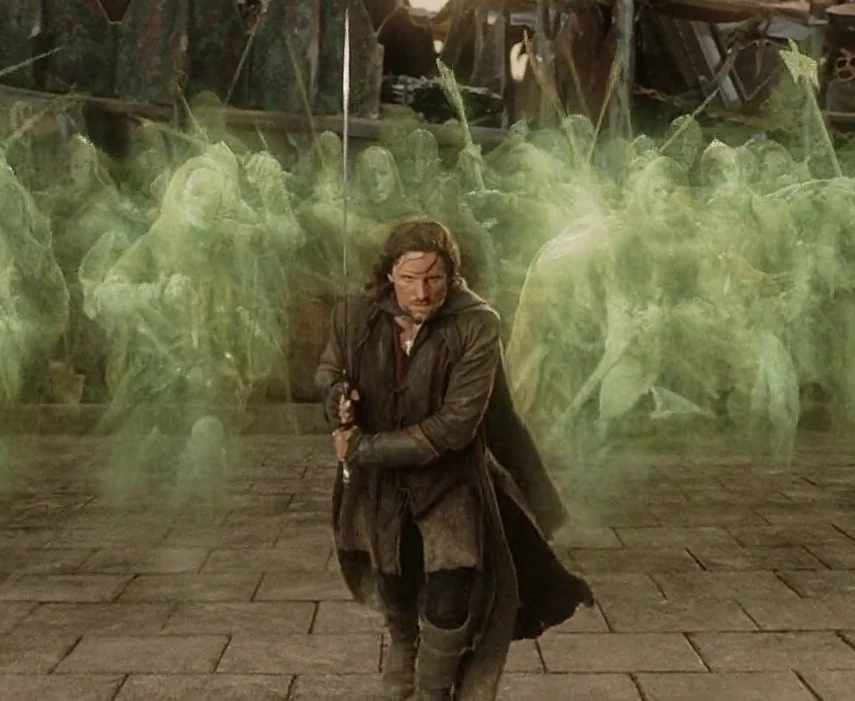
The Iraqi Army was recently revealed to have 50,000 “ghost” soldiers who conducted “ghost” exercises with “ghost” ammunition. But these soldiers were not like Aragorn’s Army of the Dead who swept aside the forces of Mordor. Instead, they melted away into their nothingness when faced by the ISIS fighters in Mosul in June last year.


The Unz Review: The Iraqi army includes 50,000 “ghost soldiers” who do not exist, but their officers receive their salaries fraudulently according to the Iraqi Prime Minister Haider al-Abadi. “The Prime Minister revealed the existence of 50,000 fictitious names,” said a statement after a thorough headcount during the latest salary payments. 

The Iraqi army has long been notorious for being wholly corrupt with officers invariably paying for their jobs in order to make money either through drawing the salaries of non-existent soldiers or through various other scams. One Iraqi politician told The Independent a year ago that Iraqi officers “are not soldiers, they are investors”. In the years before the defeat of the army in Mosul in June by a much smaller force from Isis, Iraqi units never conducted training exercises. At the time of Isis’s Mosul offensive, government forces in Mosul were meant to total 60,000 soldiers and federal police but the real figure was probably closer to 20,000. …..

….. Another source of earnings for officers are checkpoints on the roads which act like customs barriers on national frontiers. All goods being transported have to pay a tariff and this will again go into the pockets of the officer corps. These will have paid highly for promotion, with the bribe for becoming a colonel $200,000 (£127,000) and a divisional commander $2m. This money would usually be borrowed and paid back out earnings.

There have been similar scams in Afghanistan.

The GuardianEach year, foreign donors pay hundreds of millions of dollars to fund salaries for members of the Afghan national police. According to a US government watchdog, however, there is little proof of where the money ends up.

In a report released on Monday, the Special Inspector General for Afghanistan Reconstruction (Sigar) writes that much of that money may in fact be bankrolling “ghost workers” – fictional employees created to enrich police chiefs.

Business Insider: The U.S. may be unwittingly doling out checks to “ghost workers” of the Afghan National Police who don’t even exist, according to an alert letter sent from the Special Inspector General for Afghanistan Reconstruction.

The letter alleges payment of salaries to non-existent members of the police force, and comes as just the latest in a string of fraud, waste, and abuse exposed by SIGAR under the leadership of John Sopko. …… The letter follows a previous report from SIGAR that found $6.3 million in payments going to Afghan police to fix broken vehicles, many of which had been out of service for over a year or had even been destroyed. …….. Previous reports found the Pentagon paid $12.8 million for equipment that went completely unused, records being shredded of $201 million in fuel purchases for the Afghan National Army, and millions from the U.S. military actually ending up in the hands of the Taliban, among many others.

But the use of these “virtual” employees is nothing new. It was probably first invented by the construction industry and construction probably became an industry as early as in the construction of the pyramids in Egypt and the temples of Babylon some 4 -5,000 years ago. (It is perhaps fitting since Old Babylon lay close to present day Baghdad).

The construction industry uses “ghost” workers primarily for the following reasons:

  1. to milk funds for publicly funded projects – especially for job creation projects,
  2. to avoid minimum wage laws,
  3. to avoid taxes or compulsory employee contributions

Construction sites with their large numbers of transient workers are notoriously difficult to check. Even “ghost” sites with “ghost” workers are not unknown. Very often these construction workers are paid daily and in cash. The use of ghost workers then allows the conversion of project funds into untraceable cash, accumulated in slush funds, for various nefarious purposes.

In recent times the growth of the NGO’s acting as contractors, who often get their funding from charities or public monies, has led to the padding of employee numbers and fictitious payrolls.  Even during the Ebola outbreak, local politicians were busy milking the funds available in Sierra Leone with over 6,000 “ghost” workers. So much so that the British government refused to channel its funds through local organisations.

According to report, this is the first time that the British Government has openly condemned the Sierra Leone Government publicly for alleged misuse of the former’s support to the latter. This development, according to report, took place on Monday 8thDecember, 2014. On the same day, the Sierra Leone Association of Journalists (SLAJ) issued a news release expressing massive corruption and fraud in the National Ebola Response Center (NERC). The Association expressed worries over the widespread of corruption in the handling of the Ebola Funds by authorities in charge. SLAJ was particularly concerned about the disclosures of the NERC’s CEO’s revelation that some 6,000 ghost names were have been discovered in the weekly payment voucher for healthcare workers in the frontline, and the strikes by healthcare workers negatively impacting on the fight against the Ebola.

I first heard about “ghost” locums in the NHS in the UK as a student in the 1960s. In Japan it was obligatory to use local construction crews for the construction and erection of power plant equipment and we were required to hire the entire crew. My best estimates were that the crews – on paper – contained about 20% more names than ever appeared on site. In the US I found that “unionised” power plant sites always needed between 10- 20% more construction workers than non-unionised sites (always through contractors of course). It was a similar story on sites in India and Africa. Through the 1990s it was a lucrative business to start an NGO with funding from abroad (and probably still is). Often the funding was based on covering all “approved” (but ghostly) personnel costs and covering external purchases for approved projects. But here the “head” of the NGO was essentially the owner of an “enterprise”.

“Ghosts” are not going away anytime soon.

Mathematical images by Yeganeh

January 11, 2015
Yeganeh bird in flight

Yeganeh bird in flight

Hamid Naderi Yeganeh, “A Bird in Flight” (November 2014)

This image is like a bird in flight. It shows 2000 line segments. For each i=1, 2, 3, … , 2000 the endpoints of the i-th line segment are:
(3(sin(2πi/2000)^3), -cos(8πi/2000))
and
((3/2)(sin(2πi/2000)^3), (-1/2)cos(6πi/2000)).

See his gallery of images here.

Hamid Naderi Yeganeh is a Bachelor student of mathematics at the University of Qom. He won gold medal at the 38th Iranian Mathematical Society’s Competition (2014).

A Generalization of Wallis Product by Mahdi Ahmadinia and Hamid Naderi Yeganeh

PlusMaths writes:

…but it’s actually a collection of points in the plane given by a mathematical formula. To be precise, it’s a subset of the complex plane consisting of points of the form

  \[ \lambda A(t)+(1-\lambda )B(t), \]    

where

  \[ A(t)= 3(\sin (t))^{3}- \frac{3i}{4}\cos (4t) \]    

and

  \[ B(t)= \frac{3}{2}(\sin (t))^{5} - \frac{i}{2}\cos (3t) \]    

for $0\leq t \leq 2\pi $ and $0\leq \lambda \leq 1.$

The image was created by Hamid Naderi Yeganeh.

The Ukrainian pilot who shot down MH17?

January 11, 2015

The MH17 shooting down “mystery” may not remain a mystery for ever.

Further details are emerging (from the Russian side of the divide) about the shooting down of MH17 by a Ukrainian Air Force Su-25 attack aircraft piloted by Captain Vladislav Valerjevych Voloshin as narrated by a “secret” witness.

Captain Vladislav Valerjevych Voloshin image Komsomolskaya Pravda

The Russian sources are not, in themselves, entirely trustworthy but what adds to their credibility is the lack of any pushback from NATO, the Dutch prosecutor or the Malaysians. There is denial from the Ukrainians of course but the following seem to be established (with varying degrees of reliability):

  1. Captain Voloshin is a pilot in the Ukrainian Air Force
  2. He did fly a mission that day at that time
  3. He took off in his Su-25 combat jet on 17th July 2014 from Dnipropetrovsk air base
  4. His plane carried 2 air-to-air missiles on take-off
  5. His plane returned without the missiles,
  6. A passenger on MH17 was wearing an oxygen mask which had had time to deploy,
  7. The MH17 fuselage was riddled with many very regularly spaced holes of a diameter consistent with cannon fire.

The missiles were probably R-60 air-to-air missiles.

The full interview with the mystery witness is translated by Kristina Rus for FortRuss.blogspot.com from the article in  Komsomolskaya Pravda

Monkeys can learn how to use a mirror

January 11, 2015

Self-awareness is surely more than just passing a “mirror test”. There would seem to be a continuum between the two discrete states of “not being self-aware” (a stone) to being “fully self-aware” (higher primates and humans), though I am not entirely sure if even higher levels of self-awareness are conceivable. I take self-awareness to be on a higher plane than self-consciousness. Self-awareness is the recognition of a tree as “being in a forest” whereas self-consciousness is just being the “tree”. Empirically, sentience is an even higher cognitive capability where sentience requires self-awareness which in turn requires self-consciousness.

Most mammals are conscious of self or at least of self-interest. Even a tree for that matter could be said to exhibit self-interest. Passing the mirror test seems to be a fairly conclusive evidence of well-developed, self-awareness but that is not to say that some degree of self-awareness is not possible even when the mirror test is not passed. Whales, dolphins and some elephants have passed the mirror test along with most of the higher primates (gorillas, chimpanzees and bonobos). The magpie is the only bird known which has passed the test. Monkeys (rhesus monkeys, macaques) do not pass the test but are clearly self-conscious.

Now, new research has shown that rhesus monkeys can be taught to make use of a mirror such that they could pass the mirror test. Can awareness therefore be taught?

Liangtang Chang, Gin Fang, Shikun Zhang, Mu-Ming Poo, Neng Gong. Mirror-Induced Self-Directed Behaviors in Rhesus Monkeys after Visual-Somatosensory Training. Current Biology, January 2015 DOI:10.1016/j.cub.2014.11.016

EurekAlertUnlike humans and great apes, rhesus monkeys don’t realize when they look in a mirror that it is their own face looking back at them. But, according to a report in the Cell Press journal Current Biology on January 8, that doesn’t mean they can’t learn. What’s more, once rhesus monkeys in the study developed mirror self-recognition, they continued to use mirrors spontaneously to explore parts of their bodies they normally don’t see.

“Our findings suggest that the monkey brain has the basic ‘hardware’ [for mirror self-recognition], but they need appropriate training to acquire the ‘software’ to achieve self-recognition,” says Neng Gong of the Chinese Academy of Sciences.

In earlier studies, scientists had offered monkeys mirrors of different sizes and shapes for years, even beginning at a young age, Gong explains. While the monkeys could learn to use the mirrors as tools for observing other objects, they never showed any signs of self-recognition. When researchers marked the monkeys’ faces and presented them with mirrors, they didn’t touch or examine the spot or show any other self-directed behaviors in front of those mirrors in the way that even a very young person would do.

In the new study, Gong and his colleagues tried something else. They sat the monkeys in front of a mirror and shined a mildly irritating laser light on the monkeys’ faces. After 2 to 5 weeks of the training, those monkeys had learned to touch face areas marked by a spot they couldn’t feel in front of a mirror. They also noticed virtual face marks in mirroring video images on a screen. They had learned to pass the standard mark test for mirror self-recognition.

Most of the trained monkeys–five out of seven–showed typical mirror-induced self-directed behaviors, such as touching the mark on the face or ear and then looking and/or smelling at their fingers as if they were thinking something like, “Hey, what’s that there on my face?” They also used the mirrors in other ways that were unprompted by the researchers, to inspect other body parts. …… 

I note that Gordon Gallup Jr. who developed the mark test is not convinced:

Gordon Gallup Jr., an evolutionary psychologist at the State University of New York at Albany, who was not involved with the research, developed the “mark test,” which is essentially the gold standard for measuring whether an animal possesses self-recognition. [8 Humanlike Behaviors of Primates] ….

Gallup, who developed the mark test, called the study “fundamentally flawed,” because it merely demonstrated that the animals could be trained to do something, not that they understood what they were doing.

“I bet I could train a pigeon to pick the correct answers to the Graduate Record Examinations (GRE),” Gallup told Live Science. “If the pigeon got [the maximum GRE score], would it be qualified for Harvard University?”

Perhaps, given self-consciousness, much of what we call awareness can be taught. Maybe that is how babies develop; an inbuilt self-consciousness which then becomes self-aware as learning (mainly self-taught) occurs. Learning requires memory and maybe that is why this self-taught awareness is what also deteriorates with the memory loss that accompanies the onset of Alzheimer’s disease.