US now has no option but to attack Syria – but to what end other than “feeling good”?

August 31, 2013

A “feel-good” strike?

After Kerry’s speech yesterday, it is no longer possible for the US not to carry out a strike (else Kerry will have no option but to resign). The UN inspectors left Syria today. Their analyses will take at least two weeks and the US cannot – after Kerry’s assertions yesterday – wait for that. President Obama is due in Sweden next Wednesday on his way to the G20 meeting in Saint Petersburg.

So an attack will surely take place between now and then. Probably tonight. It will be “limited” and targeted according to Obama. It will be in retaliation against those who killed 1429 people by using a nerve agent. The strike will certainly bring comfort to the Syrian rebels (including Al Qaida) and raise their hopes of a deepening intervention. If the strike is limited it is unlikely to be decisive in toppling Assad. It may weaken him. Right now Assad’s forces seem to have the upper hand. So a weakened Assad is likely to lead to the civil war being prolonged – whoever comes out on top.

So what would the objectives of the strike be? And how would success be measured?

It will not get rid of all chemical weapons. It may give pause for thought to future users of chemical weapons but it will only be a limited deterrent to future users (since previous users have not faced any repercussions). If the strike kills more than 1429 people or a significant number of “innocent civilians”, it will be difficult to claim any success.  if the numbers killed are small and the material destruction is limited, it will also provide – paradoxically – succour to Assad in that he has weathered the US-led storm. The only real success would be if the numbers killed are very small but the material destruction is so high that it may prevent Assad or his officers from being so quick to use such weapons again.

Certainly the US and its allies will “feel better”. Anybody killed in the strike will not. Assad will not but his opposition will.

But the risk with a “feel-good” strike is that it will not make the war any shorter and will only lead to further intervention and the risk of strengthening Al Qaida.

The largest ship in the world – today

August 31, 2013

It is not the largest ship ever built – that honour goes to the Seawise Giant (later named Knock Nevis) which is no longer in service and is currently being broken up by ship-breakers at Alang on the Gujarat coast (Video here). But the largest ship in service today is the Mærsk Mc-Kinney Møller – a container ship of the Maersk line and named after the CEO of Maersk till 1993.

MAERSK MC KINNEY MOLLER (marinetraffic.com)

The longest ships ever

File:Bateaux comparaison2 with Allure.svg

Longest ships (Wikipedia)

Global warming has “gone missing” and the IPCC is aked to explain

August 30, 2013

Heat does not hide. It always flows towards lower temperatures.

Global warmists are now scrambling to explain why global temperatures have not been rising for the best part of two decades even though carbon dioxide concentrations keep increasing. That man-made carbon dioxide emissions may not be as important as they have fantasised is heretical and not an acceptable explanation. Instead they claim that the warming has been going on all along but the “heat is hiding” probably in the deep oceans!  How on earth it got there remains a mystery. Has it never “hidden” there before? Why just the deep oceans? Why not in the Earth’s mantle?

In any event, the hiatus in global warming can no longer be denied. So much so that the IPCC is now being asked to explain. Even Bloomberg – a well established proponent of the orthodox global warming doctrine which has been among the hiatus deniers – can no longer maintain that position. The IPCC will make a convenient scapegoat. Bloomberg  now writes (though with many caveats):

U.S. and European Union envoys are seeking more clarity from the United Nations on a slowdown in global warming that climate skeptics have cited as a reason not to “panic” about environmental changes, leaked documents show.

They’re requesting that more details on the so-called “hiatus” be included in a key document set to be debated at a UN conference next month that will summarize the latest scientific conclusions on climate change. … ..

A draft of the summary and the underlying 2,200-page report from the UN Intergovernmental Panel on Climate Change were obtained by Bloomberg from a person with official access to the documents who declined to be further identified because it hasn’t been published.

Government envoys from around the world will debate the final wording of the summary at an IPCC meeting that starts in Stockholm on Sept. 23. That document, formally the Summary for Policymakers, is designed to be used by ministers working to devise by 2015 a global treaty to curb climate change. ….

… The current version of the summary needs more information about the hiatus, according to the EU and the U.S.

“The recent slowing of the temperature trend is currently a key issue, yet it has not been adequately addressed in the SPM,” the EU said, according to an official paper that includes all governmental comments on the draft report. The U.S. comment suggested “adding information on recent hiatus in global mean air temperature trend.”

Addressing the hiatus is important because skeptics of man’s influence on warming the planet have seized on the slowing pace temperature increase as evidence that scientists have exaggerated the impact of manmade greenhouse gases. That supports their assertion that there’s less need for expensive policies to curb carbon emissions from factories, vehicles and deforestation. …

The summary document notes that the rate of warming over the past 15 years “is smaller than the trend since 1951,” citing a rate of about 0.05 degrees Celsius per decade in the years 1998 through 2012. The rate was about 0.12 degrees per decade from 1951 through 2012. …

….. The slowdown came as emissions grew, with the concentration of carbon dioxide in the atmosphere this year exceeding 400 parts per million for the first time on record.

The draft report includes possible reasons for the slowing rate, including natural variability, volcanic eruptions and a drop in solar energy reaching the Earth.

“Much of the information is present but it requires a lot of effort on the part of the reader to piece it all together,” the 28-nation EU said in the comments document.

The U.S. requested clarity on the implications of the data, commenting “this is an example of providing a bunch of numbers, then leave them up in the air without a concrete conclusion.”

Norway, Denmark and China requested information on the role oceans have played in the slowdown.

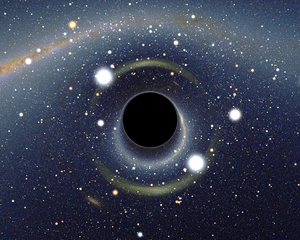
Black Holes are not as voracious as they are made out to be

August 30, 2013

I don’t understand the physics of black holes.

But I certainly had the impression that the relentless pull of gravity meant that they ruthlessly devoured everything in their paths and that they were bottomless pits. Everything beyond the event horizon – by definition – was entirely unknown and the stuff – possibly – of new Universes.

Not so – according to NASA. “Contrary to what some people think, black holes do not actually devour everything that’s pulled towards them. Sgr A* is apparently finding much of its food hard to swallow.” And so the black hole spits out what it can’t swallow!

Q. D. Wang, M. A. Nowak, S. B. Markoff, F. K. Baganoff, S. Nayakshin, F. Yuan, J. Cuadra, J. Davis, J. Dexter, A. C. Fabian, N. Grosso, D. Haggard, J. Houck, L. Ji, Z. Li, J. Neilsen, D. Porquet, F. Ripple, and R. V. Shcherbakov. Dissecting X-ray–Emitting Gas Around the Center of Our Galaxy. Science, 2013; 341 (6149): 981-983 DOI:10.1126/science.1240755

NASA Press Release:

New Chandra images of Sagittarius A* (Sgr A*), which is located about 26,000 light-years from Earth, indicate that less than 1 percent of the gas initially within Sgr A*’s gravitational grasp ever reaches the point of no return, also called the event horizon. Instead, much of the gas is ejected before it gets near the event horizon and has a chance to brighten, leading to feeble X-ray emissions.

These new findings are the result of one of the longest observation campaigns ever performed with Chandra. The spacecraft collected five weeks’ worth of data on Sgr A* in 2012. The researchers used this observation period to capture unusually detailed and sensitive X-ray images and energy signatures of super-heated gas swirling around Sgr A*, whose mass is about 4 million times that of the sun.

“We think most large galaxies have a supermassive black hole at their center, but they are too far away for us to study how matter flows near it,” said Q. Daniel Wang of the University of Massachusetts in Amherst, who led of a study published Thursday in the journal Science. “Sgr A* is one of very few black holes close enough for us to actually witness this process.”

The researchers found that the Chandra data from Sgr A* did not support theoretical models in which the X-rays are emitted from a concentration of smaller stars around the black hole. Instead, the X-ray data show the gas near the black hole likely originates from winds produced by a disk-shaped distribution of young massive stars.

“This new Chandra image is one of the coolest I’ve ever seen,” said co-author Sera Markoff of the University of Amsterdam in the Netherlands. “We’re watching Sgr A* capture hot gas ejected by nearby stars, and funnel it in towards its event horizon.”

To plunge over the event horizon, material captured by a black hole must lose heat and momentum. The ejection of matter allows this to occur.

“Most of the gas must be thrown out so that a small amount can reach the black hole”, said Feng Yuan of Shanghai Astronomical Observatory in China, the study’s co-author. “Contrary to what some people think, black holes do not actually devour everything that’s pulled towards them. Sgr A* is apparently finding much of its food hard to swallow.”

The gas available to Sgr A* is very diffuse and super-hot, so it is hard for the black hole to capture and swallow it. The gluttonous black holes that power quasars and produce huge amounts of radiation have gas reservoirs much cooler and denser than that of Sgr A*. ….

For Chandra images, multimedia and related materials, visit: http://www.nasa.gov/chandra

A box of his own

August 30, 2013

The Ghosts of Iraq are still stalking the British House of Commons and David Cameron – much to his own dismay – is not as ruthless or as devious as Tony Blair. His Syria dossier was not as sexed-up as Blair’s Iraq dossier.

But President Obama’s dilemma in Syria is a box entirely of his own making.

Red line box

Nature Editorial – All change but no change (because the heat is hidden)

August 29, 2013

A very peculiar Nature Editorial.

First they confirm that there has been a hiatus in global temperature.Then they report on recent papers trying to invoke ocean cycles and their impact on global temperatures. This is followed by a claim that this does not explain the “missing heat” but fail to say that there may be no “missing heat” at all if global warming has slowed-down or ceased. By assuming that there must be “missing heat” they then claim that the underlying science has not changed. The key point of course is that if ocean cycles can cause global cooling they can also cause global warming. Natural processes can then well explain all the temperature observations of the last 150 years. Carbon dioxide concentration in the atmosphere and the 5% of global emission that is man-made emissions of carbon dioxide become irrelevant and unnecessary to the explanations for changes to climate.

“Hidden heat” that cannot be found is just a convenient excuse to avoid having to scrap most of the existing climate models. And what Nature fails to mention is that if there is no “missing heat” then the entire edifice that is the man-made global warming hypothesis comes crashing down.

Nature: Hidden heat

Nature 500, 501 (29 August 2013), doi:10.1038/500501a

This week, Nature publishes a study online suggesting that a recent cooling trend in the tropical Pacific Ocean can explain the current hiatus in global warming. Authored by a pair of scientists at the Scripps Institution of Oceanography in La Jolla, California, the paper does not say why the Pacific seems to have entered a prolonged ‘La Niña’ phase, in which cooler surface waters gather in the eastern equatorial Pacific. It is also silent on where the missing heat is going. But it does suggest that this phenomenon — affecting as little as 8% of Earth’s surface — could temporarily counteract the temperature increase expected from rising greenhouse-gas emissions

(Y. Kosaka and S.-P. Xie  Nature, http://dx.doi.org/10.1038/nature12534; 2013).

Previous modelling studies have linked the pause to La-Niña-like conditions that have prevailed since 1999, suggesting that heat that would otherwise go into the atmosphere is getting buried deeper in the ocean. And scientists at the National Center for Atmospheric Research in Boulder, Colorado, have a study in the press indicating that decades in which global air temperature rises rapidly — including the 1980s and 1990s — are associated with warmer temperatures in the tropical Pacific, as exemplified by La Niña’s opposite effect, El Niño (G. A. Meehl et al. J. Climate http://doi.org/nkw; 2013). The Scripps researchers also confirmed that El-Niño-like conditions can boost global temperatures.

Scientists seem to be homing in on an important lever in the climate system. And none too soon. Although a prolonged hiatus in warming does not necessarily contradict prevailing theory, this one came as a surprise and has been used to discredit the climate-science community. The story will probably not end there. Scientists know that the Sun has been in a prolonged solar minimum for several years, which means less incoming energy, and there may yet be a role for sunlight-blocking aerosols — human pollution and volcanic ash — and other factors in the hiatus. But at least a better explanation of the climate system is beginning to take shape.

All of this comes as the Intergovernmental Panel on Climate Change (IPCC) prepares to release the first instalment of its fifth assessment report. The hiatus in warming is at the centre of an ongoing debate about ‘equilibrium climate sensitivity’, which is the amount of warming that would be expected over the long term owing to a doubling of atmospheric carbon dioxide levels. Several papers have assessed the most recent data and conclude that the climate may not be as sensitive to greenhouse gases as was previously thought. The latest draft of the IPCC summary for policy-makers accounts for this — just. It suggests a likely climate sensitivity of 1.5–4.5 °C, compared with a range of 2–4.5 °C in the IPCC’s last assessment report.

Some argue that recent temperature trends show that the climate problem is less urgent. One can only hope that this is so, and scientists will continue to probe the matter. But policy-makers would be foolhardy to think that the danger has receded. Although scientists understand the basic physics, nobody can know how the numbers will turn out, as shown by the various temperature projections. Plenty of other lines of evidence, including palaeoclimate data and modern modelling experiments, support the higher end of these.

Ultimately, the decision over how to characterize climate sensitivity will fall to government officials who will approve — under the watchful eye of scientists — the latest IPCC documents in Stockholm next month. Whatever their decision, the underlying science has not changed.

This 2007 ClimateGate quote seems timely:

“What if climate change appears to be just mainly a multidecadal natural fluctuation? They’ll kill us probably…”

[Via Barry Woods; Tommy Wills, Swansea University to the mailing list for tree-ring data forum ITRDB, 28 Mar 2007]

A brown and white panda

August 29, 2013

A brown panda named Qizai in a wildlife research center in northwest China’s Shannxi Province. (Photo: CCTV)

http://news.xinhuanet.com/english/china/2013-08/25/c_132660293.htm

UPI:

The four-year-old male, named Qizai (“Little Seven”), is one of only five brown pandas discovered since 1985 and the only one in captivity, China’s state-run Xinhua news agency reported Monday.

Qizai was first spotted as a two-month-old cub in a mountainous region of Shaanxi Province — the only known area to contain brown pandas — nearly four years ago. Around 20 percent of China’s total panda population, around 300 animals, live in the region, researchers said.

One expert who has been conducting research in the region for 20 years suggests brown pandas may be a result of a recessive gene and inbreeding.

“The habitat in the Qinling Mountains is seriously fragmented and the population density is very high,” Tiejun Wang, a spatial ecologist at the University of Twente in Enschede, the Netherlands, was quoted as saying by the journal Nature. “The brown pandas could be an indication of local inbreeding.”


Noted in passing 29th August 2013 – Silly season 2013 comes to an end

August 29, 2013

The varied headlines on all fronts today tell their tale. Silly season 2013 has come to an end.

David Cameron’s rush to war got a slap in the face: Back from the brink: PM forced to retreat over Syria.

Barack Obama does not want to be seen to be following in Bush’s footsteps: U.S. Facing Test on Proof to Back Taking Action on Syria

In Australia Kevin Rudd is desperate to join the big table: Rudd demands ‘robust’ response to Syrian chemical attack

Angela Merkel is beginning to campaign seriously for the German elections: Greece should never have been allowed to join euro: Merkel

Finally the main stream media are realising that global warming stopped some time ago: Global warming slowdown linked to cooler Pacific waters

Sweden’s equivalent of Eton, the elite Lundsberg school, was closed down by the authorities after some vicious ragging incidents: Swedish boarding school shut down after bullying claims

The gloss on the surface of Incredible India is getting badly tarnished: Economix: India’s Economic Crisis

We are all Martians: Earth life ‘may have come from Mars’

The oldest archaeological sites in the Amazon region: 10,000-year-old remains of settlements are unearthed in Bolivia

A clash between righteous do-gooders: Wind farms are a breach of human rights says UN. No, really.

Even articles in Nature are showing that the IPCC’s reliance on climate models rather than real observations is beginning to look particularly inane: Overestimated global warming over the past 20 years

Surprise! Surprise! Forensic Experts May Be Biased by the Side That Retains Them

Tony Blair continues his money-grubbing ways: TONY BLAIR EN MISSION POUR LA PAIX… SUR UN YACHT

A late spring and a short summer has led to Arctic ice melting much slower than for many years: IS ARCTIC SEA ICE REBOUNDING?

Mathematical turbulence at Ege University, Turkey

August 28, 2013

Back in June I had reported on the strange case at Ege University

Retraction Watch reports on the retraction of a paper by a Turkish mathematician for plagiarism. The author did not agree with the retraction.

But what struck me was the track record of this amazing Assistant Professor at Ege University.

Ahmet Yildirim Assistant Professor, Ege University, Turkey

Editorial Board Member of International Journal of Theoretical and Mathematical Physics

  • 2009       Ph.D      Applied Mathematics, Ege University (Turkey)
  • 2005       M.Sc      Applied Mathematics, Ege University (Turkey)
  • 2002       B.Sc        Mathematics, Ege University (Turkey)

Since 2007 he has a list of 279 publications!

That’s an impressive rate of about 50 publications per year. Prolific would be an understatement.

But the link to his 279 publications is now broken which now only goes to a blank page.

Upon a little further investigation it became clear that not only does he no longer work at Ege University but that his PhD has also apparently been revoked.

Paul Wouters writes:

In mathematics and computer science, Ege university has produced 210 publications (Stanford wrote almost ten times as much). Because this is a relatively small number of publications, the reliability of the ranking position is fairly low, which is indicated by a broad stability interval (an indication of the uncertainty in the measurement). Of the 210 Ege University publications, no less than 65 have been created by one person, a certain Ahmet Yildirim. This is an extremely high productivity in only 4 years in this specialty. Moreover, the Yildirim publications are indeed responsible for the high ranking of Ege University: without them, Ege University would rank around position 300 in this field. This position is therefore probably a much better reflection of its performance in this field. Yildirim’s publications have attracted 421 citations, excluding the self-citations. Mathematics is not a very citation dense field, so this level of citations is able to strongly influence both the PP(top10%) and the MNCS indicators.

An investigation into Yildirim’s publications has not yet started, as far as we know. But suspicions of fraud and plagiarism are rising, both in Turkey and abroad. One of his publications, in the journal Mathematical Physics, has recently been retracted by the journal because of evident plagiarism (pieces of an article by a Chinese author were copied and presented as original). Interestingly, the author has not agreed with this retraction. A fair number of Yildirim’s publications have been published in journals with a less than excellent track record in quality control.  ….. 

How did Yildirim’s publications attract so many citations? His 65 publications are cited by 285 publications, giving in total 421 citations. This group of publications has a strong internal citation traffic. They have attracted almost 1200 citations, of which a bit more than half is generated within this group. In other words: this set of publications seems to represent a closely knit group of authors, but they are not completely isolated from other authors. If we look at the universities citing Ege University, none of them have a high rank in the Leiden Ranking with the exception of Penn State University (which ranks at 112) that has cited Yildirim once. If we zoom in on mathematics and computer science, virtually all of the citing universities do not rank highly either, with the exception of Penn State (1 publication) and Gazi University (also 1 publication). The rank position of the last university, by the way, is not so reliable either, as indicated by the stability interval that is almost as wide as in the case of Ege University.

And a commenter at Poul Waters site adds:

kuantumcartcurt Says:
July 4, 2013 at 12:30 PM

Thanks for this detailed post. It seems that Ahmet Yıldırım’s PhD was recently revoked since it was a direct translation of a book of Ji-Huan He who is also quite a questionable figure in academia (http://elnaschiewatch.blogspot.com.es/2011/02/ji-huan-he-loses-ijnsns.html). It also seems that he was dismissed from the university (again without any official statement).

Here is Ahmet Yıldırım’s PhD ‘thesis’:https://docs.google.com/file/d/0BxUoSj9K4YfeNDIwUUZGRWU1R2c/edit?pli=1
And this is Ji-Huan He’s book: https://docs.google.com/file/d/0BxUoSj9K4YfeZmZvdGpDQUVWY0E/edit?pli=1

It would seem that Ege University is carrying out some house cleaning but neither the University nor the International Journal of Theoretical and Mathematical Physics is saying anything.

Global warming hiatus confirmed – now the Pacific is to “blame”

August 28, 2013

Speculation is rife as to why there has been no global warming for the last 17 or 18 years. Some of this speculation is by those who believe the science is settled and is merely to try and “save” the discredited climate models used by the IPCC. Others – the real scientists – actually use it as an opportunity to investigate something that is not very well understood at all.

The lack of warming has been “blamed” on a variety of reasons. Some have blamed mysterious heat storage in the deep ocean where the heat has actually been transported from and through colder temperatures to higher temperatures! Others say that aerosols and soot in the atmosphere – due to pollution – have distorted the warming trend by hiding the sun. Some few point out that the models really don’t know how to treat clouds and moisture in the atmosphere and what actually drives cloud formation is still an unknown unknown. And there are those – like me – who put it down to natural variation which in turn is ultimately driven – via many still unknown mechanisms – by the Sun.

The El Nino-Southern Oscillation, has a major impact on global climate and is usually acknowledged but a new paper in Nature now suggests that the lack of warming is due to the Pacific Decadal Oscillation that lasts for a much longer period of time (15 – 30 years).  There may well be some influence of the Pacific Decadal Oscillation and no doubt it should be investigated further. But it does first need an acknowledgement that there is something to be investigated. As the authors begin “Despite the continued increase in atmospheric greenhouse gas concentrations, the annual-mean global temperature has not risen in the twenty-first century, challenging the prevailing view that anthropogenic forcing causes climate warming”.

Yu Kosaka & Shang-Ping Xie, Recent global-warming hiatus tied to equatorial Pacific surface cooling, Nature Letter (2013),

doi:10.1038/nature12534

Despite the continued increase in atmospheric greenhouse gas concentrations, the annual-mean global temperature has not risen in the twenty-first century, challenging the prevailing view that anthropogenic forcing causes climate warming. Various mechanisms have been proposed for this hiatus in global warming, but their relative importance has not been quantified, hampering observational estimates of climate sensitivity. Here we show that accounting for recent cooling in the eastern equatorial Pacific reconciles climate simulations and observations. We present a novel method of uncovering mechanisms for global temperature change by prescribing, in addition to radiative forcing, the observed history of sea surface temperature over the central to eastern tropical Pacific in a climate model. Although the surface temperature prescription is limited to only 8.2% of the global surface, our model reproduces the annual-mean global temperature remarkably well with correlation coefficient r = 0.97 for 1970–2012 (which includes the current hiatus and a period of accelerated global warming). Moreover, our simulation captures major seasonal and regional characteristics of the hiatus, including the intensified Walker circulation, the winter cooling in northwestern North America and the prolonged drought in the southern USA. Our results show that the current hiatus is part of natural climate variability, tied specifically to a La-Niña-like decadal cooling. Although similar decadal hiatus events may occur in the future, the multi-decadal warming trend is very likely to continue with greenhouse gas increase.