China WHO?

March 26, 2020

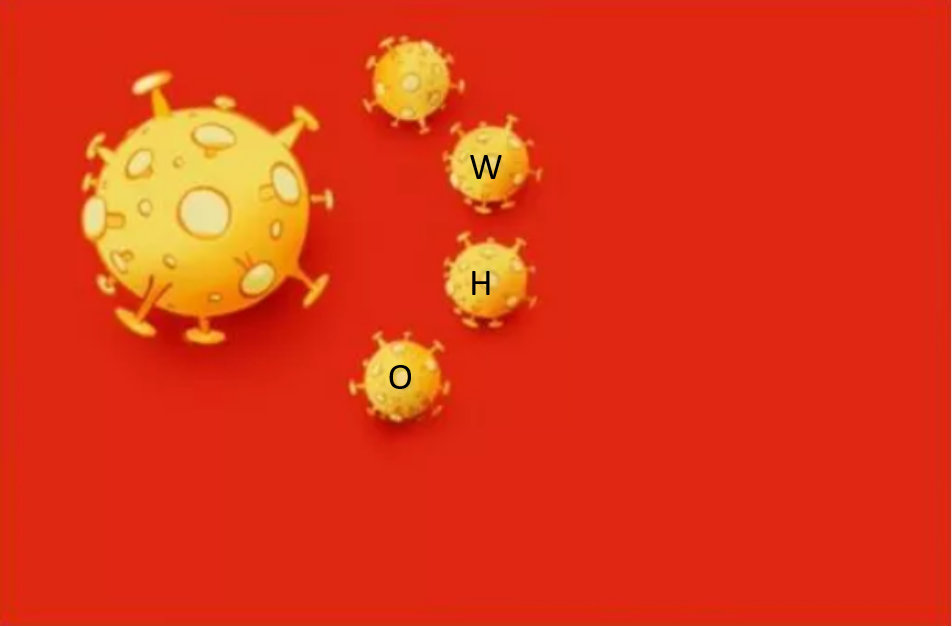
Maybe not politically correct to give the virus a nationality, ….

…… but China, aided and abetted by the WHO, certainly suppressed information which could have slowed its progress.

(original image from Denmark’s Jyllands-Posten)


Sweden’s voluntary lock-down may be able to flatten the curve

March 26, 2020

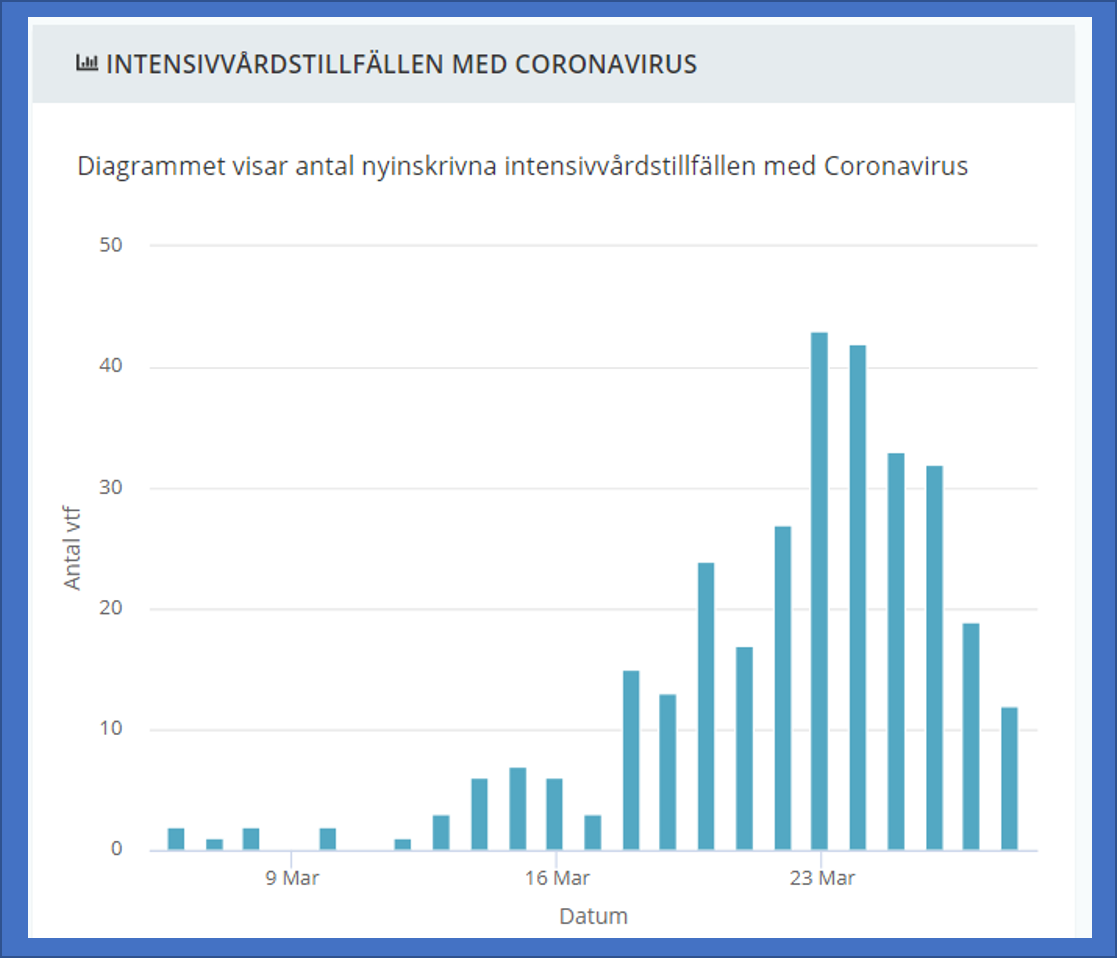
Sweden has been following a voluntary lock-down for some time now. Those who feel ill (with a cold or influenza-like symptoms) have been asked to stay at home. Those over 70 have been asked to self-isolate, stay home and only go out if absolutely necessary. Formally, only public gatherings of over 500 are not permitted. People have been asked to be socially distant but there are no compulsive measures. The strategy is absolutely reliant upon people being responsible. Of course, there are cases of irresponsible young people. However, bearing in mind that the areas of critical judgement in the human brain are not fully developed till the age of 25, this is not too surprising. Mass testing for the virus is not being carried out. Only those who clearly show symptoms and require hospital treatment are tested. Large scale testing of hospital staff and health care workers is being done. So there is no clear number of how many are actually infected. The only reliable statistics are the number of those hospitalized, those in intensive care and those who have died. Of course, the markets have crashed and small businesses are dying. Travel services, restaurants and all the service industries are in deep trouble. Big companies are sending workers home and declaring redundancies at an alarming rate.  Economic support packages are being announced every few days.

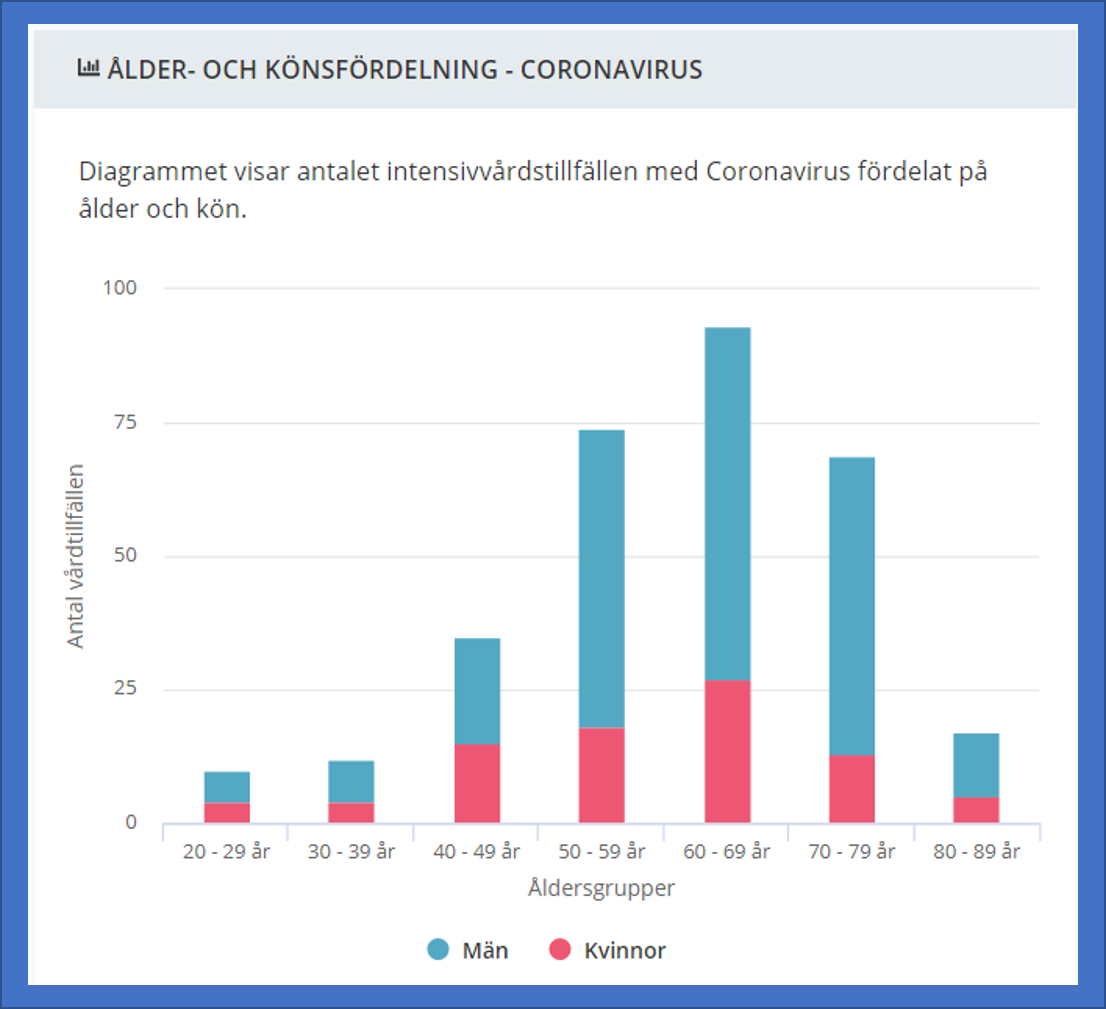
Anders Tegnell is the chief epidemiologist at the Public Health Agency and is on the news every day. To me he has been the face of common sense, even if many “influencers”, some in the media and prominent celebrities have been crying out for draconian measures to be applied (always it seems, to others). Saint Greta has been starved of attention and has just dramatically announced that she has probably been infected with Covid-19 but is recovering. (!!!??). It is not yet clear if the relatively low-key Swedish approach has worked and it will be some time before this real crisis is over. It is quite interesting that Sweden takes the common sense approach when dealing with a real crisis but becomes hysterical when dealing with imaginary crises. Virus smart but climate dumb. However, every day that goes by without the number infected increasing sharply (“day zero” when exponential growth takes off) means that the time baseline has been extended and the potential peak has been reduced. It is thought that it needs 80 days after “day zero” for the virus to have run its course.

Anders Tegnell: “Contrary to many other countries, like Great-Britain or Germany, the number of infections in Sweden has not yet started to incline dramatically, despite the fact that 36 Swedes have already died of covid-19. No region, not even Stockholm where the virus has spread considerably, has already experienced their ‘day zero’. Everything lies still ahead of us. Moreover, day zero will most likely not arrive simultaneously in the different Swedish regions.”

As of writing there have been 44 deaths in Sweden attributed to the virus and nearly all had some other underlying conditions.

The voluntary approach can only work if the sense of civic responsibility is strong. Civic responsibility runs high here. I note that it had to be enforced in China where they seem to be coming out of the crisis. It also runs voluntarily very high in S Korea and Japan where the curve does seem to have been flattened.

At the personal level, we have been “social distancing” for more than a week. Our lives are somewhat discommoded. It isn’t quite warm enough to be out on the deck. Much needed and necessary surgery is inevitably being delayed since intensive care places are limited. We don’t have the usual network of relatives or friends to run our errands or do our shopping for us but I remain quite hopeful that common sense will prevail.


If a virus is not alive, how does it die?

March 24, 2020

You can’t strictly kill a virus since it is not alive.

Outside living cells, some viruses remain potentially active for thousands of years. A virus recovered from permafrost was able to infect an amoeba. Influenza and corona viruses are thought to stay active for a few hours or days. But the smallpox virus can remain active for years

These days there are many reports about how long the coronavirus remains “alive” or “viable” or “active” on surfaces.  For example this is an abstract of a new paper (yet to be published):

Aerosol and surface stability of HCoV-19 (SARS-CoV-2) compared to SARS-CoV-1

Abstract
HCoV-19 (SARS-2) has caused >88,000 reported illnesses with a current case-fatality ratio of ~2%. Here, we investigate the stability of viable HCoV-19 on surfaces and in aerosols in comparison with SARS35 CoV-1. Overall, stability is very similar between HCoV-19 and SARS-CoV-1. We found that viable virus could be detected in aerosols up to 3 hours post aerosolization, up to 4 hours on copper, up to 24 hours on cardboard and up to 2-3 days on plastic and stainless steel. HCoV-19 and SARS-CoV-1 exhibited similar half-lives in aerosols, with median estimates around 2.7 hours. Both viruses show relatively long viability on stainless steel and polypropylene compared to copper or cardboard: the median half-life estimate for HCoV-19 is around 13 hours on steel and around 16 hours on polypropylene. Our results indicate that aerosol and fomite transmission of HCoV-19 is plausible, as the virus can remain viable in aerosols for multiple hours and on surfaces up to days.

But then I also read that viruses are not “alive”. They are just a bunch of chemicals, non-bacterial pathogens,  which, by unknown mechanisms, just happen to have

  1. long molecules of DNA or RNA that encode the structure of the proteins by which the virus acts;
  2. a protein coat, the capsid, which surrounds and protects the genetic material; and
  3. in some cases an outside envelope of lipids

Scientific American:

For about 100 years, the scientific community has repeatedly changed its collective mind over what viruses are. First seen as poisons, then as life-forms, then biological chemicals, viruses today are thought of as being in a gray area between living and nonliving: they cannot replicate on their own but can do so in truly living cells and can also affect the behavior of their hosts profoundly. The categorization of viruses as nonliving during much of the modern era of biological science has had an unintended consequence: it has led most researchers to ignore viruses in the study of evolution. Finally, however, scientists are beginning to appreciate viruses as fundamental players in the history of life. …..

What exactly defines “life?” A precise scientific definition of life is an elusive thing, but most observers would agree that life includes certain qualities in addition to an ability to replicate. For example, a living entity is in a state bounded by birth and death. Living organisms also are thought to require a degree of biochemical autonomy, carrying on the metabolic activities that produce the molecules and energy needed to sustain the organism. This level of autonomy is essential to most definitions.

Viruses, however, parasitize essentially all biomolecular aspects of life. That is, they depend on the host cell for the raw materials and energy necessary for nucleic acid synthesis, protein synthesis, processing and transport, and all other biochemical activities that allow the virus to multiply and spread. One might then conclude that even though these processes come under viral direction, viruses are simply nonliving parasites of living metabolic systems. But a spectrum may exist between what is certainly alive and what is not.

A rock is not alive. A metabolically active sack, devoid of genetic material and the potential for propagation, is also not alive. A bacterium, though, is alive. Although it is a single cell, it can generate energy and the molecules needed to sustain itself, and it can reproduce. But what about a seed? A seed might not be considered alive. Yet it has a potential for life, and it may be destroyed. In this regard, viruses resemble seeds more than they do live cells. They have a certain potential, which can be snuffed out, but they do not attain the more autonomous state of life. Another way to think about life is as an emergent property of a collection of certain nonliving things. Both life and consciousness are examples of emergent complex systems. They each require a critical level of complexity or interaction to achieve their respective states. A neuron by itself, or even in a network of nerves, is not conscious—whole brain complexity is needed. Yet even an intact human brain can be biologically alive but incapable of consciousness, or “brain-dead.” Similarly, neither cellular nor viral individual genes or proteins are by themselves alive. The enucleated cell is akin to the state of being braindead, in that it lacks a full critical complexity. A virus, too, fails to reach a critical complexity. So life itself is an emergent, complex state, but it is made from the same fundamental, physical building blocks that constitute a virus. Approached from this perspective, viruses, though not fully alive, may be thought of as being more than inert matter: they verge on life.

But how then do they die? Clearly there has to be a chemical change. Is it just a case of going from active to inactive as chemistry changes?

And that begs the question as to what that chemical change might be.


Real threats have been ill-served by the imaginary threat of fake climate crises

March 23, 2020

The utter inanity of the clamor about an imaginary climate crisis becomes clear as a real crisis unfolds.

For forty years now the doomsayers have been obsessed with the imminent catastrophe that human induced climate change (global warming due to human made carbon emissions) might bring. For the last 10 – 15 years it has become a mass delusion that eliminating the 5% of global carbon dioxide emissions that humans produce would save the planet from a certain disaster. It has been a manufactured, fake crisis which has unnecessarily consumed massive resources for no return.

But worse than the consumption of resources, the world has been diverted from addressing real threats to tilting at the imaginary windmills of “man-made climate change”.

The Cambridge Project states that the “greatest threats” to the human species are man-made; they are artificial intelligence, global warming, nuclear war, and rogue biotechnology. The Future of Humanity Institute also states that human extinction is more likely to result from anthropogenic causes than natural causes. – Wikipedia

The so-called think tanks put the risk, by 2100, of catastrophe by man-made global warming at around 20%. The Future of Humanity Institute put the risk due to an engineered pandemic at just 2% but then put the risk of a natural pandemic some 40 times less at 0.05%.

The obsession with population explosion has gone. It is population implosion which is now the greater risk. The world downgraded the risk of catastrophic pandemics and instead obsessed over normal variations of weather. The risks of famine were put to bed by the continuing green revolution. The obsession with “peak” oil has abated as fracking and methane hydrates have shown that there is little risk of running out of oil and gas. We have prepared ourselves for an imaginary sea-level rise (which is actually at a few mm/year and no different to the rate of change prevalent since the last ice age) but have made no preparations for a natural pandemic. We have no real preparations for a super-volcano eruption triggering a new ice-age. We have spent billions investigating model forecasts of “climate change” effects but have provided no great incentives for developing new antibiotics to handle multi-resistant bacteria.

The Covid-19 coronavirus has spread partly due to the Chinese government’s attempt to hide it, and certainly by the WHO’s eagerness to follow the Chinese narrative, but the real take-away is that no country was at all prepared for this pandemic. This has now become a real threat to the world order as we know it. It could decimate jobs and production for a long time to come. Savings could vanish. Maybe the virus itself could not have been avoided, but we could have been better prepared to curb its spread if we had not been so obsessed by imaginary threats.


The Corona Revels: Lock up the weak so the strong can party

March 22, 2020

I suppose it is a valid strategy.

Lock up all the old and the weak so that the young and strong can continue to party.


Corona Revels


Where Malaria is, Covid-19 is not (so far)

March 20, 2020

Just coincidence that countries with most malaria have least Covid-19?

Just coincidence that antimalarial drugs (such as hydroxychloroquine) seem to have very good effects in eliminating the Covid-19 virus?

Perhaps. But it sounds to me like good news.

An Effective Treatment for Coronavirus (COVID-19)

Summary

Recent guidelines from South Korea and China report that chloroquine is an effective antiviral therapeutic treatment against Coronavirus Disease 2019.  Use of chloroquine (tablets) is showing favorable outcomes in humans infected with Coronavirus including faster time to recovery and shorter hospital stay.  US CDC research shows that chloroquine also has strong potential as a prophylactic (preventative) measure against coronavirus in the lab, while we wait for a vaccine to be developed.  Chloroquine is an inexpensive, globally available drug that has been in widespread human use since 1945 against malaria, autoimmune and various other conditions.  

Chloroquine: C18H26ClN3


100 days and 4,000 deaths later in China ….

March 19, 2020

It is yet to be confirmed if this is just a quirk of numbers or whether the outbreak of coronavirus has truly been brought under control. Even if it has, China has used brutal and draconian measures to control the infection.

The question is whether Europe and the US are being smarter?

From the New York Times:

China’s National Health Commission (NHC) in its daily report said that no new domestically transmitted cases of the novel coronavirus disease were reported on the Chinese mainland on Wednesday. However, a total of 34 new COVID-19 cases were reported on the Chinese mainland on Wednesday, all of which were from those arriving from abroad, marking a sharp increase, it said. 

Of the 34 newly imported cases, 21 were reported in Beijing, nine in Guangdong Province, two in Shanghai, one in Heilongjiang Province and one in Zhejiang Province, the NHC said.

The overall confirmed cases on the mainland had reached 80,928 by the end of Wednesday. This included 3,245 people who died of the disease 7,263 patients and 70,420 patients discharged after recovery.

The NHC said the number of imported cases in China rose to 189 with 34 confirmed cases from the people arriving from abroad.

China has reported a total of 80,928 confirmed cases of the COVID-19, of which 3,245 have died and 70,420 patients were discharged after treatment.


Coronavirus: Flight first, but now comes fight

March 17, 2020

Today all 70+ in Sweden were advised to stay home. Many jobs are being threatened or already lost. But I also read today that manufacturing in China has restarted and is well on its way back. Two of the specialist corona patient hospitals that were opened in China have now been shut down for lack of patients. Trials of proposed vaccines have started in a number of countries. Existing medicines  which seem promising for supporting the immune system are being tested with infected patients. Some results in Australia have shown very good effects.

In almost all European countries the initial panic response was/is driven primarily, not in the first instance for the saving of lives already under threat, but for the avoidance of the health care systems being overwhelmed. Flatten the curve has become the guiding strategy. In the traditional sense this trying to run away or hide away and avoid the virus describes a classic flight response.

It strikes me that humanity as an organism shows the flight/fight response but initial flight is often to be able to marshal resources so as to fight again.

The initial flight reaction is now shifting to fight.

Flatten the Curve

I expect (perhaps a little optimistically) the world is shifting from flight to fight. But I think human resilience will not allow us to cower and hide and not fight back. That fight involves many battles on many fronts:

  • Modifying use or application of existing drugs
  • Developing new designer-vaccines
  • Increasing ICU places with access to respirators
  • Increasing availability of respirators
  • Improving treatment therapies to suppress the worst side-effects of the virus
  • ……..

It is always dangerous to be too optimistic too early. There are going to be many more deaths. I am sure we have a long recession ahead – perhaps six months. But it is not just doom and gloom.

There is a lot of gloom ahead but it is not doom.


Every ignoramus has become an expert on Covid-19 and epidemics

March 16, 2020

Every radio commentator has, overnight, become an expert. I can no longer listen for very long to radio news (and during the day I usually listen in the background to Swedish, UK and some US news broadcasts). Not only has every journalist become an expert, but every doctor, every politician and every member of the general public has also become an expert. When a journalist interviews a physician it is always about resources being insufficient. When a journalist interviews a politician it is always about why the politician got it wrong. Every posturing politician either attacks or supports the government actions depending upon whether his party is in power or not. Less than 10% of any broadcast is about reporting the latest news. The rest is inevitably taken up with opposing somebody. Even the “human interest” reports are focused on the human interest being a complaint or criticism of some kind.

So my background radio listening is now self-confined to the music channels (BBC Radio 3 or Swedish P2).

Fortunately, I don’t watch too much TV. TV commentators are a few orders of magnitude worse than their Radio counterparts. I tried last night. It took me less than 30 seconds to switch away from CNN and Fox, but BBC World News lasted over a minute. Rapport and Aktuellt were a little better but not by much.

The opinion columns in the “big” newspapers are not a lot better. The New York Times carried an article of some 2,000 words on Saturday entitled: How to Protect Older People From the Coronavirus.

I am an older person but this article is 2,000 words of drivel, signifying nothing. According to this nonsense verbiage, the way to protect older people consists of the following pearls of wisdom:

  • Familiarize yourself with guidelines and follow them.
  • Cancel nonessential doctor’s appointments if you can.
  • Beware of social isolation.
  • Have a talk with home health aides.
  • Bar visits to nursing homes.
  • Stay active, even in a pandemic.

There is not just one strategy, applicable to every population group or to every country, to limit infection and minimize fatalities. I take it on faith that all governments in power do have that as their objective. I am also taking on faith that government decisions to handle this crisis are themselves made in good faith with the best information to hand. However viruses are not so well understood that even all experts are of one mind. Even our most expert experts, whether on viruses or epidemics, are far from knowing everything.

We don’t even know whether viruses are living things or just a bunch of chemicals accumulated by chance. What we do know from the expert community (represented by the WHO) is

On 31 December 2019, WHO was informed of cases of pneumonia of unknown cause in Wuhan City, China. A novel coronavirus was identified as the cause by Chinese authorities on 7 January 2020 and was temporarily named “2019-nCoV”.

On 30 December 2019, three bronchoalveolar lavage samples were collected from a patient
with pneumonia of unknown etiology – a surveillance definition established following the
SARS outbreak of 2002-2003 – in Wuhan Jinyintan Hospital. Real-time PCR (RT-PCR) assays
on these samples were positive for pan-Betacoronavirus. Using Illumina and nanopore
sequencing, the whole genome sequences of the virus were acquired. Bioinformatic
analyses indicated that the virus had features typical of the coronavirus family and belonged
to the Betacoronavirus 2B lineage. Alignment of the full-length genome sequence of the
COVID-19 virus and other available genomes of Betacoronavirus showed the closest
relationship was with the bat SARS-like coronavirus strain BatCov RaTG13, identity 96%.

The best I can do, I think, for myself and the community is to rely on common sense.

  • Minimize my chances of being infected.
  • Minimize chances of my unknowingly infecting someone else.
  • Avoid hoarding.


The coronavirus dilemma lies between developing mass immunity and coping with the severe cases

March 15, 2020

As a layman I am still trying to understand the thinking which is leading to the political decisions surrounding the different country responses. This is just thinking aloud to get my own thoughts in order.

It seems to me that whereas it is desirable, in the long term, for as many as possible to be mildly infected (as with mass vaccinations) and develop immunity, right now countries are shutting down their borders because:

  • the infection wave would be uncontrolled, and
  • the number of resulting severe cases would also be uncontrolled, and
  • the health services may not be able to cope

I read that the virus cannot be killed off. It may die out as the human population develops immunity and the virus itself mutates. Most people who are infected, recover and develop immunity. However, for those who are severely affected (maybe 10-15% of those infected) there are no specific treatment therapies yet established. It also seems that most of those severely affected are the elderly or those who are in close contact with sick patients (doctors and nurses). A vaccine, when developed, would effectively spread immunity without the risk of severe effects, especially among those at risk. From the almost panicked reactions of so many countries I suspect that they have access to some worrying data. This is probably that

  • There is no great success in treating the risk groups who are severely infected, and
  • the fatality rate among these high-risk groups is much higher than with conventional influenza.

I discern a 3-Phase strategy being implemented.

  1. The drastic country lock-downs is Phase One. It is not so much an effort to prevent infection but an effort to prevent infection at such a rate that the severe cases are too high for the health services to cope. Probably the lock-downs will last about a month (or two).
  2. This buys time to develop some effective treatment therapies for the severely affected which then leads to Phase Two where infection is allowed to proceed “naturally” but where there is a preparedness for the severely affected.
  3. Phase Three comes when a vaccine is available and mild “natural” infection together with vaccination for those at risk, leads to the virus becoming just another “flu virus”.

The long term goal is then for populations to develop immunity (natural and by vaccination) and to have treatments for the severely infected. There is no goal to eliminate the virus (which is probably impossible).

In my lifetime, I have not seen anything like the response to the Covid-19 response. I was travelling extensively during the SARS and H1N1 and HIV scares, but the responses then were nowhere near as drastic as now. We have aged into the risk group. We travel much less now. Self-isolation causes minor difficulties but is not so very traumatic. Certainly I would prefer to get any immunity from a vaccine rather than an untreatable “natural” infection. A new risk for us, though, is that the serious but “routine” hospital care we rely on will be delayed or postponed.