It’s that time of the year and the young deer are in the garden at dawn. The crocuses (except the yellow ones) don’t stand a chance.
But that’s as it should be and all’s well.
This morning they hung around for almost an hour.



It’s that time of the year and the young deer are in the garden at dawn. The crocuses (except the yellow ones) don’t stand a chance.
But that’s as it should be and all’s well.
This morning they hung around for almost an hour.
Di Caprio spends much of his time posturing as an environmentalist and anti-corruption champion, but I am not very much impressed. He chooses to support whatever is in vogue or “politically correct” or can get publicity, with little exercise of mind. Right now he is in Indonesia protesting against the palm oil industry and the Indonesian government has even had to remind him that he could be deported for anti-government activities.
It now turns out that his 2013 movie “Wolf of Wall Street” was financed from the infamous Malaysian 1MDB fund.
Investigators believe much of the cash used to make the Leonardo DiCaprio film about a stock swindler originated with embattled Malaysian state development fund 1MDB.
Despite the star power of Leonardo DiCaprio and director Martin Scorsese, the 2013 hit movie “The Wolf of Wall Street” took more than six years to get made because studios weren’t willing to invest in a risky R-rated project.
Help arrived from a virtually unknown production company called Red Granite Pictures. Though it had made just one movie, Red Granite came up with the more than $100 million needed to film the sex- and drug-fueled story of a penny-stock swindler.
Global investigators now believe much of the money to make the movie about a stock scam was diverted from a state fund 9,000 miles away in Malaysia, a fund that had been established to spur local economic development.
The investigators, said people familiar with their work, believe this financing was part of a wider scandal at the Malaysian fund, which has been detailed in Wall Street Journal articles over the past year.
The fund, 1Malaysia Development Bhd., or 1MDB, was set up seven years ago by the prime minister of Malaysia, Najib Razak. His stepson, Riza Aziz, is the chairman of Red Granite Pictures.
The 1MDB fund is now the focus of numerous investigations at home and abroad, which grew out of $11 billion of debt it ran up and questions raised in Malaysia about how some of its money was used. …..
…… The story of how “The Wolf of Wall Street” was financed brings together Hollywood celebrities with a cast of characters mostly known for their connections to the Malaysian prime minister. It detours through parties in Cannes and aboard a yacht, and spending on such embellishments as a rare, million-dollar movie poster and an original 1955 Academy Award statuette. ……. Shooting began in August 2012. Three months later, when Mr. DiCaprio had a birthday, the Red Granite principals forged a closer tie to him with an unusual gift: the Oscar statuette presented to Marlon Brando in 1955 for best actor in “On the Waterfront.” People who described the gift said the statuette had been acquired for around $600,000 through a New Jersey memorabilia dealer. …..

Wolf of Wall Street Financing (graphic WSJ)
So, what’s new?
The I-Scan will be on commercial trials later this year and soon airport security will again be almost as unobtrusive and as non-invasive as it was before 9/11.
The brain and its centres for emotion and cognition are increasingly becoming readable. Strong emotions create stronger brain waves and their characteristic brain-wave signatures are being “read” in ever increasing detail. Israeli research – which has been classified as a military secret for some time now – has shown that “malicious intent” has a characteristic signature of brain-waves and that the proximity of actions based on the “malicious intent” are clearly connected to eye and facial movements. The new malicious intention detector (I- Scan) is non-intrusive and is based on detecting and reading the brain waves of passengers as they simply walk through what looks like a door – albeit a rather thick door. The I-Scan is built into the surrounds of the 1 m thick door and identifies anybody who has “malicious intentions” by monitoring the emanations from the limbic centre of the brain – the amygdala.

Within the limbic system is a small structure called the amygdala, a storehouse for emotional memories. It is also the area of the brain responsible for our “fight or flight” reactions, our natural survival instincts.
The brain wave detector built into the I-Scan has to be within 80 cm of the subjects skull and detects a “malicious” signature within 20 ms. Malicious intentions show up clearly as tell-tale brain-waves, and together with facial muscle and eye movements, it can now be determined if the malicious intentions are also connected to actions planned for – or carried out in – a time proximity (about 3 hours) to the present (probability >99.99%). As the passenger walks through the door-scanner, an array of five cameras placed about 2 m ahead read the facial expressions and eye movements of the subject. The scanner has been tested extensively at 3 airports in Israel and now a corporation has been vested with the sole rights for commercialisation of the device. It is unlikely that the Israelis will make the technology generally available but they are expected to licence 2 or 3 US manufacturers.
It is envisaged that everybody would walk through the intention scanner. Only those who triggered the scanner would then need to go through a conventional X-ray scanner. The luggage of these passengers would also need to be X-rayed. Even using a “safe” threshold would allow over 95% of all passengers to effectively experience no delay whatsoever. They would just walk through a door. The other 5% would still have to undergo the usual X-ray scanners and a pat-down. Most of these 5% would be false positives for “malicious intent” but but even these passengers would experience a much speedier process. It would allow the number of security staff at airports to be reduced drastically.
“No hijacker or bomber or terrorist could conceal his intentions from the I-scan” said Dr. Jakob Malinowski of The Israeli University of Bio-Competence. “We have been developing the scanner for almost 10 years and it is now ready to be rolled out. It has already been on trial – secretly, and very successfully – at 3 airports. It is so unobtrusive that nobody has even noticed”.
The scanner is now being produced by Bethmalion-I Ltd., at the rate of about 50 I-Scans per month. Production is being ramped up and it is expected that given a sufficient number of licencees, the I-Scan could have been rolled out to most “friendly” airports within 3 years. It is not expected that the Russians or the Iranians or others considered “unfriendly” will even be allowed to just purchase the I-Scan.
I have always felt that every increase of security is a sort of victory for the terrorists. We will never return to the innocent days when there was no security, but the I-Scan could both simplify the entire security process and provide a much greater level of security. That will begin to redress the balance.
It is expected that the I-Scan will have many other applications (concert halls, football stadiums, government buildings and the like).
Parts of Stockholm and Malmö and Göteborg have now some areas which are dominated by immigrant communities. With multiculturalism (as opposed to multi-ethnic under a common culture) made into a god of political correctness, Sweden has done relatively little to ensure the integration of immigrants into the country. That, in turn, has led to the congregation of immigrants into just a few areas and their subsequent segregation.
Both Denmark and Norway are now using Sweden as the cautionary tale and of how not to manage integration.
The Local: Norway’s integration minister has called for tighter immigration policies – to avoid the country becoming like Sweden.
Sylvi Listhaug used Sweden as the cautionary tale when speaking about recent terror attacks in Europe, as well as a package of asylum reforms due before the Norwegian parliament shortly.
“Many of those who have carried out terror attacks in Europe are born and raised in France and Belgium. It shows how important it is to succeed with integration and that is again connected to how many come to Norway. Therefore a tight immigration policy is important,” she said.
In the aftermath of the terror attacks in Brussels, there has been a debate in Norway on so-called parallel societies and neighbourhoods where the police don’t dare to patrol. Listhaug acknowledged that the problem exists.
“We have foreign fighters who have left Norway and [we have] radical environments. We should not stick our heads in the sand and say that everything is good here. But fortunately we are a long way from the conditions we see in some other countries, for example Sweden,” she told NTB.
The difference between multiculturalism with a fractured society and a multi-ethnic society with a common over-riding culture, is one of my hobby-horses.
A “society” – to be a society – can be multi-ethnic but not multicultural
Of course one can have – if one wishes – many different cultures within different sub-societies in a single geographic area. But if these sub-cultures are not subordinated to a larger culture then the sub-societies cannot – because it becomes a fatal contradiction – make up any larger society. Multiculturalism dooms that geographical area to inevitably be a splintered and fractured “greater” society – if at all.
Strange goings on in the Kingdom. Prince Sultan bin Turki, (who is suing the Saudi government for being kidnapped in 2003) boarded a plane in Paris bound for Cairo, but didn’t arrive. It seems he may have been whisked off to Saudi Arabia. Saudi princes wouldn’t normally interest me greatly but he “is the third Saudi prince seemingly to go missing in suspicious circumstances in the last year”.
The US has made the practice of extraordinary renditions a regular and allowable action against its perceived enemies. Saudi Arabia, it seems, favours royal renditions. The orders may have come from King Salman but are more likely to have come from his son, Deputy Crown Prince Mohammad bin Salman Al Saud, who is also the power behind the throne
…. the BND, the German intelligence agency … portrayed Saudi defence minister and Deputy Crown Prince Mohammed bin Salman … as a political gambler who is destabilising the Arab world through proxy wars in Yemen and Syria. – Wikipedia
The royal dungeons must be filling up.
Staff working for a Saudi prince involved in high-profile legal proceedings against the Saudi government claim he has been taken to Saudi Arabia from Europe against his will.
Prince Sultan bin Turki, who has elaborate 24-hour protection, brought legal action in Switzerland against the Saudi government over a kidnapping in 2003, which he says left him with serious, ongoing medical problems.
On 1 February he and his entourage boarded a Saudi plane in Paris ostensibly bound for Cairo, where he had made plans to visit friends and his father, the Saudi king’s elder brother, who lives there. His aide made reservations at the Kempinski Hotel in Cairo’s Garden City district. But he never arrived.
“There was a Saudi plane with a flight plan to Cairo but the plane did not fly to Cairo,” said an associate of the prince who was with him in Paris. “This airplane had a Saudi flag on the tail. This plane came from the Kingdom.”
The Guardian concludes
Saudi Arabia has long had problems managing disaffected royal family members. In 1975 King Faisal was assassinated by a disaffected prince, but until now there have been no claims that the kingdom might have a concerted campaign targeting defectors and dissidents.
Attempts to contact the three princes directly and members of their entourage received no response. The Saudi government and Moroccan authorities did not reply to requests to comment.
 The FBI has now dropped its lawsuit against Apple because they have managed to crack the encryption on the iPhone of the San Bernardino gunman without Apple’s help. Clearly the Israeli company Cellebrite has succeeded where the FBI’s own experts had failed.
The question now becomes what Apple will do about this demonstrated vulnerability. Perhaps they have already eliminated the weakness in their new models after the iPhone 5S? Added to their latest fiasco with their OS 9.3 download, Apple “technology” is not riding very high right now.
Cellebrite, an Israeli mobile forensic software company, is reportedly helping the FBI get into Syed Farook’s device, according to reports from Reuters and Ynet.
The FBI “has been reportedly using the services of the Israeli-based company Cellebrite in its effort to break the protection on a terrorist’s locked iPhone, according to experts in the field familiar with the case,” Ynet reports. The Verge reached out to Cellebrite yesterday afternoon for comment and hasn’t yet heard back. ……. The company has a sole-source contract with the FBI that it signed in 2013 specifically to help with mobile forensics and data extraction, exactly the task presented by the San Bernardino case. …..
In its notice of intent to sole source, the FBI wrote: “Market research efforts have indicated that the Cellebrite UFED System is the only hand-held, cellular exploitation device worldwide that requires no PC or associated phone drivers.” It continued that the company supports “all major technologies (DMA, CDMA,GSM, IDEN) including smartphone operating systems and PDAs (Apple iPhone, Blackberry, Google Android, Microsoft Mobile, Palm, and Symbian) for over 95 percent of all handset models worldwide.”
………. experts speculate the attack is based on a NAND mirroring technique, which involves essentially copying the flash memory of the device so it can be restored after a lockscreen wipe. US Representative Darrel Issa directly asked FBI Director James Comey about the possibility of using this technique during a House Judiciary hearing last month. The bureau is now well aware of its existence, and there’s no reason to believe it won’t work on the iPhone 5C in question. Notably, this method will run into problems on phones with a Secure Enclave, ruling out any phones beyond the 5S.

UFED-Touch
Some of Cellebrite’s promotional material on their UFED:
With mountains of data being created via mobile device applications daily – Facebook, Twitter, Kik, Snapchat, etc. – forensic examiners need quick and efficient ways to tap into rapidly expanding data sources when a situation demands. Our UFED Pro Series is designed for forensic examiners and investigators who require the most comprehensive, up-to-date mobile data extraction and decoding support available to handle the influx of new data sources.
UFED Ultimate enables the physical, logical and file system extraction of all data and passwords – even deleted – from the widest range of mobile phones, portable GPS devices and tablets. The powerful combination of proprietary boot loaders, UFED Physical Analyzer, UFED Phone Detective and UFED Reader, enables advanced decoding, mobile phone detection, data analysis and reporting every time.
A UK delegation to India to secure jobs in Wales.
Does not need much further comment.
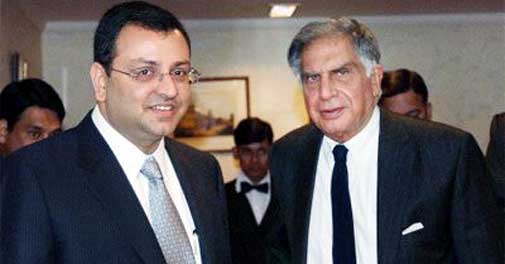
cyrus mistry (chairman) and ratan tata (former chairman) tata sons (image – businesstoday.in)
BBC:
UK union leaders have held talks in India ahead of a Tata Steel board meeting that could decide the fate of thousands of workers. Officials from the Community union had “constructive” talks with Tata Steel representatives in Mumbai, where the board is meeting on Tuesday.
The future of thousands of UK steelworkers is at stake. The Port Talbot plant in south Wales suffered most of the 1,000 job losses announced in January. Unless Tata goes ahead with a turnaround plan, the future of the huge plant could be in doubt.
Roy Rickhuss, general secretary of Community, along with Stephen Kinnock, MP for Aberavon, and Frits van Wieringen, chairman of the Tata Steel European works council, met in Mumbai with senior representatives of Tata Steel ahead of Tuesday’s board meeting.
A Community spokesman said the meeting was “open and constructive”, with the European delegates making the case for Tata to continue to support the UK business.
The myth in the UK that India gained more from British rule than the economic benefits squeezed out of India is addressed very well by Shashi Tharoor in his speech at the Oxford Union.
Dr Shashi Tharoor MP – Britain Does Owe Reparations
Democracy and leadership are incompatible. The “democratic process” does not give value to leadership, only to popularity.
By definition a “full” democracy would have all the electorate determining every little decision by a majority vote. Such a “full” democracy can never work. That would be closer to anarchy than anything else. In practice, therefore, most “democratic” states use the democratic process sparingly and primarily at the time of elections. The elections are meant to choose leaders who will then lead during their term in office. In between elections, decisions are generally to be taken by the anointed leaders in a limited but semi-autocratic fashion. Presidents and Prime Ministers become temporary, limited dictators or kings. But the more “democracy” that is applied, whether through parliamentary limitations or by passing the buck in a referendum, the more heads of government follow the wishes of the majority rather than lead. Street demonstrations, opinion polls, popularity polls, on-line polls, parliamentary votes and referenda are all supposed to be, and taken to be, expressions of the democratic will of the people. Increasingly heads of government are forced to “follow” the wishes of the masses rather than even trying to “lead”. The “democratic process” does not give value to leadership, only to popularity.
Political wolves who once led the human flock have been turned into sheep.
I suspect this is because democracy and leadership are fundamentally incompatible. The greater the level of democracy that is applied, the more a titular leader is required to follow rather than to lead. Corporations know this very well. Shareholders apply democracy only at shareholder meetings. And here they choose their leaders who become dictators for a time. Operations are autocratic and are only democratic as an “act of benevolence”. When the shareholders are not satisfied, they change the dictator but they rarely interfere with the exercise of his authority.
Looking at the titular leaders of the democratic countries today, there is not a leader of any stature anywhere in sight. I take a political leader to be someone with a vision of where he wants to take his country and his people, and who creates the path for doing so. Countries with proportional representation are – inherently – no longer capable of producing a leader of that school. They throw up administrators and conciliators who can compromise between different factions but whose time horizon is only up to the next election. They are congenitally incapable of leading, of creating a path to a new condition that they can envision and communicate. Most European countries now fall into this category. Countries with two party systems can, in theory, produce a political leader who can be a king for his term. In practice they too are constrained by their parliaments and “popularity ratings”.
Among the current bunch the closest to being a leader is Angela Merkel. There is not another “leader” in all of Europe. The democratic limitations have been further compounded by the extra layers of bureaucracy in Brussels, the European Parliament and the European Courts. The EU is not a place to look for leaders any more. Barack Obama could have been a leader but he has been too risk-averse (a euphemism for scared) to lead. Hillary Clinton is an administrator who would not recognise a vision if it was handed to her. Donald Trump is a maverick and there is just a faint chance that he could turn into a leader, though it is highly unlikely. Trudeau in Canada has just won a popularity contest and will not challenge the conventional wisdom of the masses. China has a head of political party who seems to be losing control of even his own party. Narendra Modi in India is too busy with collecting frequent flyer points and PR to have time to lead. I don’t count Putin who is a straight dictator without too much pretense of being democratic. (But he is allowed to, and he does lead.)
Democracy is fundamentally incompatible with leadership. A “full” democracy needs no leaders to make any decisions – only followers to do as they are told to by the majority. My thesis is that there is a balance to be found between democratic principles and operational authoritarianism. You can well apply democratic principles when choosing heads of government. But democracy has to be suspended when providing authority to such heads of government; at least during their time in office and perhaps with some other safeguards. But these chosen heads have to be given the room to become, or grow to become, leaders – if they can. Right now the authority of the chosen heads is so curtailed that they have little chance to be leaders.
I suspect we do need leaders. But they will not appear until the balance is redressed and we recreate the space within which political leaders can exist and operate.
ISIS is shifting to Libya (which is in chaos thanks to the European-led fiasco there), and another 800,000+ refugees can be expected to swamp Italy. And “Europe”, in the shape of the EU, is both unprepared and has no strategy to face that challenge when (not if) it comes.
The Russian intervention has succeeded not only in stopping ISIS advances but turning it into a clear retreat. The Russians have apparently a more determined – and more competent and effective – Syrian army on the ground than the US has with the Iraqi army.

The next target for the Syrian army and Russia after retaking Palmyra could be Raqqa or possibly Deir al-Zour. The Iraqis and the US are making, comparatively, slow progress in retaking Mosul. But at least ISIS is not expanding territory in Iraq.
Once ISIS loses control of Raqqa and Mosul, its remaining territory in Syria and Iraq will be less than the critical mass it needs to sustain operations. Its oil earnings would also dwindle without the physical control of territory.
Just as the US support of opposition groups crippled Assad and allowed a vacuum for ISIS to fill, the European-led fiasco in Libya has only produced chaos with no clear group in authority. This has been exploited by ISIS. For some time now, ISIS has been preparing for shifting from its HQ in Raqqa and has been establishing a new HQ in Sirte (Surt) in Libya. ISIS has already established its version of Sharia rule in the area by carrying out executions and floggings in the town and in the surrounding areas all the way to Ajdabiya. Controlling the Gulf of Sirte would allow the development of new source of oil revenues to make up for the loss of revenues in Iraq and Syria.

The US, Europe and NATO are not doing much at this point in Libya to prevent ISIS from coming in. (There are reports of some special forces and snipers from the US and the UK operating in Libya but there is certainly no concerted effort to stop ISIS). The Russians do not have the same interest to intervene and so Libya is left wide open to ISIS by a bungling Europe. With the current chaos in Libya and the pressure it is facing in Iraq and Syria, I would not be surprised to see ISIS suddenly abandon Syria and expand in Libya. I suspect that the trigger could be the loss of Raqqa.
There are also reports that Boko Haram (which has allied itself with ISIS) is facing pressure from the Nigerian army and is also planning a shift northwards to Libya.
As ISIS expands territory in Libya (and perhaps also Boko Haram), a new wave of refugees into Europe can be expected. The French Defence Minister has estimated that this number could be another 800,000 people. There could be more if Afghans, Iraqis, Syrians and Somalis also start using the route through Libya to Italy. Italy could be swamped this autumn just as Greece has been in the last 6 months.
The Russians have no great objections to additional pressure on Europe. In any case, they would be disinclined to intervene in Libya. The US will not intervene (even though they backed the ill-conceived European adventure to remove Gaddafi). There is no European planning – let alone any strategy – for this scenario. I see no European initiative which can be as decisive in Libya as the Russians have been in Syria.
How is Europe going to stop ISIS in Libya?

“Påskkärringar” 2008 and 1958 (Wikipedia)
It is Easter Sunday, Resurrection Sunday, today. In Sweden it is not possible to avoid painted eggs, chocolate eggs, little girls dressed up as witches, reruns of “Jesus Christ – Superstar” and marathon sessions of “Poirot” and “Wallander”. But I have always been a little doubtful about the way in which poor Judas Iscariot is portrayed. It is not just coincidence that Easter week is a week of mystery.
Without the Resurrection, Christianity could still be a religion and a body of teachings with Jesus as a “great teacher”. But he would not then have demonstrated his divinity. He would not qualify to be the Son of God.
The capture of Jesus, in the plot of the Bible story, is a fundamental and necessary step for the Passion and the Crucifixion and the Resurrection. The role of Judas is utterly crucial to demonstrating the divinity of Jesus, but the Bible story is not very forthcoming as to his motivations. He is a traitor who “fingers” Jesus because Satan enters him. In some Gnostic writings he is a great soul who sacrificed himself for the necessary capture of Jesus – necessary for Jesus’ purposes. Judas was the cashier for the apostles and was entrusted with keeping all their monies. That thirty pieces of silver would be the motive for the betrayal does not convince.
The Bible story is somewhat unsatisfactory also in its details of the death (usually presumed to be suicide) of Judas. From the Bible story he either hanged himself or he fell into a field and burst such that he was disembowelled. The Gospel of Judas – found in the 1970s and dated to 280 AD – is considered a Gnostic text and is not accepted as being part of the Bible. Here Judas has visions of being stoned to death by the other apostles. It is only in the Gospel of Judas that we are told the story from the viewpoint of Judas and that Judas was actually acting on instructions from Jesus.
Consider the timeline of Holy Week in the Bible story.
There are many, many writings by Bible scholars about the whole week. There are many interpretations of the symbolism but there is little controversy about the timeline. It is the timeline itself which makes me think that Judas was murdered. He identifies Jesus for the Sanhedrin on Thursday night and by dawn on Friday he is conveniently dead.
Applying the little grey cells a la Poirot,
The betrayal, death and resurrection of Jesus was the prophecy that needed to be fulfilled. The story that Judas killed himself in a fit of remorse, before Jesus even came to trial, sounds implausible to me. The accounts of his death also differ too much. Hanging cannot easily be mistaken for falling into a field and bursting. Both hanging and being thrown off a cliff could just as well have been murder as suicide. The parsimonious narrative that fits is that Jesus had to pick somebody – anybody – to be a scapegoat from among his disciples. Just turning himself in would not do, since it would not create the perception of being a martyr to a cause. He chose Judas to be the “betrayer” and put upon him that burden. However, the martyrdom of Jesus needed a “clean” betrayal; not one in which he was himself complicit. Judas was chosen as the scapegoat and had to be sacrificed to the greater cause. Jesus may well have realised that whoever he chose would incur the wrath of the other disciples. Why else did Jesus identify Judas as the betrayer to the other disciples in advance of being betrayed? And Judas duly betrayed Jesus and incurred the wrath of the others. Before the night was out, and very conveniently, he was dead and the story-line of the betrayal was secure. Possibly Judas had been murdered (executed without trial) by the other disciples for the betrayal and they did not even realise that the story-line required Judas to die.
And since the Bible story is said to be written by his disciples, it is hardly likely that they would either mention that Judas was sacrificed by Jesus or that they had killed Judas to ensure his silence and protect the story-line. So did Jesus manipulate Judas to be the betrayer or did Judas act in full knowledge of his role? Did Jesus manipulate the other disciples to make sure Judas was silenced after he had played his part? It is not surprising that the Gospel of Judas is not accepted within the Bible. For that would mean that Jesus had orchestrated his own capture.
Poor Judas. He may have just been a dupe chosen by Jesus to be the scapegoat. But if he knowingly sacrificed his life and accepted being remembered in perpetuity as the “betrayer” of Jesus, his was probably a very great soul.

 The k2p blog