Posts Tagged ‘corruption’

Earthquake deaths mainly due to corruption

January 17, 2011

Most fatalities from earthquakes in the last 30 years can be linked to corruption in building practices and lack of building standards.

“While a 7.0 magnitude earthquake that struck in New Zealand in 2010 resulted in zero fatalities, an identical 2010 quake in Haiti resulted in a death toll reaching six figures”.

A new assessment of earthquake fatalities in Nature:

Nicholas Ambraseys, Roger Bilham. Corruption killsNature, 2011; 469 (7329): 153 DOI: 10.1038/469153a

Science Daily reports:

A new assessment of global earthquake fatalities over the past three decades indicates that 83 percent of all deaths caused by the collapse of buildings during earthquakes occurred in countries considered to be unusually corrupt.

Authored by Professor Nicholas Ambraseys of the Imperial College of London and Professor Roger Bilham of the University Colorado at Boulder, the study also found that in some relatively wealthy countries where knowledge and sound business practices would be expected to prevail, the collapse of many buildings is nevertheless attributable to corrupt building practices…… The authors determined that there is roughly a one-to-one relationship between a nations’ wealth and its perceived level of corruption. “Less wealthy nations are the most corrupt,” said Bilham, also a fellow in the CU-Boulder based Cooperative Institute for Research in Environmental Sciences. “We found that fully 83 percent of all deaths from earthquakes in the last 30 years have occurred in nations where corruption is both widespread and worse than expected.”

Corrupt building practices — which are generally covert and hard to quantify — can include the use of substandard materials, poor assembly methods, the inappropriate placement of buildings and non-adherence to building codes, said the authors……

The poorest countries are the most corrupt, but some are more corrupt than others. A weighted regression line (dashed) divides nations that are perceived as more corrupt (below the line) than might be expected from the average income per capita.

……. The authors noted that while a 7.0 magnitude earthquake that struck in New Zealand in 2010 resulted in zero fatalities, an identical 2010 quake in Haiti resulted in a death toll reaching six figures. “Widespread anecdotal evidence points to the collapse of structures in devastating earthquakes as a result of corrupt building practices,” said Bilham. “In this study we have attempted to quantify that perception.

“Corruption is found to be far worse in some countries than others, despite a measure of wealth that tells us they should do better,” said Bilham. “It is in the countries that have abnormally high levels of corruption where we find most of the world’s deaths from earthquakes.”

The global construction industry, currently worth $7.5 trillion annually and which is expected to double in the next decade, is recognized by experts as being the most corrupt segment of the world economy, said the authors.

Since 1980, deaths due to an absence of effective earthquake engineering activity have averaged about 18,300 per year, according to the authors.


Corruption in the European Union is alive and well

January 12, 2011
Constituency for the European Parliament elect...

Image via Wikipedia

Transparency International’s work and its Corruption Perception Index are both important and necessary, but they are just a small contribution to trying to restore ethics and integrity into public life. It mainly addresses the public sector and takes little account of the lack of ethics in the commercial world. Another problem with the CPI is that is skewed and as a perception index tends to be overly representative of the petty but widespread corruption (the so-called “facilitation fees”) in public services and among government employees. These are more common in developing countries and newly “democratised” countries where wage levels are low and institutional processes are still under evolution. But what the CPI does not address properly is the high level of corruption and fraud among politicians and bureaucrats in the developed world (Europe, the US, Japan, Korea for example) – which are not as numerous as in developing countries  but where the monetary values involved are huge. If we distinguish between petty bribery and corruption on the one hand and “grand” fraud and corruption on the other, I have little doubt that the US, Europe and Japan continue not only to lead the “grand” fraud and corruption stakes by a long way but are also the most innovative in finding new ways of being corrupt.

Politicians in the European Parliament and bureaucrats in the European Union are particularly venal and are subject to even less scrutiny than the national parliaments of the member countries (where padding expenses, influence peddling and basic corruption are also well established). The latest example of institutionalised corruption in Europe comes from The Telegraph:

The EU’s financial watchdog has systemically “sabotaged” investigations and caved into intimidation from countries including France and Italy to cover up fraud, according to a senior official.

Maarten Engwirda, a former Dutch member of European Court of Auditors for 15 years, who retired 10 days ago, has alleged that abuse of EU funds was swept under the carpet by an auditing body that was supposed to expose wrongdoing.

“There was a practice of watering down if not completely removing criticism,” he told the Dutch Volkskrant newspaper yesterday.

Slim Kallas, the European Commission’s vice-president, who was responsible for anti-fraud measures from 2004 to 2010 and who is now the EU transport chief, is accused of putting “heavy pressure” on investigators to tone down findings of abuse.

Mr Kallas also clashed with the Court of Auditors over its use of strict accounting standards which meant that the EU’s annual accounts have embarrassingly never been given a clean bill of health. Mr Engwirda, 67, also described an endemic “cover-up culture” within the court and wider EU institutions that had prevented the true extent of fraud from being disclosed.

Marta Andreasen, a Ukip MEP and a member of the European Parliament’s budgetary control committee, that she had come under “huge pressure to conceal the truth about EU expenditure” before being sacked as the commission’s chief accountant for whistle-blowing in 2002. “I witnessed the arm twisting of the Auditors each time they attempted to reveal the failures in the EU accounting and control systems. They came under huge pressure to keep the accountancy fraud hushed up,” she said. “Sadly the auditors did not support me when I stood up in defence of European taxpayers. In my opinion the court is not an independent body.”

Pieter Cleppe, the Brussels spokesman of the Open Europe pressure group said: “This insider story should serve as a warning not to give in to EU demands for more money until the culture of financial irresponsibility is being dealt with more fundamentally.”

http://www.telegraph.co.uk/news/worldnews/europe/eu/8252958/EU-financial-watchdog-systemically-sabotaged-fraud-investigations.html

There is little doubt that European politicians have received their pay-offs whenever a “fraud” investigation has been “sabotaged”.

Related: https://ktwop.wordpress.com/2011/01/07/chief-risk-officer-of-bayerische-landesbank-arrested-for-50-million-bribes/

https://ktwop.wordpress.com/2011/01/09/widespread-corruption-within-turkish-customs-bribes-pool-of-125-million/

No surprise: US diplomats acted as Boeing salesmen

January 3, 2011

It comes as no surprise that diplomats and government officials are heavily involved in lobbying and “advocacy” in favour of major corporations in international trade. This applies for sales of all defence equipment, commercial aircraft, major rail transport projects, nuclear and conventional power plant and -in short – virtually all large projects where jobs at the seller’s establishment are involved.

Virtually every visit of a head of government to another country reserves a great deal of time for commercial lobbying activities. Large companies look to such visits to bring purchasing decisions to a head and the months preceding such visits are periods of intense co-operation between commercial sales people, diplomats, bureaucrats and politicians in both countries. So called “agents” (essentially middle-men with “sticky” fingers) thrive on such activity.  During such periods I have seen how diplomats take directions from sales people at private companies or from the “agents”. The ability to access and trigger such “advocacy” is of huge competitive advantage for the companies involved. It is here that large international companies can bring factors outside the conventional sales criteria into play.

It is not just the US or just Boeing involved in such advocacy. Nearly every country indulges in this. The UK (British Aerospace for example), France (Areva and nuclear power or Alstom and High speed trains) or Germany (Siemens for power plants or trains or VW at car factories) are all engaged in similar advocacy. But the particular case of US diplomats acting as salesmen for Boeing is reported by the New York Times from the Wikileaks release of diplomatic cables and these reveal some of the “perks” and extra factors that are brought into play. Such as

The king of Saudi Arabia wanted the United States to outfit his personal jet with the same high-tech devices as Air Force One. The president of Turkey wanted the Obama administration to let a Turkish astronaut sit in on a NASA space flight. And in Bangladesh, the prime minister pressed the State Department to re-establish landing rights at Kennedy International Airport in New York. Each of these government leaders had one thing in common: they were trying to decide whether to buy billions of dollars’ worth of commercial jets from Boeing or its European competitor, Airbus. And United States diplomats were acting like marketing agents, offering deals to heads of state and airline executives whose decisions could be influenced by price, performance and, as with all finicky customers with plenty to spend, perks.

To get the interest of their own politicians and governments every large corporation knows that the magic key is being able to link the sale being pursued to jobs in the home-country and especially in the constituency of the home-politician. “Job creation” is the magic mantra that no politician can resist or can afford to ignore. The use of dubious agents or the use of “undue” influence or the flow of a few percent of the contract value  through some side-channels or the provision of some “perks” to politicians and bureaucrats through the entire chain from supplier to purchaser become critical and pervasive.

When the potential of job creation is involved, questions of ethics are rarely raised and the system of high level corruption is perpetuated.

NYT report

High corruption at the Commonwealth games spawns tales of conspiracies

December 22, 2010

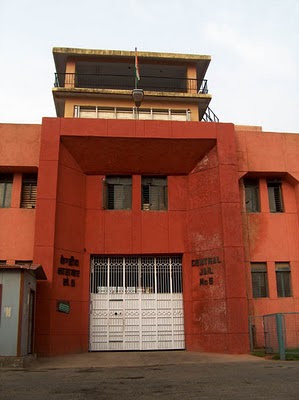
Today came the startling news that two inmates serving life sentences at Delhi’s notorious Tihar jail claim that the jail authorities gave them weapons to kill 2 of the 3 members of the Commonwealth Games Organising Committee currently being held at the jail on corruption charges.

Tihar Jail

The Hindustan Times reports:

Two inmates serving life sentences at Tihar Jail have claimed that the prison authorities gave them weapons to murder two former senior officials of the Commonwealth Games (CWG) lodged in the prison with them. In an application to chief metropolitan magistrate (CMM) Vinod Yadav, Amit and Nishant who are facing trial in a murder case, have said, “The jail authorities inside jail number 4 and ward number 11 approached us with weapons on December 20, 2010, and asked us to murder the two Commonwealth Games officials lodged in the jail with us.”  On personally meeting the judge, the inmates identified the officials as TS Darbari and Sanjay Mahendroo, who are lodged in Tihar following corruption charges.

Their application stated, “The jail officials threatened us with dire consequences if we do not comply with their orders. We are also receiving threats to our life inside the jail premises.” Amit’s mother Munni Devi has also filed an application in the magistrate’s court claiming her son and Pawan were being threatened inside the jail.

The application also claimed that a Delhi police official, who had come to the prison on Monday, recovered the knife from their cell. But they have not identified the officer before the magistrate. “The country-made pistol that was given to us was displaced by the jail authorities. We seek the court’s help to protect us from this ongoing exploitation at Tihar,” the application read.

Following this, the judge has directed the station house officer of the Hari Nagar police station to file a report in the incident and investigate the claims of the Tihar inmates.

Sunil Gupta, PRO of Tihar Jail, told Hindustan Times, “These are hardcore criminals lodged in high security jail. No weapon was recovered from the jail premises and their application is a farce. There was no conspiracy.”

Speculation now is that:

  1. The lifers made up the story merely to create a distraction from their own murder trial, or
  2. Other officials in fear of new confessions have placed a contract on the lives of the officials being held, or
  3. Politicians who fear being implicated in the mesh of corruption surrounding the games have placed the contract, or
  4. the officials under arrest have themselves arranged for the “confession” to develop a sympathy factor before they come to trial.

Tihar Jail is itself notorious for the mal-treatment of many prisoners and for the comfortable living conditions for inmates with money and clout. So the allegation that Tihar jail officials were involved in something like this is not – in itself- so incredible!!

There will be many more twists and turns in this corruption scandal.

A small bright spot in the murky world of corporate ethics

December 21, 2010

Laws tell us what we must not do and morals tell us what we ought not to do – whether illegal or not.

But ethics – when they exist – tell us what is the right and proper and desirable thing to do.

Far too many corporates seem to think that mere compliance with laws is sufficient as a code of ethics. Much trumpeted Corporate Social Responsibilities are primarily public relations and image building exercises with little relation to ethics. Token gestures of engaging in some social programme are assumed to be evidence of the existence of an ethical code but the reality is that most corporates have no ethics. They are content – like children – to let others tell them by law what is forbidden and then take the easy path provided by assuming that all behaviour which is not illegal is – by default – ethical.

As if it is not possible to be completely compliant and completely corrupt at the same time. British Aerospace and their utter lack of ethics being a case in point.

Retraction Watch carries the refreshing story of Wnt Research which shows that some bright spots still exist in the murky world of corporate ethics.

Two weeks ago, we covered the retraction of a PNAS paper on a potential breast cancer treatment, one that would make tumors that didn’t respond to tamoxifen respond to the drug. We learned earlier this week from a Retraction Watch commenter that Wnt Research, a company based on the breast cancer finding and other work, was about to go public.

In fact, their initial public offering (IPO) happened today, and you can follow the price of their stock — listed on the Stockholm Stock Exchange as WNT — here. But what we learned when we looked into the IPO was that it was originally scheduled for late November, and was delayed because of the retraction.

Tommy Andersson, one of the researchers on the now-retracted paper and Wnt Research’s chief scientific officer, told Retraction Watch that the company had initially planned on going public on November 26. They had written a memorandum describing the company’s work to date, and its plans, and the public was given a chance to invest before shares hit the Stockholm exchange. That memorandum included a mention of the PNAS paper, as follows (translated from Swedish):

The research group has even shown that combining Wnt-5a or Foxy-5 will increase the expression of estrogen receptors in estrogen-negative breast cancer cells. It turned out that human breast cancer cells exposed to Foxy-5 regained tamoxifen sensitivity, which is clear from the increased apoptosis and reduced cell growth as a response to the endocrine treatment. Likewise, the research group found that administration of Foxy-5 in the body brought back the expression of estrogen receptors in a mouse model. Apart from the therapeutic potential of these observations, there is a potential to use the outcome of estrogen receptors as a biological marker, which should advance research.

The deadline for investment was October 27, and a number of people responded, allowing the company to continue its work. But on November 11, Andersson and his colleagues realized there were serious errors in the paper, and that it would need to be retracted. When Andersson called Wnt Research’s CEO, Bert Junno, on the 12th:

He rapidly called upon an extra Board meeting on the 15th of November (the same day my email of retraction was sent to the PNAS office). At this meeting we decided to make a press release on this matter and this went out on the 16th of November.

We again had an extra Board meeting on the 19th of November to discuss what other things that we needed to do. We agreed that the short press release must be accompanied by an addition to the already published memorandum, the reason being that you cannot change in the original memorandum. The CEO wrote this addition together with the people at the office of the small Stockholm Exchange “Aktietorget” where the company was to be listed. We also decided to ask for legal advice in how to handle the public that had already paid for shares in the company.

The board held another meeting on the 22nd, during which they approved the addition to the memorandum saying that the PNAS paper had been retracted. They also did something that can only be described as the right thing: They decided to write all of the approximately 275 people who had invested in the company by the October 27 deadline and offer their money back:

The reason for this was that the lawyer advised us to act according to good morals rather than to what we were required to do by law. His belief was that this would pay off in the long run.

The memorandum addition was published on November 25. And some people did ask for their money back:

The offer to retract their investments in the company resulted in a net loss of investments, but we still obtained enough investments to continue our work.

All of that back and forth also meant that the IPO was delayed by three weeks, until today.

We find this story wonderfully refreshing. Imagine, a company bending over backward to let investors — and potential investors — know about problems with its data.

I can only agree that this little story proves that, unlike what Milton Friedman had to say, it is perfectly possible to be ethical in the corporate world.

Today I did my bit and bought some shares in Wnt Research. I know too little about cancer research to judge whether this was or will be a good buy. But I applaud their ethics and my share purchase is just to put my money where my mouth is.

Capitation fees: The stench of corruption in the Indian body academic

December 10, 2010
Varkala in Kerala. India.

Image via Wikipedia

This past week I have been travelling in the southern Indian states of Tamil Nadu and Karnataka.

The growth is palpable and vibrant. But it is chaotic and uncontrolled – and probably uncontrollable, The best that can be hoped for is that movement is in the general direction desired but it is futile to to try and exercise any micro-control. The speed is such that there is no time for consolidation, for reflection, for developing values or standards or for any feedback. Feed forward is the only thing that can keep up.

But in every field of operation – whether construction or government or industry or financial institutions or academia – the stench of corruption is contained under a thin veneer of apparent sophistication. The overpowering fundamental value which gets free reign is greed.

What has become apparent to me is that in spite of many good intentions by government, the shortage of supply in the face of an ever-increasing demand for education has allowed the unfettered growth of  private colleges and universities. But the demand is only used as a vehicle for satisfying greed not for satisfying educational needs.

All degrees and especially post graduate degrees in medicine, engineering and IT related subjects from private colleges in India are granted solely for the payment of a capitation fee.

http://en.wikipedia.org/wiki/Capitation_fee

Capitation fee refers to the unlawful collection of payment by educational bodies in exchange for a seat in the institution. It is also known as donations. This practice is popular in private colleges and universities in India, especially those that grant baccalaureate degrees in Engineering, IT and the sciences. This is an example of institutionalized corruption prevalent in India.The practice goes mostly unnoticed because the board/owners of these institutions hold political/financial powers and also the parents who pay the donations are more than happy to do so.

The Concise Oxford Dictionary defines capitation as follows:

The payment of a fee or a grant to a doctor, school, etc., the amount being determined by the number of patients, pupils etc. Origin (denoting the counting of heads)

The Kerala Self Financing Professional Colleges (Prohibition of Capitation Fees and Procedure for Admission and Fixation of Fees) Act 2004 defines capitation fees as follows.

“capitation fees” means any amount by whatever name called, whether in cash or in kind paid or collected or received directly or indirectly in addition to the fees determined under section 4.

The Supreme Court Judgement in 1993 in the Unni Krishnan Case declared that charging capitation fees was illegal.

But capitation fees are now the only way of  getting a seat in a private college. It guarantees a degree will be awarded. Academic staff  have no say in the selection of students. That selection is reserved for the owners and they usually auction the seats to the highest bidder. Capitation fees are unrecorded, undeclared and paid in cash. Academic standards are irrelevant.

This is not to say that competent engineers and doctors do not exist. But a degree from a private college is an empty thing. It only proves that a capitation fee was paid and is totally silent regarding the capability or competence of the person receiving a degree.

Proof positive of FIFA bribery & corruption: Qatar to host World Cup

December 4, 2010

Can there be any other reason than B & C for Qatar to get the World Cup???

http://news.bbc.co.uk/sport2/hi/football/9250612.stm

UK MP’s continue with their expense claim shenanigans

December 1, 2010

Of course UK MP’s are not alone among politicians who make creative and extravagant expense claims. I would suspect that Members of the European Parliament in particular could teach the UK MP’s more than a few tricks in this regard.

But The Telegraph reports the UK MP’s still spend considerable time pushing the envelope of what is an allowable expense  – even after the supposed crack-down on expenses.

A list of 1,574 claims, rejected by the Independent Parliamentary Standards Authority (Ipsa) in the space of five months, shows that politicians have attempted to claim back money for their mortgage repayments, first-class travel and excessive hospitality.

The document, obtained by The Times newspaper, which lists a total of rejected claims worth £116,359, also reveals how parliamentarians submitted duplicate claims and did not provide suitable documentary evidence to back up their claims.

One MP was refused £338 for a shredder, while another tried to claim £1,057 for advertising. A third asked for £1,085 for ”contingencies”. All claims, which were submitted between May and September this year, were refused by Ipsa – the body set up to administer MPs expense claims.

The unsuccessful claims amounted to 7% of the total submitted by MPs during the period.

The most bizarre claims:

a limed oak toilet seat

  • £97: Derek Conway (Ind, Old Bexley & Sidcup) two ‘limed oak toilet seats’. Also spent £76 on two loo roll holders at Peter Jones in London
  • 55p: Andrew Selous (Con, South West Beds) claimed for a mug of Horlicks in the House of Commons tea room one evening in March this year
  • 99p: Danny Alexander (Lib Dem, Inverness, Nairn, Badenoch & Strathspey) bought Mr Muscle cleaning fluid from a 99p shop
  • £43.56: James Arbuthnot (Con, Hampshire NE) successfully claimed for three ‘Genius 4 piece garlic peeling & cutting set’ bought on QVC shopping channel
  • £760: Alan Milburn (Lab, Darlington) went on a shopping spree in John Lewis in March 2009 including Nigella Lawson measuring spoons and a Jamie Oliver frying pan
  • £175: Julie Kirkbride (Con, Bromsgrove) claimed for a Samuel Heath Curzon extending shaving mirror from John Lewis
  • £5: Ben Chapman (Lab, Wirral South) claimed for a three pack of ‘waffle’ coat hangers from John Lewis
  • £2,300: Crispin Blunt (Con, Reigate) claimed for ‘brickwork’ including work on his ‘water wheel structure’ and terracotta fireplace
  • £2: Phil Hope (Lab, Corby) claimed for a Hamburger Maker from John Lewis, together with a £5 swivel peeler and two £6 tea towels
  • £24: Lindsay Roy (Lab, Glenrothes) bought a Babyliss Salon Dry hairdryer despite having thinning hair. His claim was rejected by the fees office
  • £105: Douglas Alexander (Lab, Paisley & Renfrewshire South) claimed for having the chimney swept at his designated second home in Scotland
  • £562.23: Kali Mountford (Lab, Colne Valley) bought an LCD TV in West Yorkshire but said it was for her designated second home in London
  • £2.95: David Ruffley (Con, Bury St Edmunds) bought an ‘anti moth proofer’ from Peter Jones of Sloane Square. A few months later he bought another six anti-moth sachets costing £24
  • £420: Lynne Jones (Lab, Birmingham Selly Oak) claimed for Farrow & Ball Toile Trellis wallpaper in April 2008, and also claimed £28.80 for a food mixer

Former head of India’s counter-terrorism division expects next Wikileaks release to be about corruption

November 28, 2010

Update!

2030 hrs CET, 28th November,

The Wikileaks release has started and will likely continue through the night. The Guardian, Der Spiegel, The New York Times, El Pais and Le Monde have received the material in advance under embargo and have all started releasing the  US State Department cables.

Wikileaks has been subjected to a cyber-attack today and its site is currently inaccessible.

Link to Guardian ability to download all cables

=======================================

The BBC headline is

US warns Wikileaks’ Assange on possible leak

The US has stepped up its threats of legal action against Wikileaks while at the same time rushing to contact all “friendly” governments to try and defuse some of the expected fallout of such a release. The flurry of US government activity seems almost panicky and constant repetition of the claim that “countless lives could be put at risk” does not carry much credibility. Instead of taking responsibility for whatever might have been done or written in the past – and presumably they had good reason to believe it was the right and proper thing to do at the time – the strategy seems to be one of “shooting the messenger”.  But in the current paradigm of ease of information dissemination and increased covert operations by governments around the world, attacks on the messenger only reduce the credibility of the attacker and are counter-productive.

B. Raman: image intellibriefs.blogspot.com

B. Raman is a former Additional Secretary (retired), Cabinet Secretariat of the Government of India. He is the former head of the counter-terrorism division of India’s external intelligence agency Research and Analysis Wing (RAW). He has been applying his mind to the imminent release of confidential US State Department information by Wikileaks and he expects the main subject to be corruption in high places. His thoughts make fascinating reading.

B. Raman writes on his blog:

1. Wikileaks announced through Twitter on November 22,2010, that it will be shortly releasing its third instalment of classified US documents.

2. The first instalment of 77,000 documents related to Afghanistan. The second instalment of 400,000 documents related to Iraq. According to the Twiiter message, its third instalment will contain a much larger number of documents.

3. Wikileaks did not say in its message what will be the subject-matter of the third instalment. However, a Reuters despatch from Washington DC said that classified US diplomatic cables reporting corruption allegations against foreign governments and leaders are expected in the official documents that Wikileaks plans to release. It added: “Three sources familiar with the US State Department cables held by Wikileaks say the corruption allegations in them are major enough to cause serious embarrassment for foreign governments and politicians named in them. They said the release was expected next week, but it could come earlier. The detailed, candid reports by US diplomats also may create foreign policy complications for the administration of US President Barack Obama, the sources said. Among the countries whose politicians feature in the reports are Russia, Afghanistan and former Soviet republics in Central Asia. But other reports also detail potentially embarrassing allegations reported to Washington from US diplomats in other regions, including East Asia and Europe. State Department spokesman Philip J. Crowley said Washington was assessing the implications of what Wikileaks may reveal and was notifying foreign governments about the possible release. “We wish that this would not happen, but we are obviously prepared for the possibility that it will,” he said.

4.The media has reported that the US has warned India and other key governments across the world about the expected release. Crowley has been quoted as saying: “We have reached out to India to warn them about a possible release of documents.” Among other Governments reportedly cautioned are those of Israel, Russia, Turkey, Canada and the UK.

5. After October last year when Wikileaks reportedly developed electronic access to the data bases of the US State Department and the Pentagon and the US military formations in Afghanistan and Iraq, the US authorities were reported to have tightened document security to prevent further leaks. If this tightening has been effective, it is likely that the latest load of documents acquired by Wikileaks (is) related to the period before October last year.

6.While corruption allegations as collected by the US Embassis in these countries could form a part of these documents, it is likely that considering the large number of documents mentioned by Wikileaks, the documents also cover US Embassy reporting on other subjects. Previously, Pakistan’s relations with the US were the focus of Wikileaks. It now seems to be focusing on India’s relations with the US too. It is, therefore, possible that in addition to corruption involving Indian personalities, the documents about India which have reached Wikileaks also relate to India’s policies on Afghanistan, Iraq and Iran.

7. Among the various events relating to Afghanistan, Iraq and Iran in which India figured during this period, four could be sensitive from India’s point of view. Firstly, the pressure on the Atal Behari Vajpayee Government by the administration of George Bush to send a Division of the Indian Army to Iraq. By July,2003, the Vajpayee Government had decided to say no to Washington DC, but there was a lot of voices in Delhi in favour of accepting the US request. Secondly, the papers captured by the US intelligence after the occupation of Iraq from the Iraqi Government Departments showing or corroborating the alleged involvement of a leader or leaders of the Congress (I) in contacts with the Saddam Hussein Government for acquiring preferential quotas for the import of oil from Iraq (the oil for food scandal). Thirdly, the pressure exercised by the Bush Administration on the Manmohan Singh Government for voting against Iran in the International Atomic Energy Agency in Vienna. The Government of India succumbed to this pressure as a quid pro quo for the Indo-US civil nuclear co-operation agreement of July,2005. Fourthly, the analysis and assessment made in the State Department and the Pentagon regarding Pakistani allegations of Indian involvement in Balochistan.

8. Is it possible that Wikileaks might have also got hold of diplomatic cables between the US Embassy in New Delhi and Washinton DC on Indian political leaders, bureaucrats and policy-making? Has it also got hold of messages sent by the US Embassy in New Delhi to Washington DC about the escape of Major Rabinder Singh, the mole of the Central Intelligence Agency in the Research & Analysis Wing, to the US in 2004 and about the detection by the Indian counter-intelligence of a US mole in the sensitive National Security Council Secretariat in 2006? The documents to be released by Wikileaks need to be carefully scrutinised.. ( 28-11-10)

Former head of Chinese Nuclear corporation sentenced to life for corruption

November 19, 2010

Kang Rixin: photo china-defense-mashup.com

In August 2009 China National Nuclear Corporation’s head Kang Rixin (born 1953), was suspended and put under investigation for misusing $260 million that was earmarked for the construction of three nuclear plants and allegedly used for playing the stock market sustaining heavy losses. Kang Rixin was also accused of accepting bribes of several million dollars of corrupt payments from Areva, a leading French nuclear engineering company.

Sun Qin was appointed President to replace the suspended Kang Rixin.

Today Xinhua reports

that a Chinese court sentenced Kang Rixin, a former head of Chinese nuclear giant China National Nuclear Corporation (CNNC), to life imprisonment Friday for corruption and accepting almost one million U.S. dollars in bribes. Kang, CNNC’s former general manager, was also deprived of his political rights for life and had his personal assets confiscated, a statement from the Beijing No.1 intermediary court said.

Kang, 57, was convicted of having abused his power to enable others to profit. He accepted bribes totaling 6.6 million yuan (970,000 U.S. dollars) between 2004 and 2009. The sentence was lighter because Kang cooperated with investigators and returned all his ill-gotten gains.

Kang became a member of the Communist Party of China (CPC) Central Committee in October 2007. He was stripped of his post in and membership of the CPC for “serious violations of the law and discipline breaches” in December 2009.