Posts Tagged ‘Renewable energy’

Renewable Energy follies: Subsidies discourage maintenance

July 6, 2011

A key problem with subsidising “renewable energy” is that the economics become so distorted that developers/owners focus first on maximising the extraction of subsidies and not on the long-term operation of the plant or the production of power. As soon as payback is achieved the focus is on generating revenues while minimising  expenditure on operation and maintenance (O & M). Inevitably such plants are abandoned as soon as the O & M costs approach the level of revenues. Whereas conventional power plants (coal, gas, hydro and nuclear) have a design life of 30 – 40 years and often carry out maintenance to extend this lifetime, subsidised “renewable energy” plants have a lifetime of less than 10 years and often even less.

For example grants for construction and high tariffs were used for many years to encourage sugar producers in India and Brazil and other countries to build power plants burning bagasse (the waste matter left after crushing sugar-cane to extract juice). But the consequence was that sugar producers could generate more revenue by producing power rather than sugar – especially when the sugar price was low. Sugar producers built power plants which were larger than they needed themselves and based solely on the level of grant that could be extracted. Access to the grid was guaranteed. But again many of these plants were abandoned as soon as the O & M costs became too onerous. Effectively the developers had recovered all the investment (which was mainly grant money anyway) and more from the allowed 16 – 20% rate of return (which in practice was more like about 30-50% ) of the supposed investment. As plants were “cashed out” and abandoned, the grid just had to absorb the disturbances – which were not negligible.

The subsidies in Europe for wind and solar power are encouraging the same behaviour. In Germany the almost profligate subsidy regime has encouraged the implementation of less than serious power projects by less than serious developers. The game has been the extraction of subsidies not of generating power. In Germany wind turbine and photo-voltaic solar cell plants popped up everywhere. Farmers and shop-keepers and schools all have became power generators. Grid stability has been weakened to cope with the plethora of small plants cutting in and out of the grid. The obscenely high feed-in tariffs in Spain have encouraged solar plants to burn more gas than permitted and pass off the power generated as being “renewable power” at the high tariff. But as the subsidy regime weakens and tariffs reduce and grants are scaled down, the likelihood of these plants being abandoned is increasing. Certainly there is no incentive to spend any money on maintenance.

P. Gosselin at NoTricksZone has this about a pv solar plant (2.7 MW) after less than 2 years:

Weed-Covered, Neglected Solar Park: 20 Acres, $11 Million, Only One And Half Years Old! 
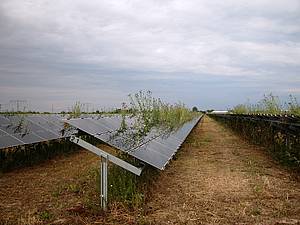
solar plant weeds

Over the next few years we shall see many more solar and wind power plants in Europe where money will not be spent on maintenance unless it is absolutely necessary for the generation of short-term (subsidised and inflated) revenues. Long-term maintenance will just not happen. And when the O & M costs become too onerous the plants will simply be abandoned. No doubt bankruptcies will be arranged when the plants are cashed-out such that there is no recourse to the developers/owners for any remaining liabilities.

Subsidies just don’t work for their intended purpose in power generation – but they are short-term gold mines for some developers.

Nature editorial chastises IPCC for conflict of interest policy

June 30, 2011

The Nature editorial  published today will be unwelcome criticism for the IPCC from a normally very friendly quarter. “Shot with its own gun” is the headline and the editorial chastises Pachauri and the IPCC for failing “to make clear when this new conflict-of-interest policy will come into effect and whom it will cover. It needs to do so — and fast”.

Allowing Greenpeace to ‘dictate’ the IPCC’s renewable-energy report was particularly inept and as one Nature reader puts it “The IPCC has become a Centre of Criticism”. But the fundamental problem with the IPCC is of course that it has become an advocacy group with a pre-determined agenda where scientific evidence has been replaced by dubious results from scenarios. Claiming that model results of a chaotic and imperfectly understood system are “settled science” is the travesty.

But criticism coming from Nature is friendly fire indeed.

Nature 474, 541 (30 June 2011) doi:10.1038/474541a

Shot with its own gun

In the past two years, the IPCC has displayed a talent for manoeuvring itself into embarrassing situations, making itself an easy target for critics and climate sceptics.

The problems began in late 2009, when it was reported that the IPCC’s fourth assessment report, published two years earlier, mistakenly claimed that all Himalayan glaciers could melt by 2035. The subsequent fallout seriously damaged the IPCC’s credibility, and was exacerbated by the inept attempts of the group’s chairman, Rajendra Pachauri, to contain the crisis. A subsequent review of the organization’s governance and policies saw it commit to a number of wide-ranging reforms.

This month, the IPCC is in the crosshairs again. The revelation that a Greenpeace energy analyst helped to write a key chapter in the IPCC’s Special Report on Renewable Energy Sources and Climate Change Mitigation, released last month, sparked widespread criticism across the blogosphere. Compared with the glacier faux pas, the latest incident is trivial. But it should remind the IPCC that its recently reworked policies and procedures need to be implemented, visibly and quickly.

In response to the glacier blunder, the IPCC pledged greater caution in the processes it uses to select scientific experts and to evaluate grey literature, and to make sure that (unpaid) work for the panel does not clash with interests arising from the professional affiliations of its staff and contributing authors (see Nature473, 261; 2011). But it has failed to make clear when this new conflict-of-interest policy will come into effect and whom it will cover. It needs to do so — and fast. 

This is the only way that the organization can counter recurring claims that it is less policy-neutral than its mandate from the United Nations obliges it to be. In particular, it needs to make clear the position for the working groups on climate-change impacts and adaptation (the science group adopted a rigid conflict-of-interest policy last year). Pachauri is on record as saying that the new conflict-of-interest policy will not apply retrospectively to the hundreds of authors already selected for the IPCC’s fifth assessment report, due in 2014. This is unacceptable. He should make it a priority to ensure that the rules cover everyone involved — including himself. …

The IPCC’s vulnerability to such attacks should also prompt it to reconsider how it frames its findings. Journalists and critics alike gravitate towards extreme claims. So when the IPCC’s press material for the May report prominently pushed the idea that renewables could provide “close to 80%” of the world’s energy needs by 2050, it was no surprise that it was this figure that made headlines — and made waves. The IPCC would have saved itself a lot of trouble and some unwarranted criticism had it made the origins of this scenario explicit.

Now with the natural death of the Kyoto Protocol and with a few decades of cooling in front of us it is time for the IPCC to be disbanded.

The Age of Fossil Fuel may be just beginning

June 3, 2011

A little bit over the top from Michael Lind in Salon but still fundamentally not wrong:

Are we living at the beginning of the Age of Fossil Fuels, not its final decades? The very thought goes against everything that politicians and the educated public have been taught to believe in the past generation. According to the conventional wisdom, the U.S. and other industrial nations must undertake a rapid and expensive transition from fossil fuels to renewable energy for three reasons: The imminent depletion of fossil fuels, national security and the danger of global warming.

What if the conventional wisdom about the energy future of America and the world has been completely wrong?

As everyone who follows news about energy knows by now, in the last decade the technique of hydraulic fracturing or “fracking,” long used in the oil industry, has evolved to permit energy companies to access reserves of previously-unrecoverable “shale gas” or unconventional natural gas. According to the U.S. Energy Information Administration, these advances mean there is at least six times as much recoverable natural gas today as there was a decade ago.

Natural gas, which emits less carbon dioxide than coal, can be used in both electricity generation and as a fuel for automobiles.

……

Two arguments for switching to renewable energy — the depletion of fossil fuels and national security — are no longer plausible. What about the claim that a rapid transition to wind and solar energy is necessary, to avert catastrophic global warming?

The scenarios with the most catastrophic outcomes of global warming are low probability outcomes — a fact that explains why the world’s governments in practice treat reducing CO2 emissions as a low priority, despite paying lip service to it. But even if the worst outcomes were likely, the rational response would not be a conversion to wind and solar power but a massive build-out of nuclear power. Nuclear energy already provides around 13-14 percent of the world’s electricity and nearly 3 percent of global final energy consumption, while wind, solar and geothermal power combined account for less than one percent of global final energy consumption. ….

In the meantime, it appears that the prophets of an age of renewable energy following Peak Oil got things backwards. We may be living in the era of Peak Renewables, which will be followed by a very long Age of Fossil Fuels that has only just begun.

Read complete article


US wind power installations down by 72%

November 1, 2010

The New York Times


broken wind turbine: image thetechherald.com


In July, the American Wind Energy Association reported that it was having a lousy year. It appears the third quarter of 2010 wasn’t much better.

According to an analysis released on Friday, the trade group reports having its slowest quarter since 2007, adding just 395 megawatts of wind power capacity. For the year to date, new installations were down 72 percent.

Natural gas, the chief fossil-fuel competitor to renewable sources of electricity, is also dirt cheap these days, making wind power a tougher sell for cost-conscious utilities and state regulators. Despite lots of talk on Capitol Hill about the hazards of fossil fuels, their contribution to climate change and the need for broad, long-term supports for the renewables industry, legislators have failed to reach agreement on what that might look like.

But then the lobbying  gets going

“If federal policymakers do not act quickly to provide investment certainty through a Renewable Electricity Standard, and longer-term tax policy like our competitors enjoy,” Denise Bode, the chief executive of the wind association, said in a prepared statement, “the U.S. wind industry will continue to stall out.”

Elizabeth Salerno, director of industry data and analysis with the American Wind Energy Association, said in a phone call that state-level policies have helped. Roughly 30 states have mandatory targets for diversifying their energy portfolios with more renewable power. “They’ve been doing a great job leading the effort to get renewables installed over the past decade,” Ms. Salerno said.

The trade group reported some interesting developments — including Oregon’s emergence as the leader in new wind installations for the third quarter, eclipsing Texas, which has long held the top slot. The reason, the group suggests, is that Texas has hit a transmission wall and is trying to sort out how to get its west Texas wind resources to the load centers in the center of the state.

Solar power subsidies are not sustainable

October 28, 2010


The power plant.

Planta termosolar Andasol: Image via Wikipedia


In Spain the huge subsidies (with feed in tariffs as much as ten times the average cost of electricity production) had led to a rush of developers getting into projects which is now proving unsustainable. Bloomberg reports that

Solar investors  were lured by a 2007 law passed by the government of Prime Minister Jose Luis Rodriguez Zapatero that guaranteed producers a so-called solar tariff of as much as 44 cents per kilowatt-hour for their electricity for 25 years — more than 10 times the 2007 average wholesale price of about 4 cents per kilowatt-hour paid to mainstream energy suppliers. Now more than 50,000 other Spanish solar entrepreneurs face financial disaster as the policy makers contemplate cutting the price guarantees that attracted their investment in the first place.

Spain stands as a lesson to other aspiring green-energy nations, including China and the U.S., by showing how difficult it is to build an alternative energy industry even with billions of euros in subsidies, says Ramon de la Sota, a private investor in Spanish photovoltaic panels and a former General Electric Co. executive. “The government totally overshot with the tariff,” de la Sota says. “Now they have a huge bill to pay — but where’s the technology, where’s the know-how, where’s the value?”

The situation in Germany is equally disturbing. The New Scientist reports

Solar power is intermittent and can arrive in huge surges when the sun comes out. These most often happen near midday rather than when demand for power is high, such as in the evenings. A small surge can be accommodated by switching off conventional power station generators, to keep the overall supply to the grid the same. But if the solar power input is too large it will exceed demand even with all the generators switched off. Stephan Köhler, head of Germany’s energy agency, DENA, warned in an interview with the Berliner Zeitung on 17 October that at current rates of installation, solar capacity will soon reach those levels, and could trigger blackouts.

Subsidies have encouraged German citizens and businesses to install solar panels and sell surplus electricity to the grid at a premium. Uptake has been so rapid that solar capacity could reach 30 gigawatts, equal to the country’s weekend power consumption, by the end of next year. “We need to cap installation of new panels,” a spokesperson for DENA told New Scientist.

The experience with highly subsidised feed-in tariffs is proving to be less than successful. In country after country the use of such subsidies is proving to be a major distortion, unhealthy and unsustainable. Countries such as India which are contemplating the use of similar subsidies for promoting intermittent, wind or solar power are beginning to have second thoughts and are now having to consider caps. It is beginning to sink in that such intermittent capacity cannot be counted into the generating base and does not reduce the need for alternative, backup generating capacity. Moreover the use of intermittent power from solar and wind only ensures that the operating conditions for the alternative capacity and for the grid are fundamentally more inefficient. This in turn leads to a hidden cost as a consequence of using the solar or wind power.

It is likely that these subsidies will have to be scaled down drastically.

Rain and lack of wind hit UK renewable generation

October 1, 2010

The Guardian reports that

The UK has suffered a second fall in renewable energy production this year, raising concern about the more than £1bn support the industry receives each year from taxpayers.

Wind turbine accident

Lower than expected wind speeds and rainfall led to a 12% fall in renewable electricity generated between April and June, compared to the same period in 2009. This setback follows a smaller but still notable decline between January and March, again compared to last year.

The DECC admits that “The intermittent nature of wind means that we do need alternative back-up generation, for when wind speeds drop” but should have added that alternative capacity is also necessary when it blows too hard and when it is too cold and when the foundations are cracking and …

Seasonal power generation can contribute marginally to energy needs but cannot provide base-load power generation.

Wind is not always as benign as it is made out. The “Summary of Wind Turbine Accident Data to 31 December 2008” reports 41 worker fatalities.

Renewable Realities

September 16, 2010
Modern wind energy plant in rural scenery.

Image via Wikipedia

Renewable energy sources – when they have become commercial – have their part to play. Engineers and scientists have made remarkable progress in the development of concepts, materials, systems and technologies. But the exaggerations and distortions regarding the possibilities follow a political agenda. Fundamentals and common sense are discarded in the fervour – almost religious – of “environmentalism” and “global warming” and subsidy scams. The realities of what renewables can offer is far from the rosy perceptions that prevail.

It is worth just reminding ourselves of the fundamental constraints which apply:

Generating Capacity: Wind and solar capacity require full back-up capacity but hydro power does not.

  • Wind power is intermittent and cannot be predicted. Therefore generating capacity needs cannot rely on wind power capacity and 100% back-up in the form of alternate capacity is always needed. Since electrical power cannot be stored, wind power cannot follow load needs. Any variation in wind power produced must be compensated for by changing the power generated by some other plant in order to follow load. Wind power cannot be despatched.
  • Solar power (thermal or photovoltaic) is intermittent not only between day and night and between winter and summer but also during the hours of sunshine due to clouds, rain and dust storms. Some little storage of thermal energy (molten salts for example) is possible but storage of electrical power in batteries or the like is not
    Solar Array récupéré de http://en.wikipedia.or...

    Image via Wikipedia

    feasible.

    Solar plant capacity must also be backed up by alternate generating capacity and since this falls to zero every night, the back up required is also around 100% (with some variation due to the particular night time load profile). Because thermal storage can be available some load changing during daylight hours is feasible.

  • Hybrid solar thermal – fossil fuel plants can ensure continuous operation and eliminate the back up capacity.
  • The lifetime of components in a solar thermal plant is drastically affected by the enforced cycling caused by daily starts and stops. (Material fatigue and creep considerations are determined by thermal cycling).
  • Hydro power plants are dependent upon seasonal water levels in reservoirs for large plant or on variations of water flow in smaller run-of-the-river plants. Large plants are nearly always used for base load power (when in-season) and can also be used for power storage of surplus power from other plants if equipped with a pumped-storage facility. Hydro power plants are always included within the generating capacity base and require no back up capacity. However a grid’s load changing needs (to follow load) must usually be provided for by other types of plant (gas or coal).

Availability and capacity factor:

  • Wind power is available only when the wind blows above a minimum value (around 4 m/s) and below a maximum value (around 25 m/s). It cannot operate in gusting conditions. For safety considerations ice formation on turbine blades must be avoided and this gives a minimum ambient temperature for operation as well. Though wind turbine machinery may be available to operate for over 90% of time, the wind or weather conditions are the limiting factor and a wind turbine – dependent on siting – can usually generate power for not more than about 40 -50%  of a year. But it is not possible to predict when it will be in operation and at what load. The resultant capacity factor for a wind turbine is around 20% (i.e. a wind power plant only generates about 20% of its rated capacity on an annual basis).
  • Solar thermal plants  without storage can operate for about an annual average of 8 -9 hours per day. With thermal storage they can operate for about 14 or 15 hours per day and where the solar field is used to augment a fossil fuel plant continuous operation is possible. Without storage, a solar thermal plant has a capacity factor of around 20% which can be increased with thermal storage to about 40%. Currently the cost of thermal storage adds about 75% to the cost of a solar thermal plant.
  • Solar photovoltaic plants cannot use any form of energy storage and therefore have a capacity factor of around 20%
  • Large hydro plants running at base-load have capacity factors well above 80% (in-season).
  • Small run-of-the-river hydro plants can have capacity factors ranging from 30% in seasonal flows and over 80% in perennial flows.