Archive for September, 2010

A whiff of common sense

September 14, 2010

Perhaps a return to some common sense instead of the religious fervour of the global warming terrorists.

  • Climate change is inevitable and warming and cooling will continue till the earth dies a “heat death” in about 4 to 5 billion years

  • The little (relative to the distance from the centre of the earth to the sun) turbulent layer of crust and atmosphere within which we live is a “chaotic” system dominated by the sun’s radiation and with the oceans as the primary vehicle for heat transport in this layer. The next largest “heat transporter” is the volcanic activity around the world and its transient effects. The atmosphere comes next and effects of its composition are dominated first by clouds and only then by the trace gases, sub-micron particulates and aerosols such as carbon dioxide and soot.
  • Climate science (which is a hotchpotch of disciplines and still a long way from being a science) can only  speculate as to the causes of and directions of climate change – from coming ice ages in the 1970’s to global warming and the melting of the ice caps in the 1990’s and to the prospects of a new little ice-age now.
  • Resorting to alarmism and the nonsensical “precautionary principle” in an attempt to control climate while still not understanding the causes of change is more than futile – it is plain stupid.

The new UK  Environment Secretary, Caroline Spelman seems to have changed tack – ever so slightly but still significantly – to focusing on adaptation rather than on trying to control or brake climate changes.

Perhaps a whiff of common sense returning. And high time for that.

The Telegraph reports that she will express this shift in her first speech on climate change. For the past few years Government policy has concentrated on trying to make people turn off lights and grow their own vegetables in an effort to bring down carbon emissions. But as global greenhouse gases continue to increase, with the growth of developing countries like China and India, and the public purse tightens, the focus will increasingly be on adapting to climate change. Temperatures are expected to rise further because of greenhouse gases that are already “locked in” but will take decades to warm the atmosphere.

http://i.telegraph.co.uk/telegraph/multimedia/archive/01408/carolinespelmanabb_1408348c.jpg

Climate change is inevitable, says Caroline Spelman

Termites predict climate change!

September 13, 2010
Termietenheuvel

Image via Wikipedia

USA Today reports that Termites help predict impact of climate change.

They rely on instinct rather than mathematical models but they surely couldn’t do worse than Michael Mann & The Hockey Stick Gang

Termites are careful builders that locate their mounds in areas with the right balance of moisture and drainage. This intuitive understanding of geology and hydrology can help explain how a local ecosystem might evolve, according to the study by the Carnegie Institution’s Department of Global Ecology.

“By understanding the patterns of the vegetation and termite mounds over different moisture zones, we can project how the landscape might change with climate change,” explains co-author Greg Asner.

http://i.usatoday.net/communitymanager/_photos/green-house/2010/09/10/termitex-wide-community.jpg

http://www.nature.com/ncomms/journal/v1/n6/full/ncomms1066.html

Regional insight into savanna hydrogeomorphology from termite mounds

by Shaun R. Levick, Gregory P. Asner, Oliver A. Chadwick, Lesego M. Khomo, Kevin H. Rogers, Anthony S. Hartshorn, Ty Kennedy-Bowdoin & David E. Knapp

Can growth in India and China prevent the double-dip?

September 13, 2010

Chinese factories increased production in August and money growth easily topped analysts’ expectations, according to data on Saturday, showing that the economy remained buoyant despite government efforts to clamp down on bank lending and property speculation. Inflation in China sped to its fastest pace in 22 months, though the bulk of price rises stemmed from higher food costs, which analysts have said should be transitory after a spell of bad weather this summer.

image: buyusa.gov

Indian shares have risen to their highest level in more than two and a half years after data showed industrial output rose faster than expected. Figures released after Friday’s market close showed July’s factory output was up 13.8% compared with a year ago. India’s benchmark Sensex index rose 322 points, or 1.7%, to 19,122, its highest since January 2008. Banks led the gains as investors expect demand for loans to rise on the back of an expanding economy. Shares in State Bank of India, the country’s largest lender, were up 4.3%. ICICI Bank shares rose 3.5%, while HDFC Bank was 1.1% higher.

With a good monsoon this year inflation in food prices in India should now reduce sharply and if industry and manufacturing maintain their spurt, a total 10%+  GDP growth for 2010 -11 becomes probable.

Most Asian stocks too gained momentum on Monday. At 11.20 am today, the Sensex was trading up 293.53 points or 1.56% at 19,093.19, while Nifty was trading higher by 85.90 points or 1.52% at 5,725.95.

Europe and the US will continue to experience a prolonged period of low or choppy economic growth but this will have little impact on the growing domestic consumption of China and India. Companies selling into these nations are experiencing buoyant trading conditions.

This should be sufficient to mitigate the risks of a prolonged double-dip recession in Europe and the US  but will not be enough to avoid it.

Microscopic secrets

September 12, 2010

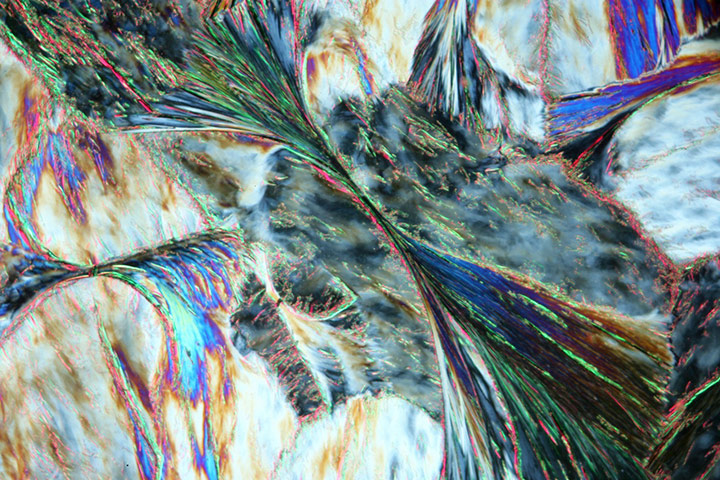
The Guardian reports that Spike Walker was awarded the Royal Photographic Society‘s combined Royal Colleges medal for his ‘outstanding contribution to photography and its application in the service of medicine’. A retired schoolteacher, Spike produces photomicrographs in his garage, which he has converted into a laboratory

Dopamine is a key neurotransmitter released in our brains when we do something rewarding. The dopaminergic system is behind most good feelings we have, and it is also the chemical that is targeted by highly addictive drugs such as cocaine.

http://thebeautifulbrain.com/wp-content/uploads/2010/09/Dophamine.jpg

The Beautiful Brain: To create this beautiful micrograph of dopamine crystals, Spike Walker, who won Thursday evening’s Royal Photographic Society‘s Combined Royal Colleges Medal, shone polarized light at the minute chemical structures. The crystals reflect light at different wavelengths depending on their orientations within the overall chemical structure. According to Walker, using this technique highlights more detail in the crystal structure than regular observation through a microscope.

Crystals of stearic acid, a saturated long-chain fatty acid found in animal fat and cocoa butter.

http://static.guim.co.uk/sys-images/Guardian/Pix/pictures/2010/9/8/1283953758659/Crystals-of-stearic-acid-010.jpg

Bike blog: Crystals of stearic acid

Indian monsoon has been “good”: 10%+ growth possible

September 12, 2010

The Indian monsoon season officially lasts from June to September. When average rainfall over these 4 months is close to or slightly above the long term average ( from about -5% to about +10%), the monsoon can be termed to be “good”.

With 3 weeks to go rainfall is running at 1% above the long term average and has been reasonably uniform over the whole country.

http://www.imd.gov.in/section/nhac/dynamic/Monsoon_frame.htm

Despite a steady decline in the share of agriculture and allied activities in GDP to about 14.6 percent, it continues to be the mainstay of majority of the population, of about 52 percent of the work force, and remains critical from the point of view of achieving the objectives of food security and price stability.

In 2009-10, there was a poor monsoon with rainfall being about 22% less than the long term average. Consequently the Agricultural growth rate was less than 2% (1.86%). The total GDP growth was held back to around 6%. The difference between a good monsoon year and a poor year is thought to be around 2% points for GDP:

For this year the pre-monsoon forecast was for 98% rainfall but with the La Niña conditions now prevailing, this has increased. Currently Agricultural growth (April – June  2010) is at 2.78% and the “good” monsoon is likely to see this increase sharply through the rest of the year.

Currently GDP is running at over 9% with industry and manufacturing each showing growth rates of close to 12%.

Inflation in food prices should now reduce sharply and if industry and manufacturing maintain their spurt, a total 10%+  GDP growth for 2010 -11 becomes probable.

Microbes ate the BP oil plume

September 12, 2010

There is still some oil left of course but “the micro-organisms were apparently stimulated by the massive oil spill that began in April, and they degraded the hydrocarbons so efficiently that the plume is now undetectable, said Terry Hazen of Lawrence Berkeley National Laboratory”. These so-called proteobacteria — Hazen calls them “bugs” — have adapted to the cold deep water where the big BP plume was observed and are able to biodegrade hydrocarbons much more quickly than expected, without significantly depleting oxygen as most known oil-depleting bacteria do. Long before humans drilled for oil, natural oil seeps in the Gulf of Mexico have put out the equivalent of an Exxon Valdez spill each year, Hazen said.

NewsDaily reports that “A Manhattan-sized plume of oil spewed deep into the Gulf of Mexico by BP’s broken Macondo well has been consumed by a newly discovered fast-eating species of microbes”.

http://www.mcclatchydc.com/2010/07/13/97433/heres-some-hope-for-gulf-spill.html

The hysteria surrounding the BP accident (almost as if it had been intentionally engineered) has focused on the photo opportunities presented by oil-coated birds and beaches and has almost obscured the fact that 11 people were killed. The accident has been dubbed “the greatest environmental disaster ever” and has been used as evidence of the evils of technology. It has not suited the environmental “do gooders” to acknowledge that “green” activities cause more damage in the Gulf of Mexico than accidental oil spills.

In the media, blame and the allocation of blame has been the order of the day rather than  analysis of the mistakes made and the engineering and technical lessons to be learnt.

That doesn’t mean there is no oil left from the 4.9 million barrels of crude that spilled into the Gulf after the April 20 blowout at BP’s Deepwater Horizon rig. The U.S. government estimated on August 4 that 50 percent of the BP oil is gone from the Gulf and the rest is rapidly degrading.

For Hauser it was worth faking data to get tenure, it seems

September 10, 2010

The Harvard Crimson reports that it is rare for cases of misconduct to result in any loss of tenure at Harvard.

The obvious conclusion is that it was probably worthwhile for Hauser to fake data if the resultant spate of publications and fame led to tenure as it probably did. A disclosure of the fakery and any resulting sanctions – none so far – will still turn out to be less than the gains made due to the acquiring of tenure. If the cost-benefit analysis is in favour of faking data it undermines and negates the entire system of getting tenure.

As psychology professor Marc D. Hauser faces allegations of research misconduct—which the American Association of University Professors states may be grounds for revocation of tenure—some in the scientific community question whether Hauser should keep his teaching position at Harvard.

But a review of Harvard’s recent history of faculty scandals suggests those calling for the University to dismiss Hauser should not hold their breath.

IPCC: Self adulation or just simple plagiarism

September 7, 2010

It would appear that large sections of the IPCC 1995 Working Group 2 report has just lifted sections from a book published by its lead author.

It could be just simple plagiarism or is perhaps the self-adulation to be expected from lead authors – or the IPCC report being used for marketing the book??

http://www.rescuepost.com/.a/6a00d8357f3f2969e2013485bc0fc9970c-250wi

The Book the IPCC Plagiarized

by Donna Laframboise.

(more…)

Michael Mann and Marc Hauser

September 4, 2010

I am not sure if the cases of Marc Hauser(Harvard)  of Hausergate and Michael E Mann (Penn State and the University of Virginia) of Climategate are strictly comparable since the two gates follow different routes in the faking of science.

Climategate was more of a group activity by a small clique with a great deal of group-think, whereas Hausergate was much more solitary.  The peer-review process was perverted to an end by the Climategate gang but this is not apparent with Hauser. Mann’s “hockeystick” was more a “fudging” of some data, “cherry-picking” and massaging statistical method to support a pre-determined result while Hauser seems to have just plain faked the data he wanted to support his personal theories. The pursuit of tenure and publications and fame (and some associated fortune) are probably common to both cases.

Climategate however affected policy and had a clear political agenda. Many involved around Climategate and the IPCC have murky ties to the multi-billion carbon scam. In Hausergate the political agenda, if any, is rather soft.

But what is noteworthy is the increase in the number of such comparisons being made and that such comparisons seem appropriate:

  1. If Michael Mann Had Worked At Harvard Instead Of Uva, Would He Now Be Working At Burger King Or Mcdonald’s?
  2. David Sheffield ’11: Scientific misconduct
  3. Monkey business?
  4. “HAUSERGATE” IS GOOD FOR SCIENCE
  5. Two Different Approaches to Academic Monkey Business

The Czar’s lost gold may have been found

September 4, 2010
A map of Baikal

Image via Wikipedia

The search for Lost Treasures still goes on.

Source: Der Spiegel

Fearing that German troops might get their hands on it during World War I, Czar Nicholas II had had 500 tons of gold transported from St. Petersburg to Kazan.

Admiral Aleksandr Kolchak led the “White Guards” under his command over the Ural Mountains. Kolchak and his forces drove the Bolsheviks out of Kazan, a city east of Moscow, and took control of a major part of Russia’s gold reserves. The gold, worth about 650 million rubles, reportedly filled 5,000 crates and 1,700 sacks; the “Whites” required 40 railway cars for the journey.

The “Czechoslovakian corps” which had been fighting the Bolsheviks alongside Kolchak, handed over 410 million rubles’ worth of the gold over to the government in Moscow in return for safe passage home.

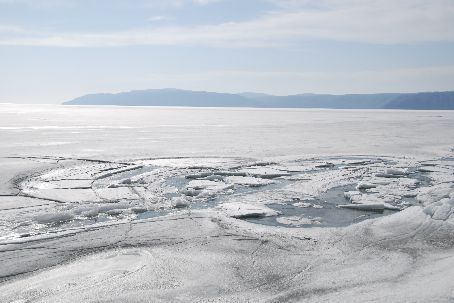
But what happened to the rest? The last traces of the gold have disappeared in the wide open spaces of Siberia. According to legend, members of the “White Guards” tried to cross Lake Baikal with the railway cars while it was frozen over with winter ice. But the weight of the cars caused them to crash through the ice and the gold sank into the depths. In fact, the frozen lake is still used as a route for traffic in the winter. During the Russo-Japanese War (1904-1905), railway tracks were even laid across the meter-thick ice.

This week, researchers, exploring the depths by submarine, may have found the Russian royals’ lost gold.

As Bair Tsyrenov slowly guided his Mir submersible up an underwater slope, a shimmer of gold was caught in the vehicle’s headlights, 400 meters (1,300 feet) below the surface of Lake Baikal. First the ship’s three-man crew discovered “steel girders that looked like railway bridges.” Then they struck upon the “bars with a particular golden radiance,” Tsyrenov, a researcher from the Lake Baikal Protection Fund, reports.

The find, made by researchers at the beginning of this week, was a spectacular one. For the last two years, the two Mir submersible research vehicles, usually at work in the Atlantic Ocean and the Indian Ocean, have been operating in Siberia’s Lake Baikal, the world’s largest freshwater body. These are the same two mini-submarines that brought the world the first underwater images of the Titanic.

The Mir expedition to Lake Baikal was actually supposed to be finishing up around now. But the vessels are currently hot on the trail of a legend: the last czars’ hoard of gold, which has been missing for 90 years and which, according to legend, lies in the depths of the Siberian lake.

Frozen Lake Baikal

http://aphs.worldnomads.com/nomadnorrie/10484/DSC_0985.jpg