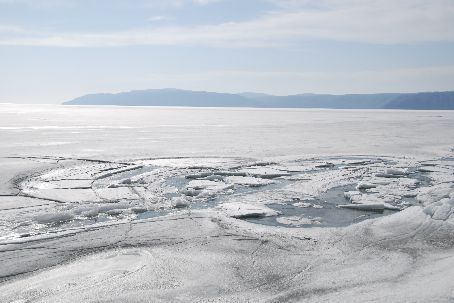
Image via Wikipedia
The search for Lost Treasures still goes on.
Source: Der Spiegel
Fearing that German troops might get their hands on it during World War I, Czar Nicholas II had had 500 tons of gold transported from St. Petersburg to Kazan.
Admiral Aleksandr Kolchak led the “White Guards” under his command over the Ural Mountains. Kolchak and his forces drove the Bolsheviks out of Kazan, a city east of Moscow, and took control of a major part of Russia’s gold reserves. The gold, worth about 650 million rubles, reportedly filled 5,000 crates and 1,700 sacks; the “Whites” required 40 railway cars for the journey.
The “Czechoslovakian corps” which had been fighting the Bolsheviks alongside Kolchak, handed over 410 million rubles’ worth of the gold over to the government in Moscow in return for safe passage home.
But what happened to the rest? The last traces of the gold have disappeared in the wide open spaces of Siberia. According to legend, members of the “White Guards” tried to cross Lake Baikal with the railway cars while it was frozen over with winter ice. But the weight of the cars caused them to crash through the ice and the gold sank into the depths. In fact, the frozen lake is still used as a route for traffic in the winter. During the Russo-Japanese War (1904-1905), railway tracks were even laid across the meter-thick ice.


This week, researchers, exploring the depths by submarine, may have found the Russian royals’ lost gold.
As Bair Tsyrenov slowly guided his Mir submersible up an underwater slope, a shimmer of gold was caught in the vehicle’s headlights, 400 meters (1,300 feet) below the surface of Lake Baikal. First the ship’s three-man crew discovered “steel girders that looked like railway bridges.” Then they struck upon the “bars with a particular golden radiance,” Tsyrenov, a researcher from the Lake Baikal Protection Fund, reports.
The find, made by researchers at the beginning of this week, was a spectacular one. For the last two years, the two Mir submersible research vehicles, usually at work in the Atlantic Ocean and the Indian Ocean, have been operating in Siberia’s Lake Baikal, the world’s largest freshwater body. These are the same two mini-submarines that brought the world the first underwater images of the Titanic.
The Mir expedition to Lake Baikal was actually supposed to be finishing up around now. But the vessels are currently hot on the trail of a legend: the last czars’ hoard of gold, which has been missing for 90 years and which, according to legend, lies in the depths of the Siberian lake.
Frozen Lake Baikal




 The k2p blog