Archive for the ‘Anthropology’ Category

Genetic mutations among the Inuit demonstrate the reality of “race”

September 23, 2015

It is politically correct to claim that “race” is just an artificial social construct. But of course “race” is real. It is about ancestry and about genetic differences that are quite real. It is about the groupings of peoples exhibiting the same genetic variations. Genetic studies are increasingly confirming the genetic differences that are distinguishable among the many ethnic groups of humans. Genetic groupings exist and are real but they are dynamic, not static. The genetic groupings (colloquially “race”) were different 1,000 generations ago and they will be different again in the future.

A new study shows that

“the Inuit and their Siberian ancestors have special mutations in genes involved in fat metabolism. The mutations help them partly counteract the effects of a diet high in marine mammal fat, mostly from seals and whales that eat fish with high levels of omega-3 polyunsaturated fatty acids.

Those genetic mutations, found in nearly 100 percent of the Inuit, are found in a mere 2 percent of Europeans and 15 percent of Han Chinese, which means that these groups would synthesize omega-3 polyunsaturated fatty acids differently from the Inuit. ….

The mutations seem to be at least 20,000 years old, and may have helped many groups of humans adapt to high-meat, high-fat, hunter-gatherer diets from large land and marine mammals high in certain types of omega-3 and omega-6 fatty acids, ……. They may have arisen among the original Siberians, who have lived in the Arctic for more than 20,000 years and arrived in Greenland when Inuit settled there about 1,000 years ago.”

Matteo Fumagalli et al,  Greenlandic Inuit show genetic signatures of diet and climate adaptation. Science, 18 September 2015 DOI:10.1126/science.aab2319

NewsBerkeley: ……. “The original focus on fish oil and omega-3s came from studies of Inuit. On their traditional diet, rich in fat from marine mammals, Inuit seemed quite healthy with a low incidence of cardiovascular disease, so fish oil must be protective,” said project leader Rasmus Nielsen, a UC Berkeley professor of integrative biology. “We’ve now found that they have unique genetic adaptations to this diet, so you cannot extrapolate from them to other populations. A diet that is healthy for the Inuit may not necessarily be good for the rest of us.”

These genetic mutations in the Inuit have more widespread effects. They lower “bad” LDL cholesterol and fasting insulin levels, presumably protecting against cardiovascular disease and diabetes. They also have a significant effect on height, because growth is in part regulated by a person’s fatty acid profile. The researchers found that the mutations causing shorter height in the Inuit are also associated with shorter height in Europeans.

Seals and walruses were part of the traditional diet of the Inuit, as seen in this illustration of a native village on Canada’s Baffin Island, from the book Arctic Researches and Life Among the Esquimaux (1865) by Charles Francis Hall.

“The mutations we found in the Inuit have profound physiological effects, changing the whole profile of fatty acids in the body, plus it reduces their height by 2 centimeters: nearly an inch,” said Ida Moltke, a University of Copenhagen associate professor of bioinformatics who is joint first author on the study. “Height is controlled by many genes, but this mutation has one of the strongest effects on height ever found by geneticists.”

Nielsen noted that this is some of the clearest evidence to date that human populations are actually adapted to particular diets; that is, they differ in the way they physiologically respond to diets. Just as genome sequencing can lead to personalized medicine tailored to an individual’s specific set of genes, so too may a person’s genome dictate a personalized diet. 

Nielsen and his colleagues at UC Berkeley and in Greenland and Denmark came to their conclusions after analyzing the genomes of 191 Greenlanders with a low admixture of European genes (less than 5 percent) and comparing them to the genomes of 60 Europeans and 44 Han Chinese. They looked for mutations occurring in a large percentage of Inuit individuals but in few or no other groups, which indicates that the mutation spread throughout the Inuit because it was somehow useful to their survival while not essential in other groups.

One cluster of mutations — in genes that code for enzymes that desaturate carbon-carbon bonds in fatty acids — stood out strongly, said Anders Albrechtsen, an associate professor of bioinformatics at the University of Copenhagen and a joint project leader. Fatty acids are the fat in our diet, and occur in saturated, polyunsaturated and unsaturated forms, depending on whether the molecules’ carbon atoms are linked together with no, some or all double bonds. Saturated fats are considered bad because they raise levels of cholesterol in the blood and lower the “good” high-density lipoproteins (HDL), all of which leads to plaque formation and clogged arteries. Diets rich in polyunsaturated and unsaturated fats are linked to lower heart disease. Desaturase enzymes convert dietary fatty acids into fatty acids stored and metabolized by the body.

The mutations common in the Inuit, once known as Eskimos, decrease the production of both omega-3 and omega-6 polyunsaturated fatty acids, presumably to account for the high amount of these fatty acids coming from the diet. Changing production of one fatty acid affects all fatty acids, however, since they regulate one another in a complex way, Albrechtsen said.

Thus, while it’s not clear which specific gene or genes within the cluster is responsible for the alteration in fatty acid metabolism, he said that “when you change the genes that are involved in fatty acid synthesis, you change the whole conversation among fatty acids, and that has a lot of downstream effects.” …… The researchers discovered another common mutation in a gene that is involved in the differentiation of brown, subcutaneous fat cells and brite fat cells, the latter of which generate heat. This may also have helped the Inuit adapt to a cold environment.

Race is real but it is dynamic. The genetically distinguishable race of Inuits goes back about 1,000+ generations. And some other genetic groupings of humans will be observable 1,000 generations on. But those groupings (races) will still be there. As I observed some time ago

We have no difficulty in accepting that different populations (effectively different races in colloquial usage) have differences of physical characteristics due to their genetic ancestry. There is no great outrage now that recent studies point to some genetic differences that Tibetans have which may give them an advantage in absorbing oxygen at high altitudes. Similarly there are no screams when other genetic studies suggest that East Africans (Kenyans and Ethiopians in the main) have some genes – or combination of genes – which give them better endurance and therefore – given good nourishment – lead to better performance as long distance runners. West Africans, or those of West African descent, it seems may have some genetic advantages which make them the fastest sprinters over short distances. African genes also seem to give a lower fat content in body mass – which is genetic – and may be one explanation why their performance as swimmers is less than exceptional. That Indians are more prone to Type 2 diabetes than other “races” is not indignantly opposed but just taken for the observation it is. Indian-Americans (3 generations) are already exhibiting lower rates than their Indian ancestry would indicate. Japanese have very low rates of heart disease but already (in less than 6 generations) Japanese-Hawaiians have heart disease rates that are 2 -3 times higher.

It is illogical to assume that these genetic variations between different geographic populations ( colloquially “races”) have only manifested themselves as physical variations. It is highly probable and probably inevitable that these genetic developments will also have affected the brain, its functioning and behaviour. And intelligence.

If it is acceptable – and not racist – to observe that there are genetic differences in physical characteristics between the “races” of today, then it is just as acceptable and no more racist to observe that there are genetic differences of intelligence between the “races” of today.

The taboo against even discussing genetic groupings (race) and physical and mental characteristics (intelligence) and behaviour is illogical.

A jawbone with a Neanderthal for a great-great-grandmother

May 30, 2015

That humans today have genes from Neanderthals, Denisovans and some other ancient cousin species seems to be quite clear from the genetic evidence (though I am always quite amazed at the wondrous ability to extract DNA from ancient bones). In fact, it seems that the mainstream of AMH had various breeding encounters with these other species at many different times and (presumably) at many geographic locations. These encounters could not have been rare isolated events suggesting that there was more than a little promiscuity in the pleistocene.

Gene flow in the late pleistocene (Kay Prüfer et al)

It has been thought that most of the Neanderthal/AMH interactions must have taken place in the Middle East or central Asia, but new work indicates that these interactions took place in Europe as well. DNA analysis of a jawbone from a Romanian cave from about 40,000 years ago had a Neanderthal for a great-great- grandparent.

I take this grandparent to be a Neanderthal grandmother who was abducted by some marauding group of promiscuous humans only because the ensuing child survived to give rise to us and it is the human environment which has continued. The picture I have is that our Neanderthal genes today are due mostly to the Neanderthal females who were “impressed” into service by an aggressive and expanding human population. There may well have been Neanderthal male – human female offspring but they would more likely have been brought up in a Neanderthal environment, which – along with them -has not survived.

Ewen Callaway reports in Nature News:

Early European may have had Neanderthal great-great-grandparent

One of Europe’s earliest known humans had a close Neanderthal ancestor: perhaps as close as a great-great-grandparent.

The finding, announced on 8 May at the Biology of Genomes meeting in Cold Spring Harbor, New York, questions the idea that humans and Neanderthals interbred only in the Middle East, more than 50,000 years ago.

Qiaomei Fu, a palaeogenomicist at Harvard Medical School in Boston, Massachusetts, told the meeting how she and her colleagues had sequenced DNA from a 40,000-year-old jawbone that represents some of the earliest modern-human remains in Europe. They estimate that 5–11% of the bone’s genome is Neanderthal, including large chunks of several chromosomes. (The genetic analysis also shows that the individual was a man). By analysing how lengths of DNA inherited from any one ancestor shorten with each generation, the team estimated that the man had a Neanderthal ancestor in the previous 4–6 generations. (The researchers declined to comment on the work because it has not yet been published in a journal).

……. All humans who trace their ancestry beyond sub-Saharan Africa carry a sliver of Neanderthal DNA — around 1–4% of their genomes. Researchers have long thought it most likely that early humans exiting Africa interbred with resident Neanderthals somewhere in the Middle East around 50,000—60,000 years ago, before travelling on to Asia, Europe and the rest of the world.

That possibility has gained support in the past year. Last year, a team that included Fu used the genome of a 45,000-year-old human from Siberia to date his Neanderthal ancestors to between 50,000 and 60,000 years ago (when modern humans were probably starting to leave Africa)2. Another reported finding the 55,000-year-old partial skull of a human in an Israeli cave not far from sites at which Neanderthals lived around the same time3.

But radiocarbon dating of remains from sites across the continent suggests that humans and Neanderthals lived together in Europe for up to 5,000 years in some areas — plenty of time for them to have met and interbred there, too.

But the AMH / Neanderthal co-existence was not a short-lived thing.

Encounters between AMH and Neanderthals probably took place at different times in different places to leave the genetic signal of some 3% Neanderthal genes in non-African AMH. Early encounters would have taken place in central Asia (perhaps 50,000 years ago) with later encounters in Europe (c. 30,000 years ago). Now new methods of radiocarbon dating at archaeological sites is providing evidence which indicates that Neanderthals and AMH overlapped for many hundreds of generations.


The Anthropocene began 400,000 years ago when fire was “controlled”

March 13, 2015

A new paper tries to address when the “age of man” – the Anthropocene – bagan. The authors argue for 1610 when “an unusual drop in atmospheric carbon dioxide and the irreversible exchange of species between the New and Old Worlds” began.

I find this a rather arrogant Eurocentric fantasy which is less than convincing. Animal species – and humans – reached the Americas and Australia and Europe long before that.  The Norsemen took rats over to the Americas 500 years before that. Dog species from India crossed to Australia somehow 10,000 years ago. Darwin did not take wild-life to the Galapagos – they were already there. That the ancient civilizations of Egypt and China and the Mohenjo-Daro Valley were not part of the “Age of Man” seems to me to be just arrogance. That the Greeks or the Romans came before the “Age of Man” borders on stupidity. The Age of Man must begin when the dominance of the species Homo becomes established and sustainable.  While there is no other species which uses tools  as widely as Humans some other species do use tools. But there is no other species at all which can start a fire let alone control it.

Simon L. Lewis, Mark A. Maslin. Defining the Anthropocene. Nature, 2015; 519 (7542): 171 DOI: 10.1038/nature14258

Summary: Time is divided by geologists according to marked shifts in Earth’s state. Recent global environmental changes suggest that Earth may have entered a new human-dominated geological epoch, the Anthropocene. Here we review the historical genesis of the idea and assess anthropogenic signatures in the geological record against the formal requirements for the recognition of a new epoch. The evidence suggests that of the various proposed dates two do appear to conform to the criteria to mark the beginning of the Anthropocene: 1610 and 1964. The formal establishment of an Anthropocene Epoch would mark a fundamental change in the relationship between humans and the Earth system.

The advent and control of fire led – eventually but inevitably –  to the Stone Age transforming into the Bronze Age and the Iron Age. And in due course it has given the Machine Age, the Electrical Age, the Plastics Age and the current Semiconductors Age. All these “Ages” are surely part of the Anthropocene. There is a case to be made for the advent of stone tools defining Man but I think there is a much stronger case to be made for the advent and control of fire being what defines and distinguishes “Man” from all other animals.

Once fire was harnessed, the dominance of Homo Sapiens not just over other species but also over the environment became inevitable. Fire saw humans through the Ice Ages. The Stone Age plus fire gave the Bronze Age. The Bronze Age + fire led to the Iron Age. It was fire in its various avatars (hearths to ovens to smelters, or energy to steam to electricity) which helped transform one Age to the next.

The one single capability which initiated the divergence of humans from all other animals and which has resulted in the inevitable development and domination of modern humans is the control of fire. And that was around 400,000 years ago. The Age of Man began when Homo Erectus learned to produce fire at will and to contain fire in a hearth. I would even speculate that without fire Homo Erectus would not have survived to evolve into Homo Sapiens. Without fire Homo Sapiens would not have thrived through the ice ages or left the tropics to colonise more northern climes.

The Age of Man started long before 1610. Perhaps 1610 is a date of great significance – but that was not the start of the Age of Man. The Anthropocene started with fire 400,000 years ago.


In Norway, more sun correlates to reduced inherited fertlity and greater infant mortality

January 10, 2015

There is a new intriguing paper from The Norwegian University of Science and Technology (NTNU):

G. R. Skjaervo, F. Fossoy, E. Roskaft. Solar activity at birth predicted infant survival and women’s fertility in historical Norway. Proceedings of the Royal Society B: Biological Sciences, 2015; 282 (1801): 20142032 DOI:10.1098/rspb.2014.2032

Researchers studied Norwegian church records of 9,000 people from the period 1750-1900 and looked at life history variables and compared them with environmental factors including solar activity.

NTNU Press Release: Skjærvø and her colleagues found that children born in the years with lots of solar activity had a higher probability of dying compared to children who were born in the years with less solar activity.

On average, the lifespan of children born in years that had a great deal of solar activity was 5.2 years shorter than other children. The largest difference was in the probability of dying during the first two years of life.

Children who were born in years with lots of sunshine and who survived were also more likely to have fewer children, who in turn gave birth to fewer children than others. This finding shows that increased UV radiation during years of high solar activity had an effect across generations.

Skjærvø used information on the number of sunspots as an indication of the amount of UV radiation in a given year. The number of sunspots reaches a maximum every 11 years on average, which results in more UV radiation on Earth during years with high sunspot and solar activity.

UV radiation can have positive effects on human vitamin D levels, but it can also result in a reduction of vitamin B9 (folate). It is known that low folate levels during pregnancy are linked to higher child mortality.

The NTNU study showed that families from the lowest socio-economic groups were most affected by UV radiation. This is probably related to the time period Skjærvø studied, which was a time of clear class distinctions in Norway, especially in rural areas. Women who worked in the fields were more exposed to the sun than other women. In many cases they also had a poorer diet.

If the primary mechanism for such connections is through UV radiation, then it presumably does not have the same impact on those with darker skin. But I suppose that the records from tropical or equatorial regions are not as comprehensive or reliable as old Norwegian church records.

“Filthy” Vikings were plagued by gut parasites

January 5, 2015

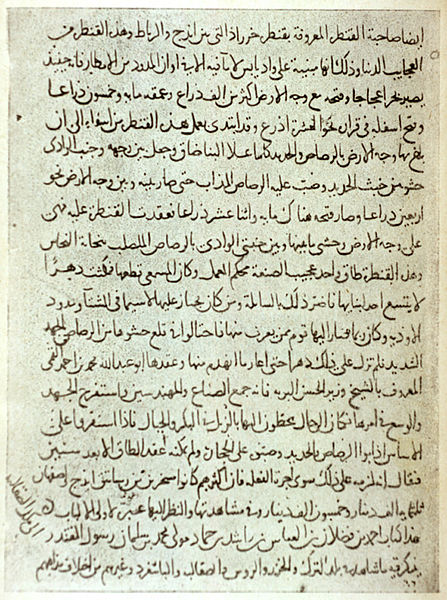
The observations of a 10th century Arab traveller, Ahmad ibn Fadlān ibn al-Abbās ibn Rāšid ibn Hammād, about the hygiene of the Vikings more than a thousand years ago, are being confirmed by new DNA analyses. Ibn Fadlan describes the Eastern Vikings while the new DNA studies are about the Western Vikings, but their living conditions and habits would have been very similar. ScienceNordic reports that a new DNA study “conducted on thousand-year-old parasite eggs recovered from Viking faeces, shows that both the Vikings and their domestic animals were plagued by parasites — which most likely enjoyed excellent living conditions in a dirty world in which domestic animals and humans lived in unhygienically close proximity to each other”.

The paper is published in the Journal of Parasitology:

Homo erectus was making engravings 500,000 years ago

December 4, 2014

Long before any specimens of Homo sapiens were even gleams in the eyes of their hominin ancestors, Homo erectus peoples on Java (how and when did they get there?) were using shells as tools and were making engravings on the shells themselves. A new paper in Nature reports on studies of hundreds of fossil shells from the Homo erectus site Trinil, on the Indonesian island of Java. The shells are part of the Dubois Collection held at the Naturalis Biodiversity Center in Leiden. They have been dated to about 500,000 years ago.

Of course if all Homo Sapiens came Out of Africa (or Africarabia) around 100,000 years ago, then these Homo erectus on Java must have gone extinct without leaving any survivors (unless some of their genes still live on through later admixtures).

Joordens J.C.A., et al. Homo erectus at Trinil on Java used shells for tool product i on and engraving, Nature 10.1038/nature19362.

The 'Pseudodon shell' fossil with the engraving made by Homo erectus op Trinil. (Photo: Wim Lustenhouwer, Vrije Universiteit)

The ‘Pseudodon shell’ fossil with the engraving made by Homo erectus on Trinil. (Photo: Wim Lustenhouwer, Vrije Universiteit)

From the Leiden University Press Release:

Oldest ever engraving discovered on 500,000-year-old shell

Homo erectus on Java was already using shells of freshwater mussels as tools half a million years ago, and as a ‘canvas’ for an engraving. An international team of researchers, led by Leiden archaeologist José Joordens, published this discovery on 3 December in Nature. The discovery provides new insights into the evolution of human behaviour.

‘Until this discovery, it was assumed that comparable engravings were only made by modern humans – Homo sapiens – in Africa, starting about 100,000 years ago,’ says lead author José Joordens, researcher at the Faculty of Archaeology at Leiden University.

A team of 21 researchers studied hundreds of fossil shells from the Homo erectus site Trinil, on the Indonesian island of Java. The shells are part of the Dubois Collection held at the Naturalis Biodiversity Center in Leiden. The shells were excavated at the end of the 19th century by the Dutch physician and researcher Eugène Dubois, the discoverer ofPithecanthropus erectus – now known as Homo erectus.

The discovery of an engraved geometrical pattern on one of the shells came as a total surprise. The zigzag pattern, that can only be seen with oblique lighting, clearly pre-dates the weathering processes on the shell arising from fossilisation. The study has excluded the possibility that the pattern could have been caused by animals or by natural weathering processes and shows that the zigzag pattern is the work of Homo erectus.

By applying two dating methods, researchers at the VU University Amsterdam and Wageningen University have determined that the shell with the engraving is minimally 430,000 and maximally 540,000 years old.This means that the engraving is at least four times older than the previously oldest known engravings, found in Africa. …..

…… This research has shown that these early human-like people were very clever about how they opened these large freshwater mussels; they drilled a hole through the shell using a sharp object, possibly a shark’s tooth, exactly at the point where the muscle is attached that keeps the shell closed. ‘The precision with which these early humans worked indicates great dexterity and detailed knowledge of mollusc anatomy,’ says Frank Wesselingh, a researcher and expert on fossil shells at Naturalis. The molluscs were eaten and the empty shells were used to manufacture tools, such as knives.

A. Shell tool, made by Homo erectus. B. Detail of the sharp edge used for cutting or etching. (Photo: Francesco d'Errico, Bordeaux University)

A. Shell tool, made by Homo erectus. B. Detail of the sharp edge used for cutting or etching. (Photo: Francesco d’Errico, Bordeaux University)


More women than men – throughout history

September 26, 2014

The Max Planck Institute for Evolutionary Anthropology is pioneering many new techniques of investigative genetics and is causing minor revolutions in many areas of anthropology. Perhaps the best known of these is Svante Pääbo and his group’s work on extracting and analysing ancient DNA.  Their work on the Neanderthal genome is changing the previously accepted history of Modern Humans and their relationships with Neanderthals, Denisovans and other ancient branches of homo erectus.

A new paper reports on a DNA study of 623 males from 51 different populations and comes to the conclusion that throughout history women have outnumbered men. The study compared the paternally-inherited Y chromosome (NRY) with maternally inherited mitochondrial DNA (mtDNA). The researchers developed a high-resolution Y chromosome sequencing assay that allowed them to get paternal and maternal histories of similar quality and resolution. Female populations were larger before the out-of-Africa migration(s) and remained so throughout almost all subsequent migrations. Women migrated more (presumably as they were married out) and men stayed put more. For most of our history a greater proportion of women in the population reproduced than men leading to females making a larger genetic contribution to the current global population than males did. Men tended to fertilise multiple females (perhaps an indicator of polygyny).

CBS News: …. people in East Asia and Europe have larger genetic differences for paternal than for maternal DNA, suggesting high levels of female migration. In contrast, populations in Africa, Oceania and the Americas have bigger differences for maternal DNA than for paternal DNA.

Human paternal and maternal demographic histories: insights from high-resolution Y chromosome and mtDNA sequences, Sebastian Lippold, Hongyang Xu, Albert Ko, Mingkun Li, Gabriel Renaud, Anne Butthof, Roland Schroeder and Mark Stoneking, Investigative Genetics 2014, 5: 13

Eurekalert:

Female populations have been larger than male populations throughout human history, according to research published today in the open access journal Investigative Genetics. The research used a new technique to obtain higher quality paternal genetic information to analyse the demographic history of males and females in worldwide populations.

The study compared the paternally-inherited Y chromosome (NRY) with maternally inherited mitochondrial DNA (mtDNA) of 623 males from 51 populations. The analysis showed that female populations were larger before the out-of-Africa migration and remained so throughout almost all subsequent migrations. The main drivers of this trend are likely to be processes such as polygyny, where one male mates with many females, and the fact that in most societies, women tend to move to live with their husbands. This has resulted in females making a greater genetic contribution to the global population than males.

Previous research on genetic history has used different techniques to analyse NRY and mtDNA, which has led to an ascertainment bias in the results. In this study, researchers from the Max Planck Institute for Evolutionary Anthropology developed a high-resolution Y chromosome sequencing assay that allowed them to get paternal and maternal histories of similar quality and resolution, so they could make a direct comparison. The results confirmed previous findings that when comparing human populations on a global scale, there are greater genetic differences in paternal NRY than in mtDNA. However, these differences are not as large as previously thought and the authors were surprised to see substantial variation in relative amounts of NRY vs. mtDNA differentiation at the regional level.

The authors argue that using this new technique, greater analysis can be undertaken at a regional level to create a clearer picture of the paternal and maternal influences on specific populations. In the African populations they studied, they saw lower paternal genetic diversity, which may be a direct result of the Bantu expansion into eastern and southern Africa beginning about three thousand years ago. In samples taken from the Americas, initial results suggest higher maternal genetic diversity, indicating that there were fewer males than females among the original colonisers.

Dr. Mark Stoneking, Department of Evolutionary Genetics, Max Planck Institute, an author on the paper, said: “Our new sequencing technique removes previous biases, giving us a richer source of information about our genetic history. It allows us to take a closer look at the regional differences in populations, providing insights into the impact of sex-biased processes on human genetic variation.”

The “original” Out of Africa event

July 6, 2014

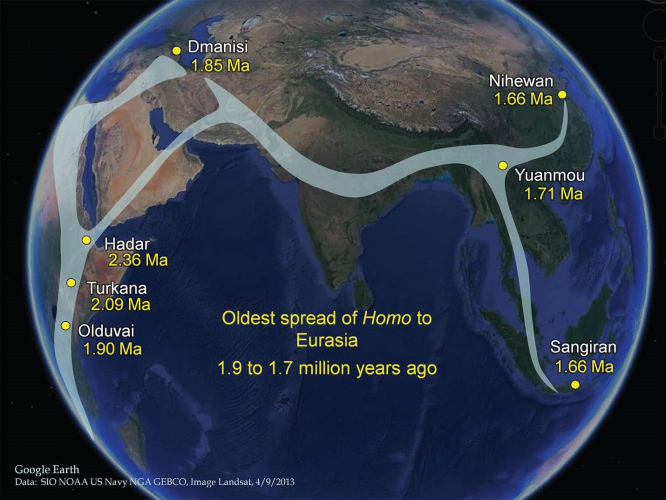
Homo Out of Africa 1.9 million years ago

Homo Out of Africa

Can Modi break down the Indian millstone of caste and clan?

June 12, 2014

If Narendra Modi manages to break – or even to weaken – the debilitating stranglehold that caste and clan have on Indian life, he stands some chance of releasing the huge potential that is still buried deep in the country. Paradoxically, his brand (now mellowing) of Hindu nationalism may allow him the freedom not only to challenge the shackles of caste and clan but also to keep in check the extravagant expectations engendered by the pampering of minority groups (which was unavoidable with a coalition government).

The caste system in India probably represents the oldest surviving form of institutionalised racism in the world. It predates Hinduism and probably started first by classifying specialists by the virtue of their professions. That was possibly 5,000 years or 250 generations ago. But with sons following fathers in their professions heredity entered into the social classification. In due course – the caste system was probably hijacked by Hinduism and then evolved into a genetic classification defining social status and even “permissible” professions for each caste.

The caste system is so prevalent and so insidious that it can even survive religious conversions. I know of some Christian families – who converted to Christianity some 200 years (10 generations) ago – but where the pre-conversion caste still survives and comes into play when arranging a marriage.

Whatever and whenever the origin, the caste system is still so ingrained that the vast majority of Hindu marriages still conform to caste rules. In many parts of rural India, close to 50% of marriages may be consanguineous (first cousins) but this drops to less than 30% in urban areas. In many communities the level of inbreeding is reaching worrying levels. Development and improvement of living standards has given a slow reduction in these numbers. But very often the castes and clans are perpetuated by the very “affirmative actions” that were supposed to eliminate them. The advantages and privileges afforded by many of these programmes has led to whole communities fighting to retain their caste differentiation. They are committed to protecting – genetically – the purity of their “low caste” to retain the privileged status they enjoy within “affirmative action” programmes for education and employment.. The caste system still dominates political life in many areas and can lead to local and state governments often being dominated by a particular caste or clan. And when one particular caste or clan is in power they regress to a medieval feudalism and see the territory they govern as their fiefdom.

Modi made all the right noises when he addressed Parliament for the first time as Prime Minister and acknowledged that casteism and regional differences had damaged India. But the difficulties he will face in trying to root out the racism inherent in the caste system cannot be underestimated. An entire political party may be dominated by a particular caste or clan. The recent barbarism in central India is a case in point. Currently Uttar Pradesh has a government – it seems  – “of the Yadvas, by the Yadavs for the Yadavs”!!

FirstPost: The rape and murder of two girls in Badaun seems to have triggered a shake-up in the Uttar Pradesh government machinery which even the near-decimation of the party in the recent Lok Sabha election could not do. Not only has Chief Minister Akhilesh Yadav transferred hundreds of officers, suspended more than half a dozen, withdrawn security or armed guards from dozens of individuals and dismissed dozens of nominated officials, but the Samajwadi Party president Mulayam Singh Yadav has disbanded party units at various levels.

But what the SP leadership has been unable to shake off is the popular perception that all the moves are more political in nature rather than an honest effort to actually change the way the state is being governed.  …….. the feeling has grown that the establishment is trying to protect the alleged culprits in the Badaun case despite the international outrage at the rape and murder of two cousins aged 15 and 14, whose bodies were found hanging from a mango tree in a village in Badaun district on 27 May. Preliminary post-mortem investigation had revealed that both had been gangraped and then hanged from a tree, and that the cause of death was hanging.

….. Mulayam’s nephew Dharmendra Yadav is the MP from Badaun and most of the police stations in the district – as well in the state – have Yadavs on the force. This phenomenon is typical of the Samajwadi Party’s reign in Uttar Pradesh and had been seen during the 2004-2007 SP regime also. “The ruling family in the SP has always been protective and supportive of the Yadavs, regardless of the criticism it attracts. The police recruitment in 2004 also reflected this. The perception among the Yadav community is very strong that the ruling family would go to any extent to protect their clansmen,” says a non-Yadav SP sympathizer. “In the Lok Sabha election the party lost all seats contested by non-family members, and it is now critical for it to consolidate whatever Yadav support it has in the community in view of the coming by-elections in the state, including Mainpuri which is close to Badaun.”

Trousers were invented for riding horses

June 3, 2014

Trousers were invented at least 3,000 years ago – for riding

The Tarim Basin in Central Asia with its hot but exceedingly dry climate has yielded a number of well preserved mummies and over 500 tombs have been found and excavated in the last 50 years. A new paper describes the finding of well preserved trousers from 3,000 to 3,300 years ago.

Whether these were the first ever trousers cannot be determined of course. But these remains found in Central Asia tell us that horse riding is at least 3,000 years old (and herding, capturing, breaking and training horses must have been “invented” well before that).

Chinese trousers 3000 years old - photo M Wagner, German Archaeological Institute

Chinese trousers 3000 years old – photo M Wagner, German Archaeological Institute