Archive for the ‘Archeology’ Category

Near complete woolly mammoth skeleton found near Paris

November 15, 2012

Woolly mammoths seem to loom out of a stone age pre-history and it is sometimes difficult to realise that they only went finally extinct some 10,000 years ago. But this particular skeleton comes from the time when Neanderthals were a common sight.

Mammuthus primigenius: Wikipedia

 Mammuthus  primigenius

A nearly complete mammoth skeleton has just been uncovered at Changis-sur-Marne in the Seine-et-Marne department. This type of discovery, in its original context, is exceptional in France since only three specimens have been found in 150 years: the first such discovery, known as “the mammoth of Choulans”, was discovered in Sainte-Foy-lès-Lyon in 1859.

This mammoth is probably a Mammuthus primigenius, a woolly mammoth with long tusks that were used to expose edible vegetation under the snow. These animals could reach 2.8 to 3.4 metres high at their withers and were covered with fur and a thick layer of fat. The mammoth of Changis-sur-Marne existed between 200,000 and 50,000 years ago, at the same time as Neanderthals. Mammoths were well adapted to cold climates and thus disappeared from western Europe 10,000 years ago when the climate became warmer. The most recent specimen died off the coast of the Bering Strait, 3700 years ago. …. 

(more…)

Sapiens + dogs >> Neanderthals

May 16, 2012

Since this blog will now focus on energy, electricity, environment and climate, I shall now post my comments /views on archaeology, pre-history, anthropology, biology and matters related to the development and evolution of humans  in 6,000 Generations instead:

Was dog domestication the critical advantage for Sapiens over Neanderthalensis

Though fossil evidence of domesticated dogs is very sparse and the earliest is from around 30,000 years ago, there is no certainty about when domestication actually occurred. For it to have been a critical advantage over Neanderthalensis it would have to have started with some form of regular human-canine co-operation – eventually leading to domestication – perhaps some 50,000 years ago.

Controlled use of fire now dated back to at least 1 million YBP

April 3, 2012

How fire came to be discovered and then brought under control by our ancestors will probably always remain a matter for speculation. There is evidence that forest fires were occurring “naturally” at least 350 million years ago when plant life colonised the land. It may have been earlier since volcanoes were active long before this but the combustible matter needed (fuel and oxygen) which volcanic eruptions could have ignited would have been plentiful only around 350 million years ago.

Many animals have learned to take advantage of the benefits of wildfires – mainly after the fire is over. Some birds of prey take advantage of fleeing insects and small animals while the fire is still raging. Carnivores search in the ashes for animals killed by the fire but still with edible remains. Herbivores gather to lick the ashes for tasty “elements” and salts. Our ancestors would have been observers and beneficiaries of the accidental “cooking” and the warmth from forest or bush fires for many millions of years.

(more…)

Earliest evidence of the wheel? 7,500 year old toy “car” found

February 26, 2012
A stone car with two axles and 4 wheels dating from about 7,500 years ago has been found near the North Kurdish town of Qoser. It would seem to be earliest known evidence of a wheeled vehicle.

7,500 year old stone car from Qoser

(more…)

6,000 generations since Out of Africa

February 13, 2012

Lately, I have been delving into the fascinating – but somewhat arcane – fields of paleo-anthropology and genetics and biology and archeology. I find I am constantly trying to create a narrative which hangs together and looking for the little details which can enable me to personalise and identify with the narrative. It is a search for little “hooks” onto which I can hang my “hats” of understanding. And one such “hook” which both anchors and enables my imagination is that when looked at in the perspective of individuals in a particular line of descent, the ancient past is not as intangible and unreachable as it might seem.

from Wikipedia

It is only simple arithmetic but it seems to me quite remarkable that the long journey from the dawn of anatomically modern humans (AMH) some 250,000 years ago, when considered along any particular line of descent, contains not more than some 12,000 individuals. So the right 12,000 names, if I knew them, would suffice to describe all the individuals on any specific line of descent from my origins as an anatomically modern human. Twelve thousand is not so great a number of people. It is less than the population of the little town I live in and it is a number that would be comfortably handled by even quite a small database. I even hear that some people boast more than 12,000 followers on Twitter and others have more than 12,000 “friends” on Facebook! It does not take many minutes to set up an Excel sheet with 12,000 line items, each line then representing one individual on one of my particular lines of descent.

So I have started a new blogsite called 6,000 Generations to provide an outlet for my speculations about individuals from my Ancestral Generations (AG’s).

Borobodur courtyard reopened but 90% of ash remains to be removed

November 22, 2010
Borobudur temple view from northeast plateau, ...

Borobudur temple view from the northeast: image via Wikipedia

The Borobodur site was closed to the public after the eruptions of Mount Merapi began on Oct. 26. The temple complex was partly reopened for tourists over the weekend. Yogyakarta airport is now open. The Jakarta Globe reports:

Officials are concerned the acidic soot will hasten the wearing of the temples, Borobudur in particular, which is covered in up to 3 centimeters of ash. “Since Nov. 11, we’ve taken emergency action to keep Borobudur clear of ash by cleaning up 72 stupas and the main stupa, and wrapping them in plastic,” Junus Satrio Atmojo, the Culture and Tourism Ministry’s head of historical and archeological sites, said Saturday.

The government has allocated a total of Rp 600 million ($67,200) to clean up the Buddhist temples of Borobudur, Pawon and Mendut, as well as the Hindu temple complex of Prambanan, he said. “Cleaning up Borobudur and the three other temples requires that we be extra careful and work step by step to prevent the ash lodging in the pores of the rock surface,” Junus said.

“It’s not a question of hiring more people to help clean up, but of the equipment that we need to buy.” That includes Rp 248 million for Borobudur. “Cleaning up Borobudur and the three other temples requires that we be extra careful and work step by step to prevent the ash lodging in the pores of the rock surface,” Junus said. “It’s not a question of hiring more people to help clean up, but of the equipment that we need to buy.”

“Our experience from the Aceh tsunami in 2004 tells us that cultural heritage and historical buildings are always the last to be budgeted for in the disaster recovery fund, and that’s why we need outside donors,” he said.

“Donors don’t necessarily have to give us cash. We’d be grateful for items such as plastic sheets, hoses, baking soda and anything else we can use to clean the monuments.”  Junus added that Unesco, which lists Borobudur as a world heritage site, had only been able to offer sending an expert to gauge the damage, as it had no experience dealing with volcanic clean-ups. “We politely declined, as we have plenty of Indonesian experts,” he said.

Temple officials have reopened the Borobudur yard and the first of the temple’s nine levels to the public, but the rest of the site remains closed for cleaning.

“That’s because we haven’t been able to remove all the volcanic ash covering the temple,” Iskandar M Siregar, head of technical services for Borobudur management, said on Saturday. “We’re using brooms and dust pans to clean it up, so we can’t go any faster,” he said. “So far, we’ve collected 20 cubic meters of ash.” Iskandar said this represented less than a tenth of the total volcanic ash at the site.

He also rebuffed calls to wait for the rains to wash away the ash, pointing out that this would only complicate matters. “That’s because the ash would wash into the temple’s drainage system and damage it,” he said.

Clean-up crews are trying as much as possible not to use mechanical equipment, which could damage the rock surface of the temple, he said.
“We have to hurry because the ash has a corrosive character, that accelerates the weathering of the stupas and stones,” Iskandar said.

Duke Danfu’s 3000 year old fruit cellar found

November 21, 2010

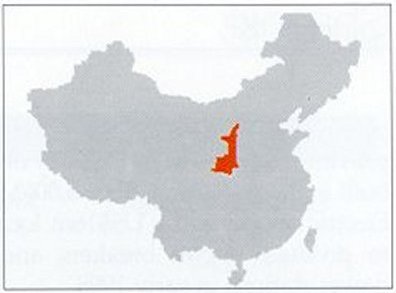
Chinese archeologists have found an ancient fruit cellar containing well-preserved apricot and melon seeds from more than 3,000 years ago in today’s Shaanxi Province reports Xinhua.

Shaanxi Province

Xian, the capitol of Shaanxi Province is better known for its tombs and terra-cotta soldiers. Xian was also the starting point of the Silk Road and home of the Banpo people, a Neolithic culture that lived in the area 8,000 years ago.

Situated at the south foot Qishan Mountain in the west of Shaanxi Province, Zhouyuan was the home of Duke Danfu, an early leader of the Zhou clan. It was the centre for the rise of the Western Zhou.

Covered ritual wine vessel (gong) 1050-900 BCE...

Western Zhou dynasty bronze c. 1000 BC: Image by mharrsch via Flickr

Nearly 800 pieces of bronzeware of the Western Zhou Dynasty, in varied sizes, have been excavated form the Zhouyuan Site, together with large palace foundations and inscribed oracle bones.

From Xinhua

The cellar was a rectangular pit about 105 cm long, 80 cm wide and 205 cm deep, said Dr. Sun Zhouyong, a researcher with the Shaanxi Provincial Institute of Archeology. Sun and his colleagues found the pit in 2002, about 70 cm underground the Zhouyuan site, ruins of Western Zhou dynasty (1046-771 BC) 100 km from Xi’an. After eight years of research, they concluded it was a cellar used to preserve fruits for aristocrats.

In each corner of the pit, Sun and his colleagues found a little round hole. “We assume the cellar had something like a shade that was fixed on the four holes but had decayed over the years.” Inside the cellar the researcher could see, even with naked eye, huge piles of nuts and seeds. “We sorted them out with care, and found about 500 apricot nuts — 108 of which were complete with carbonized pulp, at least 150 melon seeds and 10 plum seeds,” said Sun. They also found millet and grass seeds.

“Most of the seeds were intact and very few were carbonized,” said Sun. “It was so amazing that scientists who conducted lab work suspected they were actually put away by rodents in more recent times.” Sun and his colleagues sent three apricot nuts to Beta Analytic in Florida, the United states, last year for carbon 14 test to determine their age. “The test results indicated they were about 3,000 years old, dating back to a period between 1380 B.C. and 1120 B.C.,” said Sun. “Seemingly the fruits had been stored in an acidic and dry environment, so dehydration was extremely slow and the nuts were not carbonized even after so many centuries.”

Zhouyuan site, where the cellar was unearthed, was believed to be a dwelling place for Duke Danfu, an early leader of the Zhou clan. It was known as the cradle of the Western Zhou Dynasty, one of the earliest periods of China’s written history. “Presumably, the aristocrats had stored fruits in their family cellar,” said Sun. The cellar, with roughly 1.7 cubic meters of storage, could store up to 100 kilograms of fruits, he said.

The Book of Rites, a Chinese history book compiled in the Western Han Dynasty (202 BC-9), put melons, apricots, plums and peaches among the 31 categories of food favored by aristocrats of the time. It said people in the Zhou Dynasty had also learned to grow fruit trees in orchards. A poem in the “Book of Songs”, a collection of poetry from the Western Zhou Dynasty (11th century -771 BC) to the Spring and Autumn Period (770 – 475 BC), says food kept in “ling yin” — meaning cool places — will stay fresh for three days in the summer.

Before the fruit cellar was reported, archeologists in Shaanxi Province found a primitive “icebox” that dated back at least 2,000 years ago in the ruins of a temporary imperial residence of the Qin Dynasty (221 BC – 207 BC). The “icebox”, in the shape of a shaft 1.1 meters in diameter and 1.6 meters tall, was unearthed about 3 meters underground in the residence.

DNA evidence shows farming was not indigenous but was imported into Europe from the East

November 10, 2010

A new paper published in PLoS Biology today uses “high precision ancient DNA methods” to  create a detailed genetic picture of one of the first farming communities in Europe (from central Germany) which reveals that this ancient farming population was radically different to the nomadic populations already present in Europe.

Haak W, Balanovsky O, Sanchez JJ, Koshel S, Zaporozhchenko V, et al. (2010) Ancient DNA from European Early Neolithic Farmers Reveals Their Near Eastern Affinities. PLoS Biol 8(11): e1000536. doi:10.1371/journal.pbio.1000536

The hunter-gatherers of Europe it seems did not change rapidly to become farmers. The farmers moved in (invaded?) from the near east and some 8,000 years ago gradually dominated the scene. From Science Daily:

A team of international researchers led by ancient DNA experts from the University of Adelaide has resolved the longstanding issue of the origins of the people who introduced farming to Europe some 8000 years ago. A detailed genetic study of one of the first farming communities in Europe, from central Germany, reveals marked similarities with populations living in the Ancient Near East (modern-day Turkey, Iraq and other countries) rather than those from Europe.

Project leader Professor Alan Cooper, Director of the Australian Centre for Ancient DNA (ACAD) at the University of Adelaide, says: “This overturns current thinking, which accepts that the first European farming populations were constructed largely from existing populations of hunter-gatherers, who had either rapidly learned to farm or interbred with the invaders.”

“We have finally resolved the question of who the first farmers in Europe were — invaders with revolutionary new ideas, rather than populations of Stone Age hunter-gatherers who already existed in the area,” says lead author Dr Wolfgang Haak, Senior Research Associate with ACAD at the University of Adelaide. “We have also been able to use genetic signatures to identify a potential route from the Near East and Anatolia, where farming evolved around 11,000 years ago, via south-eastern Europe and the Carpathian Basin (today’s Hungary) into Central Europe,” Dr Haak says.

The Author summary:

The transition from a hunter–gatherer existence to a sedentary farming-based lifestyle has had key consequences for human groups around the world and has profoundly shaped human societies. Originating in the Near East around 11,000 y ago, an agricultural lifestyle subsequently spread across Europe during the New Stone Age (Neolithic). Whether it was mediated by incoming farmers or driven by the transmission of innovative ideas and techniques remains a subject of continuing debate in archaeology, anthropology, and human population genetics. Ancient DNA from the earliest farmers can provide a direct view of the genetic diversity of these populations in the earliest Neolithic. Here, we compare Neolithic haplogroups and their diversity to a large database of extant European and Eurasian populations. We identified Neolithic haplotypes that left clear traces in modern populations, and the data suggest a route for the migrating farmers that extends from the Near East and Anatolia into Central Europe. When compared to indigenous hunter–gatherer populations, the unique and characteristic genetic signature of the early farmers suggests a significant demographic input from the Near East during the onset of farming in Europe.

“Wiglesdor” found: Gateway to the Viking Empire

August 29, 2010

The Danevirke is a system of Danish fortifications inSchleswig-Holstein (Northern Germany). This important linear defensive earthwork was constructed across the neck of the Cimbrian peninsula during Denmark’s Viking Age.

http://upload.wikimedia.org/wikipedia/commons/thumb/f/f3/Map_danavirki.JPG/800px-Map_danavirki.JPG
The Danevirke (shown in red) on the 16th-century Carta Marina

For a century, archeologists have been looking for a gate ( the “Woiglesdor”) through a wall built by the Vikings in northern Europe. This summer, it was found. Researchers now believe the extensive barrier was built to protect an important trading route.

Archeologists have now taken a closer look at part of the construction — a three-meter-thick (10 feet) wall from the 8th century near Hedeby (known as Haithabu in German). It is constructed entirely out of stones collected from the surrounding region. Some of them are only as big as a fist, while others weigh as much as 100 kilograms (220 pounds). “The Vikings collected millions of rocks,” says archeologist Astrid Tummuscheit, who works for the state archeology office of Schleswig-Holstein.

A Customs Station, an Inn and a Bordello

(more…)