Archive for the ‘Aviation’ Category
January 12, 2011
Bloomberg reports:
IndiGo, the Indian low-cost carrier that agreed to a record plane order, may begin overseas flights in August as economic growth stokes travel in the world’s second-most populous nation. The carrier eventually plans to fly to the Middle East, Southeast Asia and other South Asianations, President Aditya Ghosh said in a phone interview today. The New Delhi-based carrier is unable to start international flights before August because of government regulations.

VT-INA - IndiGo - Airbus A320-232: image PlanespottersNet_026313.jpg
IndiGo may consider sale-and-leaseback deals and debt issuances to help pay for the 180 Airbus SAS A320 planes it has signed a preliminary agreement for, Ghosh said. The aircraft, worth about $15 billion at list prices, will boost the carrier’s fleet as it competes with Air India and Jet Airways India Ltd. in Asia’s second fastest-growing major economy.
The new order, which was announced yesterday, builds on the 100 A320s that IndiGo signed up for in 2005, the year before it began services. The carrier was operating 32 planes at the end of November, according to data on Airbus’ website. The other planes in the initial order for 100 are due to be delivered by 2015, Ghosh said. The airline is a unit of closely held InterGlobe Enterprises Ltd., which also runs hotels and offers technology services…..
Deliveries of the next 180 single-aisle planes will run from 2016 to 2025, Ghosh said. These planes will include 150 of Airbus’s revamped A320, which will be fitted with new engines. The carrier is the first customer for this new version.
Indian carriers are buying aircraft and adding overseas routes as rising wages and trade stoke leisure and business travel. Domestic passenger numbers will likely surge fourfold to 180 million a year by 2020, according to a government forecast…..
Airlines in India have to fly domestically for at least five years before they can start overseas services, under government rules.
Tags:Airbus, Airbus A320, IndiGo, IndiGo overseas, Low-cost carrier
Posted in Aviation, Business, India | Comments Off on Indian low-cost carrier signs record Airbus deal, plans to fly overseas routes
January 11, 2011
From the Daily Mail:
Dozens of Easyjet passengers were ordered off a plane and threatened with arrest if they refused – because the overloaded jet was too heavy to take off.
The flight from Birmingham to Geneva was over-filled with 10 tonnes too much fuel so the captain asked the last 37 customers to get off the plane. When some passengers refused to budge they were informed that three police officers were waiting in the airport terminal and would arrest them if necessary.
I have experienced this once on an SAS flight from Copenhagen to Norrköping. We had just seated ourselves when my son cried out “Dad, they’re taking our bags away”. Sure enough they had overfilled the plane with fuel and off-loaded baggage to compensate. But the Captain came out and apologised personally to each affected passenger, explaining that the ground crew had over-filled with fuel according to his instructions which had been based on a passenger manifest which was about 2 hours out-of-date. He acknowledged it was his fault publicly on the loudspeakers and that he had no excuses. He promised that all baggage would come out on the next flight and would be delivered to our addresses (which did happen). By the time we had landed, the stewardesses had taken down the addresses of the affected passengers and when we landed the kids were plied with toys, puzzles and 2 weeks worth of chocolates and we were given carrier bags full of bottles of wine and champagne left over from the meal service.
What I was particularly struck by was that all the irritation and anger of the passengers was completely neutralised as soon as the captain made his public acknowledgement, admitted the mistake and took responsibility. The mood on the plane palpably changed and by the time we had landed my boys actually thought it was all part of an adventure organised especially for them. Needless to say they still have a deep seated loyalty to the SAS brand even though SAS has fallen on relatively hard times and we usually have to fly Lufthansa to reach the destinations we need to get to. That Captain had a touch of class.
EasyJet has a lot to learn about what taking responsibility actually means.
If at all possible EasyJet and RyanAir are airlines I avoid like the plague.
Tags:airline incompetence, brand loyalty, classy behaviour, corporate responsibility, Easyjet, mood change, SAS
Posted in Aviation, Behaviour, Business | 1 Comment »
January 10, 2011
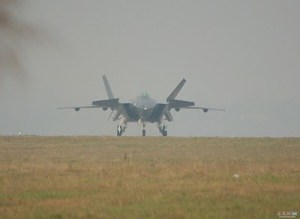
Both China and India are developing 5th Generation stealth fighters; China on its own and India as part of a joint development programme together with Russia.
From http://china-defense.blogspot.com/2010/12/latest-batch-of-j-20-photos.html
Rumours from China’s Chengdu Aerospace Corporation (CAC) and the adjoining Aircraft Plant No 132 suggest that a flight of a Chinese-developed fifth-generation fighter prototype would take place by the end of the year. Reportedly, two airframes (numbered 2001 and 2002) have been assembled at the 132 plant.
In August 2008 it was reported that 611 Institute was selected to be the main contractor for the development of the fifth-generation stealthy J-20, and that 601 Institute was the sub-contractor. It was rumored that 611 Institute has started to issue manufacturing drawings for constructing the first prototype, which is expected to fly by 2012, even though the full configuration one won’t fly until a few years later. The latest rumor suggested that a full-scale mock-up had been built at CAC.
From http://www.globalsecurity.org/military/world/china/j-xx.htm

Sukhoi PAK FA T50: image wikipedia
Russia and India are jointly developing the Sukhoi PAK FA / T-50 , which first flew in January 2010. In June 2001, India was offered ‘joint development and production’ of this new 5th generation fighter by Russia. Russia had been trying to sell this concept both to China and India for some time. It seems probable that China declined to participate in this project given a belief that Russia stood to gain more from Chinese participation than did China. That is, it would seem that China had determined that it could produce a superior product without Russian help. With the first flight of the Russian stealth fighter in 2010, an arguably superior Chinese steath fighter might be expected to take to the skies not too long thereafter.
Chinese combat aviation has made remarkable strides in recent years, moving from a collection of obsolete aircraft that would have provided a target-rich environment to potential adversaries. Today China flies hundreds of first rate aircraft, and even flies more Sukhoi Flankers [the aircraft the American F-22 was designed to counter] than does Russia. The Chinese stealth fighter has arrived right on schedule. Chinese military technology is generally rated about two decades behind that of the United States. while the advent of a Chinese counterpart to the F-22 fighter might be disconcerting, the first flight of the prototype American F-22 stealth fighter came on September 29, 1990.
New Delhi, December 21, 2010: India and Russia on Tuesday finalised a contract for the biggest defence programme in the country’s history — a $30-billion (Rs 1,35,000-crore) project involving the joint production of 200-250 fifth generation fighter aircraft (FGFA). The aircraft, being called the perspective multi-role fighter (PMF), will exploit the basic design of the Russian Sukhoi T-50 PAK-FA prototype, with modifications thrown in to meet the Indian Air Force’s “more stringent specifications”. The 30-tonne aircraft will be a swing-role fighter with stealth features for increased survivability, advanced avionics, smart weapons, top-end mission computers and 360-degree situational awareness. What will put the co-produced fighter in a different league is its ability to supercruise, i.e. sustain supersonic speeds in combat configuration without kicking in fuel-guzzling afterburners. Currently, the US Air Force’s F-22 Raptor is the only fighter in the world that can supercruise.
The contract for the joint design and development of the FGFA was signed between Hindustan Aeronautics Limited and two Russian firms, Sukhoi Design Bureau and Rosoboronexport. The fighter will be jointly marketed to international air forces. The first prototype flew its maiden sortie in January 2010 and has conducted more than 40 flights. The IAF hopes to induct it by 2018.
A joint statement issued by the ministry of external affairs said Prime Minister Manmohan Singh and Russian President Dmitry Medvedev agreed that the December 2009 pact covering bilateral military cooperation during the next decade would lead to a more substantive engagement cutting across joint research and development, manufacturing and marketing activities.

HAL Tejas: Image via Wikipedia
India today joined a select group of nations manufacturing warplanes with the home-grown Light Combat Aircraft ‘Tejas’ moving a step closer to its induction into the Indian Air Force after getting its Initial Operational Clearance (IOC) here.
27 years after the project was initiated, defence minister AK Antony handed over the IOC certificate to Air Chief Marshal PV Naik at the HAL airport in Bangalore.
“This is only the semi-finals”, Antony said, adding the LCA would enhance national security and build the country’s own fighter aircraft capabilities.
The aircraft, with an investment of over Rs 14,500 crore ($3.2 billion), has been developed by DRDO’s Aeronautical Development Agency after battling technology denial regimes and sanctions for nearly three decades. “After crossing a number of challenges and accomplishing a significant series of milestones including weapon delivery, in over 1500 sorties, the country is poised for a major turning point with the declaration of the IOC,” Antony said.
The IAF has plans to induct a total of around 200 planes of which orders for the initial 40 have already been placed by the IAF.
The aircraft, which costs between Rs 180 to 200 crore ($45 million) per piece, is presently powered by American GE-F 404 engine and the advanced GE-414 engines have been chosen for powering the LCA Mk II aircraft, which are likely to be developed by 2014.
Tags:5th generation fighters, Chengdu J-20, China, India, Lockheed Martin F-22 Raptor, Russia, stealth fighters, Sukhoi PAK FA / T-50
Posted in Aviation, China, Defense, India, Russia | 2 Comments »
January 5, 2011
While Qantas had restarted flying its A380 aircraft with Rolls Royce Trent 900 engines on 27th November after the engine failure on 4th November, its flights to Los Angeles remained grounded since the engines had not been cleared for operating at the higher thrust levels necessary for reaching LA.
Reuters reports that flights to LA could now resume on 17th January:
Qantas said on Wednesday it hoped to resume normal A380 operations from January 17 but it would still need the go-ahead from Australia’s aviation regulator before flying the superjumbo aircraft on the lucrative route……. Qantas said on Wednesday it expected to have eight A380 aircraft in the air by early February, up from five currently. The airline is scheduled to take delivery of a new A380 aircraft in mid-January and another new aircraft by early February. A third A380 currently grounded in Sydney was also due to be operating by mid-January……. Analysts estimate damages to Qantas could reach $60 million, although forecasts vary. The LA route is one of Qantas’ most profitable.
For Rolls Royce, getting Qantas back to full operation is critical to bringing this chapter to a close and to limiting at least one part of the inevitable claims that will come. They will also face claims from Airbus who announced a few days ago that they would only deliver 18 A380’s during 2010 and would not reach their already reduced target of 20 planes. This delay is put down to the extra inspections caused by the fault in Rolls Royce engines. No doubt Singapore Airlines and Lufthansa will also have claims on Rolls Royce. I still estimate that the total costs to Rolls Royce will reach $300 million.
Tags:Airbus A380, flights to Los Angeles, Qantas, Rolls Royce, Rolls Royce costs, Trent 900, Trent 900 failure
Posted in Australia, Aviation, Engineering, Technology | 3 Comments »
January 4, 2011
The Times of India reports on the bizarre story of a confidential file found on the street:
Even as the race for the “mother of all defence deals” enters the last lap, two IAS (Indian Administrative Service) officers of the defence ministry are now under the scanner for the mysterious way in which a “secret” file connected to the $10.4 billion project to acquire 126 new fighters went missing and was then found by a roadside.
There is an intense battle currently in progress to win the $10 billion deal for 126 combat aircraft (MMRCA – medium multi-role combat aircraft) where the final decision is expected to be taken by March. As I have posted earlier, the technical and flight evaluations on the 6 contenders were conducted by the Indian Air Force and their highly confidential and secret report was submitted to the Ministry of Defence by early November 2010. Many rumours circulated at the time and the word on the street was that the Eurofighter Typhoon had won the technical evaluation. However this evaluation is merely one (but important) stage in the decision making process. The strategic and financial evaluations are under way and political lobbying is building up. Some of this lobbying is at the highest levels of government and no doubt the recent visits to India by Obama and Medvedev and Sarkozy were utilised fully.
For all the contenders the technical evaluation is what determines what is left to be done to win the contract. The details in the technical evaluation report are most important for a contender to know how to compensate for any perceived failings. I am quite sure that every contender has managed by now to obtain a copy of the technical evaluation report. (To obtain copies of confidential reports from Indian bureaucrats is not in the realm of the impossible. In my experience obtaining reports and confidential documents from clerks in government service is much more effective than any Freedom of Information application and are not subject to any redactions.) I am equally sure that all the six aircraft manufacturers would have by now developed their sales strategies and lobbying plans based on the their weaknesses as recorded in the report. But what may have been missed by some is that unofficial dissemination of the “confidential” report is an expected event. It may even have been a deliberate leakage of the report as part of the Government of India’s buying strategy.
The six are:
- Dassault, Rafale, France
- Eurofighter, Typhoon, UK, Italy, Germany and Spain
- Lockheed Martin, F-16IN Super Viper, US
- Boeing, F/A-18E/F Super Hornet, US
- Saab, JAS 39 Gripen, Sweden
- Mikoyan, MiG-35, Russia
Even though there are only 6 contenders, the number of lobbyists, sub-contractors and foreign embassy officials involved would have led to at least 100 copies of the report having been “sold” by various bureaucrats with access to the file. So I do not find it very surprising that one of the many “unsold” copies was abandoned somewhere. The value of such reports goes down sharply with time. It must have been at its most expensive immediately after it was submitted to government and before the many visits by various heads of state to Delhi. Again from my past experience of such things I would expect that the report probably had an initial “price” of around Rs 10 lakhs (about $20,000) but now some 2 months later, can probably be purchased for less than 1 lakh ($2,000).
Nobody is probably very bothered by this episode since the leakage of the report to the contenders is part of the game and already taken into consideration by the Government. In fact leakage of “perceived weaknesses” to a supplier is one of the best buying strategies to extract improvements in the supplier’s offer. The most senior bureaucrats in the Ministry of Defence are probably congratulating themselves for having managed to disseminate so many copies of the report before this particular slip-up.
But for now all the right noises will be made for public consumption. As the ToI reports:
Ordering an inquiry into the episode, defence minister A K Antony on Monday said he was “very clear that every officer has to be very careful at every stage” while dealing with the huge MMRCA (medium multi-role combat aircraft) project. “We have viewed the incident seriously…the inquiry is in progress,” he said. It was last week that the “secret” file, which was earlier submitted to the MoD by IAF, went missing and was then found later in the day near Khelgaon Marg in South Delhi.
MoD was tight-lipped about the incident but sources said the file was apparently lost by the bureaucrats, one an additional secretary-rank officer and the other a director, while being taken to the Bharat Electronics Limited guest-house on Khelgaon Marg. The file was found by a security guard who then got in touch with the authorities concerned.
Tags:deliberate leaking of confidential information, India, Indian Air Force, Indian MRCA competition, technical evaluation
Posted in Aviation, Business, Defense, India, International Trade | 1 Comment »
December 24, 2010
From the WSJ:

Honda Motor Co. says the first FAA-conforming version of the small business jet it has been working on for years made its first flight. The plane, called the HondaJet, flew from the company’s Honda Aircraft Co. operation at Piedmont Triad International Airport in Greensboro, N.C.

HondaJet first flight:image Honda Motor Co.
While an earlier version called a proof-of-concept aircraft has logged more than 500 hours of flight testing, flying the version built to Federal Aviation Administration rules is what really counts toward bringing the plane to market. Honda’s project is part of a renewed and growing intersection between automobiles and aviation that is occurring around personal- and business-transport. Honda touts the same qualities for the plane, such as “dynamic performance” and efficiency, as it does for its cars. The company has said it is essentially applying lessons learned in auto manufacturing to the aircraft business

HondaJet First Conforming Flight: image Honda Motor Co.
Honda says it will build five FAA-conforming jets for testing before ramping up production in 2012. The company says it has more than 100 orders for the light business jets, which have a top speed around 483 mph and a ceiling of 43,000 feet. Honda plans to deliver the first one in the third quarter of 2012.

HondaJet interior
First flight video is at http://hondajet.honda.com/
Tags:First conforming flight, Honda HA-420 HondaJet, HondaJet
Posted in Aviation, Business, Japan, US | Comments Off on Honda takes to the air
December 22, 2010
From the WSJ:

Agence France-Presse/Getty Images The damaged Rolls-Royce Trent 900 engine and wing section from a Qantas Airways Airbus A380.
European aviation regulators on Tuesday substantially relaxed tight inspection rules covering Rolls-Royce Group PLC engines on Airbus A380 superjumbo jetliners, signaling that safety concerns about the planes are fading. The European Aviation Safety Agency, dropping emergency mandates to inspect Trent 900 engines after every 20 flights, moved to require repetitive inspections of most of the engines after 100 flights. The change is likely to reduce disruption of flight schedules, according to industry officials.
EASA’s move follows intensive inspections of Trent 900s on A380s operated by Qantas, Singapore Airlines Ltd. and Deutsche Lufthansa AG. In its latest directive, the agency said a review of manufacturing and inspection data convinced safety officials that many “lower risk” tubes are less prone to fracture and therefore don’t need such frequent checks.
Lifting the emergency directives so quickly, particularly after such a high-profile and dangerous event, indicates much of the fleet is unaffected by oil-system manufacturing defects.
To further assure the safety of Rolls-Royce-powered A380 jets, European regulators previously also ordered upgrades of Trent 900 electrical systems to prevent engine parts from turning dangerously fast, a condition that can lead to disintegration of spinning disks. Those enhancements already have been incorporated into the A380 fleet.
Problems caused by a manufacturing defect on an oil-supply tube have been blamed for the explosive failure of a relatively new Trent engine on the Qantas jet shortly after takeoff from Singapore. The fault has been found on the current fleet as well as at least one new plane slated for delivery to Qantas, according to industry officials. But on Tuesday, EASA for the first time specifically defined what it considers to be an acceptable minimum thickness for the walls of the tubes.
EASA’s decision also is good news for Qantas and the other carriers that fly A380s with Rolls-Royce engines because those airlines have been concerned about potential schedule disruptions and longer required layovers to accomplish the inspections.

Australian Transport Safety Bureau report: The Trent 900 engine blew out after the Qantas A380 took off from Singapore on Nov. 4.
It would seem that the initial failings of the Trent 900 have now been found and are being rectified. But it needs a few more months of operation before it can be said that all the “teething” problems of the Trent 900 have been identified and resolved. The costs for the fix – mainly to be borne by Rolls Royce – have still to be added up and will not be finally clear for a few more months.
EASA had also relaxed inspection requirements before the explosion on the Qantas A380 probably in response to representations by the engine manufacturer and /or the airlines. One hopes that their decision to relax inspections this time is not just in response to pressure.
Tags:A380, EASA, Rolls Royce, Trent 900
Posted in Aviation, Engineering, Technology | Comments Off on EASA eases safety inspections for A380’s Trent 900 engines
December 2, 2010
The Trent 900 fix is not going to be cheap for Rolls Royce. I am still maintaining my estimate that the total cost for the engine manufacturer will be in excess of $300 M.
The Wall Street Journal:
Australia’s Qantas Airways Ltd. Thursday said it has taken measures that would allow litigation against Rolls-Royce Group PLC if it fails to reach a commercial settlement over the recent failure of a Trent 900 engine powering one of its A380 super jumbos. Qantas confirmed in a statement it is in talks with Rolls Royce over the “financial and operational impacts” of the engine failure.
Also Thursday, the international carrier said it plans fresh inspections on the Trent 900 engines after Australian safety regulators said they have identified a possible manufacturing flaw.
Qantas was forced to ground its fleet of six A380s last month after an engine on board flight QF32 exploded above Batam Island, Indonesia shortly after the airplane took off from Singapore, en route to Australia on November 4. Two of the mega airliners have since returned to service.
The explosion has put U.K., Derby-based Rolls-Royce engines under the microscope as airlines around the world that operate the Airbus A380 run a raft of safety tests. Airbus is a division of European Aeronautic Defence & Space Co.
A statement of claim has been filed by Qantas and an injunction by the Federal Court of Australia granted, ensuring the carrier can pursue legal action if settlement does not emerge, it said in a statement.
Australian safety investigators now believe the cause of the November mid-air drama may have been a manufacturing defect with an oil tube connection on some Trent 900 engines. That problem could cause oil leakage, cracking and possible engine failure from an oil fire, the Australian Transport and Safety Bureau said Thursday.
“The safety recommendation of the ATSB is consistent with what we have said before. We have instituted a regime of inspection, maintenance and removal which has assured safe operation. This programme has been agreed in collaboration with Airbus, our airline customers and the regulators,” a Rolls-Royce spokesman said.
Singapore Airlines, Lufthansa and even Airbus (EADS) can have claims on Rolls Royce and all may well have to resort to legal action to reach settlements. Qantas and Airbus have the greatest potential claims. Whether Rolls Royce knew about defects in advance of the accident on QF32 will be a key issue to determine if the engines delivered by Rolls Royce were actually “fit for service”. If the engines were not “fit for service” it opens the door to an even greater levels of claims on Rolls Royce.
Tags:Airbus A380, legal action, Qantas, Rolls Royce, Trent 900
Posted in Aviation, Business, Engineering, Technology | Comments Off on Qantas prepares for legal action against Rolls Royce
December 2, 2010
The Australian Transport Safety Bureau has determined that there is a “critical safety issue” with the Rolls Royce Trent 900 used on the Qantas A380 aircraft which could lead to a “catastrophic failure”. Qantas has been ordered to carry out further inspections.
AFP reports:
The Australian Transport Safety Bureau said a misaligned component had thinned the wall of an oil pipe in the exploded engine, causing “fatigue cracking” that prompted leakage and a fire “central to the engine failure”. “This condition could lead to an elevated risk of fatigue crack initiation and growth, oil leakage and potential catastrophic engine failure from a resulting oil fire,” the ATSB said, noting it was “understood to be related to the manufacturing process.”
The Bureau issued a directive urging Rolls-Royce to “address the safety issue and take actions necessary to ensure the safety of flight operations in transport aircraft equipped with Rolls-Royce Trent 900 series engines.” Qantas said it would immediately conduct further engine investigations as a result of the findings, but stressed it was just a precautionary measure and “there is no immediate risk to flight safety.”
“Qantas currently has two A380 aircraft in operational service, following the grounding of the fleet on 4 November. Both A380 aircraft will be inspected at the Qantas Jet Base in Sydney,” the airline said. “Inspections will commence this afternoon.”
The flagship carrier said it would determine whether further action would need to be taken after inspections were complete and it had consulted both Rolls-Royce and regulators. “Qantas does not anticipate at this stage that the inspections will have an impact on international services. However contingency arrangements will be in place, if needed,” it said.
The findings come just five days after Qantas resumed A380 flights, though the carrier has barred the superjumbo from trans-Pacific trips to Los Angeles due to the extra engine thrust required. It had grounded all six of its Airbus superjumbos after the November 4 blast over the Indonesian island of Batam, which forced an A380 to return to Singapore airport trailing smoke.
Checks revealed problems with 16 of the total 24 Rolls-Royce Trent 900 engines powering Qantas’s A380s — four per plane — meaning the turbines would have to be replaced or modified.
Qantas chief Alan Joyce on Saturday said he was “100 percent comfortable” with the A380s’ operation.
As reported by the WSJ, Qantas has already said that they will be claiming compensation from Rolls Royce.
Tags:Australian Transport Safety Bureau, critical safety issue with Trent 900, Qantas, Rolls-Royce Trent 900, Trent 900 failure
Posted in Aviation, Business, Engineering, Technology | Comments Off on “Critical safety issue” with Trent 900 could lead to “catastrophic failure”: Qantas to make further inspections
November 27, 2010
The flight, QF1 from Sydney to London, was due to leave at 6.05pm – but passengers were pulled off the plane after a loud noise emanated from the engine while they were taxiing towards the runway. The flight was later cancelled.
Earlier, passengers watched as Qantas CEO Alan Joyce staged a media conference to assure the public the company was now “100 per cent confident” A380 planes were safe. But while passengers on the A380 flight to London got away on time, passengers on board flight QF1 to London via Bangkok were pulled off their flight because of an engine fault.
The passengers disembarked about 7pm and were given meal vouchers, while engineers examined the engine. But at 9pm they were told the flight was cancelled. It was expected to leave at 9am today.A passenger on the plane told The Sunday Telegraph he could hear the engine die. “We were on the tarmac and then the captain said there was a mechanical problem; he said there was an electrical fault and that every time they tried to start the engine up it cut out,” he said. “We sat for 45 minutes and then they took us off the plane.”
The captain of yesterday’s flight, David Evans, who was part of the cockpit crew onboard flight QF32, said as “a precaution” Qantas had decided to use “reduced thrust” on the engines for the initial flights.
Tags:A380, A380 resumes flying, engine falure, Qantas
Posted in Australia, Aviation, Business, Engineering, Technology | Comments Off on A380 resumes flying but Qantas has another engine failure on a B747


 The k2p blog