Archive for the ‘Behaviour’ Category

Hausergate: In scientific misconduct “confirmation bias” or “fudging data” are equally corrupt

January 2, 2011

The Scientific American carries an article about the Marc Hauser case at Harvard. (Marc Hauser was found to have committed 8 cases of scientific misconduct).

Scientific American

Scott O. Lilienfeld argues that Hauser may only be guilty of “confirmation bias” and that it is premature to ascribe deliberate wrongdoing to him:

Hauser has admitted to committing “significant mistakes.” In observing the reactions of my colleagues to Hauser’s shocking comeuppance, I have been surprised at how many assume reflexively that his misbehavior must have been deliberate. For example, University of Maryland physicist Robert L. Park wrote in a Web column that Hauser “fudged his experiments.” I don’t think we can be so sure. It’s entirely possible that Hauser was swayed by “confirmation bias”—the tendency to look for and perceive evidence consistent with our hypotheses and to deny, dismiss or distort evidence that is not.

The past few decades of research in cognitive, social and clinical psychology suggest that confirmation bias may be far more common than most of us realize. Even the best and the brightest scientists can be swayed by it, especially when they are deeply invested in their own hypotheses and the data are ambiguous. A baseball manager doesn’t argue with the umpire when the call is clear-cut—only when it is close.

Scholars in the behavioral sciences, including psychology and animal behavior, may be especially prone to bias. They often make close calls about data that are open to many interpretations…….

………. Two factors make combating confirmation bias an uphill battle. For one, data show that eminent scientists tend to be more arrogant and confident than other scientists. As a consequence, they may be especially vulnerable to confirmation bias and to wrong-headed conclusions, unless they are perpetually vigilant. Second, the mounting pressure on scholars to conduct single-hypothesis-driven research programs supported by huge federal grants is a recipe for trouble. Many scientists are highly motivated to disregard or selectively reinterpret negative results that could doom their careers.

But I am not persuaded. When “eminent” scientists use their position and power to indulge in “confirmation bias” it is merely a euphemism for what is still cheating by taking undue advantage of their position. It is “corruption” in its most basic form. I reject the notion that such “confirmation bias” is a form of  “unwitting behaviour”. It may well be behaviour which resides in the sub-conscious but that is not “unwitting” behaviour. Neither is it excusable just because it may be in the sub-conscious. It gets into the sub-conscious only because the conscious allows it to do so. When any behaviour residing in the sub-conscious conflicts with the values and morality of an individual it is inevitably ejected into the conscious.  Being sub-consciously immoral but consciously moral is not feasible.

In the case of Marc Hauser, even assuming that his faults were due to “confirmation bias” then either it was behaviour which remained entirely in the sub-conscious in which case his values and morality are suspect, or it was triggered into the conscious and he continued anyway in which case it was simple cheating.

Ethics of Journals: When plagiarism is not plagiarism

December 31, 2010

When is plagiarism not plagiarism?

Apparently when the editor of the journal BMC Medical Ethics finds that a paper published in his own journal has copied large chunks from a different (competing?) Journal – in this case Bioethics.

As Retraction Watch points out the retraction notice issued by BMC Medical Ethics is less than satisfying:

BMC Medical Ethics has retracted a November 2010 paper by two authors from Mayo Clinic whose manuscript — “End-of-life discontinuation of destination therapy with cardiac and ventilatory support medical devices: physician-assisted death or allowing the patient to die?” — contained passages that closely echoed those in another article, “Moral fictions and medical ethics,” published online in July 2009 in the journal Bioethics.

Retraction Watch continues:

We find the retraction notice more than a little opaque and confusing. It’s unclear how “similar” the article was to the Bioethics paper it offended. But why not use the word “plagiarism” to describe the similarities? Also, how convincing is that “no intention” disclaimer? (Not very, as it happens, as you’ll soon learn.) And why is the article still available?

We’ve emailed the editor of BMC Medical Ethics for an answer to these questions and will update this post when we learn more.

Retraction Watch spoke to Franklin G. Miller, a bioethicist at the National Institutes of Health and first author of the plagiarized Bioethics paper

Miller, to whom the retraction notice specifically apologizes, said he discovered the offending material this fall when he chanced upon the BMC Medical Ethics article.

I first saw a citation to a piece of mine in Bioethics, but then I had the feeling some of this language sounded a little familiar to me. I looked side by side at the two articles and I found extensive passages that were lifted—some were verbatim, some had a couple of minor word changes. There was a citation, but only one, and no quotation marks. They had essentially appropriated our language, our arguments, and our analysis as their own.”

Miller said he contacted the journal, which conducted an investigation.

At first they said they were going to issue a correction, which I said was not satisfactory. Finally the legal dept of the publisher of Bioethics got into the act, and that led to the retraction.

Miller said he is “very dissatisfied” with the retraction notice for its failure to use the word plagiarism and its claim that the misappropriation was inadvertent.

To say that it wasn’t intentional is mind-boggling. You cannot systematically lift someone else’s text without intending to do it. It seems not possible. A sentence or two, maybe, but not paragraphs.

It seems to me that at best the retraction notice is mealy-mouthed and at worst it represents a certain hypocrisy by the editor of BMC Medical Ethics.

Or perhaps it is only plagiarism when other Journals copy material published in yours but not when others are copied and published in your Journal?

Krypton kills nine in Sweden

December 30, 2010

Krypton the drug (and not the element nor the fictional planet nor anything related to Superman’s kryptonite) is thought to have led to the deaths of 9 young people in Sweden.

http://www.thelocal.se/31134/20101229/ reports:

A team of Swedish forensic physicians have concluded that nine young people have died over the past year after having taken the legal drug Krypton. Krypton is sold widely over the internet and is marketed as a safe drug but the risk of overdosing is high, the physicians have observed.

“Krypton reminds me of other opiates such as morphine. It is not some sort of party drug,” said Björn Bäckström, who works at the National Board of Forensic Medicine in Umeå, to the local Västerbottens Kuriren daily. Bäckström, together with colleagues Gisela Classon, Peter Löwenheim and Gunilla Thelander, have penned an article published in the medical journal Läkartidningen warning of the risks of Krypton.

The National Board of Forensic Medicine receives intakes after deaths from across Sweden and one case involving Krypton led the physicians to consider the effects of the drug and found several more cases. The Krypton-related deaths are spread across Sweden and involve both heavy addicts and occasional users, while they all concern people born in the 1970s and 1980s, the newspaper reported.

Krypton is derived from the south-east Asian plant kratom which has been traditionally used for potency and to improve mood. Aside from the leaves and extracts from kratom, Krypton has also been found to contain caffeine and the synthetic opioid O-Desmethyltramadol.
O-Desmethyltramadol is a breakdown of the product tramadol, which is prescribed in moderation to alleviate severe pain and when taken as Krypton is turned into tramadol in the liver and becomes more potent. It is due to this high potency contained in the O-Desmethyltramadol that the risk of overdosing is considered high, leading to respiratory paralysis. The Swedish physicians expect the extract and opiate to turn up in other forms if they are not classified as narcotics.

“That is one of the purposes of the article – to bring attention to this drug so that it should be narcotics classified,” Björn Bäckström told the newspaper.

(news@thelocal.se)

Japanese fishing firms fight back taxes: “necessary” bribes to Russian officials paid into Cyprus banks

December 28, 2010

An interesting defence by Japanese fishing firms that bribes paid to Russian officials and deposited in Cyprus bank accounts were properly booked as “expenditures” and therefore not to be taxed as profits!!

(And from my own experience I conclude that there is no Japanese businessman – or politician – who believes there is anything wrong or unethical in bribing officials – especially in other countries. The only wrong is in paying too much or being caught.)

The Japan Times has the story (but of course does not comment on the ethics involved):

KUSHIRO, Hokkaido (Kyodo) One of four fishery firms hit for back taxes for allegedly making illicit payments to Russian officials denied any impropriety Monday and said the payments were a necessary expense. “We booked the money in the expenditure category (in accounting). It was not illicit money,” said Munemoto Nakayama, who runs Kanai Gyoin Kushiro, Hokkaido. The president spoke with reporters following media reports Sunday that Kanai and three other fishery firms provided about ¥500 million to Russian officials in the three years to 2009 so they could fish in Russia’s exclusive economic zone beyond the limits set under a bilateral agreement with Japan.

Sources said the tax authorities discovered the firms made the payments using irregular accounting methods and concluded the act constituted income concealment, ordering them to pay about ¥200 million in back taxes and penalties. Nakayama confirmed, as claimed in fresh media reports Monday, that the four firms, in addition to having given the money to Russian officials aboard their ships, remitted part of the ¥500 million to bank accounts overseas, including in Cyprus. “We have been doing Russia-related business for over 10 years and have remitted money (overseas),” he said. He also revealed that his company had already filed a revised tax return in connection with the payments as demanded by tax authorities. The four firms admitted paying the Russians to look the other way when their fish catches exceeded the legal quota, the sources said.

File:Walleye pollock.jpg

Walleye pollock: image wikimedia

Kanai, along with three other firms — Wakkanai Kaiyo in Wakkanai, Hokkaido, Kaiyo Gyogyo in Hachinohe, Aomori Prefecture, and Sato Gyogyo in Shiogama, Miyagi Prefecture — sends boats to Russia’s EEZ to catch walleye pollock. The annual catch quotas in Russia’s EEZ were set in the Russo-Japanese fisheries talks, and this year’s quota for walleye pollock was 10,925 tons, the Fisheries Agency said. Russian border security officials are usually present on Japanese boats to monitor their operations, the sources said. Investigative sources said they often hear of fishing companies paying the Russians and they appear to be wining and dining them as well.

Rome embassy bombs set by “eco-terrorists”

December 23, 2010

From the Telegraph:

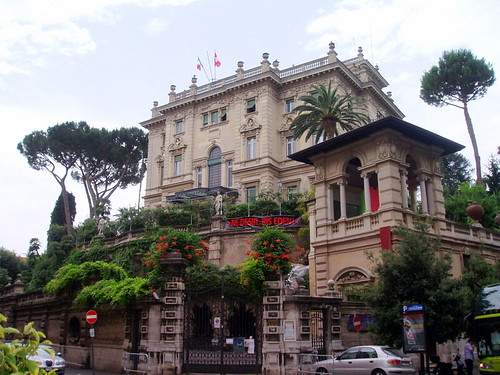
Anarchists are suspected of having launched parcel bomb attacks on the Swiss and Chilean embassies in Rome.

Swiss Embassy Rome: image flickr.com

The first explosion, which occurred at midday (11amGMT) seriously injured a caretaker at the Swiss embassy. The second, which occurred at around 3pm (2pm GMT), was at the Chilean embassy, also injuring one person. The Rome prosecutor’s office has opened an investigation on suspicion of “an attack with terrorist aims,” ANSA news agency reported

One of the investigators said that one of the main lines of inquiry was on “anarchist circles of the eco-terrorist movement.”

The parcel bomb delivered to the Swiss embassy in Rome exploded in the hands of a mail worker who opened the package. “A device hidden inside a package exploded in the embassy. at midday (1100 GMT),” the Swiss embassy said in a statement. “The postal worker’s hands were injured and he was immediately taken to hospital,” it added. The embassy said there had been no claim of responsibility. The injured man is a 53-year-old Swiss national and he risks the amputation of one or both his hands but his life is not in danger.


High corruption at the Commonwealth games spawns tales of conspiracies

December 22, 2010

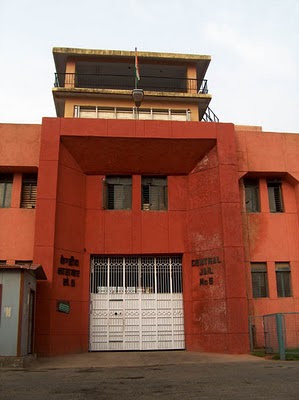
Today came the startling news that two inmates serving life sentences at Delhi’s notorious Tihar jail claim that the jail authorities gave them weapons to kill 2 of the 3 members of the Commonwealth Games Organising Committee currently being held at the jail on corruption charges.

Tihar Jail

The Hindustan Times reports:

Two inmates serving life sentences at Tihar Jail have claimed that the prison authorities gave them weapons to murder two former senior officials of the Commonwealth Games (CWG) lodged in the prison with them. In an application to chief metropolitan magistrate (CMM) Vinod Yadav, Amit and Nishant who are facing trial in a murder case, have said, “The jail authorities inside jail number 4 and ward number 11 approached us with weapons on December 20, 2010, and asked us to murder the two Commonwealth Games officials lodged in the jail with us.”  On personally meeting the judge, the inmates identified the officials as TS Darbari and Sanjay Mahendroo, who are lodged in Tihar following corruption charges.

Their application stated, “The jail officials threatened us with dire consequences if we do not comply with their orders. We are also receiving threats to our life inside the jail premises.” Amit’s mother Munni Devi has also filed an application in the magistrate’s court claiming her son and Pawan were being threatened inside the jail.

The application also claimed that a Delhi police official, who had come to the prison on Monday, recovered the knife from their cell. But they have not identified the officer before the magistrate. “The country-made pistol that was given to us was displaced by the jail authorities. We seek the court’s help to protect us from this ongoing exploitation at Tihar,” the application read.

Following this, the judge has directed the station house officer of the Hari Nagar police station to file a report in the incident and investigate the claims of the Tihar inmates.

Sunil Gupta, PRO of Tihar Jail, told Hindustan Times, “These are hardcore criminals lodged in high security jail. No weapon was recovered from the jail premises and their application is a farce. There was no conspiracy.”

Speculation now is that:

  1. The lifers made up the story merely to create a distraction from their own murder trial, or
  2. Other officials in fear of new confessions have placed a contract on the lives of the officials being held, or
  3. Politicians who fear being implicated in the mesh of corruption surrounding the games have placed the contract, or
  4. the officials under arrest have themselves arranged for the “confession” to develop a sympathy factor before they come to trial.

Tihar Jail is itself notorious for the mal-treatment of many prisoners and for the comfortable living conditions for inmates with money and clout. So the allegation that Tihar jail officials were involved in something like this is not – in itself- so incredible!!

There will be many more twists and turns in this corruption scandal.

A small bright spot in the murky world of corporate ethics

December 21, 2010

Laws tell us what we must not do and morals tell us what we ought not to do – whether illegal or not.

But ethics – when they exist – tell us what is the right and proper and desirable thing to do.

Far too many corporates seem to think that mere compliance with laws is sufficient as a code of ethics. Much trumpeted Corporate Social Responsibilities are primarily public relations and image building exercises with little relation to ethics. Token gestures of engaging in some social programme are assumed to be evidence of the existence of an ethical code but the reality is that most corporates have no ethics. They are content – like children – to let others tell them by law what is forbidden and then take the easy path provided by assuming that all behaviour which is not illegal is – by default – ethical.

As if it is not possible to be completely compliant and completely corrupt at the same time. British Aerospace and their utter lack of ethics being a case in point.

Retraction Watch carries the refreshing story of Wnt Research which shows that some bright spots still exist in the murky world of corporate ethics.

Two weeks ago, we covered the retraction of a PNAS paper on a potential breast cancer treatment, one that would make tumors that didn’t respond to tamoxifen respond to the drug. We learned earlier this week from a Retraction Watch commenter that Wnt Research, a company based on the breast cancer finding and other work, was about to go public.

In fact, their initial public offering (IPO) happened today, and you can follow the price of their stock — listed on the Stockholm Stock Exchange as WNT — here. But what we learned when we looked into the IPO was that it was originally scheduled for late November, and was delayed because of the retraction.

Tommy Andersson, one of the researchers on the now-retracted paper and Wnt Research’s chief scientific officer, told Retraction Watch that the company had initially planned on going public on November 26. They had written a memorandum describing the company’s work to date, and its plans, and the public was given a chance to invest before shares hit the Stockholm exchange. That memorandum included a mention of the PNAS paper, as follows (translated from Swedish):

The research group has even shown that combining Wnt-5a or Foxy-5 will increase the expression of estrogen receptors in estrogen-negative breast cancer cells. It turned out that human breast cancer cells exposed to Foxy-5 regained tamoxifen sensitivity, which is clear from the increased apoptosis and reduced cell growth as a response to the endocrine treatment. Likewise, the research group found that administration of Foxy-5 in the body brought back the expression of estrogen receptors in a mouse model. Apart from the therapeutic potential of these observations, there is a potential to use the outcome of estrogen receptors as a biological marker, which should advance research.

The deadline for investment was October 27, and a number of people responded, allowing the company to continue its work. But on November 11, Andersson and his colleagues realized there were serious errors in the paper, and that it would need to be retracted. When Andersson called Wnt Research’s CEO, Bert Junno, on the 12th:

He rapidly called upon an extra Board meeting on the 15th of November (the same day my email of retraction was sent to the PNAS office). At this meeting we decided to make a press release on this matter and this went out on the 16th of November.

We again had an extra Board meeting on the 19th of November to discuss what other things that we needed to do. We agreed that the short press release must be accompanied by an addition to the already published memorandum, the reason being that you cannot change in the original memorandum. The CEO wrote this addition together with the people at the office of the small Stockholm Exchange “Aktietorget” where the company was to be listed. We also decided to ask for legal advice in how to handle the public that had already paid for shares in the company.

The board held another meeting on the 22nd, during which they approved the addition to the memorandum saying that the PNAS paper had been retracted. They also did something that can only be described as the right thing: They decided to write all of the approximately 275 people who had invested in the company by the October 27 deadline and offer their money back:

The reason for this was that the lawyer advised us to act according to good morals rather than to what we were required to do by law. His belief was that this would pay off in the long run.

The memorandum addition was published on November 25. And some people did ask for their money back:

The offer to retract their investments in the company resulted in a net loss of investments, but we still obtained enough investments to continue our work.

All of that back and forth also meant that the IPO was delayed by three weeks, until today.

We find this story wonderfully refreshing. Imagine, a company bending over backward to let investors — and potential investors — know about problems with its data.

I can only agree that this little story proves that, unlike what Milton Friedman had to say, it is perfectly possible to be ethical in the corporate world.

Today I did my bit and bought some shares in Wnt Research. I know too little about cancer research to judge whether this was or will be a good buy. But I applaud their ethics and my share purchase is just to put my money where my mouth is.

Capitation fees: The stench of corruption in the Indian body academic

December 10, 2010
Varkala in Kerala. India.

Image via Wikipedia

This past week I have been travelling in the southern Indian states of Tamil Nadu and Karnataka.

The growth is palpable and vibrant. But it is chaotic and uncontrolled – and probably uncontrollable, The best that can be hoped for is that movement is in the general direction desired but it is futile to to try and exercise any micro-control. The speed is such that there is no time for consolidation, for reflection, for developing values or standards or for any feedback. Feed forward is the only thing that can keep up.

But in every field of operation – whether construction or government or industry or financial institutions or academia – the stench of corruption is contained under a thin veneer of apparent sophistication. The overpowering fundamental value which gets free reign is greed.

What has become apparent to me is that in spite of many good intentions by government, the shortage of supply in the face of an ever-increasing demand for education has allowed the unfettered growth of  private colleges and universities. But the demand is only used as a vehicle for satisfying greed not for satisfying educational needs.

All degrees and especially post graduate degrees in medicine, engineering and IT related subjects from private colleges in India are granted solely for the payment of a capitation fee.

http://en.wikipedia.org/wiki/Capitation_fee

Capitation fee refers to the unlawful collection of payment by educational bodies in exchange for a seat in the institution. It is also known as donations. This practice is popular in private colleges and universities in India, especially those that grant baccalaureate degrees in Engineering, IT and the sciences. This is an example of institutionalized corruption prevalent in India.The practice goes mostly unnoticed because the board/owners of these institutions hold political/financial powers and also the parents who pay the donations are more than happy to do so.

The Concise Oxford Dictionary defines capitation as follows:

The payment of a fee or a grant to a doctor, school, etc., the amount being determined by the number of patients, pupils etc. Origin (denoting the counting of heads)

The Kerala Self Financing Professional Colleges (Prohibition of Capitation Fees and Procedure for Admission and Fixation of Fees) Act 2004 defines capitation fees as follows.

“capitation fees” means any amount by whatever name called, whether in cash or in kind paid or collected or received directly or indirectly in addition to the fees determined under section 4.

The Supreme Court Judgement in 1993 in the Unni Krishnan Case declared that charging capitation fees was illegal.

But capitation fees are now the only way of  getting a seat in a private college. It guarantees a degree will be awarded. Academic staff  have no say in the selection of students. That selection is reserved for the owners and they usually auction the seats to the highest bidder. Capitation fees are unrecorded, undeclared and paid in cash. Academic standards are irrelevant.

This is not to say that competent engineers and doctors do not exist. But a degree from a private college is an empty thing. It only proves that a capitation fee was paid and is totally silent regarding the capability or competence of the person receiving a degree.

UK MP’s continue with their expense claim shenanigans

December 1, 2010

Of course UK MP’s are not alone among politicians who make creative and extravagant expense claims. I would suspect that Members of the European Parliament in particular could teach the UK MP’s more than a few tricks in this regard.

But The Telegraph reports the UK MP’s still spend considerable time pushing the envelope of what is an allowable expense  – even after the supposed crack-down on expenses.

A list of 1,574 claims, rejected by the Independent Parliamentary Standards Authority (Ipsa) in the space of five months, shows that politicians have attempted to claim back money for their mortgage repayments, first-class travel and excessive hospitality.

The document, obtained by The Times newspaper, which lists a total of rejected claims worth £116,359, also reveals how parliamentarians submitted duplicate claims and did not provide suitable documentary evidence to back up their claims.

One MP was refused £338 for a shredder, while another tried to claim £1,057 for advertising. A third asked for £1,085 for ”contingencies”. All claims, which were submitted between May and September this year, were refused by Ipsa – the body set up to administer MPs expense claims.

The unsuccessful claims amounted to 7% of the total submitted by MPs during the period.

The most bizarre claims:

a limed oak toilet seat

  • £97: Derek Conway (Ind, Old Bexley & Sidcup) two ‘limed oak toilet seats’. Also spent £76 on two loo roll holders at Peter Jones in London
  • 55p: Andrew Selous (Con, South West Beds) claimed for a mug of Horlicks in the House of Commons tea room one evening in March this year
  • 99p: Danny Alexander (Lib Dem, Inverness, Nairn, Badenoch & Strathspey) bought Mr Muscle cleaning fluid from a 99p shop
  • £43.56: James Arbuthnot (Con, Hampshire NE) successfully claimed for three ‘Genius 4 piece garlic peeling & cutting set’ bought on QVC shopping channel
  • £760: Alan Milburn (Lab, Darlington) went on a shopping spree in John Lewis in March 2009 including Nigella Lawson measuring spoons and a Jamie Oliver frying pan
  • £175: Julie Kirkbride (Con, Bromsgrove) claimed for a Samuel Heath Curzon extending shaving mirror from John Lewis
  • £5: Ben Chapman (Lab, Wirral South) claimed for a three pack of ‘waffle’ coat hangers from John Lewis
  • £2,300: Crispin Blunt (Con, Reigate) claimed for ‘brickwork’ including work on his ‘water wheel structure’ and terracotta fireplace
  • £2: Phil Hope (Lab, Corby) claimed for a Hamburger Maker from John Lewis, together with a £5 swivel peeler and two £6 tea towels
  • £24: Lindsay Roy (Lab, Glenrothes) bought a Babyliss Salon Dry hairdryer despite having thinning hair. His claim was rejected by the fees office
  • £105: Douglas Alexander (Lab, Paisley & Renfrewshire South) claimed for having the chimney swept at his designated second home in Scotland
  • £562.23: Kali Mountford (Lab, Colne Valley) bought an LCD TV in West Yorkshire but said it was for her designated second home in London
  • £2.95: David Ruffley (Con, Bury St Edmunds) bought an ‘anti moth proofer’ from Peter Jones of Sloane Square. A few months later he bought another six anti-moth sachets costing £24
  • £420: Lynne Jones (Lab, Birmingham Selly Oak) claimed for Farrow & Ball Toile Trellis wallpaper in April 2008, and also claimed £28.80 for a food mixer

OAS/CARICOM accept Haiti election results: Was voting necessary?

November 30, 2010

To have a result – of any kind and whether valid or not – seems to be more important than having a proper election result for OAS and CARICOM (Organisation of American States and the Caribbean Community).

Haiti Libre asks plaintively:

But we must remember that in these elections, Haiti did not have much to say. It is decided internationally what is good or what is not for us!

Sometimes we wonder why our citizens have been voting at all?

Election scrutineers are let in to the Santa Ana de Cité Soleil polling station in Port-au-Prince on 29th November. image The Independant

The BBC reports that

Haiti’s general election on Sunday was valid despite “serious irregularities”, international observers have said. The joint mission from the Organisation of American States and the Caribbean regional grouping, Caricom, said delays at some polling stations were not reason enough to cancel the election. Polling day on Sunday was marred by disorganisation and some violence, as well as allegations of fraud in favour of the governing party candidate, Jude Celestin.

The election was characterised by mismanagement and incidents of fraud, our correspondent says. There were multiple reports of would-be voters turning up at polling stations to find they were not registered to vote – and of others having the right papers but no idea where to vote. Some polling stations opened hours late, there were allegations that some people were voting multiple times, and thugs ransacked some polling stations.

Hopefully the cholera outbreak will not get a boost from the enhanced human contact during the campaigning and polling process. But the death toll has passed 2,000. The UN especially has displayed organisational incompetence.