Archive for the ‘Behaviour’ Category

Next target for Wikileaks will be a megadump of banking information

November 30, 2010

The information paradigm is changing, whether in the political or industrial or commercial or academic world. We are now in the age of megadumps of information and megaleaks from Wikileaks and its inevitable successors.

While the world’s governments threaten legal action against Wikileaks, and bemoan the damage to diplomacy, Australia is considering whether to revoke Julian Assange’s passport. Media which were not in the group of 5 who received the documents in advance are writing heavyweight editorials about the dangers to society of publishing “confidential” information. Some politicians want Wikileaks to be declared a terrorist organisation and many are warning of the “number of lives that will be put at risk”. Professors are weighing in with the dangers to history ! They are all attacking the messenger but “methinks they do protest too much”.

The risk, if any, emanates ultimately from the information or action that is the subject of the document released, not from the release in itself. Diplomats – or others – who are involved in “speaking with a forked tongue” must accept that their duplicity may be revealed. When governments – in the name of the society they represent – take upon themselves the right to tap telephones, intercept documents divert emails, search or arrest members of that society to collect “confidential” information then they will just have to live with the fact that members of that society may feel – technology permitting – the necessity to access and disseminate “confidential” government information. The information world has changed irreversibly and megadumps of information is a reality. It is not a genie which can be stuffed back into the bottle — though some politicians will try.

Attacking the messenger is essentially counter-productive.

I am sure that the self-righteous (and self-serving) indignation currently being exhibited by many politicians and diplomats as their dirty laundry becomes visible will not be present with the next megadumpaccording to Forbes – of Wikileaks revelations – concerning the banking sector. I find that this information may be of greater public interest than some of the secrets of governments – but that is because I have such low expectations of politicians and diplomats. I have the belief that being in government is inherently corrosive (the corruption of power) and all who attain “positions of power” will always engage in hypocrisy and double-talk. Forbes writes:

Early next year, Julian Assange says, a major American bank will suddenly find itself turned inside out. Tens of thousands of its internal documents will be exposed on Wikileaks.org with no polite requests for executives’ response or other forewarnings. The data dump will lay bare the finance firm’s secrets on the Web for every customer, every competitor, every regulator to examine and pass judgment on.

Sitting for a rare interview in a London garden flat on a rainy November day, he compares what he is ready to unleash to the damning e-mails that poured out of the Enron trial: a comprehensive vivisection of corporate bad behavior. “You could call it the ecosystem of corruption,” he says, refusing to characterize the coming release in more detail. “But it’s also all the regular decision making that turns a blind eye to and supports unethical practices: the oversight that’s not done, the priorities of executives, how they think they’re fulfilling their own self-interest.”

The diplomatic cable megadump is already a reality. The banking megadump will follow. And after banking it may be Energy.

The full transcript of Assange’s interview with Andy Greenberg is here.

Cancun kicks off with the Alarmist creed

November 29, 2010

The Cancun jamboree kicked-off today and started by reiterating the Global Warming Alarmist creed. Drastic – should we say Draconian? – measures would be needed. Some of the suggestions :

  • Stop economic growth in rich countries within 20 years
  • Introduce food rationing
  • Change lifestyles (reduce heating)
  • limit electricity usage
  • food transport be limited (to save on carbon footprint one understands!)
  • people compelled to use public transport

The usual dire warnings of rising sea levels, droughts in river basins and mass migrations were not left out.

It sounds remarkably like the rantings of Pentti Linkola and his ecofascism.

The Telegraph has the whole story but it requires a strong stomach to read it all in one sitting!

Cancun climate change summit: scientists call for rationing in developed world


Diplomacy in action? Two nuclear scientists attacked in Teheran, one killed

November 29, 2010

In view of the latest Wikileaks revelations where the Saudi’s were aggressively pushing for the US to attack Iran, this story about two nuclear scientists being attacked by car bombs, killing one, becomes particularly interesting. Perhaps this is an example of modern diplomacy in action. Whether carried out by Saudi or US or Israeli agents, the use of car bombs – long associated with terrorism – smacks of hypocrisy. But then in modern “diplomacy”, hypocrisy is not – it seems – considered particularly unethical and it seems that in relationships between nations the end does in fact justify the means. Judging from the reaction of the US State Department to the publication of their confidential cables, it could be concluded that politicians and diplomats do not think it necessary to have  – and are not expected to have  –  any firm ethical standards.

The BBC carries the story:

An Iranian nuclear scientist has been killed and another wounded in two separate but similar attacks, according to Iranian media reports. The scientists were targeted in Tehran by attackers who attached bombs to each of their cars, reports said. The scientist killed has been named as Majid Shahriari of Shahid Beheshti University in Tehran, according to the official Irna news agency.

Another scientist was killed in a bomb blast at the beginning of the year.

The state television website says attackers riding on motorcycles attached bombs to the car windows of the scientists as they were driving to their workplaces on Monday morning. “In a criminal terrorist act, the agents of the Zionist regime attacked two prominent university professors who were on their way to work,” Iran’s state television’s website reported.

Dr Shahriari was a member of the nuclear engineering department of Shahid Beheshti University. His wife is said to have been injured in the attack. The nuclear scientist injured in the second attack was named as Fereydoon Abbasi. His wife was also wounded. According to the conservative news website Mashreghnews, Dr Abbasi is “one of the few specialists who can separate isotopes” and has been a member of the Revolutionary Guards since the 1979 revolution.

The Iranian scientist killed in January this year, Masoud Ali Mohammadi, was said to be a nuclear scientist assassinated by counter-revolutionaries, Zionists and agents of the “global arrogance”, Iranian media said at the time.

But I cannot help reflecting that as ethics and values become selective or are diluted as and when judged to be necessary, then decadence has set in and civilisation begins to crumble. As Einstein once said “Relativity applies to physics not to ethics”.

UN Elections in Haiti a shambles

November 28, 2010

The Los Angeles Times reports:

Amid allegations of stuffed ballot boxes and other fraud, 12 of 18 candidates for president (have) called for the elections to be cancelled, (and) accuse President René Préval of trying to fix the contest.

Elections on Sunday in a nation already racked by January’s earthquake and a cholera epidemic devolved into chaos, with thousands of voters unable to find their names on electoral rolls and a general outcry alleging widespread fraud. Twelve of the 18 presidential candidates issued a declaration saying the elections should be canceled and that the people should “mobilize” to prevent the government from accepting the results. They accused President René Préval of conspiring with the electoral council to install his party in Parliament and his pick to succeed him, Jude Celestin, in the National Palace. Celestin was second in recent polling, but a reporter talking to dozens of voters at the polls Sunday could not find a single one who was planning to vote for him. Allegations of fraud are a usual part of Haitian elections but not on the scale of the claims Sunday, coming from thousands of people and the majority of candidates, including at least two of the frontrunners, Manigat and Martelly, who signed the declaration.

But the electoral commission and UN officials seemed to be living in some other reality and declared that all was well. HaitiLibre also describes the status and the apparent fantasy the UN is living in.

Twelve of the 18 candidates in the Haitian presidential election, denounced at a press conference at the Karibe Convention Center, massive fraud and irregularities. They issued a unanimous call for the annulment of the election, following protests from voters who could not vote and many cases of fraud and irregularities observed since the official opening of polling stations.

Three candidates for the presidential election in Haiti, which are Mirlande Manigat, Yvon Neptune and Jacques Edouard Alexis have denounced the fraud and demanded the annulment of the elections, adding their voices to those of other candidates favorable to the end of this sham democratic election …

Patrice Dumond, spokesman for the candidate Manigat “It’s not just fraud, it’s a scandal, a real kidnapping of elections”. Mirlande Manigat during the press conference said “I request the formal CANCELLATION of all electoral activities throughout the territory, what is happening now it’s brigandage organized […] Some State institutions are complicit in this brigandage”. For his part Jacques Edouard Alexis, also requested the cancellation of the poll citing a series of irregularities and involving President René Préval “I do not want an election with him”.

As for Yvon Neptune, also in favor of a cancellation, asks “What can we do in the meantime for good elections? We need a solution between all candidates”.

At Acul-du-Nord and Trou du Nord elections were cancelled. Violent incidents also occurred at Acul du Nord and Trou du Nord, near Cap-Haitien.

Patrick Julien mayor of Acul-du-Nord, said that people were ready to vote, but supporters of the candidates have fired in the air, there have been wounded and he himself was not able to vote “men armed with machetes ransacked six polling stations, elections were canceled,” he said.

At Trou-du-Nord, Mayor Jacques Gustave said a crowd had entered the offices and ransacked polling stations, “the ballots were thrown everywhere, the president of the pooling station made an official report and canceled the election”

At Desdunes in the north, after incidents and gunfire that resulted in injuries, Minustah has sent Sunday morning a half-dozen of armored vehicles “to regain control of the situation.”

Recall that this morning the head of the UN mission in Haiti (Minustah ), Edmond Mulet stated “In general everything goes well, all is quiet. There have been some incidents at Desdunes, minor incidents.” Edmond Mulet said there is no reason to be afraid”. “It’s a electoral feast”… Une déclaration, qui devant les moyens utilisés pour rétablir l’ordre se passe de commentaire…

Former head of India’s counter-terrorism division expects next Wikileaks release to be about corruption

November 28, 2010

Update!

2030 hrs CET, 28th November,

The Wikileaks release has started and will likely continue through the night. The Guardian, Der Spiegel, The New York Times, El Pais and Le Monde have received the material in advance under embargo and have all started releasing the  US State Department cables.

Wikileaks has been subjected to a cyber-attack today and its site is currently inaccessible.

Link to Guardian ability to download all cables

=======================================

The BBC headline is

US warns Wikileaks’ Assange on possible leak

The US has stepped up its threats of legal action against Wikileaks while at the same time rushing to contact all “friendly” governments to try and defuse some of the expected fallout of such a release. The flurry of US government activity seems almost panicky and constant repetition of the claim that “countless lives could be put at risk” does not carry much credibility. Instead of taking responsibility for whatever might have been done or written in the past – and presumably they had good reason to believe it was the right and proper thing to do at the time – the strategy seems to be one of “shooting the messenger”.  But in the current paradigm of ease of information dissemination and increased covert operations by governments around the world, attacks on the messenger only reduce the credibility of the attacker and are counter-productive.

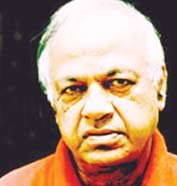
B. Raman: image intellibriefs.blogspot.com

B. Raman is a former Additional Secretary (retired), Cabinet Secretariat of the Government of India. He is the former head of the counter-terrorism division of India’s external intelligence agency Research and Analysis Wing (RAW). He has been applying his mind to the imminent release of confidential US State Department information by Wikileaks and he expects the main subject to be corruption in high places. His thoughts make fascinating reading.

B. Raman writes on his blog:

1. Wikileaks announced through Twitter on November 22,2010, that it will be shortly releasing its third instalment of classified US documents.

2. The first instalment of 77,000 documents related to Afghanistan. The second instalment of 400,000 documents related to Iraq. According to the Twiiter message, its third instalment will contain a much larger number of documents.

3. Wikileaks did not say in its message what will be the subject-matter of the third instalment. However, a Reuters despatch from Washington DC said that classified US diplomatic cables reporting corruption allegations against foreign governments and leaders are expected in the official documents that Wikileaks plans to release. It added: “Three sources familiar with the US State Department cables held by Wikileaks say the corruption allegations in them are major enough to cause serious embarrassment for foreign governments and politicians named in them. They said the release was expected next week, but it could come earlier. The detailed, candid reports by US diplomats also may create foreign policy complications for the administration of US President Barack Obama, the sources said. Among the countries whose politicians feature in the reports are Russia, Afghanistan and former Soviet republics in Central Asia. But other reports also detail potentially embarrassing allegations reported to Washington from US diplomats in other regions, including East Asia and Europe. State Department spokesman Philip J. Crowley said Washington was assessing the implications of what Wikileaks may reveal and was notifying foreign governments about the possible release. “We wish that this would not happen, but we are obviously prepared for the possibility that it will,” he said.

4.The media has reported that the US has warned India and other key governments across the world about the expected release. Crowley has been quoted as saying: “We have reached out to India to warn them about a possible release of documents.” Among other Governments reportedly cautioned are those of Israel, Russia, Turkey, Canada and the UK.

5. After October last year when Wikileaks reportedly developed electronic access to the data bases of the US State Department and the Pentagon and the US military formations in Afghanistan and Iraq, the US authorities were reported to have tightened document security to prevent further leaks. If this tightening has been effective, it is likely that the latest load of documents acquired by Wikileaks (is) related to the period before October last year.

6.While corruption allegations as collected by the US Embassis in these countries could form a part of these documents, it is likely that considering the large number of documents mentioned by Wikileaks, the documents also cover US Embassy reporting on other subjects. Previously, Pakistan’s relations with the US were the focus of Wikileaks. It now seems to be focusing on India’s relations with the US too. It is, therefore, possible that in addition to corruption involving Indian personalities, the documents about India which have reached Wikileaks also relate to India’s policies on Afghanistan, Iraq and Iran.

7. Among the various events relating to Afghanistan, Iraq and Iran in which India figured during this period, four could be sensitive from India’s point of view. Firstly, the pressure on the Atal Behari Vajpayee Government by the administration of George Bush to send a Division of the Indian Army to Iraq. By July,2003, the Vajpayee Government had decided to say no to Washington DC, but there was a lot of voices in Delhi in favour of accepting the US request. Secondly, the papers captured by the US intelligence after the occupation of Iraq from the Iraqi Government Departments showing or corroborating the alleged involvement of a leader or leaders of the Congress (I) in contacts with the Saddam Hussein Government for acquiring preferential quotas for the import of oil from Iraq (the oil for food scandal). Thirdly, the pressure exercised by the Bush Administration on the Manmohan Singh Government for voting against Iran in the International Atomic Energy Agency in Vienna. The Government of India succumbed to this pressure as a quid pro quo for the Indo-US civil nuclear co-operation agreement of July,2005. Fourthly, the analysis and assessment made in the State Department and the Pentagon regarding Pakistani allegations of Indian involvement in Balochistan.

8. Is it possible that Wikileaks might have also got hold of diplomatic cables between the US Embassy in New Delhi and Washinton DC on Indian political leaders, bureaucrats and policy-making? Has it also got hold of messages sent by the US Embassy in New Delhi to Washington DC about the escape of Major Rabinder Singh, the mole of the Central Intelligence Agency in the Research & Analysis Wing, to the US in 2004 and about the detection by the Indian counter-intelligence of a US mole in the sensitive National Security Council Secretariat in 2006? The documents to be released by Wikileaks need to be carefully scrutinised.. ( 28-11-10)

Why cannot a concept of tort or “product liability”apply to scientists?

November 28, 2010

Cases of scientific misconduct do not seem to lead to any significant sanctions. Scientists are not subject to the codes of ethics that other professions have (even if they are not always complied with). Lawyers and doctors and engineers can be “disbarred” or otherwise forbidden from practising their professions when found guilty of incompetence or fraud.  Why then can a physicist or a chemist or a biochemist not be subject to the same professional sanctions for misconduct? Learned Institutes of Physics or Chemistry or Mathematics rarely get involved in the ethics breaches of their members. Scientists also need to be held responsible (liable) for their work and in cases of fraudulent science or misconduct, the sanctions applied need to be seen to be in balance with the extent of the offence.

There have been many cases of scientific misconduct where the offender seems to get little more than a slap on the wrist or a mild reprimand. In some cases they leave one institution and merely move to another. Their degrees are rarely revoked and they usually continue “working” or faking work in some other institution.

Retraction Watch addresses the details of the case of the fraud committed by Dr Jatinder Ahluwalia at University College London which led to the retraction of a paper in Nature.

Earlier this month, we posted an item about the retraction of a 2004Nature paper, “The large-conductance Ca2+-activated K+ channel is essential for innate immunity.” (That post was followed up with provocative comments from a researcher not affiliated with the authors, about what should happen to papers whose results can’t be replicated.)

One of the paper’s authors, Jatinder Ahluwalia, hadn’t signed the retraction, and the notice referred to “Supplementary Information” that hadn’t yet been made available. Today, University College London (UCL) posted that supplementary information, which was the report of a panel that investigated charges of research misconduct against Ahluwalia. That report fills in a lot of details about what preceded the retraction.

UCL’s investigation found that Ahluwalia:

  • falsified the results of experiments conducted by him, on UCL premises, thereby committing research fraud, as defined by paragraph 1.1.iv of the UCL Procedure for Investigating and Resolving Allegations of Misconduct in Academic Research. It was alleged that Dr Ahluwalia altered the numbering of files of research results so as to misrepresent the results of experiments conducted by him;
  • further falsified and misrepresented the results of experiments conducted by him, on UCL premises, by the use of materials other than those specified in the reports of the results of those experiments, thereby committing research fraud, as defined by paragraph 1.1.iv of the UCL Procedure for Investigating and Resolving Allegations of Misconduct in Academic Research;
  • interfered with the experiments of others so as to distort their results, thus falsifying the results of research experiments conducted by others employed by UCL on UCL premises, thereby committing research fraud, as defined in paragraph 1.1.iv of the UCL Procedure for Investigating and Resolving Allegations of Misconduct in Academic Research. It was alleged that Dr Ahluwalia deliberately contaminated chemicals used by other researchers in their experiments so as to falsify the results of those experiments, in order to conceal the falsification by him of the results of his own experiments.

Dr Ahluwalia is currently employed as a Senior Lecturer & Programme leader in BSc & MSc Pharmacology at the School of Health and Biosciences, University of East London,  Stratford Campus, Romford Road, London E15 4LZ, United Kingdom. For having committed fraud and engaged in sabotage and even though he is no longer employed by UCL, it does not seem that his behaviour has led to any significant sanctions.

Recently a Harvard University investigation found its high-profile Professor Marc Hauser guilty of 8 counts of misconduct and sent him on a year’s “book leave” and he will resume his activities next year. He does not lose tenure and his degrees are not revoked and the sanction seems relatively mild in relation to his behaviour.

The product that researchers and scientists produce is publications – mainly as papers published in scientific journals and as books. Scientific misconduct (whether plagiarism or faking data or inventing data or cherry picking data) leads occasionally to dismissals (but not always) and generally very little else. It seems to me that the concept of tort or “product liability” should be applicable to the work of scientists and researchers where their work is the result of faking data, fraud or other misconduct since it would be work that “had not been done in good faith”. Tort would apply because the ramifications of their misconduct would extend far beyond their employment contracts with their employers.

Tort  (from Wikipedia) is a wrong:

that involves a breach of a civil duty owed to someone else. It is differentiated from criminal wrongdoing which involves a breach of a duty owed to society, and also does not include breach of contract. Tort cases may comprise such topics as auto accidents, false imprisonment, slander and libel, product liability (such as defectively designed consumer products), and environmental pollution (toxic torts).

Clearly a researcher has a civic duty to his co-workers, his department, his institution, his publishers and to the global community working in the same field. Scientific misconduct is a clear breach of these duties and any such researcher must then be both accountable and liable. Sanctions in such cases must be commensurate and seen to be commensurate with the offence. A year’s sabbatical from Harvard or merely moving across town to be employed at another university does not seem to be in balance with the weight of the misconduct.

The employment contract of a researcher with any institution no doubt has the appropriate language which allows sanctions (including dismissal) for breach of contract. However the liability of a fraudulent researcher – especially with published papers and books – goes beyond a simple breach of contract with his employer and extends to the entire community of workers in the field and even to all readers who may be influenced by the fraudulent work. For commensurate sanctions to be possible it becomes necessary for the concept of tort to be introduced and for  “product liability” to reside with the researcher whereby he can be held accountable by the entire audience his “product” is addressed to.

Authors of scientific papers and books need to be responsible and liable for their products.

Shooting the messenger to discredit the message

November 27, 2010

From ancient times, envoys, messengers, heralds and town criers have all had to live with the risk of the messages they delivered incensing their audiences sufficiently to cause a backlash against the messenger. “Shooting the messenger” is then the metaphoric expression of this illogical but understandable lashing out against the bearer of bad news. Envoys and heralds were sometimes arrested or beheaded and sent back not just because the message was disliked but to create and transmit a new message by the action itself.

But it is only in modern times with the advent of readily available duplication (micro-film, photocopiers, magnetic tapes, electronic scanning and now cut-and-paste) and of easy dissemination across the globe (fax, computers, email and internet) that the leaking of confidential documents has come into its own. That confidential documents have always existed and will always exist is axiomatic and it is not only governments that have an interest in keeping documents secret. While the act of keeping some information secret may well be to hide some wrongdoing, it is not in itself indicative of illegality. Nevertheless the judgement that something needs to be kept secret is in itself  acknowledgement that the information would cause harm – to someone – if disclosed.

“Whistleblowing” – defined as revealing wrongdoing which is being kept secret – is now taken to be  admirable whether the wrongdoings are by politicians or governments or corporations.  Legislation is in place in many countries ostensibly to “protect” whistleblowers but is usually quite ineffective in preventing reprisals against the whistleblower. Often the legislation is intentionally ineffective and the only purpose is to project an image of “open government” but not actually to permit the disclosure of government secrets. Reprisals have often been crude and violent. In India, whistleblowers have even been killed out of hand. So-called Freedom of Information legislation also strives to maintain this balance of creating an impression of openness but where what is desired to be kept secret can be maintained secret (either by rejection of the request or by introducing delays or by deletion of sensitive information).

The messengers today are often a part of the message. Whistleblowing may have a political agenda. Whistleblowers may be political activists trying to mobilise the forces of public opinion. “Shooting the messenger” in the form of discrediting the messenger or his objectives has now come to be seen as a legitimate method of trying to discredit the message. This was attempted in the Climategate disclosures. Numerous articles were written to label the disclosure the work of a “hacker” (and therefore an illegal act) rather than that of a “leaker” (and therefore the act of an internal whistleblower). In the event the substance of the revelations carried their own weight and even so called “whitewash” enquiries carried out to downplay the substance of the revelations have not been very successful.

Logo used by Wikileaks

Wikileaks: image via Wikipedia

In October this year Wikileaks disclosed the Iraq War Logs. Governments around the world first tried to prevent the release by claiming that people would be in danger of their lives and security would be undermined. Nobody denied that the information was authentic. Once the material had been released, the objectives of the release and the people behind the release were attacked. Governments across the world cooperated to try and discredit the messages. “National Security concerns” became the common theme for the governments in the US and Australia and the UK. The Swedish authorities have accused the Wikileaks founder (Julian Assange) of rape and attempted rape in a crude and rather bizarre incident – but presumably as part of a concerted effort to prevent further revelations. But the information revealed about the number of civilians killed in Iraq and the manner of their killing can no longer be kept secret.

Now, further revelations of confidential US State Department information are expected from Wikileaks. The attacks on the messenger have started. The US government has contacted scores of other governments to try and defuse and discredit the information before it is disclosed. As the BBC writes:

The plan by whistleblower website Wikileaks to release millions more classified US documents will put lives at risk and damage national security, the state department has warned. A spokesman said it would do harm to US international relations if the leaks contained diplomatic cables.

The Pentagon said US military interests could also be damaged. The Wikileaks website said the US authorities were afraid of being held to account.

The state department spokesman, PJ Crowley, said the release of confidential communications was “harmful to our national security. It does put lives at risk. It does put national interests at risk”. Mr Crowley said that diplomatic cables involved discussions with governments and private citizens, and their release could erode trust in the US as a diplomatic partner. “They are going to create tension in relationships between our diplomats and our friends around the world,” he said. “When this confidence is betrayed and ends up on the front pages of newspapers or lead stories on television or radio, it has an impact,” Mr Crowley said.

It is notable that when information is disclosed there is not much effort expended in denying the authenticity of the information. Instead the focus is more and more on attacking the purpose of the disclosure and on attacking the messengers. But even the most horrifying disclosures do not seem to have increased the accountability of governments or their desire to justify their behaviour. “National Security” is the new mantra they can hide behind.

But I cannot help thinking that this tendency of governments, politicians and officials increasingly to attack the messenger is ultimately due to an inability to stand up for one’s own behaviour. It boils down to a lack of courage.


Haiti response inadequate and UN Head of Mission seems incompetent

November 20, 2010

The UN after having introduced cholera to Haiti – which will now remain for many decades – is providing an “inadequate response” according to Medecins Sans Frontieres (MSF) says the BBC.

MSF said that despite the huge aid agency presence in Haiti, urgent needs were not being met. MSF’s chief in Haiti, Stefano Zannini, said the charity had treated more than 16,500 people but that there had been “no real and efficient response from other organisations. This is alarming in the sense that we haven’t reached the peak yet, that might take some time, and so the number of patients might still go up while we still don’t see actions on behalf of other people,” he said.

In a statement, Mr Zannini said more help was urgently needed to treat the sick and implement preventative measures. “There is no time left for meetings and debate – the time for action is now,” he said. Cholera was previously unknown in Haiti, so MSF said much work had to be done to reassure the population, particularly of the low risk and positive benefits of having treatment centres close to areas where people live.

Haiti - Insecurity : The alarmist statements of Edmond Mulet !

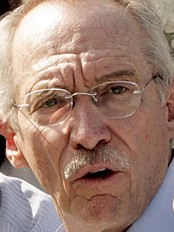
Edmond Mulet: image haitilibre.com

But the need for this reassurance to the local population is apparently not something understood by Edmond Mulet, the head of MINUSTAH (the United Nations Stabilization Mission in Haiti). He seems to be mainly engaged in justifying the UN deficiencies by blaming the lack of action on “the violent protests by people who blame peacekeepers for the spread of the disease (who) were wasting time and costing lives”.

But local Haitians are incensed by the alarmist posturing of the UN head of mission Edmond Mulet who is accused of not taking action. He is busy blaming everybody else and seems to be incompetent at basic public relations.

Judging by the response to his statements in haitilibre.com he is providing little reassurance and only succeeding to alienate the local population. They write

The alarmist statements of Edmond Mulet !

The perpetrators of these “criminals and irresponsible” acts said Mr. Mulet, “prevent the delivery of medical and sanitary assistance to the thousands of patients recently hit by the cholera epidemic, thus condemning to an unquestionable death.”

It is time to stop speaking and start acting Mr. Mulet before it is too late and that violence will spread throughout the country. 12,000 men strong, very well equipped and (with) armored vehicles, what awaits Minustah to release these roads and to restore the order in the zones concerned ? If Minustah’s mission is to maintain peace, she must first begin by eliminating the causes of these disorders, not with dramatic speeches.

If M. Mulet can only respond to the fear of people by blaming them instead of addressing their fear and anger then his competence is in question.

Rampant insider trading at Tokyo Stock Exchange

November 19, 2010
The main trading room of the Tokyo Stock Excha...

Tokyo Stock Exchange: image via Wikipedia

That insider training is endemic at all major stock exchanges is a modern-day legend. Evidential proof of insider trading is also notoriously difficult. Regulators are usually more concerned about the more “sexy” malfeasance a la Enron or a Madoff but usually long after the event and where recovery of losses is insignificant (Madoff caused 65 billion of losses and auction of his personal possessions by US Marshalls raised just 2 million dollars). If I am a little cynical it is because the actual creation and growth of real wealth (by actually making things that are wanted or providing real services that are needed) seems to be less important and less appreciated than the inflating of values (by creation of bubbles) and redistributing the artificially created “wealth” by “smart” methods.

Many of the statements and actions of the regulators are mainly for public relations purposes and sometimes lead to a few high-profile prosecutions. It is very rare for any small investors to recover what they may have lost as a consequence of fraud. Nevertheless it is always good to see the regulators have some success. Asahi News reports that

Financial authorities are taking action to prevent what has been embarrassingly described as “rampant” insider trading through short selling on the Tokyo Stock Exchange. The Securities and Exchange Surveillance Commission (SESC) is looking into allegations of insider trading of certain stocks on the TSE, but declined to disclose the issues or amount traded. The Financial Services Agency (FSA) and the TSE, meanwhile, are considering tighter rules on short selling.

“We hear from overseas investors that insider trading is rampant in Japan. It’s a grave issue,” a senior TSE official said. In short selling, investors borrow shares from brokerages or stockholders under expectations the price will drop. They sell them and buy them back for a profit after the price drops, returning the same number of shares to the lender.

Insider trading suspicions have been raised over the public stock offerings by Tokyo Electric Power Co. (TEPCO), Nippon Sheet Glass Co. and INPEX Corp., which were announced between July and September. The stock prices of all three firms plunged before the announcements of their public stock offerings.

TEPCO, for example, made public it would raise 550 billion yen ($6.6 billion) on Sept. 29 at 4:30 p.m.–after the close of trading. Earlier in the day, however, large volumes of TEPCO stock, six to 10 times more than usual, were traded mainly through short selling, with the issue closing 7.8 percent lower than the previous day. Likewise, there was a surge in short sales of Nippon Sheet Glass Co. and INPEX Corp. shares, causing the prices of both stocks to fall just before the companies announced their capital increase plans.

Companies issue public stock offerings to secure funds from a large number of unspecified investors by issuing new shares. Because it increases the total number of the company’s shares, the value per share drops, leading to lower stock prices in the short run. “I’m sure information got out beforehand,” a market source said about the recent cases. “Foreign hedge funds sold in large volumes.” These suspicions are nothing new. “Often, after receiving many inquiries in the morning from foreign investment banks on how many shares of a particular stock we have, we find a capital increase announcement by the company. There was such an incident just recently,” said a senior official at a securities company. An SESC official said: “If we do nothing about such practices, we could lose credibility of Japanese markets. If there are allegations, we intend to investigate and crack down on them.” One apparent source of inside information is a “demand survey” on institutional investors conducted in advance by brokerages that handle public stock offerings. The survey is intended to gauge the enthusiasm of institutional investors to see if the capital increase plan would go well. But an SESC official said, “People who got the information beforehand could abuse it.”

The SESC has already taken action. Following the Sumitomo Mitsui Financial Group’s issue of about 300 billion yen worth of preferred stock in 2003, the SESC revealed in 2004 and 2006 that employees of investment corporations in Singapore and Britain had been involved in illegal trading of the shares, using information they obtained beforehand. But such investigations take time because the SESC needs to exchange information with overseas regulatory authorities. The investigation involving Singapore spanned a year and a half. The one concerning the British investment corporation required three and a half years.

Both the FSA and the TSE are considering limiting short selling for a defined period after an announcement of a capital increase–until the issue price of the new stock is determined. Under a U.S. regulation introduced in the late 1990s, investors who conducted short selling within five business days before the issue price is set are prohibited from buying new shares issued through a capital increase.

“A (regulation) system has been established in the Untied States, but apparently not in Europe. We need to look into the background, and it will take some time before we reach a conclusion,” a senior FSA official said.


US scientists more likely to publish fake research

November 16, 2010

A new on-line paper in the Journal of Medical Ethics has studied the PubMed database for all scientific research papers that had been retracted between 2000 and 2010.

Retractions in the scientific literature: do authors deliberately commit research fraud? by R Grant Steen J Med Ethics doi:10.1136/jme.2010.038125

Abstract

Background Papers retracted for fraud (data fabrication or data falsification) may represent a deliberate effort to deceive, a motivation fundamentally different from papers retracted for error. It is hypothesised that fraudulent authors target journals with a high impact factor (IF), have other fraudulent publications, diffuse responsibility across many co-authors, delay retracting fraudulent papers and publish from countries with a weak research infrastructure.

Methods All 788 English language research papers retracted from the PubMed database between 2000 and 2010 were evaluated. Data pertinent to each retracted paper were abstracted from the paper and the reasons for retraction were derived from the retraction notice and dichotomised as fraud or error. Data for each retracted article were entered in an Excel spreadsheet for analysis.

Results Journal IF was higher for fraudulent papers (p<0.001). Roughly 53% of fraudulent papers were written by a first author who had written other retracted papers (‘repeat offender’), whereas only 18% of erroneous papers were written by a repeat offender (χ=88.40; p<0.0001). Fraudulent papers had more authors (p<0.001) and were retracted more slowly than erroneous papers (p<0.005). Surprisingly, there was significantly more fraud than error among retracted papers from the USA (χ2=8.71; p<0.05) compared with the rest of the world.

Conclusions This study reports evidence consistent with the ‘deliberate fraud’ hypothesis. The results suggest that papers retracted because of data fabrication or falsification represent a calculated effort to deceive. It is inferred that such behaviour is neither naïve, feckless nor inadvertent.

PhysOrg summarises the paper:

The study author searched the PubMed database for every scientific research paper that had been withdrawn—and therefore officially expunged from the public record—between 2000 and 2010. A total of 788 papers had been retracted during this period. Around three quarters of these papers had been withdrawn because of a serious error (545); the rest of the retractions were attributed to fraud (data fabrication or falsification).

The highest number of retracted papers were written by US first authors (260), accounting for a third of the total. One in three of these was attributed to fraud.

The UK, India, Japan, and China each had more than 40 papers withdrawn during the decade. Asian nations, including South Korea, accounted for 30% of retractions. Of these, one in four was attributed to fraud.

The fakes were more likely to appear in leading publications with a high “impact factor.” This is a measure of how often research is cited in other peer reviewed journals. More than half (53%) of the faked research papers had been written by a first author who was a “repeat offender.” This was the case in only one in five (18%) of the erroneous papers.

The average number of authors on all retracted papers was three, but some had 10 or more. Faked research papers were significantly more likely to have multiple authors. Each first author who was a repeat fraudster had an average of six co-authors, each of whom had had another three retractions.

“The duplicity of some authors is cause for concern,” comments the author. Retraction is the strongest sanction that can be applied to published research, but currently, “[it] is a very blunt instrument used for offences both gravely serious and trivial.”