Archive for the ‘Behaviour’ Category

Poland demonstrates that the EU is not one country – yet

October 26, 2015

Poland has moved quite decisively to the right and towards an anti-EU stance. It demonstrates once again that the dreams of a New Holy Roman Empire in the form a single European nation state are more than a little premature. A single state can only follow a levelisation of living standards and a natural homogenisation of fiscal and monetary policies. Brussels has to learn (and so do Hollande and Merkel) that a single EU state cannot be imposed by dictat or by fiscal and monetary coercion. The Euro has to be a consequence of levelisation. As a tool for levelisation, it is a very blunt and ineffective instrument.

Colours of the EU

Colours of the EU

BBC:

Poland’s conservative opposition Law and Justice party has won parliamentary elections. Exit polls suggest it has enough seats to govern alone, with an anticipated 39% of the vote.

Its eurosceptic leader Jaroslaw Kaczynski has claimed victory, and the outgoing Prime Minister, Ewa Kopacz of the centrist Civic Platform party, has admitted defeat.

Law and Justice has strong support in Poland’s rural areas. If the numbers suggested by the exit poll are confirmed, it will be the first time since democracy was restored in Poland in 1989 that a single party has won enough seats to govern alone, the BBC’s Adam Easton in Warsaw says.

Modern Hinduism in action – equates low caste children with dogs

October 22, 2015

The compassionate face of modern Hinduism.

V K Singh.jpg

Gen VK Singh in 2012 – image Wikipedia

General VK Singh was a commando and former Chief of the Indian Army Staff and took the then government to court in 2012 when he retired over a row about what his true age was. He then joined the BJP, was elected to Parliament, was the junior Minister in the Ministry of External Affairs and is now a Minister without any real portfolio but is called the Minister of Statistics and Programme Implementation – whatever that may mean. But apparently he equates children of the “untouchable” castes to dogs.

(“Dalit” is the name given to those communities classified as “untouchable” according to the Hindu caste system).

NDTV: The government cannot be held responsible for the murder of the two Dalit children in Haryana, Union Minister VK Singh said today. And in an afterthought that is expected to land him in controversy, added, “If someone throws stones at a dog, the government is not responsible”.

Asked if the government has failed in view of the Monday’s killings on the sidelines of an event in Ghaziabad, Mr Singh said, “Don’t connect the government with it. It was a feud between two families, the matter is under inquiry.”

The administration failed there, the minister said, then added the controversial comment. Haryana is ruled by the BJP, Mr Singh’s party. The children — two-and-a-half year old Vaibhav and 11-month-old Divya – had died after their house was set on fire, allegedly by members of an upper caste community at a village in Haryana near Delhi, on Monday. Their father — who sustained burn injuries to save them — said petrol was poured through the window and the house was set on fire.

While Haryana Chief Minister Manohar Lal Khattar put off his (visit) to Sonped yesterday in view of the escalating protests in the area, Congress vice-president Rahul Gandhi had met the family and launched a scathing attack on Mr Khattar, Prime Minister Narendra Modi and their party, the BJP. ………

Under attack from the opposition, the Haryana government has asked for an investigation by the Central Bureau of Investigation into the deaths. Seven people have been arrested in the case so far.

The view that fanatic Hindus (RSS, VHP,  ….) have of people of lower castes and people of different religions is not so different to how ISIS views infidels.

Saudi Arabia gets away with it again — but why?

October 21, 2015

That Saudi Arabia uses barbaric, medieval methods within Saudi Arabia is almost a cliche. But why they command an almost fawning behaviour by other countries can only be partly explained by the power of their money. Values, it seems, are subverted by Saudi oil money.

Without financing from parties in Saudi Arabia, ISIS could not sustain itself. The madrassas and mosques where feeble-minded, muslim kids are radicalised in Europe and in Asia, are financed to a large extent from Saudi Arabia. The 9/11 terrorists were mainly Saudis. Bin Laden was Saudi.

Dissolute and decadent Saudi and Gulf tourists run riot in Europe, driving recklessly, drinking heavily, cooking, littering and smoking shisha in public parks. All with an impunity as if they had a de facto diplomatic immunity – which of course they seem to have. Even the Saudi King and an entourage of 1,000 were allowed to take over a whole beach in France in spite of local protests. The French acquiesced to the King’s demand that female police officers be removed.

Saudi Arabia would collapse without its expat workers and foreign labour. Their medieval treatment of foreigners is a scandal but is tolerated because they pay well. How on earth did Saudi Arabia get elected as the Chair of UN Human Rights Council Panel?

In the last few weeks the arrogant and decadent behaviour of the Saudis at home and abroad has been on show.

  1. The incompetence of the Saudi authorities led to the death of at least 2177 people at the Hajj stampede, not the 769 that Saudi Arabia admits to (as if that was not bad enough).
  2. Two Nepali women working as maids for a Saudi diplomat were were held captive by his family and used for “entertainment” for their Saudi friends. They were starved and sexually abused by them and other Saudi guests. When the girls were eventually released and the diplomat charged, he just claimed immunity and was whisked back to Saudi Arabia.
  3. The US authorities allowed a Saudi prince to flee rape charges even though he had no immunity. Majed Abdulaziz Al-Saud was arrested but fled while on bail. “Arrested on suspicion of false imprisonment, sexual assault and battery, a Saudi prince has also recently been accused of attacking at least three women and holding them captive for several days. Immediately upon posting bail, the prince reportedly emptied his $37 million mansion and fled the country on a private jet to avoid civil litigation and criminal charges. …. Although the prince is a royal member of the House of Saud, the U.S. State Department eventually confirmed that Al-Saud does not have any diplomatic immunity”.

Is it just oil money that leads the US and European governments to put up with the atrocious behaviour that would lead to calls for regime change in other countries? Of course the US sees Saudi as a balance for Iran in the region. But if the US is serious about its so-called war on terror, the sources of most of the financing of islamic terror organisations lie in Saudi Arabia. King Salman is showing signs of dementia and the country is actually being run by his son – but not very competently. Mohammed bin Salman is just 29 and has never had experience of being anything more than an aide. The incompetence on show has led to one of the grandsons of the founder of Saudi Arabia making public his concerns about the way the country is being run.

A senior Saudi prince has launched an unprecedented call for change in the country’s leadership, as it faces its biggest challenge in years in the form of war, plummeting oil prices and criticism of its management of Mecca, scene of last week’s hajj tragedy. 

The prince, one of the grandsons of the state’s founder, Abdulaziz Ibn Saud,  ……. (but) who is not named for security reasons, wrote two letters earlier this month calling for the king to be removed.

And all of Europe and the US continue to indulge them. Low oil prices for the next decade will – perhaps – reduce some of the Saudi excesses, but there is something more than just oil money at play.

I suspect it is the delusion in US and Europe that they can manage the inevitable restructuring of nations in the Middle East that must come. At some time Iraq has to split three-ways between Sunni, Shia and Kurd. And now it looks inevitable that Syria must also split in some similar manner, with a Sunni part of Syria perhaps merged with a Sunni part of Iraq.

Ralph Peters’ scenario for the Middle East


Clinton has just 20% chance of winning against any Republican says incumbency model

October 14, 2015

According to a model based on how an incumbent fares in an election from 450 elections in 35 democratic countries, any Democrat has only a 20% chance of beating any Republican for the US Presidential election.

Clinton's chances

Clinton’s chances

The model shows that Barack Obama’s current approval ratings are not high enough to allow a successor to get elected, though he would, as an incumbent, have an 80% chance of being reelected himself. With his current approval rating of 45-47%, any successor would only have a 20% probability of winning. Even if Hillary Clinton is an exceptional candidate, it will not be enough to overcome the inexorable hand of this incumbency effect.

Clifford Young and Julia Clark in Reuters:

Elections are not mysterious events subject to the whimsy of unpredictable candidates and voters. They’re actually highly predictable, with a set of variables that influence outcomes in familiar ways. Because of that, we can say, with reasonable confidence, that a Republican will be moving into the White House in 2017.

That conclusion is based on the results of a data model we created, and is primarily the result of two factors, both related to the challenges faced by “successor” candidates — candidates from the same party as the incumbent. First, a Republican will win because voters typically shy away from the party currently in power when an incumbent isn’t running. In fact, a successor candidate is three times less likely to win. Second, President Barack Obama’s approval ratings are too low to suggest a successor candidate will take the White House.

At this point in the election cycle, poll data asking the “horserace” question (“Who will you vote for in November 2016?”) can be very misleading. This far from Election Day, published poll data is off by an average of 8 percentage points compared with the true election outcome. That’s an enormous number when we’re used to elections where candidates win by two to three points.

Time Before Election

Average error of polls (compared to final results)

One week

1.7%

One month

2.7%

Two months

3.8%

Three months

4.8%

Six months

5.8%

Nine months

6.9%

Twelve months

7.9%

Source: Ipsos analysis of 300 polls across 40 markets from 1980 through current

So we created a much larger database of elections by looking beyond the United States to hundreds of presidential and parliamentary elections in democratic countries around the world. This exercise gave us far more data to work with: a sample size of more than 450 elections from 35 countries.

The most important finding from our model is the power of incumbency: if you already hold the office you seek, you are far more likely than not to retain it. Our model showed that incumbents have a threefold greater chance of beating their opponent. When no incumbent is running, successor candidates (in this case, Democrats) are three times less likely to win.

From our database of global elections we also learned about the importance of knowing where the public stands on the direction their country and leadership are going. Are they generally happy or unhappy with the government? There are a few ways to measure this, but the most universal (and therefore the one we use) is approval ratings of the sitting leader or president.

Our model proves the power of presidential approval ratings. It determines that in order for a successor candidate to have better than even chances of winning, the sitting president must have an approval rating of above 55 percent. Because Barack Obama’s average approval rating is now at 45 percent, a successor candidate (i.e. Democrat) is unlikely to win. …….

…… In the coming months, Obama’s approval ratings may tick up. But they would have to pass the 55 point mark to give the Democrats even odds of keeping the White House. This is extremely unlikely, given the fact that presidential approval typically declines over time, and Obama’s ratings are no exception.

Some will argue that Hillary Clinton is special; that her chances are significantly better because, given her popularity and status as a “legacy” candidate, she seems more like an incumbent. But if we go along with that hypothesis and run it through our model, at Obama’s current approval ratings, Clinton’s chances of winning the general election are still less than half.

The Democrats have quite a mountain to summit to retain power past 2016.

The best strategy for Hillary would now be to stop throwing any money down the election drain until Obama improves his approval rating to at least 55%. That would at least give her a 50% chance of being elected.

Opportunities for wealth creation needed rather than just redistribution of wealth

October 13, 2015

Credit Suisse has published its Global Wealth report and its accompanying Databook. The data are based on the world’s adult population of about 4.8 billion. What is immediately obvious is that the wealth is very badly skewed with 71% of the world’s adults having a net worth of less than $10,000, 21% have net worth between $10,000 and 100,000 while just 8% have wealth of over $100,000. (I have also added the line of those in extreme poverty).

However my take is that the pyramid is actually a reflection of wealth creating ability.  The challenge is to make wealth creation opportunity less sensitive to the having of wealth. That suggests to me that it is not just a redistribution from rich to poor that is required in the first instance, but the provision of wealth creation opportunity for those having lower net worth. If extreme poverty can be eliminated, and wealth creation opportunity be made less dependant upon having wealth, then we will have a resultant wealth distribution that automatically matches the wealth creation ability of individuals.

CS global-wealth-report-2015 (pdf)

CS global-wealth-databook-2015 (pdf)

The global wealth pyramid is particularly interesting (wealth being taken as net worth):

It has a large base of low wealth holders and upper levels occupied by progressively fewer adults. We estimate that 3.4 billion individuals – 71% of all adults in the world – have wealth below USD 10,000 in 2015. A further billion adults (21% of the global population) fall in the USD 10,000–100,000 range. While average wealth is modest in the base and middle tiers of the pyramid, total wealth here amounts to USD 39 trillion, underlining the economic importance of this often neglected segment. Each of the remaining 383 million adults (8% of the world) has net worth above USD 100,000. This group includes 34 million US dollar millionaires, who comprise less than 1% of the world’s adult population, yet own 45% of all household wealth. We estimate that 123,800 individuals within this group are worth more than USD 50 million, and 44,900 have over USD 100 million.

Global Wealth Pyramid - adapted from Credit Suisse

Global Wealth Pyramid – adapted from Credit Suisse

The take-away from this depends somewhat on from which side of the political spectrum the data are viewed. Looking from the left it is a strident call to arms to “take from the rich and give to the poor”. But this, I think, is just a little too simplistic. How net worth is distributed generally reflects not only wealth concentration but also wealth creation. Merely redistributing existing wealth will actually reduce the total amount of wealth that is created. The bulk of wealth creation thus lies at the initiative of those having the most wealth. It is this coupling between having wealth and wealth creation opportunities which needs to be addressed. It is wealth creation opportunities for those at the lower reaches of the pyramid which is the real need. It is the cliche – but true – of giving a man a fish (wealth) or teaching him how to fish (or create wealth).

Just redistribution will not increase the world’s wealth creation and it is more likely that it will reduce most for those having the lowest net worth. And that would be entirely counterproductive.

However there is little denying that at the top of the pyramid, the concentration of net worth can be almost obscene. Just 123,800 individuals are each worth over $50 million and 44,900 of them are each worth over $100 million.

Top of the wealth pyramid from Credit Suisse

Top of the wealth pyramid from Credit Suisse

The Left Honourable

October 12, 2015

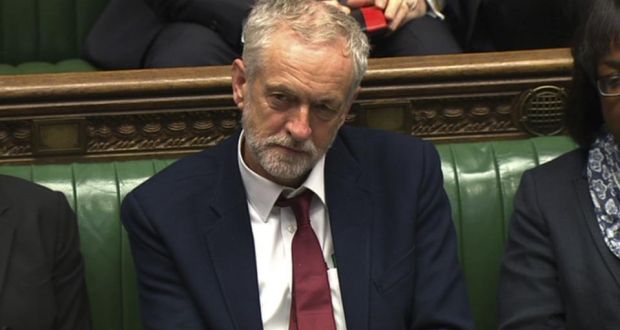
Jeremy Corbyn does not wish to kneel in front of his Queen. He went hiking rather than meet with his monarch. A dastardly act. So he is not yet a member of the Privy Council.

In Parliament he will now have to be referred to as “My Left Honourable Friend/Member”.

The Telegraph:

The Queen’s advisers told Parliament to strip Jeremy Corbyn of his “Right Honourable” status after Number 10 wrongly implied the Labour leader had joined the Privy Council, The Daily Telegraph can disclose.

Mr Corbyn was described on Parliament’s website as “Right Honourable”, which denotes membership of the centuries-old Privy Council, until late last week.

The Labour leader was also described as a “Right Honourable friend” by Prime Minister David Cameron when they faced each other in the Commons last month, days after he was voted in as Labour leader.

However, after Mr Corbyn failed to attend the first meeting of the Privy Council since the summer holidays with the Queen last Thursday, the “Rt Hon” title was removed from Mr Corbyn’s page on Parliament’s website.

The Left Honourable Corbyn (photo Irish Times)

It might seem appropriate, but, of course, there is some difficulty in being both Left and Honourable simultaneously.

Unless Corbyn is also schizophrenic.

The top 10 nanny states of the “free world”

October 12, 2015

A “nanny” state is one which perceives itself as a “free democracy”, but

in which the government insists that it knows best what is good for its subjects and enforces regulations to control individual behaviour under the pretext of the “common good”, “public morality” or of “public health and safety concerns”. 

The top 10 nanny states (11 including the EU) are

  1. Australia
  2. Sweden
  3. EU* 
  4. Norway
  5. UK
  6. Denmark
  7. Singapore
  8. US
  9. Germany
  10. France
  11. Ireland

*Note! The EU is not really a state but the Brussels mentality is fundamentally that of a super-nanny. 

A number of states which would otherwise make the list are excluded because they are not the “free democracies”  they claim to be.

Finally, Swedish opposition acquires a backbone and returns to its job

October 10, 2015

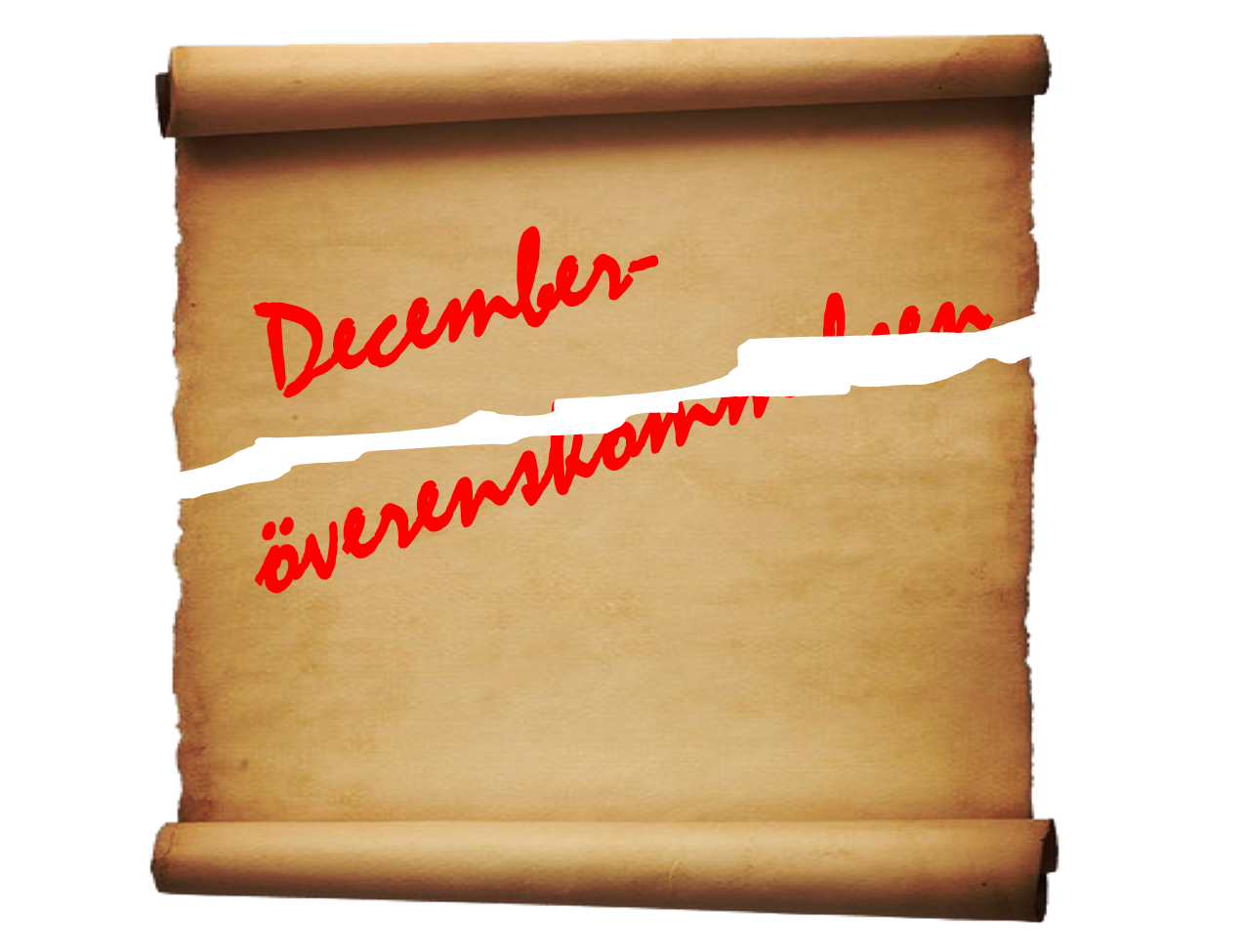
Last December the Swedish, opposition, Moderate-party-led, right-of-centre Alliance, abdicated abjectly from its responsibilities. They signed a so-called December Agreement (DÖ- decemberöverenskommelsen) where they agreed not to oppose, en masse, any critical budget proposition put forward by the minority Socialist/Green government (with the support of the communistic Left party). They agreed to do this, believe it or not, not just for a year or two, but for two whole terms of government (presumably because they thought a quid pro quo could favour them if they were in a minority government after the next election). No doubt they felt it was the only way to get away from the disruptive and looming threat of the right-wing, anti-immigration, Swedish Democrats who hold the balance of power in parliament. The pink/green government, desperate to stay in power, also cravenly agreed to this, even though their budget for 2015 had been defeated and the previous governments budget has applied for 2015. It is ludicrous that they have been in power for a year implementing the previous government’s budget.

At the time, I thought it was a rather despicable Agreement made out of fear and not out of any conviction of what was right. It was an agreement totally lacking in courage and essentially abdicated the role of providing a serious opposition to balance the profligacies of a pink/green (+red support) government. Especially when the weak Socialist leadership was being forced to accept rather childish and incompetent ministers from the Green party. The Greens are sometimes so far to the left of the communists that they approach eco-fascism. The Moderate party had a new party leader then in Anna Kinberg-Batra and she was too inexperienced at the time. She has a reputation for being tough but this toughness has not yet been on display.

DÖ ripped

In any case, the Christian Democrats, a tiny little party but part of the Alliance, have just had their annual congress. (They too have a new party leader, Ebba Busch Thor, but she is extremely lightweight). The party congress rejected the party leadership’s lukewarm recommendation to ratify the Agreement, and voted against it. (I can’t help but feel that Busch Thor and the party leadership actually wanted the rejection but were too scared to openly say so). The consequence is that the December Agreement now stands annulled.

All the Alliance parties have confirmed the annulment. The government parties (socialists, greens and reds) are all moaning about the other parties being unreliable and that they are not to be trusted ever again. The Left communists are most upset at the risk now that the Socialists may abandon them and move to the centre parties to try and cobble together enough support to run a minority government. Probably the best bet for the Social Democrats is to abandon the Greens and The Left and move sharply towards the centre. The Swedish Democrats, who are riding very high in the polls, want a new election.

The government’s budget proposition is waiting to be approved in Parliament but this I think poses no great threat. The other parties have not tabled a joint budget and their individual budget motions will fall. Without a joint budget, which the opposition would have all supported, the Swedish Democrats do not have any opposing motion that they can join to overthrow the government. The Alliance have also said that they have no intention of bringing a no-confidence motion against the government, which the Swedish Democrats then could have taken advantage of.  The Alliance parties don’t want a new election just yet (they have no viable election strategy) and will merely abstain if the SD bring a no-confidence motion themselves.

A crunch could come next autumn in 2016 and even in 2017,  if the Alliance choose to present a joint budget proposition. So we are stuck with the pink/green/red budget for at least a year. It is not a very impressive budget. About 70% of the population will be worse off.

The issue for the Alliance parties will be to develop some kind of a strategy for winning the 2018 election. At the moment they have none. They have to find a way to get back their supporters who have switched their support to the Swedish Democrats. The only strategy visible so far has been to moralise with cliches. Trying to take a high moral position with an electorate already fed-up with sanctimonious preachers has not been very effective.

I could tell them how to do it – not that anybody will listen to me. The first step would be to show some courage. The second would be to start standing up for their own values and not just massaging them – out of fear – to fit perceptions of “political correctness”. (Courage is when fear is made subservient to purpose, but all the Alliance parties have been displaying an abject cowardice in making their actions subservient to fear).

At least we may now finally have an opposition with some backbone – but even that is not entirely certain. But it is an opportunity for Kinberg-Batra to show her mettle.

We are outsourcing our digital memories

October 7, 2015

Prior to about 1995, I held all  telephone numbers important to me in my head. Now, I can remember my own mobile number but not my wife’s. In fact there are very few mobile numbers I bother to keep in my memory at all. I rely entirely on my phone. But it must be that I have taken a decision in my subconscious not to clutter my memory with these numbers – since they are so easy to access on my device.

A new study suggests that we are damaging our long term memories by our dependence upon our digital devices. I am not convinced. I suspect they asked the wrong questions. They have not, I think, considered or sought the type of new long-term memories that are built up instead. The study is by Kaspersky Lab and therefore needs to be taken with a very large bushel of salt. It is I think rather narrow and a little trivial.

Kaspersky-Digital-Amnesia (pdf)

Connected devices enrich our lives but they have also given rise to the potentially risky phenomenon of Digital Amnesia. Many people underestimate just how exposed their externally-stored memories can be, rarely thinking about the need to protect them with IT security, such as anti-virus software. Kaspersky Lab is committed to helping people understand the risks their data could be exposed to, and empowering them to tackle those risks. 

Digital Amnesia

I cannot see that the volume of long term memories is affected. The content of the long term memories we unconsciously choose to hold changes.

BBC:

An over-reliance on using computers and search engines is weakening people’s memories, according to a study.It showed many people use computers instead of memorising information. Many adults who could still recall their phone numbers from childhood could not remember their current work number or numbers of family members.

Maria Wimber from the University of Birmingham said the trend of looking up information “prevents the build-up of long-term memories”. The study, examining the memory habits of 6,000 adults in the UK, France, Germany, Italy, Spain, Belgium, the Netherlands and Luxembourg, found more than a third would turn first to computers to recall information.

The UK had the highest level, with more than half “searching online for the answer first”. But the survey suggests relying on a computer in this way has a long-term impact on the development of memories, because such push-button information can often be immediately forgotten.

“Our brain appears to strengthen a memory each time we recall it, and at the same time forget irrelevant memories that are distracting us,” said Dr Wimber. …….

….. Among adults surveyed in the UK, 45% could recall their home phone number from the age of 10, while 29% could remember their own children’s phone numbers and 43% could remember their work number.

The ability to remember a partner’s number was lower in the UK than anywhere else in the European survey. There were 51% in the UK who knew their partner’s phone number, compared with almost 80% in Italy.

The study from Kaspersky Lab, a cybersecurity firm, says that people have become accustomed to using computer devices as an “extension” of their own brain.

It describes the rise of what it calls “digital amnesia”, in which people are ready to forget important information in the belief that it can be immediately retrieved from a digital device.

The study highlights how, as well as storing factual information, there is a trend to keep personal memories in digital form. Photographs of important moments might only exist on a smartphone, with the risk of their loss if the device is lost or stolen.

My own observations about myself are that I no longer bother memorising digital information which is easily accessed on devices, but I find (or I think I find) I can remember qualitative information (colours, pictures, past conversations, smells, ideas) in much greater detail than I used to.


Pope opposes gay marriage but is afraid to admit it

October 1, 2015

The Pope had a secret meeting with Kim Davis while he was in the US. That was actually the defining moment of his visit.

I don’t like any organised religions. I find them – every one – oppressive in the space of ignorance. So, I don’t have a very high opinion of any “religious leaders” in their formal roles. Jorge Mario Bergoglio is a decent, well-meaning guy but, as Pope Francis, he has the task – uneviable though it may be – to oppress not only his own catholics with dogmatic mumbo-jumbo, but to try and spread his particular creed of ignorance to others not of the faith.

I found the circus surrounding his recent visit to the US irritating, not just because of the “populist”, politically correct facade he presented, but even more because of the fawning media hanging on his every word, and the politicians slobbering over his pronouncements as they tried to pander to their catholic voters. (There are 70 million catholics making up 22% of the US population).

But just one secret meeting is the real take-away from his 6 day visit. Publicly he said all the right things about minorities and he even met victims of abuse by priestly members of the catholic church. (Though, when he was reported as saying that “God weeps” for these victims, I wondered whether that was all his God could do? And was his God weeping at His own inability to do anything for the suffering that He had caused?)

His secret meeting was with Kim Davis, the Kentucky clerk who refused to authorise gay marriages.

HuffPoThe Vatican has confirmed that the meeting between Pope Francis and Kim Davis took place. “I do not deny that the meeting took place, but I have no further comments,” Vatican spokesman the Rev. Federico Lombardi said in a statement. 

A Kentucky clerk who went to jail for defying a federal court’s orders to issue same-sex marriage licenses says she met briefly with the pope during his historic visit to the United States. The Vatican spokesman, the Rev. Federico Lombardi, didn’t deny the encounter took place but said Wednesday in Rome he had no comment on the topic.

Rowan County clerk Kim Davis and her husband met privately with Pope Francis last Thursday afternoon at the Vatican Embassy in Washington, D.C., for less than 15 minutes, said her lawyer, Mat Staver.

Why was the meeting in secret?

And how come the fawning media missed this even though the Pope was being scrutinised for every second of his visit?

HuffPo(2):

Several thousand journalists recently covered Pope Francis’ historic visit to the United States — and yet, his meeting with controversial Kentucky clerk Kim Davis remained a secret until two days after the pontiff left the country. 

Robert Moynihan, who first reported the news Tuesday night for Inside the Vatican, a magazine he launched in 1993, met Davis in her Washington hotel room shortly after her Sept. 24 meeting with Francis, but sat on the scoop for days as the pope’s trip made headlines. 

…. Moynihan wrote that Davis told him about her meeting with Francis shortly after it occurred, though he did not specify where or when she gave the account:

“The Pope spoke in English,” she told me. “There was no interpreter. ‘Thank you for your courage,’ Pope Francis said to me. I said, ‘Thank you, Holy Father.’ I had asked a monsignor earlier what was the proper way to greet the Pope, and whether it would be appropriate for me to embrace him, and I had been told it would be okay to hug him. So I hugged him, and he hugged me back. It was an extraordinary moment. ‘Stay strong,’ he said to me. Then he gave me a rosary as a gift, and he gave one also to my husband, Joe. I broke into tears. I was deeply moved.”

…… ABC News’ Terry Moran asked Francis if he would support individuals, including government officials, who refuse to carry out duties such as issuing marriage licenses to same-sex couples if they believe doing so violates their religious liberty.

Francis said that “conscientious objection is a right that is a part of every human right.” When Moran asked if his response includes government officials, Francis responded that, indeed, “it is a human right.”

The messages I take are that

  1. The Pope actually disapproves of gay marriage, but
  2. He is afraid to say that publicly (because it is not politically correct).

For the Pope to claim conscientious objection as a human right is almost naiveI find that conscientious objection is one of those flexible concepts that every government thinks that others must do but never accepts within its own ranks. Nazi soldiers were wrong – and were even war criminals – for obeying orders and not being conscientious objectors. But I can’t see any government anywhere which would accept conscientious objection within the ranks of its own armies. Or its bureaucrats such as Kim Davis. “Your whistle-blower is a good guy, but my whistle-blower is a traitor”.