Archive for the ‘Behaviour’ Category

Numerical gibberish from a Professor of Meteorology at Florida State

January 12, 2015

There is a strange article in the Tallahassee Democrat by a Peter Ray, a Professor of Meteorology at Florida State University. This is not exactly Nature and the TD’s fact checking processes are not to be compared to a proper peer review, yet they allowed this nonsense to be published:

-TLHBrd_12-28-2014_Democrat_1_A003~~2014~12~27~IMG_-TLHBrd_11-16-2014_D_1_1_.jpg

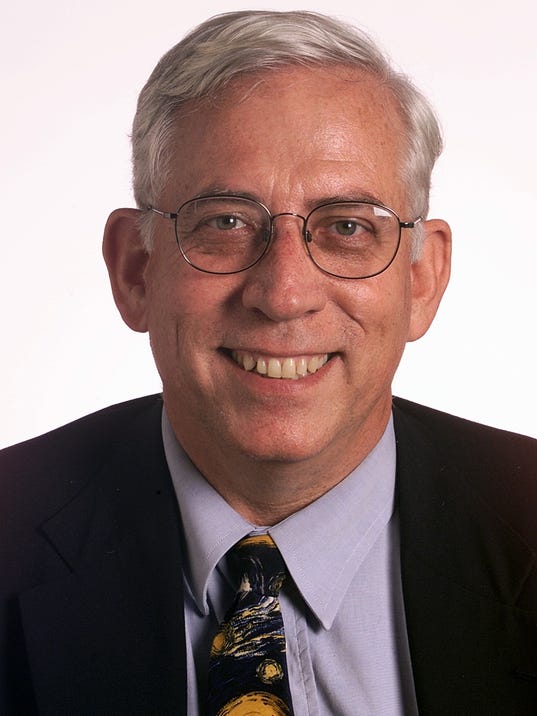
Peter Ray – image Tallahassee Democrat photo Craig Litten

The population doubles every 40 years. In 100 years there will be 100 times as many people living on the earth. All will suffer the lack of food and water. Many will die and wars will be over resources.

Never mind that the UN projections show a world population of 7 billion today reaching a peak of about 10-11 billion by 2100. Never mind that global fertility is declining fast. Never mind that a doubling every 40 years would need some 265 years to reach a factor of 100. Never mind that in 100 years the growth would be by a factor of 6.6. Peter Ray seems to be calculating by his strange mathematics a population of 700 billion in 100 years (though quite how he calculates this is a mystery). The rest of the article is conventional gloom and doom gibberish but masochists can find it here.

Prof. Peter S Ray, Florida State University

However I thought it odd that somebody so numerically illiterate – in a public article – could be a Professor of Meteorology, which led me to the Florida State University page of a Professor Peter S Ray which in turn led me to his homepage and then on to his cv. He is the only Peter Ray listed. The pictures – if all of the same person – seem a little anachronistic. Presumably the Tallahassee Democrat picture was chosen as being the most flattering but I would guess it is from 20 years ago. Personally I would prefer the later picture.

The “back to the future” theme appears also in his cv where his PhD (Meteorology) is from 1973 but his MS (Meteorology) is from 2013. It is not inconceivable that a Masters degree could follow a PhD, but in the same field?

I get worried when Professors start spouting about matters outside their own narrow fields. They are imbued with an authority they do not have and – more often than not – are misguided and misinformed. We could call it the Newton’s Alchemy Syndrome (NAS). Professor Peter Ray should probably avoid demographics.

“Ghost” armies of Iraq and Afghanistan continue a long tradition

January 12, 2015

There have been recent reports about large numbers of “ghost” employees in the military and police forces of Iraq and Afghanistan, who exist on paper to extract (or account for) large amounts of external funding.

The Iraqi Army was recently revealed to have 50,000 “ghost” soldiers who conducted “ghost” exercises with “ghost” ammunition. But these soldiers were not like Aragorn’s Army of the Dead who swept aside the forces of Mordor. Instead, they melted away into their nothingness when faced by the ISIS fighters in Mosul in June last year.
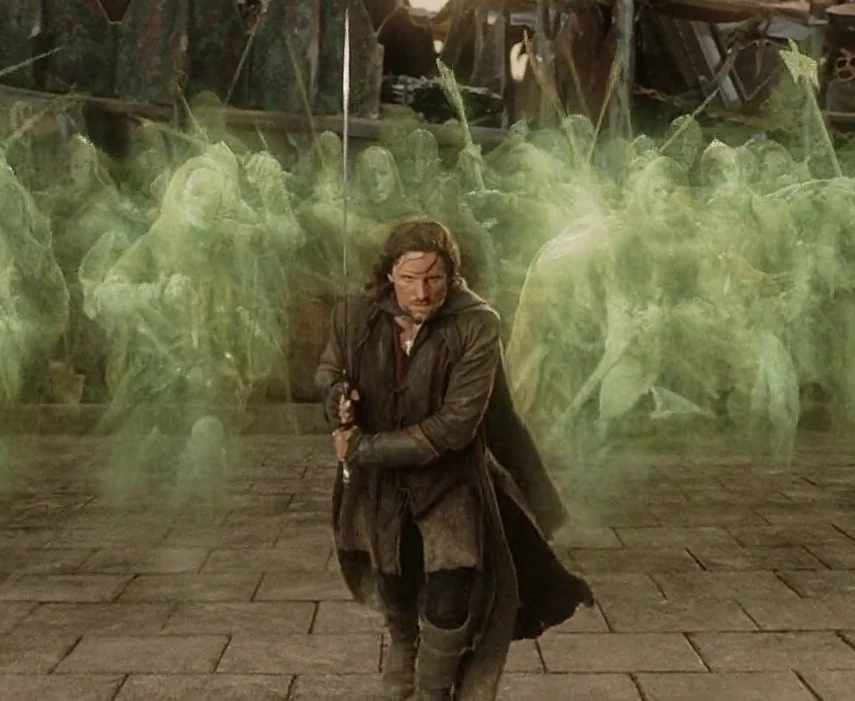
 

The Unz Review: The Iraqi army includes 50,000 “ghost soldiers” who do not exist, but their officers receive their salaries fraudulently according to the Iraqi Prime Minister Haider al-Abadi. “The Prime Minister revealed the existence of 50,000 fictitious names,” said a statement after a thorough headcount during the latest salary payments. 

The Iraqi army has long been notorious for being wholly corrupt with officers invariably paying for their jobs in order to make money either through drawing the salaries of non-existent soldiers or through various other scams. One Iraqi politician told The Independent a year ago that Iraqi officers “are not soldiers, they are investors”. In the years before the defeat of the army in Mosul in June by a much smaller force from Isis, Iraqi units never conducted training exercises. At the time of Isis’s Mosul offensive, government forces in Mosul were meant to total 60,000 soldiers and federal police but the real figure was probably closer to 20,000. …..

….. Another source of earnings for officers are checkpoints on the roads which act like customs barriers on national frontiers. All goods being transported have to pay a tariff and this will again go into the pockets of the officer corps. These will have paid highly for promotion, with the bribe for becoming a colonel $200,000 (£127,000) and a divisional commander $2m. This money would usually be borrowed and paid back out earnings.

There have been similar scams in Afghanistan.

The GuardianEach year, foreign donors pay hundreds of millions of dollars to fund salaries for members of the Afghan national police. According to a US government watchdog, however, there is little proof of where the money ends up.

In a report released on Monday, the Special Inspector General for Afghanistan Reconstruction (Sigar) writes that much of that money may in fact be bankrolling “ghost workers” – fictional employees created to enrich police chiefs.

Business Insider: The U.S. may be unwittingly doling out checks to “ghost workers” of the Afghan National Police who don’t even exist, according to an alert letter sent from the Special Inspector General for Afghanistan Reconstruction.

The letter alleges payment of salaries to non-existent members of the police force, and comes as just the latest in a string of fraud, waste, and abuse exposed by SIGAR under the leadership of John Sopko. …… The letter follows a previous report from SIGAR that found $6.3 million in payments going to Afghan police to fix broken vehicles, many of which had been out of service for over a year or had even been destroyed. …….. Previous reports found the Pentagon paid $12.8 million for equipment that went completely unused, records being shredded of $201 million in fuel purchases for the Afghan National Army, and millions from the U.S. military actually ending up in the hands of the Taliban, among many others.

But the use of these “virtual” employees is nothing new. It was probably first invented by the construction industry and construction probably became an industry as early as in the construction of the pyramids in Egypt and the temples of Babylon some 4 -5,000 years ago. (It is perhaps fitting since Old Babylon lay close to present day Baghdad).

The construction industry uses “ghost” workers primarily for the following reasons:

  1. to milk funds for publicly funded projects – especially for job creation projects,
  2. to avoid minimum wage laws,
  3. to avoid taxes or compulsory employee contributions

Construction sites with their large numbers of transient workers are notoriously difficult to check. Even “ghost” sites with “ghost” workers are not unknown. Very often these construction workers are paid daily and in cash. The use of ghost workers then allows the conversion of project funds into untraceable cash, accumulated in slush funds, for various nefarious purposes.

In recent times the growth of the NGO’s acting as contractors, who often get their funding from charities or public monies, has led to the padding of employee numbers and fictitious payrolls.  Even during the Ebola outbreak, local politicians were busy milking the funds available in Sierra Leone with over 6,000 “ghost” workers. So much so that the British government refused to channel its funds through local organisations.

According to report, this is the first time that the British Government has openly condemned the Sierra Leone Government publicly for alleged misuse of the former’s support to the latter. This development, according to report, took place on Monday 8thDecember, 2014. On the same day, the Sierra Leone Association of Journalists (SLAJ) issued a news release expressing massive corruption and fraud in the National Ebola Response Center (NERC). The Association expressed worries over the widespread of corruption in the handling of the Ebola Funds by authorities in charge. SLAJ was particularly concerned about the disclosures of the NERC’s CEO’s revelation that some 6,000 ghost names were have been discovered in the weekly payment voucher for healthcare workers in the frontline, and the strikes by healthcare workers negatively impacting on the fight against the Ebola.

I first heard about “ghost” locums in the NHS in the UK as a student in the 1960s. In Japan it was obligatory to use local construction crews for the construction and erection of power plant equipment and we were required to hire the entire crew. My best estimates were that the crews – on paper – contained about 20% more names than ever appeared on site. In the US I found that “unionised” power plant sites always needed between 10- 20% more construction workers than non-unionised sites (always through contractors of course). It was a similar story on sites in India and Africa. Through the 1990s it was a lucrative business to start an NGO with funding from abroad (and probably still is). Often the funding was based on covering all “approved” (but ghostly) personnel costs and covering external purchases for approved projects. But here the “head” of the NGO was essentially the owner of an “enterprise”.

“Ghosts” are not going away anytime soon.
Monkeys can learn how to use a mirror

January 11, 2015

Self-awareness is surely more than just passing a “mirror test”. There would seem to be a continuum between the two discrete states of “not being self-aware” (a stone) to being “fully self-aware” (higher primates and humans), though I am not entirely sure if even higher levels of self-awareness are conceivable. I take self-awareness to be on a higher plane than self-consciousness. Self-awareness is the recognition of a tree as “being in a forest” whereas self-consciousness is just being the “tree”. Empirically, sentience is an even higher cognitive capability where sentience requires self-awareness which in turn requires self-consciousness.

Most mammals are conscious of self or at least of self-interest. Even a tree for that matter could be said to exhibit self-interest. Passing the mirror test seems to be a fairly conclusive evidence of well-developed, self-awareness but that is not to say that some degree of self-awareness is not possible even when the mirror test is not passed. Whales, dolphins and some elephants have passed the mirror test along with most of the higher primates (gorillas, chimpanzees and bonobos). The magpie is the only bird known which has passed the test. Monkeys (rhesus monkeys, macaques) do not pass the test but are clearly self-conscious.

Now, new research has shown that rhesus monkeys can be taught to make use of a mirror such that they could pass the mirror test. Can awareness therefore be taught?

Liangtang Chang, Gin Fang, Shikun Zhang, Mu-Ming Poo, Neng Gong. Mirror-Induced Self-Directed Behaviors in Rhesus Monkeys after Visual-Somatosensory Training. Current Biology, January 2015 DOI:10.1016/j.cub.2014.11.016

EurekAlertUnlike humans and great apes, rhesus monkeys don’t realize when they look in a mirror that it is their own face looking back at them. But, according to a report in the Cell Press journal Current Biology on January 8, that doesn’t mean they can’t learn. What’s more, once rhesus monkeys in the study developed mirror self-recognition, they continued to use mirrors spontaneously to explore parts of their bodies they normally don’t see.

“Our findings suggest that the monkey brain has the basic ‘hardware’ [for mirror self-recognition], but they need appropriate training to acquire the ‘software’ to achieve self-recognition,” says Neng Gong of the Chinese Academy of Sciences.

In earlier studies, scientists had offered monkeys mirrors of different sizes and shapes for years, even beginning at a young age, Gong explains. While the monkeys could learn to use the mirrors as tools for observing other objects, they never showed any signs of self-recognition. When researchers marked the monkeys’ faces and presented them with mirrors, they didn’t touch or examine the spot or show any other self-directed behaviors in front of those mirrors in the way that even a very young person would do.

In the new study, Gong and his colleagues tried something else. They sat the monkeys in front of a mirror and shined a mildly irritating laser light on the monkeys’ faces. After 2 to 5 weeks of the training, those monkeys had learned to touch face areas marked by a spot they couldn’t feel in front of a mirror. They also noticed virtual face marks in mirroring video images on a screen. They had learned to pass the standard mark test for mirror self-recognition.

Most of the trained monkeys–five out of seven–showed typical mirror-induced self-directed behaviors, such as touching the mark on the face or ear and then looking and/or smelling at their fingers as if they were thinking something like, “Hey, what’s that there on my face?” They also used the mirrors in other ways that were unprompted by the researchers, to inspect other body parts. …… 

I note that Gordon Gallup Jr. who developed the mark test is not convinced:

Gordon Gallup Jr., an evolutionary psychologist at the State University of New York at Albany, who was not involved with the research, developed the “mark test,” which is essentially the gold standard for measuring whether an animal possesses self-recognition. [8 Humanlike Behaviors of Primates] ….

Gallup, who developed the mark test, called the study “fundamentally flawed,” because it merely demonstrated that the animals could be trained to do something, not that they understood what they were doing.

“I bet I could train a pigeon to pick the correct answers to the Graduate Record Examinations (GRE),” Gallup told Live Science. “If the pigeon got [the maximum GRE score], would it be qualified for Harvard University?”

Perhaps, given self-consciousness, much of what we call awareness can be taught. Maybe that is how babies develop; an inbuilt self-consciousness which then becomes self-aware as learning (mainly self-taught) occurs. Learning requires memory and maybe that is why this self-taught awareness is what also deteriorates with the memory loss that accompanies the onset of Alzheimer’s disease.

Winter storm gives a day with no deaths by fighting in Syria

January 9, 2015

And even while the Paris atrocities seem to be coming to a final resolution, there is always hope. Roll on another ice age.

From Reuters:

A day without death in Syria

 Nobody was reported killed by fighting in Syria on Wednesday, January 7, 2015, the first day without casualties in three years, after a fierce winter storm quelled violence, a group that monitors the war said.

A boy walks past a snowman along a road covered with snow in the Duma neighborhood of Damascus, January 7, 2015. REUTERS/Badra Mamet


Men walk along a street during snow fall in the Duma neighborhood of Damascus, January 7, 2015. Nobody was reported killed by fighting in Syria on Wednesday, the first day without casualties in three years, after a fierce winter storm quelled violence, a group that monitors the war said. REUTERS/Badra Mamet


Why do all mighty gods need to be defended against blasphemy?

January 8, 2015

The fatwa against Salman Rushdie was issued in 1989 by Ayatollah Ruhollah Khomeini of Iran and has yet to be withdrawn

Broadcast on Iranian radio, the judgement read:

“We are from Allah and to Allah we shall return. I am informing all brave Muslims of the world that the author of The Satanic Verses, a text written, edited, and published against Islam, the Prophet of Islam, and the Qur’an, along with all the editors and publishers aware of its contents, are condemned to death. I call on all valiant Muslims wherever they may be in the world to kill them without delay, so that no one will dare insult the sacred beliefs of Muslims henceforth. And whoever is killed in this cause will be a martyr, Allah Willing. Meanwhile if someone has access to the author of the book but is incapable of carrying out the execution, he should inform the people so that [Rushdie] is punished for his actions. Rouhollah al-Mousavi al-Khomeini.”

That was the first time I ever felt it necessary to think about blasphemy and wondered why it is considered by some to be a crime. Sol Invictus is no longer considered a god. But the power of the Sun is such that what humans may say has no impact on its behaviour or its power. It is not necessary to criminalise or be outraged by blasphemy against the Sun. Clearly no all mighty, all knowing god would have any need – or any use – for puny humans to defend the divine reputation. Unless of course, he/she/it was a fiction, in which case “blasphemy” would be seen as threatening by the creators or the supporters of the fiction. Unless the gods had been created in the image of men. The greater the fiction the greater the perceived threat. The greater the outrage against an alleged blasphemy, the weaker the god must be.

All organised religions dislike blasphemy, apostasy and heresy – but it is all about the threat perceived by the members of the organisation. The weaker the foundations of the organisation the greater is the threat perceived. The outrage against The Satanic Verses (usually without even reading the book) and the violent reactions to the Mohammed cartoons were fanned by “priests” of one kind or another. We would be well rid of these organised religions and their troublesome priests.

Voltaire addressed the idiocy of blasphemy under “B” in his Philosophical Dictionary of 1764.

….. Is it not to the purpose here to remark that what has been blasphemy in one country has often been piety in another? ….. 

In our own times it is unfortunate that what is blasphemy at Rome, at our Lady of Loretto, and within the walls of San Gennaro, is piety in London, Amsterdam, Stockholm, Berlin, Copenhagen, Berne, Basel, and Hamburg. It is yet more unfortunate that even in the same country, in the same town, in the same street, people treat one another as blasphemers.

Nay, of the ten thousand Jews living at Rome there is not one who does not regard the pope as the chief of the blasphemers, while the hundred thousand Christians who inhabit Rome, in place of two millions of Jovians who filled it in Trajan’s time, firmly believe that the Jews meet in their synagogues on Saturday for the purpose of blaspheming.

A Cordelier has no hesitation in applying the epithet of blasphemer to a Dominican who says that the Holy Virgin was born in original sin, notwithstanding that the Dominicans have a bull from the pope which permits them to teach the maculate conception in their convents, and that, besides this bull, they have in their forum the express declaration of St. Thomas Aquinas.

But the concept of blasphemy has now extended to being “offending the sensibilities” of one section of a community by another. Unfortunately “not giving offense” has become the new norm. Communities compete to see who can be more outraged. Publishers run scared in India of printing anything criticising Hinduism or Islam for fear of “offending sensibilities”. All over Europe the truth about the behaviour of some groups is suppressed to “avoid giving offense”. It is actions being subordinated to fears. It is the cowardice of “political correctness”

Kenan Malik in The Hindu

The “never give offence” brigade imagines that a more plural society requires a greater imposition of censorship. In fact it is precisely because we do live in plural societies that we need the fullest extension possible of free speech. In such societies, it is both inevitable and important that people offend the sensibilities of others. It is inevitable, because where different beliefs are deeply held, clashes are unavoidable; and we should deal with those clashes openly and robustly rather than suppress them. It is important because any kind of social change or social progress means offending some deeply held sensibilities. Or to put it another way: “You can’t say that!” is all too often the response of those in power to having their power challenged. To accept that certain things cannot be said is to accept that certain forms of power cannot be challenged.

Of course any society must itself decide where its limits of “free speech” are to be set. What constitutes “hate speech” or “incitement to violence” or “libel” or “slander” and should be banned is up to each society to decide. But no society needs to protect any gods – supposed to be all powerful – against blasphemy.

If Islam is not to be represented by its rabid killers ……..

January 7, 2015

The Paris killers are identified but still at large. But the wanton and savage attack upsets me and I cannot avoid that this post has become a bit of a rant.

It is a short step from a rational detestation of barbarous, young, bigoted and intolerant killers of any kind becoming Islampohobia, when the killers are all, once again, self-confessed followers of radical Islam. The radicalisation of young Muslims in Europe nearly always includes three factors:

  1. A rabid, supposedly religious, imam or mullah or self-anointed preacher, and
  2. an impressionable, immature young person (usually male), and
  3. a failure of parenting

Right now there are radical preachers revelling in the Paris attacks and congratulating the killers. These radicalised young Muslims in Europe are not poverty-stricken. Very often they come from fairly prosperous families. They are not uneducated or unintelligent but they are warped and twisted and brain-washed. When they are unemployed it is because they wish to be unemployed. (They differ from some of the right-wing fanatics of Europe who are often unemployable).

But if Islam is not to be represented by its killers then it is first the Islamic communities of Europe which have to drive out the rabid preachers and improve their own parenting to stop the conversion of their children into these murderous, hate-filled, savages. Merely wringing their hands and condemning these actions after the event is not enough. It is behaviour that counts.

The face of Islam today is the very real behaviour of ISIS, Al Shabab, Boko Haram, the Taliban and a host of similar jihadists together with the absence of actions (not just voices) from the Islamic community to prevent or eradicate the disease. It is high time that the moderate Islamic community realised that – like it or not – they are being defined by their most extreme, warped, fanatics. The demonisation of Islam will not stop as long as Islam does not rid itself of its demons.

Is it any wonder that Pegida is gaining strength in Germany?

I don’t care for any organised religions where preachers take it upon themselves to tell others what they are to believe.  But right now I find organised Islam (Shia and Sunni and Sufi and every jihadist faction) the easiest to despise.

BBC:

Caroline Wyatt, BBC Religious affairs correspondent has just posted this:

The killings at Charlie Hebdo are a deeply unwelcome reminder to the west that for some, mainly young radicalised men, their fundamentalist interpretation of their religion matters enough to kill those who offend it.

As a result, across western Europe, liberally-minded societies are beginning to divide over how best to deal with radical Islamism and its impact on their countries, while governments agonise over the potential for a backlash against Muslims living in Europe.

Today, mainstream Muslim organisations in the UK and France have unequivocally condemned the killings, saying that terrorism is an affront to Islam.

But the potential backlash, including support for far right parties and groups, may well hurt ordinary Muslims more than anyone else, leaving the authorities and religious leaders in western Europe wondering how to confront violence in the name of religion without victimizing minorities or being accused of “Islamophobia”.

Oil wars: US crude drops below $50 as Saudi Arabia drops prices to protect market share

January 6, 2015

Some stock markets are spooked as oil prices continue to slide, but bringing oil price back to a cost-based price is a good thing in the long term. For too long – almost 45 years – oil producers and their governments have fleeced the consumer. Oil prices have had no relationship to cost of production but have been governed by artificially controlling its scarcity (by the OPEC cartel) and pricing it at the level of unacceptable pain for the consumer. Predatory governments have assisted by taxing oil products as far as they can even for the necessities of living (gasoline, diesel, LPG, fertilisers, pesticides…). If the present oil wars bring the price to the consumer in line with the cost of production – and there is no shortage of oil available to be produced – then it is a fundamentally sound, and long overdue, removal of one of the great, artificial distortions of the market place.

History will show the OPEC cartel to have held back development for 4 decades and to have been an evil thing.

Even if Saudi Arabia is engaged in a multi-pronged war – against shale oil, against Russia, against Iran – the root cause of the drop is that there is no longer a monopoly that the OPEC cartel enjoys. And the the way being shown by US shale oil is available to many more countries. In the short term it may well affect stock markets as these fetters are removed but in the long term this is an inexorable driver of growth – especially for the developing countries and their hard pressed consumers.

Remarkably many oil producers are now even increasing production in a time of a glut and cutting prices to win market share. They are being short-sighted. As the Opec cartel collapses, and it becomes a buyer’s market it will be oil price which governs and even then only for short term supply contracts. It will no longer be possible for the cartel oil producers to extort long-term contracts at high prices from developing countries who have no alternatives.

FP0106_Oil_C_JR

2015 not 2014 — via Financial Post

 Financial PostU.S crude crashed below US$50 a barrel while benchmark Brent crude tumbled under US$53 after data showed Russian oil output at post-Soviet era highs and Iraqi oil exports at near 35-year peaks.

Meanwhile, the outright price for Canadian heavy crude fell below US$35 a barrel. ……. The drop in WTI pushed the pushed the price of Canadian heavy crude to US$34.64 per barrel, a level that could make producing crude from the oilsands unprofitable for most operators in the world’s third-largest crude reserve.

Many of the region’s operators have already slashed capital spending and slowed work on new projects in order to cope with the price crash, though production from the region has not yet been affected.

…… Top crude exporter Saudi Arabia revealed it had made deep cuts to its monthly oil prices for European buyers , the sixth time in a row since June when it had slashed prices, corresponding with the rout in crude futures markets over the period. Analysts read the latest cut as reflecting Saudi Arabia’s deepening defence of its market share for crude. The OPEC kingpin also trimmed its prices for U.S. refiners for a sixth straight month, while raising rates for Asia.

…… Some traders seem certain that U.S. crude will be trading in the US$40 region later in the week if weekly oil inventory numbers for the United States on Wednesday show another supply build. ……. 

Russia’s oil output hit a post-Soviet high last year, averaging 10.58 million barrels per day (bpd), up 0.7% thanks to small non-state producers, Energy Ministry data showed. Iraq’s oil exports were at their highest since 1980 in December, an oil ministry spokesman said, with record sales from the country’s southern terminals.

The Russian and Iraqi data overshadowed reports of drops in Libya’s oil output due to conflict. Libya’s oil output has fallen to around 380,000 bpd after the closure of the OPEC producer’s biggest oil port Es Sider, along with another oil port Ras Lanuf.

The sooner oil price drops to less than $40 per barrel, the sooner the oil price can stabilise for 12 – 18 months. Then, as the price works its way through the economies of the consumer countries, the markets could see a year or two of stable, sustainable growth.

Get yourself a luck-bucket

January 2, 2015

The new paper in Science showing that two-thirds of all cancers are due to random cell mutations and not due to life-style, environmental conditions or inherited predispositions, is getting a lot of attention today.

AbstractSome tissue types give rise to human cancers millions of times more often than other tissue types. Although this has been recognized for more than a century, it has never been explained. Here, we show that the lifetime risk of cancers of many different types is strongly correlated (0.81) with the total number of divisions of the normal self-renewing cells maintaining that tissue’s homeostasis. These results suggest that only a third of the variation in cancer risk among tissues is attributable to environmental factors or inherited predispositions. The majority is due to “bad luck,” that is, random mutations arising during DNA replication in normal, noncancerous stem cells. This is important not only for understanding the disease but also for designing strategies to limit the mortality it causes.

Nearly every newspaper headline describes these random cell mutations as being “bad luck”. And that got me to wondering about the nature of “luck” and our perceptions of “luck”.

To be “lucky” an event has to be improbable. The consequences of the lucky event may be good or bad. “Luck” or “fortune” if not qualified by the word “bad” are generally taken to be “good”. Any event which is expected is never classified as being “lucky”. That somebody will win the lottery is highly likely and is not a matter of luck. That one particular person shall win the lottery will always have a very low probability and therefore becomes a lucky happening. All those who didn’t win are not “unlucky” because their loss was expected. But to have the winning ticket which is then carried away in an improbable gust of wind could be considered “unlucky”.

I like to think of luck or fortune as a flowing river. But not everybody is near this river and not all the flow is advantageous. Some of the flow is downright poisonous. The person with “good luck” is then the person who is not only near the river but also has a bucket to capture some of the advantageous flow. The difference between the lucky person and the ordinary person is then access to the river and the existence and the suitability of the “bucket”. I think of a person with “bad luck” as one with an ineffective bucket who picks up some of the “poisoned” or disadvantageous flow. The bucket is both a container and a filter. The Romans praying to the Goddess Fortuna or Hindus praying to Lakshmi are effectively trying to buy their “luck catching buckets”. Sportsmen or gamblers going through superstitious rituals before a match or a play are trying to prepare their “luck buckets”. I used to have a “lucky tie” that I always wore to job interviews. I see athletes and footballers cross themselves before their race or their game but they are only praying for their buckets.

Statistically it may be inevitable that there will be some lottery winner. The intelligent designer of the lottery well knows that he will pay out. But he does not know to whom. And he cannot exercise the control to determine (except in a rigged lottery) the winner. There are – in a simple lottery – two random events to consider:

  1. the process by which the lottery tickets are distributed, and
  2. the process by which the number of the winning ticket is selected.

Suppose there are a million tickets numbered one to one million and that one of these numbers will be selected. There is a certainty that a winning ticket will be declared. The operator of the lottery has no need of and no recourse to luck. I have to first acquire a ticket and then my number has to be selected. The odds of my being in the game are somewhat less than one and only then would I have a one-in-a-million chance of winning. My luck-catching bucket does not have to control both these events but it does need to be able to ensure that I get a number and that the particular number allocated to me is also the particular number selected to win.

So the task is to get myself an effective luck-bucket which is not too unwieldy. An instruction manual on how to use it would be helpful But first I need a map showing me where the Luck River flows. But if I don’t have a lottery ticket my luck-bucket won’t help me. So perhaps the first thing to do is to get myself into the right game.

But my buying a lottery ticket is so improbable that this too is a matter of Luck.

There’s a hole in my bucket, dear Liza, dear Liza,
There’s a hole in my bucket, dear Liza, a hole.


Seven years of plenty from March 2015?

December 31, 2014

Tomorrow is just another day, the first day of the month we call January after the two-headed (two-faced?) Roman God Janus. The day is just another day of the 365 ¼ days the Earth takes to orbit the Sun. The first day of January as the start of another orbit is an arbitrary choice and does not coincide with any special position of the Earth or the Sun. It is 9 – 10 days after the winter solstice and the lag can be put down to the fact that the solar cycle giving the year is not a nice, clean, simple multiple of the lunar cycle giving our months. The months of course have been massaged to have a variable number of days to make 12 months fit to a year.  In Roman times, the year started on March 1st of a 10 month year. The ten months were clearly too short for the solar year, and the 50 or so days between the end of December and the start of March were acknowledged but empty and unnamed. January and February were added later to complete the solar year.

But in spite of being just another day, the 1st of January is important, not because of the Earth’s position but because humans need to be able to draw a line and start anew. For most it has been a bad year or, at best, just another ordinary year. For only a very few has it been a “good” year. We crave something to look forward to, to better times. And what better way to define the end of a period and a renewal than the start of a New Year.

A year ago on 1st January 2014, I hadn’t heard about ISIS or IS. The video of the beheading of James Foley has been – for me – the single most disgusting clip of 2014. Human behaviour continues to vary from the sublime to the barbarous. My contempt for organised religion has only increased during the year. Every case of religious violence can be traced back to a rabid mullah or imam or priest or rabbi. Islamic barbarism has distinguished itself – again. My image of 2014 is dominated by barbarous Islamic extremists. The heights of Islamic culture and poetry and art and science have long since gone and we are now seeing the depths of behaviour Islam (among other religions) can inspire. But there has been too much talk about “human rights” and not enough about corresponding “human duties”. We continue down the misguided road of legislating for human behaviour.  The rich/poor divide has widened but politicians forget that this is because the poor lack the education and the opportunity to escape the poverty trap. It is not because the rich have taken from the poor as they would like to pretend. And yet global poverty and famine and malnourishment and homelessness have declined. Politicians have vacillated as usual. Barack Obama has not lived up to the high expectations he once inspired and the new Pope Francis is on a cheap popularity quest. Courage is not particularly visible. A new economic cold war between the EU and the US against Russia has started. There are no political leaders in Europe and the EU is becoming a bureaucratic monstrosity. China and India have been unable to be the motors for global growth.

The World Cup came and went. FIFA was shown -again – to be a deeply corrupt organisation. India demonstrated that frugal engineering could allow space to be within the reach of those not so well off. Big Science – exemplified by CERN – applies a bureaucratic rather than an innovative approach to Science. Science by press releases to secure funding is more important than thinking out of the box (which cannot get published). Peer review is more pal review or even self-review. There is more ice at the poles than for 40 years. There is more ice at the Antarctic than ever measured before. Oil price has dropped spectacularly as shale oil production has increased and demand has declined. We have a year of low fuel prices ahead. In 2014 there were many small but no major volcanic eruptions or earthquakes or tsunamis. A VEI5+ volcano eruption is now well overdue. The internet and internet English and internet crime are all still growing. War is increasingly being privatised and outsourced. In a post-modern world, political correctness is becoming obsolete.

All in all, just another ordinary year.

The astrological pundits tell me that a period of unprecedented antithetical planetary positions since the 1930’s started in 2008. Apparently planets were “opposed” to each other or at “right angles” to each other or were “antagonistic”. The financial crisis – they are quick to point out – began in 2008 and reached its depths in 2013 in accord with the antagonistic alignments! In any event these unpropitious alignments come to an end in March 2015.

The end of seven lean years perhaps and the start of seven years of plenty?

As they say here, “ett gott slut och ett gott nytt”. I wish all a

A Good End and a Good Start


Sweden’s December Agreement abandons parliament for a postmodern, back-room “party democracy”

December 30, 2014

Sweden’s December Agreement can be described simply as an agreement between six of the eight political parties in parliament to abdicate their “rights” and duties – when in opposition – to oppose a minority government made up of some of the other parties to the Agreement. The Agreement negates the representative strengths of the eight parties in parliament as established by the electorate. It is claimed that it is to ensure the continuity of government by making the opposition of the two parties not represented, impotent. The two not represented are on the far left and on the extreme, nationalistic, racist right.

Parliamentary democracy as such has been abandoned in that two particular parties – representing 20% of the electorate – are being suppressed by the others getting together in a “collusion of the cowardly”. “Truth” is simply whatever promotes my (or my group’s) will or interests. None of the party leaders who signed-up to the December Agreement gain much credit. None managed to raise their vision to anything beyond maintaining their own party positions within the pig trough. The Prime Minister, Stefan Löfven was not prepared to resign or face a new election. The new leader of the Moderate Party, Anna Kinberg Batra was too new and too scared to face a new election. The Environmental Party’s Åsa Romson was only too happy with her meagre 7% to remain at the “big table” and in government. The small party leaders from the Alliance don’t come out very well. They were running scared of being wiped out in any new election and were not prepared to come out from under the protective umbrella of the Moderates. Each party had its own fears and it was an agreement based on fear and truly a collusion of the cowardly. There is not even a pretence of trying to represent the interests of their voters. It is all about the “lowest common denominator” and no hint of aspiring to the “highest common numerator”. It is the triumph of a grey, bureaucratic pragmatism over any hint of vision or idealism.

It occurs to me that this is nothing but postmodernism applied to parliamentary democracy. It is whatever you want to make of it. It is a form of “postmodern democracy” which degrades a traditional parliamentary democracy to something else. I take postmodernism to mean a world where

our interests and desires often use “reason” to promote their fulfillment; “truth” is simply whatever promotes my (or my group’s) will or interests.  There is a “political agenda” in whatever we claim to be true. Knowledge is not neutral. (This observation utilizes the “hermeneutics of suspicion.”) In response to the unbiased certainty, postmodernism emphasizes that our ideas and judgments are embedded within a historical-cultural context; so we can never fully remove ourselves from it by pure reflection. 

The will of the electorate as represented in parliament has been over-ruled by the party leaders in the back-rooms. If this is the new world of parliamentary democracy then parliament itself is irrelevant and meaningless. It is only the back-rooms and the decisions taken there which apply. Electoral democracy manifested in a parliament is abandoned and it is only those who choose the party leaders who then meet in the back-room who matter (and to some extent this is already the basic flaw in all multi-party democracies).