Archive for the ‘Business’ Category

Mammoth tusks are — mammoth!

March 26, 2013

Woolly mammoths are thought to have finally become extinct about 4,000 years ago but their bones are being recovered in increasing numbers from under the Siberian permafrost.

They have been recovered for thousands of years whenever they have been found. But now with the use of aerial surveys and with the high demand for ivory, mammoth ivory is beginning to be recovered in large quantities and used instead of illegal ivory. It is promoted as “ethical” ivory and the prices are high enough for Russian entrepreneurs to expand their digging.

National Geographic carries a story about a modern-day Siberian mammoth hunter.

The shaggy giants that roamed northern Siberia during the late Pleistocene epoch died off about 10,000 years ago, though isolated populations lingered on islands to the north and east, the last dying out some 3,700 years ago. The mammoths’ tusks, which could spiral to more than 13 feet, are reemerging from the permafrost—and fueling a trade that benefits the people of Arctic Siberia, including the native Yakuts, an Asiatic ethnic group that speaks a language of Turkic origin. …..

…. The specimen that emerges is as thick as a tree trunk—150 pounds—and in near-pristine condition. Before hauling the tusk away, Gorokhov tosses a silver earring into the hole he has dug, as an offering to the local spirits. If he gets the ancient relic safely home, it could fetch more than $60,000.

Stunning photographs by Evgenia Arbugaeva in National Geographic of mammoth tusks recovered in Arctic Siberia.

Photograph by Evgenia Arbugaeva (via National Geographic)

Photograph by Evgenia Arbugaeva (via National Geographic)

http://www.evgeniaarbugaeva.com/

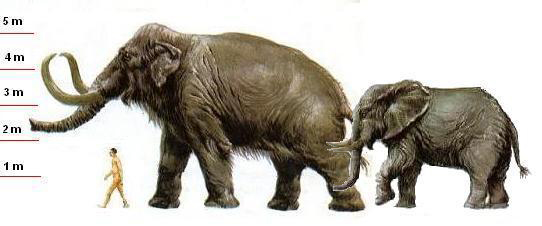
It is not always easy to imagine quite how big the mammoths were and what would have been involved in hunting them 4,000 years ago. That humans did actually manage to successfully hunt these massive beasts cannot be put down to their stature or their weapons or their prowess with spears and can only have been a result of co-operation and strategy.

mammoth hunting

Size comparison animalpicturesarchive.com

Stealing by the state from depositors in Cyprus is a dangerous precedent for all weak banks in the Euro zone

March 23, 2013

A one off tax is not a regular tax but just confiscation. When done by a State it is Grand Theft. It is some kind of nationalisation where some selected private assets are appropriated. Whatever it is called, it is just plain stealing from bank depositors. When banks are weak or badly managed it is the owners of the bank who should be held both responsible and accountable. But to blatantly and arbitrarily just “confiscate” a part of some of the depositors holdings  is a dangerous precedent.

If this is what happens in Cyprus and seemingly with the acquiescence –  if not the encouragement – of the Euro zone then it bodes ill for all depositors in weak Euro zone banks or banks in weak Euro zone countries. Cyprus can set a precedent of what is acceptable behaviour in the Euro zone. Certainly the banks and the owners will like this. After all it shifts risk from the bank’s equity to the bank’s depositors. And for profligate countries it provides a cover for stealing the money of large depositors.

For depositors having more than €100,000 in Cyprus it is already too late. Robbery by the State has been sanctioned by the European Union including Germany. Rationalising such a move by saying it is to get at black Russian money is disingenuous. If this is acceptable in Cyprus today then it may well be acceptable for banks – and not just the State – to confiscate their customer’s savings whenever an “emergency” arises.

For those with substantial deposits  – and not just over €100,000 – in Greece or Spain or Italy or Ireland it is probably high time to get out.

When it comes to radical innovation, the customer is not always right

March 22, 2013

We are all customers and and we are all essentially conservative at heart. We tend to prefer to stick to what we know and like.  So while listening to your customers is paramount when it comes to incremental improvements of products or services, the existing customer may not be the best when it comes to radical innovation and the introduction of something completely new.

Customer co-creation in service innovation: a matter of  communication? by Anders Gustafsson, Per Kristensson and Lars Witell, Journal of Service Management, 23(2012)3: 311-327. dx.doi.org/10.1108/09564231211248426. 

The paper (available as an Open Access manuscript) reports on the results of a survey among 334 managers who all had experience with innovation in the creation of new products or services. The researchers selected 284 real development projects  divided into two main groups:

  • Incremental innovation: 207 of the projects dealt with minor improvements of products or services.
  • Radical innovation: The remaining 77 projects dealt with development of radically new products or services not previously known to the market.

… The implication for the dysfunctional model is that the communication process – and therefore co-creation – is different for radical innovations than for incremental innovations. The model for radical innovations produced two significant paths (using adjusted t-tests), frequency (0.336, p< 0.05), and content (-0.246, p< 0.05). The results indicate that companies should interact frequently with their customers; this is similar to the findings in the case of incremental innovations. The path coefficient for content is negative, which indicates that customers should not be too highly involved in developing the actual content of radical innovations. …..

…. The results of the present study contribute to a deeper understanding of why new offerings developed through market research techniques based on co-creation with customers are more profitable than those developed with traditional market research techniques. ……

However, the communication process of co-creation for radical innovations seems to behave quite differently in that the four suggested dimensions are not entirely applicable in the same way for radical innovation as they are for incremental innovation. The different dimensions in the communication process behave differently in the two conditions, which suggests that companies must apply different communication strategies in co-creation depending on the degree of innovativeness of a development project. The two dimensions that are significant in radical innovation are frequency (positive) and content (negative). Direction and modality did not have a significant impact on product success. This implies that companies should learn from customers through frequent contact, which is the same as in the case of incremental innovations. However, companies should not be overly concerned with suggestions of the content of a potential new offering. Radical solutions can often be considered unthinkable in advance, which can make radical solutions hard to imagine, but customers know a good idea when they see and use it. Customers create solutions based on their previous experiences of usage of different products or services, which makes it difficult to suggest solutions that are truly radical.

Boeing’s PR upsets Japanese Civil Aviation Board – and this will delay the Dreamliner flying again

March 16, 2013

Boeing’s upbeat announcement that the Dreamliner could be flying in a matter of weeks has upset the Japanese Civil Aviation Board. It would seem that Boeing did not clear their PR blitz in Tokyo in advance with the CAB. Their optimistic statements about the Dreamliner flying again “in a matter of weeks” to try and reassure the market place may prove to be a PR blunder and could backfire.

ET: Japanese regulators immediately warned that the timetable was impossible to predict, in part because investigators still do not know what had caused lithium-ion batteries to overheat on two 787s. 

“At this time we are not yet in a position to say when flights will restart,” said Shigeru Takano, the air transport safety director at Japan’s Civil Aviation Board (CAB), which will assess and approve Boeing’sproposed fix. …

…. “If we look at the normal process and the way in which we work with the FAA, and we look at the testing that’s ahead of us, it is reasonable to expect we could be back up and going in weeks, not months,” the 787’s chief engineer, Mike Sinnett, said at an earlier briefing in Tokyo. 

But the CAB, the FAA’s counterpart in Japan, dismissed Sinnett’s prediction, saying it was too early to predict when 787 operations could resume, since regulators in the United States and Japan are still investigating. Takano, the air transport safety director at the CAB, said Sinnett’s comment on the battery probe was “inappropriate.”

To call Boeing’s statement “inappropriate” is tantamount to an outright rejection. I think Boeing has shot itself in the foot since the CAB clearly perceives their role being usurped by Boeing’s PR pronouncements. There is now no way that the CAB can or will allow any “fast-tracking” of approvals.

Reuters: Japan is Boeing’s biggest customer for the fuel-efficient aircraft, which has a list price of $207 million. JAL and ANA combined account for almost half the global Dreamliner fleet. Japanese firms also build 35 of the aircraft.

And until the CAB approves, other countries will also hold off their approvals. It is going to be at least 2 months now before Dreamliners fly again commercially.

Greenland votes today on whether to let the Chinese in

March 12, 2013

Greenland flag

UPDATE!

Greenland’s main opposition leader, who campaigned on a platform of greater control and higher taxes of foreign miners, gained the biggest number of votes in a national parliamentary election, underscoring a backlash against the island’s fast globalisation.

Aleqa Hammond’s Siumut party won around 42 percent of votes, or around 14 seats in the 31-seat parliament, meaning she will need to form a coalition. Prime Minister Kuupik Kleist won around 34 percent of votes, according to official results published by Greenland’s national KNR broadcaster.

=====================================================

Not that it is very relevant to the “general” election being held in Greenland today, but I had not really appreciated that Greenland (and half of Iceland and a large chunk of Siberia and part of Japan) are part of the North American Continental plate.  Greenland has been inhabited – off and on – for some 5000 years (from c. 2500 – 3000 BCE) and initially by the ancestors of the Arctic peoples (paleo-Eskimos). The Scandinavian link goes back to around 1200 years ago (900 CE).

 Norsemen settled on the uninhabited southern part of Greenland beginning in the 10th century. Inuit peoples arrived in the 13th century. The Norse colonies disappeared in the late 15th century. In the early 18th century, Scandinavia and Greenland came back into contact with each other, and Denmark established sovereignty over the island. Having been ruled by Denmark-Norway for centuries, Greenland became a Danish colony in 1814, and a part of the Danish Realm in 1953 under the Constitution of Denmark. In 1979, Denmark granted home rule to Greenland, and in 2008, Greenlanders voted to transfer more power from the Danish royal government to the local Greenlandic government. Under the new structure, in effect since June 21, 2009, the Danish government retains control of foreign affairs, national defence, the police force, and the justice system. …

Following World War II, the United States developed a geopolitical interest in Greenland, and in 1946 the United States offered to buy Greenland from Denmark for $100,000,000, but Denmark refused to sell.

Kuupik Kleist, prime minister of Greenland Рус...

Kuupik Kleist, prime minister of Greenland (wikipedia)

The Inuit Ataqatigiit Party which is currently in power in the “Home Rule” Government is a curious mixture of being both left-leaning and somewhat nationalistic. Their target is for an economic and politically independent Greenland and want to reduce the financial support from the Danish government by increasing the rate at which Greenland’s mineral resources are exploited. But to do that they will need labour and it seems that this could come from China. If they win the election today it could open the door for 2,000 – 3,000 Chinese engineers and miners. The opposition Siumut Party seems to have very similar goals but they don’t agree with bringing the Chinese in.

Aleqa Hammond Siumut leader

The BBC reports:

Voters go to the polls in Greenland on Tuesday, in an election dominated by the question of how the territory should exploit its mineral riches. Nearly 70% of 57,000 inhabitants are eligible to vote in Greenland, a Danish territory with partial autonomy.

Many are keen to reduce reliance on Denmark’s annual subsidy of $576m (£387m).

Iron, uranium and rare earths lie underground, but opinions differ over how to extract them. The latest poll predicts a tight race between the governing left-leaning Inuit Ataqatigiit party (IA) and the opposition Siumut party, reports the BBC’s Malcolm Brabant from the Danish capital, Copenhagen.

They will be fighting for 31 seats in a home rule government. There is only one polling station in the capital, Nuuk – a town of 15,000 with only two traffic lights.

The IA – headed by Prime Minister Kuupik Kleist – is in favour of importing cheap, foreign, mainly Chinese labour to mine iron ore. Siumut – led by Aleqa Hammond – is opposed to the plan, which could see Greenland’s population increase by 5%.

The election will be monitored in China, which wants Greenland’s iron for its expanding economy, and in turn by European Union officials who have expressed concern about China’s influence in the territory. ..

Flu vaccine strongly linked to narcolepsy in children

March 9, 2013

I believe that massive public health programs every winter for the consumption of flu vaccines are driven more by commercial rather than medical considerations. Now comes the news that the risk of narcolepsy in children is enhanced 14 times by the use of Pandemrix. Indiscriminate use of flu vaccines – especially with their limited effectiveness  – do a major public disservice by providing ammunition for the “anti-vaccination brigade”. Whether the success rate of the flu vaccines is high enough to justify the expense of mass campaigns is not clear for me. Certainly I am uncomfortable with the links  between pharmaceutical companies and those who authorise mass campaigns of vaccination.

(Reuters)Growing evidence of a link between GlaxoSmithKline Plc’s pandemic flu vaccine and an increase in narcolepsy cases among children who received it in Europe, is giving pause to health regulators weighing approval of a similar vaccine in the United States.

Data published recently in the British Medical Journal found that children in England who received GSK’s Pandemrix vaccine during the 2009-10 H1N1 swine flu pandemic had a 14-fold heightened risk of developing narcolepsy, a chronic and potentially debilitating sleep disorder that can cause hallucinations, daytime sleepiness and cataplexy, a form of muscle weakness precipitated by strong emotion.

Authors of the study – whose results echo those of similar studies in Sweden, Finland and Ireland – said the data had implications for the approval and use of future vaccines that, like Pandemrix, contain AS03, a new adjuvant, or booster, that turbo-charges the body’s immune response to the vaccine.

Scientists believe AS03 may be the culprit in the narcolepsy cases though they have yet to decipher the precise nature of the association.

…. A 14-member panel of advisors to the FDA voted unanimously in November to recommend the vaccine to protect against bird flu. The panel considered early studies from Europe showing an increase in the number of narcolepsy cases but concluded that the potential benefit of the vaccine outweighed the risk.

Since then, however, new data, including the study results from Britain, suggest the scale and strength of the narcolepsy link could be greater than first thought. At least one committee member would like the FDA to reconvene the panel.

…. According to GSK, some 30 million doses of the vaccine were administered across Europe and 800 people, mostly children, developed narcolepsy. While acknowledging an association, the company says there is insufficient evidence to prove Pandemrix is the cause. ……

I am not sure if the numbers (except the revenues and profits) actually add up.


Jaguar Land Rover poised to “make in India, export to the emerging world”

March 2, 2013

Jaguar Land Rover sells around 250,000 Land Rovers and about 55,000 Jaguars worldwide.  In 2011/12 this generated about £13.5 billion sales with a profit of £1.5 billion.  They will spend around £2 billion in the 2013 financial year on new products including a new £350 million engine plant in the West Midlands.

JLR’s Strategy (Sustainability Report), JLR Strategy, states:

In 2011 we expanded assembly operations into India, one of our key markets, and announced plans for our first manufacturing facility abroad in another key market, China, through a joint venture with Chery Automobile Company Ltd. We predict Jaguar Land Rover sales will more than double in volume by 2020, largely due to increasing demand in emerging markets.

Now Reuters reports that the emerging market strategy is progressing fast and that JLR is poised to move from just assembly to the complete manufacture of some brands in India. They join the growing number of players who now see India as a sort of export hub to emerging markets.

Jaguar Land Rover (JLR) is investigating the potential of manufacturing cars in India, company sources said, as the British luxury carmaker looks to build on its growth in emerging markets with the help of Indian parent Tata Motors.

JLR, which has ridden a wave of surging demand in China and other emerging markets to post record profits over the past year, is “actively exploring the possibility” of building cars from scratch in India, said one company source.

“The idea is being looked into, with the (Jaguar) XF and (Land Rover) Freelander the obvious candidates,” said another source with knowledge of the matter.

The British brands, which already assemble two models in India using parts and engines shipped from factories in the UK, will also begin assembling its popular Range Rover Evoque in the country soon, the first source said without providing details.

Building cars in India, which has developed into an emerging market export hub for many global carmakers, would allow JLR to skirt high import taxes on luxury cars, which the country’s finance minister proposed raising to 100 percent from 75 percent in his budget speech last week.

… JLR will exhibit a new 9-speed automatic Evoque and an electric-powered version of its Land Rover Defender at the Geneva Motor Show next week.

Bought by Tata for $2.3 billion from Ford in 2008, JLR has defied those skeptical of its future under Indian ownership to roar back into profit over the past three years as the main growth driver for its now-struggling parent.

Continued growth in emerging markets such as India and China, which accounted for 22.3 percent of its sales in the December quarter, is key for JLR as it embarks on an expensive overhaul of its production and product clout. The carmaker is investing $1.7 billion with local partner Chery Automobile Co in a factory in China.

JLR lags rivals BMW AG, Volkswagen AG’s Audi and Daimler AG’s Mercedes-Benz in assembling cars in India, where the luxury market is expected to swell by around six times by 2020 to 300,000 cars a year, according to business consultancy Frost & Sullivan. ….

…. Earlier this year JLR started the assembly of the 2.2-litre diesel version of the Jaguar XF saloon at a plant in Pune, west India, tucked away in a corner of a sprawling production site where Tata builds its heavy duty trucks and hatchbacks.

Screwed together using engines and components shipped from JLR’s Castle Bromwich plant in Birmingham, central England, the company has also been assembling its Land Rover Freelander 2 in Pune since May 2011.

The XF and the Freelander 2 are JLR’s best-selling models in India, where it sold 2,288 cars in the year to March 2012, up 157 percent from the previous year. ….. 

Falcon 9 launches as Dragon sets off on its second cargo supply mission

March 2, 2013

SpaceX has launched CRS-2 — its second  mission to the International Space Station. The Dragon capsule aboard the Falcon 9 rocket will dock with the ISS today, delivering 677 kg of cargo to the astronauts currently there, and will return in about 2 weeks.

Initial thruster problems threatened the mission but these seem to have been solved.

But vexing trouble with the capsule’s rocket thrusters quickly turned the $133 million flight into a high-tech cliff hanger. Six-and-a-half hours after launch, follwoing extensive troubleshooting and analysis, it appeared company engineers had resolved the problem, bringing all four sets of thrusters on line and setting the stage for a delayed rendezvous with the space station.

From Space X press release: 

Hawthorne, Calif. – Today, Space Exploration Technologies (SpaceX) successfully launched its Falcon 9 rocket and Dragon spacecraft to orbit for SpaceX’s second mission under its Commercial Resupply Services (CRS) contract with NASA. Falcon 9 completed its job perfectly, continuing its 100 percent success rate.

“Falcon 9 was designed to be the world’s most reliable rocket, and today’s launch validated this by adding to Falcon 9’s perfect track record with our fifth success in a row,” said Gwynne Shotwell, President of SpaceX.

After Dragon separated from Falcon 9’s second stage approximately nine minutes after launch, a minor issue with some of Dragon’s oxidation tanks was detected. Within a few hours, SpaceX engineers had identified and corrected the issue, normalizing the oxidation pressure and returning operations to normal. Dragon recomputed its ascent profile as it was designed to and is now on its way to the International Space Station (ISS) with possible arrival on Sunday, just one day past the original timeline.

Dragon is the only spacecraft in the world today capable of returning significant amounts of cargo to Earth. Dragon will stay on station for a three-week visit, during which astronauts will unload approximately 1,200 pounds of cargo and fill the capsule with return cargo, for return to Earth. Dragon is filled with supplies for the ISS, including critical materials to support science investigations. Later this month, Dragon will return a payload that includes research results, education experiments and space station hardware.

Updates on the CRS-2 mission can be found at www.spacex.com/webcast. Broadcast quality video may be downloaded at vimeo.com/spacexlaunch and high-resolution photos are posted at spacexlaunch.zenfolio.com.

About SpaceX

SpaceX designs, manufactures, and launches the world’s most advanced rockets and spacecraft. The company was founded in 2002 by Elon Musk to revolutionize space transportation, with the ultimate goal of enabling people to live on other planets. Today, SpaceX is advancing the boundaries of space technology through its Falcon launch vehicles and Dragon spacecraft. SpaceX is a private company owned by management and employees, with minority investments from Founders Fund, Draper Fisher Jurvetson, and Valor Equity Partners. The company has more than 3,000 employees in California, Texas, Washington, D.C., and Florida. For more information, visit SpaceX.com.

Boeing Dreamliner batteries could be “inherently unsafe” while Airbus says it has a Plan B

February 1, 2013

The fault with the Boeing Dreamliner Batteries/electrical systems has not yet been found. This is not good news for Boeing since the grounding of 50 aircraft continues. Each grounded aircraft poses a potential claim on Boeing for about $2.5 million per month. The delay in finding the fault also correspondingly delays the selection of a “fix” and the deployment of that “fix”. And since some 850 aircraft have been ordered and production has not been stopped, the fix has to be deployed on a large number of aircraft.

In the absence of any identified fault Boeing are continuing to defend the 787 batteries and I read this as Boeing defending both the design of the chosen batteries and their decision to select these for use. They cannot really do anything else since they cannot acknowledge any potential liability while compensation claims are up in the air (or down on the ground may be more appropriate!).

Airbus apparently has developed a Plan B in the event an alternative to lithium-ion batteries must be found for the A350.

Airbus warned about the risks of lithium-ion batteries at a closed meeting of airlines in March 2011, according to a presentation first reported by Reuters this week.

“We identified this fragility at the start of development and we think we resolved it about a year ago,” Bregier said. “Nothing prevents us from going back to a classical plan that we have been studying in parallel.”

But there is a view that the design chosen by Boeing is fundamentally unsound – that the design lends itself to the possibility of thermal runaways with overheating and subsequent fires. If the design itself is flawed and there are better designs available, then Boeing’s decision process which resulted in using a flawed design could be more damaging  than any monetary compensation for the actual groundings. Boeing can ill afford a suggestion that their design or decision process itself is flawed. The current investigation is focused on finding any faults in the units as built and not – yet – on the fundamental design itself.

They can probably absorb the financial hit but my guess is that Boeing will lose considerable ground to the Airbus A350 which could take a long time to recoup.

FlightGlobal: 

The lithium ion batteries installed on the Boeing 787 are inherently unsafe, says Elon Musk, founder of SpaceX and owner of electric car maker Tesla.

“Unfortunately, the pack architecture supplied to Boeing is inherently unsafe,” writes Musk in an email to Flightglobal.

“Large cells without enough space between them to isolate against the cell-to-cell thermal domino effect means it is simply a matter of time before there are more incidents of this nature,” he adds.

Both Boeing and Tesla use batteries fueled by lithium cobalt oxide, which is among the most energy-dense and flammable chemistries of lithium-ion batteries on the market. While Boeing elected to use a battery with a grouping of eight large cells, Tesla’s batteries contain thousands of smaller cells that are independently separated to prevent fire in a single cell from harming the surrounding ones.

“Moreover, when thermal runaway occurs with a big cell, a proportionately larger amount of energy is released and it is very difficult to prevent that energy from then heating up the neighboring cells and causing a domino effect that results in the entire pack catching fire,” says Musk.

…. “They [Boeing] believe they have this under control, although I think there is a fundamental safety issue with the architecture of a pack with large cells,” writes Musk in an email. “It is much harder to maintain an even temperature in a large cell, as the distance from the center of the cell to the edge is much greater, which increases the risk of thermal runaway.” 

Musk’s assessments of battery cells were confirmed by Donald Sadoway, a professor of electrical engineering at the Massachusetts Institute of Technology.

“I would have used the same words,” says Sadoway. “I’m glad someone with such a big reputation put it on the line.”

“He’s engineered [Tesla’s battery] to prevent the domino effect, while Boeing evidently doesn’t have that engineering,” adds Sadoway. ….. 

787 battery graphic

from Boeing

Design News:

The issue of battery cooling has been at the forefront of the Boeing story for a week. Donald Sadoway, the John F. Elliott professor of materials chemistry at MIT who is involved in a battery startup with Bill Gates, told us last week that a forced air cooling system and sensors may be needed to monitor and cool the battery in the event of overheating. Elton Cairns, a professor of chemical and biomolecular engineering at the University of California, Berkeley, and a fuel cell designer for NASA’s Gemini spaceflights, also suggested that an air- or liquid-cooled system would be necessary.

US approves sale of taxpayer subsidised battery maker to China

January 30, 2013
Image representing A123 Systems as depicted in...

Image via CrunchBase

Not just irony but also further evidence that subsidies are fundamentally unsound.

Back in October last year the US lithium-ion battery maker, A123 Systems, filed for bankruptcy.

10/15/2012: A123 Systems, which had received a $249 million grant from the U.S. government, filed for Chapter 11 bankruptcy protection on Tuesday, giving Republicans fresh ammunition to attack the Obama administration’s subsidies for green energy.

The filing came after the lithium-ion battery maker’s $465 million rescue deal with Chinese auto parts supplier Wanxiang Group collapsed, hobbled by “unanticipated and significant challenges,” A123 said on its website. A123 has agreed to sell its automotive operations, including two factories in Michigan, for $125 million to Johnson Controls Inc, a leading battery supplier and another recipient of federal green subsidies.

….. The U.S. Department of Energy allotted about $90 billion for various clean-energy programs through the administration’s stimulus package. Of that, at least $813 million went to energy companies that eventually filed for bankruptcy, including A123, Solyndra, Beacon, Abound Solar and EnerDel.

But Wanxiang Group persevered and the US Committee on Foreign Investment (CFIUS) has granted its approval for a revised deal to go ahead. In addition to the automotive business divested to Johnson Controls, all government related business was also divested by the bankrupt A123 Systems to Navita Systems (at a fire-sale price of $2.25 million).

Bloomberg: Wanxiang Group Co., China’s biggest auto-parts maker, won approval from the Committee on Foreign Investment in the U.S. to buy most of the assets of A123 Systems Inc. (AONEQ), the bankrupt electric-car battery maker backed with U.S. government funds.

Approval from CFIUS, as it is known, was the final hurdle that Wanxiang needed to overcome to complete the deal. The federal interagency group led by the Treasury Department was reviewing the sale after members of Congress expressed national- security concerns over allowing a foreign competitor to obtain the technology developed with government backing. 

…… “Nothing provided by CFIUS has changed my opinion that the core technology developed by A123,” and the related intellectual property, “can be separated along A123’s business lines,” said Representative Bill Huizenga, a Republican representing Michigan’s 2nd Congressional District, in an e- mailed statement. “American taxpayers should not be funding technology that will in turn be used in competition against American companies,” he said, adding that he will look into legislation to prevent sales of taxpayer-funded “sensitive technologies” to foreign companies in the future.

….. “The Energy Department’s Recovery Act grant to A123 was used for the construction of brick and mortar advanced battery manufacturing facilities at two Michigan locations,” Bill Gibbons, a department spokesman, said in an e-mailed statement. The funds weren’t used for the company’s research and development of battery technology, he said.

“The purchase of these assets includes the Energy Department’s requirement that the plants and equipment partially paid for by the Recovery Act stay in Michigan and continue to operate, generating job opportunities for American workers,” Gibbons said.

….. As part of the purchase Wanxiang, based in Hangzhou, China, will get A123’s cathode powder plant in China and its share of a joint venture with Shanghai Automotive Industry Corp., called Shanghai Advanced Traction Battery Systems Co., in addition to the battery technology used in Fisker Automotive Inc.’s Karma sedan. Fisker, A123’s main customer, said it was awaiting the sale of the company’s Michigan plant so it could resume production of the $103,000 plug-in Karma sedan. A123, whose automotive business supplies electric-car batteries to about a dozen customers, has facilities in the Michigan cities of Livonia and Romulus.

The A123 Systems bankruptcy itself raised some questions about who had walked away with all the benefits. In a sense the subsidies have served the purpose of those investors who got away in time! For the US this now appears to be a damage control exercise to stop the bleeding where some local jobs are temporarily “saved” but the long term benefits are all to the account of Wanxiang. If indeed A123 Systems used government funds only for the building of factories and not for R & D, then Wanxiang have – fairly cheaply – bought themselves a foothold into the US market But if the US market develops – which it may not – then some or all of these jobs will eventually move to a low-cost country. Wanxiang has in any case bought themselves a technology cheaply which may address a world-wide market. But the jobs that creates will not be in the US. If the technology fails or the US market does not develop, then Wanxiang can just walk away from the US but they will retain the technology for whatever it is worth.

Paradoxically the only way in which the US taxpayer wins is if the technology is a dud and the deal represents future losses and liabilities being exported to Wanxiang!