Archive for the ‘Conservation’ Category

When molluscs and plovers take precedence – the “green” contribution to drought and flooding

February 13, 2014

Do-gooding idiocy has its consequences.

High rains (which happen from time to time) and undredged rivers will inevitably result in escape channels for the water being restricted and increase the possibility of water breaking out of the river channels and finding their own way to the sea. In the UK it seems rainfall levels have been very high this winter – but not as high as in 1929/1930. People are now living in much more vulnerable areas than they did before and the lack of dredging – mainly to protect some form of plant or wildlife – has led to – or at least contributed to – some of the flooding that is currently being experienced. Sections of the Thames have been left undredged to protect molluscs!

Apparently the same form of green idiocy  has also been prevalent in the US. In South Dakota plovers take precedence over humans and in northern California, the Delta Smelt – a small fish – is preventing the release of waters which could alleviate the drought being experienced by many farmers.

Human Lives Being Imperiled to Save the Mollusc and the Plover

It’s time for the American Environmental Protection Agency (EPA) and its British counterpart the Environment Agency (EA) to put humans first on their epic Endangered Species Lists. 

The new mantra of everyday people who make the populations of the U.S. and Britain should be: ‘People First, Rare Molluscs, Plover, & Delta Smelt Last’.

Thousands of people in both nations are being flooded out of house and home and lives are being imperiled because weak western leaders like Barack Obama and David Cameron allow their environment protection agencies to continue to cower to the demands of radical environmentalists.

Out of decency for the devastated, photo ops for Prime Minister David Cameron and politicians visiting Britain’s flooded areas wearing “wellies” (as in Wellington rubber boots) should be curtailed. …… 

It now turns out that in spite of the afflicted region being one of the most ‘undefended flood plains in England’, the Thames was not dredged in case a rare mollusc was disturbed. (Daily Mail, Feb. 13, 2014)

The EA,  of course is claiming that the mussels were not the only reason the Thames was not dredged, even though in a 2010 report, seen by the Mail, they ruled out dredging between Datchet and Staines because the river bed was home to the vulnerable creatures. ….. 

Even with devastation as the result, in South Dakota the waters of the mighty Missouri River are held back each spring to protect the plover, a shore bird that nests along the Missouri. 

“If they let out too much water in the spring, it drowns out their nests and kills the baby birds.  So the corps holds it back to allow the birds to hatch.” (William Kevin Stoos,CFP, June 1, 2011)

“Fast forward to the spring of 2011.  As I watch my friends in Dakota Dunes frantically trying to escape the mighty flood waters released in record amounts by the Corps this week, while their houses are ruined by the Muddy Mo, and my friends, neighbors, and family members work feverishly to protect our own homes and each others’ homes in Wynstone, South Dakota—up river a ways—I thought about the plover. ……

That’s the true tawdry tale of the plovers saved by environmentalists along the Missouri.

Then there’s the never-ending curious story of the Delta Smelt, a tiny fish that is exclusive to the Sacramento-San Joaquin Delta, a once fertile area that serves as a transition for water originating in northern California, ending in water delivery west of the delta for agriculture and south of the Delta for citizens of southern California.

According to Save-the-Fish radical environmentalists, pumping stations used for water delivery were pulverizing the smelt and leading to a dramatic decrease in population and possible extinction.

“The Delta smelt is not edible, does not eliminate pests or have any meaningful commercial value.  Sometimes, despite environmentalist’s protestations to the contrary, certain species reach a natural evolutionary dead end,” wrote William Busse in the Maricopa County Conservative Examiner back in September of 2009.

“However, using the weapon of the Endangered Species Act, environmental groups sued, and on December 14, 2007, Judge Oliver Wanger of the United States District Court for the Eastern district of California, issued an Interim Remedial Order

“The impact on farmers in the area has been devastating with the San Joaquin Valley unemployment rate reaching 14% and leaving thousands of previously productive farming acres scorched and unusable.  In addition, water utilities in southern California have already begun raising rates and creating tiered pricing to address the 85% reduction in imported water.”

To this day California is still under deadly drought—and still diverting water to save the Delta Smelt.

The incredulous headlines today are about a snowstorm in Washington. A snowstorm in winter! Who could possibly have anticipated that?

Environmentalism gives little priority to humans.
Another human intervention for the survival of unfit species

November 8, 2013

I believe the entire thrust of “conservationism” in protecting unfit species and sanctioning successful species is fundamentally unsound. It is the survival of the unfit. It is no sustainable way to proceed. If humans are to intervene then it should be in the genetic adaptation of  a weak species to help that species to survive in the long term and not in “protecting” the habitat of the weak species by eradicating successful species so that the weak species continues in a state of being unfit for survival.

And now the very successful brown rats on the Isles of Scilly are to be culled in favour of sea birds that they threaten. Rather than kill the rats and perpetuate the sea birds in their unfit state, surely we ought to be adapting the sea birds to be able to survive in the new environment they live in.

Johnny Birks, chair of the Mammal Society, said: “Brown rats are not native to Britain… it’s our own fault they are so widespread and that makes it right for us to repair the damage we’ve caused.”

He added that the eradication could benefit the Scilly shrew and other species found on the islands, but it was key that the rats did not reinvade.

A convoluted – and rather sick – argument if ever there was one. To just remove the competitive pressures that the weak species is subject to is to try and prevent evolution. It may work in the short term but provides no long term future for the weak species. In fact it prevents them from responding to evolutionary pressures. The rats have taken advantage of the new environment created by humans and have thrived. The sea birds and other species have failed to do that. The paradigm cannot be  “Kill all immigrants” to freeze the unfit native species in their untenable positions. If the answer is to limit the successful species then the present thrust of “conservationism” leads logically – and inevitably – to the culling of humans as the preferred solution.

The weak have a guaranteed place in heaven anyway. Either help them to change or let them die out. But don’t lock them into the unfit state they find themselves in.

BBC

A project aimed at protecting internationally important seabird populations on two of the Isles of Scilly by killing more than 3,000 brown rats, is under way.

The islands, which are located off Cornwall, are home to breeding populations of 14 seabird species and approximately 20,000 birds.

Eradication experts from New Zealand and the UK have been contracted to carry out the work.

“Among many challenges our seabirds face, the greatest threat on land is predation of eggs and chicks by brown rats,” said Jaclyn Pearson from the Isles of Scilly Seabird Recovery Project.

“The brown rats were accidently introduced to islands from shipwrecks in the 18th Century,” she added.

The project is part of a 25-year programme to protect “internationally important” seabird numbers, including those of Manx shearwaters and storm petrels, and is costing more than £755,000.

The rodents will be poisoned on St Agnes and Gugh by Wildlife Management International Limited (WMIL).

The company has helped eradicate rats from Ramsey Island off Wales, Lundy Island off Devon and the Isle of Canna in the Scottish Hebrides.

Elizabeth Bell, from WMIL said: “A period of intensive baiting will start from the 8 November and most of the rats will be dead by the end of November. We’ll then target the surviving rats.”

A long-term monitoring programme will start at the beginning of 2014 to check the rodents have been eradicated from the islands.

Ms Bell said all the bait stations were enclosed, tied down and were designed not to kill any other species, such as rabbits. ……

Genetic adaptation – not stagnating conservation – is the way to help threatened species

October 26, 2013

If the big cats, or elephants or giraffes or pandas want to survive into the distant future they need to evolve. The changes taking place in their environment and in their loss of habitat are happening too fast for natural selection to throw up the genetic changes needed for long term survival. As long as humans remain the dominant species in their environment they will need to come to terms with that – genetically. Conventional conservation efforts are fundamentally flawed. They are backwards looking. They try to preserve these species – as they are – in artificially protected habitats which are frozen in time, which remain unchanged while the world around them changes. Conservation attempts to freeze these species and thereby lock them into the non-viable position they have found themselves in. This is not going to help them to continue into the future, except as an unsuccessful species. It is paradoxical that unsuccessful species are subject to conservation efforts and successful species get labelled as pests.

Much of the rapid change to the environments for these species is a consequence of the success of humanity as a species. Trying to keep a species unchanged and stagnating in a changing world seems to me to be irresponsible. And creating  little protected bubbles of habitat – whether in a reserve or a zoo can only be a short term measure. Domesticated animals are at little risk of extinction as long as humans thrive. Their success is inextricably linked with the human species and they have been adapted genetically to be what they are today. They are not allowed to breed freely or indiscriminately and that is the genetic price they pay. But their survival is assured – at least as long as humans thrive and maybe even beyond.

‘There are many more “urbanised” species which have through a natural – but environmentally coerced or forced – selection adapted genetically to have the traits which allow them to be successful in  the human-dominated environments they find themselves in. Foxes, bears, wolves, badgers and even the polar bears of Churchill have evolved and adapted to survive in human dominated environments. But they generally live surreptitious lives in the shadow of man. They have not found a sustainable position  as yet. An increasing number of birds have adapted their behaviour (presumably also by genetic changes) to take advantage of human behaviour. They have learned to live in and around our cities, to take advantage of our agricultural and harvesting habits and to use our waste streams as their food source. Even in the water, there are fish species which succeed because of the changes brought about by man. Many insects – be they cockroaches or spiders or mosquitoes, or termites – now know how to take advantage of man-made environments. At the microbial or viral level, species are not much concerned by the changes wrought by humans and continue their merry way.

Now in this new age of DNA analysis and intentional selection of genes I think it is time for Conservation to move away from merely trying to “freeze” species in an artificially protected environment and to move into a pro-active phase where humans actually help threatened species to continue into the future. This does not mean that the neo-species that appear must necessarily be domesticated or in the service of humans but it does mean that they must share the same habitat and be able to co-exist. If they require a specialised habitat which is likely to disappear or change due to man or for any other reason, they are destined to eventually go extinct. Putting such species into zoos or other artificially maintained or otherwise protected habitats only preserves an obsolete species in a temporary environment. Conventional conservation as it is practiced today goes down that route. And while it may provide a short term method for preserving the genes of such species, it is in an unsustainable form. It is a method which does no real service to such species.

Instead of trying to recreate the woolly mammoth for an environment which is totally unsuitable or of making futile attempts to preserve habitats for elephants so that they continue “unchanged”, it would be better if we considered how elephants – or the big cats – could be assisted along the evolutionary path such that they could find a natural and sustainable place in the brave new world that they now inhabit. For example, if neo-elephants were helped to evolve genetically such that their propensity to wander over very large areas reduced, or if they preferred certain kinds of trees and bushes and left others alone, or where their wanderings were more discerning and not as damaging to human crops, then herds of neo-elephants could find a sustainable place by the side of humanity.

Perhaps Siberian neo-tigers could be evolved genetically to help herd reindeer and develop a mutually beneficial partnership with man. An occasional reindeer kill would then be quite acceptable. It would be so much more contructive if neo-wolves were helped not to stagnate genetically, but instead to evolve the behavioural characteristics that allowed them to find a way of co-existing with humans and human flocks of sheep. The idea of neo-dolphins who communicate with man and have a herding behaviour in the oceans which benefit both humans and themselves has long been a subject of science fiction. Our nearest primate cousins have to be helped to move on and not to stagnate into extinction. The pace of environmental change is much too fast for natural selection to throw up the individuals capable of survival. Instead a natural deselection of individuals incapable of surviving is taking place. Neo-gorillas and neo-chimpanzees will not appear without human intervention.

Conservation – as stagnation – is not sustainable.  Trying to prevent change is a futile exercise. It is change which is the fundamental characteristic of life. It is managing change and even designing change which is a particular strength of the human species. It is human ingenuity at work. It is time to give thought to how we can help the species around us evolve into the neo-species which can cope with the changes which are inevitable.

The Pirates of Greenpeace

October 3, 2013

Greenpeace is not just becoming, it already is , a comic soap opera.

This is to be sung to the tune of I am the Very Model of a Modern Major-General” from The Pirates of Penzance.

Preferably after dinner with a cognac (or two) and a good cigar!

(With thanks and apologies of course to Gilbert and Sullivan)

The Pirates of Greenpeace or I am the very model of a modern Environ-Mentalist

I am the very model of a modern Environ-Mentalist
I’ve information vegetable, animal, and min’ralist,
I know the Sins of Nations, and I quote the fights rightorical
From Vancouver to Murmansk, in order categorical;
I’m very well acquainted, too, with crises hypothetical,
I understand ecology, both the stupid and the fanciful,
About bio-diversity I’m teeming with a lot o’ fears
With many, many made-up facts ’bout the dying of the polar bears
I’m very good at man-made global warming ideology;
I know the sensitivity of fossil fuel combustology:
In short, in matters vegetable, animal, and min’ralist,
I am the very model of a modern Environ-Mentalist
I know our mythic history, and Nuclear power efficacy; 
I answer hard acrostics, I’ve a pretty taste for Piracy,
I can quote in haiku all the crimes of Big Petroleum;
Genetic crops to feed the poor meet with my opprobrium;
I can tell undoubted radicals from all the evil conservatives;
For all the problems of the world, I have the simple preservatives!
Then I can hum a fugue of which I’ve heard the music’s din afore, 
And whistle all the airs from that infernal nonsense Pinafore.
Then I can write an alarmist screed in IPCC complexity,
And tell you ev’ry detail of Pachauri’s Nobel perplexity.
In short, in matters vegetable, animal, and min’ralist,
I am the very model of a modern Environ-Mentalist.
In fact, when I know what is meant by “Decadal” and “Oscillatus”,
When I can tell at sight a hockey-stick from a hiatus,
When with such affairs as PDO’s and ADO’s I’m more adept,
And when with cosmic rays and clouds I’m a little more abreast,
When I have learnt what progress has been made in modern statistickery,
When I know more of tactics than a novice in a nunnery –
In short, when I’ve a smattering of physics elementary
You’ll say a better Environ-Mentalist was never so exemplary
For my scientific knowledge, though I’m plucky and adventury,
Has only been brought down to the start of the last century;
But still, in matters vegetable, animal, and min’ralist,
I am the very model of a modern Environ-Mentalist.

As with peak gas, peak oil and rampant pessimism need to be postponed

July 9, 2012

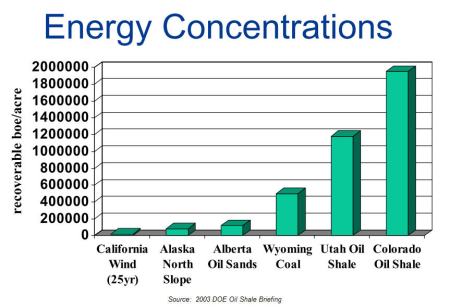
Recovery of gas and oil from shale is more than just a game changer – it is a mind-changer. The recoverability of oil and gas from shale postpones “peak oil” and “peak gas” indefinitely. For 3 decades we have suffered from the rampant pessimism of the alarmists and the coercive politics of fear. A change of mind-set from pessimistic environmentalism and backward-looking conservationism is called for. A shift of attitude from the joyless “glass half-empty and we are doomed” to the entrepreneurial “glass half-full but can be filled”  is over-due.

Resource depletion with usage is a trivial truth  – though matter at the elemental level is never destroyed by human use. However utilisation of resources does alter the composition and concentration of materials remaining available. But every alarmist and doom-sayer who has ever lived and has forecast impending catastrophe has been proven spectacularly wrong. Human ingenuity has faced every challenge and trumped the doom-sayers – every time.

The pictures say it all:

The scope of the US oil shale resource

The scope of the US oil shale resource

Related: “Peak Oil” hypothesis is following “Peak Gas” into oblivion

Moving peaks

Conservation movement’s focus is anachronistic and counterproductive – Peter Kareiva, Chief Scientist of the The Nature Conservancy.

April 4, 2012

The environmental and conservation movements lost their way when they moved to imposing their vision of the world onto others by fashioning people rather than fashioning a world to suit the needs of people. They started – in a formal sense – perhaps 60 – 70 years ago with the best of motives but became heavily politicised through the 80’s and since then have been more concerned about moulding people to fit their world view rather than serving the needs of human development. The environment – in some idealised and pristine form – even without man has been priorotised instead of being the surroundings to meet the needs of humans.  Biodiversity has been made into a false god and human development has been condemned as a demon. Alarmism has been used as the vehicle for imposing change.

An article in Breakthrough Journal is causing a few waves. This essay is full of “common sense” but what makes it noteworthy is that its authors – Peter Kareiva, Robert Lalasz and Michelle Marvier – are all senior figures in The Nature Conservancy. Common sense from the environmental and conservations “movements” has been sadly absent in recent times.The essay is posted at the Breakthrough Journal and the Journal’s publicity states:

 “By its own measures, conservation is failing. Biodiversity on Earth continues its rapid decline. We continue to lose forests in Africa, Asia, and Latin America. There are so few wild tigers and apes that they will be lost forever if current trends continue. Simply put, we are losing many more special places and species than we’re saving.”

So begins a searing indictment by the unlikeliest of sources: Peter Kareiva, chief scientist of The Nature Conservancy, the world’s largest conservation organization. …. Conservationists need to work with development, not condemn it as leading to the end of nature. In truth, nature’s resilience has been overlooked, its fragility “grossly overstated.” Areas blasted by nuclear radiation are bio-diverse. Forest cover is rising in the Northern Hemisphere even as it declines globally. …. 
And it’s time to stop prioritizing being alone over being with others.

The essay itself is well worth reading and selected extracts are reproduced below:

(more…)