Archive for the ‘Environment’ Category

Unusually thick ice traps ships in the Sea of Okhotsk

January 3, 2011

Itar-Tass reports that the Magadan icebreaker is struggling through 2-meter-thick ice to reach stuck ships in the Sea of Okhotsk and another ice-breaker is on its way. This reports talks of 3 ships being trapped but other reports speak of 10 ships with over 600 crew being trapped.

Line icebreaker ADMIRAL MAKAROV: image fesco.ru

VLADIVOSTOK, January 2 (Itar-Tass) — The Magadan icebreaker of the Far Eastern Shipping Company is struggling its way through the two-meter-thick ice to rescue three ships stuck in the ice in the Sakhalin Bay of the Sea of Okhotsk, a spokesman for the Yuzhno-Sakhalinsk sea rescue coordination center said on Sunday.

With a speed of 2.6 knots the icebreaker develops in conditions of the 10 point ice, she has to master five miles to reach the stuck ships, the spokesman said.

The Sodruzhestvo mother ship, the Professor Kizevetter research vessel and the Bereg Nadezhdy refrigerated cargo ship are trapped in the ice eleven to twelve miles off the Khabarovsk coastline. Their attempts to break free have been vain ….. According to the Sakhalin regional emergencies administration, there is no threat to the lives and health of crew members of the three ships. Of the three stuck ships, the Sodruzhestvo has the largest crew of 340 people. The ship has food reserves for 75 days.

The Admiral Makarov, the biggest icebreaker in Russia’s Far East, is also heading to join the rescue operations. She is expected to reach the Sakhalin Bay on January 4.

The BBC also carries a report also quoting Itar-Tass but their facts seem to have morphed along the way. Two metres is converted to 12 inches by the BBC calculator!!!!

map

Sea of Okhotsk: image BBC


Rescue efforts are under way to evacuate more than 600 crew on 10 ships trapped in ice in the Sea of Okhotsk. The ice is up to 30cm (12 inches) thick in some places, according to the Russian news agency Itar-Tass.

The temperature in the area is -22C, according to Itar-Tass, and forecasts suggest it will fall even lower.

An Itar-Tass update is here:

http://www.itar-tass.com/eng/level2.html?NewsID=15834220&PageNum=0

China and the use of rare earth elements trade as a tool for diplomacy

December 28, 2010

Currently China produces about 97% of the global demand for “rare earth elements” used industrially but China has only about 36% of the world’s resources. In the last few months the Chinese have created a “crisis” both by throttling exports and by sharp price increases which have alarmed the auto and electronics industry. Japanese industry has been particularly disturbed. But it would seem that China had very clear diplomatic goals for their trade actions.

The 17  “rare earth elements” are not rare at all.

Rare Earth Elements: graphic ggg.gl


From Wikipedia: http://en.wikipedia.org/wiki/Rare_earth_element

Despite their name, rare earth elements (with the exception of the highly unstable promethium) are relatively plentiful in the Earth’s crust, with cerium being the 25th most abundant element at 68 parts per million (similar to copper). However, because of their geochemical properties, rare earth elements are not often found in concentrated and economically exploitable forms. Instead, they are usually found in rare earth minerals. It was the very scarcity of these minerals (previously called “earths”) that led to the term “rare earth”. The first such mineral discovered was gadolinite, acompound of cerium, yttrium, iron, silicon and other elements. This mineral was extracted from a mine in the village of Ytterby,  Sweden; many of the rare earth elements bear names derived from this location.

A table listing the seventeen rare earth elements, their atomic number and symbol, the etymology of their names, and their main usages is provided here. Some of the rare earths are named for the scientists who discovered or elucidated their elemental properties, and for their geographical discovery.

Z Symbol Name Etymology Selected Usages
21 Sc Scandium from Latin Scandia (Scandinavia), where the first rare earth ore was discovered. Light Aluminium-scandium alloy for aerospace components, additive in Mercury-vapor lamps.
39 Y Yttrium for the village of Ytterby, Sweden, where the first rare earth ore was discovered. Yttrium-aluminum garnet (YAG) laser, YBCO high-temperature superconductors, yttrium iron garnet (YIG) microwave filters.
57 La Lanthanum from the Greek “lanthanein”, meaningto be hidden. High refractive index glass, flint, hydrogen storage, battery-electrodes, camera lenses, fluid catalytic cracking catalyst for oil refineries
58 Ce Cerium for the dwarf planet Ceres. Chemical oxidizing agent, polishing powder, yellow colors in glass and ceramics, catalyst for self-cleaning ovens, fluid catalytic cracking catalyst for oil refineries
59 Pr Praseodymium from the Greek “prasios”, meaningleek-green, and “didymos”, meaningtwin. Rare-earth magnets, lasers, core material for carbon arc lighting, colourant in glasses andenamels, additive in Didymium glass used in welding goggles, ferrocerium firesteel (flint) products.
60 Nd Neodymium from the Greek “neos”, meaning new, and “didymos”, meaning twin. Rare-earth magnets, lasers, violet colors in glass and ceramics, ceramic capacitors
61 Pm Promethium for the Titan Prometheus, who brought fire to mortals. Nuclear batteries
62 Sm Samarium for Vasili Samarsky-Bykhovets, who discovered the rare earth oresamarskite. Rare-earth magnets, lasers, neutron capture, masers
63 Eu Europium for the continent of Europe. Red and blue phosphors, lasers, mercury-vapor lamps
64 Gd Gadolinium for Johan Gadolin (1760–1852), to honor his investigation of rare earths. Rare-earth magnets, high refractive index glass or garnets, lasers, x-ray tubes, computer memories, neutron capture
65 Tb Terbium for the village of Ytterby, Sweden. Green phosphors, lasers, fluorescent lamps
66 Dy Dysprosium from the Greek “dysprositos”, meaning hard to get. Rare-earth magnets, lasers
67 Ho Holmium for Stockholm (in Latin, “Holmia”), native city of one of its discoverers. Lasers
68 Er Erbium for the village of Ytterby, Sweden. Lasers, vanadium steel
69 Tm Thulium for the mythological northern land ofThule. Portable X-ray machines
70 Yb Ytterbium for the village of Ytterby, Sweden. Infrared lasers, chemical reducing agent
71 Lu Lutetium for Lutetia, the city which later became Paris. PET Scan detectors, high refractive index glass

As long as China’s own industry was not sufficiently developed to use these materials there was no crisis and production from resources in many other countries (rare earth elements are quite plentiful around the globe and not “rare” at all) were discontinued in the face of Chinese competition. The current crisis comes about because Chinese industry is now sufficiently advanced to make use of these elements and its industrial volume is large enough to absorb a large part of the production. This allowed China to use of reduction of exports and increase of prices to send strong diplomatic signals. Firstly to counter the US pressure to revalue the Yuan and second to warn Japan regarding their territorial dispute.

But this “crisis” can only be short-lived. The price increase has already led to production of rare earth elements being restarted in the US and many other countries are now planning to start production (Sweden, India, Vietnam and countries in Central Asia for example). China is no doubt well aware that their manufactured “rare earth elements” crisis will only accelerate the production of these elements from alternate sources. But what it shows is that China has the economic muscle and the willingness to now use “trade wars” as a weapon in diplomacy. But what is also a new development is the concerted response from many countries in acting together to find alternate sources and counter the Chinese might.

That Japan feels particularly vulnerable is to be expected since it does not have its own resources and is a major user. The Asahi Shimbun writes:

One reason for China’s dominance in production is the cheap cost of labor. But the country also has an advantage because deposits there can be extracted through relatively rough methods. In southern China, the weathering of a particular type of granite containing large amounts of rare earths has progressed to the right degree. Unwanted substances have been washed away in the rain, leaving soil with high concentrations of rare earth metals exposed on the surface.

“Erosion proceeds quickly in places that are warm and have a high rainfall, but if there is too much rain, erosion proceeds too quickly,” said Mitsuya Hirokawa of Japan Oil, Gas and Metals National Corp. “The necessary conditions are the existence of granite that contain lots of rare earths and the right amount of rainfall.” Southern China fulfills these conditions.

Japan has the right type of granite, but it has not eroded at the proper pace. But environmental concerns are arising from the cheaper method of extraction in China. In normal mines, rare earths are extracted by chemically processing ore that has already been removed from the ground. But in the method used in southern China, the mine itself becomes a processing factory. Acidic liquid is poured on the ground, and the dissolved rare earths are recovered from the liquid that oozes out. If the toxic liquid leaks into rivers, it could have serious consequences for the environment. “There are paddy fields in the vicinity, and there are concerns about the impact on human health,” said a researcher who observed the procedure in southern China.

This is the context under which China cites environmental concerns as the reason for restricting exports of rare earth metals. But this cheaper method of extraction is one reason why production is concentrated in China. Many mines in the United States and elsewhere could not afford to continue operating and were closed down.

Apparently, similar “convenient” deposits exist in Vietnam. Studies are under way, but production there has not yet started.

The Wall Street Journal analyses the Chinese use of trade flows as a tool of diplomacy:

Beijing’s decision earlier this year to stop shipments of rare earth minerals to Japan apparently as part of a territorial dispute raised a lot of concerns about the strategic implications of China’s growing economic strength. And well it should. Up to now, Beijing has worked hard to separate economics from politics on the world stage as part of a strategy to minimize global unease with its rise. That it is now willing to use an economic lever in a political matter suggests that approach is changing in ways that could cause trouble for the rest of the world and for China itself……..

……….Before now, trading partners were willing to take the temporary hit to trade, since they knew the episode would quickly blow over. This time, though, all major trading partners are seriously contemplating alternatives to Chinese markets in rare earth supplies. Japan, naturally, has been most active in looking for alternative sources, signing agreements with Vietnam and Australia to develop new mines or renewing production in existing mines.

Haiti: The UN cholera tragedy continues…..

December 26, 2010

Port-au-Prince, Haiti (CNN) — At least 45 people, most of them voodoo priests, have been lynched in Haiti since the beginning of the cholera epidemic by angry mobs blaming them for the spread of the disease, officials said.

“People who practice voodoo have nothing to do with the cholera epidemic,” said Max Beauvoir, the head of a voodoo organization in the Caribbean country.

Beauvoir said Thursday that he has appealed to authorities to help before the situation gets worse.

Some of the victims were killed with machetes, others were burned alive by mobs that added tires and gasoline to stoke the fires. The cholera outbreak started in October.

Forty of the victims were found in a southwest area of Haiti called Grand Anse, said Moise Fritz Evens, a communications ministry official.

The victims have been targeted because of “misinformation” that had been circulating in the community that voodoo practitioners were spreading cholera by using witchcraft, according to communications Minister Marie-Laurence Lassegue.

“It was necessary to increase awareness of the disease and educate the population countrywide instead of getting into a religious war that has no ending,” Lassegue said.

The killings add to ongoing woes that have hit the island after the devastating earthquake in January. About 220,000 people were killed in the earthquake, and countless others left homeless. A cholera outbreak after the earthquake has killed more than 2,000 people, health officials said.

Before the current outbreak introduced by UN troops, Haiti had not seen cholera for over 100 years.

https://ktwop.wordpress.com/2010/11/19/un-cholera-and-protests-against-un-reach-port-au-prince/

Eco-friendly superyacht – a contradiction in terms!

December 26, 2010

Motor Yacht

Super Yacht "Exuma": image ypigroup.com

From CNN:

Every few years, a radically designed superyacht splashes into the water, grabbing the world’s attention. Right now it’s “Exuma,” a motor yacht intended to consume less fuel and produce less carbon emissions than other motor yachts of a similar size. The yacht, which won the Green Yacht of the Year award at this year’s Monaco Yacht Show, pays close attention to three key principles: that it should be sustainable, efficient and robust.

Featuring an elongated, slender hull designed for maximum hydrodynamic efficiency to reduce water resistance, it scythes effortlessly through the water like a shark stalking its prey. Designed with exploration in mind, it has a range of over 6,000 miles at a speed of 12 knots — which is impressive given it has a fuel tank with a 75,000-litre capacity.

I admire the yacht and the use of technology but I find the “eco-friendly” label somewhat presumptious and not just a little vulgar.

Specifications

  • Built by: Picchiotti – Perini Navi Group
  • Length: 50 mtr (164 ft)
  • Beam: 9.5 mtr (31.2 ft)
  • Draft: 2.3 mtr (8.37 ft)
  • Year Built: 2010
  • Main Engines: DIESEL CATERPILLAR
  • Engines model: 2 x C32 Acert
  • Max speed: 17 Knots
  • Cruising speed: 14 Knots
  • Classification: ABS
  • Hull construction: Aluminium
  • Superstructure material: Aluminium
  • Guests cruising: 12 persons
  • Guests sleeping: 9 persons
  • Crew: 9 persons
  • Flag: Malta
“Eco-Friendly” rates are:
Summer charter rate: from EUR 175 000 per week
Winter charter rate: from EUR 175 000 per week

Is the Landscheidt minimum a precursor for a grand minimum?

December 23, 2010

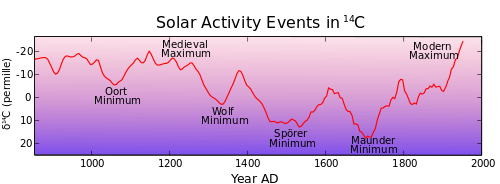
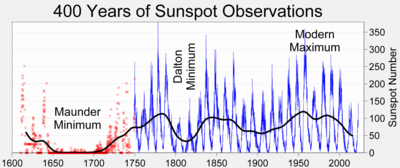
It took 500 years with reducing solar activity to get from the Medieval maximum to the the grand Maunder minimum. The Dalton minimum came a little over a 100 years later as solar activity was increasing to its modern maximum in the years preceding Solar Cycle 22 (c. 1890 – 1990). Now with the Landscheidt minimum seemingly well established, SC 23 and the current SC 24 show a clear trend of declining solar activity. SC’s 22, 23 and 24 are remarkably similar to SC’s 3, 4 and 5. The Dalton minimum coincided with SC’s 5 and 6.

It is reasonable to assume that climatic conditions over the next 20 – 30 years will resemble those prevailing between 1790 and 1820. But SC24 has a way to go yet and it could be that solar activity for SC24 and 25 will be even lower than during the Dalton minimum and perhaps closer to the Spörer minimum but perhaps not as deep as the Maunder minimum.

But in either case the solar activity to come following the Modern maximum may well resemble the 500 years of decline in solar activity which followed the Medieval maximum.

http://en.wikipedia.org/wiki/Dalton_Minimum

Solar activity events recorded in radiocarbon. Present period is on left. Values since 1950 not shown: Wikipedia

http://en.wikipedia.org/wiki/Maunder_Minimum

The Maunder minimum in a 400 year history of sunspot numbers: Wikipedia

http://sc25.com/index.php?id=268&linkbox=true&position=10

Image Attachment

The excellent historical weather chronology covering 1800 years put together by James A Marusek shows that the period between 1790 and 1820 was characterised not only by colder weather but also by violent fluctuations of seasonal weather. An extract of the chronology during the Dalton minimum is here: (weather chronology Dalton).

I give little credence to AGW Alarmism and the doom-saying regarding the effects of carbon dioxide. Environmentalism which was (and still is) highly admirable when concerned with the improvement of local conditions went off the rails when it went “global” and came to be dominated by the overweening arrogance of ignoring the sun and the presumption of super-computers and inadequate computer models.  Rather I am persuaded about the dominance of solar influences on the chaotic system which is our climate.

Whether or not a grand solar minimum is on its way, we are in for a decade of two of reduced activity and a cooling trend during this Landscheidt minimum.

Piers Corbyn forecasts a 3rd solar-influenced wave of snow in UK

December 23, 2010


Reproduced from Climate Realists.com:
Image Attachment

A THIRD period of “Solar Climate Change” on the UK will take place from Christmas Day to the End of December, this comes right after the first & second periods correctly predicted by WeatherAction.com & Piers Corbyn

The forecast made in November says….Snow deluges and blizzards in most of England and Wales, heaviest in East parts. Snow showers in Scotland. Sleet/rain and less cold in far West Ireland.

This “triple hit” of “Solar Climate Change” announced to WeatherAction.com users in November, means that the UK will go on to complete the “worst ever” December for High street retailers and business with the lack of essential public service due to road/rail/airport closures and again bring the country to it’s knees, and with “road salt” running out fast this “third” wave will take it’s toll on the “holiday” work force.

This is likely to add to one of the worst if not THE worst period of disruption in the UK to have been seen in modern times.

I will repeat what was said on the previous statement as this will still apply….

There are potential “life threatening” conditions that will be underestimated by the media (inc. Met Office).

With the aid of this forecast we hope to give some advance warning to those of you who are already suffering hardship and warn you of a very real risk of further and even bigger snow storms and blizzard conditions set for Scotland & England and Eastern Europe.

Please spread news of this forecast to all of those who are vulnerable and try to ensure that food supplies are sufficient to cope with this impending crisis.


UN to “investigate” its introduction of cholera to Haiti

December 17, 2010

More than a month after the outbreak , the United Nations secretary-general plans to call for an independent commission to study whether U.N. peacekeepers caused a cholera outbreak that has killed more than 2,400 people in Haiti, an official said on Wednesday.

http://www.thehindu.com/health/policy-and-issues/article956037.ece?homepage=true

U.N. officials initially dismissed speculation about the involvement of peacekeepers. The announcement indicates that concern about the epidemic’s origin has now reached the highest levels of the global organization.

“We are urging and we are calling for what we could call an international panel,” U.N. peacekeeping chief Alain Le Roy said at a news conference at U.N. headquarters in New York. “We are in discussions with (the U.N. World Health Organization) to find the best experts to be in a panel to be completely independent.”

Le Roy said details about the commission would be announced Friday by Secretary-General Ban Ki-moon. He said cholera experts and other scientists will have full access to U.N. data and the suspected military base.

“They will make their report to make sure the truth will be known,” Le Roy said.

Soon after the cholera outbreak became evident in October, Haitians began questioning whether it started at a U.N. base in Meille, outside the central plateau town of Mirebalais and upriver from where hundreds were falling ill. Speculation pointed to recently arrived peacekeepers from Nepal, a South Asia nation where cholera is endemic.

U.N. officials rejected any idea the base was involved, saying its sanitation was air-tight.

WHO and the U.S. Centres for Disease Control and Prevention said at the time that it was unlikely the origin would ever be known, and that pinning it down was not a priority.

Then the Associated Press found not only sanitation problems at the base, but that the U.N. mission was quietly taking samples from behind the post to test for cholera.

When the CDC determined the strain in Haiti matched one in South Asia, cholera and global health experts said there was now enough circumstantial evidence implicating the likely unwitting Nepalese soldiers to warrant an aggressive investigation.

The experts have also said there are important scientific reasons to trace the origin of the outbreak, including learning how the disease spreads, how it can best be combated and what danger countries around Haiti could face in the coming months and years.

Many think the U.N. mission’s reticence to seriously address the allegations in public helped fuel anti-peacekeeper riots that broke out across the country last month.

This outbreak, which experts estimate could affect more than 600,000 people in impoverished Haiti, involves the first confirmed cases of cholera in Haiti since WHO records began in the mid-20th century. Suspected outbreaks of a different strain of cholera might have occurred in Haiti more than a century ago.

The current outbreak has spread to the neighbouring Dominican Republic and isolated cases have been found in the United States.

French epidemiologist Renaud Piarroux argues that “no other hypothesis” from the Nepalese being the origin could explain his findings that cases of the diarrheal disease first appeared near the U.N. base in Haiti’s rural centre, far from shipping ports and the area affected by the Jan. 12 earthquake.

Bring back my incandescent light bulb!

December 8, 2010
Image showing both a fluorescent and an incand...

Image via Wikipedia

While visiting relatives in Bangalore I notice that all their solar powered lamps – installed  a year or so ago in a surge of environmental consciousness – are all just ornaments on the garden path and provide no light any more. Any talk about them is somewhat embarassing and discouraged!!!

But at least in India the incandescent light bulb is not banned as it is in the environmentally alarmist EU.

As I have posted before I find the entire low energy lamp movement totally unconvincing and whenever I do the sums I find the environmental impact on reducing carbon footprint (which in any case is of little importance) to be quite insignificant.

Moreover, I find the low energy lamps cold and unattractive compared to the simple old-fashioned, incandescent light bulb.

Now comes confirmation that in fact the low energy lamps are not that environmentally friendly:

Consumer protection organisations have demanded a suspension of the EU ban on incandescent light bulbs, citing official tests that showed the new compact fluorescent lamps to be dangerous if broken.

The energy saving bulbs show mercury levels 20 times higher than regulations allow in the air surrounding them for up to five hours after they are broken, according to tests released Thursday by the Federal Environment Agency (UBA).

“If the industry can’t manage to offer safe bulbs, then the incandescent bulbs must remain on the market until autumn of 2011,” said Gerd Billen, the leader of the Federation of German Consumer Organisations (VZVB).

I for one would be very happy to see their return.


Cancun won’t because it can’t

December 5, 2010

The  Cancun jamboree enters it’s second week with efforts being made to reduce expectations even further.  It is clear that any extension of Kyoto will be deferred till next year – again- and the pressure is now to get sufficient at Cancun next week to be able pronounce a success.

But the mood of the world has changed. Politicians lag the world by a few months and it is apparent that there are vry few who are leaders.

From the Hindu:

With Japan’s forthright statement on Monday and reluctance on the part of the other countries such as Russia, Canada and Australia to commit to a second phase, the entire negotiation is fraught with uncertainty.

To add to this the ALBA or the Bolivarian Alliance for the Peoples of Our America, which comprise nations of the South America and the Caribbean, has upped the ante by demanding a firm commitment from developed nations to the second phase of the Kyoto protocol, putting pressure on the main polluters. Matters were worsened by rumours of a secret text floated at the conference, which was strenuously denied by Christiana Figueres, Executive Secretary of the United Nations Framework Convention on Climate Change (UNFCCC), on Thursday. The secret text, according to a statement released by NGOs says the presidency of the conference of parties, Mexico, has convened an exclusive small group of countries aimed at agreeing on a text on the most sensitive topic, the mitigation efforts of developed and developing countries.

Ms. Figueres, Executive Secretary of the United Nations Framework Convention on Climate Change (UNFCCC), briefing the press, denied there was any secret Mexican text. Japan was clear about its position for a long time and it comes as no surprise that it had made a statement on its position, she reiterated. “The challenge of Cancun is how to formulate the broad array of proposals from developed countries under the UNFCCC framework,” she said. Even the position of the ALBA countries was known and there was no news there. Their position was 180 degrees opposite to Japan. “I don’t think it will be possible to guarantee a second commitment to the Kyoto Protocol. And it could be addressed later, but not at Cancun,” she said.

Expectations are being walked back.

Some good news from Cancun: Japan refuses to extend Kyoto protocol

December 2, 2010

Jun Arima, an official in the government’s economics trade and industry department, in an open session at Cancun bluntly stated that  “Japan will not inscribe its target under the Kyoto protocol on any conditions or under any circumstances.”

Kyoto stop

The Guardian is concerned which is a good sign in itself:

The brief statement…. was the strongest yet made against the protocol by one of the largest emitters of greenhouse gases.

“For Japan to come out with a statement like that at the beginning of the talks is significant,” said one British official. “The forthrightness of the statement took people by surprise.”

If it proves to be a new, formal position rather than a negotiating tactic, it could provoke a walk-out by some developing countries and threaten a breakdown in the talks. Last night diplomats were urgently trying to clarify the position. The move provoked alarm among the G77, the grouping of developing countries who regard the Kyoto protocol as the world’s only binding agreement on climate change cuts. Japan gave no reasons for making its brief statement on the second day of the talks, but diplomats said last night that it represented a hardening of its line. “Japan has stated before that it wants only one legal instrument and that it would be unfair to continue the protocol,” said one official who did not wish to be named.

Bloomberg writes:

China and Brazil led developing nations in saying Japan’s refusal to help extend the Kyoto Protocol to curb greenhouse gas emissions may halt work on a global accord to combat global warming.

A total of 37 developed countries, including Japan, ratified the Kyoto Protocol in 1997, agreeing to set limits on fossil fuel emissions. The Kyoto accord expires in December 2012 and with no other agreement to replace it, delegates at the United Nation climate talks in Cancun, Mexico, say extending the protocol is crucial.

“The Kyoto Protocol is the very basis of the framework to address climate change through international cooperation,” China’s envoy, Su Wei told reporters in Cancun. “If the pillar is collapsed, you can guess the consequences.”