Archive for the ‘Ethics’ Category

Dr Steven King of the Irish Examiner accused of widespread plagiarism

October 7, 2011

Yet another plagiarising churnalist.

Dr Steven King is the former chief political advisor to Nobel Peace Laureate and First Minister of Northern Ireland David Trimble and was a Ulster Unionist Party (UUP) negotiator on equality, human rights, security and cultural issues in the multi-party peace talks leading to the 1998 Belfast (Good Friday) Agreement.  He now writes about international affairs in a weekly column for the Irish Examiner.

But Brian Whelan who led the uncovering of the plagiarism of  Johann Hari has found that Steven King has plagiarised widely and especially from the writings of Brendan O’Neill, the editor of the blog Spiked.

The Journal: THE IRISH EXAMINER says it is investigating substantial allegations of plagiarism against one of its columnists. Steven King, who writes about international affairs in a weekly column for the newspaper, is accused of copying lengthy passages for his columns from the output of Brendan O’Neill, the editor of British-based blog Spiked.

Evidence of the plagiarism was uncovered by journalist Brian Whelan, whose blog this morning published examples of seven King articles which seem to rely heavily on passages taken from O’Neill’s columns. In one case – a column published by the Examiner in July – there are at least three paragraphs which bear striking similarities to an O’Neill column from 2008.

Whelan wrote on his blog that he had been in contact with O’Neill regarding the similarities, and had been assured that King was not given permission to use passages from his work.

DIT journalism lecturer Harry Browne subsequently uncovered further examples of potential plagiarism, in King’s column published yesterday. That column – dealing with the prospect of Barack Obama losing next year’s US election – carries similarities with pieces published on Salon.com and in Commentary Magazine.

Whelan had previously helped to uncover accusations against London Independent columnist Johann Hari, which resulted in Hari being stripped of his 2008 Orwell Prize and suspended from duty at his paperHari is now on unpaid leave from the Independent.

Brian Whelan writes:

… King was Educated at Oxford, Queen’s and the University of Ulster, holds a Bachelor of Arts in Political Science, a Master of Social Science in Humanities and a Doctor of Philosophy in Political Science.

I will show below that he has been extensively passing off the ideas of Spiked Online’s Brendan O’Neill as his own. I have contacted O’Neill who says he has never met King and never gave permission for any of his work to be reproduced by him. …

Presumably King gets paid by the Irish Examiner and – indirectly – by  thousands of readers and then this becomes a case of theft and fraud and not just of his ethics.

Related: Hari, Johann: Plagiarising Churnalist

Scientific retractions increasing sharply but is it due to better detection or increased misconduct?

October 5, 2011

Retractions of scientific papers is increasing sharply.

I am a strong believer in the Rule of the Iceberg where “whatever becomes visible is only 10% of all that exists”. And while I do not know if the number of retractions of scientific papers is increasing because detection methods are improved or because scientific misconduct is increasing, I am quite sure that the misconduct that is indicated by retractions is only a small part of all the misconduct that goes on.

What is clear however is that the world wide web provides a powerful new forum for the exercising of a check and a balance. It provides a hitherto unavailable method for mobilising resources from a wide and disparate group of individuals. The success of web sites such as Retraction Watch and Vroniplag are testimony to this. And the investigative power of the on-line community is particularly evident with Vroniplag as has been described by Prof.  Debora Weber-Wulff’s blog. And this investigative power – even if made up of “amateurs” in the on-line community – can bring to bear a vast and varying experience of techniques and expertise which – if harnessed towards a particular target – can function extremely rapidly. The recent on-line investigation and disclosure that an award winning nature photographer had been photo-shopping a great number of photographs of lynxes, wolves and raccoons and had invented stories about his encounters was entirely due to “amateurs” on the Flashback Forum in Sweden who very quickly created a web site to disclose all his trangressions and exactly how he had manipulated his images.

Nature addresses the subject of retractions today:

This week, some 27,000 freshly published research articles will pour into the Web of Science, Thomson Reuters’ vast online database of scientific publications. Almost all of these papers will stay there forever, a fixed contribution to the research literature. But 200 or so will eventually be flagged with a note of alteration such as a correction. And a handful — maybe five or six — will one day receive science’s ultimate post-publication punishment: retraction, the official declaration that a paper is so flawed that it must be withdrawn from the literature. … But retraction notices are increasing rapidly. In the early 2000s, only about 30 retraction notices appeared annually. This year, the Web of Science is on track to index more than 400 (see ‘Rise of the retractions’) — even though the total number of papers published has risen by only 44% over the past decade. …. 

…… When the UK-based Committee on Publication Ethics (COPE) surveyed editors’ attitudes to retraction two years ago, it found huge inconsistencies in policies and practices between journals, says Elizabeth Wager, a medical writer in Princes Risborough, UK, who is chair of COPE. That survey led to retraction guidelines that COPE published in 2009. But it’s still the case, says Wager, that “editors often have to be pushed to retract”. …… 

In surveys, around 1–2% of scientists admit to having fabricated, falsified or modified data or results at least once (D. Fanelli PLoS ONE4, e5738; 2009). But over the past decade, retraction notices for published papers have increased from 0.001% of the total to only about 0.02%. And, Ioannidis says, that subset of papers is “the tip of the iceberg” — too small and fragmentary for any useful conclusions to be drawn about the overall rates of sloppiness or misconduct.

Instead, it is more probable that the growth in retractions has come from an increased awareness of research misconduct, says Steneck. That’s thanks in part to the setting up of regulatory bodies such as the US Office of Research Integrity in the Department of Health and Human Services. These ensure greater accountability for the research institutions, which, along with researchers, are responsible for detecting mistakes.

The growth also owes a lot to the emergence of software for easily detecting plagiarism and image manipulation, combined with the greater number of readers that the Internet brings to research papers. In the future, wider use of such software could cause the rate of retraction notices to dip as fast as it spiked, simply because more of the problematic papers will be screened out before they reach publication. On the other hand, editors’ newfound comfort with talking about retraction may lead to notices coming at an even greater rate. …… 

Read the article

A graphic of retractions is here.

The academic and scientific community will – perforce – mirror the surrounding society it is embedded in. Standards of ethics and instances of misconduct will follow those of the surrounding environment. But the scientific community is somewhat protected in terms of not often having to bear liability for what they have published. Having to bear some responsibility and face liability for the quality of what they produce can be a force which will improve ethical standards immensely. Bringing incompetent or cheating scientists to book is not an attack on science. And it is what science needs to regain some of the reputation that has been tarnished in recent times. With the spotlight that is now available in the form of the world wide web, I expect the level of scrutiny to increase and this too can only be a force for the good.

Goldacre vs.Sigman and The Biologist: when opinion articles are published in the guise of science

October 5, 2011

Dr. Aric Sigman is a biologist with fine credentials (a Fellow of the Society of Biology and an Associate Fellow of the British Psychological Society) but one who has been seduced by the notoriety and adulation that comes from creating headlines with nonsense science (usually in the Daily Mail – popularly known as the Daily Fail).

Children’s TV diet more harmful than thought 

How super skinny TV stars are harming our health

Curse of the screen: PCs ‘dull children’s brains and should be banned until nine 

Ban TV to protect children’s health, top psychologist tells EU politicians 

How using Facebook could raise your risk of cancer 

Putting baby in nursery ‘could raise its risk of heart disease’

Just the headlines brand Sigman clearly as a publicity seeking “kook”. He has even gone on record – with the Daily Mail of course – to suggest that smacking children can lead to their success!! He may have been a scientist once but has now fallen to become a “celebrity scientist” and appears to be a psychologist suffering from some form of narcissism.

Ben Goldacre is the author of the Bad Science column in Saturday’s Guardian and of the Bad Science website and does not much care for Sigman (good for him).

But now Sigman has taken to publishing his crazy opinions in The Biologist. It is not science and the purpose is publicity and while The Biologist may well like basking in this publicity it degrades its own position as a scientific journal and degrades the work of those who publish real science in the journal.

Goldacre takes Sigman to task in The Guardian:

Last week the Daily Mail and the Today programme took some bait from Aric Sigman, an author of popular sciencey books about the merits of traditional values. “Sending babies and toddlers to daycare could do untold damage to the development of their brains and their future health,” explained the Mail.

These news stories were based on a scientific paper by Sigman in The Biologist. Itmisrepresents individual studies, as Professor Dorothy Bishop demonstrated almost immediately, and it cherry-picks the scientific literature, selectively referencing only the studies that support Sigman’s view. Normally this charge of cherry-picking would take a column of effort to prove, but this time Sigman himself admits it, frankly, in a PDF posted on his own website. Nobody reading The Biologist, or its press release, could possibly have known that the evidence presented was deliberately incomplete. That is, in my opinion, an act of deceit by the journal.  ……

Sigman replies to the criticism also in The Guardian by claiming that his article in the Biologist was not science and was clearly an opinion piece. But this does not wash. It was opinion – and nonsense opinion at that – but he clearly wanted it to be taken as science at least by the popular press to satisfy his narcissistic urges. He whines:

….. columnists and bloggers cannot assume a sense of entitlement over science and dictate to learned societies, their journals and journalists what they should publish, stifling healthy debate.

But bloggers and columnists can certainly demand of journals who claim to be scientific, peer-reviewed journals that they refrain from the politicisation and corruption of science and assure the quality of what they publish. The Biologist needs to clean up its act and cannot just pander to a “celebrity scientist” seeking publicity by passing off nonsense opinion as science. But it is Sigman’s ethics which are in doubt.

Related: How to become a celebrity scientific expert

Spotify undone

September 30, 2011
Image representing Spotify as depicted in Crun...

Image via CrunchBase

I have just returned after a weeks travel on an assignment and was disappointed to find the Spotify decision that new users must have an account with Facebook in order to sign up at all.

My son had introduced me to Spotify 6 months ago and I found it interesting and a channel for music that I used from time to time. I had always expected to increase my usage of Spotify. But I find their Facebook connection coercive and manipulative and – in my opinion – unethical.

I am much too old and much too old-fashioned to be in their target audience and my actions will not have any impact on them or their success or failure. But then I do not find the use of Facebook or Twitter to be a vital or a valuable or a necessary part of my daily life. No doubt their main target audience do not find Facebook intrusive and voyeuristic and manipulative as I do.

And since I find their actions unacceptable I have cancelled my account and uninstalled Spotify.

I shall have to get around to closing my Facebook account and clearing my computer of all their intrusive cookies.

Dutch social psychologist sacked for faking data over a “prolonged period”

September 12, 2011

On September 7th, Tilburg University officially suspended Diederik Stapel, who heads the Tilburg Institute for Behavioral Economics Research. University Rector Philip Eijlander said that Stapel had admitted to using faked data and said that he would not be allowed to return.
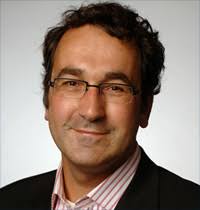
Diederik Stapel

Stapel’s homepage on the Tilburg University website has been removed “by the administrator”.

Mark van Vugt is a Netherlands evolutionary psychologist who currently holds a professorship in psychology at the VU University (Vrije Universiteit) Amsterdam, the Netherlands, and has affiliate positions at the Institute for Cognitive and Evolutionary Anthropology at University of Oxford, UK, and the University of Kent, UK. Mark van Vugt writes about his colleague Diederik Stapel in Psychology Today:

After the high profile case of Marc Hauser, the Harvard psychologist found guilty of serious scientific misconduct there is the recent case of my colleague, Diederik Stapel, a social psychology professor in the Netherlands who has been suspended by his university after admitting to have fabricated experimental data over a prolonged period.

The extent of his fraud is yet unclear but it has produced shock waves among the international social psychology community.

Stapel was the poster boy of Dutch social psychology, having published in the major psychology journals, and receiving various grants and prestigious awards for his research on social cognition and stereotyping. In a recent article published in Science, he and his colleagues showed that in a messy environment (a dirty railway station) White participants were more prejudiced against a Black person. The authenticity of these results is now being investigated…

The Science article that is being investigated is Coping with Chaos: How Disordered Contexts Promote Stereotyping and Discrimination by Diederik A. Stapel and Siegwart Lindenberg, Science 8 April 2011: Vol. 332 no. 6026 pp. 251-253 DOI: 10.1126/science.1201068

But this is not the only article being investigated and there may be a rash of retractions to come.

Science Insider writes:

A Dutch social psychologist whose eye-catching studies about human behavior were fodder for columnists and policy makers has lost his job after his university concluded that some of the data in those studies were fabricated.

Tilburg University today officially suspended Diederik Stapel, who heads the Tilburg Institute for Behavioral Economics Research. But in a TV interview today, university Rector Philip Eijlander said that Stapel had admitted to using faked data and said that he would not be allowed to return.

Stapel has worked at the university, located in southern Netherlands, since 2006. He is known as a prolific researcher and a successful fundraiser. His studies appeared to offer new insights into the workings of the human mind; for instance, a Science paper published in April showed that people are more likely to stereotype or discriminate in messy environments.

In the TV interview, Eijlander says he was first contacted on 27 August by “junior researchers” in Stapel’s lab who alleged that his conduct was fraudulent. Stapel immediately admitted that there was “something strange” in his papers, Eijlander says, and “yesterday, he told me that there are faked data.” The university has asked Willem Levelt, a psycholinguist and former president of the Royal Netherlands Academy of Arts and Sciences, to lead a panel investigating the extent of the alleged fraud. Eijlander says that all “tainted papers” will be retracted.

As to the whistleblowers, Eijlander told the television interviewer that “I have a lot of respect for them, because they found it very difficult.”

Just last week, Stapel made headlines with a press release claiming that thinking of eating meat makes people “more boorish” and less social. The announcement, which said that “meat brings out the worst in people,” raised eyebrows because the study hadn’t yet been written up, let alone published.

Roos Vonk, a psychologist at Radboud University Nijmegen and a collaborator on the study, wrote on her blog today that she believes the latest study is likely among those based on fabricated data. She writes that her conclusion is based on the fact that, although the results had been collected by Stapel’s group, “when we discussed [them], I thought it was odd that Diederik didn’t mention the name of his assistant.” But at the time, she writes, the possibility of fraud didn’t occur to her.

Roos Vonk writes further as she apologises on her blog

I regret very much that this has happened and I will do everything what I can so that trust in the scientific work within social psychology will recover. It is conceivable that this extensive lapse of a few colleagues effects the reputation of our entire profession. I understand that this way can work, but I want to stress that this is a single exception  probably much more shocking and shameful for me and my colleagues than for outsiders, because we all in our education are imbued with the importance of integrity.

An interesting UPDATE from Retraction Watch:

An alert Retraction Watch reader has pointed us to a 1999 paper by Stapel with the impossibly ironic title: Framed and misfortuned: identity salience and the whiff of scandal.”

In the article, which appeared in the European Journal of Social Psychology, Stapel and two colleagues reported the results of survey they’d conducted of Dutch psychologists in the wake of a major plagiarism scandal involving an unidentified Dutch clinical psychologist (“we decided to use neither the name of the person who was accused of plagiarism nor the university to which he was affiliated,” they wrote).

Put briefly, the researchers claimed to have found (rather unsurprisingly) that hows psychologists identified themselves professionally dictated how strongly they were affected personally by the scandal. Money quote:

Whether social psychologists view an article about a plagiarist clinical psychologist as relevant or irrelevant to the self may thus be determined by whether their social identity is narrowly defined (‘social  psychologists’), so as to exclude the plagiarist, or broadly define (‘psychologists’) to include the plagiarist.

Stapel’s group also showed that psychologists from the accused’s own university felt the shame of his alleged misdeeds more than those from other institutions.

And from what Roos Vonk has written it would seem that his collaborators indeed feel a stronger sense of shame than others.

It would seem that much of the research by Diederik Stapel will now be investigated and a number of his papers are likely to be retracted. In addition to the Science paper which is already under investigation some of his other earlier publications are:

I wonder whether cognitive psychology is particularly subject to the faking of data – possibly because faking is relatively easy when the data are so often subjective and so little of it is required to be reproducible or quantitative.

The Heidelberg affidavit: German Universities take action to prevent PhD fraud

September 12, 2011

I have long felt that the work of researchers and scientists cannot and should not be devoid of liability (whether criminal or civil liability) in cases of scientific misconduct or fraud. Recently two University of Toronto law professors argued that medical ghostwriting where medical or pharmaceutical companies finance the writing of favourable, peer-reviewed,  scientific articles should be considered fraud and liable as such.

Now after the retraction of a splurge of PhD’s awarded to German politicians, the academic community is acting to protect the reputation and the value of their PhD’s. Heidelberg University and Bonn University – among others – are tightening their regulations. The NY Times  reports:

The plagiarism scandals that rocked the political world in Germany this year have led to a period of soul-searching among academics and researchers around the country. They have also prompted calls for stricter controls at German universities. …. After several cases in which doctoral theses were described as using unattributed material from earlier works — the most prominent of which pushed Karl-Theodor zu Guttenberg to resign as defense minister — German universities have questioned the way doctoral candidates are tested. Some academics insist that the system is generally sound, pointing out that in the half-dozen high-profile cases where plagiarism was found, the doctoral degree was ultimately retracted.

… the University of Bonn, which in July retracted the doctoral title of Jorgo Chatzimarkakis, a member of the European Parliament, the university will publish extensive and explicit guidelines so that doctoral students know exactly what is expected.

Heidelberg University, which in June formally retracted the doctorate of Silvana Koch-Mehrin, a member of the European Parliament, announced in August that it would begin demanding that doctoral students sign a legally binding affidavit, attesting original authorship. Signing a false statement on such an affidavit can prompt legal action in the local courts, which can lead to a fine and even to a prison sentence of up to three years under the German penal code.

Professor Thomas Pfeiffer, speaking for the university, said the threat of possible legal action, in addition to the embarrassment of a retracted doctorate, would act as a further deterrent.

Faculties at the University of Bonn, Heidelberg University and the University of Bayreuth have all retracted doctorates after internal commissions determined that students-turned-politicians had plagiarized. They are demanding that all doctoral theses be submitted as an electronic copy, to help spot-checking with plagiarism-detection software, a step considered just as important as a deterrent for would-be plagiarists as it is a detection mechanism.

Read the whole article

The Heidelberg affidavit seems a relatively simple and effective way to go. It is pre-emptive and should act as a deterrent without being oppressive. Of course one would wish scientific research to be carried out in an open atmosphere which is not clouded by suspicion. But since the rewards of scientific misconduct – whether as academic or political advancement or in monetary gain – can be very high, suspicion and rivalry will remain unless a system of liability is introduced. This would not only create accountability but would also encourage the taking of responsibility for one’s own work. In fact, if scientists and researchers automatically bear a certain liability for the integrity (not the quality) of their work, then an open atmosphere could actually be promoted.

I see no reason why an extension of the “Heidelberg affidavit” could not be applied to all research workers regarding the integrity of their work and be an integral part of any employment contract.

Internet forum unveils the compulsive photoshopping of an award-winning nature photographer

September 9, 2011

It started on August 26th when Gunnar Glöersen, a wildlife management expert for the Swedish Hunting Association (Svenska Jägareförbundet) received a call from a journalist – Jan Henricson of  Svensk Jakt – asking him to comment on the authenticity of a suspicious photograph of a lynx taken by Terje Hellesö. Hellesö is a well-known nature photographer who received the 2010 Swedish Environmental Protection Agency’s Nature Photographer of the Year award.

On the 26th Glöersen wrote in his blog about his suspicions not only about this photograph but also of other wildlife photographs by Hellesö. His blog post was taken up in the on-line Flashback forum which exploded with all Hellesö’s photographs being investigated by the on-line community (and the knowledge and expertise and ingenuity with the amateur investigators is truly impressive). In the 2 weeks since Glöersen’s blog post the Flashback forum post has had over 800,000 readers.

Last Monday (5th September) The Local reported:

Photographer Terje Hellesö, recipient of the Swedish Environmental Protection Agency’s Nature Photographer of the Year award, has been reported to police after admitting that he manipulated a number of his pictures of predatory animals. …

“Doesn’t this lynx in the July greenery have a winter furr? How about the lynx that’s reflected in the pool, is it walking in the air or on land, and can you really see the paws in that angle?”, Glöersen wrote in a blog post dated August 26th. Glöersen also questioned the authenticity of the picture, and decided to examine more of Hellesö’s work. Based on his wildlife expertise, he began to suspect that Hellesö’s alleged accomplishments were simply too good to be true.

Among Hellesö’s claims called into question by Glöersen are reports that the nature photographer had seen 150 lynx in nine months, when Glöersen himself had only seen 15 in 52 years. Glöersen also questioned Hellesö’s claim to have photographed a raccoon dog from a meter away, in an area where they’re not even supposed to exist.

In a debate between Glöersen and Hellesö on Sveriges Radio (SR) on August 30th, Hellesö at first denied the allegations that he had doctored his images. “No no no, of course not. Not under any circumstances,” he said. However, four days later, on September 3rd, he changed admitted the forgeries to his wife. “I didn’t know about this myself. I’m still in shock,” Malin Hellesö told SR. …..

On Monday, Tommy Berglund, an inspector and wildlife tracker at the County Administrative Board of Västra Götaland, reported Hellesö to the police for fraud.
While he filed the report as a private citizen, rather than as a part of his official duties, Berglund is nevertheless concerned about the affect Hellesö’s claims have meant for local wildlife management efforts. “Raccoon dogs are among the worst carriers of rabies,” Berglund told newspaper Dagens Nyheter (DN). “Tons of resources have been used in vain to find wildcats and raccoon dogs that don’t exist.”

Because of the time and money they’ve spent, and the fact that numerous concerned people have called the Administrative Board, Berglund thinks this is an important issue, and certainly a matter for the police.

But what is truly impressive is the speed and skill with which the investigative work was done by the on-line community and in a way which I think the main stream media would not dare to do. The depth of knowledge and skill available on-line is now beyond the ability and the competence of the main stream media.  In general Hellesö seems to have used stock pictures of wildlife from the internet, flipped them, resized them and then inserted them into forest landscapes which he presumably had photographed himself. The following are animations of how just some of the pictures were manipulated by Hellesö:

The award winning Lynx picture

Another lynx in the woods

And Lynx No.3

A raccoon dog in the wild

Update: The latest count gives at least 19 manipulated (Terjade) photographs.

Hellesö’s career as a wild-life photographer is over but he probably has a new book and a new career in the field of “How I fooled the world”!

Harvard criticised for being too lenient with Hauser

September 1, 2011

I don’t know to what extent the Harvard Crimson represents student opinion at Harvard but it is likely that they represent at least a substantial body of opinion among the student body.  In an editorial today, they come down very hard against what they perceive as being the rather lenient treatment of Marc Hauser by the University. He was found guilty of scientific misconduct, sent on a years “gardening” leave but kept his tenure and his lab. He was then allowed to return and continue his research but was not allowed to teach. He then resigned or was allowed to or invited to resign. The University investigation seems to be over though the Office of Research Integrity investigation into the misuse of Federal grants may still be ongoing.

The Crimson thinks that allowing him to save face was a little too lenient:

In April, we argued that Harvard should have taken a more aggressive stance in response to the findings of the investigative committee and fired Hauser. Hauser’s prohibition from further research and teaching would have been a logical consequence of his actions. It would have forcefully upheld the imperative for honesty and accuracy in the sciences. Tenure, a privilege given to distinguished professors, is no shield for academic misconduct.

.. despite (a) measure of closure that Hauser’s resignation brings to this situation, it remains that the University should have taken stronger and earlier disciplinary action against him. 

.. By firing Hauser, Harvard would have sent a firm message that academic dishonesty is not tolerated. In contrast, Hauser’s resignation is an evasion of full culpability and deemphasizes the gravity of his actions. Allowing Hauser to save face and graciously depart his position offers little recourse for the multitude of scientific malfeasances that were committed.

.. Harvard undergraduates are held to high standards regarding academic discipline—professors with positions of influence should be equally, if not more, accountable for their deeds. By refusing to take bold action and instead allowing for a willing resignation, the University has downplayed the severity of his academic dishonesty.

Strong words.

Of course the University has also been criticised by Hauser’s friends and supporters  for being too hard on him!

University of Peshawar Vice Chancellor defends himself

August 30, 2011

The Vice-Chancellor of the University of Peshawar,  Dr Azmat Hayat Khan was found guilty of plagiarism by a three-member committee of the Higher Education Commission that was constituted to probe the matter. The Higher Education Commission had submitted its report to the Governor of Khyber-Pakhtunkhwa who is also the Chancellor of the university.

The Vice Chancellor has now put forward his story publicly and explained the plagiarism claims are not justified:

The News

Speaking out for the first time since he was accused of plagiarism, Vice-Chancellor of the University of Peshawar Prof Dr Azmat Hayat Khan Sunday rejected the allegations against him as baseless. A pressure group in the university is politicising the issue for its personal gains, he told The News in an exclusive interview.

… He said that the case was in the court and he could not comment much about it. However, I have challenged the jurisdiction of the Higher Education Commission. The letter of the HEC was written on malafide intention to the Khyber Pakhunkhwa governor in May 2011, he argued….

The Vice-Chancellor said that he had done his PhD in 1990 on the Durand Line and his thesis were challenged after 21 years, which was self-explanatory of the malafide intent behind the issue. He said that the Indian Office Library was the primary source of files for him. If you see my book you will come to know that I have quoted the original sources of information which is the same that Mst Kulwant Kaur has done. I mean both the authors have quoted original sources with different citations, he argued. In my book on several occasions I have mentioned in the footnotes that for further details see Kulwant Kaur’s book, Pak Afghan Relations. Now if I wanted to steal somebody’s work, I would not have referred to his or her book, he added.

Regarding the letters of a faculty member of the university to various quarters accusing him of giving life threats to him and his family members, Dr Azmat Hayat said he was an academician and believed in the sanctity of pen and book. ìAlso, I belong to a well-reputed family of Peshawar. People know me and my family very well. I cannot even think about such mean practices, he stated.

Read whole interview


“Top 11 examples” of US academic dishonesty

August 28, 2011

This an arbitrary listing / ranking of examples of academic dishonesty at US colleges and secondary schools put together by Online Colleges. I am sure there are many other candidates for the list but I have no doubt that it is only by exposing such cases that change can occur. The internet provides an unprecedented medium for the exposure of cases which would otherwise be swept under carpets and never get any attention. The cases of plagiarism being revealed in Germany is a case in point.

The downside of the internet is, of course, that mere allegations may be taken as being confirmed fact and that it also allows personal feuds and partisan opinions to be presented without much rigorous scrutiny.

11 Most Egregious Examples of Academic Dishonesty 

Academic dishonesty is a serious concern on college campuses and secondary schools around the U.S., as it seriously undermines the entire purpose of education. Not only does it reflect poorly on students, but the institutions to which they are enrolled as well. While cheating and lying in the classroom is nothing new, in recent years the lengths to which many college kids (and their teachers) are willing to go has shocked and surprised many. This often leads to a call for stricter penalties levied on those violating academic honor codes.

No matter where you stand on cheating or how you feel it should be combated in a school setting, there is no doubt that these cases we’ve collected here are some of the most outrageous examples in recent history. We’d like to hope these eventually mark a turning point in student behavior, but as education becomes even more competitive and expensive, cheating isn’t likely to stop anytime soon.