Archive for the ‘Greece’ Category

Greek deal will be done: Bread rather than Guernica

June 22, 2015

I was listening to Swedish, UK and German radio this morning and one could be forgiven for being utterly depressed. But surprisingly, the blackness went over the top. It was too much. The picture being painted by all the pundits and commentators seemed a little surreal. The picture left in my mind is of  Salvador Dali’s “Basket of Bread” rather than Picasso’s “Guernica”.
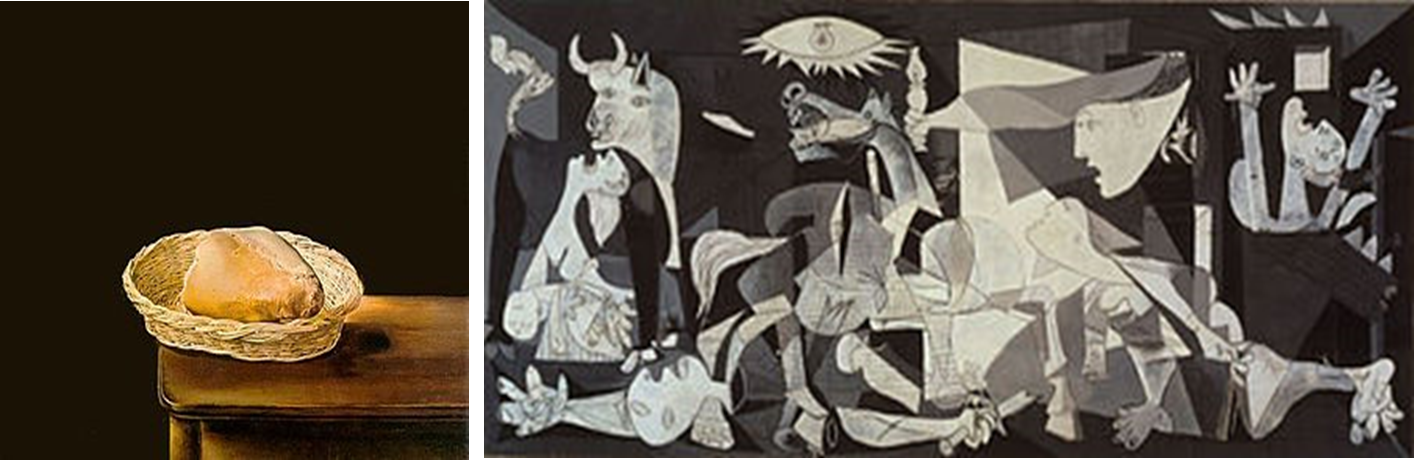
bread rather than destruction

bread rather than destruction

So instead, I am feeling remarkably upbeat. Maybe I am just an optimist and would rather see bread than destruction. But I am sufficiently “moved” that I shall make a forecast for the next few weeks.

Tsipras will make statements which seem like that he will do something about curtailing pensions. These will be worded sufficiently loosely such that the Eurozone Finance Ministers can accept the assurances and still have their posteriors covered. Tsipras will have sufficient face-saving text so that he can argue domestically that pensions will not actually be cut when the turnaround occurs and that the turnaround is just around the next corner (or maybe the one after that).

The ECB will make further emergency arrangements so that the current run on Greek banks will not be unmanageable. (By some accounts Greek banks have seen some €20 billion withdrawn).

The payment due to the IMF will be paid.

A short-term (6 month?) deal will be done and the whole problem of a non-homogeneous and splintered Eurozone will be patched up for the short term

Which is good for the short term but which, in the long term and if the Eurozone does not become homogeneous, will give a very big bang when it implodes.

There is a little more brinkmanship to go through until the Greek payment actually falls due at then end of the month.  But I expect a real jump in European markets – and followed by the Asian markets – when Greece makes the payment due and a “deal” is announced. Probably by the end of June.

Maybe it is time to pick up some equity bargains.

If a Grexit is coming, ordinary Greek savers need to “go to the mattresses”

June 17, 2015

I was talking to a “middle-class” Greek acquaintance, and I don’t envy him the lack of options he has. He didn’t vote for Syriza and is resigned but a little bitter. Tsipras is caught in the double quagmire of trying to end “austerity” without ending it and of leaving the Eurozone without being blamed for it. What he will not tell his supporters is that a “majority vote” does not change reality. The only way left seems to be for a Grexit so that Greece can default, force the write-down of its debts, return to its own drachma, introduce exchange controls, spend as much as it wants to, and where the drachma will take its own value.

But the burning question for all those with their savings in Greek stocks, real estate or as cash in banks is how they can protect the value of what they do have? Their options are limited. Holding on to non-performing, and now almost unsellable real estate in Greece is virtually forced. The value of that real estate will be whatever it will be. Its value as security will be even further impaired in the event of a Grexit. Staying in stocks is now highly risky Even to stay in stocks of companies which are mainly export driven offers no great safety. To convert as much real estate, bonds and stocks to cash (pre-Grexit Euros) as possible and before the real rush starts, is probably the only way forward for the ordinary “middle-class” saver.

Even for funds held at institutions, the window to do anything is very short. There is talk of exchange controls being introduced as early as the coming week-end. Shifting funds to non-Greek banks in the Eurozone is one way but that almost requires that they already have an account they can shift to. Opening a new bank account in say Germany or France will not be managed very quickly. Of course many Greeks (including my acquaintance) already have such accounts and the Greek banks could see (are seeing?) a flight of funds to Euro accounts outside the country. To move to another currency at a “safe” institution abroad (Dollars, Pounds, Kronor or Yen for example) is a lot safer than just staying in the Euro which will surely lose value with a Grexit. But this is not so easy for the ordinary Greek saver. He could convert to gold and maybe even some Bitcoins.

But so far as my acquaintance was concerned, the one thing he did not want to do was to hold “virtual” Euros in a Greek institution. He owed little on his house but he couldn’t sell it. He was quite resigned to the reduced value it has reached and after all, that value did not impact his daily life. He was not, at his age, moving out of Greece. He had sold off all stocks that he had which had increased or had not lost more than 10% of their purchase value. Paradoxically, he felt that companies which had already lost much greater value might come out best from the storm.  He had purchased US Dollars and GB Pounds (as physical banknotes) as much as he could. He was planning to buy some gold but was too wary to risk buying Bitcoins. As much of the rest of his savings as possible would be converted to Euro banknotes before this weekend. But he was worried that the banknotes would run out. He had invested in a very solid safe.

He was  planning, he said to, “go to the mattresses”. Literally.

I can only wish him luck.


Greek negotiating tactics are vacillating between “playing chicken” and bad faith

June 15, 2015

Another negotiating session ended in failure yesterday – after just 45 minutes. The Greek delegation were the visitors in Brussels. In any negotiation, the home side always has the “time” advantage in that that they can go as slow as they like. To neutralise this home advantage, a visiting side in a negotiation always needs to show more patience and always give the impression that they can sit there for ever. For a negotiating session to end in just 45 minutes would need the “visiting” delegation to actually walk away. And if the Greeks did walk away then it would seem that they are either playing a dangerous game of chicken or else that they are negotiating in “bad faith” with no intention of reaching a settlement. If the latter then they are just waiting for an opportune time – for domestic consumption – to bring this to an end and initiate a Grexit. If the former then they are waiting for a Grexit to appear inevitable such that they get some “final” concessions.

My own view is that any settlement now with Greece will only be a temporary fix – and the sins of past Greek profligacy will not have been fundamentally atoned for. The pension system that the Greeks awarded themselves are unsustainable even with the cuts implemented so far. A Greece forced to continue within the Eurozone will remain under debt pressure for a decade. Tourism will be constrained. No Icelandic type of recovery would be possible. Far better to bite the bullet now, allow a Grexit and begin to limit and later shrink the Eurozone. Both Greece and the Eurozone will eventually benefit.

Bloomberg:

Greece enters what could be a defining week after last-ditch negotiations between representatives of the Greek government and its creditors collapsed on Sunday.

The euro dropped as the European Commission said the talks in Brussels had broken up after just 45 minutes with the divide between what creditors asked of Greece and what its government was prepared to do unbridged. The focus now shifts to a June 18 meeting in Luxembourg of euro-area finance ministers, known collectively as the Eurogroup, that may become a make-or-break session deciding Greece’s ability to avert default and its continued membership in the 19-nation euro area. …..

……. “The shadow of a Greek exit from the euro zone is becoming increasingly perceptible,” German Vice Chancellor and Economy Minister Sigmar Gabriel wrote in an op-ed to be published in Bild on Monday. “Greece’s game theorists are gambling the future of their country. And Europe’s too.”

Critical PR exercise for Greece today

February 23, 2015

Greece needs to present its own reform package today to get the rest of the Eurozone countries to ratify the 4 month extension of its bailout tomorrow. The extension was agreed on Friday provided the package to be presented today was sufficiently credible for the lender countries.

That leaves the new Greek government with the PR problem of presenting what is essentially an “austerity package” but which

  • is its own package and not “imposed” by others,
  • is packaged as something different to “austerity” for domestic consumption.

No doubt the leftist government will include items which are ideologically sound but which have little relevance in monetary terms. Among these cosmetic items will be such things as attacking tax evasion by the rich, and getting rid of some “fat-cat” bureaucrats in the civil service, reemploying some who lost their jobs and increasing some social spending.

But the bottom line is that they will have to present a package which is all about “austerity” in everything but name.

In every financial crisis in the last 40 years I am struck by how using economic jargon and quoting high-sounding economic theory does not alter the fundamental fact that a country’s economy is just like that of any household. Past profligacy leads inevitably to current austerity. That many of the profligates may have fled the nest does not alter the fact that the rest of the household must bear the burden of the austerity. There is little doubt that in Greece, the profligacy of a few (the nexus of corrupt politician/civil servants/ business) is leading now to the austerity of the many. Unfortunately not all of the profligacy is a thing of the past. Not all the profligates have fled.

A bankrupt household must increase its earnings to get out of debt. It has no other option. Of course it must first end profligate spending. All household members must “tighten their belts”. Luxuries must be given up. All external expenditure must be curtailed. Assets may have to be sold off. And Greece must do the same. (Selling some islands to Turkey is beyond the pale). The only quick way that I think Greece can increase its earnings is by tourism – not by industry which will take much longer.

And I am convinced that tourism to Greece will do much better with a Greek drachma which is allowed to find its own level rather than being forced to use a Euro which – for Greece – is at too high a level.

Corruption is in the genes of the EU

October 20, 2013

In the developing world venality is often a matter of survival. In Europe venal behaviour is a matter of choice. The EU bureaucracy in Brussels has corruption in its genes and tax-payer’s money running through its veins. It is remarkable that so many ostensibly democratic countries (at least in name) have so easily surrendered their powers to a bloated and corrupt group in Brussels.

It is not Best in Class that applies. The Least Common Factor applies in Europe. Brussels is as corrupt and as wasteful and as inefficient as the worst country in Europe. In this case the corruption and the condoning of corruption in Brussels is as bad as in Greece. And corruption in Greece was not a small contributor to their financial problems.

Der Spiegel writes:

Anti-corruption officials in Brussels have failed to investigate reports of squandered EU funds at a training institute in Greece, a German paper reported Friday. Well-connected teachers were allegedly paid up to €610 per hour for up to 225 work hours per month.

The European Anti-Fraud Office (OLAF) has reportedly ignored repeated tip-offs about squandered European Union funds in Greece, according to an article in the Friday edition of the Süddeutsche Zeitung. The German daily reports that a Greek civil servant uncovered multiple cases of nepotism and vastly inflated salaries while inspecting the finances of a vocational training institute. Officials in Brussels have apparently not acted on any of the whistleblower’s suspicions, which he communicated in several letters, the paper added.

According to the newspaper report, Giorgos Boutos, a government finance official in Athens, began auditing the books of the Organization for Vocation Education and Training (OEEK) in 2006. The institute receives and distributes EU funds earmarked for vocational training in Greece. Boutros repeatedly stumbled upon irregularities and documented the cases in numerous letters to OLAF.

…. The case involves at least €6 million ($8.2 million). It’s not an excessive sum of money, but it is well documented. Boutos was able to substantiate the irregularities in his letters to the EU with contracts, hotel bills and bank statements. He reportedly found that 75 percent of the misappropriated money had come from the EU.

The details provided by the Süddeutsche Zeitung are sure to raise eyebrows. Some of the instructors are said to have been paid for up to 225 hours per month, even during periods when they were abroad. Hourly wages for teachers were reportedly as high as €610. The alleged corruption was compounded by apparent instances of nepotism: The son of a cabinet member taught a course on silver-plating watches, the wife of a Socialist politician led classes on both dentistry and geography, and relatives of the institute’s leader held jobs there.

….. It wasn’t until seven months — and several more inquiries — later that Boutos received fresh news about the case. Still, that letter merely stated that OLAF was in the process of “a comprehensive reorganization,” and asked him to be patient. 

Meanwhile, Boutos told the newspaper, many similar cases of misspent EU funds now fall under the statute of limitations because the EU took too long to address them. Exactly €516,000 of misappropriated EU funds have been repaid. But Boutros stressed that the EU could demand that all such funds be paid back — that is, if it really wanted to.

Boutos also questioned whether investigations had been delayed because some suspected fraud cases involved relatives of government and party officials — or whether Brussels even cared at all about such instances.

Thessaloniki: One Greek city running a budget surplus and showing how it can be done

November 17, 2012
Thessaloniki Map

Thessaloniki

If anything proves that he Greek crisis is essentially due to past profligacy it is the current improvement in the status of the finances of the city of Thessaloniki. And I have no doubt that it it was the entry into the European Union and the mirage which the EU creates of getting something for nothing which lay behind much of the public employees “jobs for life” attitude and the spendthrift behaviour that any self-respecting household would have eschewed. But of course the Greek crisis has been caused by just a small minority of Greeks. I suppose the analogy would be of a household where the husband was spending the family jewels on drink and a good time while his wife and family made do with whatever that was left. But what Thessaloniki is apparently showing is how to get out of the pit. And if Greece could have devalued their drachma and did not have the high value of the Euro as a millstone around their necks, the return of tourists and an escape from the depths would probably be faster.

Reuters reports:

With his craggy face, diamond earring and tattooed wrist, Thessaloniki mayor Yannis Boutaris looks an unlikely candidate to turn around the finances of Greece’s second biggest city.

But the 70-year old, who stands apart from the political mainstream, is pulling off reforms that have so far evaded the national government in a three-year-old debt crisis that has sucked in some 150 billion euros of international aid.

In contrast to the rest of Greece, this sea-front city of one million is shrinking debt, cutting business taxes to help firms and paying city employees and contractors on time.

(more…)

More turmoil awaits Europe as Sarkozy loses and Greeks vote against Europe

May 6, 2012

Sarkozy has lost in France according to Belgian and Swiss sources though the exit polls in France are not yet out. Hollande is expected to win by 5%.

The exit polls are also out in Greece.

In Greece, the only two parties supporting the Eurozone bailout and the austerity measures – PASOK and New Democracy – will probably not be able to form the next government. And that means that the chances of Europe leaving the Euro are greatly enhanced. In the short term this will cause massive turbulence in the Eurozone.

(more…)

Sarkozy attacks Cameron – much to Cameron’s delight

October 24, 2011

While European leaders are struggling to put together a rescue package for Greece which will not have a domino effect for Italy and Spain or drown too many European banks, David Cameron is facing renewed opposition to membership in the EU from within his own party. But it is not only in the UK that opposition to the growing exercise of powers by Brussels is increasing. Almost every EU member which has not adopted the Euro (Sweden, Denmark, Norway and the UK along with some of the newer members) has rising voices calling for the limitation of European power and a return of powers to the country parliaments. Voices against the Euro can even be heard in Germany where there is a widespread feeling ( not entirely wrong) that German taxpayers are paying twice for the spendthrift ways of Southern Europe; first directly by subsiding these countries and secondly by the devaluation of their savings in Euro. The Swiss are just thankful that they were never a part of this experiment.

In hindsight, what has become obvious is that the Euro-zone has few built in sanctions to prevent the profligacy of some countries which has to be paid for by others. What is also becoming clear is that without a fiscal uniformity – which would seem like being taxed from Brussels – the possibility of  “bad” members being spendthrift will always remain.

France has always seen the Euro as part of a long-term move towards a European political and fiscal uniformity in which France would be the centre of political power. A return to the glory days of the Holy Roman Empire which lasted over 800 years, except of course that the centre would be in France rather than in what today is Germany. Sarkozy could certainly see himself as the first Emperor.

Yesterday, as the Telegraph reports:

(more…)

“Only way out of the Eurocrisis is for Greece to leave the Euro”

June 16, 2011

Dagens Industri’s panel of finance and economy experts have a bleak view of Greece remaining within the Euro. Emergency loans will be necessary anyway but in the long term, they feel, Greece has to leave the Euro not only for their own sake but also for preventing a collapse of the EMU.

The only way out of the euro crisis is with Greece’s exit from EMU, says Dagen Industi’s expert panel. But only after a lengthy process with more emergency loans to avoid the risk of a new financial meltdown a la Lehman Brothers in 2008.

“Greece is actually already bankrupt. Market prices speak for themselves. The country would not survive a day without an emergency loan from the European Union and IMF” said Marie Giertz, chief economist at Länsförsäkringar.

A new global financial crisis threatens if Greece does not get emergency loans and are forced to suspend payments to private lenders, including German and French banks, warns the European Central Bank ECB and the large rating agencies. Germany and others complain that European taxpayers cannot just continue to sponsor Greece’s debt tangle with never-ending emergency loans.

Cecilia Skingsley, chief analyst of Swedbank’s foreign exchange and fixed income trading, believes that the new emergency loan is the solution only for the short term. But that Greece must eventually leave the EMU. “With a further loan program maybe the market calms for a while. Then in a few years we realize again that this is not sustainable. Therefore I think that Greece must leave the monetary union. In return, they may get a little waiver of some of the emergency loans from the EMU ” said Cecilia Skingsley.

Jan Häggström, chief economist at Handelsbanken, points out that the euro country taxpayers have to bear the Hellenic liabilities no matter how it goes. The alternative to providing further emergency loans is credit losses in the European banking system, which in turn would require government bailouts. “In the end somebody has to write this down and it is not unlikely that Greece will have to leave the euro, but that is further ahead in time” says Jan Häggström.

Greece, in principle, needs to step out of the EMU in order not to drag down other crisis countries into a major depletion of their treasuries, reasons Tomas Pousette, chief economist at SBAB. “Otherwise it is difficult to see why, for example, Portugal should endure ten years of very tough fiscal policy while Greece simply chops off their debt. For a Greece outside the EMU, debt would be burdened by high interest rates and bankruptcies would threaten the country’s banking sector. But the country would also get a chance to revive its tourist industry with its own, lower, exchange rate “, says Tomas Pousette.

China steps in to support Greece (and the EU)

October 3, 2010
Wen Jiabao (温家宝), Chinese Premier

Image via Wikipedia

China is now too big a player to take lightly and I see the Euro strengthening.

Dagens Industri:

(My translation)

On Saturday China entered into an EU- country’s economy by promising strong financial support to crisis-hit Greece. “When Greece has problems, China is prepared to offer all the help it can” said the Chinese Prime Minister Wen Jiabao at a press conference in Athens together with his Greek counterpart, Giorgos Papandreou sfter they had held bilateral discussions.

China, according to Wen Jiabao, will help finance the purchase of
Chinese ships to the Greek shipping industry by creating  a
Fund worth five billion U.S. dollars (about 34 billion SEK). “China is willing to join together with the EU – as a passenger in the same boat – to strengthen cooperation to meet the financial crisis, said the Chinese Prime Minister. Crisis-hit Greece also had the promise of Chinese investment, including for the port of Piraeus and for import of Greek
goods. The Chinese also promised purchases of Greek government bonds.
“Greece has been effective in its handling of the debt crisis”, continued Wen Jiabao, who spoke through an interpreter at a press conference.

He also stressed that the EU and the IMF aid package to Greece had
yielded positive results and that he sees the Greek economy recovering in line with the global economy. Papandreou, for his part said that China’s plans to support Greece is an expression of confidence in Greece.

Wen Jiabao will speak to the Greek Parliament on Sunday before moving on to Brussels to attend a meeting between EU and Asian leaders. Then he goes on to Germany, Italy and Turkey.