Archive for the ‘India’ Category

Migration from India brought genes, tools and dingoes to Australia 4,200 years ago

January 15, 2013

It is generally assumed that the expansion of AMH from Africa (or Africarabia) reached S-E Asia around 70,000 years ago and Australia some 40,000 – 50,000 years ago. The Australian population then remained virtually isolated until quite recently. But a new genome-wide study suggests that there was migration from India to Australia some 4,200 years ago during the Holocene and that they brought stone-tools and the ancestor of the dingo with them. The study suggests that after the first migrants originally arrived in Sahul, the Australian, New Guinea and Mamanwa populations split from each other some 36,000 years ago. But by – an as yet unknown route – migrants from India arrived in Australia between 4,000 and 5,000 years ago.

Though this coincides with the height of the Indus Valley civilization in 2600 BC, I think it is more likely that any ocean-based, island-hopping migration at this time would have started – at least geographically – from S-E India rather than from the Indus Valley civilization in N-W India. But coastal navigation around the Indian coastline of that time would have been well within the capabilities of the Indus valley inhabitants. This is also the period when proto-Dravidian was the language across most of India (including in the Indus valley civilization) and it would be interesting if there are any traces in language which match this genetic data.

Genome-wide data substantiate Holocene gene flow from India to Australia, by Irina Pugach, Frederick Delfin, Ellen Gunnarsdóttir, Manfred Kayser, and Mark Stoneking, Proceedings of the National Academy of Sciences, 

http://www.pnas.org/content/early/2013/01/09/1211927110

Abstract:The Australian continent holds some of the earliest archaeological evidence for the expansion of modern humans out of Africa, with initial occupation at least 40,000 y ago. It is commonly assumed that Australia remained largely isolated following initial colonization, but the genetic history of Australians has not been explored in detail to address this issue. Here, we analyze large-scale genotyping data from aboriginal Australians, New Guineans, island Southeast Asians and Indians. We find an ancient association between Australia, New Guinea, and the Mamanwa (a Negrito group from the Philippines), with divergence times for these groups estimated at 36,000 y ago, and supporting the view that these populations represent the descendants of an early “southern route” migration out of Africa, whereas other populations in the region arrived later by a separate dispersal. We also detect a signal indicative of substantial gene flow between the Indian populations and Australia well before European contact, contrary to the prevailing view that there was no contact between Australia and the rest of the world. We estimate this gene flow to have occurred during the Holocene, 4,230 y ago. This is also approximately when changes in tool technology, food processing, and the dingo appear in the Australian archaeological record, suggesting that these may be related to the migration from India.

BBC reports:

“For a long time, it has been commonly assumed that following the initial colonization, Australia was largely isolated as there wasn’t much evidence of further contact with the outside world,” explained Prof Mark Stoneking, from the Max Planck Institute for Evolutionary Anthropology in Leipzig, Germany.

“It is one of the first dispersals of modern humans – and it did seem a bit of a conundrum that people who got there this early would have been so isolated.”

To study the early origins of Australia’s population, the team compared genetic material from Aboriginal Australians with DNA from people in New Guinea, South East Asia and India.

By looking at specific locations, called genetic markers, within the DNA sequences, the researchers were able to track the genes to see who was most closely related to whom.

They found an ancient genetic association between New Guineans and Australians, which dates to about 35,000 to 45,000 years ago. At that time, Australia and New Guinea were a single land mass, called Sahul, and this tallies with the period when the first humans arrived.

But the researchers also found a substantial amount of gene flow between India and Australia.

Prof Stoneking said: “We have a pretty clear signal from looking at a large number of genetic markers from all across the genome that there was contact between India and Australia somewhere around 4,000 to 5,000 years ago.”

He said the genetic data could not establish the route the Indians would have taken to reach the continent, but it was evidence that Australia was not as cut off as had been assumed.

“Our results show that there were indeed people that made a genetic contribution to Australians from India,” Prof Stoneking explained.

The researchers also looked at fossils and other archaeological discoveries that date to this period.

They said changes in tool technology and new animals could possibly be attributed to the new migrants.

Prof Stoneking said: “We don’t have direct evidence of any connection, but it strongly suggestive that microliths, dingo and the movement of people were all connected.”
100 million expected at Maha Kumbh Mela starting today

January 14, 2013

It is a festival which has been going on for at least 1500 years and probably much longer. The earliest record of the Kumbh Mela is from the writings of Xuanzang who visited in 629 CE. But similar festivals are known to have been going on hundreds of years earlier.

It could be the largest ever gathering of humanity in one place as the Maha Kumbh Mela begins today at Sangam in Allahabad. The festival will continue for 55 days and is expected to attract over 70 million and perhaps upto 100 million people this year. It is a little mind-numbing to consider that almost 8% of the entire population of India will be in this one location over the next two months.

The 2001 Maha Kumbh – which was was a once in 144 year event – saw around 60 – 70 million attending with an estimated one million visitors from abroad. On Sunday night it was estimated that around 1.5 million people were already in place in various tent cities around Allahabad. Mark Twain was a visitor in 1895 and wrote:

It is wonderful, the power of a faith like that, that can make multitudes upon multitudes of the old and weak and the young and frail enter without hesitation or complaint upon such incredible journeys and endure the resultant miseries without repining. It is done in love, or it is done in fear; I do not know which it is.

The Mela tales place at Sangam at the confluence of the three holy rivers; the Ganga, the Yamuna and the mythical Saraswati. It was here that the Gods spilt a drop of Amrita, the nectar of life and it is by bathing here that one can be washed free of sin (and gain a portion of immortality – though this is not the purpose of the pilgrimage and the rituals). The story goes that the Amrita was contained in a pitcher (Kumbh) over which the gods fought the demons. During the battle which raged across the heavens, the God Vishnu flew away with the Kumbh and in his flight spilt some Amrita in 4 places –  Allahabad, Haridwar, Nasik and Ujjain. The battle between the gods and the demons lasted 12 “divine” days which translates to 12 human years. The location of the Mela is governed by astronomy and astrology. The location depends upon the astrological positions of the Sun and Jupiter and the timing is set by the lunar calendar.

The festivities start today with the ritual procession and bathing of the 13 akharas (sects of Sadhus and ascetics whose existence dates back to 2500 BC). The Naga Sadhus will lead the way. The order in which the 13 akharas participate was fixed during the British Raj (to prevent queue jumping and fighting among the various groups) and continues today. Twenty million people are anticipated on Basant Panchami which falls on February 15th. This year the other particularly auspicious bathing days are January 14th, January 27th, February 10th, February 25th and March 10th.

Times of India: The akharas have been allotted fixed time, ranging from 30 minutes to about an hour depending upon the size of their respective procession, for bathing with routes for going to and returning from Sangam so separated as to ward off possibility of members of rival akharas coming in contact with each other.

The mela administration said it has made elaborate arrangements for devotees who would be flocking to the city over the next 55 days. In fact, around 10-15 lakh pilgrims are already living in Sangam city’s sprawling quarters, day and night. Most of them are in tents, make-shift shelters or with sectoral groups called akharas that are administered by sadhus and mahants.

There are people from virtually every state, with those from rural areas of UP, MP, Gujarat and Maharashtra accounting for the largest numbers. The administration has received applications from more than 100 organizations seeking land to pitch more tents, and their numbers are growing.

Publicity-hungry lawyers now flocking to defend the Delhi rapists

January 10, 2013

Just a few days ago no lawyer wanted to defend the Delhi six.

But it has not taken long for the worst aspects of human behaviour to again come to the fore. Now some among the lawyers have seen how much free publicity this can bring and that they will not have many such opportunities. They are flocking like vultures to the defence of the Delhi rapists. One of them – a certain ML Sharma –  has also seen the benefit of being as provocative and outrageous as possible and has today claimed that

  1. the victim brought the rape on herself (“I have never seen a respected lady who brought rape on to herself)“!!!
  2. the prisoners are being tortured to confess

AP Singh and VK Anand are the other two lawyers who have presented themselves for the defendants. I am not sure that these lawyers will bring much competence to bear, but they will surely make the most outrageous claims and demands – and that too extremely loudly – so that they at least remain in the public eye. They have no doubt been encouraged when observing how politicians and religious leaders gain a huge amount of publicity by attacking the victim. The defendants cannot be served by more bad publicity (not that it can get much worse) but their lawyers have nothing to lose and everything to gain:

First Post: It seems to be raining lawyers for the Delhi gang-rape accused. Three lawyers have told reporters on Thursday that they will be representing four of the five accused in the case. ML Sharma, a Supreme Court lawyer, told media persons that he will be representing Mukesh, brother of main accused, Ram Singh. Explaining how he became involved in the case, he said, “I have been interested in this case from the very first day. About eight days ago, I got a call from an unknown person and he said ‘Baccho ko bachao’ (save the boys). However, I remained undecided. And it was on January 7 (on the day accused where to be produced before the court), I decided to take up their case.” …. 

…..  Sharma, a member of the Maharashtra Bar Council, says he has been practicing in the Supreme Court since 1990. Asked about some of the cases he has fought, Sharma mentions the PIL enquiring into the assets of former Chief Justice of India (CJI) KG Balakrishnan and another PIL in the Vodafone tax case that claimed that the then sitting CJI SH Kapadia had a conflict of interest in the case. Not only did the apex court dismiss Sharma’s petition in the Vodafone PIL but also fined him Rs 50,000 for it.

Another Supreme Court lawyer, AP Singh told reporters that he was representing two of the accused — Akshay Thakur and Vinay Sharma. Recounting how he came to be involved in the case, Singh said: “The family members of both the accused — Akshay Kumar and Vinay Sharma – met us. This was on 5-6 January. But at the time of the first meeting, I refused to take their case because it was a highlighted case and a number of public persons were protesting against it. The family member of accused contacted my mother again on 6-7 January. And it is not possible for me refuse the order of my mother.”

….. The loudest of the three lawyers is VK Anand, who had created a ruckus in the courtroom on Monday after getting into a heated argument with another lawyer. Anand told reporters that he was representing the main accused Ram Singh.

The advocates told reporters that the next hearing in the case will be on 14 January.

One IndiaML Sharma told Bloomberg that the 23-year-old paramedical student’s friend was “wholly responsible” for the savage attack on her. “Until today I have not seen a single incident or example of rape with a respected lady. Even an underworld don would not like to touch a girl with respect,” Sharma said. While making the above statement, the lawyer surprisingly did not even pause to think that he was casting aspersions on the victim. In his professional capacity, he might be entitled to claim that his clients are innocent. However, Sharma cannot be unaware that it is unethical to defame the deceased.

The lawyer was more in his elements when he alleged that the accused had been subjected to brutality. AFP quoted Sharma as saying that “All the accused have been badly beaten by the police and they have used the third degree to extract the statement that suits the evidence they have collected.” He even claimed: “My clients have been forced to confess to crimes that they did not commit.” He was referring to the five men who have been charged with not only raping the paramedical student in a moving bus but also brutally attacking her with a rod on that fateful night. The victim succumbed to her injuries at a Singapore hospital on Dec 29, 2012. 

The Journal:  Speaking to AFP on Thursday, Sharma said he would prove that his clients were not responsible for the attack on December 16 and he denied having tried to blame the victim. …

“I did speak to Bloomberg but did not say anything about the victim. I only told them that women are respected in India, they are mothers, sisters, friends but tell me which country respects a prostitute.”

Asked if that meant that he regarded the victim as a prostitute, Sharma replied: “No, not at all but I have to protect my clients and prove that they did not commit this heinous crime.”

I can’t help thinking that in this case court-appointed lawyers for the defense is called for. These almost self-appointed, publicity seeking lawyers are likely to only bring the court procedures into disrepute.

Delhi rape victim was moved to Singapore for political – not medical – reasons

January 8, 2013

Jyoti Singh Pandey, the victim of the horrendous rape and violence in Delhi on 16th December, has not been served very well by the Indian Government – in life or in her dying. Just to avoid having her die in the heart of Delhi she was thrown away by a cowardly government to die far away. It was Pilate all over again as the government tried to wash their hands of her death on their watch.

From Safdarganj Hospital in Delhi she was flown to Singapore on Boxing Day to the Mount Elizabeth Hospital which specialises in multi-organ transplant. The 4,000 km journey in an ambulance flight was made even though the All India Institute of Medical Science (AIIMS) is just one street-width away from Safdarganj Hospital and has itself a well deserved reputation for excellence. At the time I thought that it was a caring Government which had made the decision to take every possible action to try and save Jyoti’s life – but it appears that this was not so at all. It now begins to become clear that this was the action of a cowardly administration which just did not want her to be in the heart of Delhi when she died. Her life was already forfeit. It was an attempt at damage control. It was almost as callous an act of “throwing her away” to die far away in Singapore as that of the 6 rapists who threw her off that bus. It was entirely a political decision of an embattled and scared Government.

There was no real medical expectation that any intestinal transplant could even be contemplated to be done in Singapore. That was just a theoretical possibility and the cover story for political purposes. She had been written off before the move was made. The decision to move her was apparently made after a Cabinet meeting but I wonder which cowardly Minister(s) came up with this damage limitation plan?

Reuters reports:

… With a deadly infection seeping into her blood from damage done to her intestines during the assault, complicated by a cardiac arrest and damage to the brain, she was just clinging to life when she was flown 2,500 miles from New Delhi to Singapore late on December 26, doctors said.

“It was ethically and morally wrong to have taken her out, given that she was sinking and her chances of survival were next to zero at that stage,” said a doctor at New Delhi’s All India Institute of Medical Sciences (AIIMS), which was advising the team treating the woman at a sister hospital across the street.

“Such a thing raises false hopes in the minds of the family, the community. No doctor in his right mind would do this, unless you want to get the patient off your back,” said the doctor, who declined to be identified, saying colleagues at the government-run hospital who had spoken out had been warned of consequences in what has become a politically explosive case. ….

….. Another doctor who was consulted during the woman’s care at New Delhi’s Safdarjang hospital, where she was taken following the assault, said she had been getting the best possible treatment in India and the question of why she was shifted should be answered by the government.

Many security officials have said they feared the protests would escalate if the woman had died in New Delhi, but the government has said the only consideration was her wellbeing. …..

…… At the time of the transfer, authorities at Safdarjang said her condition was critical which was why they decided to move her to Singapore’s Mount Elizabeth Hospital, which specialized in multi-organ transplant.

But a transplant for her damaged intestine, if at all possible, was months away, doctors said. At the time of her transfer, the woman, unconscious since a heart attack the previous night, was in no condition to go through such an operation.

“One cannot think about intestinal transplant at this moment,” Samiran Nundy, the head of surgical gastroenterology and organ transplantation at the Ganga Ram Hospital in New Delhi, was quoted as saying in newspapers.

“First, the infection spreading in her should be stopped, then one can think about transplant.”

Within 40 hours of her arrival in Singapore, doctors called her family and told them the end was near, even as millions prayed at home in the hope that she would pull through.

“Sepsis followed by cardiac arrest is a terminal event in 99 percent of cases,” said the doctor at AIIMS, referring to blood infection.

A week of new cold records in Delhi – must be punishment for man-made global warming

January 6, 2013

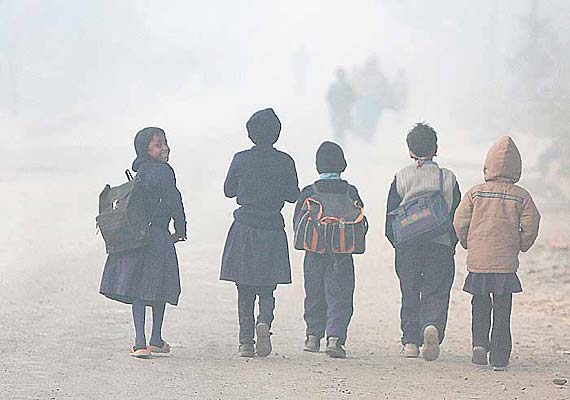
In spite of the urban heat effect and perhaps because of the religious fanaticism of the global warming pundits, every winter witnesses a significant death toll in Delhi and North India from bitterly cold weather conditions. Cold is the real killer not warmth. It is adaptation to cold which is more difficult and it is what is required.

Delhi schools to be closed till Jan 12 due to cold wave: indiatvnews.com

If instead of the Canute-like arrogance of following a pseudo-scientific religion in trying to arrest climate change, we focused on adapting and coping with the normal and real-life, variations of weather — where the magnitude of these variations  in real time dwarf those of long-term climate change — we would all be better served. It is successfully adapting to the on-going vagaries of weather (during both warming and cooling climate cycles) that has produced the greatest advances in human history. Futile attempts to control what are natural climate cycles is just plain stupid.

Cold records in Delhi: The minimum temperature in Delhi has been recorded at 1.9 degrees Celsius, which is five degrees below normal. The maximum temperature is 12.8 degrees, which is eight degrees below normal. This is the lowest minimum for January in the past five years.

…. On Saturday also, the capital had got no respite from the bitter cold as the minimum temperature settled at 2.9 degrees Celsius – four notches below average. … On Wednesday, the city witnessed the coldest day in 44 years when the maximum plummeted to 9.8 degress Celsius.

Cold wave in North India: The entire North India on Saturday continued to remain in the grip of severe cold, which claimed 11 more lives in Uttar Pradesh, taking the death toll this winter to 140.

Indian politicians expose themselves in the wake of the Delhi rape

January 6, 2013

The quality of the political leadership in India leaves much to be desired. What is clear is the medieval and feudal fantasy that many of them still live in. Women politicians included. Rape and murder and torture are all perfectly acceptable if inflicted on victims of the appropriate class or caste or sex or religion. In the 2009 parliamentary elections, 6 candidates had been charged with rape while 34 candidates were awaiting trial for crimes against women. In the state assemblies, 42 members had rape or associated charges against them at the time of their election. India has over 300 such politicians in power.

But even though they make utter idiots of themselves they continue to get the votes which keeps them where they are.

What price democracy!

RSS chief Mohan Bhagwat“There is a theory of social contract in the universe. A husband and a wife are bound by a contract which says – you (woman) look after the household chores and satisfy me, I (man) will take care of your needs and will protect you. Till she delivers her duties without fail, he keeps her on the contract and if she fails to honour the contract, he disowns her. And if it is the husband who is not honouring the contract, she can also abandon him. One can go for a new contract then.”

Congress MP from Jangipur, Abhijeet Mukherjee (son of the President of India)“This is almost like the Pink Revolution. These women who are protesting have no contact with ground reality. These pretty women, dented and painted, who come for protests are not students. I have seen them speak on television, usually women of this age are not students.”

Vibha Rao, Chairwoman of Chhattisgarh State Women Commission and BJP  “Women, influenced by western culture, send wrong signals through their dress and behaviour and men often take the cue from those signals. Women display their bodies and indulge in various obscene activities. Women are unaware of the kind of message [their actions] generate”. 

Andhra Pradesh Congress Committee President Botsa Satyanarayana: “Just because the country attained independence at midnight, is it proper for women moving at midnight? That particular woman (the Delhi rape victim) should have applied her mind before boarding the private bus. Anyway, it was a small incident”.

BJP, Minister for Commerce and Industry Kailash Vijayvargiya“Only when Sitaji crossed the Lakshman Rekha, she was kidnapped by Ravan… If Sitaji [woman] crosses the Lakshman Rekha, then Sitaharan [abduction] is bound to take place as Ravans are out there.”

BJP National Youth chief Anurag Thakur: “The difference between India and Bharat is that India is the place where The Dirty Picture gets a national award. India is the place where Mahesh Bhatt talks about sex with his daughter. India is the place where Sherlyn Chopra gets her picture clicked for the cover of Playboy and says had my father been alive, he would have been extremely proud of me. India is the place where the media celebrates the birthday of a foreign porn star. India is the place where a woman like Poonam Pandey openly speaks about stripping herself naked.”

Vishwa Hindu Parishad International President Ashok Singhal: Talking to reporters here at a congregation of saints and sadhus of Tamil Nadu, Singhal described the trend of youngsters in the country imbibing western culture from the US as “alarming”. “We have lost all the values we had in cities,” he said, demanding that India be renamed Bharat. “Let the real name of the country, Bharat, remain. When we call Bharat, it has the culture of thousands of years of this sacred land,” he said

It is Bharat versus India as Hindu fanatics try to justify the Delhi rapists

January 4, 2013

I have seen the Delhi rape being described as a manifestation of the conflict which arises at the interface between the rural and the urban life-styles. And there is probably some truth in that. There is little doubt that for the young who stream into the cities after leading highly repressed and frustrating lives in rural India it is difficult for them to make the transition from the middle-ages into the 21st century. The concept of women not being chattel is beyond some to grasp. The apparent “anonymity” of life in the city encourages a few to believe that they can prey on other “anonymous” and depersonalised victims with impunity. Most rapes and other crimes against people are rarely given high priority by city police forces struggling against an ever-increasing urban populace.  The speed with which the Delhi rapists have been apprehended and presented in court in this high profile case is the exception – not the rule. But this is not a problem which occurs only when rural meets urban or which only happens in cities. Rural India still abounds with horrendous cases of violence against others – against women,against children, against people of other religions and those of other castes. Most of this rural behaviour goes unremarked and unreported. The Khap Panchayats who use rape as a punishment and support “honour killing” and who are allowed to operate freely by supine politicians is a case in point.

So, I am not sure that this is just an “urbanisation” problem. It goes much deeper than that. The police act (or more correctly – fail to act) as they do in most cases because the political “leaders” give no priority to these. These “leaders” are rarely “leaders” but are mainly parasites. Many are themselves stuck in the attitudes of a few centuries ago and have not made the transition. Many themselves have no wish to make the transition. Many actually still believe that women are chattel. This view of women is not confined to any particular religion. It can be found among Hindus and Muslims alike. But among the Hindus, the parasitic politicians are usually those who continue not only  to believe in “caste” but are mainly responsible for the continued domination of caste politics. And they use the “privileges of caste” or the “perceived disadvantages of caste” to prop up their own out-dated and anachronistic positions. For some it is -paradoxically – the maintaining of the privileges of a “declared disadvantaged caste” which governs.

It is not a case of rural India versus urban India. The transition from rural to urban life and its difficulties could be anticipated by any competent politician or leader. It is surely the job of the leaders to manage and lead this transition. The root cause is a lack of  political leadership and a lack of political management. Fundamentally it is a lack of political competence. For “parasitic politicians” the continuation of a conflict at the interface provides more blood to be sucked out of the masses.

The issue is one of whether to live in a fantasy past or move to the real future. Whether to continue to exhibit the attitudes of  some glorified and completely false view of a Bharat – which never ever existed –  (or of the glorified view of a Moghul Hindusthan which exists only in the Muslim psyche) or to move forward to create the India of the 21st century.

In the particular case of the Delhi rape, the victim and all of the accused were Hindus. It has not taken long for the fanatics of the RSS (who may look utterly ridiculous in their khaki shorts and black caps but are a poisonous influence in the country) and some of the parasitic politicians of the BJP to try and justify the horrific behaviour of the Delhi six.

IBN Live:  Rashtriya Swayamsevak Sangh chief Mohan Bhagwat on Friday kicked up a controversy with his remark that rapes happened in cities and not in the rural areas. “Such crimes hardly take place in Bharat, but they frequently occur in India,” Bhagwat said seeming to indicate that “westernization” in Indian cities was the reason behind increasing cases of rapes. 

The remark follows a similar comment by a MP BJP leader who stated that women who did not stay within their limits, paid the price for it just like Sita was abducted by Ravana after she crossed the ‘Lakshman rekha’.

Himalayan earthquakes did break the surface in 1255 and 1934

December 30, 2012

The Indian Tectonic Plate split from Godwana some 140 million years ago and started colliding into the Eurasian Plate some 40 – 50 million years ago. The Indian Plate is being subducted under the Eurasian Plate. The collision is still going on with the Indian Plate moving North East at about 6 -7 cm per year while the Eurasian Plate is moving Northwards at about 2 cm per year. The region is geologically active and earthquakes are not uncommon as the Himalayas continue to grow. It was thought that Himalayan earthquakes rarely, if ever, broke the surface and were “blind quakes”. But a new paper describes field work with novel imaging and dating techniques which show that at least the earthquakes of 1255 and 1934 have left discernible ruptures.

S. N. Sapkota, L. Bollinger, Y. Klinger, P. Tapponnier, Y. Gaudemer, D. Tiwari. Primary surface ruptures of the great Himalayan earthquakes in 1934 and 1255Nature Geoscience, 2012; DOI: 10.1038/ngeo1669

Wikipedia: The Indo-Australian plate is still moving at 67 mm per year, and over the next 10 million years it will travel about 1,500 km into Asia. About 20 mm per year of the India-Asia convergence is absorbed by thrusting along the Himalaya southern front. This leads to the Himalayas rising by about 5 mm per year, making them geologically active. The movement of the Indian plate into the Asian plate also makes this region seismically active, leading to earthquakes from time to time.

Even blind quakes can be devastating as with the Kashmir quake of 2005:

(more…)

Narendra Modi could be the next Prime Minister of India

December 26, 2012
English: Image of Narendra Modi at the World E...

Narendra Modi – Wikipedia

If the Gujarat riots of 2002 had not happened, Narendra Modi would have an easy- and almost pre-ordained path – to becoming the nominated Prime Minister of the Bharatiya Janata Party. With his record in Gujarat he ought to be the “natural” choice of his party. As the only other political party having a national presence, the BJP has a very good chance of replacing the Indian Congress Party as the largest party and the party of government at the next general elections in 2014.  But the BJP lacks leaders of any stature – apart from Modi. The party President is himself badly tainted by corruption charges. The leaders of the past are approaching senility. Their Young Turks of 10 years ago come across as a whiny bunch who oppose for the sake of opposing and have no convictions of their own. Without a credible PM candidate having some national appeal the BJP may – at best –  only just get to be the largest party but would have the most horrendous task of creating a majority in Parliament. But there are still strong factions within the party who do not much like him. Not because of the “anti-Muslim” taint which hangs over Modi as the legacy of the Gujarat riots; but because he is just a little bit too efficient, too decisive and most of all, too “incorruptible”.

The BJP have few other leaders who have Modi’s undoubted competence and his ability to assemble competence. They have no other leaders with his charisma. He has been one of the very few regional leaders who has had the nerve to be a leader – with some kind of vision of where he wants to go – rather than a populist follower (like Mamata Banerjee). In India, populist politicians – no matter how criminal or venal or incompetent – have usually been able to ride the wave of their vote-banks into power. But that is changing as the Indian electorate becomes more discerning and more sophisticated though still dominated by caste. So it seems likely that the BJP establishment will reluctantly – and with some fears for their own futures – unite behind Modi. They have little choice with his unprecedented success in Gujarat:

Narendra Modi will take oath a fourth time as Gujarat Chief Minister at 11 am today. …. Mr Modi began his morning by tweeting a Vivekananda quote, as he is wont to do. “To make a great future India, the whole secret lies in organization…co-ordination of wills,” he said on Twitter.

It has been conventional wisdom that Modi has been fatally tainted by the Gujarat riots. But this is the conventional wisdom of the urban, semi-liberal middle-class. But I see this view changing mainly because even the urban middle-class see – especially in comparisons with China –  that a chaotic democracy holds back economic development. Political decisiveness a la Modi is seen as something which could unlock the Indian potential which is being held stagnant by corruption and the constant interplay of opposing factional interests. There is a mood abroad in the urban, middle-classes that “a Modi” is needed to bring an end to the institutionalised corruption in the country. There is a groundswell of support for the movement started by Anna Hazare but neither he nor Kejriwal are seen as being capable of implementing the ideals of the anti-corruption movement. These two forces – unlocking economic development and the fight against corruption – will convince the liberal-left middle-class to rationalise their views of Modi. He will not be completely forgiven for his role in the Gujarat riots but the taint will fade. Just as the Congress leaders implicated in the anti-Sikh riots following the assassination of Indira Gandhi reinstated themselves with the help of supportive Sikhs, Modi is rebranding himself with the help of supportive Muslims. His former opponents are applying selective memory. Already other non-Congress regional leaders are positioning themselves to be able to support Modi  when – no longer “if” – he becomes the PM candidate for the BJP.

Internationally, Modi was condemned in many quarters. But international politics is ultimately about pragmatic self-interest. If he becomes Prime Minister, it will not take long for countries – especially in Europe to come around. After all, to be seen to be anti-Muslim is quite acceptable in Europe even if Modi would like to tone down that perception. He already has the sympathy of China and Russia who struggle with containing their own Muslim minorities. His visa to the US was revoked in 2005 and the UK avoided him like a pariah for 10 years before reinstating contact in October this year.

But it his acceptance across India which counts. If he can succeed in getting some support from the Muslims across India – and this is not implausible – and if he can gain the support of the urban middle-class – which is already happening – the regional party leaders will also back him and the rest of their sheep will fall in line. For the elections in 2014, to be seen as being incorruptible, a “fighter against corruption” and to be seen as being an efficient CEO could trump all other perceived sins.

And that could make Narendra Modi the first Prime Minister after Rajiv Gandhi having a national stature, an administrative competence and a vision of his own that could be fun to watch.

Maths paper “which makes no sense mathematically” first published and then retracted

December 6, 2012

Acharya Sennimalai Kalimuthu strikes again! And Elsevier as publishers do look like idiots.

Back in April I posted about a paper by Kalimuthu which was first published in Computers & Mathematics with Applications and then retracted because it “lacked scientific content”.

This time he managed to get a paper published in Applied Mathematics Letters

For the origin of new geometry, by S. Kalimuthu, 2/394, Kanjampatti P.O., Pollachi Via, Tamil Nadu 642003, India. http://dx.doi.org/10.1016/j.aml.2010.08.006,

 He has 12 references – all self-citations. The paper has now been retracted because it “makes no sense mathematically”. The title itself should have been a give-away but the paper was published in December 2010 and it has taken 2 years to be retracted.

This paper does not meet the minimum research and mathematical standards of Applied Mathematics Letters; for example, some of this paper’s constructions and arguments make no sense mathematically. Though handled by the previous editorial office, the available records lead us to believe its publication was the result of an administrative oversight and apologies are offered to readers of the journal that this was not detected earlier.

In both cases Elsevier was the unfortunate publisher. This does not say much for the “peer-review” process at Elsevier which allowed such rubbish to be published. First I wondered if Kalimuthu might be an unrecognised genius until I read his two papers. You do not need to be an advanced mathematician to appreciate the absurdities. His two papers are

Sivasubramanian and Kalimuthu

kalimuthu 2

After the 5th reading of his second paper I managed to figure out the central claim:

Our constructions and proofs are consistent. We have not introduced any new hypothesis in this work. . ….. But we have pointed out in the abstract that the fifth Euclidean postulate problem is one of the most famous mathematical impossibilities. So, although our finding is consistent, it poses a very serious question about the foundations of geometry.

… we have obtained a challenging result, namely the smaller side of triangle AHJ is equal to the larger side BC of triangle ABC. This is a problematic problem.

Further studies will certainly unlock this mathematical mystery.

No doubt the further studies will be first published and then retracted by Elsevier.

Retraction Watch covers the story and actually took the time to write to Kalimuthu for his comments on the retraction. His reply will surely go down as a classic:

“Please and please note that I do NOT agree with retraction of this relevant paper.Can you tell me WHAT IS THE FLAW? AND WHERE IS THE FLAW? A result is a result, A result is a result, A result is a result, and A result is a result,.Let us recall what Einstein told about simplicity: IF YOU CAN NOT PUT YOUR IDEA IN SIMPLE, IT SHOWS THAT YOU DO NOT KNOW THE SUBJECT. Who is expert? We are all so called experts. Only God is expert. I am going to re write this particular paper in 20 long pages and get published. Kindly note that papers rejected by referees and editors have won the NOBEL PRIZE.”

But what on earth was Elsevier playing at to publish such drivel.

Once was bad enough but twice???

Either Kalimuthu has some kind of genius in being able to get papers without scientific content and which make no mathematical sense published or the Elsevier peer-review process is a farce.