Archive for the ‘Medicine’ Category

The “design life” of humans

March 25, 2016

The “design life” of a component or system is generally a boundary condition before starting to design. It is an inherent part of the design. The human body can be taken to be a system based on the organs as major components and a myriad of other components. Our genes are the design for our bodies and they exhibit a “design life”. Whatever we may assign as the purpose of our DNA, our bodies exhibit a design life of between 50 and 60 years. 

In engineering, when an artefact or component or system is created, it is quite usual to have a “design life” as one of the key boundary conditions for designing the artefact. The artefact-lifetime to be designed for determines the choice of materials for strength and resistance to corrosion and erosion, and for their cycling properties and their resistance to fatigue and creep. The lifetime to be designed for leads to a choice for the level of redundancies to be included, the ease of maintenance to be allowed for and a choice of a maintenance strategy which includes a replacement “philosophy”. The “design life” is then usually defined as the time for which the artefact will be fully functional and can often be the lifetime guaranteed by the manufacturer. The designer makes his choices based on the probability of failures. For example the quoted design-life may be based on the time when the probability of failure or loss of functionality is – say – less than 10% or 1% or 0.1%.

The concept of “design-life” is different to the concept of “obsolescence” or the “mean time between failures” (MTBF). Obsolescence, whether introduced intentionally or not, is the time when when the defined functionality is no longer relevant. It could be intentionally “built-in” as a marketing strategy or it may result from the appearance of new technologies. The MTBF is a measure of the time between random – not due to wear – failures of a particular component. The MTBF of single components will generally be orders of magnitude longer than the design-life of that component.

Most components or systems can – with proper maintenance – be used with full functionality long beyond their quoted design life. A power plant may have a design life of 25 years, guarantees for only 2 years but may be used for 50 or 60 years. A digital camera may have a design life of 5 years but could be obsolete after just three. A Swatch may have a design-life of 5 years and materials to suit, whereas a Rolex may use materials and manufacturing quality to be able to come with a lifetime guarantee (with suitable caveats for the user’s negligence). When analysing reliability, the life of components and systems is often illustrated by the generic “bathtub curve”, where the total failure rate is given by the addition of random failures, failures due to “infancy problems” and failures due to wear. Infancy issues are those which are caused by quality of materials, manufacturing tolerances, manufacturing processes and the like.

Modes of failure

On the bathtub curve the design life used to create a design will always fall within the section where the total failure rate is at its lowest – that is after the initial period where “teething” and other infancy problems arise and before the sharp increase in failure due to wear. Generally, to change the design life the basic design itself must be changed.

Consider the human body as a system where the organs are the key components making up the system. The functionality of human organs and of different human functional abilities also exhibit a form very similar to a reversed “bathtub” curve. Failure of a human body occurs when one or more of the functionalities falls below some threshold minimum. In the diagram below, the shaded area represents the behaviour of most organs with age. The lines represent the variation of some of the complex human functional abilities with age.
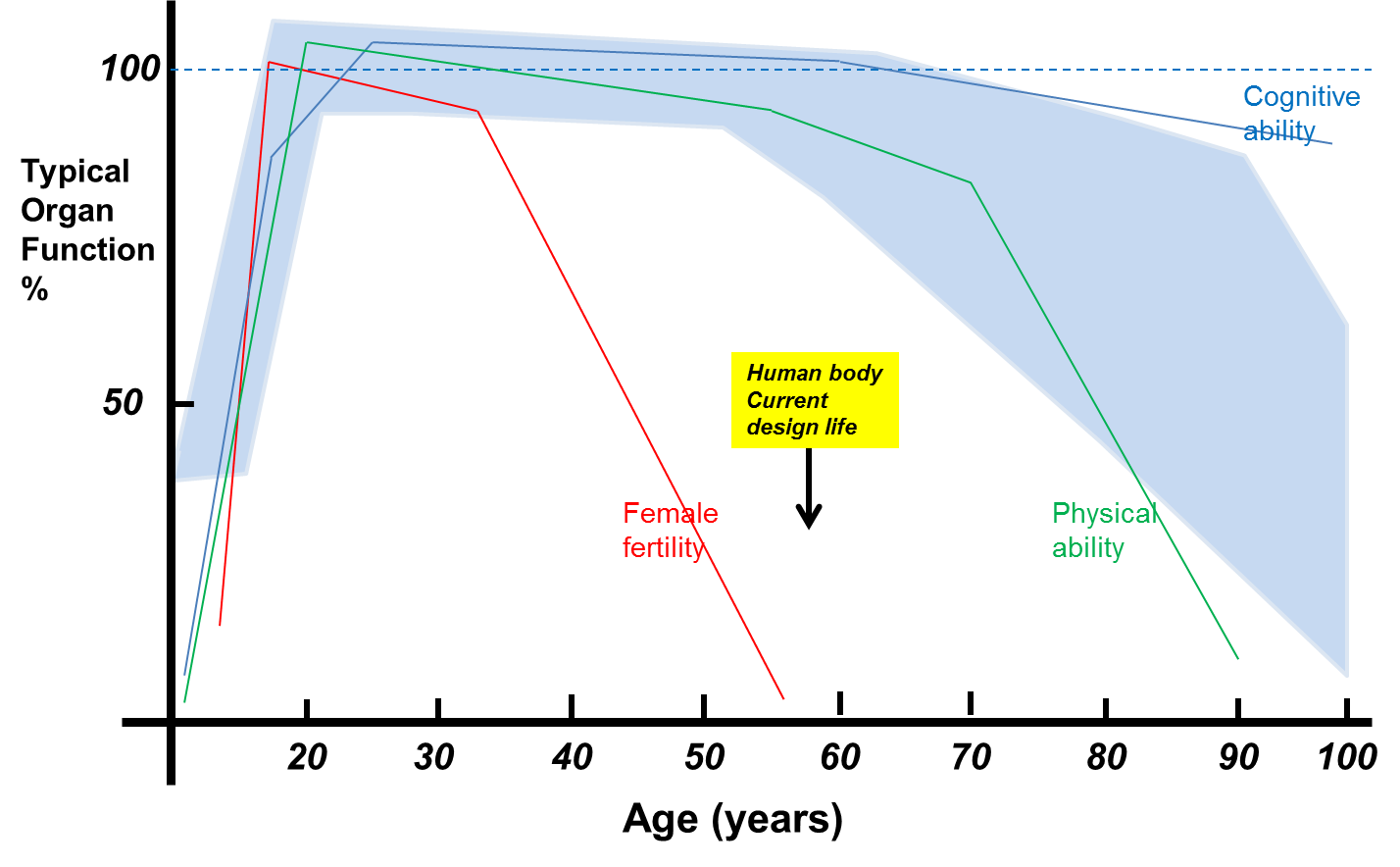
Functionality of organs with age

Functionality of organs with age

The reverse bathtub curve suggests that the human body has a design life of between 50 and 60 years.

“Infancy problems” in this context include birth and genetic defects which can influence the development and failure rate of organs. “Wear” would be the physical and mental wear and tear but would now also include the effects of aging which curtail the replacement of cells. Average, global, life expectancy is now around 80 years and the longest verified age is about 122 years. Average life expectancy has increased over the last 200 years at the rate of about 3 months every year. Over the next 100 years this may level off to perhaps add another 20 years to life expectancy. Already in 2012 the UN estimated that there were more than 300,000 centenarians alive. By 2100 perhaps global life expectancy would have reached 100 years and the maximum age attained may then be around 140-150 years.

Using the engineering analogy, the main advances in life expectancy have so far come due to improving maintenance and replacement processes but have not improved on the “basic design”. The “improved quality” at birth and in infancy and medical advances have meant that “maintenance” processes have improved drastically. Modern health care is to a large extent the application of “preventive maintenance”.

But, the the basic design is unchanged. The materials used in making up the human body have not changed but “maintenance and repair” strategies have improved out of all recognition. The life of our various organs have not changed inherently, except as a result of the much improved maintenance regime. With no change in basic design, the design life has not changed either. The increasing lifetime of the system (the body) is now beginning to approach the lifetime of the components (the organs) it is made up of.

Currently the design life of a human body could be said to be about 50-60 years. Studies suggest that though we live longer we also have longer periods at the end of our lives when our functionality is severely impaired. The ” basic design” has not changed and the “design life” is not increasing. Life spans of 200 years will not be possible without some change in the “basic design”. For our design life to change it will need advances which allow our cells to keep replicating without the aging effects of the shortening of the telomeres. When that happens (not if), then we would effectively have altered the “basic design” of the human body and its design life.



Trend reversal and sharp increase of mortality of 45-54 year old, US white population

November 3, 2015

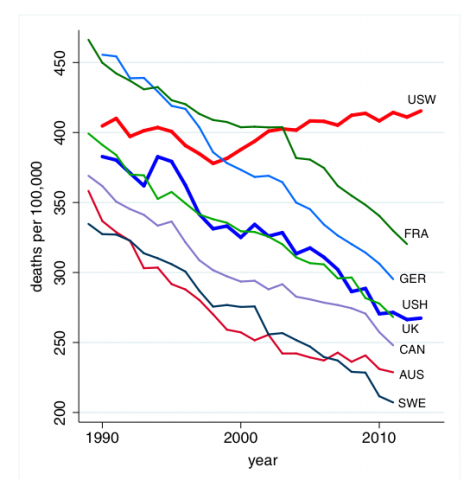
A new paper by Nobel winner Angus Deaton and his wife Anne Case points out a trend reversal and a sharp increase of mortality rates among 45-54 year old, non-Hispanic whites in the US between 1999 and 2013. This is highest among the less educated, less well-off population. It is the reversal of a previous trend and that is both perplexing and a little alarming. It suggests a deeper social malaise prevalent in this group.

A rather deadly – and morbid – case of “White Flight”.

Anne Case and Angus DeatonRising morbidity and mortality in midlife among white non-Hispanic Americans in the 21st century, PNAS, doi: 10.1073/pnas.1518393112

All-cause mortality, ages 45–54 for US White non-Hispanics (USW), US Hispanics (USH), and six comparison countries: France (FRA), Germany (GER), the United Kingdom (UK), Canada (CAN), Australia (AUS), and Sweden (SWE) Case & Deaton

All-cause mortality, ages 45–54 for US White non-Hispanics (USW), US Hispanics (USH), and six comparison countries: France (FRA), Germany (GER), the United Kingdom (UK), Canada (CAN), Australia (AUS), and Sweden (SWE)  – Case & Deaton

Abstract

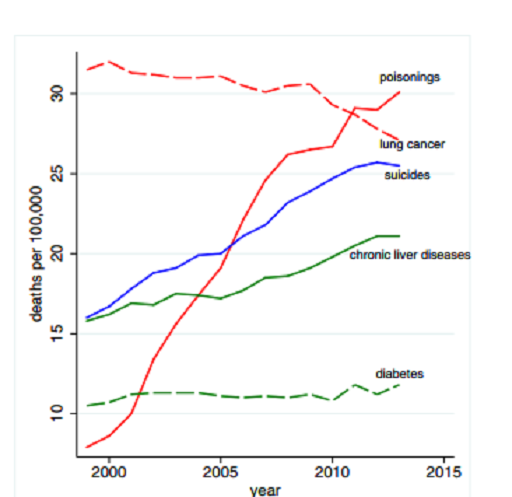
This paper documents a marked increase in the all-cause mortality of middle-aged white non-Hispanic men and women in the United States between 1999 and 2013. This change reversed decades of progress in mortality and was unique to the United States; no other rich country saw a similar turnaround. The midlife mortality reversal was confined to white non-Hispanics; black non-Hispanics and Hispanics at midlife, and those aged 65 and above in every racial and ethnic group, continued to see mortality rates fall. This increase for whites was largely accounted for by increasing death rates from drug and alcohol poisonings, suicide, and chronic liver diseases and cirrhosis. Although all education groups saw increases in mortality from suicide and poisonings, and an overall increase in external cause mortality, those with less education saw the most marked increases.

The sharpest increase has been in “poisonings” which is essentially the use of drugs (including pain related opiates) and alcohol.

Mortality by cause, white non-Hispanics ages 45–54.

Mortality by cause, white non-Hispanics ages 45–54.

American Prospect comments:

Case and Deaton’s data indicate that the white midlife mortality reversal was due almost entirely to increased deaths among those with a high school degree or less. Mortality rates in that group rose by 134 per 100,000 between 1999 and 2013, while there was little change among those with some college, and death rates fell by 57 per 100,000 for those with a college degree or more.

Death rates from suicide and poisonings such as drug overdoses increased among middle-aged whites at all socioeconomic levels (as measured by education). But the increases were largest among those with the least education and more than sufficient in that group to wipe out progress in reducing other causes of death. Deaths from diabetes rose slightly but did not account for a significant part of the white midlife mortality reversal.

  ……. Among blacks, midlife mortality has been higher than among whites. But over the period 1999-2013, according to Case and Deaton, midlife mortality declined by more than 200 per 100,000 for blacks while it was rising for whites. As a result, the ratio of black to white mortality rates dropped from 2.09 in 1999 to 1.40 in 2013. Contrary to what many Americans may still believe, drug overdoses are no longer concentrated among minorities; in fact, among the 45-54 age group, drug-related deaths are now higher among whites. …..

American Prospect goes on to suggest that this might be a loss of hope among the white, middle-aged, less educated population, which is part of the malaise which is showing up politically as support for Trump and Carson.

The declining health of middle-aged white Americans may also shed light on the intensity of the political reaction taking place on the right today. The role of suicide, drugs, and alcohol in the white midlife mortality reversal is a signal of heightened desperation among a population in measurable decline. ……  The phenomenon Case and Deaton have identified suggests a dire collapse of hope, and that same collapse may be propelling support for more radical political change. Much of that support is now going to Republican candidates, notably Donald Trump. Whether Democrats can compete effectively for that support on the basis of substantive economic and social policies will crucially affect the country’s political future.

Swedish study of one million children shows early exposure to dogs reduces asthma

November 2, 2015

We have probably gone a little too far and are just a little too protective of our children. The cleaner we try to keep everything around children, the less developed is their immunity and the more vulnerable they become later. I suspect it is the same thinking which has meant that we have also gone too far with so called Health and Safety provisions in schools which – for fear of accident and resulting liability – has reduced the fun – and the learning opportunities – of play, sports and excursions. The so-called precautionary principle (which is no principle but a political ideology) actually encourages actions to be subservient to fear. There is a difference between avoiding being foolhardy and being cowardly.

A Swedish cohort study on over one million children has found that early exposure to dogs clearly reduces the later risk of asthma.

Tove Fall, Cecilia Lundholm, Anne K Örtqvist, Katja Fall, Fang Fang, Åke Hedhammar, Olle Kämpe, Erik Ingelsson, and Catarina Almqvist. “Dog and farm animal exposure reduce risk of childhood asthma – a nationwide cohort study”.  JAMA Pediatrics. In press. DOI: 10.1001/jamapediatrics.2015.3219

Uppsala University press release (in Swedish) is here.

Medicalxpress:

A team of Swedish scientists have used national register information in more than one million Swedish children to study the association of early life contact with dogs and subsequent development of asthma. This question has been studied extensively previously, but conclusive findings have been lacking. The new study showed that children who grew up with dogs had about 15 percent less asthma than children without dogs.  

A total of more than one million children were included in the researchers’ study linking together nine different national data sources, including two dog ownership registers not previously used for medical research. The results are being published for the first time in JAMA Pediatrics. The goal was to determine whether children exposed to animals early in life are at different risk of asthma.

“Earlier studies have shown that growing up on a farm reduces a child’s risk of asthma to about half. We wanted to see if this relationship also was true also for children growing up with dogs in their homes. Our results confirmed the farming effect, and we also saw that children who grew up with dogs had about 15 percent less asthma than children without dogs. Because we had access to such a large and detailed data set, we could account for confounding factors such as asthma in parents, area of residence and socioeconomic status” says Tove Fall, Assistant Professor in Epidemiology at the Department of Medical Sciences and the Science for Life Laboratory, Uppsala University, who coordinated the study together with researchers from the Karolinska Institutet in Stockholm, Sweden. ……. 

Birth and the 116 other things which increase cancer risk

October 29, 2015

The good old WHO.

I suppose they do do some good, but they also make some horrible blunders as with the UN introduced cholera epidemic in Haiti, or with the initial downplaying of the Ebola outbreak in some African countries, or when their panel members take money from vaccine manufacturers to recommend mass flu vaccination programs. As with all UN organisations the staff are a mixture of professionals, surrounded by bureaucrats with political agendas from their home countries, and with some members from partisan lobby groups who promote their own causes and self-interests. WHO panels which recommend certain drugs or mass vaccination programs always seem to contain members with commercial ties to the pharmaceutical industry. Many in the WHO justify their alarmist tactics as a means to stimulate or trigger actions and – inevitably – many of these actions are totally unnecessary (but they are often very lucrative for some members of the WHO and their sponsors).

Now the WHO are going after processed and even red meat as causing cancer. But they have had to torture their data to calculate the risk. They forget that living is risk. Not being born, however, carries no risk of dying of anything. Therefore, the risk of cancer due to being born is far, far greater than that introduced by any other parameter or substance.  I won’t be changing my meat eating habits just yet.

Their list of 116 other things – besides birth – that increase the risk of cancer are taken from the Daily Mail.

1. Tobacco smoking

2. Sunlamps and sunbeds

3. Aluminium production

4. Arsenic in drinking water

5. Auramine production

6. Boot and shoe manufacture and repair

7. Chimney sweeping

8. Coal gasification

9. Coal tar distillation

10. Coke (fuel) production

11. Furniture and cabinet making

12. Haematite mining (underground) with exposure to radon

13. Secondhand smoke

14. Iron and steel founding

15. Isopropanol manufacture (strong-acid process)

16. Magenta dye manufacturing

17. Occupational exposure as a painter

18. Paving and roofing with coal-tar pitch

19. Rubber industry

20. Occupational exposure of strong inorganic acid mists containing sulphuric acid

21. Naturally occurring mixtures of aflatoxins (produced by funghi)

22. Alcoholic beverages

23. Areca nut – often chewed with betel leaf

24. Betel quid without tobacco

25. Betel quid with tobacco

26. Coal tar pitches

27. Coal tars

28. Indoor emissions from household combustion of coal

29. Diesel exhaust

30. Mineral oils, untreated and mildly treated

31. Phenacetin, a pain and fever reducing drug

32. Plants containing aristolochic acid (used in Chinese herbal medicine)

33. Polychlorinated biphenyls (PCBs) – widely used in electrical equipment in the past, banned in many countries in the 1970s

34. Chinese-style salted fish

35. Shale oils

36. Soots

37. Smokeless tobacco products

38. Wood dust

39. Processed meat

40. Acetaldehyde

41. 4-Aminobiphenyl

42. Aristolochic acids and plants containing them

43. Asbestos

44. Arsenic and arsenic compounds

45. Azathioprine

46. Benzene

47. Benzidine

48. Benzo[a]pyrene

49. Beryllium and beryllium compounds

50. Chlornapazine (N,N-Bis(2-chloroethyl)-2-naphthylamine)

51. Bis(chloromethyl)ether

52. Chloromethyl methyl ether

53. 1,3-Butadiene

54. 1,4-Butanediol dimethanesulfonate (Busulphan, Myleran)

55. Cadmium and cadmium compounds

56. Chlorambucil

57. Methyl-CCNU (1-(2-Chloroethyl)-3-(4-methylcyclohexyl)-1-nitrosourea; Semustine)

58. Chromium(VI) compounds

 59. Ciclosporin

60. Contraceptives, hormonal, combined forms (those containing both oestrogen and a progestogen)

61. Contraceptives, oral, sequential forms of hormonal contraception (a period of oestrogen-only followed by a period of both oestrogen and a progestogen)

62. Cyclophosphamide

63. Diethylstilboestrol

64. Dyes metabolized to benzidine

65. Epstein-Barr virus

66. Oestrogens, nonsteroidal

67. Oestrogens, steroidal

68. Oestrogen therapy, postmenopausal

69. Ethanol in alcoholic beverages

70. Erionite

71. Ethylene oxide

72. Etoposide alone and in combination with cisplatin and bleomycin

73. Formaldehyde

74. Gallium arsenide

75. Helicobacter pylori (infection with)

76. Hepatitis B virus (chronic infection with)

77. Hepatitis C virus (chronic infection with)

78. Herbal remedies containing plant species of the genus Aristolochia

79. Human immunodeficiency virus type 1 (infection with)

80. Human papillomavirus type 16, 18, 31, 33, 35, 39, 45, 51, 52, 56, 58, 59 and 66

81. Human T-cell lymphotropic virus type-I

82. Melphalan

83. Methoxsalen (8-Methoxypsoralen) plus ultraviolet A-radiation

84. 4,4′-methylene-bis(2-chloroaniline) (MOCA)

85. MOPP and other combined chemotherapy including alkylating agents

86. Mustard gas (sulphur mustard)

87. 2-Naphthylamine

88. Neutron radiation

89. Nickel compounds

90. 4-(N-Nitrosomethylamino)-1-(3-pyridyl)-1-butanone (NNK)

91. N-Nitrosonornicotine (NNN)

92. Opisthorchis viverrini (infection with)

93. Outdoor air pollution

94. Particulate matter in outdoor air pollution

95. Phosphorus-32, as phosphate

96. Plutonium-239 and its decay products (may contain plutonium-240 and other isotopes), as aerosols

97. Radioiodines, short-lived isotopes, including iodine-131, from atomic reactor accidents and nuclear weapons detonation (exposure during childhood)

98. Radionuclides, α-particle-emitting, internally deposited

99. Radionuclides, β-particle-emitting, internally deposited

100. Radium-224 and its decay products

101. Radium-226 and its decay products

102. Radium-228 and its decay products

103. Radon-222 and its decay products

104. Schistosoma haematobium (infection with)

105. Silica, crystalline (inhaled in the form of quartz or cristobalite from occupational sources)

106. Solar radiation

107. Talc containing asbestiform fibres

108. Tamoxifen

109. 2,3,7,8-tetrachlorodibenzo-para-dioxin

110. Thiotepa (1,1′,1′-phosphinothioylidynetrisaziridine)

111. Thorium-232 and its decay products, administered intravenously as a colloidal dispersion of thorium-232 dioxide

112. Treosulfan

113. Ortho-toluidine

114. Vinyl chloride

115. Ultraviolet radiation

116. X-radiation and gamma radiation

From the Daily Mail.


Swedish study says antioxidants also protect cancer cells

October 13, 2015

A new paper from Sahlgrenska Academy in Gothenburg shows that

Antioxidants can increase melanoma metastasis in mice, K Le Gal et al, Science Translational Medicine, 07 Oct 2015:
Vol. 7, Issue 308, DOI: 10.1126/scitranslmed.aad3740

First antioxidants were good for you, then they were of doubtful benefit and now it seems they are positively bad. Many foods containing antioxidants have been touted for their health benefits and have included chocolate, fresh fruits and vegetables, nuts, whole grains, maize, legumes and eggs. Red wine was on the list but the benefits of Resveratrol have already come under a cloud for alleged data tampering.

Of course, perceived antioxidant benefits have not much influenced my own consumption of dark chocolate and red wine. But what the study finds is that  “the overall conclusion from the various studies is that antioxidants protect healthy cells from free radicals that can turn them into malignancies but may also protect a tumor once it has developed”.

So antioxidants can help prevent a cancer developing, but once the cancer is there antioxidants can speed up the progression of the cancer. Dark chocolate and red wine therefore remain on the  “good foods list” for those who do not have any cancerous cells.

Sahlgrenska Press Release:

Fresh research at Sahlgrenska Academy has found that antioxidants can double the rate of melanoma metastasis in mice. The results reinforce previous findings that antioxidants hasten the progression of lung cancer. According to Professor Martin Bergö, people with cancer or an elevated risk of developing the disease should avoid nutritional supplements that contain antioxidants.

Researchers at Sahlgrenska Academy, University of Gothenburg, demonstrated in January 2014 that antioxidants hastened and aggravated the progression of lung cancer. Mice that were given antioxidants developed additional and more aggressive tumors. Experiments on human lung cancer cells confirmed the results.
Given well-established evidence that free radicals can cause cancer, the research community had simply assumed that antioxidants, which destroy them, provide protection against the disease. Found in many nutritional supplements, antioxidants are widely marketed as a means of preventing cancer. Because the lung cancer studies called the collective wisdom into question, they attracted a great deal of attention.

The follow-up studies at Sahlgrenska Academy have now found that antioxidants double the rate of metastasis in malignant melanoma, the most perilous type of skin cancer. Science Translational Medicine published the findings on October 7.
“As opposed to the lung cancer studies, the primary melanoma tumor was not affected,” Professor Bergö says. “But the antioxidant boosted the ability of the tumor cells to metastasize, an even more serious problem because metastasis is the cause of death in the case of melanoma. The primary tumor is not dangerous per se and is usually removed.”

Experiments on cell cultures from patients with malignant melanoma confirmed the new results. “We have demonstrated that antioxidants promote the progression of cancer in at least two different ways,” Professor Bergö says.
The overall conclusion from the various studies is that antioxidants protect healthy cells from free radicals that can turn them into malignancies but may also protect a tumor once it has developed. 

Taking nutritional supplements containing antioxidants may unintentionally hasten the progression of a small tumor or premalignant lesion, neither of which is possible to detect.
“Previous research at Sahlgrenska Academy has indicated that cancer patients are particularly prone to take supplements containing antioxidants,” Dr. Bergö says. “Our current research combined with information from large clinical trials with antioxidants suggests that people who have been recently diagnosed with cancer should avoid such supplements.”


A few extra copies of p53 and we could also suppress cancerous tumours

October 9, 2015

Elephants should get cancer 100 times more often than humans but instead they have a cancer mortality rate which is at 20-50% of the rate in humans. Cell for cell therefore, elephants are 200 to 500 times less likely to develop cancer than humans. Genetic studies may have revealed why that is so. They have 38 additional copies of a tumor suppressing gene (p53) while humans have only two.

Sounds fascinating. If we could only ingest some additional copies of a specific genes, of which humans have only two, we may be able to suppress cancerous tumours.

Wikipedia tells me that

Tumor protein p53, also known as p53, ……. is any isoform of a protein encoded by homologous genes in various organisms, such as TP53 (humans) and Trp53 (mice). …. p53 has been described as “the guardian of the genome” because of its role in conserving stability by preventing genome mutation. ….. The International Cancer Genome Consortium has established that the TP53 gene is the most frequently mutated gene (>50%) in human cancer, indicating that the TP53 gene plays a crucial role in preventing cancer formation. TP53 gene encodes proteins that bind to DNA and regulate gene expression to prevent mutations of the genome.

Now a new paper reports a study on why elephants rarely get cancers and finds that elephants have 38 copies of p53 whereas humans have only two.

Press Release Huntsman Cancer Institute:

Why Elephants rarely get cancer

…. elephants have 38 additional modified copies (alleles) of a gene that encodes p53, a well-defined tumor suppressor, as compared to humans, who have only two. Further, elephants may have a more robust mechanism for killing damaged cells that are at risk for becoming cancerous. In isolated elephant cells, this activity is doubled compared to healthy human cells, and five times that of cells from patients with Li-Fraumeni Syndrome, who have only one working copy of p53 and more than a 90 percent lifetime cancer risk in children and adults. The results suggest extra p53 could explain elephants’ enhanced resistance to cancer.

Joshua D. Schiffman, MD et al. Potential mechanisms for cancer resistance in elephants and comparative cellular response to DNA damage in humans. JAMA, October 2015 DOI:10.1001/jama.2015.13134

According to Schiffman, elephants have long been considered a walking conundrum. Because they have 100 times as many cells as people, they should be 100 times more likely to have a cell slip into a cancerous state and trigger the disease over their long life span of 50 to 70 years. And yet it’s believed that elephants get cancer less often, a theory confirmed in this study. Analysis of a large database of elephant deaths estimates a cancer mortality rate of less than 5 percent compared to 11 to 25 percent in people.

In search of an explanation, the scientists combed through the African elephant genome and found at least 40 copies of genes that code for p53, a protein well known for its cancer-inhibiting properties. DNA analysis provides clues as to why elephants have so many copies, a substantial increase over the two found in humans. A substantial majority, 38 of them, are so-called retrogenes, modified duplicates that have been churned out over evolutionary time.  

Schiffman’s team collaborated with Utah’s Hogle Zoo and Ringling Bros. Center for Elephant Conservation to test whether the extra gene copies may protect elephants from cancer. They extracted white blood cells from blood drawn from the animals during routine wellness checks and subjected the cells to treatments that damage DNA, a cancer trigger. In response, the cells reacted to damage with a characteristic p53-mediated response: they committed suicide.

“It’s as if the elephants said, ‘It’s so important that we don’t get cancer, we’re going to kill this cell and start over fresh,’” says Schiffman. “If you kill the damaged cell, it’s gone, and it can’t turn into cancer.  This may be more effective of an approach to cancer prevention than trying to stop a mutated cell from dividing and not being able to completely repair itself.”

I don’t understand any of this but can imagine that in a 100 years or so, children will routinely be given “genetic p53 shots”  — as routinely as they get vaccinations today. It’s not as if we don’t already have the gene. So just arranging a few extra copies of a gene we already have, doesn’t sound Frankensteinian and should not lead to developing elephantine features.

Another case of promoting a drug with “incorrect reporting and distorted data”

September 17, 2015

There is a Catch 22 situation here.

Clinical trials for new drugs are all funded – of necessity – by the pharmaceutical companies. It is only to be expected that negative results are downplayed and positive results are highlighted. Positive results get published. Negative results for drugs not yet approved are rarely published. Those conducting clinical trials are looking to enhance their lists of publications. Furthermore there is an incentive to invent “medical conditions” which can be “treated” by otherwise useless – or even damaging – compounds. My perception is that the pharmaceutical companies sometimes discover compounds unintentionally or by accident or as a compound which fails its originally intended purpose. Then – by defining (or inventing) new medical disabilities – they try and find a use for these compounds.

So how many of the new, psychiatric drugs are really of no benefit? And how many of the supposed “illnesses” – which can only be diagnosed by subjective methods – and which these new drugs are supposed to to treat – are really medical conditions?

A University of Adelaide led study has found that a psychiatric drug – paroxetine – which was claimed to be a safe and effective treatment for depression in adolescents is actually ineffective and associated with serious side effects is published today in the BMJ.

Joanna Le Noury, John M Nardo, David Healy, Jon Jureidini, Melissa Raven, Catalin Tufanaru, Elia Abi-Jaoude. Restoring Study 329: efficacy and harms of paroxetine and imipramine in treatment of major depression in adolescence. BMJ, 2015 DOI: 10.1136/bmj.h4320

there is also an editorial in the BMJ:

No correction, no retraction, no apology, no comment: paroxetine trial reanalysis raises questions about institutional responsibility

UofAdelaide press releaseProfessor Jon Jureidini, from the University of Adelaide’s newly created Critical and Ethical Mental Health Research Group (CEMH) at the Robinson Research Institute, led a team of international researchers who re-examined Study 329, a randomised controlled trial which evaluated the efficacy and safety of paroxetine (Aropax, Paxil, Seroxat) compared with a placebo for adolescents diagnosed with major depression.

Study 329, which was funded by SmithKline Beecham (now GlaxoSmithKline), was reported in 2001 as having found that paroxetine was effective and safe for depression in adolescents. However, Professor Jureidini’s reanalysis showed no advantages associated with taking paroxetine and demonstrated worrying adverse effects.

“Although concerns had already been raised about Study 329, and the way it was reported, the data was not previously made available so researchers and clinicians weren’t able to identify all of the errors in the published report,” says Professor Jureidini. “It wasn’t until the data was made available for re-examination that it became apparent that paroxetine was linked to serious adverse reactions, with 11 of the patients taking paroxetine engaging in suicidal or self-harming behaviours compared to only one person in the group of patients who took the placebo,” he says. “Our study also revealed that paroxetine was no more effective at relieving the symptoms of depression than a placebo.”  ……

……. “Study 329 was one of the trials identified as in need of restoration, and because the original funder was not interested in revisiting the trial, our research group took on the task. 
“Our reanalysis of Study 329 came to very different conclusions to those in the original paper,” he says. “We also learnt a lot about incorrect reporting and the considerable fall out that can be associated with distorted data.”

If all doctors treating patients were truly independent the system would be self-correcting. Overhyped and unnecessary drugs would wither away. But many doctors have a vested interest in the continued use of the drugs they prescribe. (And note that even some members of the WHO panels who recommend mass vaccination programs have been found to have vested interests).

As the editorial in the BMJ writes:

But in the case of Study 329 no epistemological acrobatics would seem able to reconcile the differences between the 2001 JAACAP paper and the RIAT republication. They cannot both be right. …

Such stark differences between the original paper and the rewrite are bound to put particular pressure on Andrés Martin, Yale University professor and current editor in chief of JAACAP. Martin has been under pressure to retract the paper for years, including from within his own society. Last October, Martin was compelled to address the academy’s assembly about Study 329. According to the minutes, members heard how Martin had investigated the matter thoroughly by consultation with the authors, the Committee on Publication Ethics (COPE), clinical experts, “a whole range of attorneys, and more.” Martin’s assessment, completed in July 2010, concluded that no further action was necessary. A follow-up inquiry, again by Martin, in 2012, after GSK was fined $3bn, similarly concluded “no basis found for editorial action against the article.” ……

It has proved no easier to get the professional society to talk. Several of the authors of the JAACAP paper are members of the American Academy of Child and Adolescent Psychiatry (AACAP). The BMJ sent four requests for comment to the academy’s president, Paramjit Joshi, and past president Martin Drell, but received no response.

Scientists behaving badly and psychiatrists behaving very badly. A can of worms no doubt.

Good Grief! Scientists uncover a difference between the sexes

August 16, 2015

Perhaps somebody could tell the politically correct that “different” is not an issue of “better” or “worse”. It is about not being the same. Vive la différence.

From the “science is wonderful” category.

Scientists have discovered there are fundamental differences between the brains of men and women. You cannot blame the scientists for the headlines of course, otherwise I would not know whether to be worried or relieved. In any case we could always pass a law saying this is not so.

N. Tabatadze, G. Huang, R. M. May, A. Jain, C. S. Woolley. Sex Differences in Molecular Signaling at Inhibitory Synapses in the Hippocampus. Journal of Neuroscience, 2015; 35 (32): 11252 DOI:10.1523/JNEUROSCI.1067-15.2015

Press Release from Northwestern University:

Scientists Uncover a Difference Between the Sexes

Male and female brains operate differently at a molecular level, a Northwestern University research team reports in a new study of a brain region involved in learning and memory, responses to stress and epilepsy.

Many brain disorders vary between the sexes, but how biology and culture contribute to these differences has been unclear. Now Northwestern neuroscientists have found an intrinsic biological difference between males and females in the molecular regulation of synapses in the hippocampus. This provides a scientific reason to believe that female and male brains may respond differently to drugs targeting certain synaptic pathways. 

“The importance of studying sex differences in the brain is about making biology and medicine relevant to everyone, to both men and women,” said Catherine S. Woolley, senior author of the study. “It is not about things such as who is better at reading a map or why more men than women choose to enter certain professions.”

Among their findings, the scientists found that a drug called URB-597, which regulates a molecule important in neurotransmitter release, had an effect in females that it did not have in males. While the study was done in rats, it has broad implications for humans because this drug and others like it are currently being tested in clinical trials in humans.

“Our study starts to put some specifics on what types of molecular differences there are in male and female brains,” Woolley said. 


Spice addiction prolongs your life

August 7, 2015

red chilliesEven growing up in a family which liked its food very spicy I was regarded as being extreme in my like of fiery dishes. The story is – and I have only some very vague reflections of this – that I sucked my thumb as a child for a very long time. After my parents gave up on their attempts to stop this depraved habit my grandmother took charge. She wrapped my thumb every morning in a gauze bandage steeped in powdered red chillies. This continued all through one winter she spent with us when I was about two. She was “accused” by mother of “child cruelty” but she was determined to bring the depraved child back into line. Apparently I did not cry or complain – unnatural child that I was. Only my right thumb was wrapped in the chillie-bandage but it did not get me to stop or even to shift to my left thumb. In any event this “torture” went on for about 3 months but did not cure me of sucking my thumb (and that continued, I am told, till I was almost four). Thumb-sucking came to its natural end in due course but by then red chillies had been established as my “natural comforter”. I no longer suck my thumb, even at times of great stress – but I do find a blisteringly fiery meal strangely comforting.

But perhaps my grandmother has helped prolong my life. A new study in the BMJ reports on an observational study which makes no claims about cause and effect but merely reports a correlation between the eating of spicy food and a decrease in mortality.

Jun Lv et al. Consumption of spicy foods and total and cause specific mortality: population based cohort study. BMJ, 2015 DOI:10.1136/bmj.h3942

Press ReleasePrevious research has suggested that beneficial effects of spices and their bioactive ingredient, capsaicin, include anti-obesity, antioxidant, anti-inflammation and anticancer properties. So an international team led by researchers at the Chinese Academy of Medical Sciences examined the association between consumption of spicy foods as part of a daily diet and the total risk and causes of death. They undertook a prospective study of 487,375 participants, aged 30-79 years, from the China Kadoorie Biobank. Participants were enrolled between 2004-2008 and followed up for morbidities and mortality. …… 

During a median follow-up of 7.2 years, there were 20,224 deaths. Compared with participants who ate spicy foods less than once a week, those who consumed spicy foods 1 or 2 days a week were at a 10% reduced risk of death (hazard ratios for death was 0.90). And those who ate spicy foods 3 to 5 and 6 or 7 days a week were at a 14% reduced risk of death (hazard ratios for death 0.86, and 0.86 respectively).*In other words, participants who ate spicy foods almost every day had a relative 14% lower risk of death compared to those who consumed spicy foods less than once a week.

The association was similar in both men and women, and was stronger in those who did not consume alcohol. Frequent consumption of spicy foods was also linked to a lower risk of death from cancer, and ischaemic heart and respiratory system diseases, and this was more evident in women than men.

Fresh and dried chilli peppers were the most commonly used spices in those who reported eating spicy foods weekly, and further analysis showed those who consumed fresh chilli tended to have a lower risk of death from cancer, ischaemic heart disease, and diabetes.

spice tinThere is no chocolate dessert which is not better for the addition of a sprinkle or two of red chillie powder. It is not just chillies of course. A little cumin in the cheese can do wonders. A touch of cinnamon in the Irish coffee is decadently good. A little asafoetida in the traditional Swedish pea-soup can bring it to life. Bangers and mash with hot mustard on the bangers and onions and red chillies in the mash is a student’s delight. Coriander added to the mint with any lamb dish is the way to go. A touch of saffron on any fish or crustacean dish can hardly go wrong. I even find that there is no over-rated, Michelin-starred, French dish which cannot be improved by the addition of a little of the right spice.

Birth month (hence month of conception) linked to disease risk (in New York)

June 10, 2015

Back to Astrology.

M. R. Boland, Z. Shahn, D. Madigan, G. Hripcsak, N. P. Tatonetti. Birth Month Affects Lifetime Disease Risk: A Phenome-Wide Method.Journal of the American Medical Informatics Association, 2015; DOI:10.1093/jamia/ocv046

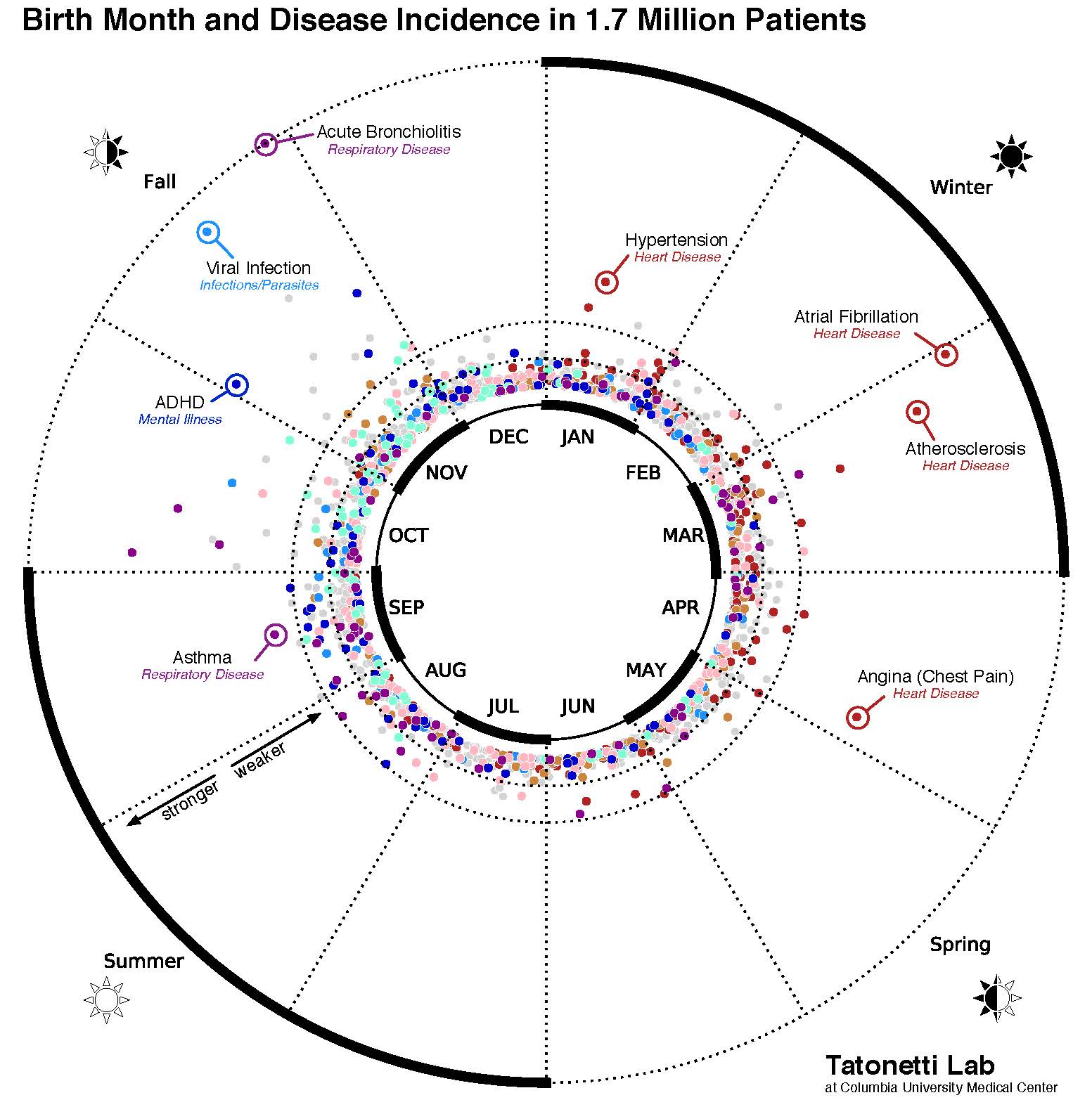
This is not so much a medical study as a data analysis of the health records of 1.7 million people in New York. It is about correlations and not about causations but could, of course, lead to insights about causations. While the study and all the headlines focus on month of birth, I note that month of birth automatically implies month of conception. I would have thought that there was a greater chance of any genetic effects being associated with the time of conception rather than the time of birth. And if the time of conception is really of some significance, then it begs the question whether the “quality” of sperm or ova are affected by time or follow some seasonal or cyclic pattern.

In any event, the association of season with health suggests that the sun is playing a role. And if the sun can play a role (gravitational?) then so can the moon and other celestial bodies. Which sounds suspiciously like Astrology.

The study finds

  • Overall, babies born in October had the highest risk of disease, and those born in May had the lowest risk.
  • Asthma risk was highest for July and October babies.
  • November babies were at the highest risk for developing ADHD.
  • Babies born in March faced the highest risk for heart problems including atrial fibrillation, congestive heart failure and mitral valve disorder.
  • Winter babies were at a higher risk of neurological problems.

Babies born in October would have been conceived in December and those born in May would have been conceived in July. And that means that conception during the summer holiday period produces babies with less risk of disease than babies conceived during the Christmas holidays.

Press ReleaseColumbia University scientists have developed a computational method to investigate the relationship between birth month and disease risk. The researchers used this algorithm to examine New York City medical databases and found 55 diseases that correlated with the season of birth. Overall, the study indicated people born in May had the lowest disease risk, and those born in October the highest. The study was published this week in the Journal of American Medical Informatics Association. ……. 

Earlier research on individual diseases such as ADHD and asthma suggested a connection between birth season and incidence, but no large-scale studies had been undertaken. This motivated Columbia’s scientists to compare 1,688 diseases against the birth dates and medical histories of 1.7 million patients treated at NewYork-Presbyterian Hospital/CUMC between 1985 and 2013. …….. The study ruled out more than 1,600 associations and confirmed 39 links previously reported in the medical literature. The researchers also uncovered 16 new associations, including nine types of heart disease, the leading cause of death in the United States. The researchers performed statistical tests to check that the 55 diseases for which they found associations did not arise by chance. ……

……….. The new data are consistent with previous research on individual diseases. For example, the study authors found that asthma risk is greatest for July and October babies. An earlier Danish study on the disease found that the peak risk was in the months (May and August) when Denmark’s sunlight levels are similar to New York’s in the July and October period.

For ADHD, the Columbia data suggest that around one in 675 occurrences could relate to being born in New York in November. This result matches a Swedish study showing peak rates of ADHD in November babies.

The researchers also found a relationship between birth month and nine types of heart disease, with people born in March facing the highest risk for atrial fibrillation, congestive heart failure, and mitral valve disorder. One in 40 atrial fibrillation cases may relate to seasonal effects for a March birth. A previous study using Austrian and Danish patient records found that those born in months with higher heart disease rates—March through June—had shorter life spans.

Tatonetti Lab disease and time of birth

Tatonetti Lab disease and time of birth