Archive for the ‘Medicine’ Category

Rosling’s health, wealth and statistics

January 31, 2014

Hans Rosling’s tour de force: 200 countries, 200 years, 4 minutes.

This is not new and I think I first saw it about 3 years ago.

But it is worth looking at not just for the content but also for the power of the presentation.

Just a reminder that the world is feeding more people than ever before, we are living longer than ever before, and things are not as black as some alarmists would have us think. And by 2100 total population will be declining.

The glass is more than half-full.

A much longer (20 minutes) presentation is also well worth watching.

Pfizer writes off $725 million – were they a victim of scientific fraud?

January 20, 2014

Whether it is just error or bad judgement or fraud we will never know. Perhaps all three.

NewsObserver: In 2008, Pfizer paid $725 million for the rights to a Russian cold medicine called Dimebon. The pharmaceutical giant thought the drug could help ameliorate the symptoms of Alzheimer’s. Several clinical trials showed the medicine had no more impact than a placebo. Pfizer has largely abandoned the project.

Earlier this week came the news that Pfizer have now written off the entire $725 million.

The last flickering hope that Medivation’s Dimebon could help Alzheimer’s disease patients has just been extinguished. The biotech announced this morning that a 12-month study of the drug failed to register significant improvements for patients, mirroring two shorter Phase III studies in which Dimebon failed to outperform a sugar pill. Pfizer took the opportunity to bow out of its partnership, writing off its $225 million upfront and $500 million milestone program for what proved to be another embarrassing pipeline failure.

In 2008, Dimebon looked like an odds-on success, with positive data from a Russian study and 10 years of sales experience to underscore its safety. But Medivation was shaken to the core when its first late-stage study ended in failure, with an additional pratfall for Huntington’s disease to cap the disaster.

In the end, Dimebon’s failure helped tarnish the reputation of Russian drug studies while raising severe doubts about Medivation.

It is not only Pfizer which has been forced to make costly write-offs. Not long ago  GlaxoSmithKline was forced to shut down Sirtris Pharmaceuticals which it had acquired in 2008 for $720 million:

Xconomy:

Glaxo paid $720 million to acquire Sirtris in April 2008, to get ahold of technology that generated lots of breathless media coverage as a modern-day fountain of youth. The company sought to make drugs that act on sirtuins, a class of proteins that scientists believe play a role in aging, programmed cell death, and other key cell processes.

Even though the company is closing the Sirtris site, Stubbee says Glaxo remains confident in the drug candidates it got from that acquisition. ….

…. Sirtuins are known to be active when the body is in a calorie-restricted state, which scientists have shown contributes to longer lifespan. The idea at Sirtris was to make small-molecule chemical compounds that activated sirtuins as a way of fighting diseases that develop as people age—including Type 2 diabetes and cancer. ….. The research into the biological role of sirtuins, from Sirtris co-founder David Sinclair, has attracted its share of skeptics. Just last week, Sinclair, a researcher at Harvard Medical School, sought to buttress his early work with a new article in Science that says resveratrol and related compounds can activate sirtuins. One critic, quoted by the Boston Globe last week, said the role of one sirtuin called SIRT1 in aging, “is still as clear as mud.”

GSK is putting a brave face on all of this.

But for many medical and biotech researchers, the path to fame and fortune is by starting a start-up with some new compound or technique and by “leveraging the promise”. For pharma and biotechnology start-ups the objective is to be bought up by one of the majors for as exorbitant an amount as can be managed. And it seems that one way to inflate the value is by making preliminary data and trials show very optimistic results. Negative results never see the light of day and the positive aspects are exaggerated and at worst manipulated.

The ten-fold growth of retractions in medicine related fields since 1975 is mainly due to misconduct according to this report in Nature where “fraud or suspected fraud was responsible for 43% of the retractions”.

For Big Pharma this is simply a consequence of having “outsourced” part of their research. They can afford a few failures it could be thought. Of course the final cost is eventually borne by the consumers but some start-ups make a killing along the way.

Google funded study implies that Google Trends is a valid and rigorous behavioural indicator

January 8, 2014

I find that this disclaimer at the end of this study effectively invalidates the method of the study and its results.

This project was supported by a Google.org grant from 2012, although Google.org played no role in designing or conducting this study.

The results of the study (that more people searched for health issues on Google during the recession) are trivial and – with the best will in the world – of little value except for providing a plug for Google Search and Google Trends. Of course a Google Trend means something but to imply – as this study does – that a Google Trend for selected search items  is a rigorous and valid representation of a human behavioural pattern is more than a little fanciful.

Benjamin M. Althouse et al, Population Health Concerns During the United States’ Great Recession, Am J Prev Med 2014;46(2):166–170

Press Release: 

The group examined Americans’ Google search patterns and discovered that during the recent Great Recession, people searched considerably more frequently for information about health ailments. The kinds of problems indicated by the queries weren’t life threatening, but they could keep someone in the bed a few days, like ulcers, headaches, and back pain. 

In total, the team found there were more than 200 million excess queries of this kind during the Great Recession than expected.

“While it’s impossible to uncover the motives for increased searches, they likely indicate a person being ill, and ill enough to seek out online information or remedies,” Ayers said. The same group previously published a report showing that queries for anxiety and depression also increased substantially during the Great Recession.

The authors themselves write:

google search

Without first a study on whether the usage of Google search is actually representative of any part of the population, and whether a trend in such usage permits conclusions regarding the motives for such usage, this study is little more than an advertisement for Google Search and Google Trends.

Just as with Facebook surveys and profound conclusions, I am not at all sure that this “study” can even be considered science  – let alone good science. It is published  – believe it or not – in a journal of preventive medicine,  but it has little to do with medicine and more to do with PR and  Google’s image.

Science journalism by press release -“New ligament found in the knee” – Yes back in 1879!

November 10, 2013

Last week every Science section in every major newspaper reported the discovery of a new ligament in the knee! Every science site carried the astonishing news in breathless tones of wonder! I almost wrote about it since my son had had his knee ligament reconstructed a few years ago after a volleyball accident. But I couldn’t get access to one of the references and I didn’t – thank goodness!

To put it mildly the “newness” of the discovery was all a load of bulls**t.

The body part in question had been discovered in 1879! A new paper had been written about this ligament and published on 1st August. But their University had only issued a press release last week. And not one of the very many science “journalists” looked beyond the press release and had bothered to read the very first line of the paper abstract which stated “In 1879, the French surgeon Segond described the existence of a ‘pearly, resistant, fibrous band’ at the anterolateral aspect of the human knee…” . Instead they went to town with their headlines as this simple Google search shows (About 29,200,000 results in 0.32 seconds) 

Science journalism by infectious press release!

Paul Raeburn’s take-down is as comprehensive as needed and is reproduced here:

 It was startling news, but an easy story to write: Scientists have discovered a new body part! Amazing, isn’t it, that something could have eluded us since the time of Hippocrates?

Well, it would be amazing, except for one little detail, a detail so trivial I’m embarrassed to bring it up: It isn’t true.

But, hey, it’s an unusually warm Thursday in New York, I’m feeling good about life, so let’s give the journalists who bungled this story a break.

Why? Because in order to discover that the story wasn’t true, they would have had to dig down all the way to the very first line of the study’s abstract, which says, “In 1879, the French surgeon Segond described the existence of a ‘pearly, resistant, fibrous band’ at the anterolateral aspect of the human knee…”

That’s the body part in question, as journalists who even glanced at the abstract would have known. The darn thing was discovered 134 years ago.

USA Today‘s story, headlined, “New body part discovered,” reports that the new study confirmed the existence of the thing, called the anterolateral ligament, or ALL. The story then says that in Segond had “speculated” about the ligament, when the abstract clearly says that he “described” it. (Please excuse the annoying overuse of italics, but it’s hard to write normally when you’re grinding your teeth.)

Gizmodo‘s story: “It may sound impossible but scientists have discovered a new body part.”

Vanity Fair: “Newly Discovered Body Part Means New Sections of WebMD to Memorize!” Funny, right?

TIME: “Your Knee Bone’s Connected to Your…What? Scientists Discover New Body Part.” This story has the virtue of consistency. Unlike some of the others, it’s wrong all the way through. Congrats, people! Segond, TIME writes, “theorized” that the knee might have another ligament.

FoxNews.com: “Surgeons Discover New Ligament in Human Knee.” The story reports that the study’s authors “looked into a theory made by a French surgeon in 1879, which claimed that an unknown ligament existed on the anterior of the human knee.” Well, what was it–a theory, or a claim? Prospectors can theorize about the location of gold deposits, but that falls far short of staking a claim.

MsnNow.com: “Doctors find totally new, undiscovered part of the human body.” MsnNow also reports that the Anatomical Society found this discovery “very refreshing.”

I’ll spare you any further examples, but here’s the catch: This study was published online on Aug 1, 2013. Why the sudden pickup now?

Apparently because the University of Leuven in Belgium, where the study’s authors work, put out a press release this week. The release sadly lacks TIME’s sparkling consistency. Its headline reports that surgeons described the ligament, which is–gasp!–correct. (The release still wrongly calls it a “new” ligament, as Ed Yong pointed out to me.) But the release’s author can’t help but go further in the text. The French surgeon “postulated” the existence of the ligament, it says. Wrong again; he described it.

That release was picked up by ScienceDaily, a press-release aggregator that masquerades as a news site, and which mangled the news further. “New ligament discovered in the human knee,” the headline reports. “Two knee surgeons at University Hospitals Leuven have discovered a previously unknown ligament in the human knee…” the story begins. ScienceDaily parrots the release’s “postulated.” And just for fun, ScienceDaily describes the new study as something “that could signal a breakthrough” in treatment of ACL injuries in the knee.

Only a single ray of hope penetrated my day, which had started out hopeful and turned so depressingly dark. The website io9 (“We come from the future”) got it right. “No,” its headline read, “science has not discovered a new body part.” The stories, it writes with admirable clarity, are “all crap.” It even links to the original French paper, where, if you’re so inclined, you can read about des ligaments dans le genou.

Moi, I’m heading to yoga; I don’t know how else to unclench my jaw.

-Paul Raeburn

University of Queenland completes misconduct investigation

November 8, 2013

I had posted earlier in September about the unusual, and laudable, actions of the University of Queensland in itself requesting retraction of a paper for misconduct after a preliminary investigation had found that primary data could not be located.

The University has now completed its investigation and issued a press releaseThe work reported may never even have been done.

The paper, titled Treatment of articulatory dysfunction in Parkinson’s disease using repetitive transcranial magnetic stimulation, was published online in the European Journal of Neurology in October 2011. …..

The final report confirmed the interim finding that no primary data could be located, and there was no evidence that the study described in the article had been conducted. 

The paper’s authors have resigned from UQ, which means the University is not in a position to take disciplinary action in relation to the matter. 

A systematic review of other papers involving the authors of the retracted paper is nearing completion. 

The review of approximately 100 papers published since 2007 has so far found no further evidence of incorrect or non-existent data or of failure to obtain ethical approval. 

The review has raised questions about the authorship of a small number of papers, and this is being examined further. …. 

The paper in question seems to be this one:

B. E. Murdoch(1), M. L. Ng(2) and C. H. S. Barwood(1), Treatment of articulatory dysfunction in Parkinson’s disease using repetitive transcranial magnetic stimulation,  European Journal of Neurology, 19: 340–347. doi: 10.1111/j.1468-1331.2011.03524.x

RIP: Augusto Odone – creator of Lorenzo’s oil

October 26, 2013

Augusto Odone, a former World Bank economist who challenged the world’s medical establishment and created Lorenzo’s Oil has died in Italy aged 80,

The story of Lorenzo’s Oil is now well enough known (and not least because of the 1992  film). Augusto Odone’s effort is the ultimate example of Citizen Science prevailing over Big Science, of a lone, non-establishment individual battling, persevering and triumphing over an establishment view.

Augusto Odone with his son Lorenzo

Augusto Odone refused to accept medical opinion that his son Lorenzo would die in childhood – BBC

And it is becoming increasingly obvious that Big Science, whether in Medicine or in Physics or in Climate Change suffers from the fundamental weakness which results from a massive inertia which prevents the non-establishment view from surfacing. Consensus Science smothers creativity and ingenuity.

Multiple investigations of multiple allegations of image manipulation at University of New South Wales

October 22, 2013

A supposedly game changing skin cancer drug, a number of retractions of papers, drug trials suspended, allegations of image manipulation, allegations of misconduct from other noted scientists and at least 3 different investigations by his Univesrity, surround Professor Levon Khachigian of the School of Medical Sciences at the University of New South Wales.

At least 6 papers are involved (of which 4 have already been retracted). The University is facing criticism for the pace of their investigations and there are some suggestions that commercial interests may be involved.

ABC News reports:

Research overseen by an eminent scientist at the University of New South Wales is again under investigation following concerns about alleged research misconduct.

The latest allegations centre on a scientific paper into the genetics of heart disease co-authored by Professor Levon Khachigian.

A research team overseen by Professor Khachigian has received many grants from bodies such as the National Health and Medical Research Council, including an $8.3 million grant for 2014 looking at cardiovascular disease research.

The research in question was published in the journal PLOS One in July 2012.

It focused on how muscle cells change into plaque – a key cause of heart attacks.

A scientist complained to the university, saying he believed one of the images appeared to have been manipulated. A letter sent to the university’s vice chancellor of research says “in figure 5, one of the panels has been duplicated, rotated 180 degrees and then used to represent cells treated with a different compound.”

“If anomalies are found, it will be necessary to (conduct interviews) individually to determine who was responsible and whether they were deliberate or accidental,” it says.

The university has conducted an initial investigation and the ABC understands it believes there is a prima facie case of research misconduct.

Professor Khachigian was in the news earlier this year about image manipulation and the suspension of the skin cancer drug DZ13.

ABC News (August 2013):

Clinical trials of an experimental cancer drug have been suspended after serious questions have been raised about the accuracy of some of the scientific data behind it.

The ABC has learnt that the University of New South Wales (UNSW) is investigating a number of allegations concerning the science and data underpinning the DZ13 compound.

DZ13 was developed by an Australian team of researchers led by Professor Levon Khachigian and heralded as a super drug in the fight against skin cancer.

Two investigations conducted at the UNSW into allegations against Professor Khachigian and his team found that there was no evidence of research misconduct.

But the current investigation was prompted by further concerns raised separately by an eminent Australian scientist and one of the former researchers on DZ13.

Both are concerned that images in a paper on DZ13, published in the Journal of Biological Chemistry in 2010, may not be genuine. ……

….. Professor David Vaux is an internationally acclaimed cell scientist at Melbourne’s Walter and Eliza Hall Institute and lectures worldwide on research ethics.

“I think that anybody who has concerns of scientific misconduct, there’s an ethical responsibility for them to raise those concerns with either the designated person to receive allegations of misconduct or with the journal editors or with the authors of the paper,” he said.

In late 2009, he came across images in three papers from Professor Khachigian’s lab relating to genetic research in the Journal of Biological Chemistry that he was concerned were inappropriately duplicated. 

He wrote twice to the journal about his concerns that the images were not genuine.

In July 2010, the three papers were retracted by the authors, who said that the presentation of the images was a genuine error.

In February this year, Professor Vaux came across another paper in the Journal of Biological Chemistry that he said raised similar concerns of image duplication. This paper was focusing on DZ13.

Professor Vaux says this time there was more urgency, as the paper gave support to DZ13, which was about to be administered to patients in clinical trials.

He wrote to the vice-president and deputy vice-chancellor (research) at the University of New South Wales, Professor Les Field, asking for him to carry out an investigation.

I wish to alert you to concerns I have over a possible case of research misconduct at the UNSW. In the paper attached I have annotated the images that I am concerned about…

They appear to contain duplications and/or alterations of images in such a way that the same data is used to represent two different conditions.

Professor Vaux also contacted the National Health and Medical Research Council in June.

I believe it would be important to act quickly, as patients may currently be receiving the agent described in the publication, DZ13, as part of a clinical trial.

If the results in this paper are not genuine, the Human Research Ethics Committee that approved the trial might have been misled, and the patients receiving the drug might not have been able to give properly informed consent.

One more scientist of Indian origin found to have faked data in the US

October 18, 2013

Nitin Aggarwal – a researcher in cardiology – apparently falsified and invented data. Once again a scientist of Indian origin caught faking data. Perhaps it’s the peer pressure – but it does make for depressing reading.

This is scientific fraud and  – once again – I wonder why scientists and scientific bodies should not be held liable and accountable for their “product” which is whatever they publish.

Maybe it is time to sell my shares in BMS.

Retraction Watch reports:

Nitin Aggarwal, formerly of the Medical College of Wisconsin, faked data in his PhD thesis, grant applications to the NIH and American Heart Association, and in two papers, according to new findings by the Office of Research Integrity.

(The case would have apparently first been published in the Federal Register on October 2, except for the government shutdown.)

Here were their findings:

…the Respondent engaged in research misconduct by falsifying and/or fabricating PHS-supported data in six (6) figures that were included in the following two (2) publications, one (1) grant application to the American Heart Association (AHA), one (1) grant application to NIH, and the Respondent’s Ph.D. thesis:

  • Aggarwal, N.T., Principal Investigator (P.I.), National Scientist Development grant application to the American Heart Association No. 11SDG7650072, “Sulfonylurea rReceptor-2 splice variant and mitochondrial mechanisms for cardioprotection and arrhythmia” (hereafter the “AHA grant application”).
  • K99 HL113518-01, “Mitochondrial ATP-sensitive K-channels and pharmacological approaches for cardioprotection,” Aggarwal, Nitin, Ph.D., P.I.
  • Aggarwal, N.T. “Endothelial 15-lipoxygenase regulates vasorelaxation and blood pressure in rabbits in normal and pathological condictions.” A Dissertation Submitted to the Faculty of the Graduate School of Biomedical Science of the Medical College of Wisconsin in Partial Fulfillment of the Requirements for the Degree of Doctor of Philosophy, Milwaukee, Wisconsin, 2008 (hereafter the “thesis”).

…………

Aggarwal won a $1,000 award for his dissertation in 2009. According to his LinkedIn profile and a recent speaker announcement, he’s now working at Bristol Myers-Squibb. We’ve tried to reach BMS for comment, along with the Medical College of Wisconsin, and will update with anything we learn.

Update, 6 p.m. Eastern, 10/17/13: The Medical College of Wisconsin tells us they have no comment on the ORI’s findings.

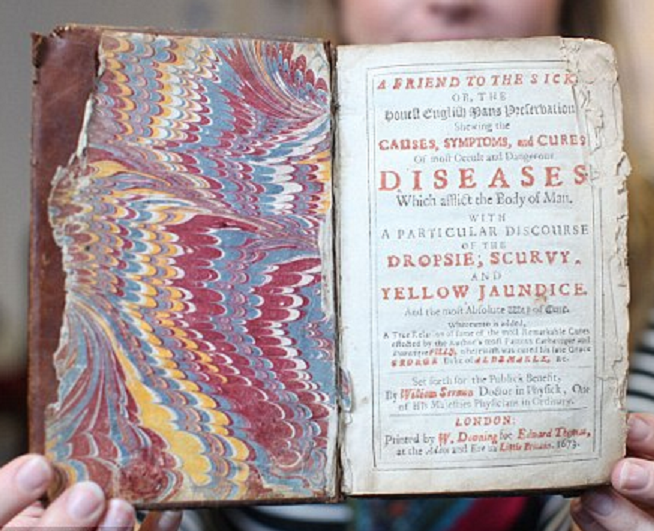
William Sermon’s remedies from 1673

October 15, 2013

A paperback version is available here but an ancient copy found during a house clearance in Derbyshire is to be auctioned reports the Daily Mail.

Sermon 1673 (via Daily Mail -Caters News Agency)

Sermon 1673 (via Daily Mail -Caters News Agency)

It was written in 1673 by Royal Physician, William Sermon, who was a physician of Charles II. ….. 

Dr Sermon, who first gained medical experience in the Army and went on to become a physician for King Charles II, died six years after his book was published at the age of 50.

He was described by 17th century historian Anthony Wood as ‘that forward, vain and conceited person.’

Dr Sermon was apparently a great believer in alcohol to combat illness.
For ‘pain in the head through cold’, he suggested: ‘Abstain from taking milk which is cool in operation and drink thin wine or such liquors.’

And for a patient suffering from toothache, Dr Sermon writes: ‘To make rotten teeth sound, take the juice of water cresses and white wine in equal measure, mix them together and rub the teeth and gums therewith.’ 

He adds that ‘the ashes of tobacco is of excellent use to cleanse the teeth and to make them white’.

sermon 1673 paperback

sermon 1673 paperback

A Friend to the Sick, Or, the Honest Englishman’s Preservation Shewing the Causes, Symptoms, and Cures of the Most Occult and Dangerous Diseases Which affect the body of Man (1673)

by William Sermon

ISBN-13: 9781240842629
Publisher: EEBO Editions, ProQuest
Publication date: 1/28/2011

Some of Sermon’s remedies might not pass muster today:

  • For the sickness bug… ‘Taking young swallows, burn them in their feathers, altogether in a new earthenware pot, covered very close, add thereto as much castor and beat them well together and put in to a glass vessel and let it stand three days after which distill it in a glass for patient to take.’
  • For earache… ‘Take a loaf made with one part of caraway seeds, and cut it through the middle and apply it to the ears.’
  • For  toothache… ‘Take the juice of water cresses and white wine in equal measure, mix them together and rub the teeth and gums therewith.’ 
  • To whiten teeth… ‘The ashes of tobacco is of excellent use to cleanse the teeth and to make them white’.’
  • For a headache… ‘Abstain from taking milk which is cool in operation and drink thin wine or such liquors.’

The book will be sold at Hansons Auctioneers in Derby on October 24 and is expected to sell for about £500.

Modern eugenics in all but name: Sex selection by abortion is legal in the UK

October 7, 2013

Eugenics is here even if nobody wants to acknowledge it for fear of being equated with the Nazis. Artificial selection and deselection rather than natural selection will eventually come to dominate the future evolution of humans. In India the abortion of female foetuses is sometimes an extension of female infanticide caused by the fear of the cost of female children and by the social status accorded by a male child. Sex selection by deselecting foetuses of unwanted genders is not just a feature of the developing world. Even in the UK, sex selection by abortion is legal.

The Telegraph:

Doctors have been informed that they can carry out sex-selective abortions in certain circumstances, the Director of Public Prosecutions has disclosed.

The British Medical Association (BMA) updated its guidance in the wake of an investigation by the Telegraph to advise doctors that “there may be circumstances, in which termination of pregnancy on grounds of fetal sex would be lawful”.

The disclosure is expected to spark fury among dozens of MPs who have criticised the medical establishment for seeking to redefine abortion laws.

Keir Starmer, the Director of Public Prosecutions, today publishes a detailed memorandum explaining the controversial decision by the Crown Prosecution Service not to prosecute two doctors who agreed to arrange illegal abortions based on the sex of an unborn baby.

Mr Starmer warns that current guidance for doctors needs to be urgently updated amid widespread concern over practices in clinics which do not appear to fall foul of the letter of the law.

The two doctors at the centre of the controversy were exposed by the Telegraph after being secretly filmed offering to abort baby girls, even though this is widely thought to be illegal.

The CPS decided it would not be in “the public interest” to prosecute the two doctors.

It has today emerged that in guidance published after The Daily Telegraph carried out the investigation, the BMA issued guidance for doctors.

It stated: “It is normally unethical to terminate a pregnancy on the grounds of fetal sex alone.”

However, it then continues: “The pregnant woman’s views about the effect of the sex of the fetus on her situation and on her existing children should nevertheless be carefully considered.”

“In some circumstances doctors may come to the conclusion that the effects are so severe as to provide legal and ethical justification for a termination,” concludes the guidance.

Letter from DPP

“…… The law does not, in terms, expressly prohibit gender-specific abortions; rather it prohibits any abortion carried out without two medical practitioners having formed a view, in good faith, that the health risks of continuing with a pregnancy outweigh those of termination. …..

….. The discretion afforded to doctors under the current law in assessing the risk to the mental or physical health of a patient is wide and, having consulted an experienced consultant in Obstetrics and Gynaecology, it appears that there is no generally accepted approach among the medical profession.”