Archive for the ‘Science’ Category

Chemistry Nobel awarded – for development of nanoscopy (super-resolved fluorescence microscopy)

October 8, 2014

UPDATE! Well the award has gone to the development of optical microscopy beyond the limits of what was thought possible.

The Royal Swedish Academy of Sciences has decided to award the Nobel Prize in Chemistry for 2014 to

Eric Betzig
Janelia Farm Research Campus, Howard Hughes Medical Institute, Ashburn, VA, USA,

Stefan W. Hell
Max Planck Institute for Biophysical Chemistry, Göttingen, and German Cancer Research Center, Heidelberg, Germany

and

William E. Moerner
Stanford University, Stanford, CA, USA

“for the development of super-resolved fluorescence microscopy”

From microscopy to nanoscopy.

Limits of microscopy – npl


All chemistry is physics of course. And so is medicine. Even if chemistry needs a separate language it is still the fundamental forces of physics which govern chemistry (and medicine and biology). But physics ultimately has to invoke “magic” to explain the fundamental forces of the physical world.

It is the turn of chemistry at the Nobels today.

While the predictions of organic LED’s being recognised are now probably ruled out after the blue LED recognition for physics yesterday, it could still be for discoveries which are leading to the creation of new materials.

Or , as I thought might happen last year, it could be Svante Pääbo and others who have developed the techniques for the extraction of DNA from ancient remains.

Carbon dioxide can disassociate to form oxygen under uv light in upper atmosphere

October 7, 2014

Oxygen in our atmosphere comes mainly from photosynthesis and not many multi-step abiotic processes producing oxygen from carbon dioxide are known.

But now work with a vacuum ultra violet laser (simulating uv light in the upper atmosphere) shows that the resulting excitation of carbon dioxide molecules can lead to the production of oxygen by disassociation. Vacuum ultra violet (200 – 10 nm; 6.20 – 124 eV) is strongly absorbed by atmospheric oxygen, but 150–200 nm wavelengths can propagate through nitrogen. This is particularly intriguing since it would be controlled by the oxygen concentration in the upper atmosphere. A lack of oxygen would lead to an increase of available vacuum uv available to trigger the disassociation of any carbon dioxide present. This could be a continuous and natural process where carbon dioxide, excited by solar ultra violet light in the upper atmosphere, is broken down to produce oxygen.

Perhaps this happens often enough and in sufficient volume to dampen CO2 concentration increase in the atmosphere.

UC Davis chemists have shown how ultraviolet light can split carbon dioxide to form oxygen in one step. Credit: Zhou Lu

UC Davis chemists have shown how ultraviolet light can split carbon dioxide to form oxygen in one step. Credit: Zhou Lu

Z. Lu, Y. C. Chang, Q.-Z. Yin, C. Y. Ng, W. M. Jackson. Evidence for direct molecular oxygen production in CO2 photodissociation. Science, 2014; 346 (6205): 61

DOI: 10.1126/science.1257156

AbstractPhotodissociation of carbon dioxide (CO2) has long been assumed to proceed exclusively to carbon monoxide (CO) and oxygen atom (O) primary products. However, recent theoretical calculations suggested that an exit channel to produce C + O2 should also be energetically accessible. Here we report the direct experimental evidence for the C + O2 channel in CO2 photodissociation near the energetic threshold of the C(3P) + O2(X3Σg) channel with a yield of 5 ± 2% using vacuum ultraviolet laser pump-probe spectroscopy and velocity-map imaging detection of the C(3PJ) product between 101.5 and 107.2 nanometers. Our results may have implications for nonbiological oxygen production in CO2-heavy atmospheres.

UC Davis Press Release:

UC Davis graduate student Zhou Lu, working with professors in the Departments of Chemistry and of Earth and Planetary Sciences, has shown that oxygen can be formed in one step by using a high energy vacuum ultraviolet laser to excite carbon dioxide. (The work is published Oct. 3 in the journal Science).

“Previously, people believed that the abiotic (no green plants involved) source of molecular oxygen is by CO2 + solar light — > CO + O, then O + O + M — > O2 + M (where M represents a third body carrying off the energy released in forming the oxygen bond),” Zhou said in an email. “Our results indicate that O2 can be formed by carbon dioxide dissociation in a one step process. The same process can be applied in other carbon dioxide dominated atmospheres such as Mars and Venus.”

Zhou used a vacuum ultraviolet laser to irradiate CO2 in the laboratory. Vacuum ultraviolet light is so-called because it has a wavelength below 200 nanometers and is typically absorbed by air. The experiments were performed by using a unique ion imaging apparatus developed at UC Davis.

Such one-step oxygen formation could be happening now as carbon dioxide increases in the region of the upper atmosphere, where high energy vacuum ultraviolet light from the Sun hits Earth or other planets. It is the first time that such a reaction has been shown in the laboratory. According to one of the scientists who reviewed the paper for Science, Zhou’s work means that models of the evolution of planetary atmospheres will now have to be adjusted to take this into account.

And the Medicine Nobel goes to …..O’Keefe, Moser and Moser

October 6, 2014

The Nobel Assembly at Karolinska Institutet has today decided to award The 2014 Nobel Prize in Physiology or Medicine with one half to John O´Keefe and the other half jointly to May‐Britt Moser and Edvard I. Moser for their discoveries of cells that constitute a positioning system in the brain

The winners were not among the Thomson-Reuters predictions.

Chillies will have to wait.

===============================================

I like chillies.

After all chillies are what distinguish humans from animals. As Paul Bloom, a Yale psychologist, puts it,

“Philosophers have often looked for the defining feature of humans — language, rationality, culture and so on. I’d stick with this: Man is the only animal that likes Tabasco sauce.”


And few chutneys are better than a Vengayaa chutney with onions and red chillies.

Which is as good a reason as any for suggesting that David Julius will be awarded the prize for his discovery of the genes that determine how we feel pain, heat and cold. He has studied chilies and how pain and heat are experienced.

I am not sure if he is the favourite but his name is tipped by the Svenska Dagbaldet this morning

Nobel prize announcements next week

October 4, 2014

It is that time of the year again.

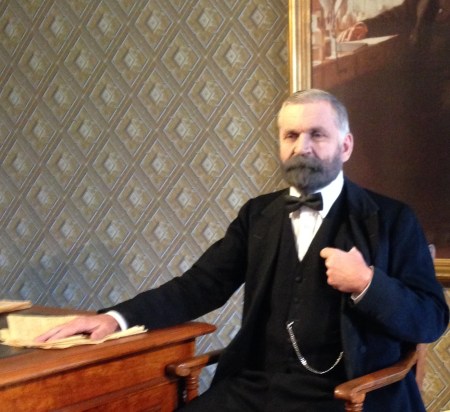
Alfred Nobel at his desk (photo kkp)

“Alfred Nobel” at his desk (photo kkp)

2014 Nobel Prize Announcements

Physiology or Medicine:
Monday 6 October, 11:30 a.m. CET at the earliest

Physics:
Tuesday 7 October, 11:45 a.m. CET at the earliest

Chemistry:
Wednesday 8 October, 11:45 a.m. CET at the earliest

Peace:
Friday 10 October, 11:00 a.m. CET

Economic Sciences:
Monday 13 October, 1:00 p.m. CET at the earliest

Literature:
The date will be set later

I only learned the story behind how the Nobel prizes came into being this summer – on a visit to Björkborn Manor in Karlskoga.

How Sohlman and 3 white Russian stallions ensured the establishment of the Nobel prizes

The Thomson-Reuters Nobel predictions are here.

No black holes, no Big Bang would leave the universe without a beginning

September 30, 2014

There is now a mathematical proof that black holes cannot exist. Event horizons and singularities then also cannot exist. Without singularities being possible there could have been no Big Bang. And without a Big Bang, the “age” of the universe has no meaning. Where does that leave time? and space-time?

(And without a Big Bang I will have to revisit my view of stasis since my own little speculation is that while time periods – Δt – can be conceived of, time itself – t- is nothing other than an axis of change connecting states of stasis.)

Black Hole star eater – National Geographic

If the mathematics holds up then not only science but also science fiction will have to look for new concepts of space and space-time and pathways to different universes and worm-holes and warp-speeds.

PhysOrg: … By merging two seemingly conflicting theories, Laura Mersini-Houghton, a physics professor at UNC-Chapel Hill in the College of Arts and Sciences, has proven, mathematically, that can never come into being in the first place. The work not only forces scientists to reimagine the fabric of space-time, but also rethink the origins of the universe. ……

The reason black holes are so bizarre is that it pits two fundamental theories of the universe against each other. Einstein’s theory of gravity predicts the formation of black holes but a fundamental law of quantum theory states that no information from the universe can ever disappear. Efforts to combine these two theories lead to mathematical nonsense, and became known as the information loss paradox.

In 1974, Stephen Hawking used quantum mechanics to show that black holes emit radiation. Since then, scientists have detected fingerprints in the cosmos that are consistent with this radiation, identifying an ever-increasing list of the universe’s black holes.

But now Mersini-Houghton describes an entirely new scenario. She and Hawking both agree that as a star collapses under its own gravity, it produces Hawking radiation. However, in her new work, Mersini-Houghton shows that by giving off this radiation, the star also sheds mass. So much so that as it shrinks it no longer has the density to become a black hole.

Before a black hole can form, the dying star swells one last time and then explodes. A singularity never forms and neither does an . The take home message of her work is clear: there is no such thing as a black hole.

….. Many physicists and astronomers believe that our originated from a singularity that began expanding with the Big Bang. However, if singularities do not exist, then physicists have to rethink their ideas of the Big Bang and whether it ever happened.

Spider Art

September 28, 2014

Spiders were thought to decorate their webs to stabilise them but this is not accepted any more, even though there is no consensus on the reason for the spiders’ art.

Perhaps it is just the spiders’ aesthetic sense.

spider decoration

image from arkinspace.com

A whole gallery of spider art is at Ark in Space.

The structures are known as web decorations but the more scientific name for one is stabilimentum.  In the plural they are known as stabilimenta and the name came about because of a mistake.  When first studied the decorations were believed to be used in stabilizing the web of a spider – and there you have the term stabilimentum – get it?  However, this theory is generally dismissed these days – although it is obvious to one and all why early scientists may have thought this. …..

…. The truth be told, it is quite likely that the purpose and function of stabilimenta are manifold.  It has been discovered that they evolved independently perhaps as many as ten times.  Some spiders make their decorations purely out of their silk.  Other spiders will make them from this and the remains of their egg sacs, not to mention any detritus that just happens to be close to their webs.  The fact that they evolved independently does seem to point towards different functionality. …… 

Some think that the web decorations afford the spider and extra edge in terms of self protection.  It may make spiders appear larger, as already seen, or make them more camouflaged.  It may be the reverse of camouflage – by making the spider more visible then the web itself will be seen by animals like birds that are then less likely to inadvertently damage the web, partially wrecking or even destroying the painstakingly built structure.  So it could well be a kind of ‘stop sign’ to other animals. …… One more modern idea posited is that the stabilimenta are used in order to attract more prey to the web.  You have all seen insects at night flying towards lights?  Ultraviolet light is often used to attract insects and then there is a sharp noise of insect flesh impacting and exploding under the influence of an electric current.  It is now thought that the web decorations reflect ultraviolet light and this makes them attractive to a large number of insect species.  Unwittingly they fly to their deaths.

Science by Press Release: Overhyped “gravity waves” were just dust

September 27, 2014

In March this year there was a great deal of publicity about the detection of gravity waves after the Big Bang. There were Press Releases and promotional videos and blanket coverage in the media. There was talk about Nobel prizes. Not unlike the massive publicity mounted by CERN about the discovery of (or more accurately the potential discovery of a possible indication of a particle not inconsistent with) the Higgs boson particle. After that non-discovery also there was talk about the CERN team being awarded a Nobel Prize! Even a member of the Nobel Committee was taken in by the publicity and fought for CERN the organisation, to be awarded  the physics prize. Most of the campaign in favour of CERN was initiated and orchestrated by the PR department at CERN and the CERN fan-club.

Now it turns out that the gravity waves may well have been cosmic dust.

BBCOne of the biggest scientific claims of the year has received another set-back.

In March, the US BICEP team said it had found a pattern on the sky left by the rapid expansion of space just fractions of a second after the Big Bang. The astonishing assertion was countered quickly by others who thought the group may have underestimated the confounding effects of dust in our own galaxy.

That explanation has now been boosted by a new analysis from the European Space Agency’s (Esa) Planck satelliteIn a paper published on the arXiv pre-print server, Planck’s researchers find that the part of the sky being observed by the BICEP team contained significantly more dust than it had assumed.

BIG Science of this kind needs BIG FUNDS. BIG FUNDS need BIG CLAIMS. A BIG CLAIM followed by a retraction is seen to be better – from a publicity perspective – than an uninteresting claim or no claim at all. The people who control the BIG FUND purse strings are generally governments in the form of bureaucrats and administrators and politicians. They don’t usually read the scientific papers themselves. But they do read the Press Releases and take note of the number of column-inches of newspaper articles that are generated. Promotional videos with many hits on You-Tube are also taken note of.

This is science by Press Release. Scientific quality is now judged by the amount of publicity generated.

I am not competent to judge the technical content of these “discoveries” and therefore have to rely on others who are. And so I take note of what Sean Carroll, a CalTech physicist writes on his blog:

Ever since we all heard the exciting news that the BICEP2 experiment had detected “B-mode” polarization in the cosmic microwave background — just the kind we would expect to be produced by cosmic inflation at a high energy scale — the scientific community has been waiting on pins and needles for some kind of independent confirmation, so that we could stop adding “if it holds up” every time we waxed enthusiastic about the result. And we all knew that there was just such an independent check looming, from the Planck satellite. The need for some kind of check became especially pressing when some cosmologists made a good case that the BICEP2 signal may very well have been dust in our galaxy, rather than gravitational waves from inflation (Mortonson and Seljak; Flauger, Hill, and Spergel).

Now some initial results from Planck are in … and it doesn’t look good for gravitational waves.

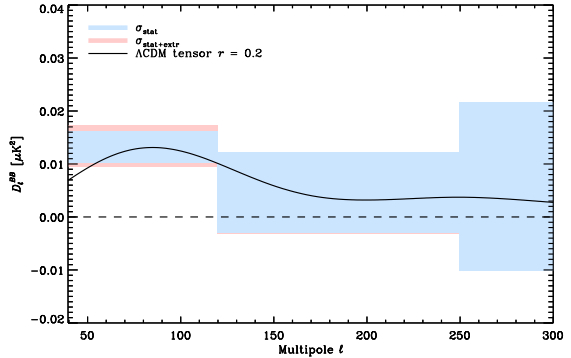
Planck intermediate results. XXX. The angular power spectrum of polarized dust emission at intermediate and high Galactic latitudes
Planck Collaboration: R. Adam, et al.

planck-bmode-spectrum

The light-blue rectangles are what Planck actually sees and attributes to dust. The black line is the theoretical prediction for what you would see from gravitational waves with the amplitude claimed by BICEP2. As you see, they match very well. That is: the BICEP2 signal is apparently well-explained by dust.

….. Planck has observed the whole sky, including the BICEP2 region, although not in precisely the same wavelengths. With a bit of extrapolation, however, they can use their data to estimate how big a signal should be generated by dust in our galaxy. The result fits very well with what BICEP2 actually measured. It’s not completely definitive — the Planck paper stresses over and over the need to do more analysis, especially in collaboration with the BICEP2 team — but the simplest interpretation is that BICEP2’s B-modes were caused by local contamination, not by early-universe inflation. ….. 

“Science by consensus” and “science by press release” and even “science by press release about the consensus” have infected much of what passes for science today.

MOM’s first image from Mars

September 25, 2014

ISRO has released the first image taken by MOM on Mars.

Taken from a height of 7300 km; with 376 m spatial resolution.

Shades of pink and brown, but I am not sure why the lighter shades around each crater reminds me of gas bubbling through sand. The “streaks” in the bottom right quadrant are suggestive of “wind effects” in a sea of sand.


MOM orbit exactly as planned with a flawless MOI

September 24, 2014

ISRO can feel very satisfied. The MOI was flawless. The tracking indicates that the MOM has achieved an orbit of 421.7 km / 76993.6 km compared to the planned 423 km / 80,000 km. Not bad after a 10 month journey of some 680 million km. The inclination of orbit with respect to the equatorial plane of Mars is 150º and exactly as planned. 

The first colour pictures of Mars from MOM are expected within a day or two.

Now for a manned, fast, free-return, fly-by of Mars in 2018?

ISRO: India’s Mars Orbiter Spacecraft successfully entered into an orbit around planet Mars today morning (September 24, 2014) by firing its 440 Newton Liquid Apogee Motor (LAM) along with eight smaller liquid engines. This Liquid Engines firing operation which began at 07:17:32 Hrs IST lasted for 1388.67 seconds which changed the velocity of the spacecraft by 1099 metre/sec. With this operation, the spacecraft entered into an elliptical orbit around Mars. 

The events related to Mars Orbit Insertion progressed satisfactorily and the spacecraft performance was normal. The Spacecraft is now circling Mars in an orbit whose nearest point to Mars (periapsis) is at 421.7 km and farthest point (apoapsis) at 76,993.6 km. The inclination of orbit with respect to the equatorial plane of Mars is 150 degree, as intended. In this orbit, the spacecraft takes 72 hours 51 minutes 51 seconds to go round the Mars once.

Spaceflight101Launched back on November 5, 2013 atop a Polar Satellite Launch Vehicle, the Mars Orbiter was constrained by the performance of India’s workhorse launcher that required the spacecraft to take the scenic route – first entering an elliptical Earth orbit that the spacecraft raised by making six engine burns before firing its main engine, the Liquid Apogee Motor, a seventh time to depart Earth and enter a path to Mars on November 30. ….. 

The Mars Orbit Insertion Burn had a planned change in velocity of 1,098.7 meters per second with an anticipated burn time of 24 minutes and 14 seconds. However, engine shutdown was triggered by the navigation system when accelerometers sensed that the proper delta-v was achieved, dynamically adjusting for actual engine performance by extending of shortening the burn slightly. 

For MOM, the sun came up 19.5 minutes into its burn, but Earth was not coming into view until three minutes after the scheduled end of the Mars Orbit Insertion burn. The spacecraft was programmed to start the re-orientation back to its comm attitude one minute after shutdown, followed five minutes later by the re-activation of the communications system when MOM was visible from Earth again.
The Mars Orbit Insertion Burn had a planned change in velocity of 1,098.7 meters per second with an anticipated burn time of 24 minutes and 14 seconds. However, engine shutdown was triggered by the navigation system when accelerometers sensed that the proper delta-v was achieved, dynamically adjusting for actual engine performance by extending of shortening the burn slightly. 
For MOM, the sun came up 19.5 minutes into its burn, but Earth was not coming into view until three minutes after the scheduled end of the Mars Orbit Insertion burn. The spacecraft was programmed to start the re-orientation back to its comm attitude one minute after shutdown, followed five minutes later by the re-activation of the communications system when MOM was visible from Earth again.

MOM successfully enters Mars orbit – first time ever on a maiden Mars mission

September 24, 2014

In what appears to have been a remarkably flawless and precise operation ISRO’s MOM has entered Mars orbit. It is the first time that a country has succeeded to get a spacecraft to enter Martian orbit on its maiden attempt.

“We have the signal.

1099 m/s.

Expected – 1098.7 m/s”

(The Mars Orbit Insertion burn had a planned duration of 24 minutes and 14 seconds, slowing the spacecraft down by 1,098.7 meters per second to be captured in an elliptical orbit around Mars.)

The operations took place while the spacecraft was behind Mars. It seemed an endless wait for it to reappear. It was then a seemingly endless 12.5 minutes from when telemetry was reactivated and the signals were received confirming that the maneuvers had been successful.

The precise orbit achieved now awaits further tracking information.

Foto

Prime Minister Narendra Modi arrived at ISRO in time to witness the critical and historical phases of the orbit insertion procedures (and he is to be highly commended for preferring real things to the meaningless, pointless and futile climate change talkshop at the UN).

He was more than a little pleased.

Narendra Modi at ISRO after MOM achieved orbit — screen grab by The Hindu

A major step not just for India’s confidence in its technological capabilities but also for its geopolitical positioning against China.

BBC: If all goes well and the satellite orbits the Red Planet, India’s space agency will become the fourth in the world after those of the United States, Russia and Europe to undertake a successful Mars mission. …..

…… After India’s successful unmanned Chandrayaan mission to the Moon in 2008 that brought back the first clinching evidence of the presence of water there, the Mars mission, according to K Radhakrishnan, chairman of the Indian Space Research Organisation (Isro), is a “natural progression”. …….

India sees the Mars mission as an opportunity to beat its regional rival China in reaching the planet, especially after a Russian mission carrying the first Chinese satellite to Mars failed in November 2011. Japan also failed in a similar effort in 1998.

China has beaten India in space in almost every aspect so far: it has rockets that can lift four times more weight than India’s, and in 2003, successfully launched its first human space flight which India has not yet embarked on. China launched its maiden mission to the Moon in 2007, ahead of India.

So if India’s mission succeeds, it will have something to feel proud about.