Archive for the ‘Technology’ Category

“Critical safety issue” with Trent 900 could lead to “catastrophic failure”: Qantas to make further inspections

December 2, 2010

The Australian Transport Safety Bureau has determined that there is a “critical safety issue” with the Rolls Royce Trent 900 used on the Qantas A380 aircraft which could lead to a “catastrophic failure”. Qantas has been ordered to carry out further inspections.

AFP reports:

The Australian Transport Safety Bureau said a misaligned component had thinned the wall of an oil pipe in the exploded engine, causing “fatigue cracking” that prompted leakage and a fire “central to the engine failure”. “This condition could lead to an elevated risk of fatigue crack initiation and growth, oil leakage and potential catastrophic engine failure from a resulting oil fire,” the ATSB said, noting it was “understood to be related to the manufacturing process.”

The Bureau issued a directive urging Rolls-Royce to “address the safety issue and take actions necessary to ensure the safety of flight operations in transport aircraft equipped with Rolls-Royce Trent 900 series engines.” Qantas said it would immediately conduct further engine investigations as a result of the findings, but stressed it was just a precautionary measure and “there is no immediate risk to flight safety.”

“Qantas currently has two A380 aircraft in operational service, following the grounding of the fleet on 4 November. Both A380 aircraft will be inspected at the Qantas Jet Base in Sydney,” the airline said. “Inspections will commence this afternoon.”

The flagship carrier said it would determine whether further action would need to be taken after inspections were complete and it had consulted both Rolls-Royce and regulators. “Qantas does not anticipate at this stage that the inspections will have an impact on international services. However contingency arrangements will be in place, if needed,” it said.

The findings come just five days after Qantas resumed A380 flights, though the carrier has barred the superjumbo from trans-Pacific trips to Los Angeles due to the extra engine thrust required. It had grounded all six of its Airbus superjumbos after the November 4 blast over the Indonesian island of Batam, which forced an A380 to return to Singapore airport trailing smoke.

Checks revealed problems with 16 of the total 24 Rolls-Royce Trent 900 engines powering Qantas’s A380s — four per plane — meaning the turbines would have to be replaced or modified.

Qantas chief Alan Joyce on Saturday said he was “100 percent comfortable” with the A380s’ operation.

As reported by the WSJ, Qantas has already said that they will be claiming compensation from Rolls Royce.

A380 resumes flying but Qantas has another engine failure on a B747

November 27, 2010

http://www.news.com.au/travel/news/grounded-jet-mars-return-of-airbus-a380/story-e6frfq80-1225962092705#ixzz16VrjhJ7P

As Qantas staged a major PR exercise to mark the return of its A380 fleet to service, another plane from Sydney, a 747, was grounded last night with engine failure.

The flight, QF1 from Sydney to London, was due to leave at 6.05pm – but passengers were pulled off the plane after a loud noise emanated from the engine while they were taxiing towards the runway. The flight was later cancelled.

Earlier, passengers watched as Qantas CEO Alan Joyce staged a media conference to assure the public the company was now “100 per cent confident” A380 planes were safe. But while passengers on the A380 flight to London got away on time, passengers on board flight QF1 to London via Bangkok were pulled off their flight because of an engine fault.

The passengers disembarked about 7pm and were given meal vouchers, while engineers examined the engine. But at 9pm they were told the flight was cancelled. It was expected to leave at 9am today.A passenger on the plane told The Sunday Telegraph he could hear the engine die. “We were on the tarmac and then the captain said there was a mechanical problem; he said there was an electrical fault and that every time they tried to start the engine up it cut out,” he said. “We sat for 45 minutes and then they took us off the plane.”

The captain of yesterday’s flight, David Evans, who was part of the cockpit crew onboard flight QF32, said as “a precaution” Qantas had decided to use “reduced thrust” on the engines for the initial flights.

Boeing 787 Dreamliner further delayed to fix electrical problems

November 25, 2010
2nd Boeing 787 First Flight

2nd Boeing 787 first flight: Image via Wikipedia

Flightblogger reports:

In the 15 days since ZA002, Boeing’s second of six 787 flight test aircraft, suffered a fire in its aft electrical equipment bay, forcing a fleet-wide halt in certification testing, the airframer is days, if not hours, away from releasing its findings of its investigation and disclosing the impact to the aircraft’s first delivery, say company and industry sources.

An additional delay to the 787’s entry into service with All Nippon Airways is now a virtual certainty, the length of that delay, however, is yet unknown.
While some analysts have suggested the 787’s first delivery could slip to 2012, an additional delay of more than nine months, Boeing’s previous six delays have never shifted the schedule more than six months at a time. A six month slide beyond today’s February 2011 plan would place handover to ANA around August of 2011, more than three years after its original target.

The fire, which happened while on approach to Laredo, Texas, and its root cause, revealed an Achillies heel in the 787’s electrical system that must be resolved before the Dreamliner can enter service.

Boeing says its first 787 delivery will slide due to software and minor hardware changes to the electrical system, an assessment the company says will be completed within “the next few weeks.”

The airframer needs to implement changes to the software that manages and protect power distribution on the aircraft, as well as a minor hardware change to the P100 distribution panel to prevent foreign object debris (FOD) ingestion.

“We have successfully simulated key aspects of the on-board event in our laboratory and are moving forward with developing design fixes,” says 787 vice president and general manager Scott Fancher

Boeing says foreign debris “most likely” caused the November 9 fire aboard ZA002 that has halted 787 certification operations.

Qantas to fly one A380 again on Saturday, Rolls Royce may limit Trent 900 thrust

November 23, 2010

Qantas will have one A380 ready to fly again on Saturday 27th, 23 days after the engine explosion on QF32. Bloomberg reports:

Chief Executive Officer Alan Joyce will be on the first flight, which will go to London from Sydney via Singapore, he said at a media briefing today. The carrier will conduct further inspections with Airbus, regulators and engine-maker Rolls-Royce Group Plc before resuming other routes, it said in a statement.

The carrier will have four 450-seat A380s in service before Dec. 25, including two new ones, Joyce said. The airline is also due to receive two superjumbos next year. Joyce said it is too early to estimate the cost of the disruption caused by grounding the A380s or to comment on whether the carrier will seek compensation.

The Financial Times reports that Rolls Royce are likely to restrict the operating regime of the Trent 900 by limiting the maximum thrust that can be used,

Reports in Australia said Rolls-Royce was about to impose new guidelines on users of its Trent 900 engines stipulating that they cannot be operated at above 70,000 pounds of thrust.

Downgrading thrust to 70,000 pounds would knock out Qantas’s A380 services from Sydney and Melbourne to Los Angeles, a worrying development for the Australian airline that dominates the Pacific route.

“72,000 pounds of thrust is needed for the Pacific route,” a Qantas spokesman said. The airline would not comment on reports that at 70,000 pounds of thrust, Qantas A380s would be forced to fly to Los Angeles less than half full. It said the voluntary suspension on the Pacific route remains “until further operational experience is gained or possible additional changes are made to engines”.

“Pilots still have access to maximum certified thrust [of 72,000 pounds] if they require it during flight. It is not a manufacturer’s directive,” the company added.

Rolls Royce shares, time to sell? Trent 900 hit will last at least 18 months

November 22, 2010

In the first half of 2010 Rolls Royce had revenues of £5.421 billion with a PBT of £465 million (8.6%) of revenues. Cash position was strong with net cash for the period at £915 million. But it looks less impressive considering the order backlog of £58.4 billion. How much of the net cash was due to order down-payments is not clear. Orders received during the period were £5.9 billion (and backlog was virtually unchanged) and this would have provided net cash of around £550 million. So operating cash flow (excluding financial posts) was probably only £350 million.

The Trent 900 debacle will probably eat up at least £200 million – and perhaps more – over the next 12 -18 months. The immediate effect will also be the loss of some expected orders and 22 A380s – bought by Qatar Airways, Kingfisher, Etihad and Air Austral – are yet to decide whether to use the Trent 900 or the rival GP7200 made by the GE / Pratt & Whitney Alliance. Any loss of market share will be difficult to recover. To sell the 100 additional engines that will be needed to recover the costs of this fix will take a few years. Even though all the costs will not be incurred in this quarter, some significant provision will have to be made this year (and it will be a real warning sign if such provision is not made).

The financial and technological position of Rolls Royce is strong and they should be able to make the fix and weather the storm. But profits will be hit hard for at least the next 12 months and perhaps even longer if Trent 900 sales suffer or if the Trent 1000 is further delayed.

Until the Trent 1000 is established in the Dreamliner (which depends on the Boeing 787 coming into service through next year), Rolls Royce share value is capped and with a big downside. It is perhaps time to sell and it could be time to re-enter in about 12 months if some of the major uncertainties are resolved by then.

ROLLS-ROYCE Share Graph

ROLLS-ROYCE Share Graph: graphs.lse.co.uk


What did Rolls Royce know and when?

November 20, 2010

Rolls Royce have been conspicuously silent but it is now emerging from the airlines that Rolls Royce knew something was amiss with the older versions of the Trent 900 long before the engine failure on QF32 on November 4th. The indications are that they had serious doubts about the unmodified engines by May this year – and perhaps even earlier.

I posted my assessments about this on November 14th and 15th.

Did Rolls Royce know about the risk for a Trent 900 failure before the Qantas accident?

Problem with Trent 900 was known before accident and raises ethical questions

From an AP report via Yahoo Finance

Rolls-Royce modified a problematic section on new models of its engine for the world’s largest jetliner months before one caught fire and blew apart over Indonesia, a Lufthansa spokesman said Thursday.

The chief executive of Qantas, meanwhile, said Rolls-Royce had made modifications to the Trent 900 engine without telling the airline or Airbus, which makes the A380 superjumbo.

The officials’ remarks were the strongest indication yet that Rolls-Royce had addressed a defect in new models of the engine while allowing Airbus A380 superjumbos to continue flying with unmodified older models.

Lufthansa’s first A380, delivered by Airbus on May 19, had three newer versions of the Trent 900 engine and one older version, airline spokesman Thomas Jachnow said.

“When we got our first aircraft it was curious that one was from an older one and three were totally new from the production line,” Jachnow said. “I think this is more or less the cusp where the old to new happened.”

The Daily Telegraph carries a similar story:

The two airlines said Rolls had not informed them about the changes to the Trent 900, although sources close to the industry played down the modifications as “continuous improvements” and said reports that the changes related to the part that caused the oil leak on the Qantas A380 were “plain wrong”.

Rolls shares fell 11½, or 2pc, to 592p.

Investors are wary that the incident could cost Rolls customers. It is understood there are 22 A380s – bought by Qatar Airways, Kingfisher, Etihad and Air Austral – which are yet to decide whether to use the Trent 900 or a rival made by GE and Pratt & Whitney.

According to Alan Joyce, Qantas chief executive, up to 40 engines could be replaced. Mr Joyce also claimed that Rolls had already been changing the engine. “Rolls-Royce have gone and modified certain parts of this engine,” he stated. “If this was significant and was known to be significant, we would have liked to have known about that. We and Airbus weren’t aware of it. But it depends on what the purpose of modifications were for. It doesn’t look like it’s a significant modification, but it is a modification that has an impact on how the engines are performing.”

A Lufthansa spokesman said it had noticed differences in newer versions of the Trent 900 it had been sent.

In addition to all their technical and logistic issues, Rolls Royce now need to urgently address their loss of credibility and provide detailed answers to:

What did Rolls Royce know and when did they know it?


Rolls Royce will face costs of over 300 million $ to fix the Trent 900 problems

November 19, 2010

Rolls Royce now faces direct costs for replacement of 40 Trent 900 engines, compensation claims from Airbus and from the airlines involved and lost opportunity costs as the Trent 900 inevitably loses market share to the General Electric / Pratt & Whitney Alliance GP 7200 engine. These could add up to around 300 million $ for fixing the Trent 900 problems and that is a best case scenario which assumes that they have not been negligent in knowingly supplying unfit engines. The cost of the consequent loss of market share cannot be easily quantified.

Airbus has already signalled that it is preparing its compensation claims for the additional costs incurred by diverting new engines from the Airbus production line to the replacement of faulty engines for Qantas, Singapore Airlines and Lufthansa. Any consequent delays to the aircraft under production at Airbus will no doubt lead to further penalties for Rolls Royce. The airlines are also, I am sure, preparing their compensation claims. Qantas is said to be losing one million dollars for every day without its A380’s. The fleet has been grounded for 15 days so far and it seems likely that this may last another 2 or 3 weeks and maybe for the rest of the 2010 calendar year. Qantas has already prepared its summer schedules based on no A380’s being available. Singapore Airlines has restarted its A380 flights.

In most supply contracts the consequential business losses at the airlines would not normally accrue to Rolls Royce but if it can be shown that the faulty engines delivered by Rolls Royce were “not fit for service” or – even more damagingly – that Rolls Royce were aware of the faults when the engines were delivered then Rolls Royce could be liable for massive damages and even for criminal negligence. In fact it would be comparable to issuing a cheque with no money in a bank account which could be construed as criminal negligence and fraud. Certainly it seems that Rolls Royce has known for some time that some of the engines delivered were “not fit for service” and it is highly unlikely that they could completely escape paying some compensation to the airlines. If the method of operation or maintenance by Qantas could be shown to be a contributory factor then Rolls Royce would have had some possibility of resisting the claim and of mitigating the penalties. But if the engines were “unfit for service” to begin with, then it even becomes possible for Airbus and the airlines to make claims for “loss of reputation” in addition to claims for loss of business. There is no viable defence at all if Rolls Royce knowingly supplied unfit engines.

A Trent 900 engine has a price of about 30 million $ and a complete A380 sells for about 320 million $. The direct cost for the engine rectifications for 40 engines is likely to be around 100 million dollars and this could easily increase to 300 or 400 million dollars with the compensation claims mainly from Airbus and Qantas. The Singapore Airlines and Lufthansa claims for compensation will not be small but will be significantly lower than the claims from Qantas. But if Rolls Royce has been negligent- whether criminally or not – then all bets are off and I think costs could escalate to be of the order of one billion dollars.

While the direct costs and compensation – once settled – can be quantified, the effects of loss of market share is potentially even more damaging but much more difficult to quantify. Since there are only 2 engine suppliers I would estimate that Rolls Royce will lose at least 5% market share to its rival as a consequence of this incident.

From my previous knowledge of the costs of fixing problems with land based gas turbines (more than 1 billion $ each for General Electric with their F-class Frame 7 and Frame 9 machines and for Alstom  and Siemens with their versions of F-class machines), I would be looking for Rolls Royce to provide – as a matter of prudence – for at least 200 million £ (300 million $) during this quarter. Rolls Royce will need to sell around 100 new engines just to recover this cost.

From an investor perspective I find the lack of communication from Rolls Royce inexplicable and suggestive that there has in fact been some negligence.

Rolls Royce kept Airbus and Qantas in the dark about two key engine modifications

November 18, 2010

The CEO of Qantas has revealed that when the Trent 900 engine failed on QF32, shrapnel from the exploding engine narrowly missed the wing fuel tank which could have caused the plane to explode. The Sydney Morning Herald:

SHRAPNEL from the engine explosion on Qantas QF32 severed a fuel pipe and narrowly missed the wing’s fuel tank, according to official preliminary reports. The chief executive, Alan Joyce, also confirmed yesterday that as many as 40 Rolls-Royce Trent 900 engines fitted to A380 superjumbos worldwide might have to be replaced.

The reports, seen by the Herald, of the damage incurred on November 4 reveal the extent to which metal components tore through the wing. The debris severed wiring looms, chopping a main fuel pipe, puncturing structural spars and ribs and punching through wing surface panels.

Qantas was ”very, very lucky” that thousands of litres of highly flammable jet fuel in the wings did not ignite from the ruptured fuel pipe or from a spark from severed wiring, said Adrian Mouritz, the head of aerospace and aviation engineering at RMIT University. ”If that fuel ignited, that aircraft would have exploded,” he said.

Qantas and Rolls-Royce are still ”days away” from identifying which engines might have to be replaced. The engine maker had kept the airline and Airbus in the dark about two series of production changes to the engine’s internals.

”What Rolls-Royce have done is that they have modified certain parts of this engine. We and Airbus were not aware of it,” Mr Joyce said.

Further extracts from the official reports and pictures of the damage from

http://blogs.crikey.com.au/planetalking/2010/11/17/the-anatomy-of-the-airbus-a380-qf32-near-disaster/?utm_source=feedburner&utm_medium=feed&utm_campaign=Feed:+CrikeyBlogs+(Crikey+Blogs)&utm_content=Google+Feedfetcher

damage 01

Damage to the wing of QF32


The questions for Rolls Royce are multiplying and their lack of communications is astounding. Not only, it seems, did Rolls Royce know about the risks of engine failure before the Trent 900 exploded on QF32, but they have also modified the engine and quietly started introducing the modifications without Qantas and Airbus being aware of the significance or the risks with the unmodified engines!!!!!

https://ktwop.wordpress.com/2010/11/14/did-rolls-royce-know-the-risk-about-the-trent-900-engine-fault-before-the-qantas-failure/

https://ktwop.wordpress.com/2010/11/15/problem-with-trent-900-was-known-before-accident-and-raises-ethical-questions/

Spaceport America gets ready for first commercial passengers to space

November 18, 2010
Simplistic map of Sierra County, New Mexico, i...

Location of Spaceport America: image via Wikipedia

Reuters reports:

The New Mexico Spaceport Authority, which plans to start launching citizen astronauts on suborbital flights within 18 months, has begun soliciting contract bids from local businesses for day-to-day operations of the facility.

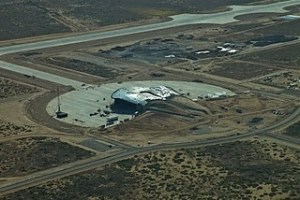
Construction of the world’s first commercial passenger space terminal, dubbed Spaceport America, is slated to be finished next year near the town of Truth or Consequences in southern New Mexico. The 2-mile-long main runway was completed in October.

Spaceport America Wednesday, 10 November 2010 04:09 :image spaceportamerica.com

Two other major structures nearing completion at the nearly $200 million facility are the air-fire rescue facility and a 110,000-square-foot hangar, authority spokesman David Wilson said.

To date, 380 wannabe space cowboys have each plunked down $200,000 each to reserve a seat aboard a Virgin Galactic six-passenger spacecraft for a 2-1/2-hour suborbital flight some 70 miles above the Earth, Wilson said.

Under a 20-year lease with the state, Richard Branson’s firm is Spaceport America’s anchor tenant and principal spaceliner, paying lease charges of up to $200 million, plus user fees to operate their own aircraft and to contract with other aerospace companies.

The site has been providing commercial launch services for the aerospace industry since 2006 and is expected to be fully operational by mid-2011. But Virgin Galactic expects to take another year to begin its private passenger service, once its test-flight program is complete.

The authority’s executive director, Rick Homans, this week issued a call for businesses to submit proposals for three major areas of operation of the spaceport.

They include general services, such as maintenance; protective services for site security, safety and environment health management; and technical services, including airfield and launch support, airspace management and flight safety engineering.

Artists impression of Virgin Galactic: image forums.finalgear.com

Virgin Galactic’s VSS Enterprise made its solo flight in October.

Rolls Royce must replace 40 of 80 Trent 900 engines deployed

November 18, 2010

I posted a few days ago that Rolls Royce would need to change out about 40 of the Trent 900 engines on the A380’s in operation with Qantas, Singapore Airlines and Lufthansa.

Now -via Qantas and The Press Association – this number has been confirmed by Rolls Royce:

Up to half of the Rolls-Royce engines of the type which disintegrated on an Airbus superjumbo this month may need to be replaced by the three carriers in Australia, Singapore and Germany, Qantas’s chief executive has said.

Australia’s Qantas, Singapore Airlines and Germany’s Lufthansa fly A380s powered by four giant Rolls-Royce Trent 900 engines, with a total of 80 engines on 20 planes.

Qantas chief Alan Joyce said that Rolls-Royce had indicated that up to 40 of them may need to be replaced.

“Rolls-Royce are still working through the criteria for which engines need to be changed,” he said on the sidelines of an event in Sydney unrelated to the A380 incident. He said that 14 of the 24 engines on Qantas planes may have to be replaced.

Whether Rolls Royce knew about the engine fault and the consequent risk prior to the accident on QF32 remains unanswered and whether the European Regulator (EASA) relaxed its inspection frequency Directive in response to Rolls Royce representations also remains unanswered.