New moon gives higher blood pressure in children

April 24, 2015

Once upon a time, Astrology was the only science. It then became pseudo-science as the age of rational science took off. In the modern world it is considered a belief system and the stuff of charlatans. Tests of astrological predictions have shown that their forecasts are no better than would be expected by chance (here and here). It is generally considered absurd that distant celestial objects can have any impact on human life or behaviour.

But in recent times it has become clear that the near celestial objects (the Sun, the moon and even Jupiter) do interact with the earth sufficiently to give correlations between their relative motion and some aspects of human life and behaviour. Our internal body clocks not only reflect the 24 hour cycle of the earth’s rotation, but even have an “annual” component seemingly related to the earth’s period of rotation around the Sun and may even have a lunar monthly component. The season of birth has been linked to personality and that begins to sound like astrology. There are now also correlations showing other possible connections to the period of rotation of the moon around the earth:

That the moon may have effects on the results of cardiac surgery is apparently not just rubbish.

It seems that the lunar nodal cycle (18.6 years) is also reflected in happenings on earth:

The lunar nodal cycle does seem to correlate with happenings on Earth. The mechanisms leading to most lunar effects on tides and sedimentation and geologic accumulations and tidal flows and sea surface temperatures and climate can be put down to some interplay of gravitational forces.

It is not such a long stretch to think that the gravitational effects of the larger planets may have some quite unlooked for effects on life on Earth.

The Sun and the moon do affect us it seems  – even if not the stars. And now it is reported from Denmark that “the lunar cycle seems to have an effect on children’s health and activity levels, but scientists are at a loss when it comes to finding an explanation for this”. The effects are small but clearly significant.

Nordic Science reports:

Just a few decades ago, it was still widely believed that the full moon held special powers and could make people act strange or even go mad. This has long since been dismissed as unscientific superstition. However, it might be time to revise that notion.

A new study, published in the scientific journal Clinical Obesity, shows that the lunar cycle is associated with a negative effect on children’s levels of physical activity, blood pressure, and blood sugar levels.

“It’s a very mysterious finding.  We actually have no idea what the reason could be for these changes in children’s behaviour during the course of the lunar cycle. It’s the first time anyone has studied children’s health in relation to the lunar cycle,” says Mads Fiil Hjorth, postdoc at the Department of Nutrition, Exercise, and Sports at the University of Copenhagen.

“Perhaps the explanation is hidden far back in evolutionary history, when moonlight could influence chances of survival and reproduction among animals and small organisms,” he says.

Hjorth is the main author of the new research article that has been written in collaboration with a team of scientists from the research centre OPUS at University of Copenhagen.

During the study, the scientists collected data from 795 children aged 8-11, taking blood samples and measuring blood pressure, sleep, and activity levels. The information was gathered over the course of nine lunar cycles – i.e. months – and then analysed.

The results revealed that on the days around a full moon the children were on average 3.2 minutes less moderately to very physically active than at new moon; equivalent to roughly 8 percent lower activity levels.

Moreover, the children’s blood pressure was 0.8 mmHg higher – equivalent to an increase of roughly 1 percent – and had an average of 0.12 mmol/L higher blood sugar levels – equivalent to an increase of just over 2 percent. Finally, the children slept 4.1 minutes more on average at full moon. ……

…….. Sleep scientist Birgitte Kornum, PhD and senior researcher at the Molecular Sleep Laboratory at Glostrup Hospital’s Research Institute, is optimistic about the results.

“This is very exciting. At this stage there is good evidence to suggest that we all have a monthly cycle inside that influences our sleep and perhaps other areas, too,” she says.

“The question is whether it’s a coincidence that the cycle follows the amount of moonlight that shines down on us, or whether the human cycle is an innate part of our biology, like the female menstrual cycle.” ….. 

Hardly any Indian Hindu wedding today takes place without first checking with astrologers that the couples’ horoscopes are not in conflict and that the day and time of the wedding is auspicious. The astrologers may well be charlatans and their various calculations are clearly just so much mumbo-jumbo, but I would not be so quick to dismiss the social and psychological importance of getting their “stamp of approval”. Astrology is still just a system of belief and astrological approval then has the importance of any religious rite.
Spring and the elk are feisty

April 23, 2015

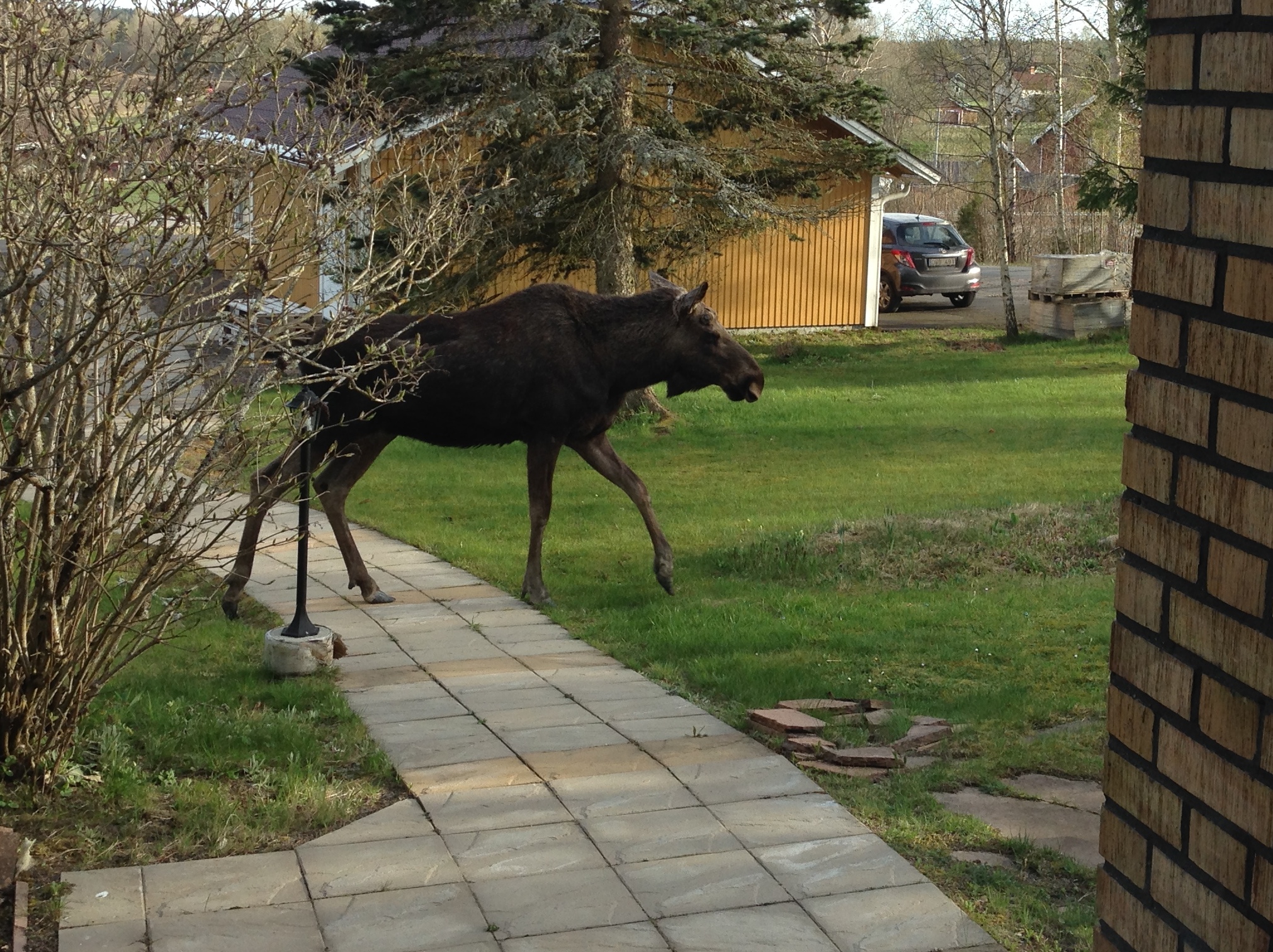
It has been a lovely spring day and the elk are getting bold. Though why this one seemed more interested in old branches from last year rather than the fresh spring buds is a mystery to me.

elk in the garden 20150423

elk in the garden 20150423

Wild Sweden. Is it an elk? Is it a moose? If you’re in Sweden, the answer is “BOTH”! The iconic, majestic forest dweller Alces alces is known as a moose in North America (actually the sub-species Alces alces americana) and an elk in Europe. The word elk, like the Swedish word älg (pronounced /elj/), is taken from the Latin alces. To make matters even more confusing, elk in North America is used for an entirely different animal – a kind of deer, Cervus elaphus, otherwise known as a Wapiti.

Mass extinctions correct for evolution’s greater than 99% failure rate

April 23, 2015

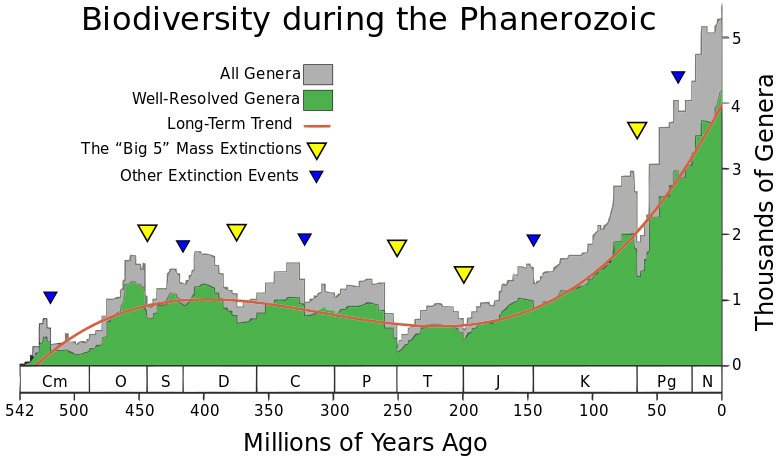
There are said to have been 5 great mass extinctions in the last 540 million years (the Phanerozoic) and a new paper claims  – without carrying much conviction – that it was really six (with two being very close together). The Alarmists claim that humans are causing a new great mass extinction (the 6th or the 7th) and that this threatens a catastrophic collapse of biodiversity. This contradicts the fact that there are more species alive today than ever before. Moreover, why this high level of biodiversity is necessary or a “good thing” remains a mystery.

The mass extinctions of the past are generally put down to various external events which provided a sharp shock to the environment in which highly stressed species existed. Nearby supernovas, asteroid impacts, sudden tectonic plate shifts, glaciation, and super-dooper-volcanic eruptions are among the “shocks” suggested.

But I would argue instead that mass extinctions are necessary and unavoidable. They are necessitated by the ineffectiveness of the process of evolution itself. They provide the self-correction necessary to cope with the mass of “rubbish” species created by the hit-and-miss process of evolution. The external shock is only incidental and acts as the trigger for the extinction of the highly-stressed “rubbish” species. None of the historical mass extinctions ever posed any threat to the continuation of life. Instead they have served to muck out the dung from the evolutionary stables.

The fossil record shows that biodiversity in the world has been increasing dramatically for 200 million years and is likely to continue. The two mass extinctions in that period (at 201 million and 66 million years ago) slowed the trend only temporarily. Genera are the next taxonomic level up from species and are easier to detect in fossils. The Phanerozoic is the 540-million-year period in which animal life has proliferated. Chart created by and courtesy of University of Chicago paleontologists J. John Sepkoski, Jr. and David M. Raup.

The fossil record shows that biodiversity in the world has been increasing dramatically for 200 million years and is likely to continue. The two mass extinctions in that period (at 201 million and 66 million years ago) slowed the trend only temporarily. Genera are the next taxonomic level up from species and are easier to detect in fossils. The Phanerozoic is the 540-million-year period in which animal life has proliferated. Chart created by and courtesy of University of Chicago paleontologists J. John Sepkoski, Jr. and David M. Raup.

The clue lies here:

Wikipedia: Although there are 10–14 million species of life currently on the Earth, more than 99 percent of all species that ever lived on the planet are estimated to be extinct.

Evolution fails in over 99% of its attempts to create species that can survive. The 1%  of species that do and have survived may seem to be perfectly tailored for the prevailing conditions but that is putting the cart before the horse. Evolution has no direction and does not seek excellence. It only throws up a plethora of species where just 1% of those species happen to suit the prevailing conditions. One round peg out of a 100 different shapes may happen to fit a round hole but the round peg itself was not designed to fit – it happened to be the only one of many which did. For every species which is just good enough to survive, evolution gives another 99 which are not. As a process it is a remarkably ineffective one. Humans are not the result of “intelligent design”. They are just the 1% of all the species created by evolution which happened to fit the round hole of the prevailing environment.

Stewart Brand writes in Aeon that “the idea that we are edging up to a mass extinction is not just wrong – it’s a recipe for panic and paralysis”

Aeon: Many now assume that we are in the midst of a human-caused ‘Sixth Mass Extinction’ to rival the one that killed off the dinosaurs 66 million years ago. But we’re not. The five historic mass extinctions eliminated 70 per cent or more of all species in a relatively short time. That is not going on now. ‘If all currently threatened species were to go extinct in a few centuries and that rate continued,’ began a recent Nature magazine introduction to a survey of wildlife losses, ‘the sixth mass extinction could come in a couple of centuries or a few millennia.’

The range of dates in that statement reflects profound uncertainty about the current rate of extinction. Estimates vary a hundred-fold – from 0.01 per cent to 1 per cent of species being lost per decade. The phrase ‘all currently threatened species’ comes from the indispensable IUCN (International Union for Conservation of Nature), which maintains the Red List of endangered species. Its most recent report shows that of the 1.5 million identified species, and 76,199 studied by IUCN scientists, some 23,214 are deemed threatened with extinction. So, if all of those went extinct in the next few centuries, and the rate of extinction that killed them kept right on for hundreds or thousands of years more, then we might be at the beginning of a human-caused Sixth Mass Extinction.

Worrying about whether the 6th mass extinction has started or not is moot. A 6th mass extinction is needed.

A failure rate of 99% creates a terrible lot of dross. Over time, all the “rubbish” species produced by evolution accumulate and clutter the available environment. They restrict the space available for more suitable (worthy) species. The analogy with my desk fits perfectly. Only one of every hundred pieces of paper needs to be kept. Every once in a while – usually triggered by the shock of having to make my tax declaration – I clear out the rubbish. Mass extinctions are then due to the accumulation of too many “rubbish” species which are highly stressed – because they are not quite good enough to survive – and then which end up being susceptible to any external shock which tips them over into the dustbin of extinction – where they belong. It is mass extinctions which provides room for the “good enough” species to grow and even thrive. Mass extinctions provide the clean-up mechanism for a very sloppy and inefficient evolution process. A rather drastic clean-up method perhaps but no more drastic than diverting the Alpheus and Peneus rivers to muck out the Augean stables!

If it is in fact true that we have more species alive today than ever before then the number of “rubbish” species around is also probably at an all-time high. A new, 6th, mass extinction is probably necessary to clean up the mess. It is clearly overdue.

And that is really the problem with the alarmist conservationists who are wasting resources in trying to protect some of the “rubbish” species which are merely examples of the failures of evolution and which deserve to be consigned to the dustbin of extinction. Species which do not adapt to the dominating presence of humans are among the “rubbish”. It may be regrettable that tigers and elephants are on the “rubbish” list but the reality is that they are failed species unable to cope with their environments and which are now restricting the dominant species. It only emphasises that true conservation would not try to freeze these species into failed patterns but to genetically adapt them to be neo-tigers or neo-elephants which would no longer just be “rubbish”.

Earth Alarmism Day today celebrates human cowardice

April 22, 2015

This started in 1970 and not one of the many catastrophes predicted has come to pass. 22nd April 1970 is when environmentalism buried its frightened head and started humans down the path of subordinating their actions to the fear of imagined, future catastrophes.

“It is already too late to avoid mass starvation.”  Denis Hayes, chief organizer for Earth Day, 1970

“If present trends continue, the world will be … eleven degrees colder by the year 2000. This is about twice what it would take to put us in an ice age.” Kenneth E.F. Watt, in “Earth Day,” 1970.

“By the year 2000 the United Kingdom will be simply a small group of impoverished islands, inhabited by some 70 million hungry people … If I were a gambler, I would take even money that England will not exist in the year 2000.” Paul Ehrlich, Speech at British Institute For Biology, September 1971.

“In ten years all important animal life in the sea will be extinct. Large areas of coastline will have to be evacuated because of the stench of dead fish.” Ehrlich, speech during Earth Day, 1970

“Demographers agree almost unanimously on the following grim timetable: by 1975 widespread famines will begin in India; these will spread by 1990 to include all of India, Pakistan, China and the Near East, Africa. By the year 2000, or conceivably sooner, South and Central America will exist under famine conditions….By the year 2000, thirty years from now, the entire world, with the exception of Western Europe, North America, and Australia, will be in famine.”  Peter Gunter, professor, North Texas State University, Earth Day 1970

Every year since has been the “last chance” to do something about some imagined, looming disaster. Each pending disaster has been based on some belief and the forecast is always for some future time such that no indicating parameters can be measured. Yet doomsayers and their predictions (which all fail) remain the darlings of the media looking for a sensational headline. For “scientists”, doomsaying which cannot be checked in their lifetimes is a certain way to get funding. Acid rain never did threaten the Black Forest. The ozone hole was not caused by man and healed itself. The ice age predicted in the 1970s did not happen. World-wide starvation did not occur. There are more species alive today than ever before (though it is not clear as to why that is a good thing).

Global warming has been absent for 2 decades while carbon dioxide emissions have almost doubled. Most of the global warming that has occurred falls within the bounds of natural variability (as a new paper recently showed). Most predictions about global warming have failed and none has ever been proven. The fantasised link between carbon dioxide in the atmosphere and significant global warming is well and truly broken. Even the link between man-made carbon dioxide emissions and carbon dioxide concentration in the atmosphere is tenuous at best. Sea levels are not increasing any faster than since the end of the last ice age. Global ice coverage is currently at the highest for many years and all the variations in ice extent in modern times are within the bounds of natural variability. The acidity of the oceans is not showing any change beyond that of natural variability. Coral reefs are not dying out.

Population – sans immigration – is already in decline in China and most Western countries. By 2050 population will be in decline in India and by 2100 in the whole world.  In the 4 decades since 1970, world population has doubled from 3.5 billion to 7 billion and fewer people are dying of starvation. More people are being fed today than ever before. Fewer people are dying of disease (but more are dying in wars). In spite of industrial activity and its growth, longevity is increasing all over the world. Gene modified crops are feeding the world. Peak oil did not happen and neither did peak gas. With shale discoveries and the potential of methane hydrates, fossil fuels will be available to humankind for the best part of the next 1,000 years.

Here are some more of the alarmist predictions of that first Earth Day of Cowards in 1970. Paul Ehrlich sticks out as being one of the chief proponents of cowardice:

“At the present rate of nitrogen buildup, it’s only a matter of time before light will be filtered out of the atmosphere and none of our land will be usable.” Kenneth Watt, Ecologist

“Civilization will end within 15 or 30 years unless immediate action is taken against problems facing mankind.”  George Wald, Harvard Biologist

“Population will inevitably and completely outstrip whatever small increases in food supplies we make. The death rate will increase until at least 100-200 million people per year will be starving to death during the next ten years.” Paul Ehrlich, Stanford University biologist

“Scientists have solid experimental and theoretical evidence to support…the following predictions: In a decade, urban dwellers will have to wear gas masks to survive air pollution…by 1985 air pollution will have reduced the amount of sunlight reaching earth by one half….” Life Magazine, January 1970

“By the year 2000, if present trends continue, we will be using up crude oil at such a rate…that there won’t be any more crude oil. You’ll drive up to the pump and say, `Fill ‘er up, buddy,’ and he’ll say, `I am very sorry, there isn’t any.’” Kenneth Watt, Ecologist

“Dr. S. Dillon Ripley, secretary of the Smithsonian Institute, believes that in 25 years, somewhere between 75 and 80 percent of all the species of living animals will be extinct.” Sen. Gaylord Nelson

And all the headlines today read just the same. A celebration of cowardice. My faith is not in catastrophe but in human ingenuity to cope – and thrive – in whatever conditions may prevail. We will manage whether sea level is 100 m lower than today in another ice age or if it rises another 2 m. We will even survive a VEI 8 volcano eruption whenever it comes – and come it will. Primitive man thrived through a number of glacial periods and many greenings of the Sahara. I would prefer an Earth Day which celebrated the ingenuity of man – but that is not the stuff of headlines.

Without scepticism there is no science – only religious belief.

Swedish health care provides inferior treatment of prostate cancer to elderly men

April 21, 2015

The Swedish health care system is often cited as an example. And in general that is probably justified. But there is little doubt that care is denied when the physician – for whatever reason – believes it is not worthwhile. The patient’s life expectancy plays a key part in this judgement. And that automatically leads to the elderly being denied treatment in some cases. After all, the common good requires that resources not be wasted! Perhaps it would be best to simply withhold all care for people over 70 – or should we say 75?

The Swedish health system does provide inferior treatment to men with prostate cancer if they are over 70 years old. A report from Lund University exposes yet another example of the age discrimination that is endemic in Sweden. And as the country ages, we can expect such denial of care to increase.

Until the over 70s start to exercise their political power.

Aftonbladet:

Many older men are not getting the cancer treatment they need. New Swedish research shows that men between 70 and 80 years are often under-treated despite having a high risk of prostate cancer. According to the national guidelines men should  have surgery or radiation treatment, but many are denied access to these treatments. The doctors believe that patients are too old, says Associate Professor Ola Bratt at Lund University in the research report that was presented at an international urology meeting in Madrid.

Prof. Ola Bratt has examined all the 19 000 men especially at risk and treated for prostate cancer  in Sweden between 2001 and 2012. He notes that doctors often misjudged the patient’s expected lifetime. The doctors have simply ignored vital treatment because they mistakenly believed that the patients would die soon.

“Such an old-fashioned and rather jaundiced view of today’s 70 year olds can have devastating consequences. It can not be the intention that Swedish men should die prematurely”.

Ola Bratt notes that there are large differences between different parts of Sweden. Between 2001 and 2012, the proportion of men over 70 years who received curative treatment was 15-38 percent, but the proportion varies greatly between counties – from 13 percent in Örebro County to 85 percent in Kronoberg County, according to the National Prostate Cancer Register. Many men are thus losers in the great cancer lottery. Those who want to survive, should stay in the right county and go to the right doctor.

There is a shortage of urologists and many of them are available in small clinics that may not keep up with the latest developments. Choice of care has also contributed to more private clinics taking responsibility for severe disease and the patient is then challenged to find the right treatment in a jungle of offers.

Time to invest in fossil fuels as China discovers vast new reserves

April 21, 2015

There is a campaign in the western “do-gooding” and deluded “green” community (exemplified by The Guardian) to pressurise investors to disinvest from fossil fuels. Fortunately there is no shortage of investors in Asia who would be only too happy to see the European financial institutions and pension funds selling off their shares in oil, shale and coal producing and using companies. There are few better investments than snapping up artificially depressed energy shares. I am watching closely to pick up any bargains that might appear if this campaign has any impact. So far it has had little effect.

In the 1970s and 1980s the alarmist view was that coal, oil and gas would run out catastrophically. Now that peak-oil and peak-gas have been pushed out into the indeterminate future and further new shale reserves are found, the alarmism has shifted to the use of these resources being catastrophic! The campaign itself is rather idiotic (“leave it in the ground”) and counter-productive, since any success can only shift ownership of energy companies eastwards. Supposedly – but misguidedly – it is about climate but the campaign has no measurable or relevant objectives. (Note that no “climate policy”  ever has a climate parameter as an objective and which can be measured.) It will certainly not reduce the consumption of fossil fuels at all – which will instead continue to grow as developing countries develop. In fact the competitiveness of the fossil fuel using countries will be further emphasised as the “do-gooding” countries entrap themselves into a very high-cost electricity production regime based on intermittent solar and wind energy. (It is worth noting that Germany which has installed more renewable energy than any other European country now has an electricity cost which is the highest in Europe and more than twice that of the US. And yet Germany burned more coal last year than they have ever done! The German Energiwende has been a fiasco for all other than those who have milked the subsidies available)

There is – again fortunately – no prospect of India, China and other developing countries in Asia and Africa reducing their use of all the fossil fuels they have available. If I could I would be investing directly in coal and oil and natural gas and shale gas in India and China and Indonesia. At present I must satisfy myself with some indirect investment.

History will be contemptuous of the irrational demonisation of fossil fuels by the alarmists and the “do-gooders” during the late 20th and early 21st century.

Xinhua reports:

China continued to be increasingly successful at discovering crude oil and natural gas reserves last year, new data from the Ministry of Land and Resources indicated on Thursday.

The country discovered nearly 1.06 billion tonnes of new crude oil deposits in 2014, up from 1.1 billion tonnes the previous year, marking a stable increase and the eighth consecutive year in which the amount discovered surpassed 1 billion tonnes. More than 1.1 trillion cubic meters of new natural gas reserves were also discovered in 2014, a record high.

Of the new discoveries, 187 million tonnes of oil and 474.9 billion cubic meters of natural gas can be exploited with current technology, according to the ministry.

New shale gas reserves discovered amount to 106.75 billion cubic meters, with 26.69 billion exploitable.

This is the first time that proven reserves of shale gas have been publicized since the Chinese government approved the listing of shale gas as an independent mineral resource in 2011.

Discoveries of coal-bed methane, an unconventional gas, amounted to 60.2 billion cubic meters, up 155.3 percent year on year.

shale basins China (The Diplomat)

shale basins China (The Diplomat)

The Indian sub-continent too has large shale reserves waiting to be exploited. The shale basins extend into Pakistan and Bangladesh and offers Pakistan the possibility of actually becoming self-sufficient for energy.

shale gas basins India

shale gas basins India

The Lancet: Scientists are “not incentivised to be right”

April 19, 2015

In time, incorrect results get corrected. In time, bad science cannot prevail – or so the belief is. But if all the articles about fraud in funding applications, dodgy peer review, predatory journals, confirmation bias and plain fraud in science are only half true, then most of what is reported as current science is not worth the paper it (isn’t) written on. Results reported are not concerned about being correct but about getting the next tranche of funding. “Politically” correct beliefs are not challenged by younger researchers because research funding will be jeopardised if “authority” is challenged. “Peer reviews” become “pal reviews” and even “self reviews”. Journals manipulate impact factors by “pal citations”.

It should all get corrected in time, except that publication of corroborating results is discouraged as not being original while “negative results” are not considered worthy of publication. A generally accepted but incorrect hypothesis then never gets corrected until an opposing theory is “proven” with positive results.

“In their quest for telling a compelling story, scientists too often sculpt data to fit their preferred theory of the world”.

These two articles, one in The Lancet and one in SMH illustrate the point:

1. The Lancet: What is medicine’s 5 sigma?

“A lot of what is published is incorrect.” I’m not allowed to say who made this remark because we were asked to observe Chatham House rules. We were also asked not to take photographs of slides. Those who worked for government agencies pleaded that their comments especially remain unquoted, since the forthcoming UK election meant they were living in “purdah”—a chilling state where severe restrictions on freedom of speech are placed on anyone on the government’s payroll. Why the paranoid concern for secrecy and non-attribution? Because this symposium—on the reproducibility and reliability of biomedical research, held at the Wellcome Trust in London last week—touched on one of the most sensitive issues in science today: the idea that something has gone fundamentally wrong with one of our greatest human creations.

The case against science is straightforward: much of the scientific literature, perhaps half, may simply be untrue. Afflicted by studies with small sample sizes, tiny effects, invalid exploratory analyses, and flagrant conflicts of interest, together with an obsession for pursuing fashionable trends of dubious importance, science has taken a turn towards darkness. As one participant put it, “poor methods get results”. The Academy of Medical Sciences, Medical Research Council, and Biotechnology and Biological Sciences Research Council have now put their reputational weight behind an investigation into these questionable research practices. The apparent endemicity of bad research behaviour is alarming. In their quest for telling a compelling story, scientists too often sculpt data to fit their preferred theory of the world. Or they retrofit hypotheses to fit their data. Journal editors deserve their fair share of criticism too. We aid and abet the worst behaviours. Our acquiescence to the impact factor fuels an unhealthy competition to win a place in a select few journals. Our love of “significance” pollutes the literature with many a statistical fairy-tale. We reject important confirmations. Journals are not the only miscreants. Universities are in a perpetual struggle for money and talent, endpoints that foster reductive metrics, such as high-impact publication. National assessment procedures, such as the Research Excellence Framework, incentivise bad practices. And individual scientists, including their most senior leaders, do little to alter a research culture that occasionally veers close to misconduct. 

Can bad scientific practices be fixed? Part of the problem is that no-one is incentivised to be right. ……… 

2. SMH: How Australian scientists are bending the rules to get research funding

“Science has become really opaque, especially when it comes to grant funding”, says UNSW climate researcher Ben McNeil. As a result innovation suffers, he says. 

The offences in question range from junior scientists ghost-writing grant applications for senior colleagues to researchers conspiring with others to influence who might review their work.

In one extreme case a cancer scientist discovered his unfunded project idea had been stolen and used by another research group a year later.

The two major schemes that fund research in Australia – the National Health and Medical Research Council (NHMRC) and the Australian Research Council (ARC) – hand out about 1.5 billion dollars a year. The impact of these grants is almost impossible to quantify, but some have resulted in big medical discoveries such as the cervical cancer vaccine and new cancer treatments. They also generate new knowledge, jobs and industries.

While their $1.5 billion budget seems hefty, together the ARC and NHMRC reject about four out of every five ideas each year. In 2013, only 1883 ideas out 9004 received funding. The consequence of researchers’ attempts to “game” the system is that, if undetected, precious money may be allocated to unworthy research projects, potentially at the expense of the next lifesaving vaccine. …… 

While the NHMRC and the ARC say they have no evidence that “gaming” is widespread, a recent survey of 200 health and medical researchers suggests this may not be the case.

Before handing out money, both bodies ask panels of anonymous experts to assess project ideas, as well as the calibre of the people who propose the idea.

When public health researcher Adrian Barnett and two colleagues surveyed researchers about whether they form alliances with others to boost their chances of a better review, they were shocked to see one in five admitted to the practice.

“I knew it was going on, but I didn’t think it’d be as high,” says Barnett, from the Queensland University of Technology.

Essence of a Manager Ebook

April 19, 2015

A pdf of my book Essence of a Manager is now available on Gumroad here:

https://gumroad.com/l/eoam

Individual chapters will also be available in pdf format in a few days.

eoam

https://gumroad.com/ktwop

https://gumroad.com/ktwop/follow

Chinless wonders and too much testosterone

April 18, 2015

A new paper by Nathan Holton and colleagues at the University of Iowa suggests that our chins (which Neanderthals and other primates did not evolve) resulted from hormonal changes which themselves resulted from increasing social interactions among humans and not from evolution due to mechanical forces such as chewing.

Using advanced facial and cranial biomechanical analyses with nearly 40 people whose measurements were plotted from toddlers to adults, the UI team concludes mechanical forces, including chewing, appear incapable of producing the resistance needed for new bone to be created in the lower mandible, or jaw area. Rather, they write in a paper published online in the Journal of Anatomy, it appears the chin’s emergence in modern humans arose from simple geometry: As our faces became smaller in our evolution from archaic humans to today—in fact, our faces are roughly 15 percent shorter than Neanderthals’—the chin became a bony prominence, the adapted, pointy emblem at the bottom of our face.

They sperculatively  suggest that

 ….. the human chin is a secondary consequence of our lifestyle change, starting about 80,000 years ago and picking up great steam with modern humans’ migration from Africa about 20,000 years later. What happened was this: Modern humans evolved from hunter-gatherer groups that were rather isolated from each other to increasingly cooperative groups that formed social networks across the landscape. These more connected groups appear to have enhanced the degree to which they expressed themselves in art and other symbolic mediums. Males in particular became more tranquil during this period, less likely to fight over territory and belongings, and more willing to make alliances, evidenced by exchanging goods and ideas, that benefited each and all.

…… the change in attitude was tied to reduced hormone levels, namely testosterone, resulting in noticeable changes to the male craniofacial region: One big shift was the face became smaller—retrenching in effect—a physiological departure that created a natural opportunity for the human chin to emerge”.

This last is more than a little speculative since the research is really just evidence that mechanical forces are probably not the cause of chin evolution and development. I am not at all convinced that the evolution of the chin could actually be due to hormonal levels resulting from social behaviour, but it could well be that it is merely a feature not explicitly selected for, but which is a geometrical consequence of other facial changes which came about as AMH evolved. It cannot either be due to just the increase in brain size since Neanderthals had somewhat larger brains. I wonder if it may be a consequence of changes due to development of speech?

N. E. Holton, L. L. Bonner, J. E. Scott, S. D. Marshall, R. G. Franciscus, T. E. Southard. The ontogeny of the chin: an analysis of allometric and biomechanical scaling. Journal of Anatomy, 2015; DOI: 10.1111/joa.12307

Abstract

The presence of a prominent chin in modern humans has been viewed by some researchers as an architectural adaptation to buttress the anterior corpus from bending stresses during mastication. In contrast, ontogenetic studies of mandibular symphyseal form suggest that a prominent chin results from the complex spatial interaction between the symphysis and surrounding soft tissue and skeletal anatomy during development. While variation in chin prominence is clearly influenced by differential growth and spatial constraints, it is unclear to what degree these developmental dynamics influence the mechanical properties of the symphysis. That is, do ontogenetic changes in symphyseal shape result in increased symphyseal bending resistance? We examined ontogenetic changes in the mechanical properties and shape of the symphysis using subjects from a longitudinal cephalometric growth study with ages ranging from 3 to 20+ years. We first examined whether ontogenetic changes in symphyseal shape were correlated with symphyseal vertical bending and wishboning resistance using multivariate regression. Secondly, we examined ontogenetic scaling of bending resistance relative to bending moment arm lengths. An ontogenetic increase in chin prominence was associated with decreased vertical bending resistance, while wishboning resistance was uncorrelated with ontogenetic development of the chin. Relative to bending moment arm lengths, vertical bending resistance scaled with significant negative allometry whereas wishboning resistance scaled isometrically. These results suggest a complex interaction between symphyseal ontogeny and bending resistance, and indicate that ontogenetic increases in chin projection do not provide greater bending resistance to the mandibular symphysis.

xray showing chin comparison between toddler and adult

University of Iowa researchers find that we develop chins as our head size increases, from childhood to adulthood. At about 4 years of age (left), we have little indication of a chin, but by our 20s, we have a prominent point at the bottom of our faces.

And that leads us to the “chinless wonders” of the Royal House of Windsor

Members of the upper classes, by repute, often have minor genetic abnormalities like receding chins. This disparaging term is often used to describe members of the British upper classes and in particular the royal family. This is probably an implied reference to the effects of the supposed inbreeding of the upper classes and, again, particularly the House of Windsor. This is mostly just name calling, but is supported by the fact that Queen Elizabeth II and her husband have the same great great grandmother – Queen Victoria, and that she had a rather receding chin, as have several of her descendants.

Too much testosterone?

HEIR AND A SPARE Prince Andrew and Prince Charles arrive in a carriage at the Royal Ascot horse race, 2006. By David Hartley/Rex USA. via Vanity Fair


Warm snow

April 17, 2015

Protesting Global Warming at the University of Colorado.

ffcu facebook page

ffcu facebook page

Daily Caller:

Global warming activists should probably start planning their protests for the summer because the second climate rally — within just days of a major one in Canada — has been buried in snow.

Student activists with Fossil Free CU have camped out the University of Colorado, staging a “sit in” meant to show the Board of Regents the group’s commitment to getting the school to divest its endowment of fossil fuel holdings.

The group’s Facebook page shows students braving the elements to convince the Board of Regents to ditch fossil fuels to fight global warming. Unfortunately for them, the “Gore effect” has kicked in and may blunt their arguments that the world is catastrophically warming.

The “Gore effect” has made its mark this year on several protests, including a major one last week in Quebec City where thousands of demonstrators marched through snow and frigid weather. Earlier this year, a divestment protest at Yale University was cancelled due to “unfavorable weather conditions and other logistical issues,” according to organizers.

That AGW is a religion and a matter of faith – which ignores reality – is apparent. Alarmism and the antics of the unthinking acolytes indicates that there is something to be said for the notion that evolution is causing the dumbing-down of the human race. Alarmism is quite simply the subordination of actions to fear – which is my definition of cowardice. We probably reached peak intelligence as hunter-gatherers and the modern “welfare state” is most likely accelerating the decline.

If “intelligence” is an inherited characteristic – as it seems at least partially to be –  then it is only a matter of simple arithmetic that unless the “more intelligent” reproduce at a higher rate than those of “less intelligence” then the “average intelligence” of the population will inevitably decrease.