Swedish lay judge wants capital punishment “for some races”

April 17, 2015

I have yet to discern the real advantages brought by lay judges to the Swedish judicial system. Presumably they are thought to bring a modicum of “real life” into the ivory tower of jurisprudence. But it seems to me that politically appointed lay judges pervert the course of justice more often than they assist it.

Sveriges Domstolar

Serving as a lay judge in a court is an honorary task.  It helps to maintain public confidence in judicial administration and is a way for the public to gain insight into the operations of the courts. The varying background and experiences of lay judges give the courts a broad picture of the general conception of justice in   society.  This is particularly valuable for assessment issues, for example, for evaluation of evidence, reasonability issues and choice of sentence. …

Lay judges are elected …  in the municipal council or county borough council after nomination by political parties. If a person wishes to be a lay judge, he or she contacts a political party and puts forward their interest.

The simple fact is that lay judges in Sweden today are mainly passive and often unprofessional – and I can’t say much worse than that. Yet another case of a lay judge demonstrating her unsuitability is reported in the Sundsvalls Tidning:

Lay judge Anita Edin (M) believes that one could impose the death penalty “for certain races.” After her statement the trial had to be interrupted.
“We obviously have zero tolerance for these things” said Judge Kristina Svedberg.
The statement was made during a break in a trial in Sundsvall District Court on Wednesday, where several persons of foreign origin were indicted for drug offenses. During the break, one of the three lay judges said that he would write a motion on the death penalty.
“Yes, at least for certain races”, responded Anita Edin, a lay judge and Moderate politician in Timrå. Judge Kristina Svedberg broke into the discussion between the jurors and pointed out to Anita Edin that statements about the death penalty on the basis of race were very inappropriate.
“No, it’s clear, you do not say such things. You can only think such things” said Anita Edin.

But in one respect Anita Edin has a point. I see no reason why – for real justice – different people committing the same crime should not be subject to differing penalties. But perhaps reserving capital punishment just “for some races” is going too far. Anita Edin should probably join the Sweden Democrats.

The Swedish use of lay judges is over 1,000 years old and it is a working system – but it does not improve the dispensation of “justice” (whatever one takes that to be). Professor Christian Diesen of Stockholm University writes –

CairnLay judges have always, without interruption, taken part in the administration of justice in Sweden. For more than a thousand years, lay judges, elected by the people, have been members of the local courts. The role has changed during the centuries, but – in contrast to all other countries in Europe except Finland (as Finland was a part of Sweden until 1809) – the lay judge has never been out of the system.

At the time of the Vikings all free men were assembled in the ting, where political matters were discussed and decided. The ting, held outdoors in a place of religious cult, also served, however, as a court. Many disputes were ”solved” through ordeals or duels, but in civil litigation the chief or leader of the court proposed a verdict to the members of the ting for approval ( – the Vikings banged their shields to signal agreement…). In the 13th century when the local courts were established (and the ordeals abandoned), the administration of justice in the country was carried out by a judge, appointed by the king, and 12 elected (permanent) members of the local community. In the 17th century the courts were led by professional judges (with legal education) and the proceedings changed from oral to written form, a change that reduced the influence of the lay members of the court. The legal reform of 1734 reduced that influence even further as it stipulated that all lay judges had to disagree with the professional judge in order to outvote him. At the beginning of the 19th century the introduction of the jury system was discussed, but the jury was introduced into the Swedish system only in cases concerning freedom of the press (and it still applies in these cases). During the 20th century two opposite lines can be seen in the development of the role of the lay judges : The number of lay judges in the local courts has been reduced, step by step. In 1918 the government decided that 3 lay judges were sufficient for minor criminal cases. In 1948 the number of lay judges was reduced from 12 to 9 for major criminal cases and in 1971 from 9 to 7. The same year lay judges disappeared from civil cases (except for cases concerning family law). In 1983 the number decreased to 5 for major criminal cases and in 1997 it fell to 3 lay judges in all criminal cases.

But though the number of lay judges has steadily decreased, they have, in spite of being politically appointed amateurs, also been given a higher individual standing

On the other hand, since 1971, lay judges participate in the proceedings of Court of Appeal (as a minority) as well as the administrative courts, and in 1983 lay judges of all courts received an individual voting right, which put them on an equal footing with a professional judge.

Probability of a VEI 5+ volcanic eruption within 5 years is over 95%

April 16, 2015

It has been 24 years since the last VEI 5+ (Mount Pinatubo, 1991, VEI 6) occurred and the probability that a VEI 5+ volcanic eruption will occur within the next 5 years is now over 95%. There are around 10 – 14 VEI 5+ eruptions every hundred years and for the the last 300 years the time between eruptions has been as short as 1 year and as long as 23 years. The current gap could be the longest recorded in three centuries. There are, on average, 2 eruptions of intensity 6 every hundred years and so the probability that an eruption of VEI 6 could occur within 5 years is about 50% (current gap 24 years, average gap 50 years). That a supervolcanic eruption of VEI 7 or greater could occur within the next 5 years is less than 1%.

The next VEI 5+ volcanic eruption is overdue During the 19th century VEI eruptions of 5 or greater occurred every 11 years on average with the Krakatoa eruption being the greatest at VEI 6 in 1883. Through the 20th century, an eruption of intensity 5 or greater came at intervals varying from 1 year upto 23 years with an average interval of just under 7 years. The Novarupta (1912) and Mount Pinatubo (1991) eruptions were the two classified at VEI6. 

  • 1902 Santa Maria
  • 1907 Kudach
  • 1912 Novarupta
  • 1913 Colima
  • 1918 Katla
  • 1932 Cerro Azul
  • 1933 Kharimkotan
  • 1956 Bezymianny
  • 1963 Mount Agung
  • 1980 Mount St. Helens
  • 1982 El Chichón
  • 1991 Mount Pinatubo
  • 1991 Mount Hudson
vei eruption balls image geology.com

vei eruption balls image geology.com

So far in this century the 2010 Eyjafjallajökull eruption in Iceland “only” reached a VEI intensity of 4. The Puyehue-Cordón Caulle eruption in 2011 was judged – by some – to be of intensity 5 was really just a VEI 4. The 2012 Mt. Etna eruption was rated a 3+.

Classification of eruptions esf.org

Classification of eruptions esf.org

The impact of the next eruption has to be assessed in a short and a long-term perspective. Immediate loss of life and property is primarily a function of population in the area of the eruption and the time available for evacuation. Populations are higher now than ever in the past but warnings come earlier and possibilities for evacuation are better than ever before.  The population directly at risk from volcanoes in the year 2000 has been estimated at 500 million or more, The long-term impacts could be much more profound and independent of the location of the eruption. We are already into an ocean- current led global cooling cycle. We could well have another year or two without a summer after the next VEI 5+ eruption. The key will be the extent of the dust cloud, the altitude it reaches and for how long it persists. It will not be a Toba like cataclysm which affected the evolution of humans, but it may well be the impulse which drives the earth into an Ice Age. It could even be the start of a 1000 years of transition back into a Glacial Age since the current Interglacial has been around for some 15,000 years.

Extreme Geohazards: Reducing the Disaster Risk and Increasing Resilience VEI values have been determined for more than 5,000 eruptions in the Holocene…. None of these reached the maximum VEI of 8. Several of the most devastating eruptions during the last 2,000 years had VEI values lower than 6. For example, the VEI 5 eruption of Vesuvius in 79 AD destroyed Pompeii and Herculaneum. Since 1500, more than 20 eruptions of VEI 5 or more occurred, with only the Tambora eruption in 1815 reaching VEI 7. It is worth noting that the extremely disruptive eruption of Eyjafjallajökull only reached an estimated VEI of between 3 and 4. …… The size and magnitude of …. the eruption, is only loosely related to the resulting damage. For example, mudflows triggered by the VEI 3 eruption of Nevado del Ruiz (Colombia) in 1985 caused one of the worst volcanic disaster in the 20th century. …… of the nine greatest volcanic disasters in terms of casualties since 1500, only three (Tambora, Krakatau and Laki) qualify as ‘very large’ eruptions with a VEI of greater than 5. ….. during the past 36 Ma, 42 VEI 8 eruptions have been identified. The authors indicate that these eruptions are not evenly distributed in time but seem to cluster in two pulses over the past 36 Ma. Periods with as many as 22 events/Ma and down to 1.4 event/Ma have been identified. More recent examples are the eruptions of Taupo (around 24,000 BC), Toba (around 74,000 BC), and Yellowstone (around 640,000 BC), for which the impacts have been studied in detail. More recent large eruptions with a VEI of 5, 6 or 7 include Thera (≈1630 BC), Vesuvius (79 AD), Laki (1783), Tambora (1815), Krakatau (1883), Novarupta (1912) and Pinatubo (1991). Each of these eruptions (except Novarupta, due to the remoteness of the area) generated immediate loss of life and structures at local distances (through the generation of pyroclastic flows, ash and gas emissions, tsunamis) as well as long-term losses at regional and global distances. These eruptions impacted the climate for long periods by injecting ash in the stratosphere at high altitudes (Tambora’s ash column height reached 43 km) and triggering temperature changes which heavily impacted the harvest and led to famine and epidemics in several areas of the planet: the year 1816, following Tambora’s eruption, is recalled as ‘the year without summer’, and generated abnormal temperatures in China, Europe and North America. 

The hypotheses about man made global warming are neither predictable or measurable and are just fancies. But volcanic eruptions are neither fanciful nor amenable to prediction. They will occur and we have no means of preventing them. Within 5 years it is close to a certainty (> 95%) that a VEI 5+ volcanic eruption will occur. With global mobilisation loss of life can be minimised but the effects of the eruption on climate will just have to be endured.

Charm school does not make up for lack of competence

April 15, 2015

I have a clear perception that many hospitality companies have calculated that “charm school” is much cheaper than training employees for competence and are intentionally pursuing a strategy not of adding form to substance but of replacing substance with form.

I am just back after two weeks of airlines, airports, security checks, hotels and the hospitality industry surrounding the “wedding business”. Everybody seems to have been to charm school and that’s nice. But smiles and charm ring hollow sometimes. I perceive a decline in competence.

The Connemara used to be my hotel of choice in Madras. My preference shifted to the Adyar Park in the late 90s and that remained my preferred choice till 2006. Now after an 8 year break I have spent 8 days at the Park. But I am left somewhat disappointed.

I note that ITC has expended much effort in training staff in their charm schools. The smiles and politeness border on the excessive. My stay would have been unforgettable if backed up by efficiency and competence. Unfortunately this was not the case.

Even where some competence was visible, it was far too narrow and there seems to have been little interest – either from the employer or the employee – to widen the employee’s area of expertise. Where employees did not have an answer – no shame in that – they had no interest in getting me an answer let alone increase their own knowledge. Security was for show and brainless and bypassed by the “privileged” regularly. Time does move slower in Madras than in the rest of the world but 5 minutes should not be 30. What I took to be promises were clearly not perceived as being promises by the front desk staff.  And these non-promises were produced with a smile at the drop of a hat – a first response without any substance. It was an attitude which permeated the establishment. Plenty of smiles, empty promises but no real interest or a pride in the result. It is only my perception but the younger employees seemed to more infected by the “charm school syndrome” characterised by smiling – but empty – promises.

One noteworthy exception was the concierge and his staff who impressed with their breadth of knowledge and their readiness to address all issues. Presumably they were all too old to have been sent to ITC’s charm school.

Smiles and the politeness are welcome and necessary but they are not sufficient. Without competence the charm rings dangerously hollow. A modicum of politeness would have been sufficient for competent and professional staff. But no amount of smiling and fawning compensates for a lack of competence.

Richie Benaud 1930 – 2015

April 10, 2015

As John Arlott was to cricket commentary on radio, so was Richie Benaud to cricket commentary on TV.

But before he became the gold standard for former cricketers aspiring to make their mark in TV commentary, he was a world class spin bowling exponent who then created a new standard for the “thinking” captain. As a leg-spin exponent he was my schoolboy hero and role model.

As a TV commentator he set a standard for the model that Grieg and Boycott and Shastri have followed but have not quite matched. No non-cricketer TV commentator comes anywhere close to his under-stated but remarkably effective style. Almost laconic he exuded cricket erudition. Gavasker and Boycott had the erudition, but one had an axe to grind and the other played politics. Sidhu does not even count.

John Arlott and Richie Benaud were in a class of their own and I loved listening to them.

Richie Benaud 1930 – 2015.

RIP.

After all, the essence of justice lies in being able to discriminate

March 31, 2015

I was recently accused of discrimination.

It is a pity – linguistically – that the word “discrimination” is used as – and generally taken to be – “unjust discrimination”.

A discerning person, a person of judgement is one with the ability to discriminate. Discernment, discrimination and judgement all weigh something against some value scale. The value scale comes first. To judge or discriminate, whether for music or literature or taste or behaviour, first requires some standard value scale against which to compare.

Without being able to compare and discern differences and then make judgements which necessarily require discrimination, we could not achieve justice. Some discrimination may be considered to be unjust. Other discrimination may correct an injustice. The same action may be unjust to the one while being just to another. The same action resulting from discrimination may be considered just by some and unjust by others.

Virtually all human behaviour is based on discrimination. We choose one food over another, make friends with some and not with others, listen to jazz but not to punk-rock or kill some people but not others. We discriminate whenever we give “more” care to a sick person or an old person or a child. And that is just. We discriminate when we don’t give one of Usain Bolt’s competitors a head start. We discriminate with different tax rates for different people. Nobel prizes are awarded subsequent to discrimination. We discriminate when we prefer anything or anyone. But we don’t take that to be unjust. Without discrimination there would be no appreciation (or contempt).

Those without values cannot judge or discern or discriminate. A person with sensibilities is one with values. Nearly all behaviour discriminates. The issue is not the discrimination, but where the subsequent actions lie on the scale of being just. And that scale of justness (rather than justice) too is a value scale.

The ability to discriminate is what tells us where we are on our (or somebody elses) scale of justness. It is what makes us sapient. In a world without discrimination there would be no values, no good or bad, or just or unjust.

And so when I was accused of discrimination, I took it as a compliment.

Discriminating (adj): discerning, selective, judicious, refined, cultivated, cultured, sophisticated, sensible, enlightened, sensitive, subtle, nuanced, critical, perceptive, insightful, perspicacious, penetrating, astute, shrewd, ingenious, clever, intelligent, sharp, wise, erudite, aware, knowing, sagacious, sapient.


On a break

March 31, 2015

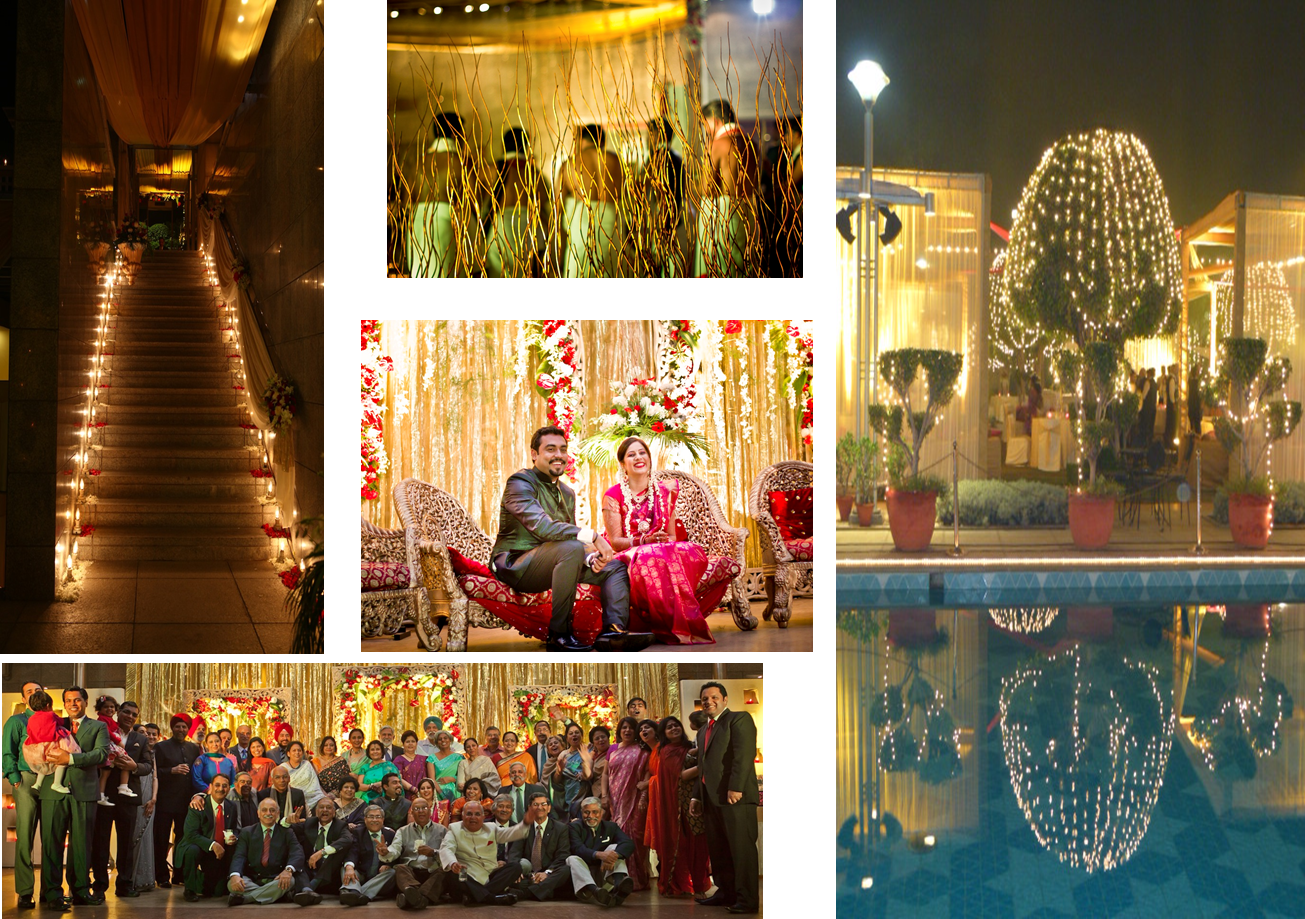
I am on a break for a couple of weeks, travelling on an assignment and – among other things – attending the many days of festivities surrounding a family wedding.

Interrupting festivities to blog is difficult and at an Indian wedding festivities tend not only to be long but also to run into each other. They usually end up eating (and drinking) into time reserved for catching some sleep. Stupors are also not very conducive to thinking – let alone writing.

Blogging will therefore be very light and rather sporadic for the next 2 weeks.

Family wedding 2012

Family wedding 2012

German Wings 4U9525: Could Andreas Lubitz even be innocent?

March 31, 2015

I wrote a few days ago that though the guilt of Andreas Lubitz was being taken as proved beyond all reasonable doubt, I felt that even if it was so, the French prosecutor was rushing a little too fast to judgement. I wrote then:

Maybe there are no other alternatives and all the conclusions being reached are perfectly justified. Maybe the sounds of his breathing which are being used to state that he was fully conscious and breathing normally are absolutely conclusive. Maybe there was no possibility that he could have been incapacitated and still have that breathing pattern. Maybe his 5 month break from his training for what a friend has called “depression and burn-out” is conclusive proof – as the media seem to assume – that he was mentally disturbed.

Maybe.

I am far from any kind of expert on airplanes and on the black boxes and what they can and can’t reveal, but my discomfort with the rush to judgement is apparently shared by some who are experts:

Helsingborgs Dagblad:

The German co-pilot Andreas Lubitz has been painted as being solely responsible for the plane crash in the French Alps. But now some voices claim that it is too early to rule out technical problems.  “It is too early to judge anyone” says flight safety expert Hans Kjäll.

Investigations are continuing in the French Alps where 150 people died in plane crash a week ago. The German co-pilot Andreas Lubitz is suspected of deliberately crashing the plane and, among other things,  it has been revealed that he had been treated for suicidal tendencies and suffered from a psychosomatic illness.

Meanwhile, only one of the two so-called black boxes has been found, which means that it can not be completely ruled out that some technical fault on the plane may have been significant.

“Currently no hypothesis about a technical fault can be entirely ruled out”, admits one of the French prosecutors to EKOT. According to Hans Kjäll it is only when the second black box is found that the plane’s flight data can provide the answers as to exactly when the disaster occurred and what data was input by the co-pilot can be determined.

“It is argued that 100 feet was set as the minimum height, but then that would mean flying below the ground surface. But how do we know?” Another possible reason for the crash is that there was a lack of oxygen in the cabin and that was why Lubitz began a descent. “He could have suffered from a lack of oxygen and passed out” says Hans Kjäll.

That the first pilot was not allowed into the cockpit may then have a natural explanation and then Lubitz can not be held responsible for the crash. “The first pilot may actually have left the cockpit to get an extra oxygen mask or oxygen bottle and then found the door locked” says Kjäll.

He believes that the scenario of how the co-pilot has been convicted before the completion of the investigation is similar to that with the missing Malaysian plane MH370, where the captain was very early on blamed for the incident. But later reports then showed no evidence that the pilot did anything intentionally.

Kjäll believes that Swedish prosecutors would have been more cautious in their statements than the French after the air disaster in the Alps.

“They probably should not have gone out so early with details. The Accident Investigation Commission probably would not have said anything at all before finding the flight data recorder”, he says.

Maybe Andreas Lubitz is as guilty as everyone seems to believe. But he has not received his due process before he has been indicted and his guilt has been proclaimed as a settled fact. I understand that French prosecutors are not just investigators and prosecutors but also judges to some extent. Brice Robin, the French prosecutor (full transcript here) may be entirely right in his assessment of Lubitz’s guilt, but I still feel his press conference was not merely to allege guilt as a prosecutor but to pronounce guilt as a judge – and in that he went too fast, too far.

How English has become the language of science

March 31, 2015

Michael D Gordin is a historian at Princeton University and explains how English has become the language of modern science:

how did science come to speak only english

……. contemporary science is monoglot: everyone uses English almost to the exclusion of other languages. A century ago, the majority of researchers in Western science knew at least some English, but they also read, wrote and spoke in French and German, and sometimes in other ‘minor’ languages, such as the newly emergent Russian or the rapidly fading Italian. …..

Often, scientists or humanists assume that English science replaced monoglot German, preceded by French and then by Latin in a ribbon that unfurls back to the dawn of Western science, which they understand to have been conducted in monoglot Greek. Understanding the history of science as a chain of monolingual transfers has a certain superficial appeal, but it isn’t true. Never was. ….. we can observe two basic linguistic regimes in Western science: the polyglot and the monoglot. The latter is quite new, emerging just in the 1920s and vanquishing the centuries-old multilingual regime only in the 1970s. Science speaks English, but the first generation who grew up within that monoglot system are still alive. ….

In the 15th century in western Europe, natural philosophy and natural history – the two domains of learning that would, by the 19th century, come to be known as ‘science’ – were both fundamentally polyglot enterprises. This is the case despite the fact that the language of learning in the High Middle Ages and the Renaissance was Latin.

But Latin had been preceded by Greek and Arabic.

The translation of works in canonical natural philosophy from Arabic into Latin helped birth the revival of learning in the West. Learning, learned people knew, was a multilingual enterprise. …..

This system started to break down in the 17th century, in the midst of, and as an essential part of, what was once dubbed ‘the scientific revolution’. Galileo Galilei published his discovery of the moons of Jupiter in the Latin Sidereus Nuncius of 1610, but his later major works were in Italian. As he aimed for a more local audience for patronage and support, he switched languages. Newton’s Principia (1687) appeared in Latin, but his Opticks of 1704 was English (Latin translation 1706). ….

……..

Something obviously changed. We now live in the Esperantists’ dreamworld, but the universal language of natural science is English, a language that is the native tongue of some very powerful nation states and as a consequence not at all neutral. What happened to the polyglot system of science? It broke. More accurately, it was broken. When the Great War erupted in summer 1914 between the Central Powers (principally, Germany and Austria-Hungary) and the Triple Entente (Britain, France, Russia), among the first casualties were the ideals of beneficent internationalism. German scientists joined other intellectuals in extolling Germany’s war aims. French and British scientists took note.

After the war, the International Research Council, formed under the aegis of the victorious Entente – now including the US but excluding Russia, which had descended into the maelstrom of the Bolshevik Revolution – initiated a boycott of scientists from the Central Powers. New international institutions for science were erected in the early 1920s locking out the defeated Germanophone scientists. This exclusion lit a long-delay fuse that, in the coming decades, would contribute to the death of German as a leading scientific language. Three languages had, for part of Europe, diminished to two. Germans responded to their predicament by reinvigorating their commitment to their native language. The multilingual system was beginning to crack, but it was the Americans who would shatter it. .

…….

Read the entire article.

A monoglot system in a polyglot world may seem unsustainable and Gordin argues that even without the Anglophone nations, inertia would keep English in its pre-eminent position for science.

it takes a lot of energy to maintain a monoglot system on such a scale, with enormous resources poured into language training and translation in non-Anglophone countries. And, second, if the Anglophone nations were to vanish tomorrow, English would still be a significant language of science, simply because of the vast inertia of what already exists.

But I suspect it is not just a simple matter of monoglot versus polyglot. Using India as an example of a polyglot nation, one of the most important unifying factors is that at second language level, India is actually monoglot and the language is an “Indian” English. The internet age has I think led to the world – at second language level – being monoglot – and that language is an internet English which is still evolving and very rapidly at that.

Esperanto failed because it never reached a critical mass of users. Dialects appear because a critical mass of practitioners of a particular usage exists. What is correct grammar and correct spelling and even correct meaning lags, and doesn’t lead, usage. Languages evolve and change as users and usage changes – not because of edicts from the keepers of language. If the French want French to survive for ever, they need to ensure that the number of users expands (with whatever changes that may bring), rather than preventing the assimilation of anglicisms. A “protected”, “correct” language with an ever decreasing number of users will become extinct. Changes appear in spite of the inertia and resistance of the language keepers. And languages die when change stops and users decline and usage withers. Demographics trumps any “goodness” of language.

This new, still-changing, 140-character-focused, English will be with us for a long time yet – and not just in science.

“They’re off” in the great UK entertainment stakes

March 30, 2015

The UK General Election campaign kicked off today. There are 38 days of campaigning and I am looking forward to some entertainment from the antics of the menagerie.

  • From the duck I expect that the many insults will just roll of its back, that it will not produce any deep or profound thoughts but that it may make some dreadful (and hopefully entertaining) gaffes.
  • I expect the poodle to spend much effort in denying it is a poodle, trying to appear pro-business while soaking the rich and denying that it is really a communist.
  • I expect that Nicola Sturgeon may compete in a show of fangs with Alex Salmond to demonstrate who is the more dangerous hyena. Possibly they will split the work-load with Salmond harrying the poodle while Sturgeon goes after the duck.
  • The jackal will race after any wounded prey in sight and may also look for unattended carcasses to feed from. It will be fascinating to see if the lame duck manages to land any kicks on the sneaky but nimble jackal as it cavorts around.
  • The chameleon will continue being all things to all men (and women), but may stand exposed as it changes colour too slowly to keep up with the changes in its background. But the illusions it weaves could be compelling for those with a hallucinatory frame of mind.
  • The green slug will slither along in its slime, first one way then another, in great confusion, but it could provide some interesting contortionist tricks.

UK general election menagerie


It’s not a bad cast from an entertainment perspective. From the viewpoint of leadership or vision, it is a pretty useless bunch. The duck has the advantage of having been at the top table for some time. But it may have outstayed its welcome and could provide a succulent feast for a clever predator (though cleverness is conspicuously lacking among the predators on show).


A Swedish government non-apology (which the silly Saudis thought was sincere)

March 30, 2015

Oh dear!

She couldn’t understand how a unilateral non-extension of a defence cooperation agreement with Saudi Arabia – because it was a dictatorship – was an insult. She couldn’t understand how her planned formal speech about women’s rights and human rights – as Sweden’s Foreign Minister and as a speaker invited to the Arab League – was not an insult to the systems of government and a denigration of their judicial systems. Even though she was a Foreign Minister she could not understand how criticising a judicial system based on Sharia was not also a criticism of the religion it was based on.

In any case, the deteriorating diplomatic situation was rescued by a monarch-to-monarch appeal by King Carl XVI Gustaf to King Salman bin Abdulaziz al-Saud. Margot Wallström could not understand her offense and now she cannot understand how the Swedish appeal through its special emissary could be construed as an apology! But her denial that anything said was an apology insults intelligence. Or does she mean that “we didn’t apologise but the silly Saudis thought we did”. She might as well say that the Saudi King now agrees with her statements.

Margot Wallström is among the more experienced and competent members of the Swedish government. But as Foreign Minister, her lack of understanding of the consequences of her statements smacks of incompetence. I have no doubt that some of her statements were more for domestic consumption, since this government is hostage to its green partners (pun intended). But it was more than a little naive for a Foreign Minister to think that such statements would not be taken seriously and at face value abroad.

The Saudi King would never have received an emissary directly from the “socialist” government which had contemptuously dismissed him as a dictator. However he was certainly prepared to accept an emissary and a private letter from King Carl XVI Gustaf. The letter hailed King Salman for  “protecting Islam and its holy places” and expressed great “sorrow and regret”. It is not the first time that Swedish royalty has been invoked to smooth over diplomatic issues with Saudi Arabia. Back in 2004 Crown Princess Victoria was sent to Saudi Arabia (also by a Social Democrat government) to save some defence (radar equipment) deals. The Defence cooperation agreement came in 2005 – also under the Social Democrats.


UPDATE! I note that the Svenska Dagbladet claims to have seen the King’s letter and that it contained no apology. Presumably SvD in its politically correct wisdom (or self-delusion) thinks that the Saudis have been successfully fooled!!!


1427498080030735400.jpg

Björn von Sydow, former Swedish defense minister and special envoy of Sweden meets Prince Mohammed Bin Salman, Minister of Defense. (SPA)

 Arab NewsSweden has apologized for the recent offensive remarks by its foreign minister against the laws of Saudi Arabia and hoped for better relations between the two countries. …….. 

In a message to King Salman, Sweden’s Prime Minister Stefan Lofven expressed “deep sorrow and regret over the current crisis in the relations between the two countries” while stressing his government’s keenness to maintain healthy relations between the two countries.
Lofven also said the role of King Salman in protecting Islam and its holy places is clear and that his government was concerned over the deterioration of the relations between the two countries following the controversial comment by his cabinet minister.

But for domestic consumption Margot Wallström must now walk the tightrope and insist that what was an abject apology, and accepted as a sincere apology, was not really an apology after all. If she agrees she apologised she upsets the greens and denies moral superiority. If she denies the apology she is insincere and has “duped” the Saudis with her subterfuge.

Expressen: “Naturally, the Swedish government has not apologised for its well-known and long-held positions on democracy and human rights”

The bottom line is that for a Swedish Foreign Minister, an abject expression of “deep sorrow and regret” does not constitute an apology. If a Saudi Arabian Foreign Minister had used such words he would have had little recourse but to resign for having his country deliver such a shameful apology. A Japanese Foreign Minister forced to express “sorrow and regret” would then have resigned and (since hara-kiri is no longer de rigueur) left politics. These are dangerous waters for Margot Wallström and for Sweden. A Foreign Minister of Sweden who is perceived as being insincere is “all used up” and can only damage the country’s affairs abroad.

What I find most reprehensible in anybody is a lack of professionalism. The worst insult I know of is to call a specialist an amateur. Margot Wallström and this Swedish red/green government have been amateur and unprofessional. If Swedish foreign policy is to influence and encourage the development of human rights in Saudi Arabia then this episode has been spectacularly counter-productive.