I had some difficulty finding posts I had written many years ago and realised that I had no search bar in the blog. A search bar has been added.
I had not realised that I could define an icon for the blog, which I have now done.

I had some difficulty finding posts I had written many years ago and realised that I had no search bar in the blog. A search bar has been added.
I had not realised that I could define an icon for the blog, which I have now done.

Hardly a day goes by where I do not consider the origin of something. On some days I may ponder the origin of hundreds of things. It could be just curiosity or it could be to justify some current action or to decide upon some future action. Sometimes it is the etymology of a word or it could be the origins of an idea. It could be the story of what happened yesterday or something about my father or a thought about the origins of time. I know that when I seek the history of a place or a thing or a person, that what I get is just a story. In every case the story inevitably carries the biases of the story-teller. However, most stories are constrained by “evidence” though the point of the story may well lie in the narrative (inevitably biased) connecting the points of evidence.
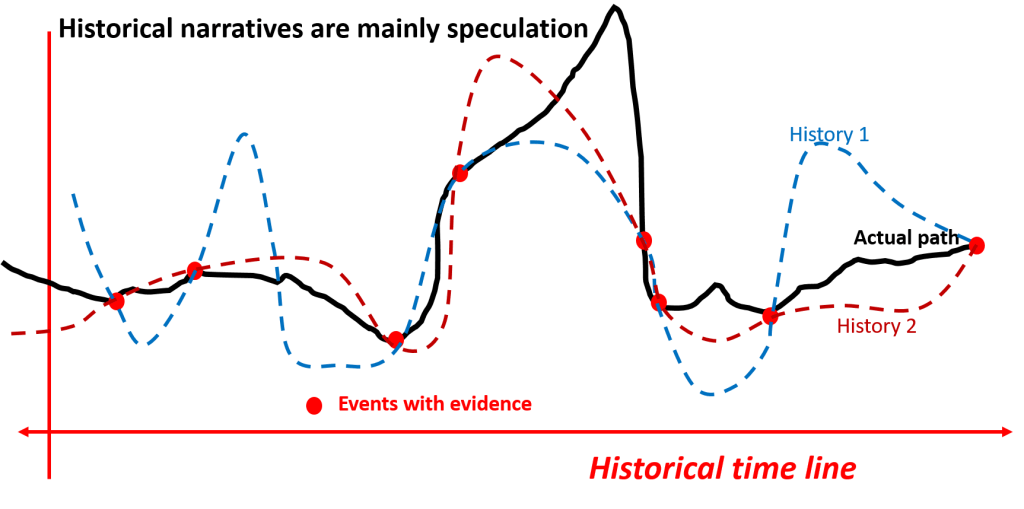
The same evidence can generate as many stories as there are story-tellers. Often the narrative between sparse evidence forms the bulk of the story. When the past is being called upon to justify current or future actions, histories are invented and reinvented by playing with the narrative which lies between the evidence. Of course, the narrative cannot contain what is contradicted by the evidence. Human memory is always perception and perception itself is imperfect and varies. I know that the story I tell of some event in my own history changes with time. Thus the “history” I tell of all that lies between the “recorded facts” of my own existence is a variable and is a function of the “now”. It is experience and knowledge of the world and the people around us which provides the credibility for the stories which lie between the evidence. But bias plays its role here as well. A desired story-line is always more credible than one which is not.
A historian looks for the events which, incontrovertibly, took place. The further back events lie in the past the less evidence survives. But histories are never merely a tabulation of events with evidence (though even what constitutes incontrovertible evidence is not without controversy). The more there is evidence the more constrained is the inter-connecting narrative. But historians make their reputations on the stories they tell. Their histories are always a combination of evidenced events and the narrative connecting them. Historian bias is inevitable.
I have been writing a story – hardly a history – about my father’s early life and through the Second World War. For a period covering some 20 years I have documented evidence for about 30 separate events – dates when certain events occurred. The date he graduated, the date he joined up, the date he was promoted or the date he arrived somewhere. The documented events are, like all documented events, just events. If not this set of events then it would have been some other similar set of events. If not these particular dates then some other set of dates. The events are always silent about what his mood was or what he had for breakfast on the day of the event. They provide a fixed frame but the overwhelming bulk of my story is speculation about why and how he went from one event to the next. The story fits my understanding of how he was much later in his life. My story about his motivations and his behaviour are entirely speculation but always fit my central story-line. The documented events are just the bones on which to hang the flesh of my story. My story is not determined by the events. It is determined elsewhere but has to conform to the events.
Go back a little under 1,000 years and consider Genghis Khan. We have documentary evidence about the date he died but even his date of birth is speculation. Current histories vary according to whether the historian desires to describe a hero or a villain. Both can be hung upon the framework provided by the few documented events available. Go back another 1,000 years and even with the large (relatively) amount of evidence available about the Roman Empire, the range of speculation possible can justify the politics of any contemporary viewpoint.
And so it is with all histories. We claim that histories help us to understand the past and that this, in turn, helps us to choose our future actions. I am not so sure. The power of a history lies in the credibility of the narrative connecting the certain events. As with the story about my father, a history is not a narrative determined by the events. The narrative is determined by other imperatives but must conform to the events. I begin to think that we write (and rewrite) our histories, always in the present, and with our present understandings, to justify where we are or the choices we want to make. They are always a justification of something in the present.
“Why is there something rather than nothing?” is considered by some to be the most fundamental question in metaphysics, and by others to be an invalid question. The Big Bang, quantum mechanics, time, consciousness, and God are all attempts to answer this question. They all invoke randomness or chance or probabilistic universes to escape the First Cause Problem. Physics and mathematics cannot address the question. An implied God of Randomness is the cop-out for all atheists.
Stanford Encyclopedia of Philosophy
The Commonplace Thesis, and the close connection between randomness and chance it proposes, appears also to be endorsed in the scientific literature, as in this example from a popular textbook on evolution (which also throws in the notion of unpredictability for good measure):
scientists use chance, or randomness, to mean that when physical causes can result in any of several outcomes, we cannot predict what the outcome will be in any particular case. (Futuyma 2005: 225)
Some philosophers are, no doubt, equally subject to this unthinking elision, but others connect chance and randomness deliberately. Suppes approvingly introduces
the view that the universe is essentially probabilistic in character, or, to put it in more colloquial language, that the world is full of random happenings. (Suppes 1984: 27)
The scientific method is forced to introduce random into stories about the origin of time and causality and the universe and life and everything. Often the invocation of random is used to avoid any questions of Divine Origins. But random and chance and probability are all just commentaries about a state of knowledge. They are silent about causality or about Divinity. Random ought to be causeless. But that is pretense for such a random is outside our experience. The flip of a coin produces only one outcome. Multiple outcomes are not possible. The probability of one of several possible outcomes is only a measure of lack of knowledge. Particles with a probability of being in one place or another are also an expression of ignorance. However when it is claimed that a particle may be in two places simultaneously we encounter a challenge to our notion of identity for particle and for place. Is that just ignorance about location in time or do we have two particles or two places? Random collisions at the start of time are merely labels for ignorance. Invoking singularities which appear randomly and cause Big Bangs is also just an expression of ignorance.

Whenever science or the scientific method requires, or invokes, randomness or probability, it is about what we do not know. It says nothing about why existence must be. The fundamental question remains unaddressed “Why is there something rather than nothing?”
And every determinist or atheist, whether admitted to or not, believes in the God of Randomness. Everything Random is Unknown (which includes the Divine).
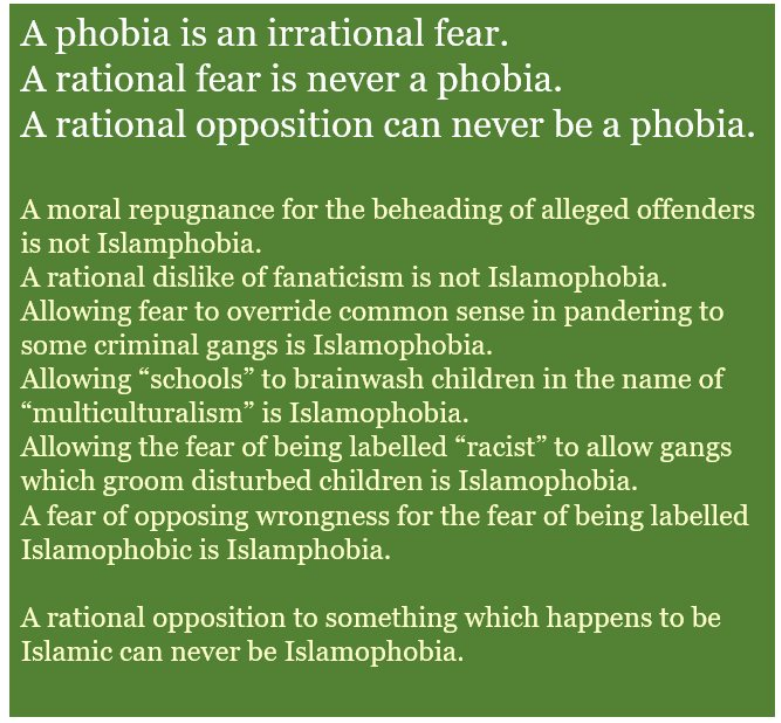
It is no longer politically correct to have an irrational fear of anything. There have been politically correct, but rather cowardly, reporters on Swedish TV who have even questioned whether the French teacher who was beheaded by an Islamic terrorist did not bear some responsibility for his own death.
But when what is wrong is denied for the fear of being seen as a racist or Islamophobic, it is both irrational and cowardice.
Anti-vax may be utterly stupid but vaccine worship is not far behind.
Let us not forget the public health fiasco with swine influenza vaccine and narcolepsy. In October 2009, Sweden’s public health services carried out a mass vaccination program against swine influenza. Six million doses of GlaxoSmithKline’s H1N1 influenza vaccine Pandemrix were administered. The vaccine was approved for use by the European Commission in September 2009, upon the recommendations of the European Medicines Agency. By August 2010, both the Swedish Medical Products Agency (MPA) and the Finnish National Institute for Health and Welfare (THL) launched investigations regarding the development of narcolepsy as a side effect.
An increased risk of narcolepsy was found following vaccination with Pandemrix, a monovalent 2009 H1N1 influenza vaccine that was used in several European countries during the H1N1 influenza pandemic. This risk was initially found in Finland, and then other European countries also detected an association.
CDC
Today over 400 people of those vaccinated in Sweden suffer from narcolepsy.
Narcolepsy is a central nervous system disorder characterized by excessive daytime sleepiness (EDS) and abnormal manifestations of rapid eye movement (REM) sleep. This disorder is caused by the brain’s inability to regulate sleep-wake cycles normally. The condition is incurable and life long. Some treatments can help to alleviate symptoms.
It is the same “experts” and institutions who decided on mass use of Pandemrix who are now inventing public health strategies for Covid-19. Meanwhile a vaccine for the coronavirus is still in its early stages of development and clinical trials. Some of these “expert” strategies are just fairy tales and fantasy.
Vaccinations generally work. Particular vaccinations sometimes don’t. Whether any particular vaccine against Covid-19 will work remains to be seen. The experience with other coronaviruses provides no track record which inspires great confidence.
I get worried when people say they believe in science. To be scientific is to be skeptical. If some science has to be believed in, then whatever it is that has to be believed, is not science.

I was recently invited by our local college (gymnasium) to give a lecture about my views on leadership. I was a little surprised that some of the questions were focused on the style of leadership rather than on substance. For example, styles are sometimes classified as being:
Without the need for cooperation, the word “leader” is undefined. Without a leader the word “leadership” is undefined. For me, leadership is entirely about behaviour. This classification of styles is not, in fact, about what constitutes leadership or even about different kinds of leadership. It is merely a list of styles which is entirely superficial. It places an undue emphasis on form rather than on substance; on the cosmetics of what leadership looks like rather than the fundamental behaviour involved. The use of “democratic” as a qualifier for a leadership style merely panders to a fashionable sense of political correctness and is inherently self-contradictory. The behaviour needed for leadership is no different whether in a monarchy or a democracy or a dictatorship. The behaviour is no different whether in the military or in government or in the corporate world or in sport.
I prefer my own definition of what a leader is.
“A leader is a person who behaves in such a manner as to induce the necessary behaviour from others, individually and collectively, towards a goal”
With this definition, the various behavioural styles above only describe particular facets of behavioural interactions between a leader and others. A leader has just two functions, which are necessary and sufficient:
Behavioural styles of a leader are then, and must be, as varied as may be necessary to induce the required behaviour from others. Depending upon the size of the group involved and their competence, a leader will need to use different styles to motivate and encourage different members. He is the conductor of an orchestra of behaviours. He may have to be a tyrant occasionally, a commander with some, show empathy with others, or be consultative with a few. The style in play may well vary with different leaders and different members. Behavioural style may vary over time or depending upon the prevailing external conditions. The so-called “democratic” style is really a very particular style of behaviour. It is useful, at times, in getting consensus – if consensus is what is needed – when dealing, for example, with an expert group where all members have very high levels of specialized competence. Group members have different roles and can vary widely in competence. A consensus of the incompetent is of no great value. Any leader who generally subordinates his behaviour to the consensus, or to a majority view to determine decisions, effectively abdicates leadership. A “democratic” leadership is inherently contradictory. You can have leadership in a democracy but not democracy within leadership. Any “style” of leadership behaviour must always be subordinated to the primary function of inducing the behaviour necessary from others to achieve a goal.
By considering the two components separately, it becomes much easier not only to assess people for leadership roles but also to tailor education and training to suit particular individuals.
It then naturally follows that being visionary and having skills for strategy or planning or forecasting or communication will be beneficial for goal-setting. Similarly, it becomes obvious that people-skills, motivation, communication, inspiration and persuasion are beneficial for getting the required behaviour from others. It is, I have found, counter-productive to over-think and unnecessarily complicate the basic principles.
Leadership is about the effectiveness of the leader’s behaviour. The empirical evidence of 200,000 years as modern humans is that a group with leadership is more effective than one without. Leadership is a vector quantity with both magnitude and direction. The direction comes from the creation and setting of goals and the magnitude is a measure of the “goodness” of the leadership which, in turn, is a measure of the competence of the leader to induce the required behaviour of others.
I do not claim that leadership is easy. But I do claim that the principles of leadership are simple and straightforward. A leader must be able to create and establish goals and must then be able to induce the behaviour of others towards those goals. It is complex but it is not more complicated than that.

Matt Ridley’s article in the Rational Optimist expresses much of my frustration with gullible journalists and the opportunism of the scientific fraternity (where over half are bean counters or clerks and don’t do any science) to exploit every funding opportunity. The money being thrown at Covid-19 research is far too tempting to expect that the charlatans will stay away. More than three hundred different projects being funded for developing a vaccine suggests that either we are so clueless that 300 different paths need to be pursued or that we have a number of fake projects being funded. I am not impressed when projects are funded to “study” how long the virus remains viable on mobile phones as opposed to plastic bags, or when the number of authors on Covid-19 papers are counted and “analysed”.
As Matt Ridley writes:
“…. peer review is often perfunctory rather than thorough; often exploited by chums to help each other; and frequently used by gatekeepers to exclude and extinguish legitimate minority scientific opinions in a field”.
His article is re-blogged here.
What the pandemic has taught us about science – Matt Ridley
The scientific method remains the best way to solve many problems, but bias, overconfidence and politics can sometimes lead scientists astray.
The Covid-19 pandemic has stretched the bond between the public and the scientific profession as never before. Scientists have been revealed to be neither omniscient demigods whose opinions automatically outweigh all political disagreement, nor unscrupulous fraudsters pursuing a political agenda under a cloak of impartiality. Somewhere between the two lies the truth: Science is a flawed and all too human affair, but it can generate timeless truths, and reliable practical guidance, in a way that other approaches cannot.
In a lecture at Cornell University in 1964, the physicist Richard Feynman defined the scientific method. First, you guess, he said, to a ripple of laughter. Then you compute the consequences of your guess. Then you compare those consequences with the evidence from observations or experiments. “If [your guess] disagrees with experiment, it’s wrong. In that simple statement is the key to science. It does not make a difference how beautiful the guess is, how smart you are, who made the guess or what his name is…it’s wrong.”
So when people started falling ill last winter with a respiratory illness, some scientists guessed that a novel coronavirus was responsible. The evidence proved them right. Some guessed it had come from an animal sold in the Wuhan wildlife market. The evidence proved them wrong. Some guessed vaccines could be developed that would prevent infection. The jury is still out.
Seeing science as a game of guess-and-test clarifies what has been happening these past months. Science is not about pronouncing with certainty on the known facts of the world; it is about exploring the unknown by testing guesses, some of which prove wrong.
Bad practice can corrupt all stages of the process. Some scientists fall so in love with their guesses that they fail to test them against evidence. They just compute the consequences and stop there. Mathematical models are elaborate, formal guesses, and there has been a disturbing tendency in recent years to describe their output with words like data, result or outcome. They are nothing of the sort.
An epidemiological model developed last March at Imperial College London was treated by politicians as hard evidence that without lockdowns, the pandemic could kill 2.2 million Americans, 510,000 Britons and 96,000 Swedes. The Swedes tested the model against the real world and found it wanting: They decided to forgo a lockdown, and fewer than 6,000 have died there.
In general, science is much better at telling you about the past and the present than the future. As Philip Tetlock of the University of Pennsylvania and others have shown, forecasting economic, meteorological or epidemiological events more than a short time ahead continues to prove frustratingly hard, and experts are sometimes worse at it than amateurs, because they overemphasize their pet causal theories.
A second mistake is to gather flawed data. On May 22, the respected medical journals the Lancet and the New England Journal of Medicine published a study based on the medical records of 96,000 patients from 671 hospitals around the world that appeared to disprove the guess that the drug hydroxychloroquine could cure Covid-19. The study caused the World Health Organization to halt trials of the drug.
It then emerged, however, that the database came from Surgisphere, a small company with little track record, few employees and no independent scientific board. When challenged, Surgisphere failed to produce the raw data. The papers were retracted with abject apologies from the journals. Nor has hydroxychloroquine since been proven to work. Uncertainty about it persists.
A third problem is that data can be trustworthy but inadequate. Evidence-based medicine teaches doctors to fully trust only science based on the gold standard of randomized controlled trials. But there have been no randomized controlled trials on the wearing of masks to prevent the spread of respiratory diseases (though one is now under way in Denmark). In the West, unlike in Asia, there were months of disagreement this year about the value of masks, culminating in the somewhat desperate argument of mask foes that people might behave too complacently when wearing them. The scientific consensus is that the evidence is good enough and the inconvenience small enough that we need not wait for absolute certainty before advising people to wear masks.
This is an inverted form of the so-called precautionary principle, which holds that uncertainty about possible hazards is a strong reason to limit or ban new technologies. But the principle cuts both ways. If a course of action is known to be safe and cheap and might help to prevent or cure diseases—like wearing a face mask or taking vitamin D supplements, in the case of Covid-19—then uncertainty is no excuse for not trying it.
A fourth mistake is to gather data that are compatible with your guess but to ignore data that contest it. This is known as confirmation bias. You should test the proposition that all swans are white by looking for black ones, not by finding more white ones. Yet scientists “believe” in their guesses, so they often accumulate evidence compatible with them but discount as aberrations evidence that would falsify them—saying, for example, that black swans in Australia don’t count.
Advocates of competing theories are apt to see the same data in different ways. Last January, Chinese scientists published a genome sequence known as RaTG13 from the virus most closely related to the one that causes Covid-19, isolated from a horseshoe bat in 2013. But there are questions surrounding the data. When the sequence was published, the researchers made no reference to the previous name given to the sample or to the outbreak of illness in 2012 that led to the investigation of the mine where the bat lived. It emerged only in July that the sample had been sequenced in 2017-2018 instead of post-Covid, as originally claimed.
These anomalies have led some scientists, including Dr. Li-Meng Yan, who recently left the University of Hong Kong School of Public Health and is a strong critic of the Chinese government, to claim that the bat virus genome sequence was fabricated to distract attention from the truth that the SARS-CoV-2 virus was actually manufactured from other viruses in a laboratory. These scientists continue to seek evidence, such as a lack of expected bacterial DNA in the supposedly fecal sample, that casts doubt on the official story.
By contrast, Dr. Kristian Andersen of Scripps Research in California has looked at the same confused announcements and stated that he does not “believe that any type of laboratory-based scenario is plausible.” Having checked the raw data, he has “no concerns about the overall quality of [the genome of] RaTG13.”
Given that Dr. Andersen’s standing in the scientific world is higher than Dr. Yan’s, much of the media treats Dr. Yan as a crank or conspiracy theorist. Even many of those who think a laboratory leak of the virus causing Covid-19 is possible or likely do not go so far as to claim that a bat virus sequence was fabricated as a distraction. But it is likely that all sides in this debate are succumbing to confirmation bias to some extent, seeking evidence that is compatible with their preferred theory and discounting contradictory evidence.
Dr. Andersen, for instance, has argued that although the virus causing Covid-19 has a “high affinity” for human cell receptors, “computational analyses predict that the interaction is not ideal” and is different from that of SARS, which is “strong evidence that SARS-CoV-2 is not the product of purposeful manipulation.” Yet, even if he is right, many of those who agree the virus is natural would not see this evidence as a slam dunk.
As this example illustrates, one of the hardest questions a science commentator faces is when to take a heretic seriously. It’s tempting for established scientists to use arguments from authority to dismiss reasonable challenges, but not every maverick is a new Galileo. As the astronomer Carl Sagan once put it, “Too much openness and you accept every notion, idea and hypothesis—which is tantamount to knowing nothing. Too much skepticism—especially rejection of new ideas before they are adequately tested—and you’re not only unpleasantly grumpy, but also closed to the advance of science.” In other words, as some wit once put it, don’t be so open-minded that your brains fall out.
Peer review is supposed to be the device that guides us away from unreliable heretics. A scientific result is only reliable when reputable scholars have given it their approval. Dr. Yan’s report has not been peer reviewed. But in recent years, peer review’s reputation has been tarnished by a series of scandals. The Surgisphere study was peer reviewed, as was the study by Dr. Andrew Wakefield, hero of the anti-vaccine movement, claiming that the MMR vaccine (for measles, mumps and rubella) caused autism. Investigations show that peer review is often perfunctory rather than thorough; often exploited by chums to help each other; and frequently used by gatekeepers to exclude and extinguish legitimate minority scientific opinions in a field.
Herbert Ayres, an expert in operations research, summarized the problem well several decades ago: “As a referee of a paper that threatens to disrupt his life, [a professor] is in a conflict-of-interest position, pure and simple. Unless we’re convinced that he, we, and all our friends who referee have integrity in the upper fifth percentile of those who have so far qualified for sainthood, it is beyond naive to believe that censorship does not occur.” Rosalyn Yalow, winner of the Nobel Prize in medicine, was fond of displaying the letter she received in 1955 from the Journal of Clinical Investigation noting that the reviewers were “particularly emphatic in rejecting” her paper.
The health of science depends on tolerating, even encouraging, at least some disagreement. In practice, science is prevented from turning into religion not by asking scientists to challenge their own theories but by getting them to challenge each other, sometimes with gusto. Where science becomes political, as in climate change and Covid-19, this diversity of opinion is sometimes extinguished in the pursuit of a consensus to present to a politician or a press conference, and to deny the oxygen of publicity to cranks. This year has driven home as never before the message that there is no such thing as “the science”; there are different scientific views on how to suppress the virus.
Anthony Fauci, the chief scientific adviser in the U.S., was adamant in the spring that a lockdown was necessary and continues to defend the policy. His equivalent in Sweden, Anders Tegnell, by contrast, had insisted that his country would not impose a formal lockdown and would keep borders, schools, restaurants and fitness centers open while encouraging voluntary social distancing. At first, Dr. Tegnell’s experiment looked foolish as Sweden’s case load increased. Now, with cases low and the Swedish economy in much better health than other countries, he looks wise. Both are good scientists looking at similar evidence, but they came to different conclusions.
Having proved a guess right, scientists must then repeat the experiment. Here too there are problems. A replication crisis has shocked psychology and medicine in recent years, with many scientific conclusions proving impossible to replicate because they were rushed into print with “publication bias” in favor of marginally and accidentally significant results. As the psychologist Stuart Ritchie of Kings College London argues in his new book, “Science Fictions: Exposing Fraud, Bias, Negligence and Hype in Science,” unreliable and even fraudulent papers are now known to lie behind some influential theories.
For example, “priming”—the phenomenon by which people can be induced to behave differently by suggestive words or stimuli—was until recently thought to be a firmly established fact, but studies consistently fail to replicate it. In the famous 1971 Stanford prison experiment, taught to generations of psychology students, role-playing volunteers supposedly chose to behave sadistically toward “prisoners.” Tapes have revealed that the “guards” were actually instructed to behave that way. A widely believed study, subject of a hugely popular TED talk, showing that “power posing” gives you a hormonal boost, cannot be replicated. And a much-publicized discovery that ocean acidification alters fish behavior turned out to be bunk.
Prof. Ritchie argues that the way scientists are funded, published and promoted is corrupting: “Peer review is far from the guarantee of reliability it is cracked up to be, while the system of publication that’s supposed to be a crucial strength of science has become its Achilles heel.” He says that we have “ended up with a scientific system that doesn’t just overlook our human foibles but amplifies them.”
At times, people with great expertise have been humiliated during this pandemic by the way the virus has defied their predictions. Feynman also said: “Science is the belief in the ignorance of experts.” But a theoretical physicist can afford such a view; it is not much comfort to an ordinary person trying to stay safe during the pandemic or a politician looking for advice on how to prevent the spread of the virus. Organized science is indeed able to distill sufficient expertise out of debate in such a way as to solve practical problems. It does so imperfectly, and with wrong turns, but it still does so.
How should the public begin to make sense of the flurry of sometimes contradictory scientific views generated by the Covid-19 crisis? There is no shortcut. The only way to be absolutely sure that one scientific pronouncement is reliable and another is not is to examine the evidence yourself. Relying on the reputation of the scientist, or the reporter reporting it, is the way that many of us go, and is better than nothing, but it is not infallible. If in doubt, do your homework.

As schools and colleges have opened and partying has resumed, the number of infections have been rising.
However the deaths attributed to Covid-19 no longer stick out of the average of deaths/day (all causes).

Counting and the invention of numbers and the abstractions enabling mathematics are surely cognitive abilities. Counting itself involves an abstract ability. The simple act of raising two fingers to denote the number of stones or lions or stars implies first, the abstract ability to describe an observed quality and second, the desire to communicate that observation.
What led humans to counting and when?
Before an intelligence can turn to counting it must first have some concept of numbers. When and how did our ancient ancestors first develop a concept of numbers and then start counting? ……..
It seems clear that many animals do distinguish – in a primitive and elementary way – between “more” and “less, and “few” and “many”,and “bigger” and “smaller”, and even manage to distinguish between simple number counts. They show a sophisticated use of hierarchy and precedence.
Some primates show some primitive abilities when tested by humans
….. Rhesus monkeys appear to understand that 1 + 1 = 2. They also seem to understand that 2 + 1 = 3, 2 – 1 = 1, and 3 – 1 = 2—but fail, however, to understand that 2 + 2 = 4. ……
But even chimpanzees and monkeys rarely, if ever, use counts or counting in interactions among themselves. The abilities for language and counting are not necessarily connected genetically (though it is probable), but they are both certainly abilities which appear gradually as cognition increases. Mathematics is, of course, just another language for describing the world around us. Number systems, as all invented languages, need that a system and its rules be shared before any communication is feasible. It is very likely that the expressions of the abilities to count and to have language follow much the same timeline. The invention of specific sounds or gestures to signify words surely coincided with the invention of gestures or sounds to signify numbers. The step change in the size of brains along the evolutionary path of humans is very likely closely connected with the expressions of the language and the counting abilities.

The ability to have language surely preceded the invention of languages just as the ability to count preceded the expressions of counting and numbering. It is not implausible that the first member of a homo erectus descendant who used his fingers to indicate one of something, or four of something else, to one of his peers, made a far, far greater discovery – relatively – than Newton or Einstein ever did.
We must have started counting and using counts (using gestures) long before we invented words to represent counts. Of course, it is the desire to communicate which is the driving force which takes us from having abilities to expressions of those abilities. The “cooperation gene” goes back to before the development of bipedalism and before the split with chimpanzees or even gorillas (at least 9 million years ago).
The simple answer to the question “Why did we start to count?” is because we could conceive of a count, observed it and wished to communicate it. But this presupposes the ability to count. Just as with language, the ability and the expression of the ability, are a consequence of the rapid increase in brain size which happened between 3 m and 1 m years ago.
I am persuaded that that rapid change was due to the control of fire and the change to eating cooked food and especially cooked meat. The digestion of many nutrients becomes possible only with cooked food and is the most plausible driver for the rapid increase in brain size.
Raw Food not enough to feed big brains
………. our brains would still be the size of an ape’s if H. erectus hadn’t played with fire: “Gorillas are stuck with this limitation of how much they can eat in a day; orangutans are stuck there; H. erectus would be stuck there if they had not invented cooking,” she says. “The more I think about it, the more I bow to my kitchen. It’s the reason we are here.”

 The k2p blog