March 26, 2013
The wunderkind of the EU have just established a two-currency Europe and have undermined the trust any depositor can have in a Eurozone bank. The Cyprus solution has effectively created a Cypriot Euro which is – in practice – worth a lot less than a normal Euro. And every depositor holding more than €100,000 will be taking a very large risk if he puts his money in a weak Eurozone bank or in a weak Eurozone country. The depositor will need to demand a risk premium to cover the risk that his money could be stolen by the bank or by the State.
A Cypriot Euro (Κ€) is now worth less than a “normal” Euro (€). What that value is is a little difficult to judge but it lies somewhere between 60% and 90% of a normal Euro. All K€ which are outside of the deposit guarantee are now only worth 80% of a normal €. Moreover currency restrictions apply which are not so different to exchange control regulations for movement outside the country but which apply – in addition – to movement of money within Cyprus. A K€ still has the same buying power as a normal Euro but, on the other hand, it will no longer be possible to get any “outside Euros” to move into Cyprus and risk confiscation!
Jeroen Dijsselbloem, the Dutch chairman of the Eurozone announced (rather idiotically) yesterday that the Cyprus solution was the template to be used in the future. Cyprus itself does not have an economy large enought to be so significant. But effectively he was confirming that “Savings accounts in Spain, Italy and other European countries will be raided if needed to preserve Europe’s single currency by propping up failing banks”. But the resulting, ostensibly “single currency” will , de facto, have to distinguish between the currency held in different countries and just calling it a “single” currency will not hide the reality. Mr. Dijsselbloem later tried to back-pedal on his statement but the truth was out by then. No amount of denials will change the fact that the Cyprus solution now sets the precedent and every weak bank will now be required to try and protect its shareholders by attacking its depositors.
I think the damage has been done and it is already too late for the EU to try and soften the message. I heard today that financial advisers in India and China were already suggesting to clients with Euro holdings to make sure it was in a strong country. This eliminates Greece, Italy, Spain, Ireland and even Hollande’s France. This only leaves Germany. The Russians are probably already shifting their legitimate Euro funds to Germany or the Netherlands and their not-so-legitimate money to the Bahamas or Mauritius or the Seychelles. In the short term Germany is the main beneficiary. Not only are their exports being helped by a weak Euro (kept weak because of the weak countries persisting within the Euro) but their banks are likely to see Euro deposits from the weak countries moving their way. But in the long term a flight from the Euro will not help anyone in Europe. The ideological – and almost dogmatic – attachment to the single Euro is now damaging all of Europe and delaying the recovery. Every single one of the bailed-out countries would recover faster if only they had a currency which could have been devalued.
The Cyprus solution is also a more general attack on Europe’s middle class (admittedly the richer part of the middle class). The population of the EU is about 500 million. With an average of about 2.5 individuals per household this represents about 200 million households. Probably 15-20 million households have a net worth exceeding €200,000 which implies financial assets (as opposed to property and other non-liquid assets) of about €100,000. So an attack on European deposits of greater than €100,000 could affect some 40 – 50 million individuals.
Cyprus could be the straw that breaks the Euro’s back.
Tags: Cyprus, Euro, European Union, Eurozone, Jeroen Dijsselbloem, Two currency Europe
Posted in Behaviour, Currency, Economy, European Union, Politics | Comments Off on Cyprus could be the straw that breaks the Euro’s back
March 26, 2013
Woolly mammoths are thought to have finally become extinct about 4,000 years ago but their bones are being recovered in increasing numbers from under the Siberian permafrost.
They have been recovered for thousands of years whenever they have been found. But now with the use of aerial surveys and with the high demand for ivory, mammoth ivory is beginning to be recovered in large quantities and used instead of illegal ivory. It is promoted as “ethical” ivory and the prices are high enough for Russian entrepreneurs to expand their digging.
National Geographic carries a story about a modern-day Siberian mammoth hunter.
The shaggy giants that roamed northern Siberia during the late Pleistocene epoch died off about 10,000 years ago, though isolated populations lingered on islands to the north and east, the last dying out some 3,700 years ago. The mammoths’ tusks, which could spiral to more than 13 feet, are reemerging from the permafrost—and fueling a trade that benefits the people of Arctic Siberia, including the native Yakuts, an Asiatic ethnic group that speaks a language of Turkic origin. …..
…. The specimen that emerges is as thick as a tree trunk—150 pounds—and in near-pristine condition. Before hauling the tusk away, Gorokhov tosses a silver earring into the hole he has dug, as an offering to the local spirits. If he gets the ancient relic safely home, it could fetch more than $60,000.
Stunning photographs by Evgenia Arbugaeva in National Geographic of mammoth tusks recovered in Arctic Siberia.

Photograph by Evgenia Arbugaeva (via National Geographic)
http://www.evgeniaarbugaeva.com/
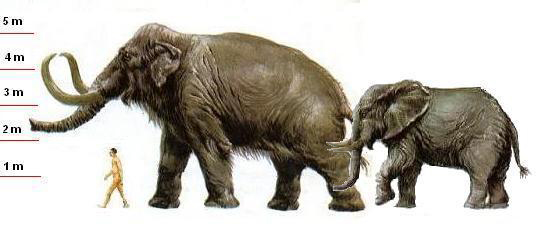
It is not always easy to imagine quite how big the mammoths were and what would have been involved in hunting them 4,000 years ago. That humans did actually manage to successfully hunt these massive beasts cannot be put down to their stature or their weapons or their prowess with spears and can only have been a result of co-operation and strategy.

mammoth hunting

Size comparison animalpicturesarchive.com
Tags: Elephant and mammoth ivory, Evgenia Arbugaeva, Mammoth, National Geographic, Siberia, Tusk
Posted in Business, Development, Evolution, Russia | Comments Off on Mammoth tusks are — mammoth!
March 25, 2013
The days of segregating bus passengers by skin colour and their appearance are not just something from the bad old days of the American South or from the days of apartheid in S. Africa. It would seem to be alive and well and practised in Sweden even today. For some it brings back memories of Bosnia where those with the “wrong” names were selected to be put on the “death-buses”.
Sweden has a population of 9.55 million and around 19.6% or 1.858.000 inhabitants who have a foreign background, defined as being born abroad or being born in Sweden of two parents born abroad. Many sectors of industry and public services are totally dependent upon the “immigrants” as in the rest of Europe. The welfare states of Europe are more and more dependent upon the immigrants of working age who help support the ageing demographics. Overt discrimination in Sweden is probably much less than in many other parts of Europe but it would be quite wring to think that it is absent. The latent dislike of “others” will always be present under the surface but it is the political “respectability” provided by the new fascist or neo-Nazi parties which encourages this “latent” behaviour to openly manifest itself .
Another Kristallnacht somewhere in Europe within the next decade is not unthinkable. And if it happens it may well be in Greece or Germany or Austria but it could also happen further North.
Dagens Nyheter reports (my free translation):
The segregation of people having a different appearance which DN revealed on Saturday is not unique. When Viking Line buses would depart from Örebro, bus drivers used name-lists to place the “immigrants” on one bus and “Swedes” on another. “There was absolutely no way that this was random,” said Faruk Smailhodzic.
DN’s articles on how Eckerö Line buses, run by the People Travel Group owned by Veolia, on at least two occasions segregated passengers according to their skin colour has aroused strong reactions. And now it turns out that Wednesday’s and Thursday’s events are not unique.
On two occasions in December Viking Line drivers had been provided with lists of passengers in order to divide them onto different buses. One list contained the names that appeared to be “Swedish” and other names that appeared to be “foreign”. ….
For one couple it brought back memories of Bosnia. Memories of how some people were selected while others escaped. “We have experienced of when people are separated and put on a bus and it is not a good feeling. And there was always a feeling that maybe we were not going on any cruise, but maybe somewhere else”, says Faruk Smailhodzic.
Tags: Apartheid, Dagens Nyheter, Eckerö Line, People Travel Group, Segregation, Sweden, Veolia, Viking Line
Posted in Behaviour, Demographics, Sweden | Comments Off on Apartheid is still alive and well – in Sweden
March 24, 2013
The first time ever that India has managed a white-wash on their opponents in a test series. They won 4 tests of the 4 test series at home against Australia. (They already know how to be white washed!)
But the Australian team can take comfort in the fact that practice paid-off and they won the toss 4 times in a row – and elected to bat each time and lost each time.
And they all learned how to use PowerPoint.

Cricket by PowerPoint
Cricinfo:
- This is the first time India have won four Tests in a series. They’ve won three in a series on three occasions, two of which were clean sweeps at home – against England in 1992-93, and against Sri Lanka the following season.
- For Australia, this is only their second clean-sweep defeat in a series, after their 4-0 rout in South Africa in 1969-70. This is the sixth time they’ve lost four or more Tests in a series, and the first such instance since the Ashes at home in 1978-79, when an Australian team depleted by the Kerry Packer exodus lost 5-1.
- This is only the second time in Test history that a team has won four or more tosses in a series, and lost four or more Tests in the same series. The only previous such instance was in the Ashes series of 1978-79 mentioned above, when Australia won the toss in five out of six Tests, but lost the series 5-1.
- India have won 12 Tests at the Feroz Shah Kotla, which is next only to the MA Chidambaram Stadium in Chennai, where they’ve won 13. Of their last ten Tests here, India have won nine and drawn one. Their last defeat at this venue was in 1987, against West Indies.
- Cheteshwar Pujara was not only one of the Indian heroes for the match and the series, but also for the entire season: he scored 857 runs in eight Tests 85.70, which puts him in 15th place in the all-time list forruns scored in a season for India. With a 600-run cut-off for a season, Pujara’s average of 85.70 puts him inseventh place.
- Pujara’s unbeaten 82 in the fourth innings came off only 92 balls. His strike rate of 89.13 is the third-best for India in fourth-innings knocks of 75 or more.
- The 104-run stand between Pujara and Virat Kohli is the tenth century stand for India for the second wicket in the fourth innings of a Test match.
- R Ashwin’s series haul of 29 wickets is the seventh-best for India in a Test series, and the best since Harbhajan Singh’s 32 against Australia in 2001. The only Indian bowlers who’ve taken more wickets in a series are BS Chandrasekhar, Vinoo Mankad, Subhash Gupte, Kapil Dev, Harbhajan and Bishan Singh Bedi.
- There were five five-fors for India in the series; only three times have there been more five-fors in a series for India.
- Peter Siddle became the first batsman in Test history to score at least a half-century in each innings of a Test. He scored 51 in the first innings and 50 in the second, top-scoring for Australia in each innings.
- Glenn Maxwell became the first Australian to open the batting and bowling in the same Test since Percy Hornibrook in 1929. Hornibrook, a left-arm bowler who bowled some medium-pace and spin, opened the batting and bowling at the MCG Test against England.
- For only the third time in their entire Test history, Australia opened the attack with two spinners. The last such instance for Australia was in Georgetown in 2003 against West Indies, when Stuart MacGill and Brad Hogg opened the bowling in West Indies’ second innings.
Tags: Australia, Border-Gavaskar Trophy, India, Test cricket, White-wash
Posted in Sport, Trivia | Comments Off on Border-Gavaskar trophy: Australia win 4 in a row but get white-washed
March 24, 2013
Two interesting articles today and perhaps they presage the return of some sanity to the ludicrous, Canute-like attempts to try and control climate. The first is in Die Welt (which is usually a most politically correct adherent of global warming dogma) about the nonsense that the Greens have wrought in German policy (by Sebastian Lüning and Fritz Vahrenholt reported by P. Gosselin). The second is a leader in the Telegraph calling for the repeal of the Climate Change Act in the UK.
NoTricksZone: Germany’s Energiewende [energy transition over to renewables] is being watched closely in foreign countries. Already bets are being made on whether the expensive experiment is going to work. Meanwhile increasing numbers of international experts are expressing serious doubts. In the March 20th print edition of German national daily Die Welt, Daniel Wetzel reports on a survey by the World Energy Council in an article titled “The Energiewende is an international flop”. An online version of the report is now available and bears the watered down title: “Other countries disdaining the Energiewende”:

Worldwide doubt about the success of the German Energiewende is growing. International experts are sure that the German economy is weakening. This is the finding of a survey from the World Energy Council. […] A rapid short-term shutdown of nuclear power plants along with unlimited subsidies for renewable energies: In Germany this has been viewed as the silver bullet for energy policy since the Fukushima accident. However in Europe and globally, there’s hardly a nation that views the German ‘Energiewende”’ as worth copying. These are the findings of the German section of the World Energy Council in 23 member countries, made exclusively available to Die Welt. […] The rising doubt is possibly related to the unexpectedly rapidly rising electricity prices in Germany, which are having a dissuasive effect. Stotz believes: ‘Obviously one has to be able to afford an energy transition.’ (Read more at Welt Online).
In a commentary appearing at Die Welt titled, “Germany, the odd one out”, Daniel Wetzel pleads for more prudence, and rejects climate alarmism as the most important argument for an Energiewende:
Also the necessity to rapidly end the use of fossil fuels no longer appears as urgent as it was just a few years ago. Indeed, in the meantime, fear of climate change appears to have evaporated worldwide. Global warming has been taking a break for over 10 years, and politicians in many countries appear as if they would rather await a good explanation for this phenomenon before again making the fight against climate change a high priority. Quite apart from this: one other large industrial country has just succeeded in reducing its per capita CO2 emissions to levels of the early 1960s. The best in the class when it comes to climate politics is the USA. Thanks to fracking technology in natural gas drilling, they have been able to switch off dirty coal power plants.”
“The Tory part of the Coalition is beginning to recognise some painful truths, but it is time for the Coalition to tear up its energy policy before the lights go out” says The Telegraph:

…… Because of a misguided faith in green energy, we have left ourselves far too dependent on foreign gas supplies, largely provided by Russian and Middle Eastern producers. Only 45 per cent of our gas consumption comes from domestic sources. All it takes is a spell of bad weather, and the closure of a gas pipeline from Belgium, to leave us dangerously exposed, and to send gas prices soaring. Talk of rationing may be exaggerated, but our energy policy is failing to deal with Britain’s fundamental incapacity to produce our own power.
…… It is time for the Coalition to tear up its energy policy before the lights really do go out. The first priority must be to repeal the Climate Change Act of 2008, with its brutal, punishing targets: ……… But green technology – in its current incarnation, anyway – is just too inefficient and expensive to meet our energy needs. In some of the worst weather for more than 30 years, green power still only provides a tiny fraction of our energy needs. Solar power is of limited use in our cold, dark, northern climate. And wind power isn’t much better – cold weather doesn’t necessarily mean windy weather.
…….. He will know that American gas prices have plummeted, thanks to the US embracing the shale gas revolution. ………. Our energy problems have been deepened by the greener-than-green Liberal Democrats, with their seeming stranglehold on the Cabinet post of Energy Secretary. ………….
There is some good news, however. As we report today, government sources have said that wind power subsidies are to be cut again. This is a move in the right direction and we very much welcome it. It is to be hoped that there will be more such announcements, and concrete actions, from a government that has neglected a fundamental duty – to keep the lights on, energy affordable and our houses warm.
Tags: climate change, energiewende, Energy legislation, Germany, global warming, Renewable energy, United Kingdom
Posted in Alarmism, Climate, Energy | Comments Off on Reality Check – Climate does not much care for Acts of Parliament
March 23, 2013
A one off tax is not a regular tax but just confiscation. When done by a State it is Grand Theft. It is some kind of nationalisation where some selected private assets are appropriated. Whatever it is called, it is just plain stealing from bank depositors. When banks are weak or badly managed it is the owners of the bank who should be held both responsible and accountable. But to blatantly and arbitrarily just “confiscate” a part of some of the depositors holdings is a dangerous precedent.
If this is what happens in Cyprus and seemingly with the acquiescence – if not the encouragement – of the Euro zone then it bodes ill for all depositors in weak Euro zone banks or banks in weak Euro zone countries. Cyprus can set a precedent of what is acceptable behaviour in the Euro zone. Certainly the banks and the owners will like this. After all it shifts risk from the bank’s equity to the bank’s depositors. And for profligate countries it provides a cover for stealing the money of large depositors.
For depositors having more than €100,000 in Cyprus it is already too late. Robbery by the State has been sanctioned by the European Union including Germany. Rationalising such a move by saying it is to get at black Russian money is disingenuous. If this is acceptable in Cyprus today then it may well be acceptable for banks – and not just the State – to confiscate their customer’s savings whenever an “emergency” arises.
For those with substantial deposits – and not just over €100,000 – in Greece or Spain or Italy or Ireland it is probably high time to get out.
Tags: confiscation, Cyprus, European Union, Germany, Greece, Ireland, Italy, Spain, Stealing from depositors
Posted in Behaviour, Business, European Union, Politics | 1 Comment »
March 23, 2013
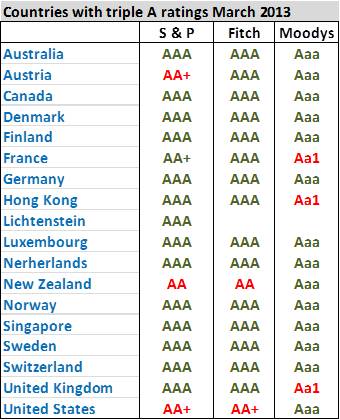
As Fitch puts the Uk’s country rating on negative watch, the number of countries left with triple A ratings has continued to shrink in 2013. Only countries given a triple-A rating by at least one of the big-3 rating agencies are included here.
Tags: Credit rating, Fitch, Moody, S & P
Posted in Economy, Politics | 1 Comment »
March 23, 2013
That spring is delayed all over Europe and North America is bad enough (the sun is shining here at latitude 58.7057° N but the temperature is all of – 10 °C).
That people will be “celebrating” Earth hour today is even worse.
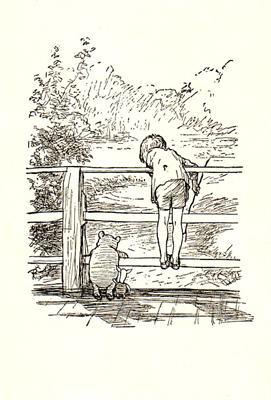
But that the annual Pooh Sticks competition (world championship) scheduled for tomorrow has been cancelled in the UK is beyond the pale.
And those to blame are clearly the CRU of the UEA, the IPCC and the WWF.

CANCELLED
We are very sorry to announce that we have to cancel this Sunday’s World Pooh Sticks Championships.
If we had just had a little rain on the day then we would have still played and we would have splashed around in wellington boots and dropped our coloured sticks over the bridges, however we’ve had so much rain over the last few weeks that the river is still too high and fast to have our safety boats on the river and there’s no sign of the rain stopping this weekend.
“I think we all ought to play Poohsticks,” So they did. And Eeyore, who had never played it before, won more times than anybody else; and Roo fell in twice, the first time by accident and the second time on purpose, because he suddenly saw Kanga coming from the Forest, and he knew he’d have to go to bed anyhow. So Rabbit said he’d go with them; and Tigger and Eeyore went off together Because Eeyore wanted to tell Tigger How to Win at Poohsticks. (from “The House at Pooh Corner”)
‘The official Pooh Corner Rules for Playing Poohsticks’ was written in 1996 to commemorate the 70th anniversary of the publication of ‘Winnie-the-Pooh’.

- First, you each select a stick and show it to your fellow competitors. You must agree which stick is which – or whose, as it were.
- Check which way the stream is flowing. Competitors need to face the stream on the side where it runs in, under the bridge (upstream). Note: If the stream runs out, from under the bridge you are standing on the wrong side! (downstream).
- Choose someone to be a Starter. This can be either the oldest or the youngest competitor.
- All the competitors stand side by side facing upstream.
- Each competitor holds their stick at arms length over the stream. The tall competitors should lower their arms to bring all the sticks to the same height over the stream as the shortest competitor’s stick.
- The starter calls, ‘Ready – Steady – Go!” and all the competitors drop their sticks. Note: the stick must not be thrown into the water.
- At this point in the game all the players must cross to the downstream side of the bridge. Please take care – young players like to race across. Remember, other people use bridges and some of them have vehicles or horses.
- Look over the edge of the bridge for the sticks to emerge. The owner of the first Stick to float from under the bridge, is the winner.
Remember: Falling into the water is SAD (Silly And Daft)!
Tags: House at Pooh Corner, Milne, Pooh Stick World Championships, Poohsticks, Tigger, Winnie-the-Pooh
Posted in Trivia | Comments Off on Spring delayed – 2013 World Pooh Sticks championship cancelled!
March 22, 2013
I have experienced the rigours of real blackouts and brownouts many times in my life.
I have seen what it was like in Kobe after the 1995 earthquake when no power was available.
The availability of electricity for the bulk of the world’s population has been by far the most important factor in the development of humans in recent times and possibly ranks with the discovery of fire and the wheel as the most important advances ever made.
A self-indulgent, “feel-good” gesture such as Earth Hour is not just meaningless and futile – it is the stridently self-righteous action of a morally bankrupt group which from a position of relative comfort and abundance would deny the aspirations of millions to improve their lot. It is a gesture which scorns the efforts of those who would try and provide the benefits that cheap and readily available electricity brings.
I doubt whether many in the northern latitudes who will indulge in this silliness tomorrow by turning off some of their lights will actually turn off any heating during this bitterly cold March. I shall not respond in kind by the equally arrogant gesture of turning on all the lights in my house.
Earth hour is a morally bankrupt, self-indulgent, “feel-good” gesture. It is a “cheap” and mean action. It does a disservice to humanity. It diverts attention from the real issues of development that face the world’s poor. And the availability of electric power is fundamentally necessary to this development.
And during Earth Hour tomorrow it will be business as usual for me. I shall not be turning off any lights and I shall not be turning off the heating in my house.
Tags: Earth Hour, Electricity
Posted in Alarmism, Behaviour | 1 Comment »
March 22, 2013
We are all customers and and we are all essentially conservative at heart. We tend to prefer to stick to what we know and like. So while listening to your customers is paramount when it comes to incremental improvements of products or services, the existing customer may not be the best when it comes to radical innovation and the introduction of something completely new.
Customer co-creation in service innovation: a matter of communication? by Anders Gustafsson, Per Kristensson and Lars Witell, Journal of Service Management, 23(2012)3: 311-327. dx.doi.org/10.1108/09564231211248426.
The paper (available as an Open Access manuscript) reports on the results of a survey among 334 managers who all had experience with innovation in the creation of new products or services. The researchers selected 284 real development projects divided into two main groups:
- Incremental innovation: 207 of the projects dealt with minor improvements of products or services.
- Radical innovation: The remaining 77 projects dealt with development of radically new products or services not previously known to the market.
… The implication for the dysfunctional model is that the communication process – and therefore co-creation – is different for radical innovations than for incremental innovations. The model for radical innovations produced two significant paths (using adjusted t-tests), frequency (0.336, p< 0.05), and content (-0.246, p< 0.05). The results indicate that companies should interact frequently with their customers; this is similar to the findings in the case of incremental innovations. The path coefficient for content is negative, which indicates that customers should not be too highly involved in developing the actual content of radical innovations. …..
…. The results of the present study contribute to a deeper understanding of why new offerings developed through market research techniques based on co-creation with customers are more profitable than those developed with traditional market research techniques. ……
However, the communication process of co-creation for radical innovations seems to behave quite differently in that the four suggested dimensions are not entirely applicable in the same way for radical innovation as they are for incremental innovation. The different dimensions in the communication process behave differently in the two conditions, which suggests that companies must apply different communication strategies in co-creation depending on the degree of innovativeness of a development project. The two dimensions that are significant in radical innovation are frequency (positive) and content (negative). Direction and modality did not have a significant impact on product success. This implies that companies should learn from customers through frequent contact, which is the same as in the case of incremental innovations. However, companies should not be overly concerned with suggestions of the content of a potential new offering. Radical solutions can often be considered unthinkable in advance, which can make radical solutions hard to imagine, but customers know a good idea when they see and use it. Customers create solutions based on their previous experiences of usage of different products or services, which makes it difficult to suggest solutions that are truly radical.
Tags: Business, Innovation, Knowledge Creation, Knowledge Management, Market research, radical innovation
Posted in Behaviour, Business, Innovation, Management | Comments Off on When it comes to radical innovation, the customer is not always right