Facebook copies social networking concept from 600 years ago

January 21, 2013

The Facebook concept was anticipated some 600 years ago.

A collaborative research project is ongoing between Royal Holloway, University of London, the British Library and Reading University, in which a team of academics are cataloguing and investigating the works of the Italian Academies, dating from 1525 to 1700.One of the major outcomes of the project is a comprehensive database of information on Academies from across the Italian peninsula, detailing their membership and publications. This is publicly accessible through the British Library on-line catalogue

Learned Academies represent a vital and characteristic dimension of early modern culture. There were ca. 600 Academies in Italy in the period 1525-1700. In the 16th and 17th centuries the Italian Academies were responsible for promoting debate and discussion in many different disciplines from language and literature, through the visual and performing arts to science, technology, medicine and astronomy.

And the researchers have also found that scholars at the Italian Academies were networking socially with satirical nicknames while sharing comments on topical events and exchanging poems and plays and music.

The project provides information about the academies, their members, publications, activities and emblems. Researchers were surprised to realise just how similar the activities of these sixteenth and seventeenth century scholars were with society today. 

Professor Jane Everson, Principal-investigator, said: “Just as we create user names for our profiles on Facebook and Twitter and create circles of friends on Google plus, these scholars created nicknames, shared – and commented on – topical ideas, the news of the day, and exchanged poems, plays and music. It may have taken a little longer for this to be shared without the internet, but through the creation of yearbooks and volumes of letters and speeches, they shared the information of the day.” 

The scholars created satirical names for their academies such as Gelati  and Intronati. Professor Everson explains: “They are jokey names, which really mean the opposite of what they say. Intronati has nothing to do with thrones; it means dazed, stunned, knocked out and so not able to think straight – but really the Intronati were engaged in serious study, debates, dramatic performances and the like from the moment they were founded in the 1520s – and they are still as active as ever in their home city of Siena. The Gelati were not going around singing just one cornetto. Gelati means the frozen ones – so a pun on the fact that these academicians far from being totally inactive through being frozen cold, were busy debating, exploring ideas, challenging received opinions and changing the cultural world of their home city of Bologna, and indeed of Italy and far beyond.”

Just as the names of the academies and the nicknames of the individual members were fun, so are the emblems and mottos which illustrate the name of the academy. The scholars took great delight in creating puzzling emblems with hidden meanings. Professor Everson adds: “They do sometimes take some working out, but it is great fun when you can see the hidden meanings in the images.”  

Just another Russian winter — or is it global warming?

January 20, 2013

It is cold that kills not warmth. It is global cooling that will provide the greater challenge for humans – not global warming. But whether cooling or warming or both, humans will be better served by figuring out the best ways to adapt and not waste time and energy on trying to control the climate based on fanciful theories and religious beliefs about what causes climate change.

It’s the Sun, stupid!

Yesterday we had about -20°C,  which is pretty cold but not unusual for this time of year. A friend in Australia was sweltering in +44°C  -pretty hot but also not unusual. Another friend in Alberta had a normal winter day at about -25°C. Yesterday across the world humans were living and managing over temperatures ranging from about -50°C to about +49°C. Coping – quite successfully – with a temperature range caused by local weather of almost 100°C .

Snowpocalypse Russia

On Friday, Moscow was on a verge of traffic collapse as more than 10 inches of snow fell on the city, which is more than half of January’s average. Thousands of passengers were stranded overnight in the capital’s major airports, as several dozen flights were delayed. Muscovites woke up and found their cars, driveways and houses buried under a thick layer of snow, with city workers unable to get to smaller streets.

Moscow (Reuters / Sergei Karpukhin)

Moscow (Reuters / Sergei Karpukhin)

While the snowstorms have caused inconvenience for large population centers in western Russia, they have been life-threatening further east in the country. The polar circle city of Norilsk has been buried under 10 feet of snow – entire apartment blocks, markets, stores and offices were buried under snow overnight.

Banks of snow were as high as two people put together, reaching the second-story windows of some apartment buildings. Cars, stores, garages were blocked. Norilsk metropolitan workers were forced to dig passageways through the snow banks to create access between the outside world and the barricaded city. Meanwhile, icicles up to three feet in length have formed off the ledges of buildings, breaking at random and causing a lethal hazard for pedestrians below.

Norilsk (Photo from bigpicture.ru)

Norilsk (Photo from bigpicture.ru)


Noted in Passing 19th January 2013

January 19, 2013

A weekly post on things that were interesting or which I would have liked to have blogged about …….

Engineering and Technology

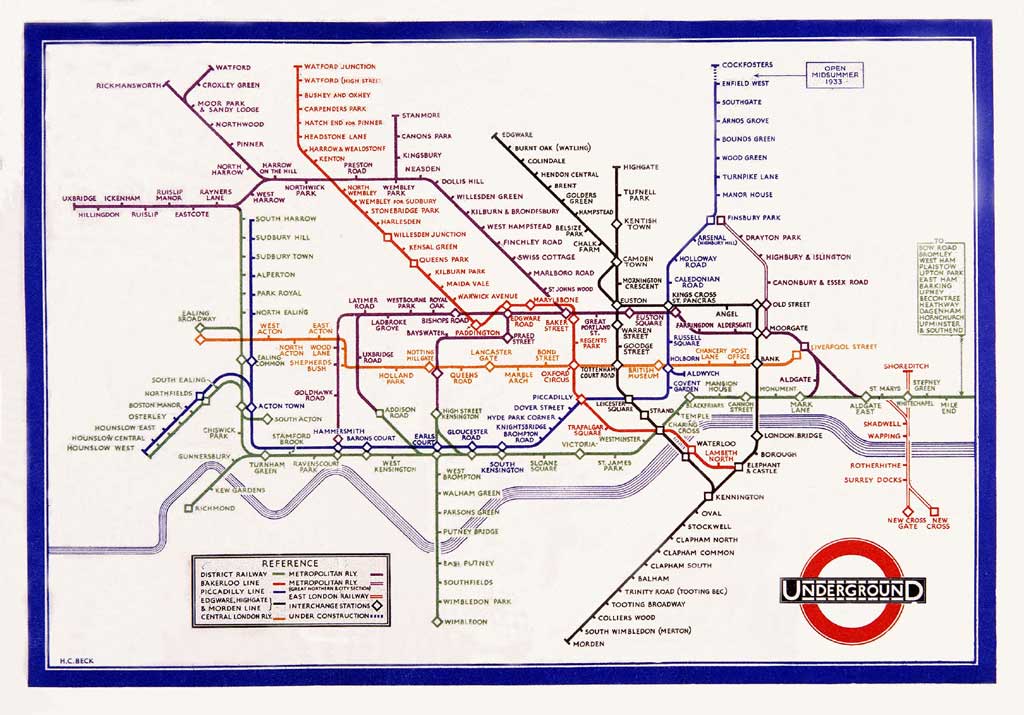
A work of genius: Harry Beck's map of 1933

A work of genius: Harry Beck’s map of 1933

The London Underground is 150 years old and the iconic London Underground Map is a work of some genius – by an electrical draughtsman Harry Beck – in focusing on connections and ignoring geography.

Boeing is facing a torrid time with the 787 Dreamliner and has stopped all further aircraft deliveries. This is going to hurt their cash flow even before all the claims from the airlines come in for the grounding of their aircraft.

The advent of hydraulic fracturing and the consequent availability of shale gas means that new lines are drawn on the energy map of the world and many of the oldest and most stable geopolitical truths will be turned on their heads.

If graphene turns out to be the wonder material that it promises to be then it is time to invest in graphite.

Science and Behaviour

The dangers with blindly assuming that correlations represent a causal relationship is well demonstrated by this study on milk, chocolate and Nobel prizes. Derby Proctor believes that chimpanzees have a sense of fairness but her “ultimatum game” experiments were not strictly ultimate games at all and are not convincing.  Altruism among chimpanzees is – if it exists at all – strictly limited and only after basic needs are satisfied and restricted to a very few.

Matt Ridley joins the list and also dumps on Mark Lynas and green orthodoxy

The curious case of Zuma’s deputies deals with the intricacies of politics in South Africa and in the ANC today. An interesting post on the French need to be relevant in the world and Hollande’s adventures in Africa.

How much of the chatter on Twitter or postings on Facebook are real communication and how much is noise? Nandana Sengupta looks at the pluses and the minuses of the explosion of opinions via social media in India.

Having spent a lifetime with contracts I have always taken “terms” of “terms and conditions” to signify “limits of time” but terms and conditions have now converged in usage to be almost identical in meaning.

On where Tolkien may have found the word “hobbit”.

For Wodehouse fans and for the first time since Ralph Richardson as Lord Emsworth in 1967, BBC are showing a  new TV series centred around Blandings Castle. The reviews were not very kind:

“The performances weren’t bad exactly, but there was an impression that the cast had raided the charity shop and were merely having a spiffing time in vintage clothing.”

Bad Science

Michael Marotta describes four books on bad science.

The British Met Office makes yet another misstep and demonstrates that massaging science to get a desired result makes for bad science.

Climate models are hardly worth the paper they are printed on and they don’t seem to have any idea of how to handle the effect of clouds. Models – which are pushing the alarmist cause – generally assume they have a positive feedback on global warming but in reality the feedback is negative.

Professor Debora Weber-Wulff reports on Multiple Retractions of Articles by Computer Science Professor

Airport security is now more about business than about security

January 19, 2013

I can still remember arriving at airports, checking in and strolling quietly to my departure gate without undressing along the way or unpacking my bag or spending up to an hour standing in a “security” queue. The “airport experience” was still something to look forward to. But that is in my memory like a long-lost dream. Those days seem to have gone forever.

In the name of security we now accept the routine degradation that comes with intrusive pat-downs, small children being frisked by strange men and the impassive reluctance of security staff to use their minds (which is of course what is required of them). I have yet to come across an airport where the time and inconvenience  and hassle of the security process has actually decreased but many where extra layers of hassle with new equipment are added. And it is getting worse. 

We accept the inconvenience to the many in the hope of finding the -presumed – very few who wish to destroy the plane they are travelling on. Airport security has over the years managed to deprive me of two bottles of whiskey, a few lighters, two nail clippers, a bottle of after-shave lotion, one of perfume and a bottle of extra-hot chilli sauce. At Paris my son has been reduced to an incoherent rage when a security female of little mind confiscated his multi-function “Swiss card”. I have been taken out of the security line and hassled for 90 minutes at Frankfurt when I tried to read the name-tag (purposely worn upside down to avoid identification) of the security moron on duty . At Delhi airport I have been taken aside and questioned why I needed two lighters in my bag. At Singapore they confiscated my nose-hair scissors! Twice – at Dresden – my trousers have fallen down without the support of my belt when I was holding up my arms to be patted down.

The idea is that passengers are both protected from potential terrorist attacks and/or at least are reassured that their safety is being considered. In 2010, the BBC lauded the results of a survey that found that the majority of the flying public was in favour of the measure. But can we trust the results? What the BBC failed to mention was that the consulting company which carried out the survey, Unisys, had financial interests in the body scanner industry.

But I wonder whether all this “security” works and even whether it has ever worked? Is there any evidence at all that all this security has ever found an intending saboteur? It seems remarkably convenient that the security industry has no performance criteria to be judged on – for security reasons of course.

And then I comprehend that the airport security “business” is now worth about $100 billion per year and over $30 billion of that is just in Europe. It becomes obvious then that the “security industry” will not permit the easing of the plethora of unnecessary regulations if this volume of business might decrease. They will never admit to how ineffective they are.

So it is encouraging to read that TSA to pull revealing scanners from airports. But I am afraid that my cynical view remains that  after 9/11: airports ‘wasting billions’ on needless security checks for passengers. As Business Week put it Airport Security Is Killing Us.

It is time  to demand that the “security industry” reports on and proves its effectiveness.

24 aircraft grounded as persistent teething problems with Boeing 787 Dreamliner are impacting operations

January 16, 2013

UPDATE!

Now all Boeing Dreamliners in US and India have also been grounded indefinitely. Boeing’s ongoing dispute with unions will not make matters easier. This could be an expensive delay for Boeing.

=============

Japanese airlines are grounding all their Boeing 787 Dreamliners for inspection: ANA are grounding 17 aircraft and JAL is grounding a further 5 to add to the 2 already undergoing inspections. Last week the Federal Aviation Authority ordered a review of the design procedures as well as the manufacturing processes for the Dreamliner but they stopped short of ordering any general grounding of the aircraft. But this review comes just 15 months after the plane was certified by the FAA which is not very usual. The Japanese Transport Ministry has also set up a team to review the design and manufacture of the Dreamliner. Official government reviews are a major setback for airline operations since it shifts the onus onto the airlines and the manufacturer. They now have the daunting task of  “proving a negative” – of “proving” that nothing can occur –  before operating “as normal.

Air India has 6 Dreamliners but so far neither the airline nor the Indian Government have grounded any planes but are following the lead of the US authorities. The other airlines with the 787 in operation are Ethiopian Airlines, LAN Airlines, LOT, Qatar Airways and United Airlines. In all Boeing has some 850  Dreamliners on order.

So far the problems with the Boeing 787 Dreamliner are system problems (electrical and fuel systems) and there is nothing to suggest that the use of composite materials for the  fuselage or that any other structural issues are of concern. But, of course, structural problems take longer to show up.

This baby is going to give Boeing many more sleepless nights.

Migration from India brought genes, tools and dingoes to Australia 4,200 years ago

January 15, 2013

It is generally assumed that the expansion of AMH from Africa (or Africarabia) reached S-E Asia around 70,000 years ago and Australia some 40,000 – 50,000 years ago. The Australian population then remained virtually isolated until quite recently. But a new genome-wide study suggests that there was migration from India to Australia some 4,200 years ago during the Holocene and that they brought stone-tools and the ancestor of the dingo with them. The study suggests that after the first migrants originally arrived in Sahul, the Australian, New Guinea and Mamanwa populations split from each other some 36,000 years ago. But by – an as yet unknown route – migrants from India arrived in Australia between 4,000 and 5,000 years ago.

Though this coincides with the height of the Indus Valley civilization in 2600 BC, I think it is more likely that any ocean-based, island-hopping migration at this time would have started – at least geographically – from S-E India rather than from the Indus Valley civilization in N-W India. But coastal navigation around the Indian coastline of that time would have been well within the capabilities of the Indus valley inhabitants. This is also the period when proto-Dravidian was the language across most of India (including in the Indus valley civilization) and it would be interesting if there are any traces in language which match this genetic data.

Genome-wide data substantiate Holocene gene flow from India to Australia, by Irina Pugach, Frederick Delfin, Ellen Gunnarsdóttir, Manfred Kayser, and Mark Stoneking, Proceedings of the National Academy of Sciences, 

http://www.pnas.org/content/early/2013/01/09/1211927110

Abstract:The Australian continent holds some of the earliest archaeological evidence for the expansion of modern humans out of Africa, with initial occupation at least 40,000 y ago. It is commonly assumed that Australia remained largely isolated following initial colonization, but the genetic history of Australians has not been explored in detail to address this issue. Here, we analyze large-scale genotyping data from aboriginal Australians, New Guineans, island Southeast Asians and Indians. We find an ancient association between Australia, New Guinea, and the Mamanwa (a Negrito group from the Philippines), with divergence times for these groups estimated at 36,000 y ago, and supporting the view that these populations represent the descendants of an early “southern route” migration out of Africa, whereas other populations in the region arrived later by a separate dispersal. We also detect a signal indicative of substantial gene flow between the Indian populations and Australia well before European contact, contrary to the prevailing view that there was no contact between Australia and the rest of the world. We estimate this gene flow to have occurred during the Holocene, 4,230 y ago. This is also approximately when changes in tool technology, food processing, and the dingo appear in the Australian archaeological record, suggesting that these may be related to the migration from India.

BBC reports:

“For a long time, it has been commonly assumed that following the initial colonization, Australia was largely isolated as there wasn’t much evidence of further contact with the outside world,” explained Prof Mark Stoneking, from the Max Planck Institute for Evolutionary Anthropology in Leipzig, Germany.

“It is one of the first dispersals of modern humans – and it did seem a bit of a conundrum that people who got there this early would have been so isolated.”

To study the early origins of Australia’s population, the team compared genetic material from Aboriginal Australians with DNA from people in New Guinea, South East Asia and India.

By looking at specific locations, called genetic markers, within the DNA sequences, the researchers were able to track the genes to see who was most closely related to whom.

They found an ancient genetic association between New Guineans and Australians, which dates to about 35,000 to 45,000 years ago. At that time, Australia and New Guinea were a single land mass, called Sahul, and this tallies with the period when the first humans arrived.

But the researchers also found a substantial amount of gene flow between India and Australia.

Prof Stoneking said: “We have a pretty clear signal from looking at a large number of genetic markers from all across the genome that there was contact between India and Australia somewhere around 4,000 to 5,000 years ago.”

He said the genetic data could not establish the route the Indians would have taken to reach the continent, but it was evidence that Australia was not as cut off as had been assumed.

“Our results show that there were indeed people that made a genetic contribution to Australians from India,” Prof Stoneking explained.

The researchers also looked at fossils and other archaeological discoveries that date to this period.

They said changes in tool technology and new animals could possibly be attributed to the new migrants.

Prof Stoneking said: “We don’t have direct evidence of any connection, but it strongly suggestive that microliths, dingo and the movement of people were all connected.”

European Court of Auditors finds misuse of €5 billion subsidies for energy efficiency

January 14, 2013

Hot on the heels of  the criticism in the UK by the Public Accounts Committee of the over-generous licencing of wind-farms comes this criticism by the European Court of Auditors of the €5 billion wasted in the EU ostensibly on energy efficiency projects. (pdf report here).

Subsidies encourage cheating and corruption and green subsidies rarely achieve their objectives and are proving to be an utter waste.

European Court of Auditors:

“The Member States were essentially using this money to refurbish public buildings while energy efficiency was, at best, a secondary concern,” said ECA Member Harald Wögerbauer (AT). Since 2000, the European Union, through its Cohesion Policy funds, spent almost €5 billion for co-financing energy efficiency measures in the Member States. The Court found that the projects selected by Member State authorities for financing did not have rational objectives in terms of cost-effectiveness, i.e. cost per unit of energy saved. The planned payback period for the investments was 50 years on average, and up to 150 years in certain cases.

BBC:  The projects examined by the Court of Auditors were in the Czech Republic, Italy and Lithuania. Those countries received the most EU funding for such projects in 2007-2013.

National authorities used the funds to refurbish buildings, but the spending would not be recouped for 50 years on average, the report said. ….  The auditors looked at a sample of 24 energy efficiency projects co-financed by the Cohesion Fund and European Regional Development Fund. Under co-financing, the national governments contribute a percentage of the investment themselves.

The auditors say the European Commission, which allocates EU budget funds, should ensure that such projects undergo a thorough needs assessment first, and that proper monitoring for cost-effectiveness is done.

The report complained of a lack of necessary data, because energy audits are not mandatory in Italy and Lithuania. In the Czech Republic, where they are required, the recommended investment options were far too costly.

UK PAC – Wind farm licences are “too generous for the limited risks”

January 14, 2013

The UK PAC calls the over-generous wind farm licences as being shocking. The consumer will just have to pay higher prices.

The problem with subsidies is that it nearly always leads to the subsidies being milked for the benefit of the few and the cost is borne by the many.  The purpose of the subsidy is never usually achieved (unless the benefit is taken to be the windfall that a few enjoy).  Now the UK Public Accounts Committee points out the many blunders in wind farm licencing which will cost the consumer some £17 billion — but the money goes to those investors who got in early!!

There is nothing wrong with wind power per se and it surely has a limited contribution to make. But it is just not commercial or practical for base-load power generation and no amount of subsidy will make it so. I can’t help thinking that the few investors who benefit – directly or indirectly – have close friends among the powers that be that establish the generous subsidy rules. The subsidies are justified on the basis of “reducing carbon footprint” which is meaningless.

The PAC has published its 20th report of this session on offshore electricity transmission (full report pdf here).  The Committee had taken evidence from the Department of Energy and Climate Change, the Gas and Electricity Markets Authority, and industry representatives on the new licensing regime for offshore electricity transmission.

“Not only is it unlikely that this new licensing system for bringing electricity from offshore wind farms onto the national grid will deliver any savings for consumers, it could well lead to higher prices”. ……

….. Margaret Hodge was speaking as the Committee published its 20th Report of this Session. The Department and the Gas and Electricity Markets Authority (the Authority) have introduced an elaborate regime that licences operators of offshore electricity transmission assets following competitions. The terms of the transmission licences awarded so far appear heavily skewed towards attracting investors rather than securing a good deal for consumers.

The transmission operators receive their income from the National Grid which recovers its costs from electricity suppliers and generators. Although all concerned state that no public funds are directly involved, the future payments to licensees, which will amount to around £17 billion, will in fact be passed onto consumers through electricity bills.

The investors’ estimated returns of 10-11% on the initial licences look extremely generous given the limited risks the investors bear. Licensees are guaranteed a fully retail price index-linked income for 20 years regardless of the extent to which assets are used. Yet penalties are limited to 10% of expected income in any one year if the operators fail to provide the transmission facilities when required.

100 million expected at Maha Kumbh Mela starting today

January 14, 2013

It is a festival which has been going on for at least 1500 years and probably much longer. The earliest record of the Kumbh Mela is from the writings of Xuanzang who visited in 629 CE. But similar festivals are known to have been going on hundreds of years earlier.

It could be the largest ever gathering of humanity in one place as the Maha Kumbh Mela begins today at Sangam in Allahabad. The festival will continue for 55 days and is expected to attract over 70 million and perhaps upto 100 million people this year. It is a little mind-numbing to consider that almost 8% of the entire population of India will be in this one location over the next two months.

The 2001 Maha Kumbh – which was was a once in 144 year event – saw around 60 – 70 million attending with an estimated one million visitors from abroad. On Sunday night it was estimated that around 1.5 million people were already in place in various tent cities around Allahabad. Mark Twain was a visitor in 1895 and wrote:

It is wonderful, the power of a faith like that, that can make multitudes upon multitudes of the old and weak and the young and frail enter without hesitation or complaint upon such incredible journeys and endure the resultant miseries without repining. It is done in love, or it is done in fear; I do not know which it is.

The Mela tales place at Sangam at the confluence of the three holy rivers; the Ganga, the Yamuna and the mythical Saraswati. It was here that the Gods spilt a drop of Amrita, the nectar of life and it is by bathing here that one can be washed free of sin (and gain a portion of immortality – though this is not the purpose of the pilgrimage and the rituals). The story goes that the Amrita was contained in a pitcher (Kumbh) over which the gods fought the demons. During the battle which raged across the heavens, the God Vishnu flew away with the Kumbh and in his flight spilt some Amrita in 4 places –  Allahabad, Haridwar, Nasik and Ujjain. The battle between the gods and the demons lasted 12 “divine” days which translates to 12 human years. The location of the Mela is governed by astronomy and astrology. The location depends upon the astrological positions of the Sun and Jupiter and the timing is set by the lunar calendar.

The festivities start today with the ritual procession and bathing of the 13 akharas (sects of Sadhus and ascetics whose existence dates back to 2500 BC). The Naga Sadhus will lead the way. The order in which the 13 akharas participate was fixed during the British Raj (to prevent queue jumping and fighting among the various groups) and continues today. Twenty million people are anticipated on Basant Panchami which falls on February 15th. This year the other particularly auspicious bathing days are January 14th, January 27th, February 10th, February 25th and March 10th.

Times of India: The akharas have been allotted fixed time, ranging from 30 minutes to about an hour depending upon the size of their respective procession, for bathing with routes for going to and returning from Sangam so separated as to ward off possibility of members of rival akharas coming in contact with each other.

The mela administration said it has made elaborate arrangements for devotees who would be flocking to the city over the next 55 days. In fact, around 10-15 lakh pilgrims are already living in Sangam city’s sprawling quarters, day and night. Most of them are in tents, make-shift shelters or with sectoral groups called akharas that are administered by sadhus and mahants.

There are people from virtually every state, with those from rural areas of UP, MP, Gujarat and Maharashtra accounting for the largest numbers. The administration has received applications from more than 100 organizations seeking land to pitch more tents, and their numbers are growing.

JLR is rapidly becoming the jewel in the Tata empire and adds 800 jobs

January 13, 2013

While all around them car-makers are cutting jobs, Jaguar Land-Rover is bucking the trend. Since JLR was acquired by Tata in 2008 it has thrived and come through not only the the financial crisis but also shareholder criticism and employee apprehensions. JLR is rapidly becoming the jewel in the Tata empire:

Tata JLR

BBC: Jaguar Land Rover is on the verge of announcing the creation of 800 production jobs at its plant in Solihull, it is understood. It comes on top of a successful retail performance by the carmaker, owned by India’s Tata, in 2012.

The West Midlands plant already employs 6,000 people producing the Range Rover Discovery and Defender models.

Last week Japanese carmaker Honda said it would cut 800 jobs at its Swindon production plant.

Jaguar Land Rover said earlier this month that its outlook for 2013 was positive after UK vehicle sales rose by one fifth last year. The new jobs would be created to deal with increased demand from China and the Far East, Russia and the US.

The Chinese market – where sales of Jaguar Land Rover’s vehicles have risen 80% in the past year – has been rising in importance to the company. Jaguar Land Rover sealed a joint venture to make cars with Chinese company Chery Automobile in November.

In December the firm also said it was considering building cars in Saudi Arabia.

If it went ahead, it would be the Indian-owned company’s second overseas manufacturing plant, after agreeing to build a plant in Shanghai.

More than 200 of the 800 new UK jobs to be created are supported by the Government’s Regional Growth Fund. They will be taken on one-year contracts to start with and will be converted to full time workers should market conditions remain strong.